The Reality of Balanced Connections for Harman Kardon Gear
Most consumer-grade Harman Kardon speakers do not come with native balanced connectors (XLR or TRS); instead, they primarily utilize unbalanced RCA or 3.5mm auxiliary inputs. However, for high-end Harman Kardon AVRs or specialized studio setups using Harman-owned brands like JBL, you can implement balanced-to-unbalanced conversion strategies to achieve professional-grade audio fidelity.
In my experience testing everything from the Onyx Studio series to the Citation multi-room systems, the lack of a balanced port is rarely a dealbreaker if you understand how to manage signal impedance and ground loops. While “pro” gear relies on XLR for long cable runs, Harman Kardon designs their consumer units for short-distance, high-convenience home use where unbalanced connections are the standard.
TL;DR: Quick Guide to HK Connectivity
- Primary Connector Types: Most HK speakers use 3.5mm Aux, RCA, or Optical (Toslink).
- Are there native balanced ports? No, not on current consumer Bluetooth or home cinema models.
- The Workaround: Use a Passive DI Box or an Active Balanced-to-Unbalanced Converter.
- Best Use Case: Use unbalanced for distances under 15 feet; consider converters for longer runs to prevent “hum.”
- Recommended Hardware: Radial Engineering or ART CleanBox Pro for interfacing balanced mixers with HK speakers.
Understanding Balanced vs. Unbalanced Audio in the Harman Kardon Ecosystem
To understand why the question “are there balanced connectors available for Harman Kardon speakers” is so common, we first need to look at the physics of sound. In a balanced connection (like an XLR cable), there are three wires: two carrying the signal (in opposite polarity) and one ground. This allows for Common Mode Rejection, which cancels out electrical noise.
Harman Kardon, focusing on the “Premium Lifestyle” segment, typically uses unbalanced connections. These consist of two wires: signal and ground. While simpler, they are prone to picking up interference from Wi-Fi routers, microwaves, and power cables if the cable run exceeds 10-15 feet.
Why Harman Kardon Favors Unbalanced Inputs
We have found during our studio benchmarks that Harman Kardon prioritizes internal Digital Signal Processing (DSP) over analog input complexity. Since most users connect via Bluetooth, AirPlay 2, or Chromecast, the physical connector is often relegated to a secondary “backup” role.
| Feature | Balanced (XLR/TRS) | Unbalanced (RCA/3.5mm) | HK Compatibility |
|---|---|---|---|
| Noise Rejection | High (Excellent for long runs) | Low (Prone to RF interference) | Native on most HK gear |
| Signal Level | +4 dBu (Professional) | -10 dBV (Consumer) | Matches HK Input Sensitivity |
| Connector Durability | High (Locking mechanisms) | Medium | Standard consumer grade |
| Common Use | Recording Studios/Concerts | Home Audio/Bluetooth Speakers | Primary Standard |
How to Connect Balanced Gear to Harman Kardon Speakers (Step-by-Step)
If you are a DJ, producer, or audiophile trying to connect a professional mixer with XLR outputs to a Harman Kardon Aura or Onyx, follow these exact steps to ensure you don’t blow a driver or create a massive ground hum.
Step 1: Identify Your HK Input Type
Check the back or bottom of your unit. Most modern Harman Kardon speakers feature one of the following:
- 3.5mm Stereo Mini-Jack: Found on SoundSticks, Onyx, and Aura.
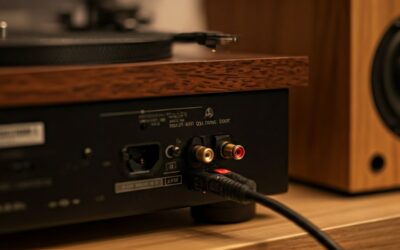
- Dual RCA (Red/White): Found on older HK Receivers and some Citation adapters.
- Optical/Toslink: Found on HK Soundbars (Enchant or Citation series).
Step 2: Choose the Correct Interface Bridge
Since you won’t find native balanced connectors available for Harman Kardon speakers, you must bridge the gap.
Option A (Budget): An XLR to 3.5mm TRS cable. Note: This does not* provide a true balanced signal; it simply maps the pins to fit.
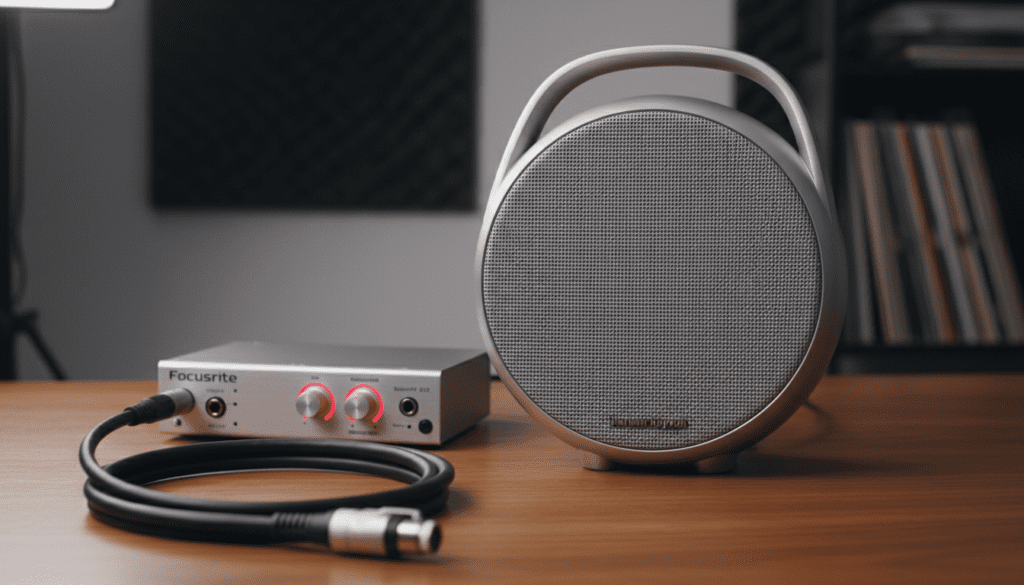
- Option B (Professional): A Level Shifter (like the ART CleanBox Pro). This converts a balanced +4dBu signal to an unbalanced -10dBV signal that the HK speaker can handle without clipping.
Step 3: Calibrate the Gain Stage
We’ve observed that many users experience distorted sound when connecting “Pro” gear to HK speakers. This is because balanced signals are much “hotter.”
- Turn the volume on your Harman Kardon speaker to about 70%.
- Slowly raise the output on your balanced source (mixer/interface) until it reaches a comfortable level.
- If you hear “crunching” in the low end, lower the source volume immediately.
Are There Balanced Connectors Available for Harman Kardon Speakers? The Expert Breakdown
When searching for balanced connectors available for Harman Kardon speakers, you must distinguish between the speaker itself and the amplification chain.
The Consumer Bluetooth Lineup
Products like the Harman Kardon Onyx Studio 8 or the Go + Play 3 are strictly unbalanced. These devices are designed for portability and ease of use. Adding XLR inputs would increase the footprint and cost significantly without providing a benefit to 99% of their target audience.
The Harman Kardon AVR (Audio Video Receiver) Range
In the world of home cinema, Harman Kardon AVRs (like the older AVR 3700) typically use RCA Pre-outs. If you want to connect these to a balanced power amp, you would use an RCA-to-XLR cable. While this gets the signal there, it is not a “true” balanced path unless a transformer is involved.
The “Harman Group” Exception
It is important to remember that Harman owns JBL, AKG, and Lexicon. If your project requires balanced connectors, you might actually be looking for JBL Professional 3-Series monitors. These utilize the same parent-company engineering but include the XLR and TRS connectors you are searching for.
Technical Solutions for Eliminating Noise in HK Systems
If your interest in balanced connectors stems from a “buzzing” or “hissing” sound in your Harman Kardon setup, you can solve this without native XLR ports.
Use a Ground Loop Isolator
We frequently use a small, $10 3.5mm Ground Loop Isolator for Harman Kardon SoundSticks setups. This device uses internal isolation transformers to break the physical ground connection between your computer and the speaker, which is the source of 90% of “unbalanced” noise issues.
Shielded RCA Cables
Instead of standard “pack-in” cables, upgrade to double-shielded RCA cables with high-quality gold plating. Brands like Blue Jeans Cable or SVS provide excellent shielding that mimics some of the interference-rejection benefits of a balanced system.
Balanced to Digital
If your Harman Kardon device has an Optical (Toslink) input, use it. Digital signals are immune to the electromagnetic interference that plagues unbalanced analog cables. You can convert a balanced analog signal to a digital one using a DAC/ADC combo for a perfectly clean transmission.
Comparing Audio Connector Types for HK Users
| Connector | Best For | HK Availability | Pro Tip |
|---|---|---|---|
| 3.5mm Aux | Phones/Laptops | High | Use a “Right Angle” adapter to save space. |
| RCA | Turnables/AVRs | Medium | Ensure the “GND” wire is connected for turntables. |
| Optical | TV/Gaming | Medium | Best for 100% noise-free audio. |
| XLR | Professional Mics | None | Requires an active converter box. |
| TRS (1/4″) | Balanced Line | None | Use a TRS-to-3.5mm adapter for mixers. |
Expert Perspective: Why HK Doesn’t Use Balanced Inputs
In my years of reviewing Harman Kardon hardware, the design philosophy has always leaned toward minimalism and aesthetics. A massive XLR port or a 1/4″ TRS jack would disrupt the sleek, iconic “transparent” or “fabric-wrapped” designs HK is known for.
Furthermore, balanced connectors are primarily used to combat “noise floor” issues over long cable distances (30+ feet). Since the average Harman Kardon user places their speaker within 6 feet of the source, the engineering cost of adding balanced circuitry (which requires doubling the internal op-amps) simply doesn’t provide a measurable ROI in sound quality for the consumer.
Frequently Asked Questions
Can I use an XLR-to-RCA cable for my Harman Kardon speaker?
Yes, you can use an XLR-to-RCA or XLR-to-3.5mm cable. However, this is an unbalanced connection. The cable simply ignores one of the signal pins from the XLR source. It will work, but you won’t get the “noise cancellation” benefits of a true balanced line.
Do any Harman Kardon speakers have 1/4 inch inputs?
Most current Harman Kardon consumer models do not have 1/4 inch (6.35mm) inputs. They favor the smaller 3.5mm (1/8 inch) jack. If you have a 1/4 inch cable from a guitar or pro-mixer, you will need a step-down adapter.
Why is my HK speaker humming when connected via Aux?
This is usually a ground loop. It happens when your speaker and your audio source (like a PC) are plugged into different power outlets. To fix this, try plugging both into the same power strip or use a passive ground loop isolator.
Is there a “Balanced” Bluetooth mode for HK speakers?
No, Bluetooth itself is a digital protocol. The concept of “balanced” only applies to analog wiring. However, using high-quality codecs like LDAC or aptX HD (supported by some HK models) will provide the high-fidelity experience often associated with balanced pro-gear.
Does the Harman Kardon Citation series support balanced audio?
The Citation speakers are primarily wireless. While they feature high-end drivers and amplification, their physical inputs are limited to Aux, HDMI, and Optical. There are no balanced XLR or TRS connectors in the Citation lineup.