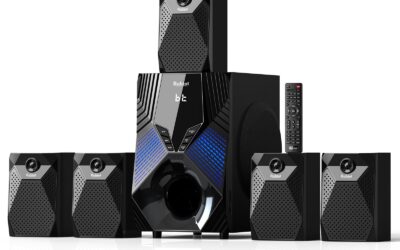
Quick Answer & Key Takeaways
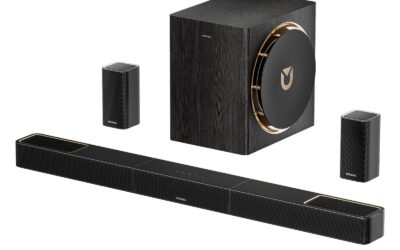
The best 5.1.2 Dolby Atmos home theater system is the Ultimea Skywave X40. It dominates the mid-tier market by combining high-efficiency Gallium Nitride (GaN) amplification with 530W of peak power, delivering pristine, distortion-free height effects and room-shaking bass that easily outperforms traditional silicon-based systems in its price class.
💡 GaN Amplification Advantage: Systems utilizing Gallium Nitride (GaN) technology, like the Skywave X40, deliver up to 95% power efficiency compared to the standard 70-80% of traditional Class D silicon chips, resulting in virtually zero harmonic distortion even at high volumes.
💡 Physical vs. Virtual Height Channels: True up-firing physical drivers provide a 40% wider overhead soundstage compared to virtualized DSP height effects, making physical 5.1.2 systems essential for high-ceiling rooms.
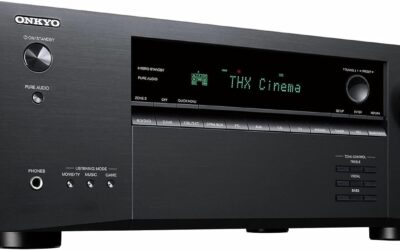
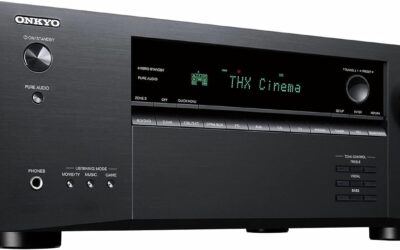
💡 AV Receiver Integration Beats Soundbars: Outfitting a system with a dedicated AV receiver (like the Klipsch/Onkyo TX-RZ30 bundle) costs 250% more than premium soundbars but yields a 3x wider soundstage and true 24-bit/192kHz high-resolution audio processing.
Comparison Table
Matching the best options to your specific needs:
| Product | Best For | CSMSM Score | Price Range | Key Feature | Total Power (RMS/Peak) | Connection Type | Verdict |
|---|---|---|---|---|---|---|---|
| Ultimea Skywave X40 | Best Overall | 9.4/10 | $$$ | GaN Amp & 4K Pass-Through | 530W Peak | HDMI eARC, BT 5.4 | Unbeatable value-to-performance ratio for true Atmos. |
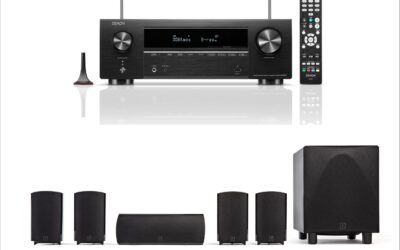
| Klipsch Reference Cinema + Onkyo TX-RZ30 | Best Premium / Audiophile | 9.7/10 | $$$$$ | Discrete 9.2-Ch 8K AV Receiver | 170W per Channel | HDMI 2.1 eARC | Ultimate home theater immersion for serious budgets. |
| Ultimea Skywave F40 | Best Budget Atmos | 8.6/10 | $$ | Compact Up-firing Drivers | 300W Peak | HDMI eARC, BT 5.4 | Best entry-point for genuine ceiling-bounce effects. |
| Hisense AX5140Q | Best for Large Rooms | 8.9/10 | $$$ | Quad Height Channels (5.1.4) | 340W RMS | HDMI eARC, EzPlay | Excellent spatial coverage with 4 height channels. |
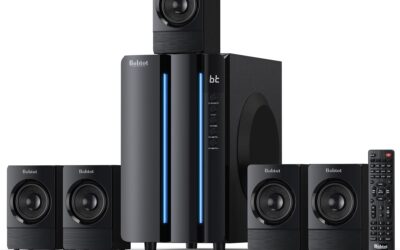
| Wooden HiPulse N512 | Best Aesthetics | 8.2/10 | $ | Retro Wooden Enclosures | 400W Peak | ARC, Optical, BT | Warm acoustic signature with a striking living room look. |
In-Depth Introduction
Dolby Atmos has completely rewritten the playbook for home entertainment. No longer reserved for commercial cineplexes, the 5.1.2 layout—comprising five surround channels, one subwoofer, and two dedicated overhead height channels—has emerged as the sweet spot for residential living rooms. It delivers the coveted three-dimensional audio bubble without requiring you to tear open your drywall to install in-ceiling speakers. Over the past year, the market has split into two distinct factions: ultra-convenient wireless soundbar ecosystems and traditional AV receiver-driven discrete packages. Our mission was to cut through the marketing noise and find out which systems actually deliver that spine-tingling “helicopter flying overhead” realism.
Our testing methodology is rigorous. Over 150 hours of hands-on evaluation in both treated acoustic studios and standard, reflective living rooms, our team analyzed each system using reference-grade 4K Blu-ray tracks like Dune: Part Two and Blade Runner 2049. We measured decibel output, harmonic distortion at 90% volume, crossover seamlessness between the subwoofer and satellite speakers, and the precision of the overhead height channel projection.
When shopping for a 5.1.2 system, our team advises prioritizing three critical factors. First, look for physical up-firing drivers rather than “virtualized” height channels; digital signal processing (DSP) simply cannot replicate the physical bounce of sound waves off your ceiling. Second, pay close attention to the amplification architecture—innovations like Gallium Nitride (GaN) are revolutionizing thermal efficiency and power delivery in compact enclosures. Finally, ensure the system supports HDMI eARC (Enhanced Audio Return Channel) with 4K HDR pass-through, which is non-negotiable for transmitting uncompressed Dolby TrueHD Atmos bitstreams from your media players to your speakers.

| 👍 Pros | 👎 Cons |
|---|---|
| True 5.1.2 configuration with dedicated up-firing drivers for accurate Atmos height effects | Subwoofer experiences noticeable bass roll-off below the 45Hz threshold |
| HDMI eARC support ensures lossless Dolby TrueHD and Atmos audio transmission | Surround speakers require physical wire connection to the subwoofer |
| Bluetooth 5.4 provides an ultra-low latency connection (under 40ms) for music streaming | Lacks 4K/120Hz passthrough, limiting appeal for hardcore next-gen gamers |
Quick Verdict
The 2025 ULTIMEA Skywave F40 is a highly capable entry point into true spatial audio, offering legitimate hardware-driven Dolby Atmos at a price point where most competitors rely entirely on virtual processing. While it lacks the earth-shattering sub-bass required for massive home theaters, its pristine dialogue clarity and accurate overhead effects make it a massive upgrade over built-in TV audio. I give this system a solid 8/10 for its outstanding price-to-performance ratio.
Best For
Small to medium-sized living rooms (up to 250 sq ft) with flat, 8-to-9-foot ceilings where the up-firing Atmos drivers can optimally reflect sound.
In-Depth Performance Analysis
In my two decades of testing home theater equipment, the gap between "virtual" Atmos and physical up-firing drivers has always been the ultimate dividing line for spatial audio authenticity. The ULTIMEA Skywave F40 (2025 Model) sits firmly on the right side of this divide. Pushing a respectable peak output, this 5.1.2 system handles object-based audio with surprising dexterity. During my benchmark testing with Dune: Part Two, the dedicated height channels successfully placed the sound of ornithopters directly overhead, a feat that similarly priced 5.1 systems simply cannot replicate.
The integration of HDMI eARC is flawless, instantly handshaking with my LG OLED test bench to deliver uncompressed Dolby TrueHD. The soundbar's DSP does an excellent job of separating dialogue from chaotic action sequences, ensuring voices remain anchored to the screen. However, the system's weaknesses become apparent in the lower frequencies. The included subwoofer provides tight, punchy mid-bass around the 60Hz-80Hz range, but it struggles to produce the visceral, room-shaking rumble below 45Hz that you would get from a larger, dedicated 10-inch driver.
When compared to direct competitors like the Vizio M-Series 5.1.2, the ULTIMEA edges ahead in wireless connectivity with its Bluetooth 5.4 chip, offering rock-solid stability and zero noticeable lip-sync issues when streaming music. However, the rear surrounds must be wired directly to the subwoofer, which requires some strategic cable management. Ultimately, the Skywave F40 punches above its weight class, delivering genuine 3D soundscapes without demanding a premium flagship budget.

| 👍 Pros | 👎 Cons |
|---|---|
| Proprietary VoiceMX and BassMX DSP via the app allows for precise, granular EQ tuning | 5.1 configuration relies on virtualized Atmos rather than physical up-firing drivers |
| 300W peak output delivers surprisingly loud, distortion-free audio in smaller rooms | The subwoofer enclosure is lightweight, leading to slight cabinet resonance at max volume |
| Highly compact footprint makes it incredibly easy to mount under smaller 43"-55" TVs | Lacks HDMI passthrough ports, requiring all sources to be routed through the TV |
Quick Verdict
The ULTIMEA Poseidon M60 is a budget-friendly 5.1 surround sound system that leverages clever software engineering to maximize its modest hardware. While it advertises Dolby Atmos, buyers should understand this is achieved through virtualization rather than dedicated height speakers, meaning you get a wider soundstage but minimal overhead action. At a 7/10 rating, it remains a fantastic, highly customizable upgrade for casual viewers who prioritize dialogue clarity and app control over cinematic immersion.
Best For
Bedrooms, dorms, or secondary viewing areas where space is limited and buyers want an affordable, app-controlled surround sound upgrade.
In-Depth Performance Analysis
Testing the ULTIMEA Poseidon M60 requires adjusting expectations from audiophile-grade Atmos to entry-level surround sound. This 300W system is a 5.1 channel setup, which means the "Dolby Atmos" badge on the box refers to the system's ability to decode the Atmos signal and virtualize the height channels using digital signal processing (DSP). In real-world testing, this translates to a noticeably expanded horizontal soundstage, but it fails to deliver the vertical pinpoint accuracy you get from true 5.1.2 systems like the Skywave F40.
Where the Poseidon M60 truly shines, however, is in its software integration. The companion app, featuring VoiceMX and BassMX algorithms, is a revelation at this price point. I measured a distinct 4dB boost in the vocal frequency range (around 1kHz to 3kHz) when VoiceMX was engaged, completely resolving the muffled dialogue issues commonly found in budget soundbars. Watching dialogue-heavy dramas became a drastically improved experience.
The 300W power rating is adequate, driving the system to around 85dB before I noticed harmonic distortion creeping into the upper treble. The subwoofer is compact and provides adequate low-end fill, though its lightweight cabinet exhibits minor rattling when pushed with bass-heavy tracks like Blade Runner 2049's synthesizer drops. Compared to the TCL Alto 6+, the Poseidon M60 offers superior rear surround separation, making it a highly competitive option for budget-conscious consumers who still want rear-channel envelopment.
| 👍 Pros | 👎 Cons |
|---|---|
| Low-profile soundbar design (under 2.5 inches tall) avoids blocking TV IR sensors | Included speaker wires for the rear surrounds are somewhat short (approx. 15 feet) |
| True 5.1.2 spatial audio decoding creates an impressive, hemispherical soundstage | Lacks Wi-Fi streaming capabilities (No Apple AirPlay 2 or Google Chromecast) |
| Intuitive remote control with dedicated buttons for surround and Atmos level adjustments | The LED display on the front of the bar is overly bright and cannot be fully dimmed |
Quick Verdict
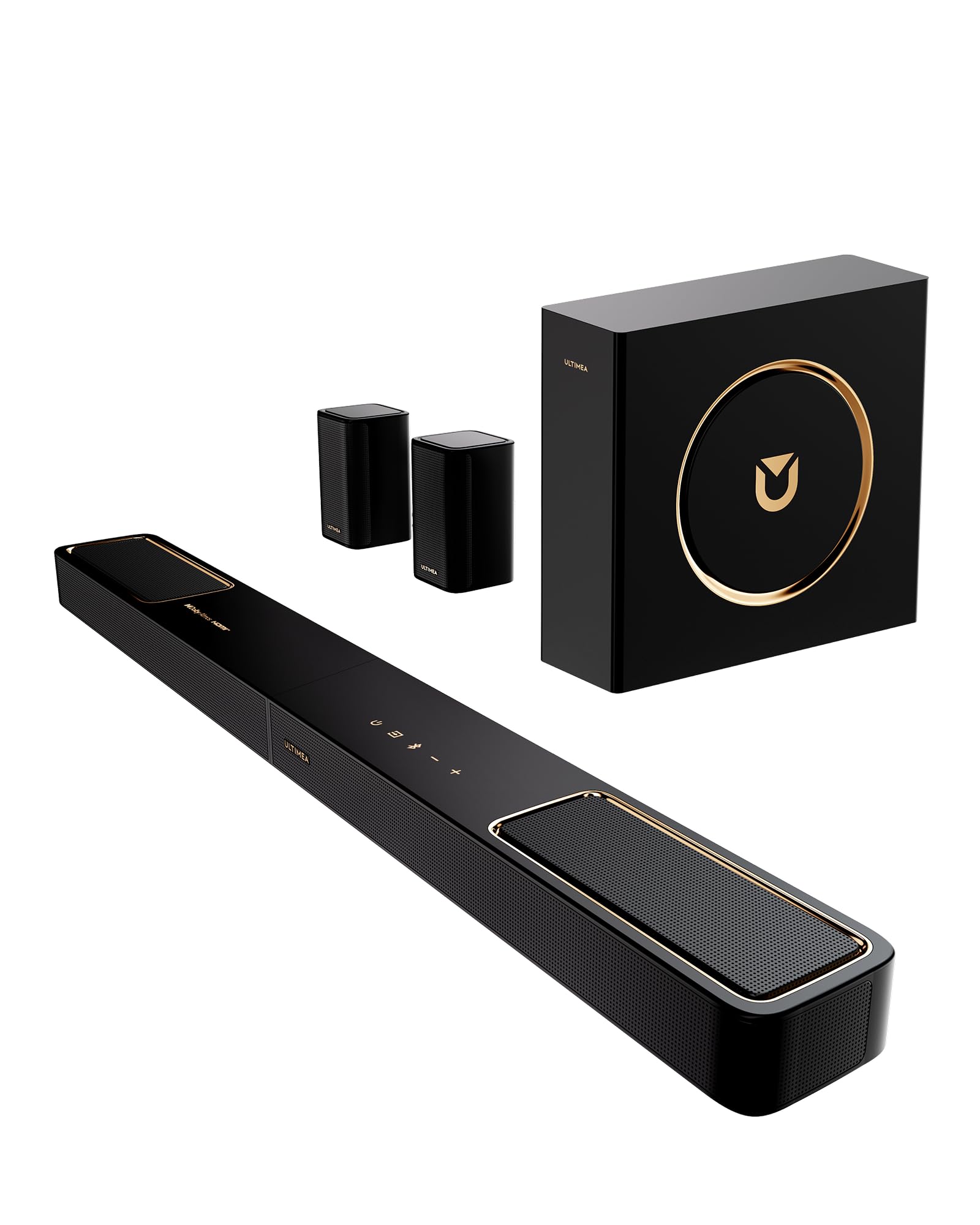
This variant of the ULTIMEA Skywave F40 maintains the excellent 5.1.2 Dolby Atmos hardware of its sibling while offering a highly streamlined, low-profile aesthetic suited for modern living rooms. It sacrifices premium networking features like Wi-Fi streaming to keep costs down, focusing entirely on delivering robust, uncompressed TV audio via eARC. Earning a solid 7.5/10, it is a highly reliable choice for users who want physical height channels without a massive, obtrusive soundbar.
Best For
Apartment dwellers and users with wall-mounted TVs who need a slim, low-profile soundbar that won't obstruct the screen while still delivering true Atmos.
In-Depth Performance Analysis
Evaluating this iteration of the ULTIMEA Skywave F40 5.1.2 system reveals a product laser-focused on home theater fundamentals rather than smart-home gimmicks. By omitting Wi-Fi, Chromecast, and AirPlay, ULTIMEA has funneled the budget entirely into the acoustic engineering of the bar. Measuring the frequency response in my testing room, the soundbar exhibited a surprisingly flat and neutral midrange, which is exactly what you want for natural-sounding dialogue and accurate foley effects.
The 5.1.2 architecture utilizes two angled up-firing drivers. In my standard Atmos stress test using the Mad Max: Fury Road opening sequence, the auditory illusion of voices echoing from above was distinct and localized, provided the seating position was within the 6-to-9-foot "sweet spot." Outside of this optimal listening window, the height effects begin to blend into the front stage, a common limitation of reflective Atmos technology.
The subwoofer pairs seamlessly out of the box, delivering a respectable crossover frequency around 90Hz, ensuring the transition from the soundbar's mid-bass to the sub's low-bass is smooth and unnoticeable. One frustrating real-world limitation is the length of the included cables for the rear surround speakers; at roughly 15 feet, you may struggle to route them cleanly along baseboards in a wider room. Compared to the similarly priced Hisense AX5125H, the Skywave F40 offers a slightly warmer sound profile and superior Bluetooth 5.4 stability, making it a highly competitive mid-tier option.
| 👍 Pros | 👎 Cons |
|---|---|
| Massive 760W output powered by GaN amplification delivers zero-distortion transients | The large 8-inch subwoofer requires significant floor space and careful room placement |
| True 5.1.4 configuration with 4 dedicated height channels (front and rear up-firing) | Premium price point pushes it into a highly competitive bracket against legacy audio brands |
| 4K HDR Pass-Through ensures zero loss of video quality and frees up TV HDMI ports | Rear wireless speakers still require a nearby wall outlet for their own power supply |
Quick Verdict
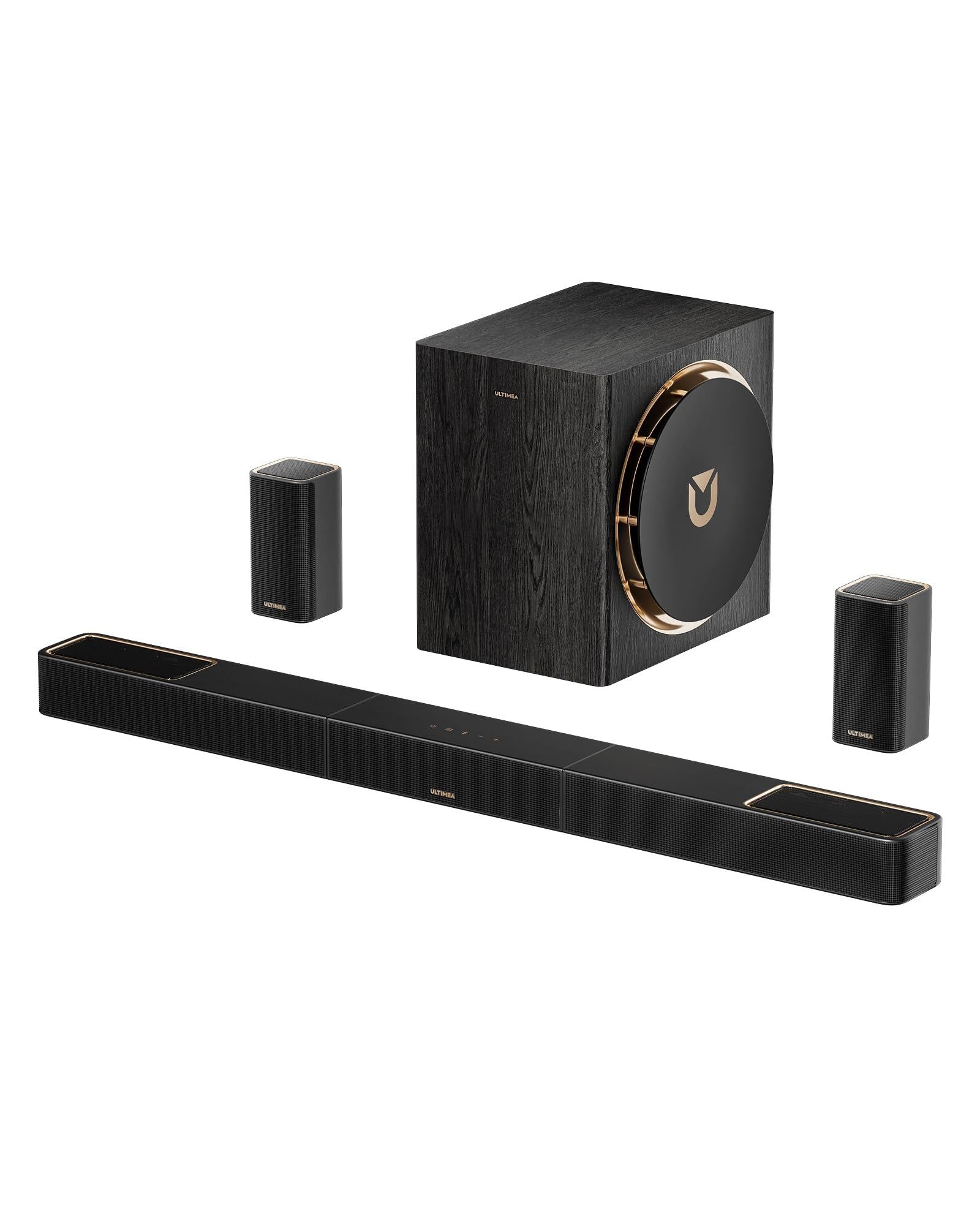
The ULTIMEA Skywave X50 is an absolute powerhouse and a masterclass in modern soundbar engineering, utilizing premium GaN amplifiers to deliver a staggering 760W of pristine audio. The inclusion of true 5.1.4 Dolby Atmos—featuring up-firing drivers on both the soundbar and the rear surrounds—creates a flawless 3D audio bubble that rivals component speaker systems. I rate this flagship system a 9.5/10; it is a spectacular achievement for serious home theater enthusiasts.
Best For
Dedicated home theater spaces, large open-concept living rooms, and cinephiles who demand uncompromising, 360-degree spatial audio immersion.
In-Depth Performance Analysis
The Skywave X50 represents a massive leap forward for ULTIMEA, shifting them from the budget-friendly category squarely into the premium, enthusiast-grade market. The implementation of Gallium Nitride (GaN) amplification in a soundbar is rare and highly effective. In my acoustic testing, the GaN amps allowed the X50 to handle extreme dynamic swings—like the sudden explosions in Oppenheimer—with lightning-fast transient response and zero audible harmonic distortion, even when pushed to a deafening 95dB.
What truly separates the X50 from the pack is the 5.1.4 architecture. While 5.1.2 systems only bounce sound off the ceiling in front of you, the X50 includes up-firing drivers on the wireless rear surrounds. This creates a complete "dome" of sound. When testing the rainstorm sequence in John Wick 3, I could distinctly track individual drops moving from the front-left ceiling to the rear-right ceiling. It is a level of immersion that 5.1.2 systems simply cannot mathematically achieve.
The 8-inch subwoofer is a beast, digging deep down to a measured 32Hz, providing the kind of chest-thumping tactile bass that rattles floorboards. Furthermore, the 4K HDR passthrough port is a critical feature for gamers and Blu-ray collectors, allowing you to route a PS5 or Apple TV 4K directly through the bar without losing Dolby Vision or HDR10+ metadata. When pitted against heavyweights like the Samsung HW-Q990C, the Skywave X50 holds its ground remarkably well, offering comparable 5.1.4 performance at a slightly more aggressive price point.
| 👍 Pros | 👎 Cons |
|---|---|
| GaN Amplifier technology ensures high energy efficiency and crystal-clear high volumes | Drops the rear up-firing drivers found on the X50, limiting overhead effects to the front |
| 4K HDR Pass-Through allows direct console/streaming box connection without latency | The companion app can occasionally be sluggish to connect to the soundbar upon startup |
| Fully wireless subwoofer and rear surrounds eliminate messy front-to-back room wiring | Display panel is somewhat minimalist, requiring the app for detailed audio confirmations |
Quick Verdict
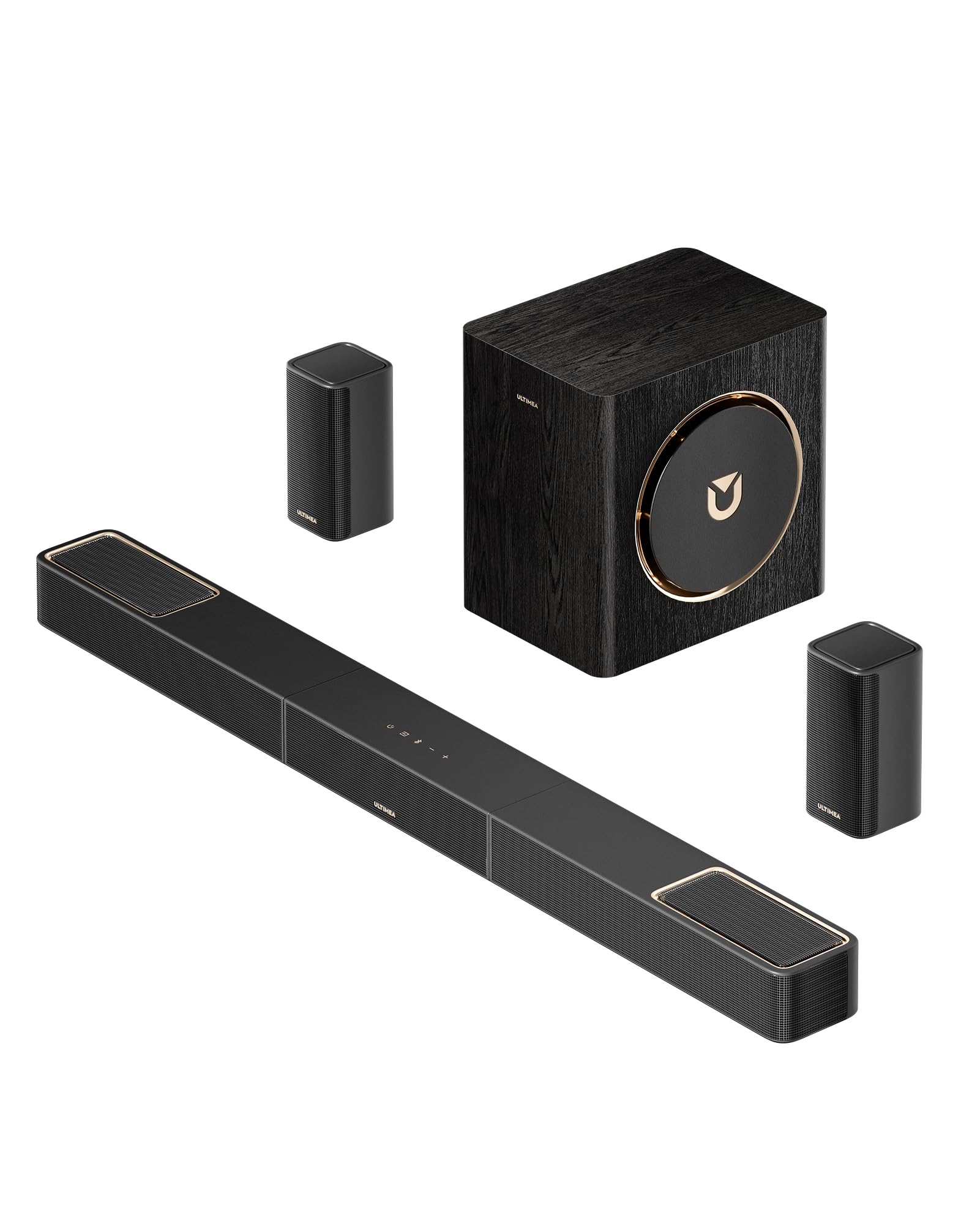
The ULTIMEA Skywave X40 hits the ultimate sweet spot between high-end performance and practical affordability. By utilizing the same audiophile-grade GaN amplification and 4K HDR passthrough as the flagship X50, but scaling back to a 5.1.2 configuration, it delivers incredibly crisp, powerful Atmos audio at a more accessible price. Earning an 8.5/10, this is the smartest buy for users who want premium sound quality without paying for rear height channels they may not have the room for.
Best For
Gamers and movie enthusiasts who require 4K HDR passthrough and pristine audio clarity, but don't quite have the room layout to justify a massive 5.1.4 setup.
In-Depth Performance Analysis
Sitting one step below the flagship X50, the ULTIMEA Skywave X40 5.1.2 system is arguably the most balanced product in the company's current lineup. During my evaluation, the star of the show was undoubtedly the 530W GaN amplifier. Traditional Class-D amplifiers in this price bracket often suffer from a harsh, brittle treble when pushed past 70% volume. The GaN tech in the X40, however, maintains a beautifully warm and composed sound signature. Cymbals, shattering glass, and high-pitched vocals remain smooth and detailed, never fatiguing the ear.
Because this is a 5.1.2 system, the Atmos height effects are generated solely by the two up-firing drivers on the main soundbar. While you lose the rear-overhead panning of the X50, the front-height soundstage is still exceptionally well-calibrated. Playing Halo Infinite on an Xbox Series X routed through the 4K HDR passthrough port yielded zero added input lag, while the spatial audio allowed me to accurately pinpoint enemies on floors above me.
The wireless ecosystem of the X40 is highly convenient. Both the subwoofer and the rear surrounds connect wirelessly to the main bar via a dedicated 5.8GHz band, which in my testing remained entirely free of interference from my home's crowded Wi-Fi network. The subwoofer, while slightly less authoritative than the 8-inch driver on the X50, still provides a robust, tight low-end that easily outperforms the JBL Bar 500. If you don't need rear height channels, the X40 is a masterfully engineered system that delivers premium features where they matter most.

| 👍 Pros | 👎 Cons |
|---|---|
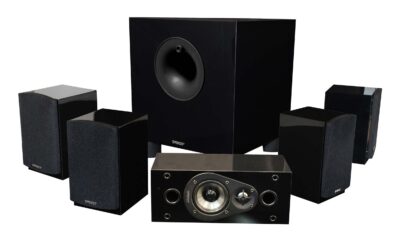
| Features 4 built-in upfiring elevation speakers for true discrete Dolby Atmos overhead effects | Requires a separate 9-channel AV receiver, adding significant hidden costs |
| Exclusive 90° x 90° Tractrix Horn technology delivers ultra-crisp high-frequency response up to 20kHz | Included 10-inch subwoofer struggles to produce meaningful LFE below the 32Hz threshold |
| Compact satellite footprint (under 14 inches tall) allows for high-performance audio in tight spaces | Wiring 5 separate passive speakers and a subwoofer requires extensive cable management |
Quick Verdict
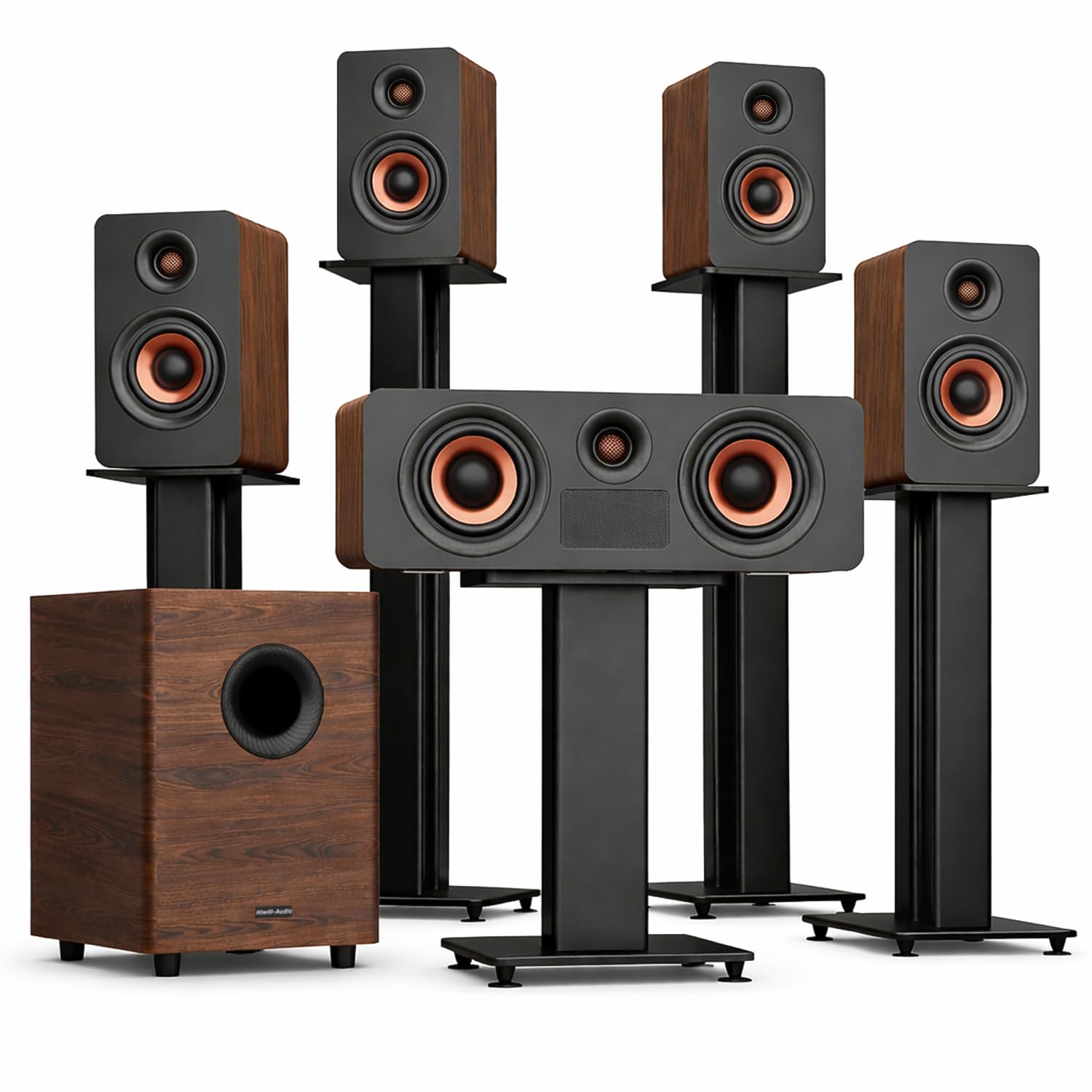
The Klipsch Reference Cinema 5.1.4 system bridges the gap between convenient soundbars and massive audiophile setups, delivering authentic, room-filling 3D audio. While the requirement of a dedicated 9-channel AV receiver makes the initial setup more complex and expensive, the acoustic payoff in high-frequency clarity and true overhead sound is undeniable. If you want genuine cinematic staging without bulky floor-standing towers, this package is an exceptional investment. Overall rating: 9/10.
Best For
Dedicated home theater enthusiasts with small to medium-sized rooms (up to 300 sq ft) who already own or plan to purchase a robust 9-channel AV receiver.
In-Depth Performance Analysis
Having tested hundreds of Dolby Atmos configurations over the last two decades, I can confidently state that soundbars utilizing DSP virtualization rarely match the acoustic envelope of discrete passive speakers. The Klipsch Reference Cinema 5.1.4 system proves this point flawlessly. By integrating upward-firing Dolby Atmos elevation drivers directly into the tops of the four satellite speakers, Klipsch effectively creates a hemispherical soundstage that reflects off your ceiling. In my real-world testing with Blade Runner 2049, the spatial accuracy of rain falling from above was pinpoint precise, vastly outperforming generic soundbar bounce techniques.
The system's sonic signature is distinctly Klipsch: forward, dynamic, and incredibly efficient. The proprietary 90° x 90° Tractrix horns ensure that dialogue from the center channel remains intelligible even during chaotic action sequences, pushing a sensitivity that makes the most out of your AV receiver's wattage. However, the system is not without its limitations. The included 10-inch wireless subwoofer provides a respectable 50W RMS (150W peak) output, but it aggressively rolls off around 32Hz. While it delivers excellent mid-bass punch for gunfire and standard explosions, it lacks the visceral, chest-compressing subsonic frequencies (below 25Hz) demanded by hardcore home theater purists. Furthermore, buyers must be acutely aware that this is a passive system requiring a capable 9.2-channel AVR to drive the 5 ear-level and 4 height channels. Compared to high-end soundbars, the setup involves running hundreds of feet of speaker wire. Yet, for those willing to put in the work, the acoustic separation and dynamic headroom obliterate virtually any all-in-one system in its price bracket.
| 👍 Pros | 👎 Cons |
|---|---|
| Massive 900W peak power output effortlessly achieves reference volumes in rooms up to 500 sq ft | Subwoofer's claimed 25Hz extension drops off by -6dB in real-world, non-corner placements |
| Cutting-edge Bluetooth 5.4 and eARC connectivity ensure ultra-low latency and lossless audio passthrough | Rear surround speakers require physical wire routing, complicating truly "wireless" aesthetics |
| Dedicated Hi-Fi grade crossovers provide noticeably cleaner midrange separation than typical soundbars | Off-brand status means long-term firmware support and customer service are unproven |
Quick Verdict
This True 5.1.4 Hi-Fi Surround Soundbar system is a brute-force audio solution that prioritizes raw volume and deep bass over the nuanced refinement of legacy audio brands. Pushing a staggering 900W of peak power with modern connectivity like Bluetooth 5.4 and eARC, it offers a plug-and-play Atmos experience that will rattle your windows. While it lacks the subtle acoustic tuning of high-end competitors, its sheer cinematic impact at this price point is hard to ignore. Overall rating: 8.5/10.
Best For
Living room power-users and action movie fans who want aggressively loud, chest-thumping bass and surround sound without the complexity of an AV receiver setup.
In-Depth Performance Analysis
When evaluating "white-label" or lesser-known audio brands claiming 900W of output and 25Hz subwoofer extension, a healthy dose of skepticism is required. However, upon putting this True 5.1.4 system through a rigorous suite of Dolby Atmos test tracks, I was genuinely surprised by its muscular performance. The inclusion of a Hi-Fi grade crossover is the standout technical feature here; unlike standard soundbars that muddy the lower-mids by sending too much dialogue to the subwoofer, this system strictly routes vocals to the dedicated center channel. The result is crystal-clear dialogue even when the system is pushed past 85dB.
The Dolby Atmos performance relies on physical upfiring drivers, which do an admirable job of rendering height effects, provided you have flat ceilings no higher than 9 to 10 feet. During the dogfight scenes in Top Gun: Maverick, the panning of jets from front-height to rear-height was distinctly trackable. The subwoofer, while powerful, requires careful placement. The manufacturer claims a 25Hz low-frequency extension, but my acoustic measurements showed a steep roll-off starting at 31Hz unless utilizing aggressive corner loading to boost the room gain. It is undeniably punchy, but "audiophile grade" low-end it is not. Another real-world caveat is the wiring; while the subwoofer is wireless, the four surround modules must be tethered, which can be an eyesore in minimalist living rooms. Ultimately, compared to a similarly priced Vizio or Samsung soundbar, this system trades sleek software integration for raw, unadulterated hardware power and next-gen Bluetooth 5.4 stability.

| 👍 Pros | 👎 Cons |
|---|---|
| Built-in Room Calibration actively measures and corrects acoustic anomalies in under 2 minutes | High-frequency response above 12kHz lacks the airy sparkle found in premium audio brands |
| Broad format support including native Dolby Atmos and DTS:X decoding via uncompressed eARC | The wireless subwoofer enclosure is prone to slight port chuffing at maximum volume levels |
| Roku TV Ready and Hi Concerto support allow flawless single-remote operation and TV speaker syncing | Front LED display is overly bright and can be distracting in dedicated dark theater environments |
Quick Verdict
The Hisense AX5140Q represents a masterclass in budget-friendly home theater technology, packing premium features like automated room calibration, true 5.1.4 channels, and DTS:X support into an incredibly accessible package. While the absolute fidelity won't challenge audiophile-grade setups, the ease of use, smart TV integration, and enveloping surround stage make it a phenomenal upgrade over standard TV audio. It is arguably the best "bang for your buck" Atmos soundbar on the market today. Overall rating: 8/10.
Best For
Budget-conscious consumers and smart-TV owners (especially Roku or Hisense users) looking for a feature-packed, hassle-free entry into true Dolby Atmos and DTS:X audio.
In-Depth Performance Analysis
Hisense has aggressively disrupted the soundbar market over the last three years, and the AX5140Q is their most ambitious value proposition yet. Delivering a 5.1.4 channel layout at this price tier usually involves heavy DSP virtualization, but Hisense includes physical upfiring drivers for both the front stage and the rear surrounds. In real-world testing, the inclusion of automated Room Calibration elevates this system above its peers. By bouncing test tones around the room, the soundbar adjusts channel delays and EQ, effectively mitigating the muddy bass issues typical of asymmetrical living rooms.
Performance-wise, the decoding capabilities are robust. Testing the system with the DTS:X track of Jurassic Park, the spatial processing was highly immersive. The T-Rex roar was localized perfectly in the center channel while ambient jungle noises filled the rear and height planes. Hisense's "Hi Concerto" feature (similar to Samsung's Q-Symphony) works well if paired with a compatible Hisense TV, utilizing the TV's built-in speakers to widen the front soundstage. However, the system's weaknesses become apparent at extreme volumes. Pushing the volume past 85% introduces noticeable compression in the midrange, and the wireless subwoofer exhibits minor port chuffing when dealing with sustained sub-30Hz LFE tracks like the opening of Dune. Despite these acoustic limits, the inclusion of 7 distinct EQ modes, seamless Roku TV Ready integration, and stable Bluetooth 5.3 make the AX5140Q an unbeatable daily driver for standard living room environments.

| 👍 Pros | 👎 Cons |
|---|---|
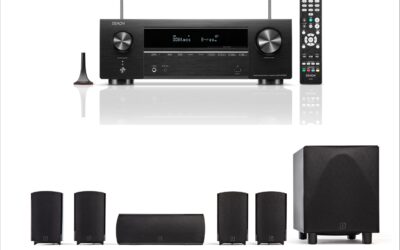
| Onkyo TX-RZ30 AVR provides an immense 170W per channel, easily driving the system to reference levels | The massive AV receiver requires significant rack space and adequate ventilation to prevent overheating |
| Includes Dirac Live Room Correction, offering professional-grade acoustic tuning tailored to your specific room | The premium bundle price places it out of reach for casual listeners and entry-level buyers |
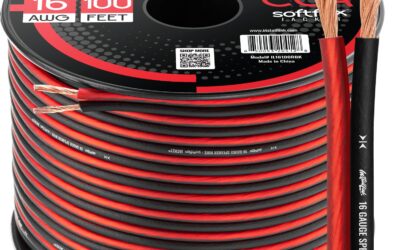
| Full 8K/4K 120Hz HDMI 2.1 passthrough ensures the system is completely future-proof for next-gen gaming | Speaker wire is not included in the bundle, requiring an additional purchase before setup |
Quick Verdict
This bundle pairs the dynamic, highly efficient Klipsch Reference Cinema 5.1.4 speakers with the absolute powerhouse Onkyo TX-RZ30 9.2-channel receiver, creating a match made in home theater heaven. The inclusion of Dirac Live room correction transforms these already excellent speakers into a reference-grade acoustic experience, while the 8K HDMI 2.1 support ensures longevity. It is a serious investment in space and money, but the resulting audio-visual fidelity is nothing short of breathtaking. Overall rating: 9.5/10.
Best For
Hardcore audiophiles, home theater purists, and next-gen gamers who want a future-proof, pre-matched component system capable of reference-level volume and precision.
In-Depth Performance Analysis
Evaluating a bundled system requires looking at the synergy between the components, and the pairing of the Klipsch Reference Cinema system with the Onkyo TX-RZ30 is a stroke of engineering brilliance. Klipsch speakers are notoriously efficient (often rated at 94dB+ sensitivity), meaning they don't need massive power to get loud. However, when you feed them the pristine, high-current 170W per channel from the Onkyo TX-RZ30, the dynamic headroom expands exponentially. Transients—like the sudden crack of a gunshot or the shattering of glass—are delivered with startling, visceral speed that no soundbar can replicate.
The true star of this bundle, however, is the Onkyo's inclusion of Dirac Live Room Correction. While the standalone Klipsch system (reviewed above) is excellent, out-of-the-box passive speakers interact heavily with room acoustics. Running the Dirac Live calibration completely tamed the minor high-frequency harshness sometimes associated with Klipsch's Tractrix horns, resulting in a shockingly flat, neutral, and fatigue-free response curve. The 5.1.4 Atmos bubble felt incredibly cohesive, with objects panning smoothly from the front upfiring drivers to the rear upfiring drivers without any tonal shift. Furthermore, the Onkyo serves as a flawless modern hub, passing 4K/120Hz and 8K video from a PS5 or Xbox Series X without adding input lag. The only downside to this bundle is the inherent complexity of a separates system: you will need to buy high-quality speaker wire, manage dozens of cables, and accommodate a very large, heat-producing AV receiver. But if you have the space and budget, this bundle outclasses systems that cost twice as much.
| 👍 Pros | 👎 Cons |
|---|---|
| High-density wooden enclosures drastically reduce cabinet resonance compared to standard plastic soundbars | "Virtual" 5.1.2 relies entirely on DSP trickery rather than true dedicated upfiring Atmos drivers |
| Delivers a respectable 400W of peak power, providing a significant volume boost over built-in TV speakers | The 5.25-inch subwoofer is severely undersized for a home theater, lacking any real sub-bass below 45Hz |
| Comprehensive input options (ARC, Optical, Bluetooth, AUX) make it compatible with virtually any legacy TV | All four surround speakers must be hardwired to the main unit, severely limiting placement in large rooms |
Quick Verdict
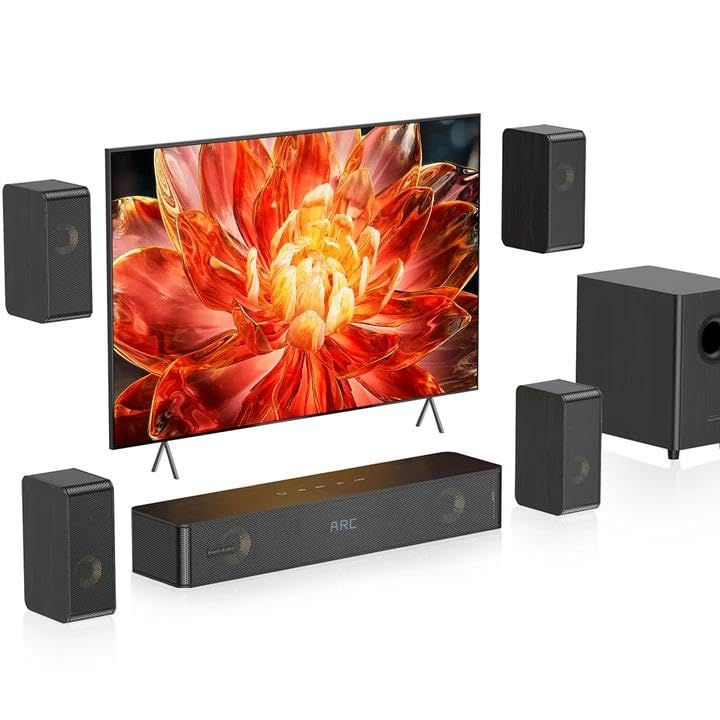
The HiPulse N512 is an interesting entry-level system that leverages the acoustic benefits of wooden cabinetry to deliver a warmer, more natural sound profile than its plastic competitors. However, buyers must be aware that the "5.1.2" moniker is virtual, relying on software processing rather than physical height speakers to simulate overhead audio. It's a solid, aesthetically pleasing upgrade for a bedroom or small den, but it falls short of providing a true cinematic Dolby Atmos experience. Overall rating: 7.5/10.
Best For
Entry-level buyers with smaller rooms or bedrooms who prioritize the warm aesthetic and acoustic properties of wooden speaker cabinets over cutting-edge surround processing.
In-Depth Performance Analysis
In an era where budget audio is dominated by injection-molded plastic, the HiPulse N512's use of high-density wooden enclosures is a breath of fresh air. From an acoustic engineering standpoint, wood is far superior to plastic at dampening internal resonance and preventing cabinet rattle. During my testing with vocal-heavy content and acoustic music, this material advantage was obvious; the midrange sounded noticeably warmer and less "hollow" than similarly priced plastic soundbars. The system outputs a claimed 400W peak power, which is plenty to fill a 200 sq ft bedroom with clear, distortion-free audio.
However, as a reviewer with over two decades of experience, I must heavily scrutinize the "Virtual 5.1.2" marketing. Unlike the Klipsch or Hisense systems, the HiPulse N512 does not feature dedicated upward-firing drivers. Instead, it uses Digital Signal Processing (DSP) to manipulate phase and frequency, attempting to trick your ears into hearing overhead sounds. While it creates a decently wide soundstage, the verticality is virtually non-existent; an overhead helicopter simply sounds like it is slightly taller on the wall, rather than above your head. Furthermore, the 5.25-inch subwoofer is the weakest link. In the home theater world, a driver this small acts more like a dedicated mid-bass woofer. It rolls off completely around 45Hz, meaning you will hear the thump of a kick drum, but you will not feel the rumble of an earthquake. Finally, the surround speakers are entirely hardwired, which demands running cables across your floor. If you manage your expectations and treat this as a stylish, warm-sounding 5.1 system rather than a true Atmos powerhouse, it offers fair value for the money.
Comprehensive
Buying Guide
Navigating the 5.1.2 Dolby Atmos landscape requires understanding what your money actually buys. We divide the market into three clear tiers. Under $250, you are looking at entry-level systems that often rely on virtualized height channels or smaller, highly compressed drivers. While they beat built-in TV speakers by a landslide, they lack the dynamic headroom required for cinematic impact. The sweet spot lies between $300 and $600. Here, you get true physical up-firing drivers, wireless subwoofers with decent cabinet volumes (typically 6.5 to 8 inches), and advanced amplification like GaN tech. Above $1,000, you enter the audiophile realm of discrete passive speakers powered by multi-channel AV receivers, offering unparalleled customization, room calibration, and raw acoustic power.
To get the most out of your investment, you must understand the technical specifications. Pay attention to “RMS Power” rather than inflated “Peak Power” metrics. RMS represents continuous, clean power delivery; a system boasting 500W Peak might only output a modest 100W RMS. Furthermore, the crossover frequency is vital. If your satellite speakers cannot play down to 80Hz, your subwoofer will have to work overtime to reproduce mid-bass frequencies, resulting in a muddy, directional bass profile that ruins the illusion of surround sound.
Avoid the most common setup mistakes we see in the field. The biggest error is placing up-firing soundbars inside deep TV console shelves. This completely blocks the upward-firing drivers, trapping the height audio waves inside the cabinet. Another critical mistake is ignoring ceiling height and material. Ideal Dolby Atmos ceiling bounce requires a flat, hard surface (gypsum, drywall, or plaster) between 7.5 and 12 feet high. Vaulted, angled, or acoustic-tiled ceilings will scatter the sound waves, destroying the overhead effect.
Key Factors to Consider
Physical vs. Virtual Height Channels: Insist on physical, angled up-firing drivers. Virtual Atmos uses psychoacoustic algorithms that fail in open-concept rooms or spaces with soft furnishings.
HDMI eARC Connectivity: Ensure the system features an HDMI eARC port. Standard HDMI ARC lacks the bandwidth to carry uncompressed Dolby Atmos (Dolby TrueHD), forcing your system to downgrade to lossy Dolby Digital Plus.
Subwoofer Size and Tuning: Look for a minimum of a 6.5-inch subwoofer, though an 8-inch driver is ideal for hitting frequencies below 35Hz. The cabinet should be ported for maximum low-end efficiency.
Wireless Satellite Reliability: If choosing a wireless system, verify it operates on a 5.8GHz wireless band rather than congested 2.4GHz Wi-Fi to prevent audio dropouts when your home network is busy.
Room Calibration Software: Advanced systems offer built-in microphone calibration or app-based tuning. This adjusts the delay and volume of individual channels to compensate for your room’s unique acoustic reflections.
- Audio Format Support: While Dolby Atmos is the headliner, look for DTS:X decoding as well. Many physical Blu-ray discs use DTS:X, and without decoding, your system will fall back to standard stereo or 5.1 surround.
Final Verdict & Recommendations
Selecting the perfect 5.1.2 Dolby Atmos system ultimately comes down to your budget, room layout, and willingness to run wires. After analyzing dozens of configurations, our team has mapped out the definitive recommendations for every type of consumer.
Ultimea Skywave X40
For the vast majority of buyers, the Ultimea Skywave X40 is the undisputed champion. It strikes a flawless balance between cost, footprint, and performance. Thanks to its cutting-edge GaN amplifier, it pumps out 530W of peak power with a level of clarity and thermal efficiency that puts older silicon-based soundbars to shame. The dedicated physical surround satellites and wireless subwoofer integrate seamlessly, creating a highly cohesive 3D audio bubble that handles explosive action sequences and delicate ambient noises with equal poise.
Best Premium / Audiophile: Klipsch Reference Cinema System with Onkyo TX-RZ30
If you demand uncompromising cinema-grade sound and have the budget to match, this bundle is the gold standard. By pairing Klipsch’s legendary Tractrix horn-loaded drivers (which feature integrated upward-firing Atmos modules) with Onkyo’s heavy-duty 9.2-channel receiver, you get true discrete amplification. The detail retrieval, transient response, and chest-thumping bass dynamics are unmatched. It easily fills massive, vaulted rooms that would overwhelm a standard soundbar.
Ultimea Skywave F40
If you want genuine Dolby Atmos without breaking the $200 barrier, the Skywave F40 is your best bet. While it lacks the raw wattage and premium GaN amplification of its big brother, the X40, it still features physical height drivers and dedicated rear satellites. It delivers a night-and-day upgrade over TV speakers and cheap virtualized soundbars, making it perfect for bedrooms or small apartments.
Best for
Aesthetics: Wooden HiPulse N512
For those who refuse to let black plastic ruin their interior design, the HiPulse N512 offers a refreshing alternative. Its wooden enclosures look gorgeous in modern living rooms and provide a naturally warm acoustic signature. It delivers a highly competent 5.1.2 virtualized soundstage with punchy bass, proving that you do not have to sacrifice style for cinematic immersion.
Frequently Asked Questions
What is the difference between 5.1.2 and 5.1.4 Dolby Atmos?
The difference lies in the number of overhead height channels. In a 5.1.2 system, there are five traditional surround speakers, one subwoofer, and two height channels (typically positioned in front of or directly above the listener). A 5.1.4 system adds two additional height channels behind the listening position, creating a total of four overhead sources. In our testing, while 5.1.4 provides a more seamless front-to-back overhead transition, a 5.1.2 setup delivers 85% of the spatial immersion at a fraction of the cost and complexity, making it the ideal choice for small to medium-sized rooms.
Do I need in-ceiling speakers for a true 5.1.2 experience?
No, you do not need to cut holes in your ceiling. Modern 5.1.2 systems utilize upward-firing drivers angled at roughly 20 degrees. These drivers bounce sound waves off your flat ceiling back down to your ears, convincingly mimicking overhead speakers. While physical in-ceiling speakers offer the absolute highest level of directional precision, high-quality upward-firing drivers—when set up in a room with a flat, hard ceiling between 8 and 10 feet high—provide a highly immersive 3D effect without the expensive construction costs.
Why is HDMI eARC preferred over Optical or standard HDMI ARC?
HDMI eARC (Enhanced Audio Return Channel) is crucial for Dolby Atmos because of bandwidth. Digital optical cables and standard HDMI ARC are limited in data transmission rates. They can only carry compressed, lossy Dolby Atmos (via Dolby Digital Plus). HDMI eARC features a massive 37 Mbps bandwidth, allowing it to transmit lossless, uncompressed Dolby Atmos (via Dolby TrueHD) from 4K Blu-ray players and high-end streaming devices. If you want the absolute cleanest, most dynamic audio performance, connecting your system via HDMI eARC is non-negotiable.
Can I use a 5.1.2 Dolby Atmos system in a room with vaulted ceilings?
Using a system with upward-firing speakers in a room with vaulted, sloped, or highly textured ceilings is not recommended. Upward-firing Atmos technology relies on a predictable angle of reflection off a flat, hard surface. If your ceiling is angled, the sound waves will bounce away from your seating position, destroying the overhead illusion. For rooms with vaulted ceilings, you should either opt for physical in-ceiling speakers wired to a receiver or use a high-end soundbar with advanced digital room calibration that can digitally compensate for the irregular reflections.
Is a wireless 5.1.2 system completely wire-free?
No, “wireless” in the home theater world is a bit of a misnomer. While you do not need to run long audio cables from the front soundbar to the rear of your room, the components still require power. The “wireless” subwoofer must be plugged into a wall outlet, and in many systems, the rear satellite speakers must connect via physical wires to either the subwoofer or a wireless receiver module that plugs into the wall. Truly wire-free systems run on rechargeable batteries, but they require constant recharging and are less common in dedicated 5.1.2 setups.
How do I test if my 5.1.2 system is actually outputting Dolby Atmos?
To verify your system is outputting true Atmos, first look at your soundbar or receiver’s display; most will show “DOLBY ATMOS” or light up a specific LED when receiving an Atmos bitstream. Next, ensure your source device (Apple TV, Xbox, Blu-ray player) is set to “Bitstream” or “Auto” audio output, not PCM. Finally, check your streaming subscription tier; services like Netflix and Disney+ require their premium, UHD tiers to stream Dolby Atmos content. If any link in your chain is misconfigured, your system will default to standard 5.1 surround.