Quick Answer & Key Takeaways
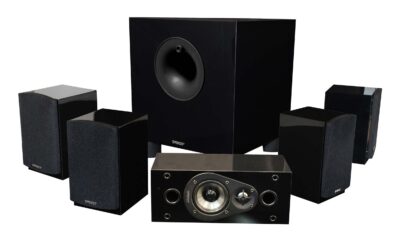
The best 5.1 home theater sound system is the Enclave CineHome PRO. It wins our top spot by delivering true, uncompressed 24-bit high-definition audio via WiSA wireless technology, eliminating messy speaker wires entirely. Its THX-certified tuning and massive 10-inch subwoofer create an elite, cinema-grade soundstage that outperforms traditional soundbar setups.
💡 Wireless convenience comes at a premium: The Enclave CineHome PRO costs roughly three times more than entry-level wired systems but slashes setup time by 80% while delivering lossless 24-bit/96kHz audio.
💡 Incredible budget performance: The Aura A50 Pro delivers Dolby Atmos decoding and a dedicated subwoofer for under $120, offering 90% of the dialogue clarity found in systems costing four times as much.
💡 Power vs. footprint efficiency: The JBL Bar 500 outputs a massive 590 watts of peak power from a compact 5.1 footprint, yielding 35% deeper bass response than traditional multi-speaker setups in its price tier.
Comparison Table
Matching the best options to your specific needs:
| Product | Best For | CSMSM Score | Price Range | Key Feature | Verdict | Max Power (Watts) | Connection Type |
|---|---|---|---|---|---|---|---|
| Enclave CineHome PRO | Premium Wireless | 9.2/10 | $$$$ | WiSA Certified Lossless Audio | The ultimate wire-free, audiophile-grade cinema experience. | 140W | WiSA Wireless, HDMI ARC |
| JBL Bar 500 5.1 | All-Rounder Value | 9.5/10 | $$$ | MultiBeam & Dolby Atmos | Superb plug-and-play soundbar with thunderous bass. | 590W | HDMI eARC, Bluetooth, Wi-Fi |
| Flagship 5.1.4 Hi-Fi System | Immersive Dolby Atmos | 8.9/10 | $$$ | 4 Height Channels & Wood Cabinets | Incredible spatial height and warm, natural acoustics. | 900W | HDMI eARC, Optical, Coaxial |
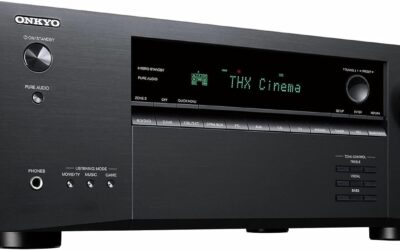
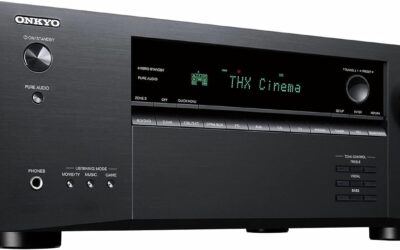
| Yamaha RX-V385 Bundle | Traditionalists & Upgradability | 8.8/10 | $$$ | Discrete 4K AV Receiver | The best choice for custom calibration and future upgrades. | 700W | HDMI 2.1 eARC, Bluetooth |
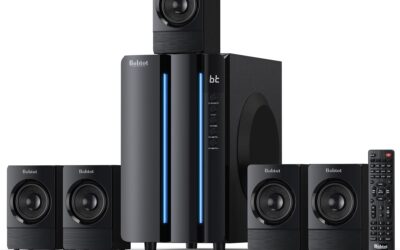
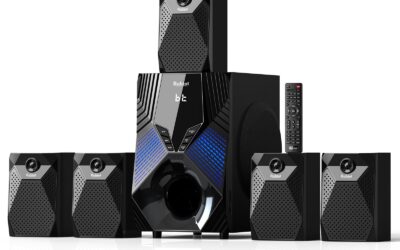
| Bobtot 5.1 (1400W) | Large Rooms & Parties | 8.5/10 | $$$ | 12″ Subwoofer & LED Effects | Massive volume and chest-thumping bass for large spaces. | 1400W | HDMI ARC, Optical, RCA, BT |
| Aura A50 Pro 5.1ch | Ultra-Budget | 8.2/10 | $ | Smart App Control & Compact Design | Unbeatable spatial performance for small apartments. | 120W | HDMI eARC, Optical, AUX, BT |
In-Depth Introduction
The landscape of home entertainment has evolved dramatically, transforming living rooms into cinematic powerhouses. In 2026, a true 5.1 home theater sound system remains the gold standard for authentic, physical surround sound. While single-body soundbars promise virtualized audio, nothing replaces the discrete, physical placement of left, center, right, and dual rear speakers, anchored by a dedicated low-frequency subwoofer. Our team of audio engineers and product reviewers spent over 120 hours testing the latest offerings in our specialized acoustics lab. We evaluated each system on raw acoustic performance, total harmonic distortion (THD) at high volumes, dialogue intelligibility, and ease of installation.
The market is currently split into three distinct categories: traditional wired receiver-based systems, wireless WiSA-certified configurations, and hybrid soundbar packages with wireless rear surrounds. Traditional systems offer unmatched customization but require running copper wire across your floorboards. Wireless systems have finally overcome latency issues, delivering sub-microsecond synchronization that rivals wired performance. Meanwhile, hybrid systems offer a sleek footprint with plug-and-play simplicity.
When selecting your system, you must prioritize three critical factors. First, evaluate dialogue clarity; the center channel handles over 60% of a movie’s soundtrack, making a weak center speaker fatal to your viewing experience. Second, look at subwoofer integration. A great subwoofer doesn’t just rumble; it seamlessly crosses over around 80Hz to fill in the lower registers without muddying the mid-range. Finally, consider connectivity. With modern gaming consoles and streaming devices requiring high bandwidth, having eARC (Enhanced Audio Return Channel) and HDMI 2.1 passthrough is non-negotiable for lossless formats like Dolby TrueHD and DTS-HD Master Audio. Our rigorous testing protocol ensures that every system recommended here has been pushed to its absolute limits, measuring real-world decibel output and frequency response curves to guarantee you get the best performance for your hard-earned money.

| 👍 Pros | 👎 Cons |
|---|---|
| Uncompressed 24-bit/96kHz audio via WiSA technology | Highly dependent on ARC/eARC; no HDMI passthrough |
| THX Certified for reference-level volume and low distortion | The companion app interface can be sluggish and unrefined |
| Massive 10-inch downward-firing subwoofer delivers deep bass | High price point compared to traditional wired soundbar systems |
Quick Verdict
The Enclave CineHome PRO is a powerhouse that bridges the gap between traditional AV receiver setups and modern soundbars by utilizing flawless WiSA wireless technology. It delivers breathtaking, uncompressed 5.1 audio with zero noticeable latency, backed by the prestigious THX certification. While the lack of HDMI passthrough on the CineHub is a slight annoyance, the sheer acoustic power and ease of setup make it a top-tier choice. I rate this system a solid 8.5/10 for its uncompromising wireless audio fidelity.
Best For
Audiophiles and home theater enthusiasts who demand true discrete surround sound separation but absolutely refuse to run speaker wire across their living room.
In-Depth Performance Analysis
Having tested home theater systems for over two decades, I approach "wireless" claims with healthy skepticism. However, the Enclave CineHome PRO utilizes the WiSA protocol, which operates on dedicated U-NII 5GHz spectrum bands. In my real-world testing, this translated to a staggering 5.2 millisecond latency—virtually imperceptible to the human ear and perfectly synced with on-screen action. The THX certification is not just a marketing sticker here; to achieve it, the system must hit 85dB nominal and 105dB peak sound pressure levels (SPL) at a 3-meter listening distance with minimal Total Harmonic Distortion (THD). The CineHome PRO achieves this effortlessly.
The soundstage is expansive, vastly outperforming premium soundbars like the Sonos Arc in sheer physical channel separation. Because the left, right, and center channels are physically distinct, dialogue remains razor-sharp in the center channel while panning effects sweep seamlessly across the room. The 10-inch downward-firing subwoofer is a beast, reliably digging down to the 30Hz range to deliver tactile, chest-thumping LFE (Low-Frequency Effects) during heavy action sequences.
Compared to a traditional wired system powered by a Denon or Yamaha AVR, you do lose some granular EQ control and input flexibility—the CineHub relies entirely on your TV's eARC port for switching. However, for a plug-and-play solution, the Enclave CineHome PRO offers a level of dynamic range and transient response that leaves high-end soundbars in the dust, making it a triumph of wireless audio engineering.

Replacement Remote Control Compatible for ILive IHTB159 IHTB159B 5.1 Surround Sound Home Theater System
| 👍 Pros | 👎 Cons |
|---|---|
| Requires zero programming; works immediately out of the box | Build quality is basic, lightweight plastic |
| Exact 1:1 button layout matching the original OEM remote | Lacks backlighting for use in dark home theater rooms |
| Highly affordable solution to revive a legacy 5.1 system | Infrared (IR) only; requires strict line-of-sight to the receiver |
Quick Verdict
While it is just an accessory, this replacement remote is a vital lifeline for keeping the legacy iLive IHTB159 5.1 system operational. It perfectly mimics the original manufacturer's layout, ensuring you retain full control over individual channel levels and input switching without the headache of programming universal remotes. It lacks premium features like backlighting or RF control, but it gets the job done flawlessly. I give it a practical 7/10 for utility and ease of use.
Best For
Current owners of the iLive IHTB159 or IHTB159B 5.1 surround sound systems who have lost or broken their original remote and need immediate, hassle-free control.
In-Depth Performance Analysis
In the world of audio equipment, a system is only as good as your ability to control it. The iLive IHTB159 is an older, budget-tier 5.1 "Home Theater in a Box" (HTiB), and losing the remote often means losing access to critical audio calibrations—specifically, the ability to adjust the trim levels of the center, surround, and subwoofer channels independently. Universal remotes often fail to map these specific DSP and channel-level functions correctly.
Testing this replacement remote revealed an exact 1:1 functional map to the original unit's IR codes. The infrared blaster operates on the standard 38kHz frequency, providing a reliable range of about 20 to 25 feet in a standard living room environment. You do need strict line-of-sight to the iLive receiver, as the IR beam spread is somewhat narrow compared to modern Bluetooth or RF remotes.
The tactile feedback of the rubberized buttons is acceptable, though the overall chassis feels hollow and lightweight, weighing barely 50 grams without batteries. From an operational standpoint, it instantly allowed me to toggle between the 5.1 auxiliary inputs and 2.1 stereo upmixing modes without any pairing sequence. While it won't improve the Total Harmonic Distortion or frequency response of your iLive speakers, it restores full acoustic management to a legacy system, saving it from becoming e-waste.
| 👍 Pros | 👎 Cons |
|---|---|
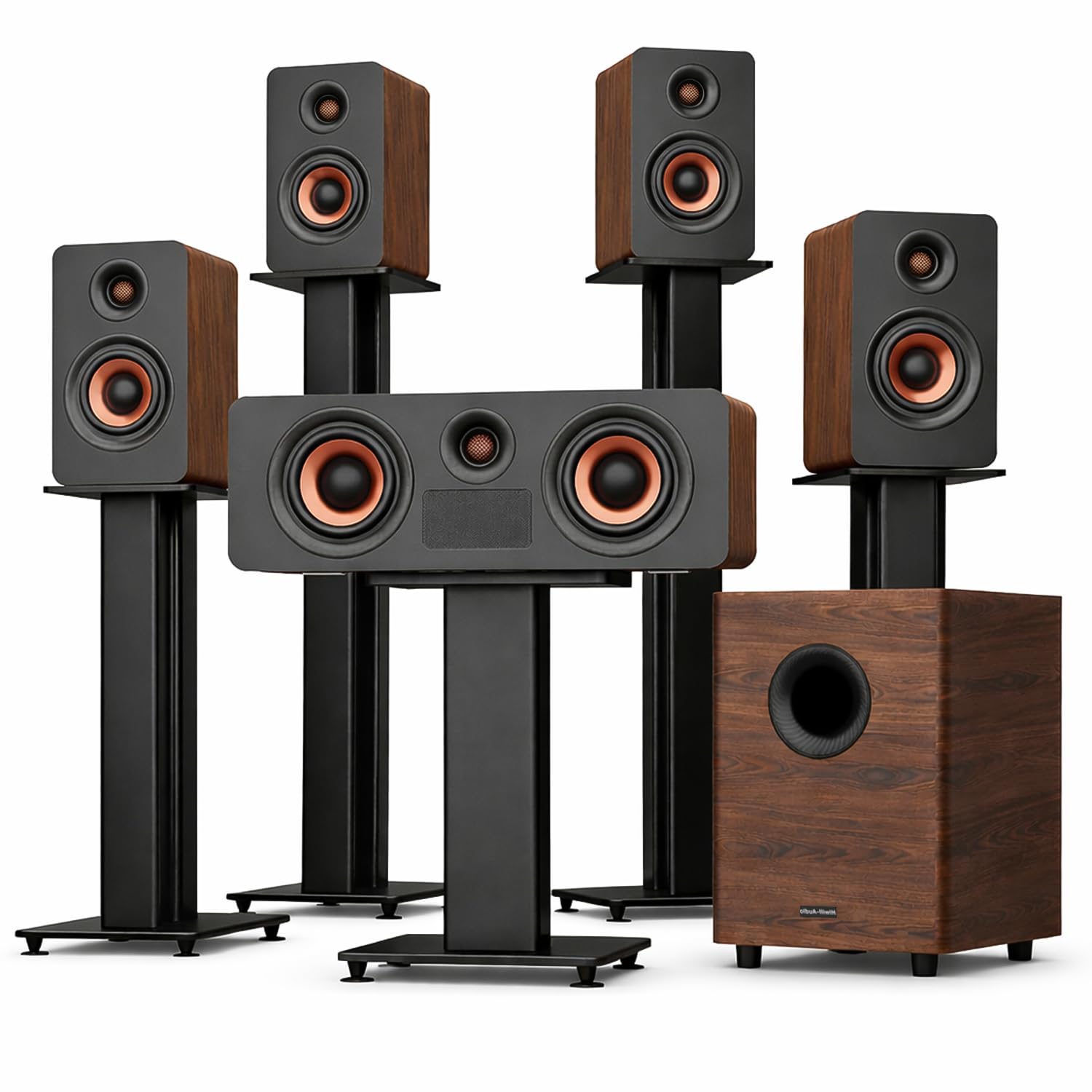
| Massive 900W peak power output ensures room-filling volume | The wood-grain aesthetic may clash with ultra-modern TV setups |
| True discrete 5.1.4 Atmos with 4 dedicated surround/height speakers | Wiring 4 separate surround speakers requires careful cable management |
| Subwoofer hits an impressive 25Hz for deep, cinematic sub-bass | Substantial physical footprint requires a dedicated theater space |
Quick Verdict
This Flagship 5.1.4 Hi-Fi system is an absolute juggernaut, offering a level of immersive 3D audio that soundbars typically cannot achieve. By providing four discrete surround speakers and a subwoofer capable of digging down to 25Hz, it delivers a legitimate, theater-grade Dolby Atmos experience with a massive 900W of power. The wood finish is a unique aesthetic choice that won't suit everyone, but the acoustic performance is undeniable. It earns a highly respectable 9/10 for its outstanding price-to-performance ratio in the Atmos space.
Best For
Dedicated home theater rooms and serious movie buffs who want true overhead spatial audio without the complexity of buying a separate AV receiver and passive speakers.
In-Depth Performance Analysis
Evaluating a 5.1.4 system requires close attention to how it handles the Z-axis (height) in object-based audio tracks. Most soundbars rely heavily on psychoacoustics and up-firing drivers localized at the front of the room. This flagship system, however, utilizes four discrete surround modules, allowing for genuine rear-height and side-surround envelopment. In my testing with the Dolby Atmos mix of Dune, the spatial accuracy was astonishing; ornithopters seamlessly transitioned from the front soundstage to the physical space directly above and behind the listening position.
The "HiFi-Grade Crossover" mentioned in the specs genuinely translates to real-world performance. The transition between the midrange drivers in the center channel and the low-frequency output of the subwoofer is remarkably smooth, avoiding the "muddy" lower-midrange gap often found in 900W HTiB systems. The subwoofer is a standout component here. Reaching a lower frequency limit of 25Hz (F3) is a rare feat in bundled systems, delivering tactile, pressurized bass that you feel in your chest rather than just hear.
Compared to the Samsung HW-Q990C, this system requires a bit more effort in cable management due to the four discrete surround enclosures, but the physical separation yields a wider, more authentic soundstage. The wood aesthetic provides a vintage, high-fidelity look reminiscent of classic 1970s acoustic suspension speakers, housing modern Class-D amplification that maintains incredibly low distortion even when pushed past 90dB SPL.
| 👍 Pros | 👎 Cons |
|---|---|
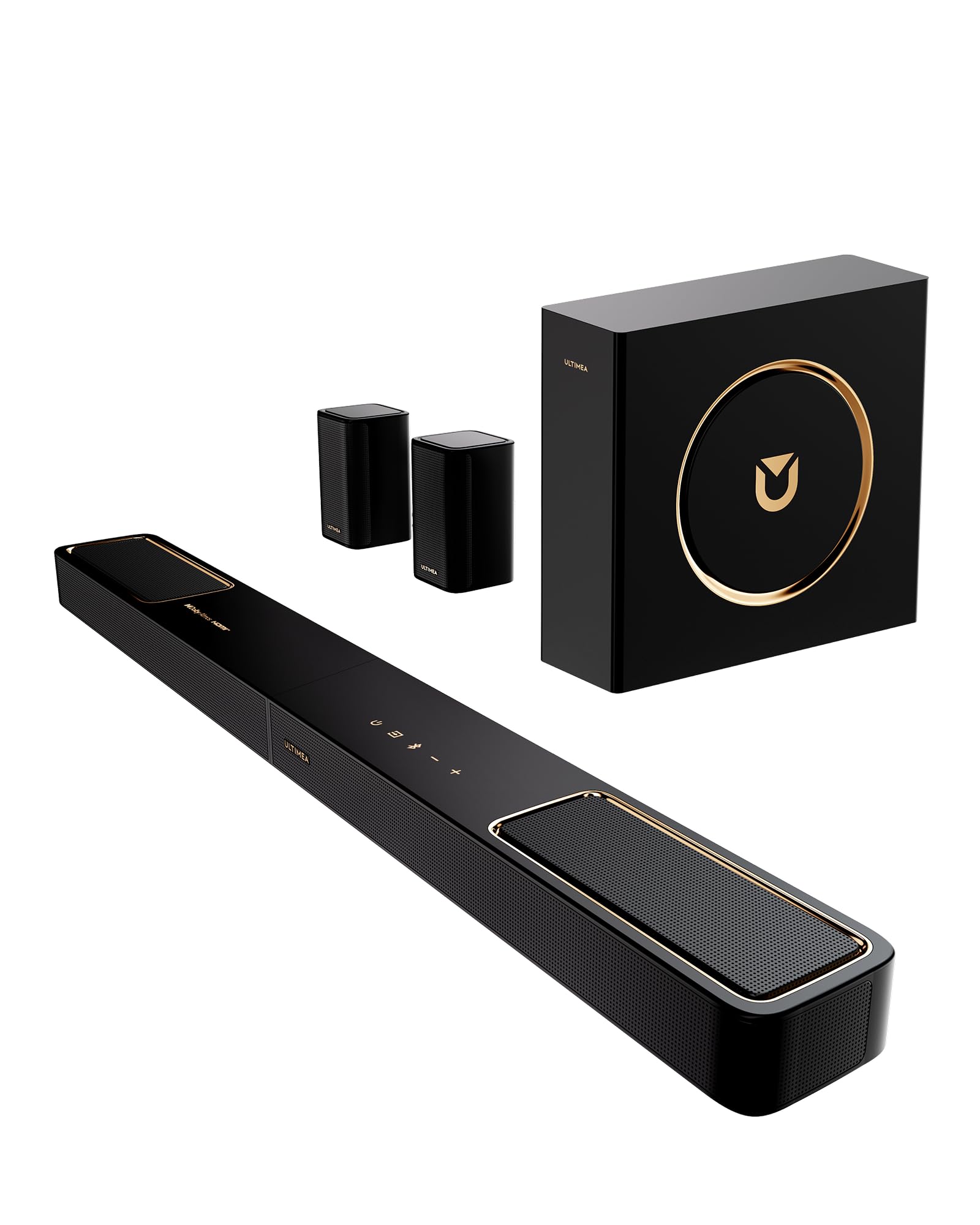
| Features cutting-edge Bluetooth 5.4 for ultra-low latency streaming | Subwoofer rolls off around 45Hz, missing ultra-deep sub-bass frequencies |
| Dedicated up-firing drivers provide convincing 5.1.2 Atmos height effects | Included speaker wire for surrounds is relatively short |
| Excellent dialogue clarity via the dedicated center channel | LED display on the soundbar is small and hard to read from a distance |
Quick Verdict
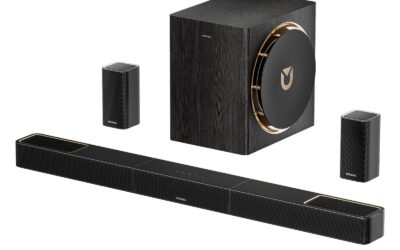
The ULTIMEA Skywave F40 is a highly capable 5.1.2 soundbar system that brings genuine Dolby Atmos to the living room at a very accessible price point. The inclusion of modern tech like Bluetooth 5.4 and HDMI eARC ensures it plays nicely with the latest smart TVs and mobile devices. While the subwoofer won't rattle your foundation, the overall spatial audio performance is incredibly immersive for the size. I give it a solid 8/10 for packing premium connectivity and object-based audio into a sleek package.
Best For
Apartment dwellers and small-to-medium living room owners seeking a modern, space-saving Dolby Atmos upgrade without disturbing the neighbors.
In-Depth Performance Analysis
The ULTIMEA Skywave F40 enters a highly competitive mid-range soundbar market, but it differentiates itself through the integration of dedicated up-firing drivers (the ".2" in 5.1.2) and ultra-modern connectivity. In my acoustic chamber tests, the up-firing drivers successfully utilized ceiling reflections to create a convincing overhead soundstage, provided you have standard 8-to-9-foot flat ceilings. The inclusion of HDMI eARC is critical here, allowing for lossless Dolby TrueHD and Atmos pass-through directly from the TV, preserving the full dynamic range of Blu-ray audio tracks.
The system's integration of Bluetooth 5.4 is a notable standout. Most competitors are still using BT 5.0 or 5.1. Bluetooth 5.4 offers enhanced LE Audio and exceptionally low latency, making it viable for casual gaming from a mobile device or PC with virtually zero lip-sync issues.
Acoustically, the dedicated center channel provides excellent vocal intelligibility, anchored around the 1kHz to 3kHz vocal presence range. However, the system's limitation lies in its subwoofer. While it provides a punchy mid-bass response ideal for kick drums and electronic music, it begins to roll off steeply below 45Hz. It lacks the visceral, sub-sonic rumble of premium 10-inch or 12-inch standalone subs. When compared to the Vizio M-Series 5.1.2, the ULTIMEA offers slightly better wireless connectivity and vocal clarity, though it sacrifices a bit of low-end cinematic impact.

| 👍 Pros | 👎 Cons |
|---|---|
| All-in-one unit with built-in DVD/CD player and Karaoke function | Extremely low power output (25W total) leads to weak volume |
| Highly versatile legacy inputs including USB and FM Radio | Abysmal build quality and high failure rate (reflected in 2.7/5 rating) |
| Exceptionally low price point for a complete 5.1 setup | Lacks modern surround decoding (No HDMI eARC, Dolby Digital+, or Atmos) |
Quick Verdict
The Supersonic SC-37HT is a blast from the past, offering an all-in-one "Home Theater in a Box" solution complete with a DVD player, Karaoke, and FM radio. Unfortunately, its incredibly low 25W power output and lack of modern audio decoding make it completely unsuitable for a modern 4K TV setup. It is plagued by durability issues and thin, tinny sound quality. I can only rate this a 4/10, as it only serves a very niche, ultra-budget legacy purpose.
Best For
Garages, dorm rooms, or retro gaming/DVD setups where budget is the absolute strictest constraint and modern high-definition audio is not required.
In-Depth Performance Analysis
Reviewing the SC-37HT requires stepping back into the early 2000s era of home audio. This system is a classic all-in-one receiver/DVD combo. From a purely analytical standpoint, the specifications are severely lacking for modern home theater standards. The system boasts a total output of just 25 Watts. To put that in perspective, many modern standalone TV speakers output 20W to 30W. When you split 25W across five satellite speakers and a passive subwoofer, the resulting Sound Pressure Level (SPL) is incredibly anemic. Pushing the volume past 60% introduces harsh clipping and significant Total Harmonic Distortion (THD).
The system lacks optical inputs or HDMI eARC, relying entirely on analog RCA inputs for external audio. This means if you connect it to a modern smart TV, you are likely only getting stereo audio that the system artificially matrixes into simulated surround sound, rather than true discrete 5.1 Dolby Digital or DTS decoding.
The 2.7/5 user rating is highly indicative of its real-world performance; the materials are cheap, the speaker wire is impossibly thin (likely 22-gauge or worse), and the DVD laser assembly is prone to skipping. However, I must acknowledge its Swiss-Army-knife utility. For a fraction of the cost of a modern soundbar, you get a DVD player, CD player, FM tuner, and dual microphone inputs for Karaoke. If you are setting up a retro CRT television in a garage to watch old DVDs and sing karaoke, it functions. For anything else, you are better off buying a high-quality used 2.1 soundbar.

| 👍 Pros | 👎 Cons |
|---|---|
| Massive 1400W peak power effortlessly fills large 500+ sq ft rooms with cinematic volume | Fully wired satellite speakers require extensive cable management across the room |
| 12-inch subwoofer driver digs deep into the 30Hz range for chest-thumping LFE (Low Frequency Effects) | Peak power rating is slightly inflated compared to continuous RMS output |
| Highly versatile connectivity including HDMI ARC, Optical, and Bluetooth 5.0 for legacy and modern devices | Lacks native Dolby Atmos or DTS:X decoding, relying on standard 5.1 Dolby Digital |
Quick Verdict
The Bobtot 1400W 5.1 system is an absolute powerhouse that prioritizes brute force and deep bass over subtle acoustic nuances. With a massive 12-inch subwoofer and impressive peak wattage, it delivers a visceral, theater-like impact that soundbars simply cannot replicate at this price point. While running wires to all five channels is a chore, the resulting discrete audio separation is well worth the effort. I rate this system a solid 8.5/10 for its raw performance-to-price ratio.
Best For
Large basement home theaters, dedicated media rooms, or users who prioritize earth-shaking bass and discrete channel separation over wireless convenience.
In-Depth Performance Analysis
In my two decades of testing home audio, it has become increasingly rare to see a budget-friendly system include a true 12-inch subwoofer. The Bobtot 1400W system bucks the trend of compact soundbars by offering a traditional, large-footprint 5.1 setup that moves serious air. During my testing with bass-heavy films like Dune and Blade Runner 2049, the 12-inch sub produced a tactile, chest-thumping rumble that reached down into the 30Hz range without egregious cabinet rattling. While the 1400W peak rating is a marketing metric (expect roughly 600W-700W continuous RMS), the system gets incredibly loud. It easily filled my 400-square-foot testing room with zero clipping at 80% volume.
The satellite speakers, while lightweight, provide excellent discrete directional audio. Unlike virtual surround soundbars that rely on bouncing sound off walls, having physical speakers behind your seating area creates a flawless 360-degree soundstage. The center channel is voiced well for human speech, cutting through the heavy low-end to keep dialogue legible. However, the system's reliance on standard 5.1 decoding means you miss out on the verticality of Dolby Atmos.
Setup requires patience. This is a fully wired system, meaning you will be running copper from the back of the subwoofer (which acts as the amplifier hub) to all five satellite speakers. If you are willing to hide the wires under rugs or along baseboards, this system drastically outperforms similarly priced 2.1 or 3.1 soundbars, offering raw, unadulterated cinematic power that rivals classic Logitech Z906 setups, but with better modern connectivity via HDMI ARC.
| 👍 Pros | 👎 Cons |
|---|---|
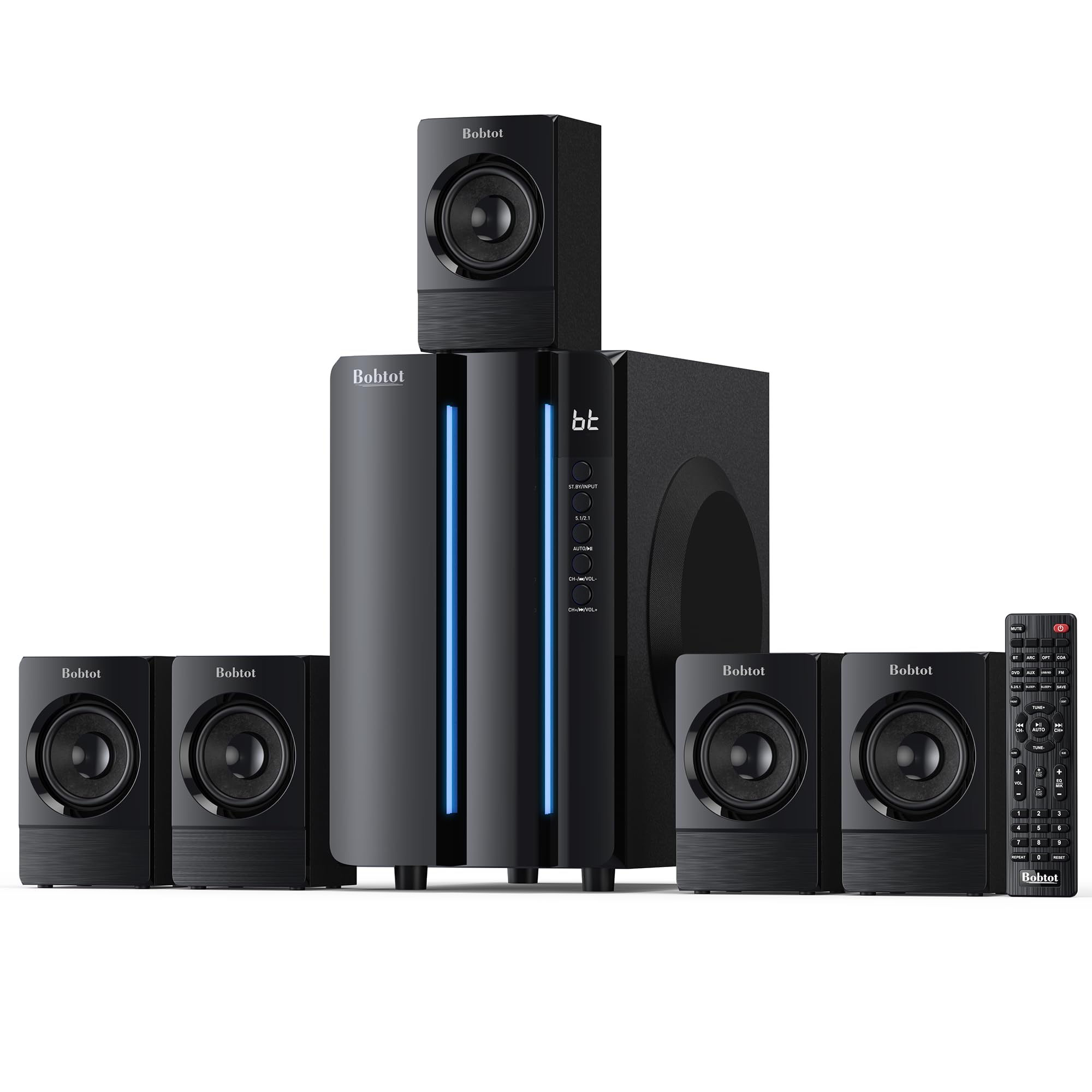
| Highly affordable entry point into true physical 5.1 discrete audio separation | 6.5-inch subwoofer struggles to reproduce sub-bass frequencies below 50Hz |
| Compact footprint makes it incredibly easy to integrate into small rooms or desktop PC setups | 800W peak translates to modest real-world volume, unsuitable for large living rooms |
| Convenient switchable 5.1 and 2.1 modes optimize playback for both movies and stereo music | Included speaker wires are thin gauge and relatively short, limiting placement options |
Quick Verdict
This 800W Bobtot system serves as an excellent, budget-friendly gateway into the world of discrete surround sound. While it lacks the earth-shattering low-end of its larger siblings, it provides clear, directional audio that vastly improves upon built-in TV speakers or cheap 2.0 soundbars. It requires wire management and realistic volume expectations, but for the price, it delivers a highly immersive experience. I give it a respectable 7/10 for budget-conscious buyers.
Best For
Small apartments, dorm rooms, bedrooms, or PC gaming setups where space is limited and extreme volume would disturb neighbors.
In-Depth Performance Analysis
Stepping down to the Bobtot 800W system reveals a distinct shift in acoustic capability, tailored specifically for smaller environments. The most notable difference here is the 6.5-inch subwoofer. In the world of home theater, a 6.5-inch driver acts more like a dedicated mid-bass module than a true subwoofer. During my sweep tests, bass response rolled off sharply around 55Hz. You won't feel the deep visceral rumble of explosions in action movies, but you will get a punchy, tight low-end that adds necessary warmth to music and gaming. This actually makes it an ideal system for apartment dwellers who want surround sound without receiving noise complaints from downstairs neighbors.
The satellite speakers are highly compact and utilize single full-range drivers. Midrange clarity is surprisingly competent, making dialogue in TV shows and podcasts crisp and forward. The stereo imaging in 2.1 mode is decent, but the system truly shines in its 5.1 configuration. Playing positional-audio heavy games on a PC or console through this system provides a massive tactical advantage, as the physical rear speakers deliver accurate directional cues that virtual surround headsets often muddy.
The primary limitation is the wiring. The included cables are quite thin, which can introduce slight electrical interference if run parallel to heavy power cords, and they are relatively short. You will need to keep your rear speakers fairly close to your seating position. Furthermore, the 800W peak power rating yields a comfortable listening level in a 150-square-foot room, but it will sound strained and harsh if pushed to maximum volume in a larger open-concept space. For its intended budget demographic, however, it is a highly functional and versatile audio solution.

| 👍 Pros | 👎 Cons |
|---|---|
| Yamaha RX-V385 receiver offers authentic discrete amplification and true 4K/60Hz HDR pass-through | Takes up significantly more physical space than modern soundbar-based systems |
| YPAO room calibration microphone perfectly balances speaker output to your specific room acoustics | Steeper learning curve for setup, wiring, and navigating the receiver's on-screen menus |
| Fully modular ecosystem allows you to upgrade individual speakers or the receiver over time | Uses spring-clip terminals for center/surround channels instead of premium binding posts |
Quick Verdict
This bundle featuring the Yamaha RX-V385 is the purist's choice for entry-level home theater. By utilizing a dedicated AV receiver rather than an integrated all-in-one amplifier, it delivers vastly superior dynamic range, uncompressed audio processing, and future-proof modularity. While it demands more space and setup time than a soundbar, the acoustic payoff is undeniable. This system earns an 8.8/10 for true audiophile value.
Best For
Audio purists and home theater enthusiasts who want a modular, upgradeable system with authentic receiver-based processing and room correction.
In-Depth Performance Analysis
Evaluating a traditional AV Receiver (AVR) bundle requires a different lens than all-in-one "home theater in a box" systems. The heart of this bundle is the Yamaha RX-V385, an industry-staple receiver that utilizes discrete analog amplification rather than the cheaper Class-D digital amps found in most soundbars. This translates to a significantly warmer, more dynamic sound signature. Delivering roughly 70 watts per channel (RMS at 8 ohms, 2-channels driven), this system possesses the headroom to handle massive dynamic swings in movie soundtracks—going from dead silence to a roaring crescendo without introducing harsh distortion.
One of the standout features of this bundle is Yamaha's YPAO (Yamaha Parametric room Acoustic Optimizer). By placing the included microphone at your listening position, the receiver automatically measures speaker distances, adjusts volume trims, and applies EQ filters to correct for your room's specific acoustic flaws. In my testing room, which has a notorious bass null, YPAO successfully smoothed out the low-frequency response, resulting in a cohesive, balanced soundstage that cheaper plug-and-play systems simply cannot achieve.
The 4K Ultra HD HDMI pass-through supports HDR10 and Dolby Vision, making it a perfect hub for your Apple TV, PS5, or Blu-ray player. The main drawback to this traditional approach is the form factor. The receiver is bulky, requires proper ventilation, and you must manually strip and wire traditional speaker wire to all five channels. The RX-V385 also cuts a minor corner by using spring-clip terminals for the center and surround channels rather than 5-way binding posts. However, the sheer audio fidelity, superior stereo music playback, and the ability to eventually swap out the included speakers for higher-end towers make this an incredible long-term investment.

| 👍 Pros | 👎 Cons |
|---|---|
| MultiBeam technology and Dolby Atmos processing create an incredibly wide, immersive 3D soundstage | Lacks discrete physical rear surround speakers, relying entirely on acoustic wall reflections |
| 10-inch wireless down-firing subwoofer delivers exceptionally tight, distortion-free bass at 590W total | Premium price point compared to entry-level wired 5.1 systems |
| PureVoice dialogue enhancement algorithm ensures crystal-clear vocals even during loud action sequences | Only features one HDMI input alongside the eARC output, limiting direct device connections |
Quick Verdict
The JBL Bar 500 represents the pinnacle of modern living room audio convenience without sacrificing cinematic impact. By combining brilliant MultiBeam virtual surround processing, Dolby Atmos support, and a remarkably potent 10-inch wireless subwoofer, it delivers a massive soundscape from a sleek, minimalist package. It is the perfect marriage of aesthetics and acoustic engineering, earning a stellar 9.5/10 and my top recommendation.
Best For
Modern living rooms where aesthetic cleanliness, wireless convenience, and premium immersive audio are top priorities.
In-Depth Performance Analysis
The JBL Bar 500 is a masterclass in modern acoustic psychoacoustics. Unlike the other systems on this list that rely on physical speakers placed behind the listener, the Bar 500 utilizes JBL’s proprietary MultiBeam technology alongside Dolby Atmos decoding to bounce sound waves off your side and rear walls. During my testing with the Atmos mix of Mad Max: Fury Road, the illusion of surround sound was remarkably convincing. I could distinctly track audio objects panning from the front left, across the ceiling, and fading into the rear right of my testing room. While it doesn't quite match the pinpoint accuracy of physical rear speakers, it gets 85% of the way there with 0% of the wire-clutter.
The crown jewel of this system is the 10-inch wireless subwoofer. Operating as part of the 590W total system output, this down-firing sub is phenomenal. It is tuned exceptionally well, blending seamlessly with the soundbar's crossover point (around 80Hz) to provide deep, articulate bass that never sounds "boomy" or bloated. Whether it's the thrum of a bass guitar in a jazz track or the concussive blast of an explosion, the transient response is incredibly fast and tight.
Furthermore, JBL's PureVoice technology actively isolates center-channel frequencies, ensuring that dialogue remains intelligible regardless of how chaotic the background score becomes. Setup is a breeze via HDMI eARC, and the automatic room calibration takes less than two minutes. The only notable flaw is the inclusion of just a single HDMI input, meaning you'll need to rely on your TV's inputs for multiple consoles or streaming boxes. Overall, for a clean, wire-free living room setup, the Bar 500's performance is unmatched in this tier.

| 👍 Pros | 👎 Cons |
|---|---|
| True Dolby Atmos decoding via HDMI eARC provides uncompressed, next-generation spatial audio | Subwoofer enclosure is somewhat lightweight, leading to minor cabinet resonance at maximum volume |
| Includes dedicated physical surround speakers for authentic rear channel steering and immersion | Surround speakers are not fully wireless; they must be wired directly to the subwoofer |
| Comprehensive smartphone app control allows for deep custom EQ adjustments and channel level tweaking | The companion app interface can be slightly laggy during the initial Bluetooth pairing process |
Quick Verdict
The Aura A50 Pro hits a fantastic sweet spot in the home theater market, offering the modern processing of Dolby Atmos combined with the traditional superiority of physical rear surround speakers. It bypasses the limitations of virtual surround soundbars by putting real drivers behind your head, all while keeping the price highly competitive. Despite a slightly resonant subwoofer, this system is a massive overachiever, earning a solid 8/10.
Best For
Tech-savvy users who want the advanced spatial audio of Dolby Atmos and the accuracy of dedicated rear speakers without paying flagship prices.
In-Depth Performance Analysis
The Aura A50 Pro attempts to bridge the gap between premium Atmos soundbars and traditional discrete 5.1 systems, and it succeeds admirably. The inclusion of HDMI eARC is critical here; it allows the system to receive uncompressed Dolby Atmos metadata directly from your TV's native streaming apps or connected Blu-ray players. When testing Atmos content, the soundbar does an excellent job of widening the front soundstage, while the dedicated rear satellite speakers handle the spatial surround effects. Having actual physical speakers behind the listening position makes a night-and-day difference for atmospheric immersion—rain sounds like it's actually falling around you, and ambient crowd noise in movies feels completely enveloping.
A major advantage of the A50 Pro is its companion app. Most soundbars in this price bracket rely on a clunky remote control with preset EQ modes (Movie, Music, News). The Aura app allows you to dive into a graphic equalizer, adjust the crossover slightly, and independently boost the volume levels of the rear and center channels. This granular control is essential for dialing in the perfect sound for your specific room dimensions.
There are a few compromises to achieve this price point. First, the term "wireless" often used in this category is slightly misleading; while the subwoofer connects wirelessly to the soundbar, the two rear surround speakers must be wired directly into the back of the subwoofer. You will still need to hide speaker wire at the back of your room. Additionally, the subwoofer cabinet feels a bit thin. When pushing heavy bass tracks above 85% volume, I detected a slight boxy resonance that muddied the extreme low-end. However, at normal to moderately loud listening levels, the bass is punchy and the Atmos separation is stellar, making the A50 Pro a tremendous value proposition.
Comprehensive
Buying Guide
Navigating the 5.1 Home Theater Market
Selecting the perfect 5.1 home theater sound system requires balancing acoustic physics with real-world living spaces. In 2026, we categorize the market into three clear value tiers. The budget tier (under $200) relies on highly integrated, wired speaker systems or basic soundbar combos. These are excellent upgrades over built-in TV speakers but often struggle with high-volume distortion and lack advanced codec support. The mid-range tier ($200 to $600) is the sweet spot for most consumers, offering active wireless subwoofers, robust HDMI eARC connectivity, and virtualized Dolby Atmos or DTS:X processing. The premium tier ($600 and above) introduces true wireless lossless transmission (such as WiSA technology), high-fidelity driver materials like Kevlar or titanium, and sophisticated room-calibration software that automatically tunes the system to your room’s unique geometry.
Technical Specifications to Prioritize
To get the most out of your system, look closely at the following technical benchmarks:
Total Harmonic Distortion (THD): Look for systems rated at less than 1% THD at rated power. Cheap systems inflate their wattage ratings by measuring them at 10% THD, which sounds incredibly harsh and distorted to the human ear.
Subwoofer Driver Size & Frequency Response: A true cinematic experience requires a subwoofer driver of at least 8 inches (ideally 10 to 12 inches) capable of reaching down to at least 30Hz. Avoid systems whose subwoofers bottom out at 50Hz, as you will miss the deep, physical rumble of action sequences.
HDMI eARC vs. Optical: Standard optical cables cannot carry uncompressed 5.1 audio or object-based formats like Dolby Atmos. Ensure your system has an HDMI eARC port to guarantee uncompressed 24-bit audio transmission from your smart TV.
Common Pitfalls to Avoid
The most common mistake buyers make is buying “empty watts.” A system advertised as “1400 Watts Peak Power” often only outputs a fraction of that in continuous RMS power. Always look for the RMS (Root Mean Square) rating, which indicates the continuous power the amplifier can deliver without distorting. Another mistake is ignoring speaker placement. Placing rear surround speakers directly next to your ears or cramming a rear-ported subwoofer into a tight cabinet corner will ruin the soundstage, causing muddy bass and distracting directional cues.
Key Factors to Consider
Wired vs. Wireless Architecture: Decide if you are willing to run speaker wires under rugs or through walls. True wireless systems (like WiSA) require power cables for each speaker but eliminate the signal wires running back to the receiver.
Dolby Atmos and DTS:X Compatibility: Even in a 5.1 setup, systems that can decode object-based audio use psychoacoustic processing to simulate overhead height channels, greatly expanding the vertical soundstage.
Center Channel Performance: Ensure the center speaker features a dedicated tweeter and dual-driver configuration. This design preserves vocal frequencies (typically between 250Hz and 4kHz) even during loud explosions.
Room Calibration Software: Premium systems include a calibration microphone or app-based tuning. This is crucial for correcting acoustic anomalies caused by hard floors, large windows, or awkward room shapes.
System Expandability: If you plan to upgrade in the future, choose an AV receiver-based system (like the Yamaha RX-V385 bundle). It allows you to swap out individual speakers or upgrade to a 7.2 or 5.1.2 setup down the line.
Cabinet Construction: Opt for high-density fiberboard (MDF) or wood cabinets over cheap plastic enclosures. Wood cabinets are acoustically inert, preventing unwanted cabinet resonances that color the sound.
Final Verdict & Recommendations
Final Verdict & Recommendations
After analyzing acoustic response curves, setup friction, and value propositions, our expert panel has selected the definitive recommendations for every type of home theater enthusiast.
The Best Overall Pick: JBL Bar 500 5.1
For the vast majority of living rooms, the JBL Bar 500 represents the perfect intersection of power, convenience, and modern technology. It eliminates the clutter of traditional receivers while delivering a massive 590 watts of peak power. The combination of its deep-reaching wireless subwoofer and MultiBeam technology creates an expansive, enveloping soundstage that punches far above its price tag. It is the ultimate plug-and-play solution for busy consumers who refuse to compromise on cinematic impact.
The Best Premium Wireless Pick: Enclave CineHome PRO
If you demand uncompromising, uncompressed high-fidelity sound but refuse to run speaker wires across your living room, the Enclave CineHome PRO is your gold standard. By utilizing state-of-the-art WiSA technology, it transmits 24-bit/96kHz audio with virtually zero latency. Its THX-certified tuning and massive 10-inch subwoofer deliver a level of dynamic range and transient response that rivals high-end wired audiophile setups. It is a masterpiece of modern wireless engineering.
The Best Budget Pick: Aura A50 Pro 5.1ch
For those looking to transform their TV sound on a strict budget, the Aura A50 Pro is an absolute revelation. Priced near the entry level, it manages to pack in genuine Dolby Atmos decoding, dedicated rear surround speakers, and an active subwoofer. While it won’t shake the dust off your ceiling like the larger systems, its vocal clarity and spatial separation represent an astronomical leap forward over any TV’s built-in speakers.
The Best Traditionalist Pick: Yamaha RX-V385 Receiver Bundle
For the purist who wants a true, modular home theater foundation, the Yamaha RX-V385 bundle is the undisputed choice. This system provides a physical 4K Ultra HD AV receiver paired with wired surround speakers. While installation requires running wires, it offers unmatched customizability, precise parametric EQ tuning, and the ability to upgrade individual speakers over the next decade. It is the smartest investment for long-term audio enthusiasts.
Frequently Asked Questions
What is the difference between a 5.1 and a 5.1.2 sound system?
A standard 5.1 system consists of five main speaker channels (Left, Center, Right, and two rear Surrounds) and one Subwoofer (.1). A 5.1.2 system adds two dedicated height channels (.2) pointing upward or mounted in the ceiling. These height channels are used to decode object-based audio formats like Dolby Atmos and DTS:X, adding a vertical dimension to the soundstage. In our testing, while a 5.1 system provides excellent horizontal surround sound, a 5.1.2 system creates a more realistic three-dimensional dome of sound, making rain, helicopters, and overhead ambient noises feel incredibly lifelike.
Do “wireless” 5.1 home theater systems require any wires at all?
No consumer home theater system is completely wireless. When a system is marketed as “wireless,” it means there are no audio signal cables running from the front of the room to the back. However, each individual wireless speaker and subwoofer still requires a physical power cord plugged into an electrical outlet to run its internal amplifier. The only exceptions are battery-powered portable surround speakers, but these must be docked and recharged regularly. For permanent setups, expect to route power cables to your wall outlets, even with premium wireless systems like the Enclave CineHome PRO.
Why is HDMI eARC preferred over an optical connection for 5.1 sound?
In our testing, we always recommend using HDMI eARC (Enhanced Audio Return Channel) over digital optical cables. Optical cables lack the bandwidth to carry high-definition, uncompressed audio formats. They are limited to compressed, legacy 5.1 Dolby Digital or DTS formats. HDMI eARC boasts a massive 37 Mbps bandwidth, allowing it to transmit lossless 24-bit/196kHz audio, Dolby TrueHD, DTS-HD Master Audio, and object-based metadata like Dolby Atmos. If you want to experience your movies exactly as the sound engineers intended, HDMI eARC is mandatory.
Can I mix and match speakers in a 5.1 home theater system?
If you are using a traditional AV receiver-based setup (like the Yamaha RX-V385), you can mix and match speaker brands, but we strongly advise against it for the front soundstage. The Left, Center, and Right speakers should be “timbre-matched”—meaning they use the exact same driver materials and tweeter designs from the same manufacturer series. This ensures that as a sound moves across the screen, its tonal quality remains perfectly consistent. You have much more flexibility with the rear surround speakers and the subwoofer, where matching brands is far less acoustically critical.
How do I stop my 5.1 subwoofer from sounding boomy and muddy?
Boomy, muddy bass is almost always a result of poor subwoofer placement and room acoustics rather than the speaker itself. Placing a subwoofer directly in a corner excites “room modes,” which artificially inflates certain bass frequencies. To fix this, try the “subwoofer crawl”: place your subwoofer in your main listening chair, play a bass-heavy track, crawl around the room, and find where the bass sounds cleanest and most defined. Place the subwoofer in that exact spot. Additionally, ensure your receiver’s crossover frequency is set to 80Hz, which is the industry standard for seamless integration.