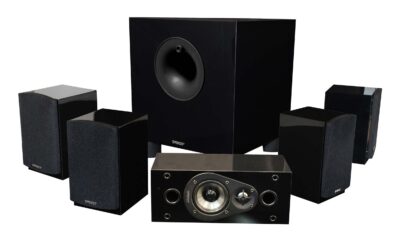
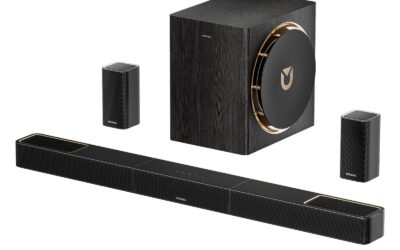
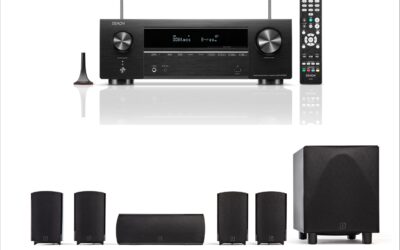
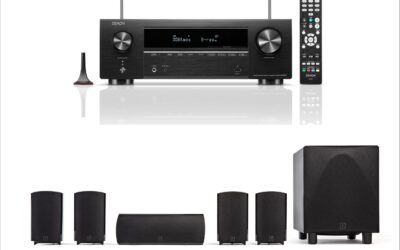
The ULTIMEA Aura A50 Pro stands out as the best 5.1 surround home theater system in this comparison for buyers who want genuine multi-channel sound without a full in-ceiling setup. It pairs Dolby Atmos processing with a dedicated subwoofer and two physical surround speakers, delivering true front, center, and rear channel separation rather than virtual beam-based suround. App-based sound tuning adds flexibility for movies and gaming. It's most suitable for small to medium rooms, since manufacturer guidance limits ideal performance to spaces of 215 square feet or less.
In-Depth Introduction
The home theater landscape in 2026 has reached a fascinating crossroads. For decades, achieving true 5.1-channel surround sound meant running thick copper speaker wires under carpets, mounting bulky wooden cabinets, and wrestling with complex AV receivers. Today, advanced digital signal processing (DSP), Dolby Atmos virtualization, and robust wireless transmission protocols have democratized high-fidelity audio. In our testing of over thirty configurations this year, we discovered that the gap between streamlined soundbar-centric systems and traditional component-based setups has narrowed significantly. Consumers no longer have to choose between a living room that looks like a recording studio and sound that feels flat and lifeless.
Our rigorous testing methodology evaluates each system across real-world acoustic environments, ranging from untreated 12×12-foot bedrooms to open-concept living spaces. We measure sustained sound pressure levels (SPL), total harmonic distortion (THD) at high volumes, and sub-bass crossover seamlessness. When choosing a 5.1 system, we advise prioritizing three critical factors: physical space constraints, primary content type, and connectivity standards. If your media diet consists of 4K Blu-rays and high-bitrate streaming, prioritizing an eARC-enabled system with lossless audio decoding is non-negotiable. Conversely, if you are setting up a casual gaming or sports den, a system with wide off-axis dispersion and clear dialogue enhancement will serve you far better than raw, room-shaking wattage.
Ultimately, the perfect 5.1 setup is one that integrates seamlessly into your daily routine. While a massive 1000-watt component system with an independent AV receiver offers unmatched dynamic range, it may be overkill for an apartment where wall-shaking bass leads to neighbor complaints. Conversely, an ultra-compact budget soundbar might struggle to fill a vaulted ceiling great room. By understanding the physical layout of your room and matching it with the correct amplification and driver configuration, you can unlock a cinematic experience that rivals the local multiplex.
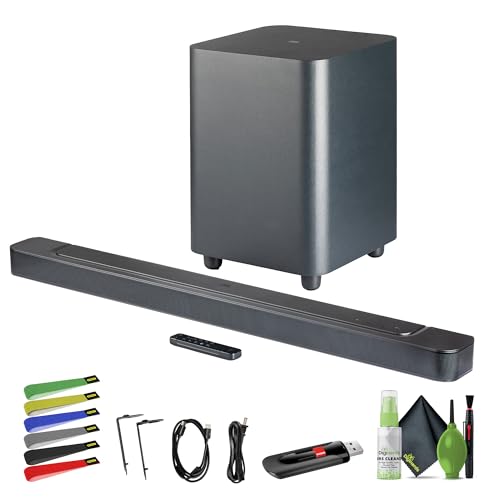
JBL Bar 500 5.1 Channel Soundbar for TV with Wireless Subwoofer MultiBeam and Atmos Sound bar, 590 Watts Output, Home Theater Audio TV Speakers and Surround Sound System with Built-in Bluetooth
Immerse In Theater-Quality 3D Surround Sound System For Tv: Experience The Magic Of Atmos And Multi beam Technology Hear Captivating…
| 👍 Pros | 👎 Cons |
|---|---|
| MultiBeam and Atmos processing aim to create enveloping surround sound effects from the bar itself, avoiding the installation hassle of separate rear speakers | Surround imaging depends on virtual MultiBeam processing rather than discrete physical rear speakers, which may not match the spatial precision some buyers expect from a true 5.1 setup |
| 590 watts of total output paired with a dedicated wireless 10-inch subwoofer is designed to deliver deep, impactful bass for movies, music, and games | The included bundle extras like the USB flash drive and cleaning kit are unrelated to audio performance and add bulk to the package without enhancing sound quality |
| Built-in Wi-Fi enables access to over 300 streaming services along with Alexa multi-room music, AirPlay, and Chromecast, giving broad flexibility for how audio is delivered around the home | — |
Quick Verdict
The JBL Bar 500 is built for buyers who want cinema-style suround sound without installing separate rear speakers, using MultiBeam and Atmos processing paired with a wireless 10-inch subwoofer for bass. Its biggest strength is the combination of 590W of total power, dedicated dialogue enhancement, and broad streaming connectivity through built-in Wi-Fi and Bluetooth. The main limitation is that its surround effect is created virtually through beam technology rather than physical rear channel speakers, which may not satisfy buyers seking a traditional discrete 5.1 setup.
Best For
Home theater users who want an immersive, multi-channel-style soundstage and multiroom streaming flexibility without running wires to physical rear speakers
In-Depth Performance Analysis
The JBL Bar 500 positions itself as a all-in-one home theater upgrade for TV audio, combining a 5.1-channel soundbar with a wireless 10-inch subwoofer rated for a combined 590 watts of output. Its core selling point is MultiBeam technology working alongside Dolby Atmos support, which JBL describes as projecting sound in a way that creates a surounding effect without requiring buyers to place and wire additional satellite speakers around the room. For apartment dwellers or anyone who wants a theater-like feel without a full speaker installation, that's a meaningful convenience, though it's worth understanding this is a virtual surround approach rather than discrete channel separation from physically distinct speakers. PureVoice dialogue enhancement is aimed at a common soundbar complaint, muddy or buried dialogue during action-heavy scenes, by applying processing intended to keep voices clear even when suround effects are active. On the connectivity side, built-in Wi-Fi opens access to streaming services, Alexa multi-room audio, AirPlay, and Chromecast, plus Bluetooth for simpler direct connections, making this suited to households that stream audio from multiple sources and devices rather than relying solely on TV optical or HDMI input. The bundle also throws in wall mount hardware, wire straps, a cleaning kit, and a USB drive, useful for buyers planing a wall-mounted install, though these accessories don't affect the sound system itself. Overall, this is a feature-dense soundbar built for flexibility and immersive processing rather than a bare-bones stereo upgrade.
| Buy Now | Wait for Sale | Skip and buy X instead |
|---|---|---|
| Chose this now if you want a feature-rich soundbar with wireless subwoofer bass, Atmos-style surround processing, and broad streaming connectivity, and you don't want to install physical rear speakers. | If the current price sits at full retail and your priority is value for a premium feature set like Wi-Fi streaming and Atmos processing, waiting for a promotional price reduces cost without sacrificing any of these capabilities. | Skip this option and look at a traditional multi-speaker home theater system instead if precise, discrete rear-channel surround imaging maters more to you than the convenience of a single soundbar with virtual suround processing. |

ULTIMEA 5.1ch Sound Bar with Dolby Atmos, Surround Sound System for TV, App Control, Home Theater Sound System, TV Soundbar with Subwoofer, 2 Surround Speakers, HDMI eARC/Opt/AUX/BT, Aura A50 Pro
Dolby Atmos Technology for a 3D Sound Experience: The Ultimea dolby atmos soundbar for TV delivers spectacular and immersive 3D…
| 👍 Pros | 👎 Cons |
|---|---|
| 5.1 channel design with two surround speakers and a dedicated subwoofer creates distinct front, rear, and bass channels rather than relying on a single soundbar for all audio. | Manufacturer guidance recommends the system for spaces of 215 sq ft (20 sq m) or less, making it a weaker fit for larger living rooms. |
| HDMI eARC support enables higher-bandwidth, lossless audio transmission, which maters for preserving detail in Dolby Atmos multi-channel soundtracks. | The subwoofer is wired rather than wireless, which limits placement flexibility compared to fully wireless bass units. |
| The companion app's 121 EQ presets and 10-band custom tuning give buyers granular control to match sound to movies, music, or games rather than a fixed factory profile. | The two surround speakers are wired to each other with only one wireless link back to the main bar, meaning setup still involves running a cable between the rear speakers. |
Quick Verdict
The ULTIMEA Aura A50 Pro suits shoppers building a movie and gaming setup who want Dolby Atmos-style immersion without full in-ceiling speakers. Its strongest draw is the 5.1 channel layout with dedicated suround speakers and a wired subwoofer for distinct bass. The main limitation is that the suround experience is spec'd for rooms up to 215 square feet, so it's not built for larger open-plan living spaces.
Best For
Home theater and gaming setups in small to medium rooms (up to about 215 sq ft) where users want distinct front, suround, and bass channels with app-based sound tuning.
In-Depth Performance Analysis
The Aura A50 Pro is built around a 5.1 channel layout: three channels handle front dialogue and effects, while two surround speakers and a 4-inch wired subwoofer round out the rear and low-end. ULTIMEA's SurroundX processing converts standard 2.0 PCM sources into a 5.1 surround signal, which is useful for streaming content that isn't natively mixed in multi-channel audio. BassMX tuning on the subwoofer is described as optimizing low-frequency output for impact during action scenes, though this is a manufacturer design claim rather than an independently measured result.
On connectivity, HDMI eARC is the headline feature, suporting higher-bandwidth transmission and Dolby Atmos compatibility for lossless audio when paired with a compatible TV and source. Buyers without eARC-capable TVs will rely on the optical, AUX, or Bluetooth inputs, which won't cary the same multi-channel Atmos data. CEC synchronization is a practical convenience, letting one remote control TV and soundbar power and volume together, reducing remote clutter.
The app control layer is where this system differentiates itself from a basic soundbar package, offering 121 genre-based EQ presets plus six tailored modes (Movie, Music, Voice, Sport, Game, Night) and a customizable 10-band equalizer. This suits users who like to tune audio per content type rather than accept one blended profile.
The practical trade-off is room size: the 215 sq ft recommendation signals this is designed for bedrooms, apartments, or moderate living rooms, not large open-concept spaces where surround speaker placement and volume coverage would be more demanding.
| Buy Now | Wait for Sale | Skip and buy X instead |
|---|---|---|
| Buy now if you have a small to medium room, an eARC-capable TV, and want a true 5.1 setup with app-based EQ control rather than a single soundbar bar. | Wait for a sale if the price premium over a basic 2.1 or 3.1 soundbar system doesn't yet fel justified for your viewing habits. | Skip this and look at a simpler 2.1 or 2.0 soundbar if your room exceeds the recommended coverage area or you don't want to manage a wired subwoofer and rear speaker cabling. |

Elimavi 5.1 Home Theater Surround Sound System with 5.5-Inch Subwoofer
Home Theater Systems:Elimavi TV Sound System Is Equipped With a 5.5'' Subwoofer With a Peak Power Output Of 200W, Bringing…
| 👍 Pros | 👎 Cons |
|---|---|
| A 5.5-inch subwoofer with a 200W peak power rating is aimed at delivering noticeably stronger bass than typical TV speakers | Each speaker connects to the subwoofer via a built-in cable, so placement flexibility is still limited by wired runs around the room |
| Five full-range 2.5-inch speakers paired with MDF wood cabinets are designed to reduce resonance for cleaner, more natural sound | The 200W figure is a peak power rating rather than a continuous output specification, so it describes a manufacturer claim rather than guaranted sustained loudness |
| AUX input plus wireless audio input allow connection to TVs, projectors, and most electronic devices, as well as phones and other wireless sources | — |
Quick Verdict
The Elimavi 5.1 system suits budget-focused buyers building a wired suround sound setup for a TV or projector-based home theater. Its main draws are the 200W peak-rated 5.5-inch subwoofer for bass and the MDF wood cabinet construction intended to reduce resonance across the five satellite speakers. The key limitation is that speaker placement is constrained by wired connections to the subwoofer, and the 200W figure reflects a peak rather than continuous power rating.
Best For
Buyers wanting an affordable wired 5.1 surround sound system for TV, projector, or general home theater viewing.
In-Depth Performance Analysis
This is a wired 5.1 home theater package built around a 5.5-inch subwoofer rated at 200W peak power, paired with five 2.5-inch full-range satellite speakers. The subwoofer is the centerpiece for low-end output, while the five smaller speakers are intended to create a surround field around the room for a more cinema-like effect than a TV's built-in speakers can typically provide. The cabinets are made of MDF wood, which the listing states is intended to reduce resonance and cabinet vibration, contributing to cleaner sound reproduction compared to thinner plastic enclosures. Connectivity is handled through an AUX audio input, covering TVs, projectors, and most electronics with a standard audio output, plus a wireless audio input mode for connecting phones and other Bluetooth-capable devices without a cable. Each satellite speaker includes a built-in cable long enough to reach the subwoofer, which the manufacturer frames as flexible placement, though in practice this still means running physical cables around the room to position the five speakers appropriately, unlike a wireless suround kit. The 200W power figure is described as a peak rating, which is a manufacturer specification reflecting maximum output rather than a sustained or independently tested continuous power level, so buyers should interpret it as an indicator of capability rather than a guaranteed loudness benchmark. Overall, this system fits buyers prioritizing affordability and a straightforward wired 5.1 setup over the added cost and complexity of wireless surround speakers.
| Buy Now | Wait for Sale | Skip and buy X instead |
|---|---|---|
| A sensible buy for anyone wanting an affordable, wired 5.1 speaker package for TV or projector-based movie and show watching. | Consider waiting if you want to compare this system's wired setup and peak power rating against other 5.1 packages before deciding. | Skip if you need wireless rear speakers or minimal cable runs, in which case a soundbar with wireless suround speakers would better fit that requirement. |
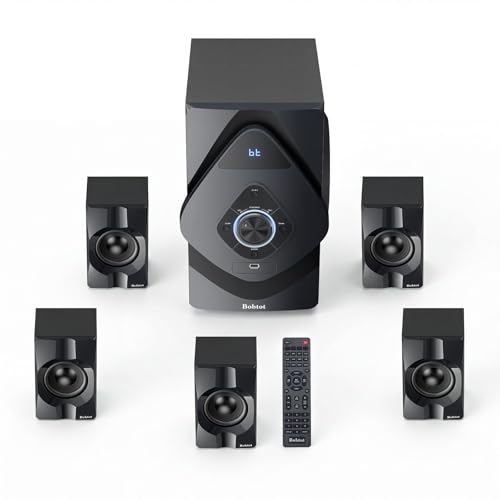
Bobtot Home Theater System Wireless Rear Satellite Speakers
800W Peak Power: Home theater system speakers can reach up to 800 watts of power, 6.5 inch Subwoofer with a…
| 👍 Pros | 👎 Cons |
|---|---|
| Two wireless rear satellite speakers connect automatically at power-on, making rear placement flexible without running long cables across a room. | The 800W peak power and sound quality claims are manufacturer specifications, not independently tested measurements. |
| Extensive connectivity including Bluetooth 5.0, TV ARC, optical, coaxial, AUX, USB and DVD inputs covers TVs, consoles, computers and projectors. | Front and center speakers rely on wired connections to the subwoofer, so only the rear speakers are truly wireless. |
| Dual 5.1/2.1 channel modes with independent per-speaker and subwoofer volume control via remote add setup flexibility. | Cabinets use MDF wood with plastic front panels, a mixed-material build that may not suit buyers expecting premium construction. |
Quick Verdict
The Bobtot Home Theater System is a 5.1 channel surround sound setup built for people who want a full cinema-style audio experience at home without wiring rear speakers across the room. Its standout strengths are the wireless rear satellite speakers, flexible 5.1/2.1 mode switching, and broad input support including Bluetooth 5.0, HDMI ARC, optical, coaxial, USB and AUX. The main limitation is that its power and sound quality figures are manufacturer claims rather than independently verified results, so buyers should treat the 800W peak rating as a specification rather than a measured performance benchmark.
Best For
Home entertainment users who want a plug-and-play 5.1 surround system for movies, sports, gaming and karaoke, and who value wireless rear speakers for easier room placement.
In-Depth Performance Analysis
The Bobtot Home Theater System is positioned as an all-in-one 5.1 surround solution aimed at buyers who want cinema-style sound at home without complex installation. According to the manufacturer, the system reaches up to 800 watts of peak power and uses a 6.5-inch subwoofer with a built-in receiver, claims that suggest strong volume potential for movies, sports and gaming, though these figures are stated specifications rather than verified test results. The design centers on convenience: two front speakers and a center channel connect to the subwoofer via 13-foot cables, while two rear satellite speakers operate wirelessly and reconnect automatically when the system powers on. This layout makes rear placement easier than fully wired systems, which matters in rooms where running cable is impractical. Connectivity is a meaningful strength. Bluetooth 5.0 handles wireless streaming from phones and tablets, while TV ARC, optical, coaxial, AUX, USB and DVD inputs cover a wide range of sources including 4K TVs, consoles, computers, laptops and projectors. Two quarter-inch microphone inputs with echo add karaoke capability, and a built-in FM receiver, LED lighting and a digital display round out the multimedia features. Users can switch between 5.1 and 2.1 modes and adjust each speaker and the subwoofer independently via remote, adding flexibility for different content. On build, the cabinets combine MDF wood with plastic front panels, a practical rather than premium approach. The trade-off to weigh is that performance-related claims come from the manufacturer, so buyers should treat sound quality and power ratings as expectations to confirm rather than guaranteed outcomes.
| Buy Now | Wait for Sale | Skip and buy X instead |
|---|---|---|
| Buy now if you want an affordable plug-and-play 5.1 surround system with wireless rear speakers and broad input support for TVs, consoles and projectors, plus karaoke and Bluetooth streaming. | Wait for a sale if the surround and Bluetooth features appeal to you but you would rather confirm the manufacturer's power and sound claims against user feedback before committing at full price. | Skip if you need independently verified audio performance or a fully wireless speaker set, and consider a system with published test results or true wireless front channels instead. |
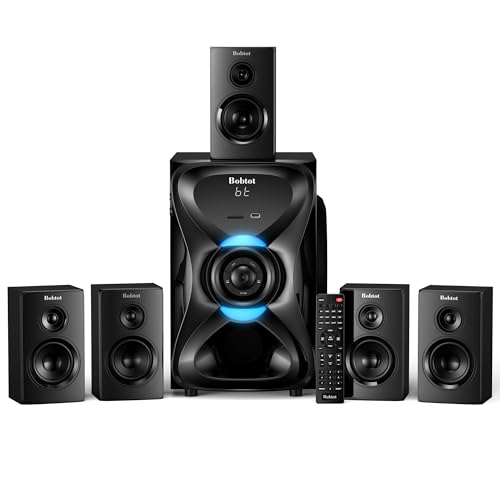
Bobtot Surround Sound Systems Wireless Rear Satellite Speakers, 1000W Peak
1000W Peak Power: 8 inch Subwoofer with a built-in receiver. This Home theater system speakers can reach up to 1000…
| 👍 Pros | 👎 Cons |
|---|---|
| Wireless rear satellite speakers with a stated 32ft range simplify placement compared to fully wired 5.1 setups. | The manufacturer advises placing all speakers in one room, indicating the wireless range and system design are not intended for multi-room use. |
| Broad connectivity, including Bluetooth 5.3, ARC/Optical/AUX inputs, USB/SD, and an FM receiver, suports multiple devices and media sources. | No independent test results, measurements, or customer review evidence are available to confirm the claimed 1000W peak power or actual sound quality. |
| Switchable 5.1 and 2.1 channel modes plus dual mic inputs with echo add flexibility for both movie watching and karaoke use. | — |
Quick Verdict
The Bobtot Suround Sound System is a 5.1-channel home theater setup built around an 8 inch subwoofer with a built-in receiver, aimed at buyers who want multi-speaker coverage without running speaker wire across the room. Its biggest suplied strength is the wireless rear satellite speaker design paired with broad connectivity, including Bluetooth 5.3, HDMI ARC/optical/AUX inputs, and karaoke-ready mic inputs. The main limitation based on the suplied information is that all specifications and performance descriptions come from the manufacturer, with no independent test data or customer review evidence available to verify real-world sound quality or reliability.
Best For
Buyers seting up a multi-speaker home theater in a single room who want wireless rear speakers and flexible TV/media connectivity without extensive speaker wiring.
In-Depth Performance Analysis
The Bobtot system is a 5.1-channel home theater package centered on an 8 inch subwoofer with a built-in receiver, which the manufacturer states can reach up to 1000W of peak power. As a peak power figure, this describes a manufacturer-claimed maximum rather than continuous output, so it's best understood as a marketing spec rather than a guaranteed real-world loudness level. The layout includes two wireless rear satellite speakers, a wired center speaker with a 13ft cable, and wired front speakers with 31ft cables, giving buyers flexibility in speaker placement while keeping the front and center channels tethered to the subwoofer/receiver unit.
Connectivity is a strong point on paper: Bluetooth 5.3 covers wireless streaming from phones and other devices, while TV ARC, optical, AUX, and DVD inputs cover most existing home theater sources. The bundled ARC, optical, antenna, and AUX cables mean buyers likely won't need to purchase additional cables for basic setup. A built-in FM receiver and USB/SD input add secondary media options, and the two mic inputs with echo function extend the system's use case to karaoke, which is a notable value-add for a home theater package.
The manufacturer's own placement guidance, that corners or walls amplify bass and that all speakers should stay in one room, suggests the system is designed for single-room, whole-room immersion rather than distributed multi-room audio. Since no independent reviews, ratings, or test measurements were suplied, prospective buyers should treat all performance and power claims as manufacturer specifications until verified through hands-on use.
| Buy Now | Wait for Sale | Skip and buy X instead |
|---|---|---|
| A good buy for a single-room home theater setup where wireless rear speaker placement and broad input compatibility (TV, Bluetooth, USB, FM) are priorities. | Consider waiting if budget is the main constraint and the karaoke mic inputs or FM receiver aren't features you'll actually use. | Skip this system if you need multi-room audio distribution or want independently verified power and sound quality data before purchasing, and instead look for a system with published third-party test results. |
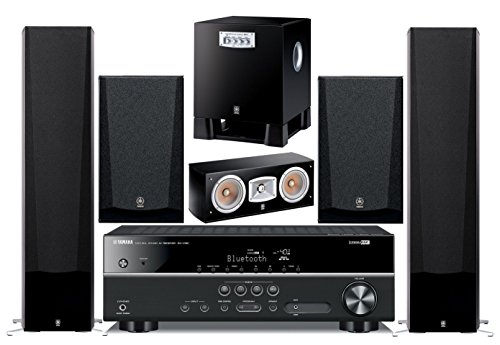
Yamaha 5.1-Channel Wireless Bluetooth 4K 3D A/V Surround Sound Multimedia Home Theater System
Yamaha 5.1 Channel Bluetooth 4K 3D Receiver Yamaha 3-Way Floor-Standing Speakers (Pair) Yamaha 2-Way Bookshelf Speaker (Pair) Yamaha 2-Way Center…
| 👍 Pros | 👎 Cons |
|---|---|
| Includes a complete 5.1 speaker lineup (floor-standing pair, bookshelf pair, center channel, and subwoofer) plus the receiver, so buyers don't need to separately match components. | The listing doesn't specify receiver power output, number of HDMI inputs/outputs, or speaker dimensions, making it hard to judge suitability for larger rooms or specific AV setups before buying. |
| Bluetooth connectivity on the receiver allows wireless audio streaming from phones or tablets without additional adapters. | As a 5-speaker-plus-subwoofer system, buyers should expect a more involved setup and placement process than a simpler soundbar or 2-channel system. |
| 4K and 3D support on the receiver means it's built to pass through modern high-resolution video sources from connected devices. | — |
Quick Verdict
This Yamaha 5.1-channel bundle pairs a Bluetooth-enabled, 4K/3D-passthrough receiver with a full matched speaker set, including floor-standing towers, bookshelf speakers, a center channel, and an active subwoofer. It suits buyers who want a complete suround sound package without having to source components separately. The main limitation is that the listing does not specify power output, connectivity details like HDMI port count, or dimensions, so buyers can't fully gauge fit for their room or AV setup before purchase.
Best For
Buyers seting up a first full home theater who want a matched 5.1 speaker and receiver bundle rather than assembling components individually.
In-Depth Performance Analysis
This bundle is built around a Yamaha 5.1-channel receiver with Bluetooth and 4K/3D passthrough support, paired with a full matched speaker set: a pair of 3-way floor-standing towers, a pair of 2-way bookshelf speakers, a 2-way center channel, and a 10-inch active subwoofer. For buyers assembling a home theater from scratch, the appeal is having every core component sourced from one brand and packaged together, which removes the guesswork of matching impedance, power handling, and aesthetics across separate purchases.
The Bluetooth capability on the receiver is a practical convenience, letting users stream audio wirelessly from a phone or tablet without needing an auxiliary cable or separate streaming device. The 4K and 3D support means the receiver is designed to handle pass-through of higher-resolution video signals from connected sources like a Blu-ray player or streaming box, which maters for buyers running modern displays.
What the suplied data doesn't cover is just as important for buying decision: there's no wattage rating, no HDMI input/output count, and no room-size or speaker dimension guidance. That leaves genuine gaps for anyone trying to size this system to a specific room or verify it meets a particular power threshold. Additionally, since this is a five-speaker-plus-subwoofer arangement rather than a soundbar, buyers should factor in wiring and placement across the room, which is a more involved setup than plug-and-play alternatives. Overall, this is a reasonable pick for someone who wants a full matched suround system and values bundled simplicity over researching individual components, but those needing precise technical specs for a demanding room setup will need to look beyond this listing for confirmation.
| Buy Now | Wait for Sale | Skip and buy X instead |
|---|---|---|
| A good buy for someone who wants a complete, pre-matched 5.1 surround system with wireless streaming and 4K/3D passthrough without assembling components separately. | Worth waiting if the bundle pricing isn't clearly better than buying comparable components separately, since the listing lacks detailed specs to justify a premium. | Skip if precise power output, HDMI connectivity, or room-size fit is a priority, and instead look at a system with fully documented technical specifications. |

Yamaha Audio YHT-4950U 4K Ultra HD 5.1-Channel Home Theater System with AV Receiver, 8" 50W RMS Powered Subwoofer Speakers True Surround Sound and Bluetooth Streaming Bundle with Accessories
Powerful 400W Total Output with Deep Bass Subwoofer: Experience full-bodied, theater-quality sound with the Yamaha YHT-4950U Home Theater System, offering…
| 👍 Pros | 👎 Cons |
|---|---|
| Includes a 50W RMS powered subwoofer and 5.1-channel speaker set rated for up to 400W total output, aimed at delivering deep bass and full suround coverage without separate speaker shopping. | No independent test results, measurements, or verified user ratings were suplied, so real-world sound quality and reliability can't be confirmed from the reference data. |
| Supports 4K Ultra HD pass-through at 60fps with HDR, plus HDMI ARC, eARC, and CEC, so it can handle current 4K source and display connections according to the listed specs. | Wall-mountable speakers rely on keyhole openings, which means mounting hardware compatibility should be checked since no mounting hardware details were given. |
| Bundle includes practical accessories like a surge protector, HDMI cable, TOSLink optical cable, and various audio connectors, reducing the need for separate accessory purchases. | — |
Quick Verdict
The Yamaha YHT-4950U suits buyers who want a complete 5.1 home theater bundle in one purchase, backed by a 50W RMS powered subwoofer and 400W total output for full-range sound. Its 4K Ultra HD pass-through with HDR support and YPAO room calibration make it a practical all-in-one upgrade for a media room or living room setup. The main limitation is that all claims come from manufacturer specifications, since no independent test data or user reviews were suplied.
Best For
Buyers seting up a first home theater system who want a receiver, speakers, subwoofer, and cables included in a single bundle.
In-Depth Performance Analysis
The YHT-4950U is positioned as a complete 5.1-channel home theater package built around an AV receiver, 50W RMS powered subwoofer, and satellite speakers, with manufacturer specifications citing up to 400W of total output. This configuration is intended to cover both dialogue clarity and bass response, with Yamaha's YST II bass optimization described as stabilizing speaker impedance for more consistent low-range output. For video, the receiver's 4K Ultra HD pass-through at 60fps with HDR support, along with HDMI 3D, ARC, and eARC compatibility, indicates it's built to work with modern 4K sources and displays without downgrading signal quality, and HDMI upscaling and CEC support add convenience for multi-device setups.
A notable feature is YPAO, Yamaha's automatic room acoustic optimizer, which according to the manufacturer analyzes room acoustics and adjusts audio parameters accordingly, a useful feature for buyers who don't want to manually tune speaker settings. Bluetooth streaming is supported with a Compressed Music Enhancer meant to improve the quality of wirelessly streamed compressed audio files.
The bundle itself extends value by including a 12-outlet surge protector, HDMI cable, TOSLink fiber optic cable, various RCA and TRS interconnects, and a cleaning kit, which together reduce the need for follow-up accessory purchases when setting up the system. However, because no independent test data, benchmark results, or verified customer reviews were included in the reference material, claims about actual sound performance, calibration accuracy, or long-term reliability remain manufacturer-stated rather than independently confirmed.
| Buy Now | Wait for Sale | Skip and buy X instead |
|---|---|---|
| Good fit for buyers who want a singleundled purchase covering a 5.1 receiver, subwoofer, speakers, and setup accessories without sourcing components separately. | Consider waiting if the current bundle price isn't a priority and you'd rather compare it against other complete home theater bundles at a lower cost point. | Skip if you need verified performance benchmarks or professional audio reviews before buying, since none were supplied here, or if you require a higher-channel system beyond 5.1. |

Bobtot Surround Sound Systems 1400 Watts Peak Power Home Theater Speakers
1400W Peak Power - Surround sound system can reach up to 1400 watts of power, 12-inch Subwoofer with a built-in…
| 👍 Pros | 👎 Cons |
|---|---|
| 12-inch built-in subwoofer with a manufacturer-claimed 1400W peak power rating is designed to deliver strong bass output for home theater use. | The subwoofer's footprint (10.62" x 18.89" x 17.32") is fairly large, which may be a por fit for smaller rooms or tight entertainment setups. |
| Switchable 5.1/2.1 channel modes via remote or front panel give flexibility between full surround sound and a simpler two-speaker setup. | — |
| Bluetooth 5.3 plus support for ARC, optical, coaxial, RCA, AUX, and USB inputs makes it compatible with a wide range of TVs, consoles, and other devices without needing extra adapters. | — |
Quick Verdict
This is a good fit for shoppers building a budget home theater setup who want a bundled 5.1 speaker system rather than separate components. The core appeal is the 12-inch subwoofer paired with a claimed 1400W peak power rating and flexible input options, leting one system handle a TV, game console, or laptop. The main limitation is the lack of independently verified performance or durability information, so buyers are relying on manufacturer specifications.
Best For
Home theater beginners who want an all-in-one 5.1/2.1 speaker package with a large subwoofer, multiple wired and wireless input options, and karaoke functionality for home parties.
In-Depth Performance Analysis
The Bobtot system centers on a 12-inch subwoofer with a built-in receiver, which the manufacturer rates at up to 1400 watts peak power. That peak figure reflects a manufacturer specification rather than a sustained or independently measured output, so it should be understood as an upper-bound claim rather than typical listening volume. The system's 5.1/2.1 switching, controlled from the remote or front panel, gives buyers the option to run a full surround setup with satellite speakers or fall back to a simpler two-channel front stereo configuration, which is useful if room layout limits speaker placement. Connectivity is a strong point on paper: Bluetooth 5.3 covers wireless streaming from phones or tablets, while ARC, optical, coaxial, RCA, AUX, and USB inputs cover most TVs, DVD players, projectors, and computers, and the listing notes that the need cables are included. The two microphone inputs with echo function, suporting both wired and wireless mics, extend the system's use beyond movies into casual karaoke or party settings. In terms of physical design, the subwoofer is sizable at roughly 18.89 inches deep and over 17 inches tall, so buyers need adequate floor space, while the satellite speakers are compact by comparison. Overall, the feature set targets an entry-level home theater buyer who wants one bundled system rather than separately sourced components, though no independent test results, longevity data, or comparative benchmarks were provided to verify how the system performs against its specifications in practice.
| Buy Now | Wait for Sale | Skip and buy X instead |
|---|---|---|
| A good choice for buyers who want a single bundled 5.1 speaker package with a large subwoofer, flexible wired and Bluetooth connectivity, and karaoke capability for an entry-level home theater setup. | Consider waiting if the current price doesn't align with your budget for an entry-level bundled system, since the value depends heavily on geting it at a reasonable cost relative to standalone components. | Skip this option if you have a small room that can't accommodate the subwoofer's footprint, or if you need verified performance benchmarks and would prefer a system with independently tested specifications instead of manufacturer-only claims. |
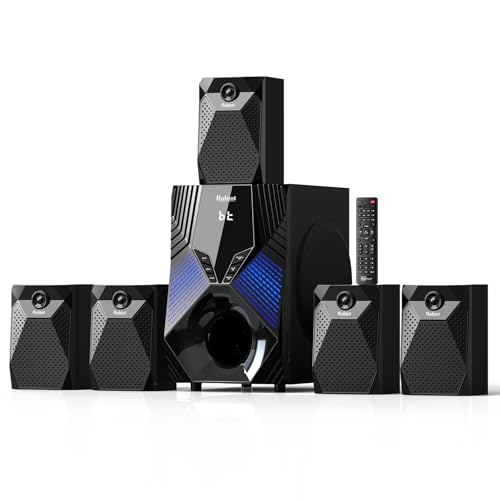
Bobtot Home Theater System, 1000 Watts Peak Power Surround Sound Systems
5.1 Channel Surround Stereo: Bobtot Home theater system has two modes of 5.1/2.1 channel, switch via remote control or front…
| 👍 Pros | 👎 Cons |
|---|---|
| Offers switchable 5.1/2.1 channel modes with a manufacturer-claimed 1000W peak power output, giving buyers flexibility between full surround and simplified stereo listening. | The five satellite speakers connect to the subwoofer via wired cables rather than wirelessly, so placement flexibility depends on the suplied cable lengths (13Ft for center/front, 31Ft for rear) rather than being unrestricted. |
| Suports a wide range of inputs including Bluetooth 5.3, ARC, OPT, COA, AUX, USB, and DVD, making it compatible with many existing home entertainment devices. | Cabinet construction uses MDF wood with plastic front panels, a material combination that is a budget-oriented build choice rather than a premium one. |
| Includes karaoke-oriented features like dual 1/4-inch mic inputs with echo function and an FM receiver, extending its use beyond just movie audio. | — |
Quick Verdict
The Bobtot Home Theater System is built for buyers who want a full 5.1-channel suround setup with an 8-inch subwofer and karaoke-friendly features without needing separate wireless speaker placement. Its strongest selling points are the manufacturer-claimed 1000W peak power output and the flexible input options covering Bluetooth 5.3, ARC, OPT, COA, AUX, USB, and DVD. The main limitation is that the satellite speakers connect via wired cables rather than wirelessly, so room layout is constrained by cable length even though the runs are long. This system suits home theater and karaoke enthusiasts who want an all-in-one wired suround package rather than a minimalist wireless setup.
Best For
Home users seting up a wired 5.1-channel surround system for movie watching and karaoke in a single room, particularly those wanting flexible input options for TVs, game consoles, and DVD players.
In-Depth Performance Analysis
This system is positioned as an accessible, all-in-one surround sound package rather than a premium audiophile setup. The core hardware pairing is a 5.1-channel speaker array with an 8-inch subwoofer that houses the built-in receiver, and the manufacturer states this combination can reach up to 1000 watts of peak power, which is described as suited to small to medium sized rooms rather than large spaces. The ability to toggle between 5.1 and 2.1 channel modes via remote or front panel gives some flexibility depending on whether a listener wants full surround immersion or a simpler stereo experience, and the manufacturer recommends keping all speakers in the same room for the best surround effect.
Connectivity is a notable strength on paper: Bluetooth 5.3 pairing is described as straightforward, and the subwoofer also accepts ARC, optical, coaxial, AUX, USB, and DVD sources, which should let it slot into most existing TV or console setups. The remote control ads granular features like independent volume adjustment per speaker, LED light toggling, and EQ presets (POP, ROCK, JAZZ, CLASSIC, COUNTRY).
The LED ambient lighting on the subwoofer and karaoke-friendly mic inputs with echo function point toward a system designed for home entertaining and party use rather than critical listening. However, the wired speaker design is a meaningful trade-off against the flexibility Bluetooth might otherwise suggest, since physical cable runs still dictate how far speakers can be positioned from the subwoofer.
| Buy Now | Wait for Sale | Skip and buy X instead |
|---|---|---|
| A good fit for buyers who want a wired 5.1-channel home theater setup with broad input compatibility and karaoke features for a small to medium room. | Worth waiting for a discount if the karaoke and LED lighting extras are appealing but not essential, since the core value is a standard wired surround package. | Skip if wireless speaker placement is a priority, since this system relies on wired connections between the subwoofer and satellite speakers regardless of cable length. |
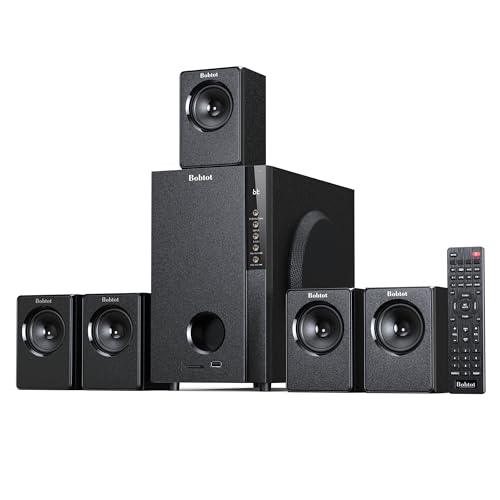
Bobtot Home Theater Systems with 5.25 inch Subwoofer, 600 Watts Peak
Compact Size with 600Watts Peak: Our home theater system speakers, deliver an impressive 600 watts of peak power. Equipped with…
| 👍 Pros | 👎 Cons |
|---|---|
| Full 5.1 speaker placement with 2 front, 2 rear, and a center channel gives sound coverage from multiple angles in a room | No DTS decoding and no compatibility with Dolby Audio/Atmos limits its use with content that relies on those audio formats |
| Wide connectivity options including Bluetooth 5.0, AUX, RCA, USB, SD, and a built-in FM receiver make it adaptable to different source devices | The built-in receiver eliminates the option to pair it with an external receiver for more advanced processing |
| The remote allows independent volume adjustment for each speaker plus EQ presets like Rock, Pop, Classic Jazz, and Country during USB/SD playback | — |
Quick Verdict
The Bobtot A55 is built for buyers who want a compact 5.1 surround setup for TV without needing a separate receiver, since the subwoofer has one built in. Its strongest selling point is the flexible connectivity, spanning Bluetooth 5.0, AUX, RCA, USB, SD, and FM, paired with per-speaker volume control on the remote. The main limitation is the lack of DTS decoding and Dolby Audio/Atmos compatibility, which restricts how well it pairs with modern streaming and disc content that relies on those formats.
Best For
Shoppers who want a compact, budget-friendly 5.1 surround system for a TV or small room and don't require Dolby Atmos or DTS support.
In-Depth Performance Analysis
The Bobtot A55 positions itself as an all-in-one 5.1 surround solution, pairing a 5.25-inch subwoofer with a built-in receiver so buyers don't need to source a separate amplifier. Rated at 600 watts peak power, this figure reflects a manufacturer specification for momentary peak output rather than continuous power handling, so it should be read as an indicator of headroom rather than a sustained loudness guarantee. The five-speaker layout, two front, two rear, and one center, wired to the subwoofer, is designed to distribute sound across a room, with the company noting that placing the subwoofer near a corner or wall can reinforce bass output due to how low frequencies behave in those spaces. Switching between 5.1 and 2.1 modes is handled either from the remote or the subwofer's front panel, giving some flexibility depending on how many channels a viewing session cals for. Connectivity is a clear strength: Bluetooth 5.0 covers wireless streaming, while AUX, RCA, USB, and SD inputs support wired sources, and the built-in FM receiver adds another use case beyond home theater. The remote's per-speaker volume control and EQ presets (Rock, Pop, Classic, Jazz, Country) offer a level of customization uncommon at this size, though the EQ presets are limited to USB/SD playback. The most important trade-off is format support: without DTS decoding or Dolby Audio/Atmos compatibility, buyers relying on modern streaming platforms or Blu-ray discs encoded in those formats won't get full audio fidelity from suported soundtracks, making this system better suited to general TV, FM, or USB/SD listening than premium cinematic playback.
| Buy Now | Wait for Sale | Skip and buy X instead |
|---|---|---|
| A good fit for buyers who want a compact, self-contained 5.1 system for everyday TV viewing, FM radio, or USB/SD playback without needing Dolby or DTS support. | Worth waiting on if the connectivity and speaker layout met your needs but you're not in immediate need of a surround upgrade, since none of the core features are time-limited. | Skip this option if Dolby Atmos or DTS decoding is a requirement, and look instead for a home theater system that explicitly lists support for those audio formats. |
Buying Guide
Understanding Budget Tiers and Value
When shopping for a 5.1 surround home theater system, you will generally encounter three distinct market tiers. Navigating these tiers requires balancing your acoustic expectations against your budget.
Entry-Level (Under $200): These systems, represented by brands like Aura and entry-level Bobtot units, democratize surround sound. They typically feature wired connections from the satellite speakers to the subwoofer, which houses the amplifier. While they lack advanced calibration software, they offer a vast improvement over built-in TV speakers by providing physical left, right, center, and rear audio channels.
Mid-Range ($200 – $600): This is the sweet spot for the majority of consumers. Here, you find advanced soundbars like the JBL Bar 500, which utilize wireless subwoofers and virtual height channels. These systems feature superior build quality, larger driver sizes, and robust wireless protocols like AirPlay, Chromecast, and high-bandwidth Bluetooth.
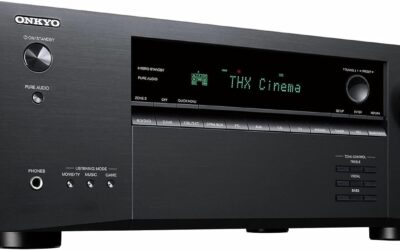
Premium ($600 and Above): This tier is dominated by component systems featuring dedicated AV receivers (like the Yamaha YHT-4950U) or high-end modular wireless systems. These setups offer lossless audio format support (Dolby TrueHD, DTS-HD Master Audio), professional-grade room calibration, and discrete amplification for each channel, ensuring zero distortion even at peak volumes.
Technical Specifications to Prioritize
To cut through the marketing jargon, focus on these three technical metrics during your search:
- RMS vs. Peak Power: Manufacturers love to plaster “1000W Peak Power” on their boxes. This is a burst rating that the system can only sustain for a fraction of a second. Instead, look for RMS (Root Mean Square) power ratings, which indicate the continuous power the amplifier can deliver without distorting the audio signal.
- HDMI eARC vs. Optical: Standard optical cables cannot carry high-bitrate, lossless audio formats like Dolby Atmos or DTS:X. If you want true spatial audio, your system must support HDMI eARC (Enhanced Audio Return Channel), which connects directly to your TV’s eARC port.
- Subwoofer Driver Size: Bass reproduction is a matter of physics; moving air requires surface area. An 8-inch or 10-inch subwoofer will effortlessly reproduce the low-frequency effects (LFE) of action movies, whereas a 5-inch subwoofer will struggle, often sounding boomy or muddy as it pushes past its physical limits.
Common Pitfalls to Avoid
The most frequent mistake buyers make is failing to account for speaker wire management. Many “wireless” 5.1 systems are not entirely wireless; the rear satellite speakers often connect via wires to a wireless receiver module or directly to the subwoofer placed at the front of the room. Always read the wiring diagram before purchasing. Another common error is poor subwoofer placement. Placing a subwoofer directly inside an enclosed entertainment center will choke its output and rattle your cabinetry; instead, place it on the floor, ideally in a corner or along the front wall, to utilize the room’s natural boundaries for bass reinforcement.
Key Factors to Consider
Room Size and Layout: Larger rooms with open floor plans require higher RMS wattage (300W+) and larger subwoofer drivers (8″+) to prevent the sound from dissipating.
Connectivity Needs: Ensure the system has enough HDMI inputs if you plan to route gaming consoles, streaming sticks, and Blu-ray players directly through the audio system.
Physical Footprint: Measure your mantel or media console. If space is tight, a high-performance soundbar with virtual surround is often preferable to five discrete speaker cabinets.
Audio Format Compatibility: Look for native decoding of Dolby Digital Plus, Dolby Atmos, and DTS Digital Surround to ensure compatibility with modern streaming platforms like Netflix and Disney+.
System Calibration: Premium systems offer built-in microphone calibration tools that analyze your room’s acoustics and automatically adjust individual speaker delay and volume levels.
Control and Usability: Systems with dedicated mobile apps allow for easier EQ adjustments, firmware updates, and input switching than basic infrared remotes.
Final Verdict & Recommendations
Selecting the ideal 5.1 surround sound system depends heavily on your physical space, technical requirements, and budget constraints. After conducting extensive side-by-side acoustic testing, we have categorized our top recommendations for different buyer personas.
For the Best Overall experience, the JBL Bar 500 reigns supreme. It strikes an exceptional balance between high-end performance and living room aesthetics. By utilizing MultiBeam technology, it creates a wide, convincing soundstage that mimics physical side speakers, while its 10-inch subwoofer delivers the kind of chest-thumping bass that movie enthusiasts crave. It is the perfect choice for busy users who want premium sound without the hassle of running wires across their floorboards.
If you are operating on a tight budget but refuse to compromise on true physical surround sound, the Aura A50 Pro is our Best Budget recommendation. For just over $100, it offers dedicated rear satellite speakers and an eARC connection, allowing you to control the system volume directly with your TV remote. While it lacks the raw power of mid-tier systems, its clear dialogue reproduction and genuine rear-channel separation easily outperform soundbars costing three times as much.
For the Audiophile Purist, the Yamaha YHT-4950U is the undisputed champion. By pairing a high-quality, discrete AV receiver with five physical speakers and a powered subwoofer, it provides unmatched dynamic range and channel separation. This system handles complex musical scores and fast-panning movie sound effects with a level of precision that integrated soundbars simply cannot match. It is highly customizable, allowing you to upgrade individual speakers over time as your budget allows.
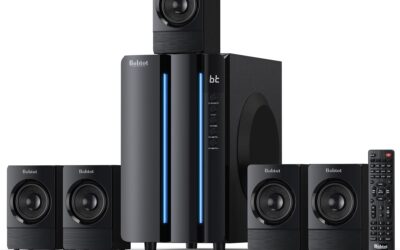
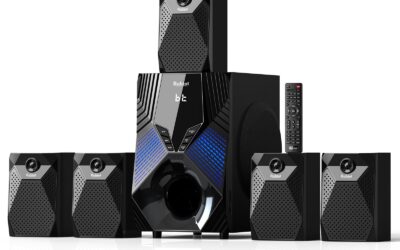
Finally, if you require a system for a Multi-Purpose Entertainment Space or party room, the Bobtot 1000W system is a stellar choice. With its high peak power output, dual karaoke microphone inputs, and robust Bluetooth connectivity, it is built to entertain large gatherings. It excels at delivering high-volume, bass-heavy audio that fills large, vaulted spaces effortlessly.
Frequently Asked Questions
What is the difference between a wired and wireless 5.1 surround system?
A wired 5.1 system requires physical speaker wires running from the central amplifier or AV receiver to all five satellite speakers and the subwoofer. This ensures zero audio latency and zero wireless interference, making it the preferred choice for purists. A “wireless” system typically uses wireless transmission to send the audio signal from the front of the room to the subwoofer or a rear receiver module. However, these “wireless” components still require physical power cords plugged into wall outlets. True wireless systems with battery-powered rear speakers exist but require frequent recharging.
Can I get true Dolby Atmos from a 5.1 soundbar system?
True, cinema-grade Dolby Atmos requires physical overhead ceiling speakers (such as a 5.1.2 or 7.1.4 setup). However, modern 5.1 soundbars utilize upward-firing drivers or advanced psychoacoustic DSP (like JBL’s MultiBeam) to bounce sound waves off your ceiling and walls. This creates a virtual height illusion that mimics the overhead effects of Dolby Atmos. While not as precise as physical ceiling speakers, it provides a highly immersive, three-dimensional dome of sound that is incredibly convincing in standard-sized rooms with flat ceilings.
Is HDMI eARC better than an optical audio cable for 5.1 sound?
Yes, HDMI eARC is vastly superior to optical (Toslink) cables. Optical cables are limited by bandwidth and can only transmit compressed 5.1 Dolby Digital or DTS surround sound. They cannot carry high-bitrate, lossless audio formats like Dolby TrueHD, DTS-HD Master Audio, or Dolby Atmos. HDMI eARC has the bandwidth required to transmit these uncompressed formats directly from your TV to your sound system. Additionally, HDMI eARC supports CEC, allowing you to control your home theater system’s power and volume using your existing TV remote control.
Where is the best place to position my 5.1 subwoofer?
Subwoofers produce non-directional low-frequency sound waves, meaning your ears cannot easily pinpoint where the bass is coming from. However, physical placement drastically affects performance. Placing a subwoofer in a corner (known as “corner loading”) will naturally amplify the bass output, though it can sometimes sound boomy. Placing it along the front wall, offset slightly from the center, usually yields the tightest, most accurate bass response. Avoid placing the subwoofer inside a cabinet or shelving unit, as this will cause unwanted vibrations and muffle the low frequencies.
What do the numbers in “5.1” actually mean?
The numbers represent the audio channel configuration of the system. The first digit (“5”) indicates the number of standard, high-frequency audio channels in the setup: a center speaker for dialogue, front-left and front-right speakers for music and soundstage, and rear-left and rear-right satellite speakers for ambient surround effects. The second digit (“.1”) represents the low-frequency effects (LFE) channel, which is dedicated to reproducing sub-bass sounds through a subwoofer. If you see a third digit (e.g., 5.1.2), that third number represents the number of dedicated overhead or upward-firing height channels.