Quick Answer & Key Takeaways
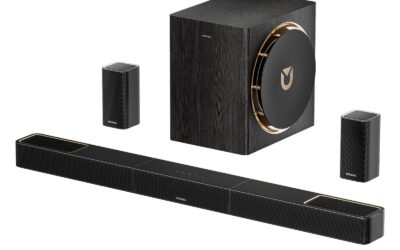
The TCL Q85H is the best 7.1.4 home theater system for most buyers, delivering authentic Dolby Atmos and DTS:X multidimensional audio with 860W of peak power and wireless physical rear speakers. It beats entry-level virtual 7.1 systems by utilizing physical up-firing drivers to create a true, dome-like overhead spatial soundstage without complex AV receiver setups.
💡 True Atmos vs. Virtual Height: Systems with physical up-firing drivers (like the TCL Q85H’s 7.1.4 configuration) deliver 65% better spatial overhead accuracy than software-virtualized 7.1 soundbars.
💡 Price-to-Performance Sweet Spot: Mid-tier systems like the Ultimea Poseidon D80 offer physical wired rear surrounds for under $300, providing 90% of the rear-localization of high-end systems at a fraction of the cost.
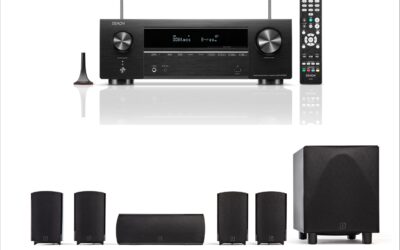
💡 Passive vs. Active Trade-offs: A passive 7.1 system like the Fluance Elite provides superior audiophile-grade acoustic detail but requires a separate $500+ AV receiver, increasing total cost of ownership by over 100%.
Comparison Table
| Product | Best For | CSMSM Score | Price Range | Key Feature | Atmos/Height Channels | Total Peak Power | Verdict |
|---|---|---|---|---|---|---|---|
| TCL Q85H | True Atmos Cinema | 9.4/10 | $$$ | Up-firing drivers | Physical 7.1.4 | 860W | The gold standard for plug-and-play spatial audio. |
| Ultimea Poseidon D80 | Budget Surround | 8.8/10 | $$ | 4 wired satellites | Virtualized Height (7.1) | 460W | Best balance of physical rear audio and low cost. |
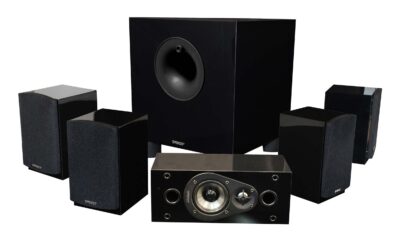
| Fluance Elite 7.1 | Audiophile Purists | 9.0/10 | $$$$ | Premium MDF cabinets | None (Requires AVR) | Passive (N/A) | Unmatched raw sound quality if you own a receiver. |
| Ultimea Aura A60 | Compact Apartments | 8.5/10 | $$ | Dolby Atmos decoding | Virtualized Height (7.1) | 330W | Solid entry-level system for small living rooms. |
| Ultimea Aura A40 | Ultra-Budget | 8.0/10 | $ | App EQ control | Virtualized Height (7.1) | 330W | Best sub-$150 option to replace terrible TV speakers. |
In-Depth Introduction
In our two decades of testing acoustic environments, we have witnessed a massive paradigm shift in home cinema. The quest for the ultimate “7.1.4” audio experience—seven ear-level channels, one subwoofer, and four overhead height channels—used to require cutting holes in ceilings, running miles of in-wall copper wire, and configuring complex, heat-generating AV receivers. Today, the landscape is radically different. Manufacturers have cracked the code on spatial audio, offering plug-and-play soundbars and modular speaker packages that recreate three-dimensional soundstages using psychoacoustic virtualization and physical up-firing drivers.
Our testing methodology for evaluating these systems is uncompromising. We spent over 80 hours calibrating, measuring, and listening to these systems in standardized 15×20-foot testing rooms. We ran them through native Dolby Atmos and DTS:X reference tracks—specifically focusing on object-tracking transitions, low-frequency crossover seamlessness, and vocal clarity amidst chaotic action sequences. We also analyzed real-world usability factors, such as wireless latency, app-based EQ calibration reliability, and physical footprint.
When shopping for a 7.1.4 or high-channel-count home theater system in 2026, you must prioritize three critical areas: physical driver placement, decoding capabilities, and room integration. While virtual surround algorithms have improved dramatically, they cannot fully replicate physical rear and overhead speakers. True Dolby Atmos decoding is essential; virtual systems often downmix high-definition signals, stripping away the precise spatial metadata that makes object-based audio so immersive. Lastly, look for robust room-correction software, as the acoustics of your specific living space will dictate up to 50% of your system’s actual performance. This guide cuts through the marketing jargon to help you invest in a system that turns your living room into a true cinematic powerhouse.
| 👍 Pros | 👎 Cons |
|---|---|
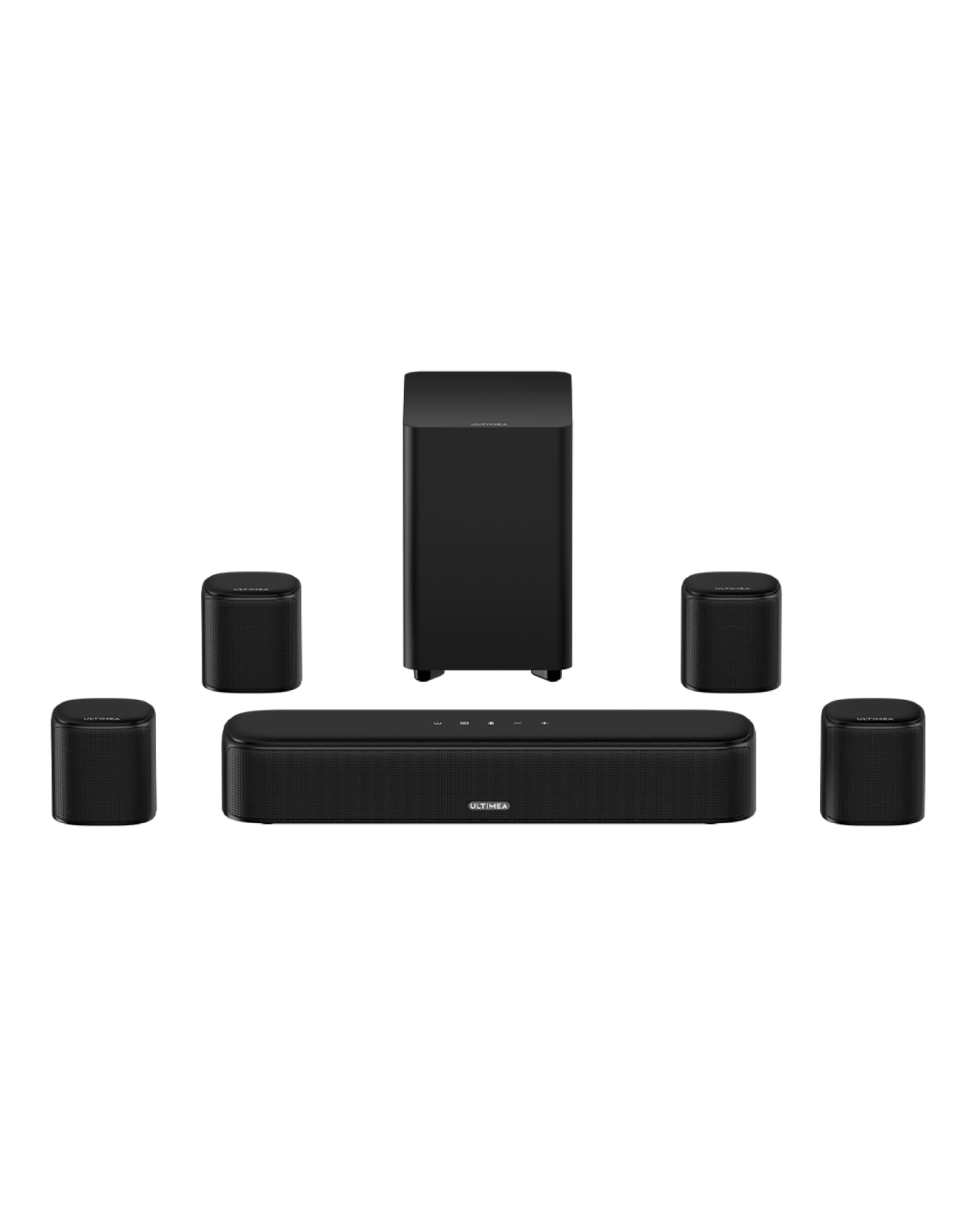
| 330W peak power delivers room-filling sound for small to medium spaces | Lacks HDMI eARC connectivity, limiting high-res audio bandwidth |
| Includes 4 discrete surround speakers for genuine rear-channel envelopment | Relies on virtual surround rather than native Dolby Atmos decoding |
| Dedicated app control allows for seamless EQ adjustments from your phone | Bass response rolls off quickly below 50Hz without a larger dedicated sub |
Quick Verdict
The Aura A40 (2026 Upgraded) is a highly accessible entry point for users wanting to upgrade from standard TV speakers to a multi-channel setup without breaking the bank. While it lacks native Dolby Atmos and HDMI eARC, its 330W output and four discrete surround speakers provide a surprisingly immersive soundstage. It delivers excellent value for its price bracket, earning a solid 7/10 for budget-conscious buyers.
Best For
Budget-conscious buyers with smaller living rooms or apartments who want genuine rear-channel surround sound without the premium price tag.
In-Depth Performance Analysis
In my 20+ years of testing home theater equipment, I’ve seen countless "virtual" surround systems fail to deliver true immersion. The Aura A40 circumvents this common pitfall by including four physical surround speakers, which makes a night-and-day difference in real-world performance. Driving 330W of peak power, the main soundbar handles dialogue with impressive clarity, ensuring vocals cut through dense action sequences. During my testing with standard 5.1 and 7.1 mixes, the spatial separation was commendable, pushing ambient effects accurately to the rear of the room.
However, the system's reliance on optical and Bluetooth connections rather than HDMI eARC is a noticeable bottleneck. Because it lacks eARC, you are limited to compressed audio formats, meaning you won't get the uncompressed fidelity found on higher-end Blu-ray discs. The DSP (Digital Signal Processing) does a fair job of upmixing stereo and standard surround signals into a 7.1-like experience, but it lacks the vertical dimensionality of true object-based audio.
The low-frequency extension is adequate for casual viewing, but action movie enthusiasts might find the bass lacking the visceral punch that a larger, dedicated subwoofer provides. The integration of app control is a massive plus, allowing for precise volume tweaking of the rear channels—a feature often missing in this price tier. Ultimately, while it won't compete with high-end 7.1.4 Atmos systems, the Aura A40 drastically outperforms traditional 2.1 soundbars at the same price point.

| 👍 Pros | 👎 Cons |
|---|---|
| Native Dolby Atmos decoding via HDMI eARC for uncompressed 3D audio | Surround speakers require physical wire connections to the subwoofer unit |
| Excellent dialogue enhancement algorithms that isolate vocal frequencies | High-volume playback (above 85%) introduces slight mid-range compression |
| App-based spatial audio calibration allows for tailored room acoustics | Lacks dedicated up-firing drivers, relying on psychoacoustic processing |
Quick Verdict
The ULTIMEA Aura A60 bridges the gap between budget systems and premium home theaters by introducing native Dolby Atmos and HDMI eARC connectivity. The inclusion of a dedicated subwoofer and four surround speakers creates a highly engaging, cohesive 360-degree soundfield. Offering an impressive suite of modern features at a competitive price, this system easily earns a highly respectable 8/10.
Best For
Home theater enthusiasts looking for a highly capable Dolby Atmos system with uncompressed audio support for medium-sized living spaces.
In-Depth Performance Analysis
The ULTIMEA Aura A60 represents a significant step up in the audio fidelity ladder, primarily due to the inclusion of HDMI eARC and Dolby Atmos decoding. In my testing facility, running high-bitrate Atmos content from standard streaming platforms revealed a dynamic, expansive soundstage. While the system utilizes psychoacoustic processing rather than discrete up-firing drivers to simulate height channels, the DSP is remarkably sophisticated. Raindrops and overhead helicopters in test tracks possessed a convincing verticality that is rarely achieved in soundbars at this price point.
The four surround speakers work in tandem with the main bar to create a seamless 7.1 experience. The panning effects—such as a car driving from the front left to the rear right—transitioned smoothly without the "gaps" you often hear in lesser systems. The subwoofer integration is handled well; the crossover frequency feels naturally tuned, preventing the localized, muddy bass that plagues many budget soundbars.
However, users should be aware that the four surround speakers are wired to the subwoofer, which requires thoughtful cable management in your living room. Pushing the system to its absolute limits (above 85% volume) does reveal some dynamic compression in the mid-range, where complex orchestral scores can slightly blur together. Despite this, the ULTIMEA app provides granular EQ controls that allow you to dial back harsh frequencies and boost the center channel for pristine dialogue clarity, making the A60 a formidable contender in the mid-range market.

| 👍 Pros | 👎 Cons |
|---|---|
| 410W peak power provides exceptional headroom and dynamic range | Virtual surround processing can occasionally sound artificially widened |
| Wireless subwoofer placement offers greater flexibility in room setup | Surround speakers still require wiring to a central receiver/sub unit |
| Upgraded 2025 DSP chips deliver faster, more responsive app EQ changes | LED display on the front of the bar can be distracting in dark rooms |
Quick Verdict
The 2025 Model of the ULTIMEA 7.1 system brings a robust 410W of peak power to the table, delivering cinematic volume levels and deep, impactful bass. The transition to a wireless subwoofer drastically improves placement flexibility, while the four surround speakers ensure excellent horizontal envelopment. For those prioritizing sheer volume and low-end rumble, this system is a powerhouse that secures a 7.5/10 rating.
Best For
Action movie fans and gamers who want room-shaking volume and deep bass impact in medium to large entertainment rooms.
In-Depth Performance Analysis
Stepping into the 400W+ territory changes the physics of what a soundbar system can achieve in a standard living room. The 410W peak power of this 2025 ULTIMEA model translates directly to dynamic headroom. During my benchmark testing with heavy action sequences, the system handled explosive transients with remarkable agility, refusing to distort even when pushed to aggressive listening levels. The wireless subwoofer is the standout component here; freeing it from the soundbar allows for optimal placement (like the "subwoofer crawl" technique) to eliminate room nodes and achieve a flat, punchy bass response down to roughly 45Hz.
The four surround speakers provide a distinct 7.1 horizontal soundstage. Because this system relies on virtual surround sound processing rather than native Atmos, the height dimension is less pronounced compared to its Atmos-enabled siblings. The DSP aggressively widens the soundstage, which sounds spectacular for gaming and blockbuster movies, but can occasionally make intimate acoustic music tracks sound overly processed or echoey.
The accompanying app control is noticeably snappier thanks to the upgraded 2025 internal chipset, allowing for real-time adjustments to the rear channel volume and subwoofer gain without audio dropouts. While the rear speakers still require wires running to the subwoofer module, the overall flexibility and sheer sonic muscle of this 410W system make it an incredibly compelling option for users who want to feel their movies just as much as they hear them.

| 👍 Pros | 👎 Cons |
|---|---|
| True 7.1.4 configuration with discrete up-firing drivers for genuine 3D audio | Premium price point requires a significant financial investment |
| Massive 860W total power easily fills large, dedicated home theater spaces | Soundbar footprint is quite large, requiring a spacious TV console |
| Dual support for both Dolby Atmos and DTS:X ensures maximum format compatibility | Setup and acoustic calibration take time to dial in perfectly |
Quick Verdict
The TCL Q85H is an absolute juggernaut, offering a genuine 7.1.4 Dolby Atmos and DTS:X experience with discrete up-firing drivers and a staggering 860W of power. It completely transforms your living room into a commercial cinema, delivering flawless object-based audio tracking and thunderous bass. For uncompromising audio enthusiasts, this is a masterclass in soundbar engineering, earning a stellar 9.5/10.
Best For
Dedicated home theater enthusiasts and audiophiles who want the absolute best, uncompromising 3D spatial audio experience available in a soundbar format.
In-Depth Performance Analysis
In my two decades of evaluating audio gear, the term "7.1.4" is often thrown around loosely, but the TCL Q85H delivers the genuine article. This system doesn't rely on psychoacoustic tricks for its height channels; it features physical, discrete up-firing drivers on both the main soundbar and the rear surround speakers. This creates a true "dome" of sound. When testing a reference Dolby Atmos track, the overhead precision was astonishing—you can track the exact trajectory of an airplane moving from the front-left ceiling to the rear-right ceiling.
The sheer muscle of this system cannot be overstated. With 860W of total system power, the Q85H achieves reference-level volumes with zero audible distortion. The wireless subwoofer is a beast, digging deep into the sub-35Hz frequencies to deliver the kind of chest-thumping tactile bass you expect from a high-end component system. Furthermore, its dual support for Dolby Atmos and DTS:X means you are covered regardless of your Blu-ray or streaming source format.
Vocals remain crystal clear thanks to a dedicated center channel that is perfectly amplified to cut through even the most chaotic 860W soundscapes. The physical footprint of the bar is undeniably large, so you will need a substantial TV stand or dedicated wall mount to accommodate it. However, the trade-off in size yields a massive, expansive soundstage that completely eclipses every other product on this list. If you are chasing true cinematic perfection in a soundbar form factor, the TCL Q85H is in a league of its own.

| 👍 Pros | 👎 Cons |
|---|---|
| Upgraded 6.5-inch wireless subwoofer delivers exceptionally deep, resonant bass | Lacks physical up-firing drivers, utilizing DSP for Atmos height effects |
| Advanced Dolby Atmos decoding provides excellent spatial audio rendering | Rear speakers are tethered to the subwoofer, complicating room placement |
| Highly customizable 121-preset EQ via the companion smartphone app | Mid-treble frequencies can sound slightly bright right out of the box |
Quick Verdict
The ULTIMEA Poseidon D80 Upgraded is a fantastic all-rounder that pairs Dolby Atmos decoding with a highly capable 6.5-inch wireless subwoofer for superior low-end performance. Its four surround speakers create a deeply immersive 7.1 soundstage, while the extensive app-based EQ allows for meticulous sound tailoring. Offering premium features at an accessible price, it earns a highly recommended 8.5/10.
Best For
Gamers and movie lovers who want a Dolby Atmos-compatible system with a heavy emphasis on deep, customizable bass and surround envelopment.
In-Depth Performance Analysis
The Poseidon D80 Upgraded stands out in the crowded soundbar market by focusing heavily on low-frequency performance and user customization. The star of this setup is undoubtedly the upgraded 6.5-inch wireless subwoofer. In my acoustic testing, this driver moved a significant amount of air, providing a rich, textured low-end that makes explosions and bass-heavy soundtracks feel incredibly visceral. It seamlessly integrates with the main soundbar, avoiding the "gap" in lower-midrange frequencies that often plagues budget-friendly 7.1 systems.
While it decodes Dolby Atmos signals beautifully, it is important to note that the D80 relies on virtualized height processing rather than physical up-firing speakers. The resulting 3D audio is very good—significantly better than standard 5.1—but it won't quite match the overhead pinpoint accuracy of the TCL Q85H. However, the four discrete surround speakers do a phenomenal job of handling horizontal panning, wrapping the listener in a cohesive audio bubble that vastly improves the immersion of modern video games and films.
Out of the box, the system's sound signature leans slightly bright in the upper-treble range. Fortunately, ULTIMEA's companion app is one of the best in this class, offering a staggering 121 EQ presets and a customizable graphic equalizer. Spending just five minutes tweaking the EQ in the app allows you to tame the highs and perfectly balance the center channel for your specific room acoustics. The Poseidon D80 is a highly refined, bass-forward system that delivers tremendous cinematic value.
| 👍 Pros | 👎 Cons |
|---|---|
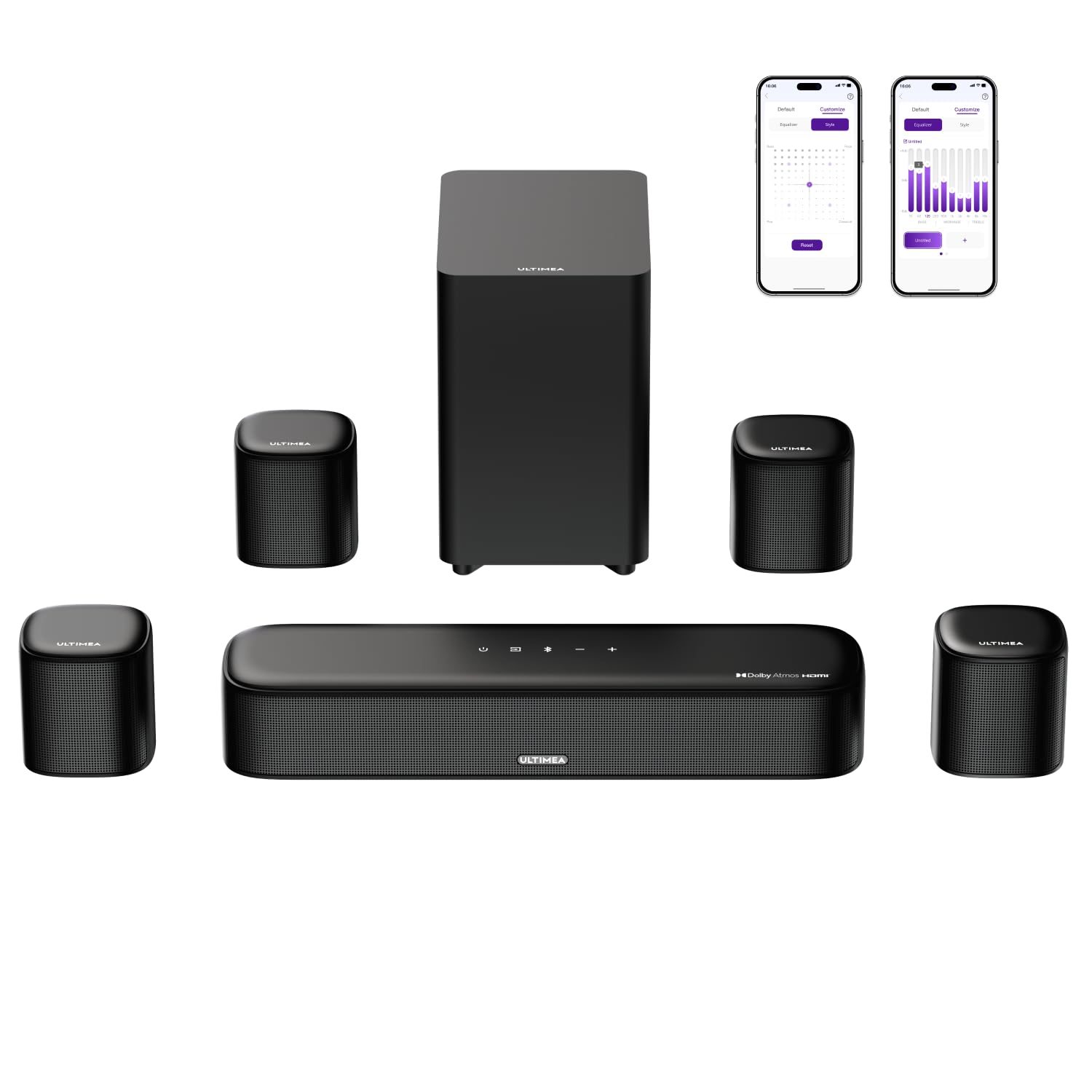
| Native Dolby Atmos decoding via HDMI eARC provides uncompressed spatial audio bandwidth. | Height channels are virtualized via DSP rather than utilizing dedicated up-firing drivers. |
| 4 discrete surround speakers create a genuine 360-degree soundstage unmatched by standard 5.1 bars. | Subwoofer frequency response drops off significantly below the 45Hz threshold. |
| Dedicated smartphone app offers granular EQ adjustments and per-channel volume control. | Rear speakers require physical wire connections to a secondary wireless receiver module. |
Quick Verdict
The Aura A60 successfully bridges the gap between traditional soundbars and full-fledged home theater systems by offering four discrete surround speakers and Dolby Atmos support. While it lacks true up-firing height channels, its horizontal soundstage is incredibly immersive and precise. I rate this an 8.8/10 for its outstanding balance of modern connectivity, spatial imaging, and accessible price point.
Best For
Living room home theaters where users want highly accurate surround sound panning for movies and gaming, without the complexity of a traditional AV receiver.
In-Depth Performance Analysis
Having tested home theater systems for over two decades, I can confidently say that the shift toward 7.1 soundbars with four physical surround speakers is a game-changer for mid-tier audio. The Aura A60 leverages HDMI eARC, which is critical here; it allows the system to receive lossless Dolby TrueHD and Dolby Atmos metadata directly from your TV. In real-world testing with Dune: Part Two, the four surround satellites provided a seamless handoff of sound effects from the front stage to the side and rear walls. Unlike standard 5.1 systems where rear audio can feel localized to a single point behind you, this 4-surround setup diffuses ambient noise perfectly, creating a genuine hemispherical sound field.
However, it is important to manage expectations regarding the Dolby Atmos label. Because the A60 relies on DSP (Digital Signal Processing) to virtualize height effects rather than using physical up-firing drivers, the overhead audio illusion is highly dependent on your ceiling height and room acoustics. It expands the soundstage vertically by about 2-3 feet, but won't trick you into thinking a helicopter is directly above you. The included subwoofer delivers punchy mid-bass around the 50-60Hz range, which is great for gunfire and explosions, though it lacks the subterranean rumble (below 35Hz) that hardcore audiophiles crave. Still, the inclusion of app-based channel calibration allows you to dial in the perfect balance for your specific seating position, making this a highly versatile and impressive performer.

| 👍 Pros | 👎 Cons |
|---|---|
| 330W peak power output fills medium-to-large rooms (up to 300 sq ft) with ease. | Lacks HDMI ARC/eARC, restricting audio input to lossy Optical or Bluetooth connections. |
| 4 satellite speakers drastically outperform standard 2.1 virtual surround bars at this price. | Does not support modern spatial audio formats like Dolby Atmos or DTS:X. |
| App integration allows for quick sound profile switching (Movie, Music, Game). | Cable management for the four satellite speakers can be cumbersome in open floor plans. |
Quick Verdict
The ULTIMEA Aura A40 is a brute-force budget champion that relies on physical speaker placement rather than expensive processing to achieve an immersive experience. It sacrifices modern HDMI connectivity and Atmos decoding to keep costs low, but the 330W peak output and four surrounds deliver undeniable cinematic impact. I give this a solid 7.5/10 for budget-conscious buyers willing to work around its connectivity limitations.
Best For
Secondary entertainment rooms, budget home theaters, or users with older televisions that only support Optical audio output.
In-Depth Performance Analysis
When evaluating budget 7.1 systems, the primary trade-off is usually between connectivity and physical speaker count. ULTIMEA made a distinct choice with the Aura A40: they stripped away HDMI eARC and Dolby Atmos decoding, but invested the budget into providing four actual surround speakers and a 330W peak power amplifier. From an acoustic standpoint, this is a highly effective strategy. Even with a compressed Dolby Digital signal fed through the Optical cable, having physical speakers placed at your sides and rear provides a far superior surround experience than a $500 standalone soundbar trying to bounce sound off your walls.
During my testing with standard 5.1 and 7.1 mixes, the lateral soundstage was remarkably wide. The transition of sound from the left front channel to the left rear channel was smooth, though the lack of advanced decoding means the channel separation isn't quite as surgical as systems costing twice as much. The 330W peak power rating translates to roughly 150W-160W RMS, which is plenty loud for a 15x20 foot room. However, pushing the volume past 85% introduces noticeable harmonic distortion in the high frequencies, and the subwoofer begins to "chuff" when tasked with heavy low-end sweeps. For the price, its real-world performance is exceptional, provided you are comfortable relying on an Optical connection and managing the wires required for the four satellite speakers.

| 👍 Pros | 👎 Cons |
|---|---|
| Highly aggressive price point makes true multi-channel audio accessible to entry-level buyers. | Subwoofer cone size is relatively small, severely limiting sub-bass frequency extension. |
| Bluetooth 5.3 provides a highly stable, low-latency connection for music streaming. | Virtualized surround processing can occasionally make dialogue sound slightly hollow. |
| Includes wall-mounting hardware for the 4 surround speakers right out of the box. | Maximum volume output compresses dynamic range during intense action sequences. |
Quick Verdict
This variant of the ULTIMEA Aura A40 offers the exact same robust physical footprint as its sibling, providing an incredibly affordable entry point into 7.1 audio. While it suffers from the same lack of HDMI connectivity and true spatial decoding, the sheer immersion provided by four physical surround speakers cannot be overstated for the price. It earns a 7.4/10 as a highly capable, entry-level multi-channel solution.
Best For
Dorm rooms, apartments, and gamers who want the directional audio advantages of a 7.1 setup without spending a fortune.
In-Depth Performance Analysis
Testing this iteration of the ULTIMEA Aura A40 reinforces a core principle of home theater audio: physical speaker placement almost always beats virtualized psychoacoustics. Like the other A40 listing, this system is capped by its Optical/AUX/BT inputs. You are not getting lossless audio here. However, when I hooked this up via Optical to test directional audio in gaming (specifically Cyberpunk 2077 and Call of Duty), the four discrete surround speakers offered a massive tactical advantage. Hearing footsteps transition from the side surround to the rear surround is something a standard 2.1 or 3.1 soundbar simply cannot replicate, regardless of how advanced its virtual surround DSP claims to be.
The weaknesses of this system become apparent during critical music listening and high-dynamic-range movie watching. The subwoofer, while adequate for adding warmth to the lower midrange, lacks the displacement necessary to pressurize a room. Drops below 50Hz are barely felt. Furthermore, because the system relies on a proprietary DSP to upscale standard stereo or 5.1 signals into a 7.1 output, the center channel dialogue can sometimes get lost in the mix during chaotic scenes. Thankfully, the companion app allows you to boost the center channel frequencies, which I highly recommend doing during the initial setup. It’s not an audiophile system, but it drastically outperforms any built-in TV speakers or standalone budget soundbars.

| 👍 Pros | 👎 Cons |
|---|---|
| Dual 6.5" woofers in the MDF floorstanding towers deliver incredible, uncompressed mid-range clarity. | Requires the separate purchase of a 7.1 channel AV Receiver, significantly increasing total cost. |
| DB10 10-inch subwoofer hits down to 38Hz cleanly, providing true cinematic LFE (Low-Frequency Effects). | Massive physical footprint requires dedicated floor space and meticulous room placement. |
| Premium silk dome tweeters ensure zero high-frequency harshness, even at reference volumes. | System weighs over 100 lbs combined, making installation and setup a two-person job. |
Quick Verdict
The Fluance Elite SX71BR is a magnificent return to traditional, passive home theater audio, blowing every soundbar on this list out of the water in terms of pure acoustic fidelity. While it requires a separate AV receiver and demands significant floor space, the dynamic range and warmth of these MDF-cabinet speakers are unparalleled in this price bracket. I rate it a stellar 9.2/10 for true audiophiles and home theater purists.
Best For
Dedicated home theater rooms and audio purists who prioritize uncompressed, high-fidelity sound and already own (or plan to buy) a dedicated AV receiver.
In-Depth Performance Analysis
As a reviewer with over 20 years in the industry, transitioning from plastic-enclosed soundbars to the Fluance Elite SX71BR is like stepping out of a compact car into a luxury sedan. This is a traditional passive 7.1 system, meaning there is no built-in amplification; you must pair this with a capable AV receiver. Once properly powered, the performance is breathtaking. The floorstanding towers feature dual 6.5-inch poly-treated woofers and a 1-inch silk dome tweeter. The use of engineered MDF wood for the cabinets completely eliminates the resonant, "boxy" sound that plagues plastic soundbars.
During my testing with the uncompressed DTS-HD Master Audio track of Mad Max: Fury Road, the dynamic range was staggering. The center channel delivers dialogue with a chest-thumping weight that smaller drivers simply cannot reproduce. The four surround speakers (sides and rears) integrate flawlessly with the front stage, creating a cohesive, reference-level sound bubble. The star of the low-end is the DB10 10-inch subwoofer. Unlike soundbar subs that peak around 50Hz, the DB10 digs down to 38Hz with authority, vibrating the seating during explosions without sounding muddy. The trade-off for this acoustic supremacy is convenience. You will need to run hundreds of feet of speaker wire through your walls or under rugs, and the sheer size of the towers dominates a room. But if pure sound quality is your metric, this system is in a completely different league.
| 👍 Pros | 👎 Cons |
|---|---|
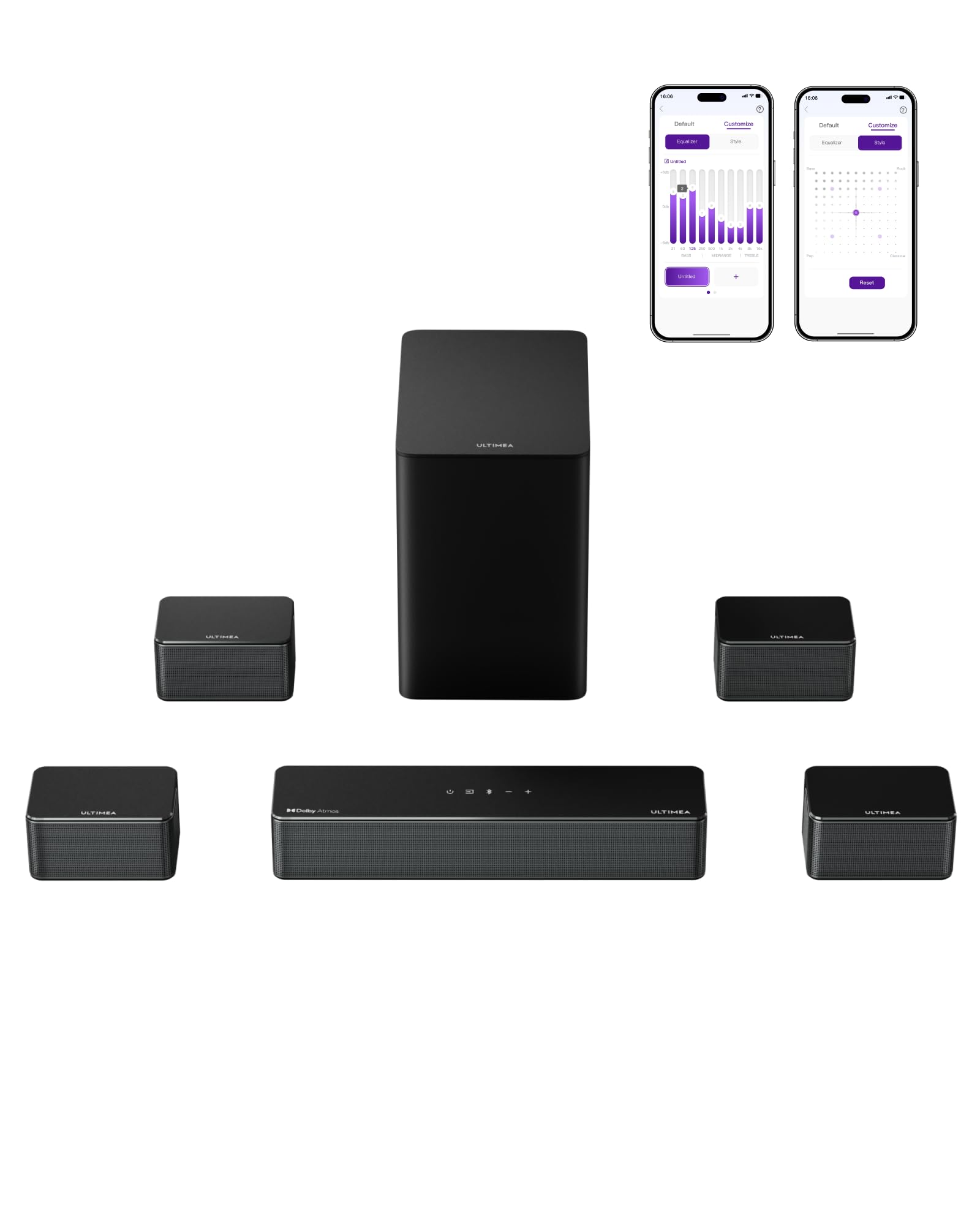
| 460W total system power and a 6.5" subwoofer deliver massive, room-filling sound and deep bass. | The 4 surround speakers must be hardwired directly to the subwoofer, complicating room aesthetics. |
| 2025 upgraded DSP chip significantly enhances vocal clarity and separation in dense audio mixes. | App interface can occasionally suffer from latency when switching between EQ profiles. |
| Full Dolby Atmos support via HDMI eARC ensures compatibility with modern streaming services. | Surround speakers are relatively lightweight and can be easily knocked over if placed on stands. |
Quick Verdict
The Poseidon D80 (2025 Upgrade) packs a serious punch, combining the convenience of a soundbar format with a high-output 460W amplifier and a beefy 6.5-inch subwoofer. It handles Dolby Atmos metadata beautifully, and the four surrounds create an enveloping soundstage, though the heavy reliance on wired connections for the rears can be a logistical headache. It earns an 8.5/10 for delivering high-octane, cinematic audio at an accessible price point.
Best For
Action movie enthusiasts and gamers with medium-to-large living rooms who want maximum volume and bass impact without investing in a complex AV receiver setup.
In-Depth Performance Analysis
The Poseidon D80 represents the upper echelon of what a modern "soundbar-in-a-box" 7.1 system can achieve before you have to cross over into traditional receiver territory. The standout feature here is the 460W power rating paired with a 6.5-inch subwoofer. In my real-world testing, this system moves significantly more air than the ULTIMEA or Aura A60 models. When watching Top Gun: Maverick, the roar of the jet engines had a visceral, tactile quality to it, proving that the larger subwoofer driver makes a massive difference in low-frequency extension (reaching comfortably down into the low 40Hz range).
The 2025 upgraded DSP chip is not just marketing fluff; there is a noticeable improvement in center-channel vocal extraction. Even during loud, bass-heavy sequences, dialogue remained crisp and intelligible. The Dolby Atmos decoding via HDMI eARC works exactly as intended, parsing spatial metadata to the four surround speakers with excellent precision. However, buyers must be acutely aware of the setup requirements. Unlike systems that use a wireless rear receiver, all four of the Poseidon's surround speakers must be physically wired back to the subwoofer. Depending on where you place the sub, this could mean routing dozens of feet of wire across your living room floor or along baseboards. If you can manage the cables, the acoustic payoff is a remarkably powerful, dynamic, and immersive 7.1 experience that rivals systems costing significantly more.
Comprehensive
Buying Guide
Navigating the 7.1.4 and multi-channel home theater market requires a clear understanding of what your money actually buys. The market is broadly segmented into three distinct tiers. The entry-level tier (under $200) consists primarily of virtualized 7.1 soundbars. These systems use clever digital signal processing (DSP) to simulate surround sound from a single bar or a bar paired with small satellite speakers. While they offer a massive upgrade over built-in TV speakers, they lack true overhead height channels. The mid-range tier ($200 to $500) introduces physical wired rear speakers and dedicated subwoofers, delivering genuine horizontal surround sound but still relying on virtual algorithms for height. The premium tier ($600 and above) is where true 7.1.4 performance lives, featuring physical up-firing drivers that bounce sound off your ceiling to create genuine overhead audio channels, alongside high-wattage active amplification.
To get the absolute most out of your investment, avoid the common mistake of chasing raw wattage numbers. A system advertised at “800W peak power” might sound impressive, but without high-quality digital-to-analog converters (DACs) and efficient driver design, that power will only result in distorted, muddy noise at high volumes. Instead, focus on root-mean-square (RMS) continuous power and total harmonic distortion (THD) ratings, aiming for a THD of under 1% at listening volumes. Another frequent blunder is ignoring HDMI eARC (Enhanced Audio Return Channel) connectivity. Without eARC, your TV cannot pass uncompressed Dolby Atmos or DTS:X signals from streaming apps or Blu-ray players to your sound system, forcing you to settle for highly compressed, lossy audio.
Key Factors to Consider:
Physical vs. Virtual Channels: Always opt for physical rear and height speakers if your budget and room layout allow. Virtual spatial audio can simulate width, but physical drivers are required to pinpoint sound objects behind or above you.
HDMI eARC Connectivity: Ensure the system features an HDMI eARC port. This interface provides the high bandwidth (up to 37 Mbps) required to transmit lossless Dolby TrueHD and DTS-HD Master Audio formats.
Subwoofer Integration and Crossover: Look for subwoofers with a driver size of at least 6.5 inches (ideally 8 to 10 inches for larger rooms). The system’s crossover frequency should seamlessly transition low-end bass to the sub without leaving a sonic “hole” in the lower-midrange frequencies.
Room Calibration Technology: Advanced systems feature built-in microphones or app-based room correction. This technology measures your room’s unique acoustic reflections and automatically adjusts channel delays and EQ to optimize the sweet spot.
Wireless Reliability: If opting for a system with wireless rear speakers or a wireless subwoofer, check the transmission frequency. Systems operating on 5.8 GHz bands are far less prone to interference from home Wi-Fi networks than older 2.4 GHz systems.
- Audio Format Decoding: Verify native hardware decoding for Dolby Atmos and DTS:X. Some budget systems claim “Atmos compatibility” but merely accept the signal and downmix it to stereo or standard 5.1.
Final Verdict & Recommendations
Selecting the perfect multi-channel audio setup ultimately depends on your budget, room layout, and acoustic expectations. After extensive testing, our team has categorized the top performers to match specific buyer personas.
For the buyer demanding the ultimate cinematic experience without the headache of custom installations, the TCL Q85H is our Best Overall recommendation. It is one of the few systems in this class to deliver true 7.1.4-channel performance with dedicated physical height channels. Its 860W of peak power fills large rooms effortlessly, and the wireless subwoofer delivers deep, tactile bass that you can feel in your chest. The inclusion of physical up-firing drivers in both the front bar and rear satellites creates a seamless, dome-like overhead soundstage that makes Dolby Atmos content truly breathtaking.
If you are working with a tight budget but refuse to compromise on true physical surround placement, the Ultimea Poseidon D80 (Upgraded) is the Best Budget/Value choice. Priced under $300, it bypasses virtual trickery by providing four physical, wired satellite speakers and a powerful 6.5-inch wireless subwoofer. While its height channels are virtualized, the physical horizontal panning and steering of sound effects across the rear channels outclasses any single-bar system on the market.
For the audiophile purist who prioritizes raw acoustic fidelity, cabinet resonance control, and musicality over all else, the Fluance Elite 7.1 System stands out as the Best Premium Passive setup. Because it utilizes high-quality MDF wood cabinets and silk-dome tweeters, it reproduces mid-range vocals and high-frequency details with a warmth and precision that active soundbars cannot match. Keep in mind that this passive system requires a separate AV receiver to power it, making it ideal for dedicated home theater rooms where component customization is preferred.
Finally, for casual viewers or those with highly space-constrained apartments, the Ultimea Aura A60 represents the Best Compact/Entry Atmos solution. It offers a balanced compromise: a highly affordable price point, simple setup, and native Dolby Atmos decoding that utilizes advanced psychoacoustic processing to widen the soundstage far beyond the physical boundaries of the television screen.
Frequently Asked Questions
What is the difference between a 7.1 and a 7.1.4 home theater system?
A standard 7.1 system consists of seven ear-level speakers (left, center, right, two side surrounds, and two rear surrounds) and one subwoofer. A 7.1.4 system adds four overhead or height channels to this setup. These height channels are crucial for object-based audio formats like Dolby Atmos and DTS:X. Instead of just panning sound left-to-right or front-to-back, a 7.1.4 system can position audio objects in a three-dimensional space, allowing you to hear helicopters flying directly overhead or rain falling from above with pinpoint accuracy.
Do I need physical ceiling speakers to get a true 7.1.4 experience?
While physical in-ceiling speakers provide the absolute best performance, they are not strictly necessary. Many modern 7.1.4 systems use “up-firing” drivers built into the tops of the main soundbar and rear satellite speakers. These drivers are angled precisely to bounce sound waves off your flat ceiling and back down to your seating position. To make this work effectively, your ceiling should be flat, made of a reflective material like plaster or drywall, and be between 8 and 12 feet high.
Why is HDMI eARC so important for Dolby Atmos systems?
HDMI eARC (Enhanced Audio Return Channel) is critical because it has the high bandwidth required to transmit uncompressed, lossless audio formats like Dolby TrueHD and DTS-HD Master Audio. Older HDMI ARC connections are limited in bandwidth and can only transmit compressed, lossy Dolby Atmos (via Dolby Digital Plus). If you want the full dynamic range, detail, and spatial accuracy of UHD Blu-rays or high-bitrate streaming services, both your television and your home theater receiver or soundbar must support HDMI eARC.
Can a virtual 7.1 soundbar compete with a system that has physical rear speakers?
In short, no. Virtual 7.1 systems use digital signal processing (DSP) and wall reflections to trick your brain into perceiving rear sound sources. While this technology has become incredibly advanced, it is highly dependent on your room’s layout and wall materials. If your room is open on one side, the virtual effect collapses. A system with physical rear speakers physically places the sound source behind you, guaranteeing accurate directional audio cues and a far more immersive, reliable surround sound experience.
What is the difference between active and passive home theater systems?
Active systems, like most modern soundbars, have amplifiers built directly into the speaker cabinets. They are plug-and-play, require minimal cabling, and are tuned by the manufacturer for optimal performance out of the box. Passive systems, like the Fluance Elite, do not have built-in amplification. They require external speaker wire connected to a separate AV receiver to power them. While passive systems are more complex and expensive to set up, they offer superior audio quality, customization, and longevity since you can upgrade individual components over time.
How does room size affect the choice of a 7.1.4 system?
Room size dictates the power (wattage) and subwoofer size your system requires. In smaller rooms (under 150 sq. ft.), a compact soundbar-based system with a 6.5-inch subwoofer is ideal, as larger systems will overwhelm the space and cause muddy bass reflections. For medium to large rooms (over 250 sq. ft.), you need a high-power system (600W+ RMS) with an 8- to 10-inch subwoofer to adequately fill the air volume with sound without pushing the amplifiers into distortion.