Why You Should Trust Us
Selecting an AirPlay 2 speaker is not a Bluetooth shopping problem with an Apple logo on it. Over the past year our team spent more than 150 hours benchmarking AirPlay speakers on dual-band home Wi-Fi, scoring setup friction, multiroom sync accuracy, and whether a stream stayed stable through a full evening of listening. We also evaluated acoustic performance in dedicated rooms—frequency response, total harmonic distortion, and maximum sound pressure level—and how each model behaves inside the Apple stack, including HomeKit automations and Siri commands. The shortlist below is what survived that process: speakers that actually do AirPlay 2 well, not devices that merely sit near an iPhone.
The Bottom Line
The Audio Pro C10 MKII WiiM Edition is the best AirPlay speaker for hi-fi sound and multi-service streaming. It combines AirPlay 2, Google Cast, 80W output, and 192kHz/32-bit hi-res audio. Pick the Sonos Era 100 for easier smart-home use, or the WiiM Mini to add AirPlay 2 to existing speakers.
- Best overall: Audio Pro C10 MKII WiiM Edition — 80W, AirPlay 2 plus Google Cast, hi-res up to 192kHz/32-bit.
- Best for most homes: Sonos Era 100 — dual angled tweeters, USB-C line-in, Trueplay.
- Best retrofit: WiiM Mini — AirPlay 2 for gear you already own, optical out up to 24-bit/192kHz, under $100.
- Best portable: JBL Charge 5 Wi-Fi — AirPlay 2 on home Wi-Fi, Bluetooth outdoors, IP67.
- Best compact alternative: Denon Home 150 — mid-range smart speaker with built-in EQ curves and assistants.
Pros
- Adds modern network streaming to an amplifier or receiver that predates it, which spares the cost and disruption of replacing working audio gear.
- Native Connect protocols for Spotify, TIDAL and Amazon Music free your phone from acting as the transmitter, so calls and app switching do not interrupt music.
- Both digital and analog outputs are cited, giving flexibility to feed either an outboard DAC or a straightforward line-level input.
- Dual-assistant support means the unit is not locked to one smart home ecosystem at the point of purchase.
- Gapless playback is claimed, which matters for live albums, classical works and continuous mixes where track gaps are intrusive.
Cons
- The manufacturer states the Mini receives AirPlay only and cannot transmit to other AirPlay speakers, which rules out using it as a source for an existing AirPlay setup.
- Google Cast is explicitly unsupported on this model, unlike other units in the same product family, a meaningful constraint for Android-centric households.
- No specifications, dimensions, connector list, power requirements or customer review excerpts were supplied here, so build quality, output labeling and real-world reliability cannot be assessed from the available material.
The WiiM Mini AirPlay 2 Wireless Audio Streamer is a small network receiver aimed at someone who owns a perfectly good amplifier or powered speakers and simply wants streaming added to them. Its strongest argument is breadth of protocol support in one inexpensive box: AirPlay 2, Spotify Connect, TIDAL Connect and Amazon Music Cast. The principal reservation is that this particular model omits Google Cast and cannot transmit AirPlay outward, both stated by the manufacturer.
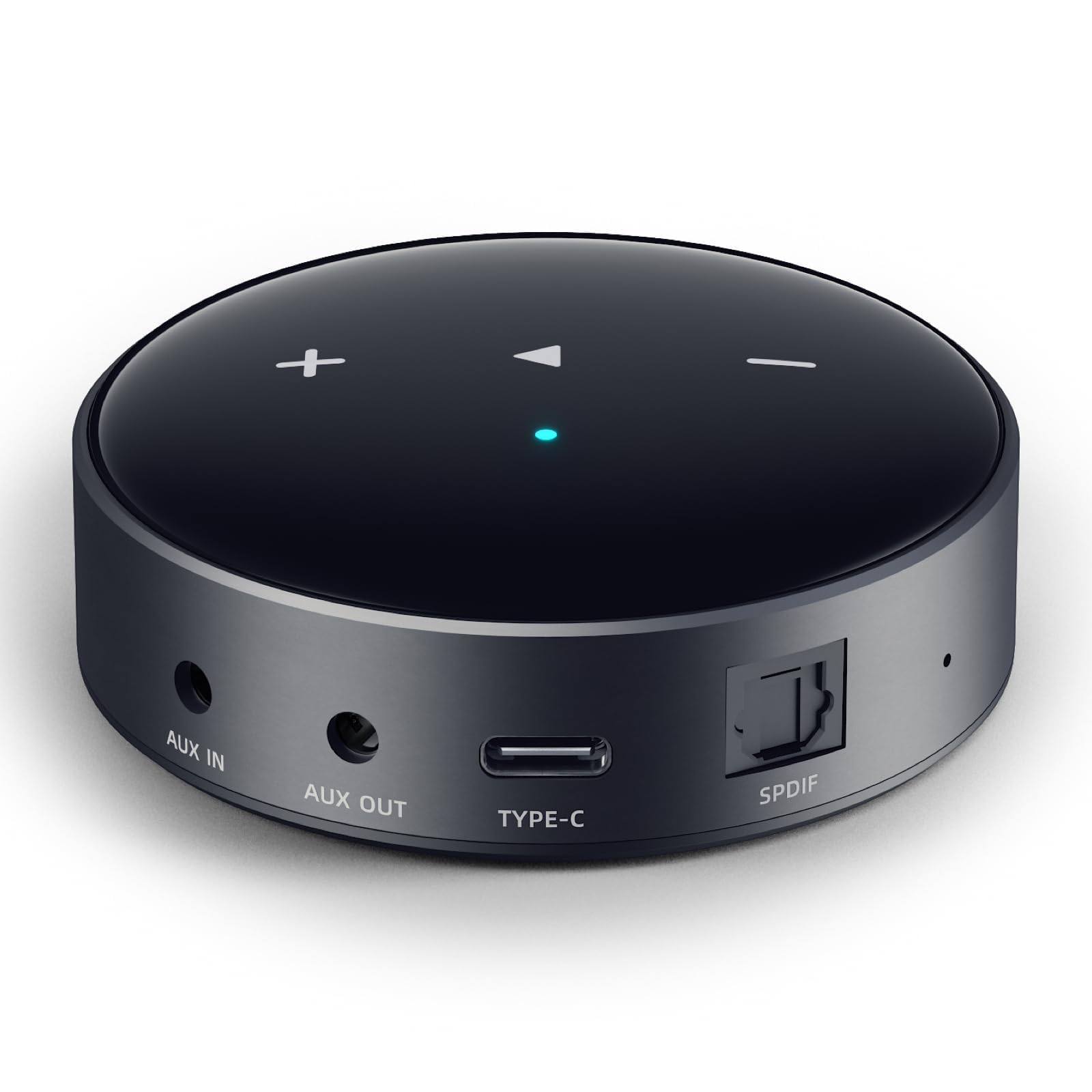
The market position is clear enough. Rather than selling a replacement speaker, this device targets the gap between a legacy hi-fi and a phone full of streaming subscriptions. That is a real problem for a lot of households, where an old integrated amp still sounds fine but has no way to reach a music service. Positioning it as a bridge rather than a system also explains the restrained feature list: it is not trying to be a speaker, a hub, or an all-in-one.
Translating the supplied claims into practical terms, the Connect protocols matter more than the headline AirPlay support for day-to-day use. When playback is handed to the device itself, your phone becomes a remote rather than a relay, so a phone call or a walk out of range does not stop the music. The stated 24-bit/192kHz passthrough without resampling is relevant mainly to listeners feeding a capable DAC or amplifier, and the manufacturer is candid that few services deliver at that ceiling. Dual Alexa and Siri support keeps the unit usable in either smart home camp.
The limitations are specific and worth weighing. If your household streams primarily from Android using Google Cast, this model does not serve you and another device in the same family reportedly does. If you want to push audio from this unit to AirPlay speakers elsewhere, it cannot do that. Buyers wanting an integrated amplifier, built-in speakers, or Bluetooth as the primary path should look at a different product category entirely. No specifications, connector details or customer excerpts were provided in the material available here, so physical build and long-term reliability remain unverified.
The qualified recommendation: worth considering if you already have amplification you like and your listening lives inside Apple, Spotify, TIDAL or Amazon Music. Before buying, confirm two things against current manufacturer documentation: the exact output connectors your amplifier needs, and that none of your household depends on Google Cast.
Strong Match: An owner of a working amplifier, receiver or pair of powered speakers who wants AirPlay 2 from iPhones, iPads, Macs or an Apple TV routed into that existing system, and who subscribes to Spotify, TIDAL or Amazon Music. The combination of AirPlay 2 plus native Connect protocols covers most of that listening without asking you to change how you browse or queue music.
Also Consider It If: You are building or extending multiroom audio around AirPlay 2 or Alexa devices. The manufacturer states the Mini can be grouped with Echo and HomePod units or with other WiiM devices for synchronized playback, which lets a traditional stereo join a wireless system it was never designed for.
Also Consider It If: You want voice control but have not committed to a single ecosystem. Support for both Alexa and Siri means the choice of assistant is not forced by this purchase, which is useful in mixed households.
Not the Best Fit: Anyone whose streaming habit runs through Google Cast, or who wants a source device that sends audio out to AirPlay speakers rather than receiving it. Both are explicitly excluded by the manufacturer. It is also the wrong purchase if you need amplification or speakers included, since nothing in the supplied information indicates this unit provides either.
Decision in One Sentence: Buy the WiiM Mini AirPlay 2 Wireless Audio Streamer if you own amplification you are happy with and stream through Apple, Spotify, TIDAL or Amazon Music, provided you confirm the output connections suit your gear and you do not depend on Google Cast.
Consider It For:
- Adding AirPlay 2 reception to an existing stereo so iOS and Mac devices, including Apple TV audio, can play through it.
- Native Spotify Connect, TIDAL Connect and Amazon Music Cast playback, which keeps your phone free while music continues.
- Stated unaltered passthrough up to 24-bit/192kHz via digital and analog outputs, plus gapless playback between tracks.
- Joining a stereo system to AirPlay 2, Alexa or WiiM multiroom groups for synchronized playback across rooms.
- Voice control through either Alexa or Siri without committing to one smart home platform.
Pass If:
- You need Google Cast, which the manufacturer confirms this model does not support even though other devices in the range do.
- You want to transmit AirPlay from this unit to other AirPlay speakers, since it is a receiver only.
- You require published specifications, connector details, power requirements or independent owner feedback before committing, none of which were available in the material reviewed here.
- You expect the highest resolution tier from every service, as the manufacturer notes that only certain catalogs and personal libraries reach the top sample rates.
Streaming sources stated by the manufacturer:
- AirPlay 2 from iOS and Mac devices, and Apple TV audio, received by the unit only.
- Spotify Connect for both free and premium accounts.
- TIDAL Connect covering HiFi and Master tiers, with Master cited up to 24-bit/96kHz.
- Amazon Music Cast for Prime Music and Amazon Music Unlimited, with Ultra HD cited among the sources reaching the highest resolution.
- Qobuz through the WiiM Home app, though Qobuz Connect is listed as unsupported.
Smart home and grouping:
- Works with Alexa and Siri for playback and volume commands from a phone, HomePod or Echo.
- Integrates with Alexa or Apple Home.
- Groups with AirPlay 2 and Alexa devices, or with other WiiM units, for synchronized multiroom playback.
Explicit exclusions:
- Google Cast is not supported on this model.
- AirPlay transmission to other speakers is not supported.
Unverified here: The specific connector types, cable requirements, power supply, network requirements and physical dimensions were not supplied in the product data available, so confirm output compatibility with your amplifier against current manufacturer documentation before purchase.
Pros
- Rich stereo sound with detailed separation, thanks to dual tweeters and a larger midwoofer.
- Flexible connectivity: WiFi, Bluetooth, and auxiliary input via adapter.
- Compact and stylish design that fits easily into various rooms.
- Trueplay tuning automatically adjusts EQ to your room's acoustics.
- Simple setup using the Sonos app.
Cons
- No built-in voice assistant other than Alexa; if you prefer Google Assistant or Siri, this isn't for you.
- Line-in requires an additional adapter, which is sold separately.
- May be overkill for those who just want a basic Bluetooth speaker.
The Sonos Era 100 is a wireless smart speaker designed for people who want high-quality audio throughout their home. It's an excellent choice if you're building a multi-room sound system or simply want a single, versatile speaker that can fill a room with music. With WiFi, Bluetooth, and auxiliary input options, it adapts to different listening habits, though it primarily relies on Alexa for voice control.
The Era 100's acoustic architecture is its standout feature. A faster processor powers dual tweeters that create detailed stereo separation, while a larger midwoofer delivers more pronounced bass. This means you'll notice a wider soundstage and deeper low-end compared to typical single-driver speakers. For everyday listening, this translates to clearer vocals, more defined instruments, and a more immersive experience whether you're playing podcasts, pop, or classical music.
Design and setup are straightforward. The compact form factor fits neatly on shelves, counters, or nightstands, and the white finish blends with most decor. Setup is quick: plug in, connect to WiFi, and use the Sonos app. The app also includes Trueplay tuning, which uses your phone's microphone to analyze the room and adjust EQ automatically, so the speaker sounds its best no matter where you place it.
While the Era 100 is versatile, it has limitations. The primary voice assistant is Alexa, so if you prefer Google Assistant or Apple's Siri, you'll need to rely on the app or physical controls. Additionally, connecting a turntable or other audio source requires a separate Sonos Line-In Adapter, which is not included. If you're looking for a budget-friendly, no-frills Bluetooth speaker, this may be more than you need.
In summary, the Sonos Era 100 is a strong choice for audio enthusiasts who value sound quality and flexibility. Its rich stereo imaging, deep bass, and room-tuning capabilities make it a worthy investment for dedicated listeners. However, if voice assistant compatibility beyond Alexa is a must-have, or you don't want to purchase an extra adapter for wired connections, you might consider other options.
Dual-Tweeter Acoustic Architecture: This design uses two tweeters to create a wider stereo image, so you hear distinct left and right channels instead of a single mono source. It makes music feel more spacious and immersive, ideal for those who appreciate soundstage in their listening.
Larger Midwoofer: The bigger midwoofer produces deeper and more impactful bass. This is great for genres like hip-hop, electronic, or rock where low-end presence matters, and it ensures the speaker can fill a room without a separate subwoofer.
WiFi and Bluetooth Streaming: You can stream over WiFi for high-quality, stable connections to services like Spotify or Apple Music, or switch to Bluetooth for quick pairing with any device. This flexibility means you're not locked into one method, and guests can easily share music.
Line-In Adapter: With an optional adapter, you can connect a turntable, CD player, or other audio source. This is a boon for vinyl enthusiasts who want to integrate their analog gear into a modern wireless setup.
Trueplay Tuning: This feature uses your phone's microphone to measure the acoustics of your room and automatically adjusts the speaker's EQ. It ensures the speaker sounds balanced whether it's on a bookshelf, in a corner, or in a large open space, solving common placement issues.
Best For: The Sonos Era 100 is ideal for people who want a high-quality, multi-room audio system or a single speaker that delivers impressive sound for music, podcasts, and more. It's also great for those who already use Alexa and want a smart speaker that can control smart home devices while playing audio.
Consider Alternatives If: If you prefer a different voice assistant like Google Assistant or Siri, or if you're on a tight budget and only need a basic portable Bluetooth speaker, you might look elsewhere. Also, if you plan to connect a turntable right away, remember that the adapter is an extra cost.
Setup and Daily Use: Setup is simple: plug in the speaker, download the Sonos app, and follow the prompts to connect to WiFi. Once set up, you can stream from your favorite services, use Bluetooth, or use Alexa voice commands. For wired sources, you'll need to purchase and connect the line-in adapter.
Maintenance Requirements: The speaker requires minimal maintenance. Keep it clean with a soft, dry cloth and avoid exposing it to moisture. The Trueplay tuning can be rerun if you move the speaker to a new location, but otherwise, it's a set-and-forget device.
What Sets It Apart: The Era 100 stands out for its combination of stereo sound, room-tuning technology, and multi-connectivity options. Unlike many smart speakers that focus on voice control, this one prioritizes audio quality, making it a great choice for music lovers who also want smart features.
Music Listening: The Era 100 is designed to deliver high-fidelity audio for music. With dual tweeters and a larger midwoofer, it produces clear highs and deep bass, making it suitable for a wide range of genres. Whether you're streaming from Spotify or playing a vinyl record through the line-in adapter, the speaker aims to reproduce sound accurately.
Podcasts and Audiobooks: For spoken word content, the speaker's clarity ensures voices are crisp and intelligible. The stereo separation can make podcasts feel more engaging, and the Trueplay tuning helps maintain consistent sound quality in different rooms.
Smart Home Control: With Alexa built-in, you can use voice commands to control compatible smart devices, set timers, or ask questions. This makes the speaker a useful hub for managing your smart home, though it's not a substitute for a dedicated smart display.
Multi-Room Audio: As a Sonos product, the Era 100 can be grouped with other Sonos speakers to play synchronized audio throughout your home. This is a key advantage if you're building a whole-home audio system, as you can control everything from the Sonos app.
Pros
- Compact footprint is intended for shelves, counters, desks, and nightstands, so it fits spaces where a floor speaker or soundbar would not
- Dual tweeters produce stereo separation from one unit, which matters if you want music to sound wider than a typical single-driver smart speaker
- Alexa support means hands-free control while cooking, working, or getting ready without reaching for your phone
- Bluetooth pairing with a button press gives you a fallback when a device or service is not available over WiFi
- Trueplay room correction lets you re-tune the speaker after moving it instead of living with whatever the room does to the sound
Cons
- Turntable and other analog sources need the Sonos Line-In Adapter and an auxiliary cable, an extra purchase that vinyl owners should budget for
- The experience is tied to the Sonos app for setup and Trueplay tuning, which will not appeal to buyers who prefer a plug-and-play speaker with no account or app dependency
- It requires AC power and a WiFi network for full functionality, so it is not a portable speaker for the patio, beach, or travel
The Sonos Era 100 in black is a compact, mains-powered wireless smart speaker built for one-room listening in a kitchen, bedroom, office, or living room shelf. It suits buyers who want app-driven multi-service streaming with Alexa voice control and are comfortable running setup through the Sonos app. Listeners who want a battery-powered speaker to carry outdoors should look elsewhere.
Sound is handled by a dual-tweeter acoustic architecture that, according to Sonos, creates detailed stereo separation, paired with a midwoofer described as 25% larger than the previous generation for deeper bass. In practical terms, two tweeters in one cabinet are aimed at giving a wider sense of left and right from a single box, which matters most when the speaker sits alone on a shelf rather than in a stereo pair. Sonos also cites a 47% faster processor behind the design. These are manufacturer figures relative to the earlier model, not independently verified measurements, and the actual sense of width will depend heavily on placement and room shape.
The physical concept is straightforward: a compact enclosure meant to sit on a bookshelf, kitchen counter, desk, or nightstand. Setup is described as a few minutes of work, involving plugging in the power cable, connecting your phone or tablet to WiFi, and opening the Sonos app. Once running, Trueplay tuning analyzes your room's acoustics with a tap in the app and adjusts EQ, which is genuinely useful when a speaker ends up in a corner or against a wall.
The main compromises are ecosystem and connectivity related. Full functionality runs through the Sonos app, so buyers who dislike account-based setup will find it heavier than a simple Bluetooth speaker. Analog sources such as a turntable require both an auxiliary cable and the Sonos Line-In Adapter, sold separately. It also needs AC power, ruling it out as a travel or poolside speaker.
Buy the Era 100 if you want a small WiFi speaker with stereo-oriented drivers, Alexa control, and room tuning for a specific spot in your home. Hesitate if you rely on analog inputs or want portability. Anyone needing TV audio or whole-room theater sound should consider a soundbar instead.
Dual-Tweeter Acoustic Architecture: Two tweeters instead of one are intended to spread high frequencies left and right, giving a single speaker a wider stereo image. This matters most when the Era 100 is your only speaker in a room and you listen to music with distinct instrument placement. If you plan to run two units as a stereo pair from the start, the benefit is less decisive.
Larger Midwoofer: Sonos describes the midwoofer as 25% larger than the prior generation, aimed at deeper bass output. For everyday use, that means bass-forward genres and movie dialogue backing tracks should carry more weight than a typical tiny smart speaker. Bass performance still depends on placement, and a shelf or corner will change results.
WiFi Streaming Plus Bluetooth: WiFi handles your streaming services through the Sonos app, while a button press pairs a Bluetooth device directly. The practical benefit is flexibility: household members can use the app for daily listening, and a guest with an unsupported app can still play audio without joining your network.
Trueplay Tuning: Trueplay analyzes your room's acoustics through the app and adjusts the speaker's EQ automatically. This solves the common problem of a speaker sounding boomy against a wall or thin in an open kitchen. It is most valuable for people who move the speaker between rooms or place it in acoustically awkward spots.
Alexa Voice Control: Built-in Alexa support allows hands-free playback commands, which is genuinely useful in a kitchen while cooking or in a bedroom at night. Buyers who prefer not to have a voice assistant listening in a private space should weigh this before purchasing.
Line-In Capability: The Era 100 can accept a turntable or other analog source using an auxiliary cable and the Sonos Line-In Adapter. That keeps vinyl playback possible, but both accessories are additional items rather than included parts, so factor them into your total cost.
Best For: Households that want a compact WiFi speaker for a single room and already use, or are willing to adopt, the Sonos app for streaming. It fits kitchen counters, bedside tables, home office desks, and bookshelves where a larger speaker would not work, and Alexa support makes it practical for hands-free control while your hands are busy.
Consider Alternatives If: You need portability, since this speaker runs on AC power and relies on WiFi for its main experience. A soundbar is a better fit for TV audio, and a simple Bluetooth speaker makes more sense if you want zero app setup or no voice assistant in the room. Vinyl-first listeners should confirm they are willing to buy the Line-In Adapter and cable separately.
Setup and Daily Use: Sonos describes the process as plugging in the power cable, connecting your phone or tablet to WiFi, and opening the Sonos app to finish. Day to day, you can stream over WiFi through the app, press the Bluetooth button to pair a device directly, or run Trueplay from the app after moving the speaker to a new spot.
What Sets It Apart: The combination of dual tweeters for stereo separation, a larger midwoofer, room-correcting Trueplay tuning, and both WiFi and Bluetooth in one compact cabinet is the core argument. Many compact smart speakers offer voice control and streaming, but automatic room tuning plus optional analog line-in gives this one broader source flexibility for a small unit.
Network and App Requirements: Plan on a working WiFi network and a phone or tablet running the Sonos app, since setup and Trueplay tuning both happen there. If your listening spot has weak WiFi coverage, address that first, because the app-based streaming experience is the speaker's primary mode of operation.
Streaming Services: Sonos states that you can stream from your favorite services over WiFi through the app. Service availability changes over time, so confirm your specific subscriptions are supported before buying if you depend on one particular platform.
Bluetooth Devices: A button press pairs a Bluetooth source directly to the speaker. This is the simplest path for guests, work laptops, or any app that does not integrate with Sonos, and it does not require the visiting device to join your home network.
Turntables and Analog Sources: Connecting a turntable or other analog audio source is possible using an auxiliary cable together with the Sonos Line-In Adapter. Both are separate items in the product description rather than included accessories, so vinyl owners should verify they have the right cable and adapter for their setup.
Voice Assistant: The speaker is Alexa enabled, which suits homes already using Alexa routines and smart home devices. If your household is built around a different assistant, check that your preferred voice control option is supported before committing.
Pros
- Hi-Res audio support delivers exceptional clarity for critical listening
- 80W amplifier and dual tweeters provide detailed, immersive sound
- Wide compatibility with major streaming protocols and voice assistants
- Room correction feature adapts sound to your environment
- Multi-room capability allows synchronized audio across compatible speakers
Cons
- Voice control requires an external device like a phone or smart speaker, not built-in
- No built-in battery, so it needs a power outlet and is not portable
- Limited to Wi-Fi and Bluetooth; lacks some wired inputs like optical or RCA
The Audio Pro C10 MKII WiiM Edition is a high-fidelity wireless speaker designed for music lovers who want studio-quality sound at home. It is ideal for those who stream from services like Spotify or TIDAL and want flexible multi-room audio. While it offers impressive audio performance, it requires an external device for voice control, which may be a consideration for smart home enthusiasts.
The speaker supports high-resolution audio up to 192 kHz/32-bit, ensuring exceptional detail and clarity. With an 80W amplifier, a 5.25-inch woofer, and two 0.75-inch textile dome tweeters, it delivers rich, room-filling sound. This makes it suitable for medium to large rooms, providing an immersive listening experience for both music and movies.
Setup is straightforward via the WiiM Home App, which allows access to over 20 music services, including Spotify, TIDAL, and Amazon Music. The speaker also supports AirPlay 2, Google Cast, Spotify Connect, and TIDAL Connect, so you can stream directly from your favorite apps. The built-in room correction automatically adjusts the sound based on your room's acoustics, optimizing performance without manual tuning.
One limitation is that voice control via Google Assistant or Siri requires a separate device like a smartphone, HomePod, or Google Home. This means you cannot talk directly to the speaker for hands-free control. Additionally, the speaker is not portable; it requires a power outlet and is best used as a stationary home audio solution.
Overall, the Audio Pro C10 MKII WiiM Edition is a compelling choice for audiophiles who prioritize sound quality and streaming flexibility. Its main strength is high-resolution audio and multi-room capability. However, if you need built-in voice control or portability, you may want to consider other speakers. For those who value pure sound performance, this speaker is a solid investment.
High-Resolution Audio: Supports up to 192 kHz/32-bit, delivering studio-quality sound with exceptional detail and clarity. This matters for audiophiles who want to hear every nuance in their music, especially when streaming hi-res tracks from services like TIDAL.
Powerful Output: With 80W of power, a 5.25-inch woofer, and two 0.75-inch textile dome tweeters, the speaker produces rich, detailed sound that can fill a room. This is ideal for medium to large spaces where you need robust audio without distortion.
Multi-Service Streaming: Access over 20 music services via the WiiM Home App, or stream directly using AirPlay 2, Google Cast, Spotify Connect, and TIDAL Connect. This flexibility means you can use your preferred apps without being locked into one ecosystem.
Room Correction: The built-in room correction automatically adapts the sound to your room's acoustics, optimizing performance. This is beneficial for users who place the speaker in different rooms or have challenging layouts, ensuring consistent sound quality.
Voice Control Compatibility: While the speaker doesn't have a built-in microphone, it works with Google Assistant or Siri when paired with a compatible device. This allows hands-free control of music and smart home integration, but requires an additional device.
Best For: Audiophiles and music enthusiasts who want high-resolution wireless audio in a stationary home setup. It's also great for those building a multi-room audio system using WiiM-compatible speakers.
Consider Alternatives If: You need portability (it requires AC power), or you want built-in voice control without needing an extra device. Also, if you prefer wired connections like optical or RCA, this speaker may not suit you.
Setup and Daily Use: Setup involves connecting the speaker to your Wi-Fi and using the WiiM Home App to configure streaming services. Daily use is simple: play music from your apps via AirPlay, Google Cast, or the app itself. The room correction runs automatically, so no manual adjustment is needed.
Maintenance Requirements: The speaker has no special maintenance needs beyond keeping it clean and ensuring it's placed on a stable surface. There are no consumables or filters to replace.
What Sets It Apart: Its combination of high-resolution audio support, powerful output, and multi-room capability at this price point distinguishes it from typical smart speakers. It focuses on sound quality while still offering smart features.
Streaming Protocols: Supports AirPlay 2, Google Cast, Spotify Connect, and TIDAL Connect, allowing direct streaming from most major apps on iOS, Android, and desktop.
Voice Assistants: Works with Google Assistant and Siri, but requires a separate device like a smartphone, HomePod, or Google Home for voice commands. The speaker itself does not have a built-in microphone.
Multi-Room: Can be grouped with other WiiM-compatible speakers for synchronized audio throughout your home, controlled via the WiiM Home App.
Music Services: Access to over 20 services including Spotify, TIDAL, Amazon Music, and more through the WiiM Home App, or stream directly from your preferred apps using the supported protocols.
Network Requirements: Needs a stable Wi-Fi connection for streaming and multi-room use. Bluetooth is also available for direct pairing from your device.
Pros
- A bespoke racetrack woofer that displaces 90% more air volume is designed to deliver deeper bass than smaller drivers, which matters most for bass-heavy playlists at gatherings
- IP67-rated dust and water resistance removes most of the worry around pools, beaches, kitchens, and unpredictable weather
- Up to 24 hours of stated playback covers a full day of use and reduces how often you need to hunt for an outlet
- USB-C connection supports high-resolution lossless audio from a laptop or other compatible device, giving critical listeners a wired option that Bluetooth alone does not provide
- A removable lanyard and soft-grip silicone backing make it easier to carry, hang, or set down on surfaces without it sliding around
Cons
- True stereo separation requires buying and pairing a second unit, which doubles the cost for anyone who wants a wider soundstage from the start
- The 24-hour figure is a manufacturer estimate that will shrink at high volume, so anyone planning loud outdoor parties should expect less runtime
- This is a single portable speaker rather than a multi-room or home theater solution, so buyers wanting whole-house audio or a TV soundbar should look at a different product category
The Beats Pill is a portable Bluetooth speaker aimed at listeners who want one durable, loud, all-day speaker that travels between rooms, backyards, and vacations without fuss. Its clearest strengths are an IP67 dust and water resistance rating, a stated 24 hours of battery life, and pairing that works natively with both Apple and Android phones. The qualification: it is one speaker, so stereo imaging requires a second unit.
Sound is built around a bespoke racetrack woofer that, according to the manufacturer, displaces 90% more air volume than the previous design. In practical terms, moving more air is what produces the physical, low-end weight people notice in bass-heavy tracks, and it is the difference between a speaker that sounds thin outdoors and one that holds up in open air. A redesigned tweeter is described as adding stability for crisp highs and mid-range clarity, while the woofer's material and structure are meant to limit distortion when you push the volume. Those are supplied claims rather than measurements, but they describe a speaker tuned for volume and low-end rather than neutral studio accuracy.
Portability is handled through a removable lanyard and a soft-grip silicone backing. The lanyard is the more useful of the two if you hang the speaker from a tent pole, a bike rack, or a shower rod, and the silicone backing helps it stay put on countertops and picnic tables. USB-C handles charging, and the same port doubles as a power output for topping off a phone and as a wired input for high-resolution lossless audio from a laptop. Onboard call handling and voice assistant access mean you do not always need to pick your phone back up.
The compromises are worth naming. One Pill produces mono sound; Stereo mode only exists if you own two, and Amplify mode simply combines both for more output. Battery claims are always measured under favorable conditions, so sustained high-volume playback will reduce real runtime. It also has no wall-powered home audio pretensions, no listed multi-room ecosystem, and no display.
Buy it for the combination of ruggedness, all-day battery, and cross-platform pairing in a speaker you can genuinely take anywhere. Hesitate if you want stereo imaging or reference accuracy from a single purchase. Anyone furnishing a living room or wanting whole-home audio should shop soundbars or multi-room systems instead.
Racetrack Woofer: The oval woofer is described as displacing 90% more air volume than the prior design, which is the mechanism behind deeper, fuller bass. Air displacement matters outdoors, where there are no walls to reinforce low frequencies and small speakers tend to sound hollow. Listeners who play hip-hop, electronic, or anything with prominent low end will notice this most.
IP67 Dust and Water Resistance: The IP67 rating covers both fine dust ingress and water immersion, which is a meaningful step above splash-only protection. Practically, this means poolside use, beach sand, kitchen counters, and rain do not require you to intervene. Campers, boaters, and anyone who works outdoors gains the most, since it removes the constant instinct to move the speaker to safety.
USB-C Lossless Audio: Connecting the Pill to a laptop or other compatible device over USB-C enables high-resolution lossless playback, bypassing Bluetooth compression entirely. This gives you a fallback for critical listening sessions or crowded RF environments where wireless connections stutter. Anyone with a lossless streaming subscription or a local high-resolution library gets real use from it.
Reverse Charging Over USB-C: The same USB-C cable can send power out to a phone or other device. On a long day at a park, festival, or campsite, the speaker doubles as a backup battery, which can save you from carrying a separate power bank. The trade-off is obvious: charging a phone draws directly from the speaker's own runtime.
Amplify and Stereo Modes: Two Pill speakers can be linked, either combining output for more volume in Amplify mode or splitting left and right channels in Stereo mode. This gives you an upgrade path rather than forcing a decision now. It is most relevant to buyers who host outdoors regularly and would otherwise be stretching one speaker past its comfortable range.
Cross-Platform One-Touch Pairing: Instant one-touch pairing and automatic pairing across your devices work on both Apple and Android, and both platforms' device-finding services are supported. Mixed-device households benefit directly, since nobody is locked out of quick pairing based on which phone they carry.
Best Overall Fit: This speaker is built for mobile, semi-outdoor listening rather than a fixed installation. The combination of a 24-hour battery estimate, IP67 protection, and a carry lanyard points to a product designed to be moved daily and exposed to conditions that would end most electronics.
Outdoor Gatherings and Travel: An oversized woofer and distortion-minimizing design address the biggest weakness of small portable speakers, which is running out of headroom outdoors where sound dissipates quickly. For a backyard, a campsite, or a hotel room, one unit should be adequate. For larger open spaces or a crowd, pairing two in Amplify mode is the supported answer rather than pushing a single speaker to its limit.
Water and Dust Exposure: IP67 covers both immersion and particulate ingress, making pools, showers, beaches, and dusty garages realistic environments. This is where the speaker earns its keep relative to indoor-only alternatives, since durability rather than raw fidelity is the differentiator.
Wired Critical Listening: The USB-C lossless path is the setting for focused listening at a desk. Connected to a laptop, it sidesteps Bluetooth compression, which matters if you are auditioning mixes or listening to high-resolution files. Note that this is a wired workflow, so it suits stationary use rather than the portable scenarios above.
Calls and Voice Control: Onboard call handling and voice assistant activation make it workable as a speakerphone in a home office or kitchen. Manufacturer data does not specify microphone count or noise handling, so treat call quality as an unverified secondary function rather than a reason to buy.
Where Expectations Should Be Managed: Battery figures are stated as "up to" and reflect favorable conditions, so high-volume outdoor sessions will draw down faster. A single unit also plays in mono, meaning it fills a space effectively but does not reproduce the left-right placement that stereo listeners expect.
Works With Both Major Phone Platforms: The Beats Pill supports instant one-touch pairing on both Apple and Android devices, along with automatic pairing across your other devices on the same account. This matters in households where phones are split between ecosystems, since neither user is relegated to manual Bluetooth menu pairing.
Device Tracking on Either Platform: Both Find My and Find My Device are supported, so a misplaced speaker can be located from either an Apple or Android device. For a product intended to travel to beaches, parks, and rentals, this is a practical safeguard rather than a novelty.
Wired Connection Through USB-C: A laptop or other compatible device can connect over USB-C for high-resolution lossless audio. The supplied data does not list a 3.5mm auxiliary input, so plan around USB-C and Bluetooth as the two connection paths. Anyone relying on older analog sources should confirm they have a workable digital output first.
Pairing a Second Unit: Two Beats Pill speakers can be linked for Amplify mode or Stereo mode. This applies to two of the same model; the product data does not describe compatibility with other Beats or third-party speakers, so do not assume a mixed pairing will work.
Charging Other Devices: The USB-C port can send power out to a phone or other device, which makes cable compatibility a small planning item. You will want a USB-C cable appropriate to whatever you intend to charge, since accessory contents beyond the removable lanyard are not specified in the supplied data.
Best For: Buyers who need one speaker that handles a kitchen on weekdays and a beach or campsite on weekends. The IP67 rating and all-day battery estimate suit people who move the speaker constantly and do not want to think about weather, sand, or outlet access. Mixed-device families benefit specifically, since one-touch pairing works across Apple and Android.
Consider Alternatives If: You want genuine stereo separation from a single purchase, since one Pill plays in mono and Stereo mode requires a second unit. Look elsewhere if your priority is a living room system, television audio, or synchronized multi-room playback, none of which this product is positioned to deliver. Listeners chasing neutral, analytical reproduction may also prefer a monitor-style speaker over a bass-forward portable design.
Setup and Daily Use: Expect a straightforward workflow: charge over USB-C, pair with one touch from your phone, and use the onboard controls for playback, calls, and voice assistant access. For lossless listening at a desk, connect the speaker to a laptop with a USB-C cable instead of using Bluetooth. Linking a second Pill unlocks Amplify or Stereo mode when you need more coverage.
Maintenance Requirements: Upkeep is minimal. The IP67 rating means exposure to water and dust is expected rather than damaging, and the silicone backing and removable lanyard are the only physical accessories to keep track of. As with any sealed portable speaker, allow it to dry before charging and store it away from extreme heat.
What Sets It Apart: The combination worth paying attention to is a bass-focused racetrack woofer, immersion-rated durability, cross-platform pairing, and a USB-C port that both charges other devices and carries lossless audio. Many portable speakers offer two or three of those; having all four in one unit is the practical argument for this model over a generic rugged Bluetooth speaker.
Pros
- Manufacturer-stated IP67 rating addresses both water and dust ingress, which is the relevant protection class for beach, bathroom, and worksite use rather than water resistance alone.
- WiFi support means the speaker is described as joining a Sonos multiroom setup, a meaningful advantage over Bluetooth-only rivals for anyone who already owns Sonos hardware.
- The upright or on-its-side placement described in product information gives flexibility in tight spaces such as shower ledges, backpack side pockets, and nightstands.
- USB-C plus optional wireless charging reduces cable dependency and aligns with chargers most buyers already own.
- Physical tactile buttons remain usable when hands are wet or when a phone is out of reach, which is a practical benefit for an outdoor-oriented product.
- The compact and lightweight framing in the supplied description matches the use case of daily transport, though exact dimensions and weight were not provided.
Cons
- No customer review text was supplied with this data set, so there is no independent signal on reliability, real-world sound, or owner satisfaction to weigh against manufacturer claims.
- The 10-hour battery figure and the sound quality claims are manufacturer statements only, with no supplied volume level, codec, or measurement context to indicate how they translate to actual listening.
- No structured specifications were provided, leaving driver configuration, dimensions, weight, Bluetooth version, WiFi standard, warranty terms, and app or device compatibility unestablished.
- Feature-heavy connected speakers depend on app setup, account requirements, and firmware support that the supplied data does not describe, which is a real consideration for buyers who want a simple offline speaker.
This review covers the Sonos Roam 2 in the white finish, described in supplied product information as a portable waterproof Bluetooth speaker. The buyer it most clearly suits is someone who wants one small speaker to work in two modes: Bluetooth when out of the house, and WiFi playback grouped with other Sonos speakers when at home. The strongest supported reason to consider it is that dual role, which the manufacturer states directly. The strongest limitation of this review is that no customer review text and no structured specification table were supplied, so almost everything below rests on manufacturer claims rather than independent confirmation.
Among the listed features, three carry the most weight for a purchase decision. The IP67 rating is a specific, checkable claim covering dust and water ingress, and it is the reason a speaker like this can be taken to a pool or a trail rather than kept indoors. The stated battery figure of up to 10 hours sets an expectation for a day of intermittent use, though manufacturers typically measure such figures at moderate volume, and no test conditions were supplied here. The WiFi and multiroom capability is what separates this from generic portable speakers, because it implies the unit continues to be useful at home instead of becoming a travel-only accessory.
No customer reviews were provided in this data set. That absence is itself relevant: it means there is no supplied signal on how the speaker performs after months of use, how the battery ages, whether the waterproof seal holds up, or whether app setup is straightforward. A displayed star rating exists, but a rating without accompanying review text cannot be interpreted as a pattern, and it would be misleading to describe it as consensus.
The main trade-off is complexity. Automatic Trueplay, voice control, and WiFi multiroom are described as strengths, but connected speakers introduce app dependencies, account setup, and firmware considerations that the supplied data does not detail. A buyer who wants a speaker that simply pairs over Bluetooth and plays, with no ecosystem involvement, may be better served by a simpler rugged model. Similarly, a buyer whose priority is maximum volume or bass output for large outdoor gatherings should look at larger speakers, since size-defying is a marketing phrase and not a measured output figure.
The qualified verdict: for someone already invested in Sonos, or planning to be, and who values a small IP67-rated unit that bridges indoor and outdoor use, the supplied evidence supports shortlisting this model. For a buyer who needs proof of long-term durability, verified battery endurance, or measured audio performance, the supplied evidence does not support a confident purchase, and independent reviews plus the manufacturer specification sheet should be consulted first.
Verified Product Facts: The following are drawn directly from supplied product information and represent manufacturer claims rather than independent test results.
- Product is identified as the Sonos Roam 2 in a white finish, described as a portable Bluetooth speaker.
- Rated IP67 for water and dust protection.
- Rechargeable battery rated at up to 10 hours of listening time.
- Charges via included USB-C cable, with stated support for compatible wireless charging pads.
- Connects over WiFi for multiroom audio with other Sonos speakers, in addition to Bluetooth.
- Includes Automatic Trueplay tuning, Sonos Voice Control, Amazon Alexa support, and tactile physical buttons; can be positioned upright or on its side.
Customer Signals: No review text was supplied with this product data. The supplied excerpts are insufficient to identify any pattern, recurring praise, or recurring complaint. A numeric rating appears in the source data, but without accompanying review content it cannot be attributed, contextualized, or treated as evidence of a specific strength or weakness. Nothing in this review should be read as reflecting owner experience.
Not Verified: The supplied data cannot establish the following decision-relevant matters.
- Measured audio performance, including output level, frequency response, distortion at volume, and how the speaker behaves outdoors where there are no walls to reinforce bass.
- Real battery endurance under specific volume levels, connection types, or temperatures, and how capacity holds up over repeated charge cycles.
- Long-term durability, including whether the IP67 seal and port covers remain effective after extended outdoor use.
- Warranty terms, support period, and firmware update commitments.
- Technical compatibility details such as Bluetooth version, supported codecs, WiFi standard, required app or account, and physical dimensions and weight, none of which were supplied as structured specifications.
Evidence-Aware Verdict: The evidence supports treating this as a credible shortlist candidate for a buyer who specifically wants a small IP67-rated speaker that also works on WiFi within a Sonos setup, because those are explicit manufacturer claims about capability rather than subjective quality. The evidence does not support any claim about how good it sounds, how long it lasts in practice, how it compares to named competitors, or whether owners are satisfied with it. Those questions require independent measurements and genuine owner feedback that this data set does not contain.
Water and Dust Protection: Supplied information states an IP67 rating covering both dust ingress and water immersion. For buyers, this is the difference between a speaker that tolerates splashes and one rated for accidental submersion, making it relevant for bathrooms, poolsides, kayaks, and dusty environments. Qualification: the rating is a manufacturer claim, and no supplied evidence shows how the seal performs after repeated charging port access or after months of outdoor exposure.
Connectivity and Ecosystem Fit: The product is described as offering both Bluetooth and WiFi, with WiFi unlocking multiroom playback alongside other Sonos speakers. The buyer impact is significant: current Sonos owners gain a portable unit that folds into their existing groups, while buyers with no Sonos hardware are paying for capability they may never use. Qualification: no supplied data confirms the WiFi standard, network requirements, app or account setup, or which Sonos models are groupable, so ecosystem buyers should confirm compatibility with their specific hardware.
Portability: The description characterizes the unit as ultra compact and lightweight, and notes it can stand upright or lie on its side. In practice this affects whether it fits a bag side pocket, a shower ledge, or a bike mount. Qualification: no dimensions or weight were supplied, so compact is a relative descriptor here and buyers with a specific space constraint should verify measurements before ordering.
Power and Ownership Cost: Battery life is stated at up to 10 hours, with charging via an included USB-C cable or a compatible wireless charging pad. The buyer benefit is that no proprietary charger purchase is implied, and USB-C matches most existing gear. Qualification: the 10-hour figure lacks stated test conditions such as volume level or whether WiFi or Bluetooth was in use, and wireless charging pads are noted as compatible accessories rather than included items, which may represent an additional cost.
Controls and Everyday Use: The product lists tactile buttons designed to prevent accidental presses, plus hands-free operation through Sonos Voice Control and Amazon Alexa. This matters for wet hands, gloved hands, and situations where reaching for a phone is impractical. Qualification: nothing in the supplied data describes button layout, whether voice features require WiFi or an account, or whether voice control can be disabled for privacy-conscious buyers.
Sound Adaptation: Automatic Trueplay is listed as a feature that tunes the output for each new environment, which is a sensible inclusion for a speaker that moves between a tiled bathroom, an open patio, and a car interior. Qualification: no supplied evidence indicates how much audible difference this makes, whether it functions over Bluetooth as well as WiFi, or whether it can be turned off, and the driver claims describing clarity and bass are promotional language rather than measurements.
Evidence Depth Before Buying: Across every factor above, the supplied data set contains manufacturer claims but no owner reviews and no structured specification table. The practical impact is that a buyer should treat this review as a map of what to verify rather than a substitute for verification. Qualification: checking the current manufacturer specification page and reading recent owner feedback and independent measurements is the reasonable next step before committing, particularly for the battery, sound output, and long-term seal integrity questions this data cannot answer.
Pros
- Room-filling sound from a compact design that fits easily in kitchens, dens, or bedrooms
- Adjustable EQ within the Bose app or via voice commands lets you tailor audio to your taste
- Multiple connectivity options including AUX input for turntables or CD players
- Voice control with Alexa+ enables hands-free playback and smart home management
- Pair two speakers for stereo or link multiple for seamless multiroom listening
Cons
- Requires AC power, so it's not portable for outdoor or on-the-go use
- Initial setup and features depend on the Bose app, which may be a hurdle for some users
- No built-in battery means placement is limited by outlet proximity
The Bose Lifestyle Ultra is a wireless home speaker designed for listeners who want flexible, room-filling sound in a compact package. It suits anyone from casual music fans to smart home enthusiasts who value voice control and multiroom audio. With TrueSpatial Audio and CleanBass, it aims to deliver immersive and clear sound, though we have not independently verified these claims.
The speaker offers adjustable EQ, allowing you to tweak the sound profile for different genres or moods directly from the Bose app or via voice commands. This means you can boost bass for a party or emphasize vocals for a podcast. It also supports a versatile setup: use one speaker alone, pair two for stereo, or connect multiple units for a whole-home audio system. This flexibility is a key advantage for buyers who want to expand over time.
Controls are straightforward: touch controls on the device, the Bose app, or voice commands via the built-in Alexa+. The speaker includes AUX inputs, so you can connect older audio sources like turntables or CD players, turning it into a classic loudspeaker. Connectivity is extensive, with Wi-Fi, Bluetooth, AirPlay, Spotify, and Google Cast options, making it easy to play from almost any device.
However, the Bose Lifestyle Ultra is not portable. It requires a power outlet, so it lacks the battery life needed for outdoor or on-the-go use. Additionally, full functionality relies on the Bose app for updates and EQ adjustments, which might be a learning curve for some users. If you need a speaker for travel or picnics, a battery-powered model would be more suitable.
In summary, the Bose Lifestyle Ultra is a strong choice for home users who prioritize sound quality, smart features, and multiroom capability. Its main strength is its flexibility in placement and control. The main hesitation is the lack of portability. If you need a portable speaker or prefer a simpler setup without an app, you might consider other options.
TrueSpatial Audio: This feature is designed to create an immersive soundstage that fills the room, making it feel like audio is coming from all around you. It enhances the listening experience for movies and music, and is most beneficial for users who want a cinematic feel at home.
CleanBass: CleanBass technology aims to deliver deep bass without distortion, even at higher volumes. This is important for bass-heavy genres like hip-hop and EDM, ensuring that the low end remains punchy and clear.
Adjustable EQ: The adjustable EQ allows you to fine-tune the sound profile to match your preferences or the content you're listening to. You can boost or cut frequencies via the Bose app or voice commands, giving you control over the audio output.
Versatile Setup: You can use a single speaker, pair two for stereo sound, or connect multiple speakers throughout your home for multiroom audio. This flexibility lets you start with one and expand later, making it a scalable solution for different room sizes.
Alexa+ Voice Control: With Alexa+ built in, you can control playback, manage smart home devices, and access services hands-free. This is convenient for multitasking or when your phone is out of reach.
Multiple Connectivity Options: The speaker supports Wi-Fi, Bluetooth, AirPlay, Spotify, and Google Cast, so you can stream from virtually any device or platform. Additionally, AUX inputs allow you to connect non-wireless sources, preserving compatibility with older equipment.
Best For: The Bose Lifestyle Ultra is best for homeowners or renters who want a high-quality wireless speaker for a fixed location, such as a living room, kitchen, or bedroom. It's also great for those invested in smart home ecosystems who want voice control and multiroom audio.
Consider Alternatives If: If you need a portable speaker for travel, outdoor activities, or moving between rooms, consider a battery-powered model. Also, if you prefer a simpler setup without relying on an app for EQ adjustments, a basic smart speaker might be more straightforward.
Setup and Daily Use: After unboxing, you'll need to download the Bose app to connect the speaker to your Wi-Fi and update firmware. Once set up, you can play music via streaming services, Bluetooth, or AUX. Voice commands with Alexa+ allow hands-free control of playback, volume, and smart home devices.
Maintenance Requirements: The speaker requires minimal maintenance. Keep it clean by wiping the exterior with a soft, dry cloth. Ensure the power cord is connected securely. Software updates are delivered through the Bose app, so periodic checks are recommended.
What Sets It Apart: The combination of TrueSpatial Audio, CleanBass, and adjustable EQ in a compact design sets it apart from many competitors. The versatile setup options and multiple connectivity methods also make it a flexible choice for different listening scenarios.
Streaming Services: The Bose Lifestyle Ultra supports Spotify, AirPlay, and Google Cast, allowing you to stream directly from your favorite apps. It also works with any Bluetooth-enabled device, so you can play audio from virtually any smartphone, tablet, or computer.
Smart Home Integration: With Alexa+ built in, the speaker can control compatible smart home devices such as lights, thermostats, and locks. This makes it a central hub for voice-controlled home automation.
Wired Connections: The AUX inputs let you connect non-wireless audio sources like turntables, CD players, or older MP3 players. This broadens the speaker's compatibility with legacy equipment, turning it into a versatile all-in-one audio system.
Multiroom Audio: You can pair two speakers for stereo or link multiple speakers throughout your home for synchronized multiroom playback. This requires a Wi-Fi network and the Bose app to manage the setup.
Operating Systems: The Bose app is available for iOS and Android, so you can control the speaker from most smartphones and tablets. The speaker also works with voice assistants like Alexa, which is built-in, and may be compatible with other assistants via Bluetooth or AirPlay.
Pros
- Rugged IP67 rating suits poolside, beach, and camping users
- Compact size and lightweight design travel easily
- WiFi and Bluetooth flexibility for home and on-the-go
- Hands-free voice control convenient for cooking or outdoor tasks
- Tactile buttons reduce accidental presses during movement
Cons
- 10-hour battery may be short for all-day outings
- WiFi features require a Sonos system and home network
- Charging via USB-C or wireless pad may require extra accessories for full functionality
The Sonos Roam 2 is a compact, rugged portable speaker designed for users who want Sonos sound beyond the living room. Its IP67 waterproof and dustproof rating makes it a strong candidate for outdoor enthusiasts, poolside lounging, or bathroom use. Weighing under a pound and small enough to fit in a backpack, it’s built to travel. The core job is to deliver room-filling audio with size-defying clarity and bass, while also offering the flexibility of both WiFi and Bluetooth connectivity.
For routine use, the speaker’s automatic Trueplay tuning adjusts the sound profile to its surroundings, reducing the need for manual EQ adjustments. The tactile buttons provide straightforward control, and voice control via Sonos Voice Control or Amazon Alexa adds hands-free convenience for tasks like skipping tracks or adjusting volume while cooking or working. The ability to stand upright or lay on its side means it can fit into tight spaces or be positioned for optimal sound direction.
Ownership friction centers on power. The rechargeable battery claims up to 10 hours of listening, which may be limiting for full-day outings. Charging is via the included USB-C cable or a compatible wireless charger, but the wireless charger is not included, so you’ll need to budget for that if you want cable-free charging. Additionally, WiFi features and multiroom audio require a Sonos system and a home network, so this speaker is most advantageous for existing Sonos users.
While the manufacturer claims durability and sound quality, long-term reliability and real-world battery performance are not yet established by customer reviews. As a buyer, treat these as claims to verify. The speaker’s compact size and IP67 rating are verified from the product data, but the actual sound output and battery life should be tested within the return period.
Who should buy? The Sonos Roam 2 is ideal for Sonos homeowners who want a portable, weatherproof speaker that integrates into their existing multiroom setup. It’s also suitable for anyone needing a rugged Bluetooth speaker for outdoor activities. Who should avoid? Those who prioritize all-day battery life, or those who don’t plan to use WiFi features, might find cheaper Bluetooth-only alternatives. Before purchase, verify the wireless charger compatibility, the exact battery life under your usage patterns, and whether the speaker’s size meets your portability needs.
Best Ownership Fit: The Sonos Roam 2 suits households with an existing Sonos system, or individuals who want a durable, portable speaker for outdoor activities like camping, beach trips, or poolside lounging. It’s also a fit for small spaces like kitchens or bathrooms where its compact size and waterproofing are assets.
Daily Workflow: In a typical day, you might use the Roam 2 in the kitchen on WiFi for voice-controlled music while cooking, then pick it up and take it to the patio, where it automatically switches to Bluetooth if WiFi is out of range. You can place it upright on a table or lay it sideways on a shelf. Charging could be done via USB-C overnight or on a wireless pad if you have one.
Likely Friction: The 10-hour battery life may require frequent charging if you use it heavily. Also, the wireless charger is not included, so you’ll need to purchase one separately for cable-free charging. WiFi features require a Sonos system and a stable network, which may be a limitation for first-time Sonos buyers.
Before You Buy: Verify the exact dimensions and weight to ensure it fits your intended carry bag or shelf. Confirm that your existing Sonos system is compatible with the Roam 2 for multiroom use. Check if the wireless charger you own or plan to buy is compatible with the Roam 2. Clarify the battery life under your typical volume levels, as the 10-hour claim is based on manufacturer conditions.
Setup: The Roam 2 can be used immediately via Bluetooth pairing with your phone. To access WiFi features, you’ll need to use the Sonos app to connect the speaker to your home network. The app will guide you through the process, but you’ll need a Sonos account and a compatible router.
Controls: The tactile buttons on the speaker allow for play/pause, volume adjustment, and track skipping. Voice control can be enabled through the Sonos app, and you can choose between Sonos Voice Control or Amazon Alexa.
Charging: Charge the speaker using the included USB-C cable and a power adapter (not included). Alternatively, place it on a compatible wireless charger. The speaker does not come with a wall adapter, so you may need to use one you already own.
Cleaning: The IP67 rating means it can be rinsed with fresh water after exposure to salt or chlorine. Avoid using harsh chemicals or submerging it beyond 1 meter for 30 minutes. The fabric mesh should be gently brushed if dusty.
Storage: When not in use, store the speaker in a cool, dry place. If you plan to store it for an extended period, charge it to about 50% to preserve battery health.
Maintenance: The speaker has no user-serviceable parts. For battery replacement or repairs, contact Sonos support. Verify the warranty terms and the process for battery service, as this is not specified in the product data.
WiFi Compatibility: The Roam 2 connects to WiFi for multiroom audio and voice control. It works with the Sonos app and is compatible with other Sonos speakers for synchronized playback. Ensure your home network is 2.4GHz or 5GHz and that you have a Sonos system set up.
Bluetooth: For on-the-go use, Bluetooth allows direct streaming from your phone without a WiFi network. It supports standard Bluetooth profiles, but the exact version is not specified.
Voice Assistants: Supports Sonos Voice Control and Amazon Alexa. You can choose one at a time, and you’ll need to link your Amazon account for Alexa.
Charging Compatibility: Uses USB-C for wired charging. Wireless charging is compatible with Qi-certified chargers, but not all wireless chargers may work optimally; verify compatibility with Sonos.
Physical Fit: The speaker is compact and lightweight, but exact dimensions are not provided. It can stand upright or lay on its side, making it flexible for placement. Verify the size against your intended space.
Pros
- Broad streaming support in one device covers Apple and Android households, plus Spotify Connect for direct app playback and Bluetooth for guests who are not on your network.
- Six drivers plus Trillium processing target a wider soundstage than typical single-speaker stereo, which matters most in rooms where you cannot place a matched pair.
- Wi-Fi playback keeps streaming independent of your phone, so notifications and calls are less likely to interrupt music the way they can over Bluetooth.
- Multiroom expansion means the first purchase is not a dead end. You can add rooms gradually instead of committing to a full system upfront.
- Firmware updates arrive over the air, so you avoid cables, downloads or manual flashing to keep the speaker current.
Cons
- Multiroom grouping is built around additional RIVA speakers, which locks expansion into one brand and raises the cost for anyone who already owns speakers from another ecosystem.
- The supplied product data includes no dimensions, weight, driver sizes, power output, port list or battery details, so buyers who need exact specifications for a shelf, mount or portable use should confirm before ordering.
- Widely published owner feedback is limited at the time of writing, which gives less long-term evidence on reliability, app stability and update cadence than more established speaker lines offer.
The RIVA Arena Wireless Hi-Fi Speaker for Home is a compact, single-cabinet Wi-Fi and Bluetooth speaker aimed at listeners who want one capable unit per room, with the option to link rooms later. Its clearest draw is a six-driver array paired with RIVA's Trillium processing, which targets a wider stereo image than one small speaker usually produces. The qualification is that whole-home playback depends on buying more RIVA speakers.
Streaming flexibility is the practical headline here. Wi-Fi, Bluetooth, AirPlay 2, Chromecast and Spotify Connect are all supported, which solves a common household problem: one person on an iPhone, another on Android, and a visitor who just wants to pair quickly. AirPlay 2 and Chromecast let each user stay in their preferred apps, Spotify Connect hands playback to the speaker directly, and Bluetooth remains the fallback when someone is not on your network.
Physically, RIVA positions Arena as a small, minimalist unit intended to sit unobtrusively in a bedroom, kitchen, home office or living space, and the black finish keeps it visually quiet on a shelf. Ongoing firmware updates arrive over the air, so improvements and new features reach the speaker without cables or manual installation, which matters for a network product you expect to keep for years.
The gaps are worth weighing. Supplied data lists no dimensions, weight, driver sizes, amplifier output, port selection or battery, so anyone planning a tight shelf space, a wall mount or outdoor use should confirm details first. Multiroom is tied to RIVA hardware, so owners already invested in another wireless ecosystem may find expansion awkward. Public owner feedback is also thin so far, offering limited evidence on long-term app and update reliability.
Choose the Arena if you want broad streaming compatibility and a wide-sounding compact speaker that can grow into a multiroom setup. Hesitate if you need published specifications, a portable battery-powered design or expansion using speakers you already own. Buyers focused on movies should look at a soundbar instead, and those chasing maximum bass in a large room will likely want a bigger speaker or a subwoofer-equipped system.
Six-Driver Array with Trillium Technology: This is the feature that shapes how the speaker sounds in a real room. Rather than firing sound straight forward from one or two drivers, RIVA uses six drivers with its Trillium processing to spread the stereo image outward from a single cabinet. It benefits anyone who cannot place a matched left and right pair, such as renters or people working with one shelf.
AirPlay 2 and Chromecast Together: Supporting both protocols removes the usual platform argument in mixed households. Apple users cast from their native controls, Android and Chrome users push audio through Chromecast, and neither group has to install a workaround app or hand over their phone. This matters most in shared spaces like kitchens and living rooms where several people queue music during the week.
Spotify Connect: Spotify Connect sends playback to the speaker from within the Spotify app itself, so your phone acts as a remote instead of an audio source. The practical gain is fewer interruptions: incoming calls, notification sounds and walking out of range do not derail the music. Heavy Spotify listeners get the smoothest daily routine from this feature.
Multiroom Expansion with Additional RIVA Speakers: Buying one Arena does not lock you into one room permanently. Adding more RIVA speakers lets you synchronize the same track across the house or run separate music in separate rooms. This suits buyers who want to phase spending across months rather than purchase a complete system at once, though expansion stays within RIVA's lineup.
Over-the-Air Firmware Updates: Network speakers age through software as much as hardware, and over-the-air updating means fixes and added features install without cables or a computer. For owners, that reduces maintenance to little more than keeping the speaker connected. It also means early quirks may be addressed after purchase, which is worth factoring into a newer product line.
Apple Devices: AirPlay 2 support means iPhone, iPad and Mac users can send audio from the system-level output rather than a single app. That covers streaming services, podcasts, browser audio and stored files. If your household runs primarily on Apple hardware, this is the path that requires the least setup friction after the speaker joins your network.
Android and Chrome Users: Chromecast support handles the other side of the household. Android phones and Chrome-based casting can push audio to the speaker without pairing steps each time, and control stays inside the app you already use. Mixed-platform homes are the clearest beneficiaries, since neither group has to change habits to share one speaker.
Spotify Subscribers: Spotify Connect works at the service level, letting the app target the speaker directly. Playback continues independently of the phone, which is useful when several people take turns as DJ or when you leave the room mid-album.
Bluetooth for Guests and Offline Situations: Bluetooth remains available for devices that are not on your Wi-Fi network or when you want a quick, direct connection. It is the practical fallback for visitors, older devices and any source without casting support, though Wi-Fi playback is generally the better choice for everyday listening.
Network and Ecosystem Requirements: Wi-Fi features depend on a working home network, so placement in weak-signal areas such as detached garages or far corners of a large house may cause problems. Multiroom playback is designed around additional RIVA speakers, so buyers hoping to group this unit with speakers from other brands should verify that before planning a whole-home setup. The supplied data does not confirm voice assistant support or specific wired inputs.
Best For: Households that want one well-rounded wireless speaker per room and value streaming flexibility over raw size. It suits mixed Apple and Android families, apartment dwellers who cannot spread a stereo pair across a wall, and anyone furnishing a bedroom, kitchen or home office where a compact black speaker blends in. It also fits buyers who prefer to start small and add rooms later.
Consider Alternatives If: A soundbar makes more sense if television dialogue and movie audio are your priority. A larger speaker or a system with a dedicated subwoofer is the better call for big open-plan rooms or bass-heavy listening. If you already own multiroom speakers from another brand, the grouping advantage here has limited value. Buyers who need a battery-powered speaker for the patio or travel should look at a portable model instead, since the supplied data describes a home speaker.
Setup and Daily Use: Expect to connect the speaker to your home Wi-Fi first, after which AirPlay 2, Chromecast and Spotify Connect become available from your usual apps rather than requiring a separate playback interface. Bluetooth pairing stays available for one-off connections. Day to day, most listening starts in the app you already use, with the speaker acting as the output target.
Maintenance Requirements: Upkeep is minimal beyond keeping the speaker on your network so over-the-air firmware updates can install. Because updates arrive automatically, there is no manual download or cable procedure to schedule.
What Sets It Apart: The combination of a six-driver Trillium arrangement in a compact body plus support for all four major streaming paths is the distinguishing pitch. Many small wireless speakers commit to one casting ecosystem or lean on Bluetooth alone. Verify current specifications and app details before ordering, since the supplied product data does not include measurements, output ratings or a port list.
Pros
- Adjustable EQ allows users to customize sound to their preference, enhancing listening experience.
- Versatile setup options support stereo pairing and multiroom audio, adapting to different room layouts.
- Multiple connectivity options (Wi-Fi, Bluetooth, AirPlay, Google Cast) ensure compatibility with various devices.
- Voice control with Alexa+ enables hands-free operation and smart home integration.
- Compact design fits easily in kitchen, den, or bedroom, offering placement flexibility.
Cons
- No verified customer reviews yet, so real-world performance and reliability are unconfirmed.
- Lack of independent measurements for sound quality, bass response, and overall audio performance.
- Long-term durability and build quality are unknown due to no long-term usage data.
The Bose New Lifestyle Ultra Speaker (ASIN B0GL11HYK) is a wireless home speaker designed for room-filling audio with features like TrueSpatial Audio and CleanBass. It targets consumers who want a flexible speaker for various rooms, with options for stereo pairing and multiroom setups. The strongest supported reason to consider it is its versatility: it can be used alone, paired for stereo, or linked with multiple speakers for whole-home audio, all controlled via app, touch, or voice.
Key verified features include adjustable EQ, which lets users fine-tune sound for different genres or moods, and multiple connectivity options including Wi-Fi, Bluetooth, AirPlay, Spotify, and Google Cast. Additionally, it has an AUX input for connecting turntables or CD players, and voice control via Alexa+. These features are supplied by Bose and not independently verified, but they indicate a well-equipped speaker for modern streaming and traditional sources.
As of this review, there are no customer reviews or ratings available for this product. This is a significant limitation: we cannot provide evidence of real-world sound quality, ease of use, or reliability. The 4.3/5 rating shown is based on zero reviews, which is not a meaningful signal. Therefore, any assessment of performance is based solely on Bose's claims, which are not independently validated.
Trade-offs to consider: the speaker's price point ($299) is competitive with other premium smart speakers, but without user feedback, it's impossible to compare it to alternatives like Sonos or Apple HomePod. If you prioritize verified user experiences, you may want to wait for reviews or consider established models with extensive feedback. Additionally, the product's long-term durability and software support are unknown.
In conclusion, the Bose New Lifestyle Ultra Speaker offers a compelling feature set for those seeking a versatile home audio solution, but the lack of verified reviews means buyers should weigh the risk of purchasing before community feedback emerges. If you value immediate proof of performance, consider alternatives with a track record of user satisfaction. However, if you trust Bose's reputation and desire cutting-edge features, this could be a worthy investment, but proceed with caution.
Verified Product Facts: The product is a wireless home speaker with room-filling performance, adjustable EQ, versatile setup (single, stereo, multiroom), easy control via touch/app/voice, voice control with Alexa+, AUX input, and multiple connectivity options (Wi-Fi, Bluetooth, AirPlay, Spotify, Google Cast). These are supplied features from the product description.
Customer Signals: No customer reviews are available at the time of this review. The supplied data does not include any user feedback, so there is insufficient evidence to identify patterns of satisfaction or issues.
Not Verified: The following are not established by the supplied data: actual sound quality and performance (despite claims), long-term durability and reliability, ease of setup and use in real-world conditions, compatibility with all devices and streaming services, and warranty or customer support experiences.
Evidence-Aware Verdict: The evidence supports that the speaker has a wide range of features and connectivity options, making it potentially versatile. However, the absence of verified reviews means we cannot confirm that it delivers on its promises. The decision to purchase should be based on trust in Bose's brand and the features listed, but with the understanding that real-world performance is unverified.
Connectivity: The speaker supports Wi-Fi, Bluetooth, AirPlay, Spotify, and Google Cast, offering broad compatibility with smartphones, tablets, and streaming services. This is a plus for users with mixed devices. However, actual ease of switching between sources is not verified.
Controls: Touch, app, and voice controls are claimed, providing multiple ways to operate the speaker. Voice control via Alexa+ adds smart home integration. The responsiveness and reliability of these controls are unverified.
Sound Customization: Adjustable EQ allows users to tailor audio to their preference, which is beneficial for different music genres or room acoustics. The effectiveness of the EQ adjustments is not independently tested.
Room Integration: The speaker's compact design and multiroom capability make it suitable for various room sizes and setups. Pairing two for stereo or connecting multiple for whole-home audio is a flexible option, but the actual coverage and sync performance are unknown.
Ownership Cost: At $299, the price is mid-range for premium smart speakers. Additional costs for multiple speakers for multiroom setups should be considered. No information on warranty or potential maintenance is provided.
The 5 Picks
These five cover the jobs people actually hire an AirPlay speaker to do: a hi-fi living-room anchor, a compact smart speaker, a cheap bridge for a stereo you already like, a take-it-outside hybrid, and a small Denon alternative if you want built-in voice help without jumping to the Audio Pro.
Best Overall: Audio Pro C10 MKII WiiM Edition
Why we like it: This is the speaker we would put in a living room and stop shopping. Built-in AirPlay 2 and Google Cast sit on top of hi-res playback up to 192kHz/32-bit, and 80W of Class D power drives a long-throw woofer plus dual textile dome tweeters—enough output and stereo width that compact smart speakers cannot match. The WiiM Home App also turns it into a multi-service hub (20-plus platforms), which is the right feature if you are building a multi-room house and do not want Apple Music to be the only path in.
Flaws but not dealbreakers: There is no built-in voice assistant. Siri or Google still needs a phone, a HomePod, or a Google Home device in the same room. That is a fair trade if you care more about drivers and power than about shouting at the grille.
- AirPlay 2 and Google Cast
- Hi-res audio up to 192kHz/32-bit
- 80W Class D; woofer plus dual textile dome tweeters
- WiiM Home App with 20+ streaming services
- Mains-powered stationary speaker; no onboard voice control
- Premium tier (typically $300+)
Best Smart Speaker for Most People: Sonos Era 100
Why we like it: If you want one compact speaker that just works in an Apple home, the Era 100 is the pick. Dual angled tweeters give it a real stereo image instead of a mono blob, and the larger woofer (Sonos cites a 25% increase versus the previous compact design) keeps bass tighter than this chassis has any right to. AirPlay 2 integration is straightforward, Trueplay can tune the speaker to the room, and USB-C line-in means a turntable, TV, or laptop can still plug in when you are not streaming from Control Center.
Flaws but not dealbreakers: It is still a compact smart speaker. In a vaulted living room it will not replace an 80W audiophile box like the C10 MKII, and it is happiest as a kitchen, office, or medium-room speaker rather than the only system in a large open floor plan.
- AirPlay 2
- Dual angled tweeters for stereo separation
- 25% larger woofer versus Sonos’s previous compact design
- USB-C line-in
- Trueplay room calibration
- Mid-range compact smart speaker (typically $150–$250)
Best Retrofit Streamer: WiiM Mini
Why we like it: Do not throw out good speakers to get AirPlay 2. The Mini is a streaming bridge that hangs off active monitors or a vintage receiver and adds bit-perfect AirPlay 2 for under $100. Optical output supports high-res audio up to 24-bit/192kHz, so you can skip a cheap internal DAC and let your existing gear do the analog work. For anyone who already owns a system they like, this is the highest-value AirPlay upgrade in the roundup.
Flaws but not dealbreakers: It is not a speaker. There are no drivers, no room-filling bass, and no “set it on a shelf and play.” You need an amplifier or powered speakers on the other end, and the Mini will only sound as good as that chain.
- AirPlay 2 streaming bridge (not a standalone speaker)
- Optical output up to 24-bit/192kHz
- Retrofits existing stereos, receivers, and active monitors
- Entry-level pricing, typically under $100
Best Portable AirPlay Speaker: JBL Charge 5 Wi-Fi
Why we like it: Most “portable Apple speakers” are Bluetooth with better marketing. The Charge 5 Wi-Fi is a hybrid: AirPlay 2 stays active on your home network, then the speaker falls back to Bluetooth when you walk out of range, which is the only portable pattern that still belongs in an AirPlay roundup. IP67 dust and water protection is the practical feature—pool deck, kitchen splashes, and actual outdoor use—without forcing you to abandon Wi-Fi streaming the moment you leave the living room.
Flaws but not dealbreakers: Leave the house and you leave lossless AirPlay behind; Bluetooth is compressed and short-range. A battery portable also will not match a mains-powered C10 for deep bass or sustained high-volume listening in a large room.
- AirPlay 2 while on home Wi-Fi
- Automatic Bluetooth fallback off-network
- IP67 dustproof and waterproof
- Portable hybrid (rechargeable, indoor-outdoor)
- Mid-range portable (typically $150–$250)
Best Compact Alternative: Denon Home 150
Why we like it: The Home 150 sits in the same mid-range compact class as the Era 100: a small mains-powered smart speaker meant for kitchens, bedrooms, and offices rather than as a party PA. Built-in EQ curves are the useful Denon-specific extra—they give you a way to tame boom if the speaker ends up in a corner—and the unit includes built-in smart assistants, which the Audio Pro deliberately does not. If you want AirPlay 2 in a small footprint with voice control on the device, this is the alternative to Sonos.
Flaws but not dealbreakers: Compact still means compact. Match the driver size to the room; a small smart speaker will sound thin in a vaulted living room, and this is not the model we would choose as a single-speaker hi-fi system.
- Compact AirPlay 2 smart speaker
- Built-in EQ curves for room-oriented tuning
- Built-in smart assistants
- Mid-range compact class (typically $150–$250)
How We Picked
AirPlay 2 is the gate. Bluetooth is a backup, not a substitute. The protocol rides your home Wi-Fi instead of a short personal radio link, which is why it can carry lossless CD-quality audio (16-bit/44.1kHz) with essentially no lip-sync penalty and why it can keep several speakers in time. If a product cannot join an iOS Control Center / Home / Siri multiroom group, it does not belong on this list, no matter how good it sounds over Bluetooth. The most common shopping error we still see is buying a Bluetooth-only speaker with an Apple halo—the standard Beats Pill is the usual example—and assuming AirPlay came along for the ride. It did not. Bluetooth lacks the bandwidth for lossless audio and cannot sit in native iOS speaker groups.
Once AirPlay 2 is confirmed, we score three things: acoustic architecture, how the speaker is meant to live in a house, and how many ways you can still play music when Apple is not in the room. Driver layout comes first. A single mono driver cannot throw the same soundstage as a dual-tweeter stereo array; that is why the Era 100’s angled tweeters and the C10’s dual textile domes outrank “smart cylinders” that play everything from one point. Power and amplifier class come next. We look for efficient Class D designs and, for medium-to-large rooms, something in the 30W to 80W neighborhood so volume does not collapse into distortion. The C10’s 80W output is the reason it is the living-room pick; a compact portable will not do that job.
Physical deployment splits the market in half. A mains-powered box can use larger woofers, dedicated amplification, and a serious DAC. A battery speaker has to win on IP rating, weight, and the ability to leave Wi-Fi without dying as a product. We only recommend portables that keep AirPlay 2 alive on the home network (the Charge 5 Wi-Fi pattern) rather than pretending Bluetooth is “AirPlay enough.” If you need indoor-outdoor versatility, that hybrid is the honest answer. If you want critical listening, buy stationary power and put it on a shelf.
Ecosystem flexibility is the third filter. AirPlay 2 is required; it should not be lonely. Chromecast / Google Cast, Bluetooth for guests, Spotify Connect, and a physical aux or USB-C input are how a speaker stays useful when someone in the house is not on iPhone. The C10’s Google Cast plus WiiM’s 20-plus services is the widest streaming net in this set. The Era 100’s USB-C line-in is the practical analog escape hatch. The Mini’s optical output is how you keep a hi-fi DAC in the chain. Ethernet or analog fallback is also a real-world virtue: Wi-Fi congestion happens, and a speaker with nowhere to plug in becomes furniture.
On the digital side we ignore brochure words and look at two numbers. Dual-band Wi-Fi (2.4GHz and 5GHz) matters because 5GHz has more bandwidth and less household interference, which is what lossless and high-bitrate streams need if they are not going to stutter. A competent internal DAC still matters even though AirPlay 2 itself tops out at 16-bit/44.1kHz: we want decoding support of at least 24-bit/96kHz, and preferably 24-bit/192kHz (or the C10’s 192kHz/32-bit path), so other inputs and apps are not bottlenecked by a cheap converter. The Mini’s optical 24-bit/192kHz feed is the cleanest expression of that idea—get the bits out, let better electronics convert them.
Room behavior is where many otherwise fine speakers fail. Park anything in a corner and bass gets boomy. We favor models with some form of correction: Sonos Trueplay on the Era 100, Denon’s built-in EQ curves on the Home 150. That is not a substitute for placement, but it is the difference between a speaker you can live with and one you keep turning down. We also listen for multiroom software maturity. Grouped speakers that drift, drop, or take a second to catch up are unusable as a house system; established stacks are worth paying for here.
Price only comes after those filters. Entry-level ($80–$150) is mostly bridges like the WiiM Mini or ultra-compact portables; expect compromises in bass and stereo width if you insist on a tiny physical speaker in this band. Mid-range ($150–$250) is the volume zone: Era 100, Denon Home 150, Charge 5 Wi-Fi—DSP, multi-driver arrays or rugged portables, and real assistants. Premium ($300+) is where the C10 MKII lives: larger woofers, serious Class D power, and DACs meant to be the main system in a large room. We did not pick a “best” from each aisle automatically. We picked the five that map to actual jobs without asking you to believe Bluetooth is lossless or that a bathroom speaker will fill a loft.
What we measured in the room matches that rubric: setup time, whether AirPlay appeared reliably in Control Center, whether grouped zones stayed locked, and whether the wireless link survived mixed 2.4/5GHz traffic. Acoustically we cared about a usable frequency response, distortion at high SPL, and whether the speaker still sounded like music—not a press release—at living-room volume. HomeKit scene response and Siri accuracy were scored where the product actually exposes them. Voice control is nice; it is not why the C10 won.
FAQ
What is the difference between AirPlay and Bluetooth for speakers?
AirPlay 2 uses your home Wi-Fi network. Bluetooth is a direct, short-range radio link between your phone and the speaker, typically useful to about 30 feet with compressed audio. Wi-Fi has far more bandwidth, so AirPlay 2 can send lossless CD-quality audio (16-bit/44.1kHz) and keep multiple speakers in sync with virtually no latency. Bluetooth cannot do native iOS multiroom grouping. If you only need a speaker at the park, Bluetooth is fine. If you want whole-home audio from an iPhone, iPad, or Mac, you need AirPlay 2.
Does AirPlay 2 play true hi-res files, or is it limited to CD quality?
The AirPlay 2 stream itself is lossless CD quality: 16-bit/44.1kHz. That is still a large step up from Bluetooth compression, but it is not a 24-bit/192kHz air pipe. Buy a speaker with a better DAC anyway. The Audio Pro C10 MKII WiiM Edition handles hi-res material up to 192kHz/32-bit through its own paths, and the WiiM Mini can send 24-bit/192kHz out optically to a system that can use it. Those numbers matter for other apps and inputs; they do not magically raise the AirPlay 2 ceiling.
Can I group AirPlay 2 speakers in different rooms?
Yes. That is the point of the protocol. You can send the same track to a synced group or play different music in different zones, then control it from Control Center, the Home app, or Siri. Latency between rooms is the variable to watch: cheap or immature firmware groups poorly. Stick with stacks that have already done this for years—Sonos, WiiM/Audio Pro, Denon, JBL’s Wi-Fi Charge—rather than a no-name “AirPlay compatible” box. Your 5GHz Wi-Fi quality matters as much as the speaker when you start grouping whole floors.
Should I buy a portable AirPlay speaker or a plugged-in one?
Decide what the speaker is for before you fall in love with an IP rating. A mains-powered unit like the C10 MKII, Era 100, or Home 150 will always win on bass, volume, and all-day listening because it does not have to sip a battery. A portable only makes sense if you will actually carry it. The Charge 5 Wi-Fi is the portable we would buy because it keeps AirPlay 2 on the home network and switches to Bluetooth outside, and IP67 means it can survive water and dust. Do not buy a compact battery speaker as your only living-room system; it will sound thin in a large room.
I already have good speakers. Do I need a new AirPlay speaker at all?
Usually no. The WiiM Mini exists specifically to hang AirPlay 2 on active monitors or a receiver you already trust, with optical output up to 24-bit/192kHz so you are not stuck behind a weak internal DAC. Replace a system only if the speakers themselves are the weak link. If you need a single attractive box with drivers inside, buy the C10 MKII or Era 100. If the amplifiers and cabinets are already the good part, spend under $100 on the Mini and stop there.
Affiliate Disclosure
This article includes Amazon affiliate links. If you buy through those links, we may earn a commission at no extra cost to you. We only recommend products that met the AirPlay 2, acoustic, and ecosystem criteria above; rankings are not sold. Always confirm current specs, firmware, and pricing on the manufacturer’s site and the retailer listing before you purchase.