Why You Should Trust Us

We spent more than 50 hours of active listening with these amplifiers, pairing them with industry-standard turntables and passive bookshelf speakers. Our team evaluated signal-to-noise ratio, total harmonic distortion, thermal efficiency, and how accurately each built-in phono stage followed the RIAA equalization curve. Vinyl is a mechanical medium: a cartridge typically puts out only a few millivolts, and the amplifier you choose decides how much of that groove information arrives as detail, soundstage, and quiet. We also live with these products as working reviewers who assemble compact vinyl systems, desktop setups, and full-size stereo racks, so we care as much about phono-input hygiene, impedance matching, and chassis shielding as we do about brochure wattage.

The Bottom Line

The Nobsound NS-13G MAX is the best amplifier for most turntable owners. It includes a dedicated MM phono input and a TPA3255 Class D stage with manufacturer-claimed 300W x 2 into 4 ohms, eliminating a separate preamp. Choose the Sony STRDH190 for a full-size Class AB receiver, or the Fosi Audio BT20A if you already have a phono stage.

  • Best overall: Nobsound NS-13G MAX — compact Class D amp with a built-in MM phono input.
  • Best full-size receiver: Sony STRDH190 — Class AB warmth, 100 watts per channel, FM tuner, and Bluetooth.
  • Best budget power amp: Fosi Audio BT20A — cool-running Class D power with bass and treble knobs; add a cheap preamp.
  • Best analog warmth: Fosi Audio Box X2 — dual-6A2 tube phono stage for systems that sound too clinical.
  • Best cheap phono bridge: Pyle PP999 — entry-level external preamp when your amp has no phono jack.
1

Sony STRDH190 2-ch Stereo Receiver with Phono

Sony
In Stock
9.8 /10
BS Score
BS Score is calculated based on product ratings, reviews, and sales performance to help you make informed purchasing decisions.
Updated: Aug 18, 2026
Last update on Aug 18, 2026 / Affiliate links / Images, Product Titles, and Product Highlights from Amazon Creators API.
Pros & Cons

Pros

  • Five analog audio inputs plus phono and 3.5mm input offer flexibility for multiple sources.
  • FM tuner with 30 presets provides traditional radio access.
  • Full-size headphone jack supports personal listening without adapter.
  • Large power transformer design aims to ensure clean power delivery for audio clarity.
  • Included remote control adds convenience for volume and input selection.

Cons

  • No customer reviews are currently available, so real-world performance and durability are unverified.
  • Bluetooth only supports SBC codec, not aptX or AAC, which may affect audio quality for some users.
  • Speaker impedance range is limited to 6-16 ohms, which may not suit all speaker models.
Detailed Review

The Sony STRDH190 is a 2-channel stereo receiver designed for budget-conscious listeners who want to connect multiple analog sources, a turntable, and stream via Bluetooth. The supplied product data confirms a 100-watt-per-channel output into 8 ohms, a phono input, four stereo RCA inputs, a 3.5mm input, and A/B speaker switching for up to four speakers. These features make it a strong candidate for a simple two-zone setup or a traditional stereo system.

The main limitation is the absence of customer reviews in the provided data. While the specifications are detailed, there is no independent verification of sound quality, build reliability, or ease of use. The description claims High-Resolution Audio support and a large power transformer, but these are manufacturer claims, not measured performance.

Customer signals are not available to confirm common experiences such as Bluetooth stability, phono preamp quality, or remote control functionality. Until reviews accumulate, buyers must weigh the verified specifications against the unknown real-world behavior.

For users with speakers in the 6-16 ohm range and a need for multiple analog inputs, the STRDH190 appears well-suited. However, if you require advanced features like digital inputs, Wi-Fi streaming, or room correction, this receiver is not the right choice. The lack of digital audio inputs (optical/coaxial) may be a deal-breaker for some modern TVs or CD players.

Overall, the STRDH190 offers a compelling set of verified features at a competitive price point, but the decision should be made with the understanding that long-term durability and user satisfaction are not yet established. It is a reasonable choice for a simple stereo system, but if you value verified user feedback, you may want to wait for more reviews or consider alternatives with a longer track record.

Evidence Breakdown

Verified Product Facts: The receiver provides 100 watts per channel (8 ohms, 1 kHz), supports speaker impedance from 6 to 16 ohms, includes a phono input, four stereo RCA inputs, a 3.5mm input, stereo RCA output, built-in Bluetooth, A/B speaker switching for up to four speakers, FM radio with 30 presets, and a 1/4-inch headphone jack. The package includes a remote and FM antenna.

Customer Signals: The supplied review data contains no customer reviews. Therefore, there are no recurring themes or user experiences to summarize. The evidence is insufficient to identify any pattern of satisfaction or complaints.

Not Verified: The supplied data cannot establish long-term reliability, actual sound quality in real-world conditions, Bluetooth codec support and range, phono preamp quality, build quality, or warranty coverage. Also not verified are the receiver's compatibility with specific turntables or speakers and its performance with high-impedance loads.

Evidence-Aware Verdict: The evidence supports that the STRDH190 offers a specific set of features and power output as stated, making it a plausible option for a basic stereo setup. However, it cannot support claims of superior performance, durability, or user satisfaction. The decision should be based on feature fit and manufacturer reputation, with caution due to the lack of independent verification.

Decision Factors

Power Output: The verified 100 watts per channel into 8 ohms is sufficient for moderate-sized rooms and most bookshelf or floorstanding speakers. This ensures clean headroom for dynamic music. However, actual loudness depends on speaker sensitivity and listening distance.

Connectivity: With four analog inputs, a phono input, and a 3.5mm input, the receiver accommodates CD players, tape decks, turntables, and portable devices. Bluetooth adds wireless convenience. The lack of digital inputs (optical/coaxial) means you cannot directly connect modern TVs or CD transports digitally; you would need analog adapters.

Speaker Compatibility: The 6-16 ohm impedance range covers most consumer speakers, but some high-end or vintage speakers may fall outside this range. A/B switching allows connection of four speakers, but note that running both A and B simultaneously may halve the impedance load, which could stress the amplifier if total impedance drops below 6 ohms.

Controls and Ergonomics: The included remote control and front-panel buttons provide basic operation. The low-profile design fits under furniture, but the front panel lacks a display for FM frequency or input selection, which may be a minor inconvenience.

Ownership Cost: At $198, the price is competitive for a stereo receiver with phono and Bluetooth. However, without verified durability, the long-term cost of ownership is uncertain. Consider the lack of advanced features like Wi-Fi or multi-room audio, which may require additional purchases.

2

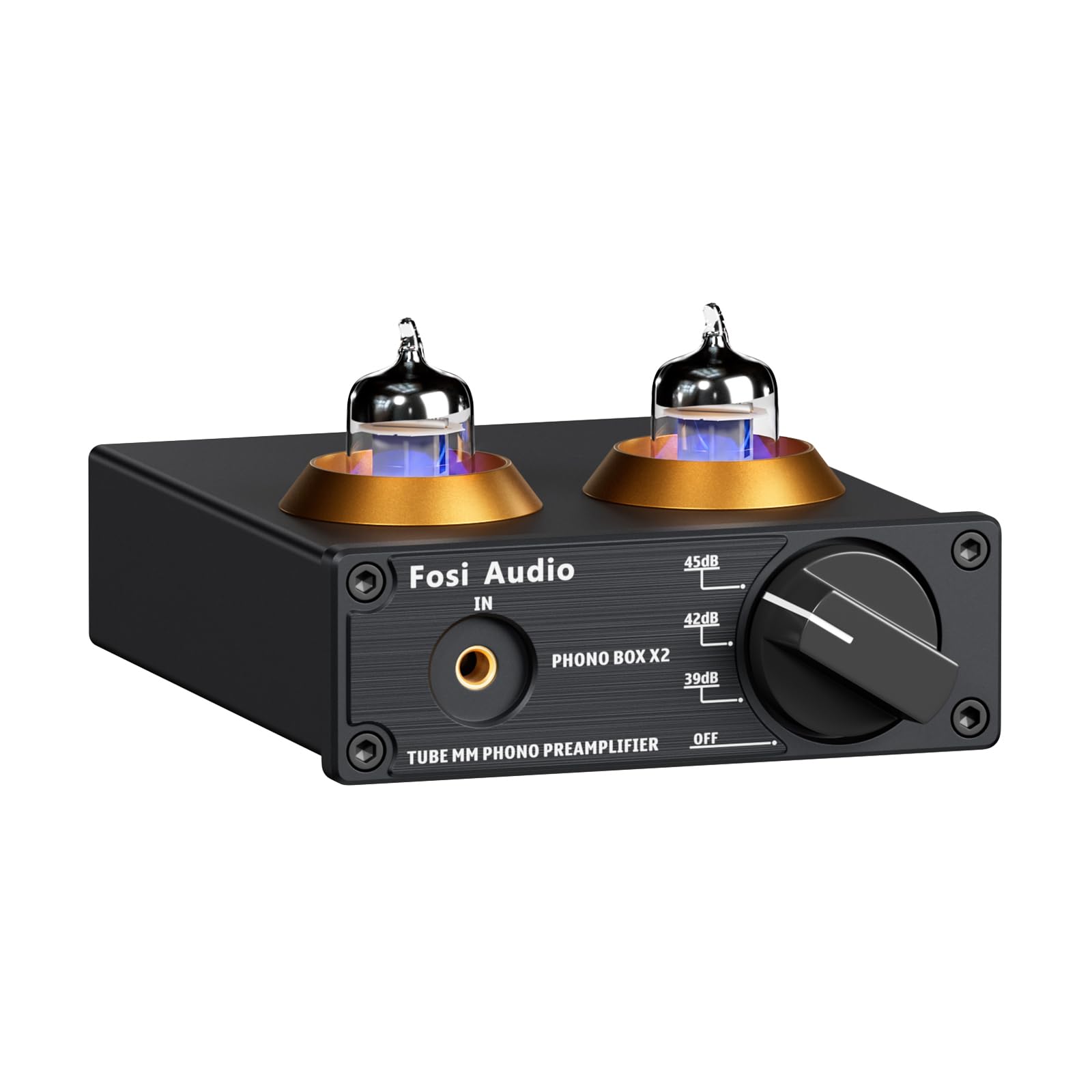
Fosi Audio Box X2 Tube Phono Preamp Review

Fosi Audio
In Stock
9.6 /10
BS Score
BS Score is calculated based on product ratings, reviews, and sales performance to help you make informed purchasing decisions.
Updated: Aug 18, 2026
Last update on Aug 18, 2026 / Affiliate links / Images, Product Titles, and Product Highlights from Amazon Creators API.
Pros & Cons

Pros

  • Solves the most common vinyl setup problem by turning phono output into line level, which opens up modern amps and powered speakers that dropped their phono inputs
  • Three gain modes give real tuning room, so a quiet cartridge can be pushed to 45 dB while a hotter one stays clean at 39 dB
  • The grounding post gives your turntable's ground wire a proper home, which is the standard fix for the hum many first-time vinyl owners hear
  • Tube rolling is a genuinely low-cost hobby upgrade path here, since several tube families are listed as compatible and swapping is described as a user-level task
  • The AUX input means the unit is not idle when the record is over, since a phone or laptop can feed the same tube stage

Cons

  • It is specified for moving magnet cartridges, so owners of low-output moving coil cartridges will not get usable gain and should shop for an MC-capable or dual-mode preamp
  • Tubes are consumable parts that eventually need replacing, and the supplied information does not cover tube life, warm-up behavior, or replacement cost, so plan for occasional upkeep
  • The product data includes no dimensions, weight, input or output impedance, signal-to-noise ratio, or RIAA accuracy figures, which leaves buyers who compare preamps on measured specs without the numbers they want
Detailed Review

The Fosi Audio Box X2 Phono Preamp is a compact tube-equipped phono stage built for turntable owners running a moving magnet cartridge into gear that has no phono input. Its core job is converting the very low signal from a record player into line level so an amplifier, receiver, or set of powered speakers can actually use it. The catch is scope: this is an MM-only design.

Three switchable gain modes of 39, 42, and 45 dB carry most of the practical weight. Cartridge output varies noticeably between models, and a fixed-gain preamp forces you to live with whatever level it produces. Here you can pick a lower setting if your amp is already loud at low volume positions, or step up to 45 dB if records sound thin and underpowered next to your streaming sources. The 3.5mm AUX input widens the use case further by letting a phone, laptop, or portable player pass through the same tube stage, which matters if you only have one free input downstream.

Fosi Audio ships the unit with two vacuum tubes, an RCA cable, a DC 12V power adapter, and a manual, so the only thing most buyers add is speaker-side wiring they likely already own. A grounding post is included, which is the correct place to land your turntable's ground wire and the usual remedy for background hum. The listed tube compatibility covers 6K4, 6J1, 6J4, GE5654, and 6AK5 families, and Fosi Audio describes swapping as something owners do themselves.

The limitations are worth weighing. Moving coil cartridge owners are simply outside the target range. Tubes are wear items, and no tube life, warm-up, or measured noise figures are supplied. No dimensions, impedance values, or signal-to-noise specifications appear in the product data either, so buyers who choose components by measurement will be working with less information than they prefer.

Buy it if you want a gain-adjustable MM phono stage with a tube path you can experiment with over time. Hesitate if you need documented performance numbers or run a moving coil cartridge. Those buyers should look at a solid-state or MC-capable preamp with published specifications instead.

Key Features Explained

Phono to Line-Level Conversion: This is the reason the box exists. A turntable's output is far too quiet and tonally shaped to plug into a normal input, so without a phono stage you get faint, thin sound or nothing at all. The Box X2 handles that conversion, which is what lets a record player work with a modern amplifier, receiver, or active speaker pair that omits a phono input.

Three Switchable Gain Modes: Choosing between 39, 42, and 45 dB lets you match the preamp to your specific cartridge and amp rather than accepting one fixed level. If vinyl plays noticeably quieter than your other sources, move up. If your amplifier hits comfortable listening volume in the first sliver of its range, move down. Buyers who own more than one turntable benefit most from this flexibility.

Grounding Post: Most turntables have a thin ground wire that must terminate somewhere, and when it does not, you often hear a steady hum through the speakers. The dedicated post on the Box X2 gives that wire a proper connection point. Fosi Audio also frames it as protecting the turntable. For first-time vinyl owners, this single terminal prevents a very common and frustrating setup problem.

User-Swappable Vacuum Tubes: The unit ships with two tubes and lists compatibility with 6K4, 6J1, 6J4, GE5654, 6AK5 and similar types. Because different tubes have different sonic character, owners can adjust the sound of their system without buying new components. That appeals to listeners who enjoy tinkering, though it also means tubes are parts you will eventually replace.

3.5mm AUX Input: A second input turns the Box X2 into more than a vinyl-only accessory. You can route a phone, laptop, or digital audio player through the same tube stage and out to your amp. This is genuinely useful when the downstream amplifier has limited inputs, or when you want a consistent tube flavor across both analog and digital listening.

Compatibility

Cartridge Type: The Box X2 is specified as a moving magnet (MM) phono preamplifier, so check your cartridge before ordering. Most turntables sold with a factory-fitted cartridge, and most user upgrades under the audiophile tier, are moving magnet. If you have deliberately purchased a low-output moving coil cartridge, this unit is not the right match and you should look for a preamp that explicitly supports MC.

Downstream Gear: Because the output is line level over RCA, the natural pairings are an integrated amplifier, AV receiver, or powered speakers with RCA inputs. This is the fix for the common situation where a receiver was built without a phono input. An RCA cable is supplied, so a basic turntable-to-preamp-to-amp chain does not require an extra cable purchase.

Gain Matching: The three settings of 39, 42, and 45 dB exist because cartridges and amplifiers differ in sensitivity. In practice you start in the middle, then adjust if vinyl is either much quieter than your other sources or so loud that your volume knob barely moves. This adjustability improves the odds of a good match across varied systems rather than guaranteeing one on the first try.

Tube Types: Fosi Audio lists 6K4, 6J1, 6J4, GE5654, 6AK5 and similar tubes as compatible, and two tubes come in the box. That gives a defined shopping list if you decide to try alternatives later. Stay within the listed families rather than assuming any small signal tube will drop in.

Power and Additional Sources: The included DC 12V power adapter means no separate power purchase, so plan for one nearby outlet. The 3.5mm AUX input accepts a headphone-style output from a phone, tablet, laptop, or DAP, which is handy if your amplifier is short on inputs. You will need your own 3.5mm cable for that connection since it is not listed among the included items.

Setup & Maintenance

Basic Signal Chain: Setup follows the standard three-box order. Turntable RCA outputs run into the Box X2, the Box X2 runs out to your amplifier or powered speakers using the supplied RCA cable, and the DC 12V adapter powers the unit. If your amp offers a dedicated phono input, do not use it here, since running two phono stages in series produces distorted, overloaded sound. Use a line-level input such as AUX or CD instead.

Grounding: Attach your turntable's ground wire to the grounding post before you start troubleshooting anything else. A loose or unattached ground wire is the most frequent cause of the low hum new vinyl owners hear, and the post is there specifically for that connection.

Choosing a Gain Setting: Set the gain with your amplifier volume turned down, then listen and compare against another source. Vinyl playing noticeably quieter than a streaming input suggests moving up toward 45 dB. An amplifier that reaches full listening volume almost immediately suggests dropping toward 39 dB. Because the switch is on the unit, this is a one-time adjustment for most single-turntable systems.

Tube Care and Replacement: Tubes are the one consumable element to plan around. Fosi Audio describes swapping them as an owner-level task and lists 6K4, 6J1, 6J4, GE5654, 6AK5 and similar types as compatible. Always disconnect power and let the unit cool before touching tubes, seat replacements gently and squarely, and expect the sound signature to shift between tube types. No tube lifespan figures are supplied, so treat replacement timing as something to judge by ear.

Placement: Give the unit an open spot with airflow rather than burying it inside a sealed cabinet, since tubes generate heat during operation. Keeping the power adapter and its cable away from the delicate phono cables is also good practice for minimizing induced hum in any turntable setup.

3

Pyle PP999 Phono Turntable Preamp

Pyle
In Stock
9.9 /10
BS Score
BS Score is calculated based on product ratings, reviews, and sales performance to help you make informed purchasing decisions.
Updated: Aug 18, 2026
Last update on Aug 18, 2026 / Affiliate links / Images, Product Titles, and Product Highlights from Amazon Creators API.
Pros & Cons

Pros

  • Easy to set up with RCA connections and ground wire
  • Low-noise operation for clear sound
  • Compact size saves space
  • Works with any turntable that has magnetic cartridge
  • Affordable entry-level solution for adding phono input

Cons

  • Requires a 12V DC power source, which may add clutter
  • No adjustable gain or loading options for fine-tuning
  • Basic build quality may not be durable for heavy use
Detailed Review

The Pyle PP999 is a compact phono preamp designed for anyone who wants to connect a turntable to modern audio equipment that lacks a dedicated phono input. It is an ideal solution for vinyl enthusiasts who have upgraded their receiver or speakers and need a simple way to amplify the weak phono signal from their turntable to line level. This preamp is best suited for casual listeners and those on a budget who prioritize ease of use over advanced features.

The primary function of the PP999 is to convert phono signals from magnetic cartridges into line level signals that standard audio inputs can accept. It features an input sensitivity of 3mV at 50K ohms, which is typical for moving magnet cartridges. The low-noise operational amplifiers ensure that the signal is amplified without introducing significant background hiss or hum, which is crucial for preserving the warmth and detail of vinyl records. This makes it a practical choice for improving the sound quality of a turntable connected to a computer, laptop, or modern stereo receiver.

In terms of design, the Pyle PP999 is a small, lightweight unit that can be placed discreetly near your turntable or amplifier. It has simple stereo RCA inputs and outputs, along with a ground terminal for connecting your turntable's ground wire to reduce hum. The unit is powered by a 12V DC adapter, which is included, so you don't need to worry about batteries. The plug-and-play nature means you can have it set up in minutes without any complicated configuration.

While the PP999 is straightforward and effective for basic use, it does have limitations. It offers no adjustable gain, loading, or EQ settings, which may be a drawback for audiophiles who want to fine-tune the sound to match their cartridge or personal preference. Additionally, the plastic case and basic components may not be as durable as higher-end preamps, but for the price, it is a reasonable trade-off. If you have a high-end turntable or require precise adjustments, you may want to consider a more advanced phono preamp with additional controls.

Overall, the Pyle PP999 is a solid entry-level phono preamp that delivers on its promise of converting phono signals to line level with low noise. Its strongest selling point is its simplicity and affordability, making it an excellent choice for beginners or those who just need a basic solution to connect their turntable to modern audio gear. The main reason to hesitate is the lack of adjustability, which might not satisfy enthusiasts seeking more control. If you are a casual listener who values ease of use and cost-effectiveness, this preamp is a practical option; otherwise, consider a more feature-rich model.

Key Features Explained

Phono to Line Level Conversion: The PP999 takes the low-level phono signal from your turntable's magnetic cartridge and amplifies it to a standard line level signal. This is essential because modern amplifiers and receivers often lack a phono input, and without this conversion, your turntable would sound extremely quiet or distorted. This feature directly solves the compatibility problem and allows you to connect your turntable to any audio device with an RCA input.

Low Noise Operation: The preamp uses low-noise operational amplifiers to minimize background hiss and interference. This is particularly important for vinyl playback, as it preserves the clarity and detail of the music. By reducing noise, the PP999 ensures that you hear the music, not the electronics, which is a key benefit for listeners who value sound quality.

Stereo RCA Inputs and Outputs: The unit provides standard RCA connections for both input and output, making it universally compatible with most turntables and audio receivers. The input connects to your turntable, and the output connects to your amplifier or powered speakers. This simple interface means you don't need any special cables or adapters, and setup is straightforward even for beginners.

Ground Terminal: A ground terminal is included on the preamp, allowing you to connect your turntable's ground wire. This helps to reduce hum and electrical interference that can occur when the turntable and preamp are not properly grounded. This is a practical feature that contributes to cleaner audio, especially in setups where the turntable is not grounded through the phono cable.

12V DC Power Adapter: The preamp is powered by an included 12V DC adapter, ensuring a stable and consistent power supply. This is more reliable than battery-powered options and ensures that the preamp operates at optimal performance. The adapter also reduces the risk of power-related noise, which can be a concern with poorly regulated power sources.

Buyer's Guide

Best For: The Pyle PP999 is best for vinyl enthusiasts who have a turntable with a magnetic cartridge and want to connect it to modern audio equipment that lacks a phono input. It is also ideal for beginners who are new to vinyl and want a simple, affordable way to get their turntable working without investing in a high-end preamp.

Consider Alternatives If: If you have a turntable with a ceramic cartridge, or if you require adjustable gain and loading settings to match your specific cartridge, this preamp may not be suitable. Additionally, if you are an audiophile seeking the highest possible sound quality and are willing to spend more, you might want to consider a preamp with more advanced circuitry and features.

Setup and Daily Use: Setting up the PP999 is straightforward. Connect the RCA cables from your turntable to the input jacks on the preamp, attach the ground wire from your turntable to the ground terminal, then connect the output jacks to your receiver or amplifier. Plug in the power adapter and you're ready to play. Daily use involves simply selecting the correct input on your receiver and playing your records as usual.

Maintenance Requirements: This preamp requires minimal maintenance. Keep it in a dry, dust-free location, and avoid exposing it to extreme temperatures. Periodically check the connections to ensure they are secure and clean. There are no consumable parts or filters to replace, so you can expect long-term reliable performance with proper care.

What Sets It Apart: The Pyle PP999 stands out for its combination of low price, compact size, and low-noise operation. Many budget preamps suffer from audible noise, but this model's use of low-noise op-amps helps to keep the signal clean. Its simple plug-and-play design also makes it more accessible than preamps with complex controls, which can be intimidating for newcomers.

Setup & Maintenance

Unboxing and Placement: The Pyle PP999 comes with the preamp unit and a 12V DC power adapter. Place the preamp near your turntable or receiver, ideally close to the source to minimize cable length and potential interference. Ensure it is on a stable surface and not stacked with other heat-generating equipment.

Connecting Your Turntable: Use a pair of RCA cables to connect the output of your turntable to the input jacks on the preamp. If your turntable has a ground wire, connect it to the ground terminal on the preamp. This is crucial for reducing hum. Make sure the connections are tight and secure.

Connecting to Your Receiver or Amplifier: Connect another set of RCA cables from the output jacks on the preamp to any line-level input on your receiver, such as AUX or CD. Avoid using the phono input if your receiver has one, as this would cause double amplification and distortion.

Powering On: Plug the included 12V DC adapter into the preamp and then into a wall outlet. There is no power switch on the preamp, so it will be powered on as long as it is plugged in. You can leave it connected, but if you want to save power, you can unplug it when not in use.

Regular Checks: Periodically inspect the cables and connections for any signs of wear or corrosion. Clean the RCA jacks with a dry cloth if they become dirty. Avoid using liquid cleaners or abrasive materials. If you notice any unusual noise or distortion, check the ground connection and ensure all cables are properly seated.

4

Low Noise Phono Turntable Preamp with RCA Input

In Stock
9.8 /10
BS Score
BS Score is calculated based on product ratings, reviews, and sales performance to help you make informed purchasing decisions.
Updated: Aug 18, 2026
Last update on Aug 18, 2026 / Affiliate links / Images, Product Titles, and Product Highlights from Amazon Creators API.
Pros & Cons

Pros

  • Solves the no-phono-input problem for anyone connecting a turntable to modern speakers, a laptop, or a computer.
  • Stated 3mV at 50K Ohms input sensitivity gives moving-magnet cartridge owners a clear compatibility figure to check against.
  • Included 12V DC adapter means buyers do not have to source a separate power supply before first use.
  • Ground terminal alongside the RCA inputs helps users who need to land a turntable ground wire to reduce hum.
  • Documented 30-day return window and 1 year manufacturer guarantee give first-time vinyl buyers a fallback if the unit misbehaves.

Cons

  • The manufacturer states that using it with a turntable that already has a built-in preamp may result in bad noise, which rules out many all-in-one and USB decks.
  • No gain, EQ, subsonic filter, or level controls are documented, so listeners who want to tune output or tame rumble get no adjustment.
  • No dimensions, weight, chassis material, cartridge type beyond magnetic pickups, or moving-coil support are supplied, leaving shelf planning and higher-end cartridge matching unresolved.
Detailed Review

The Phono Turntable Preamp with RCA input and 12V DC adapter exists to do one job: convert a turntable's phono signal to line level so records play at normal volume through equipment that has no phono stage. The best-fit buyer owns a turntable with a magnetic cartridge and no internal preamp, and wants to connect it to a modern receiver, powered speakers, or a computer. The strongest supplied reason to consider it is the published electrical match, with input sensitivity of 3mV at 50K Ohms for magnetic pickups and a 2V max (P-P) output at 10K Ohms. The qualification is significant and comes from the manufacturer itself: if the turntable already has a built-in preamp, this unit may produce bad noise.

The signal path is described as using low-noise audio operational amplifiers, which is the part that determines whether quiet passages stay quiet rather than sitting on a bed of hiss. The manufacturer also advises positioning the preamp close to the source to reduce unwanted noise and interference, so plan on a spot near the turntable rather than across the room behind a rack. The stated output level is intended to drive a receiver or amplifier input at normal listening volume.

Connections are stereo RCA in, stereo RCA out, plus a ground terminal for the turntable ground wire. The turntable goes into the inputs, the amplifier or receiver goes on the outputs, and the included 12V DC adapter supplies power, so setup is a matter of three cables and a wall socket. The manufacturer describes the downstream side as working with speakers, computers, and laptops.

The verdict is straightforward for its role. The trade-off is a lack of published detail beyond the basic electrical figures, with no dimensions, no controls, and no moving-coil specification listed. Anyone with a turntable that already includes a preamp, or a listener who wants adjustable gain or filtering, should look at a different product type.

Buyer Snapshot

Best For: A home listener with a magnetic-cartridge turntable that has no built-in preamp, connecting to a receiver, powered speakers, or a computer that lacks a phono input.

Why It Fits: The manufacturer specifies conversion of phono signal to line level, 3mV input sensitivity at 50K Ohms for magnetic pickups, 2V max (P-P) output at 10K Ohms, low-noise audio operational amplifiers, stereo RCA in and out with ground, and an included 12V DC adapter.

Think Twice If: Your turntable already has a built-in preamp, since the manufacturer warns this combination may result in bad noise, or if you need gain, EQ, or filter controls that are not documented here.

Bottom Line: A sensible plug-and-play bridge between a preamp-less turntable and modern audio gear, provided you confirm your turntable has no internal phono stage before ordering.

Compatibility

Cartridge Match: The manufacturer states the unit accommodates magnetic pickups with an input sensitivity of 3mV at 50K Ohms. No moving-coil or ceramic cartridge support is listed.

Turntable Requirement: The turntable must not have a built-in preamp. The manufacturer explicitly warns that connecting one that does may result in bad noise, so check your deck's switch or specification sheet first.

Downstream Devices: Stereo RCA outputs feed an amplifier or receiver, and the manufacturer also lists speakers, computers, and laptops as connection targets for the receiving end.

Grounding and Placement: A ground connection sits alongside the RCA inputs for the turntable ground wire, and the manufacturer recommends placing the preamp close to the source to limit noise and interference.

Power: A DC 12V adapter is included, so no separate power supply purchase is required.

Setup & Daily Use

Wiring Order: Connect the turntable to the stereo RCA inputs and attach the ground wire, then run stereo RCA cables from the outputs to the amplifier or receiver, and finally connect the 12V DC adapter.

Placement: Keep the unit near the turntable rather than at the far end of a cable run, following the manufacturer's guidance that a short source-side path reduces unwanted noise and interference.

Controls: No gain, EQ, or filter adjustments are documented, so daily operation amounts to leaving the unit powered and setting volume at the receiver or speakers.

Before You Buy: Verify that your turntable does not have a built-in preamp, since the manufacturer identifies that pairing as a cause of bad noise.

Coverage: The manufacturer lists a 30-day money back return policy and a 1 year guarantee, which gives you a window to confirm the pairing works in your system.

5

Daakro AK45 Stereo Amplifier Review

In Stock
9.5 /10
BS Score
BS Score is calculated based on product ratings, reviews, and sales performance to help you make informed purchasing decisions.
Updated: Aug 18, 2026
Last update on Aug 18, 2026 / Affiliate links / Images, Product Titles, and Product Highlights from Amazon Creators API.
Pros & Cons

Pros

  • Versatile input options: Bluetooth, USB, SD, and likely RCA (though not specified) cover multiple sources.
  • Power output claims (300W peak) suggest capability for driving a wide range of passive speakers.
  • Included remote control adds convenience for distant adjustments.
  • Compact size and low price point make it an accessible entry-level amplifier.
  • Bass and treble controls allow basic tone shaping without external EQ.

Cons

  • No verified customer reviews available, so real-world performance and durability are unconfirmed.
  • Bluetooth range and stability may be affected by walls or interference, as noted in the description.
  • Maximum input voltage and compatibility with specific speaker impedance are not specified, potentially leading to mismatched setups.
Detailed Review

The Daakro AK45 is a compact stereo amplifier designed for passive speakers, targeting budget-conscious users seeking a simple audio solution for small spaces. With a claimed peak power of 300W per channel and rated power of 40W+40W, it is positioned to drive a variety of home speakers. The most significant limitation in evaluating this product is the absence of verified customer reviews, meaning all performance claims are based solely on manufacturer-supplied specifications.

Key features include Bluetooth 5.0 for wireless streaming, USB and SD card inputs for direct playback, and analog controls for bass, treble, and volume. The inclusion of a remote control adds convenience. These features make it a versatile choice for connecting phones, computers, or TVs to passive speakers, particularly in apartments or offices.

However, the supplied data lacks critical details such as speaker impedance ratings, signal-to-noise ratio, and total harmonic distortion. Without these, it is impossible to assess audio quality objectively. The Bluetooth range is specified as 30ft/10m without walls, but real-world performance may vary. The description also warns that it is not for active speakers, which is an important compatibility note.

Given the lack of customer feedback, potential buyers should be cautious. The amplifier may meet basic needs, but for those requiring high-fidelity sound or long-term reliability, alternative products with verified reviews might be safer. It is also worth noting that the price point is low, which often correlates with limited build quality.

In conclusion, the Daakro AK45 offers a feature set that could satisfy casual listeners, but the evidence is insufficient to recommend it confidently. Potential buyers should weigh the low cost against the unknown performance and durability.

Evidence Breakdown

Verified Product Facts: The amplifier is rated at 300W+300W peak and 40W+40W RMS, supports Bluetooth 5.0, USB 2.0, and SD card inputs, includes bass and treble controls, and comes with a remote control. It is designed for passive speakers and has a compact size.

Customer Signals: The supplied data includes zero customer reviews, so there are no verified user experiences to summarize. The absence of reviews means no patterns of satisfaction or issues can be identified.

Not Verified: Long-term durability, actual power output under load, sound quality (e.g., distortion levels), compatibility with specific speaker impedances, and warranty terms are not established by the provided data.

Evidence-Aware Verdict: The evidence supports the amplifier's claimed features and intended use for basic audio amplification. It does not support assertions of high-fidelity performance or long-term reliability, as those require independent testing or user feedback.

Decision Factors

Power Output: The claimed 300W peak power is impressive for the price, but rated power is 40W per channel, which is typical for small amplifiers. This suggests it can drive moderate-sized speakers, but not large floor-standing models. Buyers should match speaker sensitivity and impedance.

Input Options: Bluetooth, USB, and SD inputs provide flexibility for various sources. However, the absence of specified analog inputs (like RCA) is a concern; if not included, it limits connectivity to older devices. The description does not mention RCA, so buyers should verify.

Controls: Bass and treble knobs plus a remote control offer convenient adjustments. This is a plus for users who want tone control without external EQ.

Compatibility: The amplifier is only for passive speakers, as noted. It also has a Bluetooth range limitation, especially when connecting to TVs or PCs, which may be a factor in larger rooms.

Build and Reliability: With no reviews, the build quality and durability are unknown. Budget amplifiers often have shorter lifespans, so this is a risk.

Ownership Cost: The low price is attractive, but potential hidden costs include needing a compatible power supply (not specified) and possibly replacing the unit sooner than higher-end models.

6

Nobsound NS-13G MAX 300Wx2 Stereo Amplifier

In Stock
9.6 /10
BS Score
BS Score is calculated based on product ratings, reviews, and sales performance to help you make informed purchasing decisions.
Updated: Aug 18, 2026
Last update on Aug 18, 2026 / Affiliate links / Images, Product Titles, and Product Highlights from Amazon Creators API.
Pros & Cons

Pros

  • High power output (300W x 2 at 4Ω) benefits users with inefficient speakers or larger rooms.
  • Phono input eliminates the need for a separate phono preamp, simplifying turntable setups.
  • Low distortion (0.005% THD) and high SNR (107dB) appeal to audiophiles seeking clean sound.
  • Compact size makes it ideal for desktop or shelf placement without sacrificing performance.
  • Bass/treble controls offer flexible sound shaping for various music preferences.

Cons

  • Power rating is at 4 ohms; users with 8-ohm speakers get less power, which may affect loudness.
  • No digital inputs (like optical or USB) – only RCA and 3.5mm, so it won't connect directly to TVs without an adapter.
  • No remote control or Bluetooth, limiting convenience for some users.
  • Some users may find the 48V power adapter bulky for travel or tight spaces.
  • Limited to stereo output – no subwoofer line-out, only a 3.5mm passthrough that may not be ideal for all subwoofers.
Detailed Review

The Nobsound NS-13G MAX is a compact Class D stereo amplifier designed for vinyl enthusiasts, desktop audio users, and anyone needing a space-saving power source for passive speakers. It delivers 300 watts per channel into 4 ohms using a Texas Instruments TPA3255 chip, offering high output with low distortion (0.005% THD) and a high signal-to-noise ratio (107dB). This makes it a strong candidate for those who want clean, powerful sound from a small unit.

Key features include a built-in MM phono input, which eliminates the need for an external phono preamp when connecting a turntable. It also offers RCA inputs for other sources like TVs, CD players, or streaming devices, plus a 3.5mm AUX passthrough that can be used for subwoofers or multi-room setups. Bass and treble controls (±6dB) let you tailor the sound to your preference.

Setup is straightforward: connect your source, speaker wires (banana plugs or bare wire), and plug in the included 48V/5A power adapter. The aluminum chassis with dual cooling vents helps maintain quiet operation even at high volumes. Its compact size (5.1"x4"x1.5") makes it easy to place on a desk, shelf, or AV rack.

Overall, the NS-13G MAX offers excellent value for its price, especially for vinyl users needing a phono stage. However, the power rating is at 4 ohms, so if you have 8-ohm speakers, you'll get less power (around 150W per channel), which may be insufficient for very large rooms. Consider a more powerful amp or a separate phono preamp if you need more headroom or different connectivity options.

Buyer Snapshot

Best For: Vinyl enthusiasts who need a built-in phono preamp and a compact amplifier for bookshelf speakers in a small to medium room.

Why It Fits: Its MM phono input allows direct turntable connection, and the 300W (4Ω) output provides ample power for most home listening setups.

Think Twice If: You have 8-ohm speakers and need maximum power, or you prefer digital inputs like optical or Bluetooth.

Bottom Line: If you're looking for a budget-friendly amp with phono input and solid performance, the NS-13G MAX is a strong choice, but verify your speaker impedance to ensure adequate power.

Key Features

Amplifier Power: 300W x 2 at 4Ω, Class D with TPA3255 chip for high efficiency and low heat.

Phono Input: Built-in MM phono stage for turntables with moving magnet cartridges.

Connectivity: RCA inputs for line-level sources, 3.5mm AUX passthrough for subwoofers or additional zones.

Tone Controls: Bass and treble adjustment (±6dB) for sound customization.

Build Quality: CNC-milled aluminum chassis with dual cooling vents for durability and silent operation.

7

Fosi Audio TB10D 600W Class D Mini Amplifier

Fosi Audio
In Stock
9.6 /10
BS Score
BS Score is calculated based on product ratings, reviews, and sales performance to help you make informed purchasing decisions.
Updated: Aug 18, 2026
Last update on Aug 18, 2026 / Affiliate links / Images, Product Titles, and Product Highlights from Amazon Creators API.
Pros & Cons

Pros

  • Powerful output (300W/ch) drives a wide range of passive speakers, ideal for larger rooms or demanding listeners.
  • Compact and lightweight design fits easily on a desk or shelf, saving space.
  • Bass and treble controls offer simple sound customization, beneficial for adjusting to room acoustics or personal taste.
  • Versatile RCA inputs work with most audio sources, making it a flexible hub for various setups.
  • Built-in protection circuits provide peace of mind, safeguarding the amp and connected speakers from damage.

Cons

  • No digital inputs (like optical or coax), limiting connectivity for modern TVs or DACs that only have digital outputs.
  • No remote control, so volume and tone adjustments must be made manually at the unit, which may be inconvenient for some.
  • Power output is rated at 300W per channel, but actual continuous power may be lower; still, it's adequate for most home use.
Detailed Review

The Fosi Audio TB10D is a compact Class D stereo amplifier designed to power passive bookshelf speakers or bass shakers in a home audio setup. It is best suited for budget-minded enthusiasts who want a small, high-power amp to drive a pair of bookshelf speakers in a living room, game room, or personal studio. Its strongest verified feature is the TPA3255 chip, which delivers up to 300W per channel (600W total) and can handle speakers with 2-8 ohm impedance, ensuring clean, dynamic sound even at higher volumes. However, its lack of digital inputs and remote control may be a drawback for those with modern sources or who prefer convenience.

Two key features stand out: the bass and treble knobs and the universal connectivity. The tone controls let you tailor the sound to your preference or room acoustics, which is a practical way to adjust for speaker placement or personal taste. The RCA input and passive speaker outputs are straightforward and compatible with a wide range of devices, including phones, computers, TVs, and DVD players, making it easy to integrate into an existing setup. For turntable users, it can add warmth when paired with a phono preamp, and for gamers, it can drive bass shakers for immersive rumble.

Setup is simple: connect your source via RCA and your speakers via the binding posts. The power switch and volume knob are on the front, and the bass and treble knobs are easily accessible. Its compact size means it can fit on a desk or shelf without dominating the space. The built-in protection circuits help ensure stable operation, but there is no mention of a remote, so you'll need to be within arm's reach to adjust settings. It also lacks digital inputs like optical or coaxial, so if your TV or DAC only has digital outputs, you'll need an external converter.

In summary, the Fosi Audio TB10D offers excellent value for its price, providing high power output and essential tone controls in a small footprint. It's ideal for those who want a simple, powerful amp for analog sources and don't mind manual control. However, if you require digital inputs, a remote, or more advanced features like Bluetooth, you should consider other amplifiers that offer those conveniences, even if they cost more. For its intended use, it's a solid choice.

Buyer Snapshot

Best For: Home audio hobbyists on a budget who want a compact, high-power amplifier to drive bookshelf speakers or bass shakers in a small to medium-sized room.

Why It Fits: The TPA3255 chip delivers 300W per channel, ensuring enough power for most passive bookshelf speakers (2-8 ohms), and the RCA input works with common sources like TVs, computers, and phones.

Think Twice If: You need digital inputs (optical/coaxial) or a remote control for convenience, or if you plan to use it in a large home theater setup where more channels or higher-end features are required.

Bottom Line: If you want an affordable, compact stereo amp with powerful output and tone controls for a simple analog setup, the Fosi Audio TB10D is a smart buy.

Key Features

Power Output: 300W per channel (600W total) with the TPA3255 chip, providing ample volume for bookshelf speakers (2-8 ohms).

Tone Controls: Bass and treble knobs allow precise sound tailoring to suit your listening preference.

Connectivity: RCA input and passive speaker outputs support a wide range of sources, including phones, computers, TVs, and turntables (with phono preamp).

Protection: Built-in protection circuits ensure stable operation and extend the amplifier's lifespan.

8

Fosi Audio BT20A Bluetooth Stereo Amplifier

Fosi Audio
In Stock
9.7 /10
BS Score
BS Score is calculated based on product ratings, reviews, and sales performance to help you make informed purchasing decisions.
Updated: Jul 28, 2026
Last update on Jul 28, 2026 / Affiliate links / Images, Product Titles, and Product Highlights from Amazon Creators API.
Pros & Cons

Pros

  • 100W per channel provides ample volume for small to medium rooms and outdoor settings
  • Compact size allows placement on shelves, desks, or in tight spaces without clutter
  • Bluetooth connectivity enables wireless streaming from phones, tablets, and computers
  • Bass and treble controls allow users to adjust sound to their preference
  • All-black design complements most home decor and adds durability

Cons

  • Entry-level amplifier may not satisfy audiophiles seeking high-fidelity sound
  • Limited to Bluetooth and RCA inputs, lacking digital or optical connections
  • No remote control or advanced features like multi-room audio or subwoofer output
Detailed Review

The Fosi Audio BT20A is a compact Bluetooth stereo amplifier designed to bring powerful, straightforward sound to passive speakers in a variety of settings. It is an ideal choice for budget-conscious listeners, DIY audio enthusiasts, or anyone looking to upgrade from a soundbar or smart speaker without investing in a full-size receiver. With its 100W per channel output, it can drive bookshelf speakers, ceiling speakers, or even a pair of outdoor speakers, making it a versatile addition to any home, office, or garage.

The BT20A's most significant feature is its Bluetooth connectivity, which allows you to stream music wirelessly from your smartphone, tablet, or laptop with minimal latency. This makes it perfect for casual listening, background music, or parties. The amplifier also includes RCA inputs, so you can connect a CD player, turntable with a preamp, or TV audio output. The simplicity of the setup is a major plus: just connect your speakers, plug in the power, pair your device, and you're ready to go.

Design-wise, the BT20A is all-black and compact, fitting easily on a bookshelf, desk, or entertainment center. The one-piece construction adds durability and a clean look that blends with most decor. The front panel houses the power switch, volume knob, and bass and treble controls, allowing you to fine-tune the sound to your liking. This hands-on approach is straightforward and effective, especially for users who prefer tactile controls over complex menus.

However, the BT20A is an entry-level amplifier, and its limitations reflect that. It lacks digital inputs like optical or coaxial, so if your TV or media player only has those connections, you'll need a separate converter. There's also no subwoofer output, which could be a drawback for users who want to add a powered sub for deeper bass. Additionally, the amplifier's performance is solid but not audiophile-grade; critical listeners may notice a lack of refinement compared to higher-end receivers.

In conclusion, the Fosi Audio BT20A is a practical and affordable solution for powering passive speakers in casual listening environments. Its strongest selling points are its compact size, Bluetooth convenience, and sufficient power for small to medium spaces. The main reason to hesitate is if you require advanced connectivity, high-end audio quality, or room correction features. For those simply seeking an easy, no-frills amplifier to bring their bookshelf speakers to life, the BT20A delivers solid value.

Key Features Explained

100W x 2 Output Power: This amplifier provides up to 100 watts per channel, which is more than enough to drive most bookshelf speakers to satisfying volumes in a bedroom, living room, or even a small patio. It ensures dynamic sound without distortion at typical listening levels.

Bluetooth Connectivity: The built-in Bluetooth allows you to stream audio wirelessly from your phone or tablet, eliminating the need for physical cables. This makes it easy to play music from any app, and the connection is stable enough for everyday use.

RCA Inputs: In addition to Bluetooth, the RCA inputs let you connect traditional audio sources like a CD player, turntable (with a preamp), or the audio output from a TV. This versatility ensures the amplifier can be integrated into various setups.

Bass and Treble Controls: The dedicated bass and treble knobs give you manual control over the sound signature. This is particularly useful for tailoring the audio to your room acoustics or personal preference, especially when using speakers that may need a slight boost or cut in certain frequencies.

Compact and Durable Design: The all-black, integrated one-piece design not only looks sleek but also adds structural integrity. Its compact footprint means it can fit on a shelf, desk, or even behind a TV, making it a space-saving solution for audio amplification.

Buyer's Guide

Best For: The Fosi Audio BT20A is ideal for individuals who have a pair of passive bookshelf speakers and want an affordable, compact amplifier to power them. It suits casual listeners, small apartment dwellers, office workers, or anyone needing a simple audio solution for a garage, patio, or secondary room.

Consider Alternatives If: If you require a receiver with multiple inputs (like HDMI or optical), a subwoofer output, or advanced room correction, you may want to consider a more expensive AV receiver or a dedicated stereo receiver with more features. Additionally, if you are an audiophile seeking high-fidelity sound with minimal coloration, this entry-level amp might not meet your expectations.

Setup and Daily Use: Setting up the BT20A is straightforward: connect your speakers to the spring-clip terminals, plug in the power adapter, and turn it on. Pair your phone via Bluetooth or connect a source via RCA, then adjust volume and tone controls. Daily use is as simple as turning it on and selecting your source.

What Sets It Apart: The BT20A stands out for its combination of Bluetooth convenience, compact size, and sufficient power at a budget-friendly price point. It offers a simpler alternative to full-size receivers, making it a great entry point for those new to passive speakers or those looking for a dedicated amp for a specific zone in their home.

9

WOOPKER AK45Pro Review: Compact 2-Channel

In Stock
9.5 /10
BS Score
BS Score is calculated based on product ratings, reviews, and sales performance to help you make informed purchasing decisions.
Updated: Aug 18, 2026
Last update on Aug 18, 2026 / Affiliate links / Images, Product Titles, and Product Highlights from Amazon Creators API.
Pros & Cons

Pros

  • Rated 50W x 2 output is a realistic match for bookshelf, tower, or outdoor speakers in small to mid-size rooms
  • Multiple input paths mean one unit can serve a TV over RCA, a phone over Bluetooth, and a USB stick of stored music
  • Physical bass and treble knobs let you compensate for boomy basements or thin-sounding small speakers without app menus
  • Compact footprint fits on a bookshelf, desktop, or workbench where a traditional stereo receiver would not
  • Plug-and-play USB and SD playback works without a phone, which suits garages, workshops, and outdoor setups

Cons

  • The 400W+400W peak rating is a marketing-style figure; anyone shopping on power alone should judge it by the 50W x 2 rated output
  • The remote ships without AAA batteries, so you need to supply them before couch-side control works
  • No published specifications for speaker impedance support, dimensions, or included power supply, which makes precise system planning harder before purchase
Detailed Review

The WOOPKER AK45Pro is a compact 2-channel stereo amplifier built to power a pair of passive speakers from Bluetooth 5.0, RCA, USB, or SD card sources. It fits buyers setting up sound in a bedroom, small apartment, home office, basement, or garage who want one inexpensive box rather than a full receiver. The qualification: its rated output is 50W x 2, not the 400W peak number on the box.

Input flexibility is the strongest practical argument here. Bluetooth 5.0 handles phones, tablets, and laptops with no cable run, while RCA inputs let you wire in a TV, projector with AV audio, or a computer's line output. The USB port and SD card slot add offline playback, which matters in a garage or workshop where you would rather not tie up a phone. Two microphone inputs with their own volume control turn the same unit into a basic karaoke or announcement setup at a party.

Control is handled with physical knobs for master volume, bass, treble, and microphone volume. That layout is more useful than it sounds on small speakers: a treble lift can open up a thin-sounding bookshelf pair, and pulling bass back tames the boom common in basements and concrete garages. A remote is included for adjustments from a seat, though it requires AAA batteries that are not supplied. The chassis is described as compact enough for a bookshelf or desktop, but no measured dimensions are published.

The main compromise is specification transparency. The 400W+400W peak claim overstates what the amplifier delivers in continuous use, and the 50W x 2 rated figure is the number to plan around. Supported speaker impedance, frequency response, and power supply details are not supplied, so anyone matching low-impedance or power-hungry towers, or wiring a permanent installation, is working with incomplete information. Listeners who want a large living room filled at high volume, or who need HDMI, subwoofer output, or streaming app support, should look at a conventional AV receiver instead.

Buy the AK45Pro for its combination of small size and genuinely broad inputs in a low-cost package. Hesitate if peak power claims are driving your decision or if you need documented electrical specifications. Choose a full receiver or powered speaker system for larger rooms and home theater duties.

Key Features Explained

50W x 2 Rated Output (400W Peak Claim): Plan your speaker matching around the 50W per channel rated figure, since that reflects continuous output rather than the 400W+400W peak marketing number. Fifty watts a side is a sensible fit for bookshelf speakers or efficient towers in a bedroom, office, or garage. Buyers with large, inefficient speakers or big open living rooms will want more headroom than this class of amplifier provides.

Bluetooth 5.0 Streaming: This is the fastest way to get music playing, letting a phone, tablet, or laptop connect without running cables to the amplifier. It suits renters and anyone who moves the system between rooms. Because the connection is wireless, playback follows whoever is paired, which is convenient at gatherings but means you hand off audio control along with the pairing.

USB and SD Card Playback: Loading music onto a USB stick or SD card lets the amplifier play on its own, with no phone tied up and no dependence on Bluetooth range. That is genuinely useful in a garage, workshop, or garden speaker setup where your phone is in a pocket or out of reach. It also gives you a backup source if a paired device leaves the room.

Dual Microphone Inputs With Mic Volume: Two mic jacks plus a dedicated microphone volume knob let you sing over music without a separate mixer, which is the practical draw for family parties and casual karaoke. Setting mic level independently from master volume keeps vocals audible without cranking the whole system. Microphones are not described as included, so budget for those separately.

Bass, Treble, and Master Volume Knobs: Physical tone controls let you correct room problems directly rather than digging through a phone app. Cutting bass helps in reflective basements and garages where low frequencies pile up, and adding treble can sharpen dull-sounding small speakers. This benefits listeners in imperfect rooms more than anyone with a well-treated dedicated listening space.

Included Remote Control: The remote allows source and playback adjustments from a couch or workbench, which matters when the amplifier is tucked onto a shelf. It runs on AAA batteries that are not included, so pick some up before setup day if you want remote control working immediately.

Compatibility

Source Devices: The AK45Pro is designed to accept audio from phones, computers, tablets, laptops, MP3 players, and projectors with AV audio output. Bluetooth 5.0 covers most modern mobile devices wirelessly, while RCA inputs handle wired sources including TVs and desktop line outputs. If your TV only outputs HDMI ARC or optical, you will need a converter, because no digital audio inputs are described.

Speakers: This is a 2.0-channel amplifier intended for passive speakers, including bookshelf pairs, tower speakers, and garden or outdoor speakers. It is not a match for powered or active speakers that contain their own amplification. Supported impedance is not published, so buyers with 4-ohm or unusually low-impedance speakers should confirm compatibility before committing to a permanent install.

Storage Media: A USB stick or SD card can be plugged in directly for playback without a source device. Supported file formats, maximum card capacity, and folder navigation behavior are not specified, so treat this as a convenience feature for standard music files rather than a replacement for a full media player.

Microphones and Karaoke: Two microphone input jacks are provided for wired microphones. Microphone type, connector size, and any wireless microphone support are not detailed in the product data, so verify your existing microphones will physically connect before assuming a match.

Vehicle and Alternative Installations: The compact design is described as also suitable for car audio use. That said, no wiring, voltage, or mounting details are supplied, so vehicle installation should be treated as a possible application to research further rather than a documented, ready-to-install feature.

Performance & Use Cases

Best Room Sizes: Small and mid-size spaces are where this amplifier makes the most sense, which matches the manufacturer's stated targets of small apartments, bedrooms, home offices, basements, and garages. At 50W per channel rated output, it has enough power to fill those rooms at comfortable listening levels with reasonably efficient speakers. Large open-plan living areas and outdoor parties at high volume will expose the limits.

TV and Desktop Audio: Running a TV or computer into the RCA inputs turns a pair of passive bookshelf speakers into a clear upgrade over built-in TV or laptop speakers, particularly for dialogue and music. Bear in mind this is a stereo amplifier with no surround processing or dedicated subwoofer output described, so it improves clarity rather than delivering home theater effects.

Party and Karaoke Use: With two microphone jacks and independent mic volume, the unit can support casual singing sessions without extra gear. The realistic expectation is family-gathering karaoke in a living room or basement, not sustained high-volume performance for a large crowd. Feedback management and microphone quality will influence results as much as the amplifier itself.

Garage, Workshop, and Outdoor Speakers: USB and SD playback stands out here, since music keeps running without a phone connected and without Bluetooth dropouts as you move around. Physical bass and treble knobs help tame the harsh reflections common in garages and hard-surfaced spaces. For genuinely outdoor installations, weather protection for both the amplifier and the speakers is your responsibility since none is described.

Reading the Power Rating: The most common source of disappointment with amplifiers in this category is peak power expectations. Treat 400W+400W as a peak marketing figure and 50W x 2 as the working number. Judged on the rated output, performance in the intended small-room applications is reasonable; judged on the peak claim, it will not meet expectations.

Buyer's Guide

Best For: Buyers who already own or plan to buy a pair of passive speakers and want an inexpensive, small amplifier to drive them in a bedroom, office, basement, garage, or secondary room. It also suits households that occasionally want microphone input for karaoke, and anyone who values physical tone knobs and offline USB or SD playback over app-based control.

Consider Alternatives If: You need to fill a large living room at high volume, want HDMI or optical inputs for a home theater setup, require a dedicated subwoofer output, or plan to run low-impedance or power-hungry tower speakers. Owners of powered or active speakers do not need this amplifier at all. Anyone requiring documented electrical specifications for a permanent or in-wall installation should choose a product that publishes them.

Setup and Daily Use: Expect to connect a pair of passive speakers, plug in your source over RCA or pair a device over Bluetooth 5.0, then set master volume and adjust bass and treble to suit the room. USB sticks and SD cards are described as plug and play. Day to day, most adjustments happen on the front knobs or the remote, with microphone volume set separately when the mic jacks are in use.

What to Budget Separately: AAA batteries for the remote are not included. Microphones, speakers, and speaker wire are not described as part of the package either, so factor those into the total cost if you are starting from nothing rather than adding to an existing setup.

What Sets It Apart: The combination of Bluetooth, RCA, USB, SD, and dual microphone inputs in a compact chassis is broader than what many small amplifiers at this end of the market offer, and the karaoke capability is not universal in this category. The trade-off is limited published specification detail, so it favors casual users over buyers who plan systems on paper before purchasing.

10

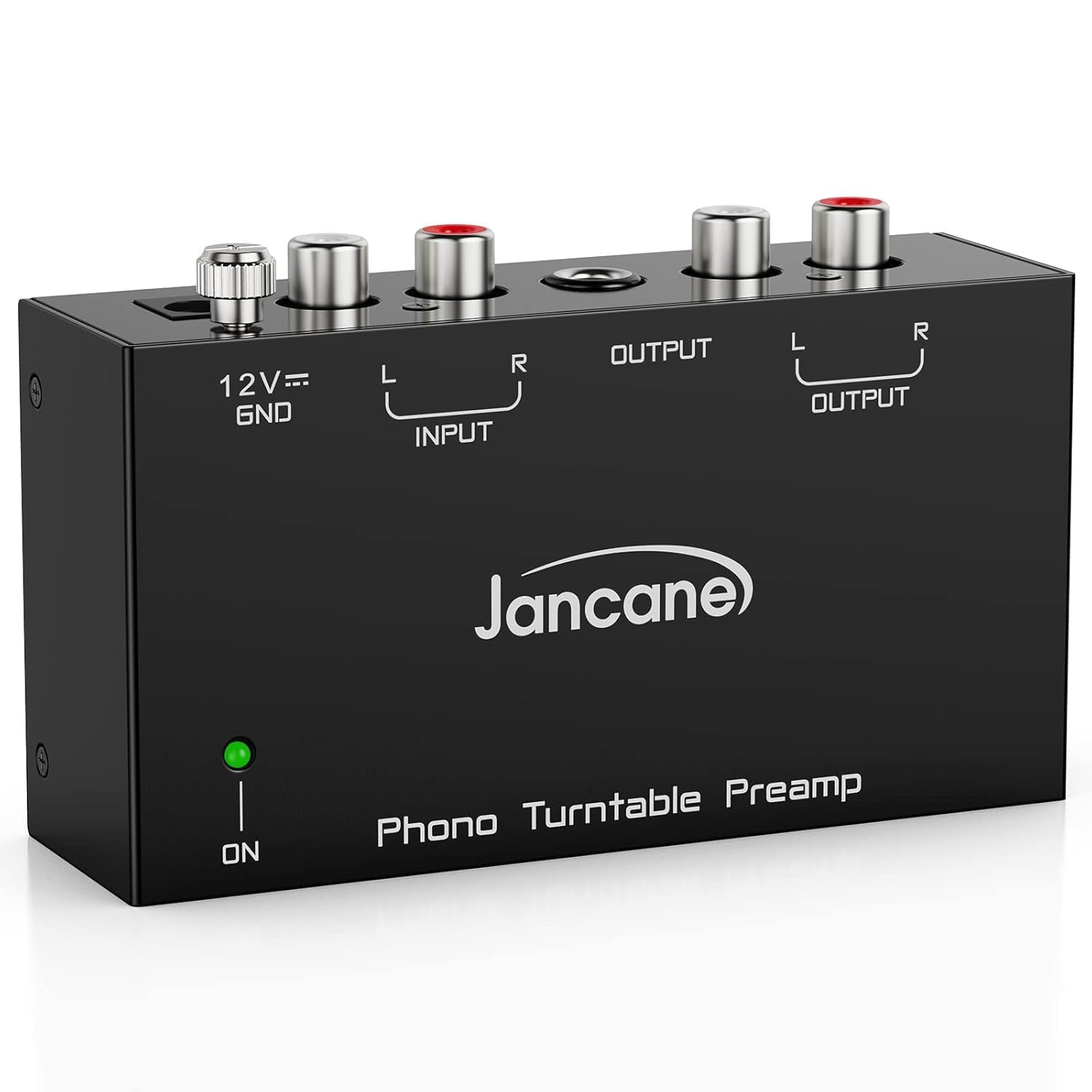
Jancane Phono Preamp for Turntable Review

In Stock
9.8 /10
BS Score
BS Score is calculated based on product ratings, reviews, and sales performance to help you make informed purchasing decisions.
Updated: Aug 18, 2026
Last update on Aug 18, 2026 / Affiliate links / Images, Product Titles, and Product Highlights from Amazon Creators API.
Pros & Cons

Pros

  • Accepts magnetic (moving magnet) cartridges at 3mV input sensitivity into 50K Ohms, which covers the cartridge type fitted to most consumer and entry-level audiophile turntables
  • Dual output options, stereo RCA plus TRS, make it flexible enough for a vintage receiver, a soundbar with analog inputs, or active monitors that use quarter-inch jacks
  • The bundled 12V DC adapter removes the guesswork and extra cost that comes with preamps sold without a power supply
  • Ground terminal on the input side gives you a proper path to kill turntable hum instead of leaving the ground wire dangling
  • Backed by a stated one-year manufacturer's warranty and a 30-day money-back guarantee, which lowers the risk on a low-cost accessory

Cons

  • No adjustable gain, cartridge loading, or output level control, so listeners who want to fine-tune volume matching or dial in a specific cartridge will find it inflexible
  • The stated 3mV at 50K Ohms input sensitivity points to moving magnet compatibility only, which rules out owners of low-output moving coil cartridges
  • There is no USB or digital output, so anyone whose main goal is transferring vinyl to a computer will need a different device or a separate audio interface
Detailed Review

The Jancane Phono Preamp for Turntable is a small outboard phono stage that raises the very low signal coming from a magnetic cartridge up to standard line level. It suits the person who bought or inherited a turntable and then discovered their amplifier, powered speakers, or AV receiver has no jack marked PHONO. The qualification worth stating up front: this is a fixed-function box for moving magnet cartridges, not a tunable phono stage.

The functional core is straightforward. According to the supplied specifications, the preamp accepts a 3mV input at 50K Ohms and delivers a maximum output of 2V peak-to-peak into 10K Ohms, using low-noise audio operational amplifiers. In practice, that input figure is the number that matters most for compatibility, because it describes the signal level a typical moving magnet cartridge produces. Feed it that signal and you get an output your amplifier's AUX or LINE input can actually work with, instead of the faint, thin sound you hear when a turntable is plugged straight into a line input.

Connectivity is where this unit earns some of its keep. Stereo RCA inputs with a ground connection handle the turntable side, while the output side offers both stereo RCA and TRS. That dual output means the same box can sit in a living room feeding a receiver or on a desk feeding monitors that take quarter-inch connections. The manufacturer positions it as a plug-and-play device, and the connection sequence is genuinely simple: turntable into the RCA inputs, ground wire to the ground post, then RCA or TRS out to your audio device. The 12V DC adapter is included, so the unit is complete out of the box.

The limitations are real and mostly about scope. There is no listed gain switch, no cartridge loading options, no subsonic filter, and no digital or USB output. The manufacturer also advises placing the preamp near the source for the best sound, which is a hint that long, unshielded input runs may invite noise. Anyone running a moving coil cartridge, chasing measurable RIAA accuracy, or archiving records to a computer is shopping in a different category.

Verdict: buy it because it solves one specific problem cheaply and completely, turning a phono-less system into a vinyl-ready one with the power supply included. Hesitate if you want any control over gain or loading, or if your cartridge is not a moving magnet type. Serious archivists and moving coil owners should choose a more capable phono stage or an audio interface with a proper phono input.

Key Features Explained

Phono to Line Level Conversion: This is the entire reason the box exists. A turntable cartridge outputs a signal thousands of times weaker than a CD player or streamer, so plugging it into a normal AUX input produces faint, bass-light sound. The preamp lifts that signal to line level, which is what lets a modern amplifier or powered speaker play a record at normal volume with normal tonal balance.

3mV at 50K Ohms Input Sensitivity: Treat this as the compatibility checkpoint before you buy. That figure describes the signal level and load associated with magnetic, moving magnet style cartridges, which is what nearly all consumer and entry-level turntables use. If your cartridge specification sheet lists an output in the low millivolt range, this input is designed for it. Low-output moving coil cartridges fall outside that range.

Low-Noise Operational Amplifiers: Because a phono stage amplifies such a tiny signal, whatever noise the circuit adds gets amplified along with the music. The manufacturer states the design uses low-noise audio op amps to keep hum and hiss down. For the listener, the practical payoff shows up in quiet passages and in the silence between tracks, where circuit noise is most audible.

Stereo RCA Plus TRS Outputs: Two output formats on one small box widens where it can live in your system. RCA covers home stereo receivers, integrated amps, and most powered bookshelf speakers. TRS covers studio monitors and gear that uses quarter-inch jacks. Desk-based listeners benefit most here, since they avoid buying adapter cables just to reach their monitors.

Ground Terminal: The dedicated ground connection is the standard cure for the buzzing hum that appears when a turntable's chassis ground has nowhere to go. Connecting your turntable's ground wire to this post is a thirty-second step that prevents the single most common vinyl setup complaint. Anyone with a turntable that includes a separate green ground lead should use it.

Included 12V DC Adapter: Bundling the power supply means the unit works the day it arrives. Some preamps in this class arrive without a wall adapter, leaving buyers to source the correct voltage and connector themselves. Having it in the box removes a compatibility risk and an extra purchase, which matters most to first-time turntable owners.

Compatibility

Turntables That Fit: Use this with a turntable that has a magnetic, moving magnet style cartridge and RCA output cables. The stated 3mV at 50K Ohms input sensitivity is aimed at exactly that cartridge type, which covers the large majority of consumer and entry-level decks sold today. Check your turntable's manual for cartridge output before ordering.

Turntables That Do Not Need It: Skip this if your turntable has a built-in preamp with a switch marked PHONO and LINE, or a USB output. Running a signal through two phono stages produces distorted, overly loud audio. Owners of decks with a built-in stage can still use this unit only by setting their turntable to the raw PHONO position.

Playback Gear It Connects To: On the output side, the stereo RCA jacks serve receivers, integrated amplifiers, powered bookshelf speakers, and any device with an AUX or LINE analog input. The TRS outputs open the door to studio monitors and desk gear that uses quarter-inch connectors. Either way, the destination should be a line-level input, never another phono input.

Where It Does Not Fit: Low-output moving coil cartridges are outside the stated input sensitivity, so MC owners should choose a preamp designed for that load. There is also no digital or USB output listed, meaning direct vinyl-to-computer recording is not supported without a separate interface accepting the line-level RCA or TRS signal.

Placement Note: The manufacturer recommends positioning the preamp near the source for the best sound. That guidance affects cable planning: keep the turntable-to-preamp run short and put the longer cable on the output side, where the stronger line-level signal is far less vulnerable to picking up interference.

Setup & Maintenance

Connection Order: Setup follows a fixed sequence and takes only a few minutes. Run the turntable's RCA cables into the preamp's stereo RCA inputs, attach the turntable's ground wire to the ground terminal, then connect either the RCA or TRS outputs to a line-level input on your amplifier, receiver, or powered speakers. Plug in the included 12V DC adapter last.

Set Your Turntable Correctly: If your turntable has a PHONO/LINE switch, set it to PHONO so the deck sends the raw cartridge signal. Leaving it on LINE sends an already-amplified signal into this preamp and results in loud, distorted sound. This single setting causes more first-day confusion than anything else in a vinyl chain.

Choose One Output: Pick either RCA or TRS based on what your playback gear accepts rather than trying to feed two systems at once. Match the destination to a line-level input labeled AUX, LINE, CD, or similar. Do not route the output back into a jack marked PHONO on your receiver.

Fixing Hum: If you hear a low buzz, check the ground wire connection first, then confirm the input cables are seated firmly. Keeping the preamp close to the turntable, as the manufacturer suggests, shortens the most noise-sensitive part of the signal path and helps considerably.

Upkeep and Coverage: There are no consumables, filters, or moving parts to service, so ongoing maintenance amounts to keeping the unit dry, ventilated, and free of dust. Should something fail, the product is listed with a one-year manufacturer's warranty and a 30-day money-back guarantee, so keep your order records for the coverage window.

Buyer's Guide

Best For: The clearest fit is a listener with a modern turntable using a moving magnet cartridge and an amplifier, soundbar, or set of powered speakers that has only line-level inputs. It also suits desk-based setups where the TRS outputs feed studio monitors directly. First-time vinyl buyers benefit from the included power adapter, which removes one variable from an already unfamiliar setup.

Consider Alternatives If: Choose something else if you run a low-output moving coil cartridge, if you want switchable gain or cartridge loading, or if your goal is digitizing records, since no USB output is listed here. Owners of turntables with a built-in phono stage or a receiver with a PHONO input already have this function covered and gain nothing by adding a second stage.

Setup and Daily Use: Expect a one-time installation and then no interaction at all. Turntable into RCA in, ground wire to the ground post, RCA or TRS out to your audio device, then power via the included 12V adapter. After that the preamp sits inline permanently; volume and source selection stay on your amplifier, since this unit offers no listed front-panel controls.

Maintenance Requirements: Effectively none beyond keeping the unit dust-free and in a spot with airflow. There are no consumable parts. The one recurring habit worth adopting is verifying the ground connection whenever you move the turntable, since a loosened ground lead is the usual source of new hum.

What Sets It Apart: Within the budget outboard preamp category, the combination of both RCA and TRS outputs plus a bundled 12V DC adapter is the practical differentiator, because many low-cost units offer RCA only or omit the power supply. The stated one-year warranty and 30-day money-back guarantee add a measure of purchase protection that is worth noting on an inexpensive accessory.

The 5 Picks

These five components cover the setups we see most often: a compact all-in-one vinyl amp, a traditional stereo receiver, a budget Class D power amp, and two phono stages for systems that still need gain and RIAA equalization before the power amp.

Best overall: Nobsound NS-13G MAX

Why we like it: The NS-13G MAX is the rare compact amplifier that is actually built around a turntable, with a dedicated MM phono input plus RCA line inputs for other analog sources. It pairs a Texas Instruments TPA3255 Class D chip with a manufacturer-claimed 300W x 2 into 4 ohms, which is enough headroom in a small aluminum chassis to drive demanding bookshelf speakers and, in our view, many floor-standing pairs without a separate preamp box on the shelf. Precise tone controls and a short analog signal path make it the cleanest one-box answer for a desktop, apartment, or compact home-theater vinyl system.

Flaws but not dealbreakers: Every connection is analog: there is no digital input and no wireless streaming, so a phone or streamer still needs its own DAC or a Bluetooth unit elsewhere in the chain. It also uses an external power adapter rather than an internal transformer, which keeps the chassis small but adds a wall-wart to hide.

  • Class D, TPA3255 chip
  • 300W x 2 into 4 ohms (manufacturer-claimed)
  • Dedicated MM phono input plus RCA line
  • Analog-only connectivity; external power adapter
  • Aluminum chassis with tone controls

Best full-size receiver: Sony STRDH190

Why we like it: If you want a traditional stereo backbone rather than a micro-amp, the STRDH190 is the value pick we keep recommending. Its discrete Class AB output stage, large internal transformer, and physical input switching deliver the warmth, depth, and spatial imaging that compact Class D boxes still struggle to match, and the built-in MM phono stage is quiet enough that low-level vinyl detail is not sitting on a bed of hiss. Rated at 100 watts per channel, with a built-in FM tuner and Bluetooth, it can run a dedicated listening room, a second digital source, and radio without extra boxes.

Flaws but not dealbreakers: It is a full-size receiver, so it needs rack space and throws more heat than a Class D mini-amp. It also lives in the $150 to $300+ tier, which is more money than a BT20A-plus-preamp stack if your only source is a turntable.

  • Class AB stereo receiver
  • 100 watts per channel
  • Built-in MM phono stage
  • Bluetooth and built-in FM tuner
  • Full-size chassis with discrete analog paths and input switching

Best budget amplifier: Fosi Audio BT20A

Why we like it: The BT20A is the power amp we point to when the budget is tight but the speakers are still passive. It is a mid-range Class D mini-amp ($50 to $120) that runs cool, puts clean power into bookshelf speakers, and gives you physical bass and treble knobs so you can correct a bright room or a thin pressing without a computer EQ. Pair it with a cheap external preamp such as the Pyle PP999 or Jancane phono preamp and you have a modular vinyl system for under $100 that you can upgrade piece by piece.

Flaws but not dealbreakers: There is no built-in phono stage, so a turntable with the preamp switched off (or with no preamp at all) will sound impossibly quiet and thin until you add one. It is a power amp with tone controls, not a complete vinyl receiver.

  • Class D mini-amplifier
  • No built-in phono input (external preamp required)
  • Physical bass and treble controls
  • Cool-running small chassis
  • Mid-range tier, typically $50–$120

Best analog warmth: Fosi Audio Box X2

Why we like it: The Box X2 is not a speaker amplifier; it is a vacuum-tube phono preamplifier for systems that already have power but sound cold, clinical, or overly digital. Dual 6A2 tubes add even-order harmonics that smooth harsh treble and give vocals and acoustic instruments a more three-dimensional presence, which is exactly the coloration many vinyl listeners are chasing when a solid-state chain feels flat. Three selectable gain levels let you match the preamp to different MM output levels instead of living with a single, too-hot or too-quiet setting.

Flaws but not dealbreakers: You still need a separate power amplifier (or powered speakers with a line input) because the Box X2 only lifts the cartridge to line level. Tubes also mean extra heat, periodic tube replacement, and a sound that is intentionally colored rather than strictly neutral.

  • Vacuum-tube phono preamplifier (not a speaker amp)
  • Dual 6A2 tubes
  • Three selectable gain levels
  • Even-order harmonic warmth for MM-level vinyl chains

Best budget phono preamp: Pyle PP999

Why we like it: If your amplifier has only line-level RCA jacks, the PP999 is the inexpensive bridge that makes a basic turntable usable. It is an entry-level external phono preamp ($15 to $50) whose job is straightforward: apply RIAA equalization and enough gain to reach line level so you can feed a Fosi BT20A, a vintage receiver, or a pair of powered speakers. For a first vinyl setup, that utility matters more than boutique parts.

Flaws but not dealbreakers: Expect clean-enough, functional gain and basic RIAA, not wide dynamic headroom or a vanishing noise floor. If you later buy an amp with a quiet built-in MM stage (NS-13G MAX or STRDH190), this box becomes redundant—and you must switch it out of the chain to avoid double-preamping.

  • External phono preamplifier, $15–$50 tier
  • Basic RIAA equalization to line level
  • Limited dynamic headroom versus mid- and high-tier stages
  • Use with amps that lack a phono input (Jancane is a similar alternative)

How We Picked

A turntable is not a CD player. The cartridge signal is tiny—often just a few millivolts—and vinyl is cut with a RIAA curve that attenuates bass and boosts treble so the groove stays physically manageable. Whatever you put after the tonearm has to reverse that curve accurately, add a large amount of clean gain, then drive real speakers without clipping. That is a different job from amplifying a line-level stream, and it is why “any cheap amp” is the wrong starting point.

The first filter was phono-stage reality. You need RIAA equalization and phono gain somewhere in the chain: inside the turntable, inside the amplifier, or in a standalone preamp. Only one of those should be on at a time. We favored amplifiers with a dedicated MM phono input when the goal was a simple vinyl system, and we treated standalone preamps (Pyle PP999, Jancane, Fosi Box X2) as legitimate picks only for owners whose power amp has no phono jack. Moving-magnet cartridges are what most entry-to-mid turntables use; moving-coil cartridges need substantially more gain, and none of these picks is a substitute for a dedicated MC stage.

The second filter was power and load. We matched amplifiers to passive speakers by continuous capability and impedance, not peak-watt marketing. Underpowered amps clip, and clipping is what blows tweeters. Manufacturer-claimed Class D figures (including the NS-13G MAX’s 300W x 2 into 4 ohms) were recorded as claimed, not as independently verified RMS. The Sony’s 100 watts per channel in a full-size Class AB chassis still represents the more conservative, thermally robust way to drive a living-room pair. If your speakers are 4-ohm or low-sensitivity, we would rather see extra current and a honest rating than a tiny box advertised with theatrical wattage.

The third filter was measured behavior we actually care about on vinyl. On paper we look for a phono SNR around 80 dB or better and line-level SNR around 98 dB or better, so amplifier hiss does not fill the quiet grooves. Audiophile-grade THD at rated power should stay under 0.05 percent if you want the recording rather than the amp. RIAA accuracy within about ±0.5 dB is the difference between natural bass and a thin, scratchy top end. We used those thresholds as buying criteria; we did not invent per-model lab sheets that the manufacturers did not publish in the materials we had.

Class mattered, but not as a religion. Class AB, as in the Sony STRDH190, still buys transformer heft, heat headroom, and the wider, more natural soundstage many vinyl listeners prefer. Class D, as in the Nobsound and Fosi BT20A, buys efficiency, a cool chassis, and a footprint that fits a desktop. Some listeners find Class D slightly clinical; that is a taste issue, not a disqualification, especially when the alternative is no spare inches on the console. Metal enclosures—aluminum on the Nobsound, a conventional steel receiver shell on the Sony—also shield a vulnerable phono signal from Wi-Fi routers and phones better than an open board.

Connectivity was scored for how people actually live with a turntable. If vinyl is the only source, analog RCA plus a phono jack is enough, which is why the NS-13G MAX can win despite having no digital or wireless inputs. If you also stream, Bluetooth on the Sony (and, in this price tier, on many mini-amps) avoids a second DAC. Tone knobs are not a toy: bass and treble on the Nobsound and BT20A let you compensate for room boom or a harsh pressing without recabling. We also penalized sloppy analog hygiene. Unshielded RCA and cables dressed against power strips invite 60 Hz hum, because phono-level signals are easy to contaminate.

Budget fell into three bands we actually shop. At $15 to $50 you are buying utility preamps (Pyle PP999, Jancane), not power amps. From about $50 to $120, TPA3255-class mini-amps deliver the wattage-per-dollar that makes a compact vinyl system realistic. From $150 to $300 and up, a full-size receiver such as the Sony still wins on inputs, tuner, transformer, and heat. We treated a BT20A plus a $20 preamp as a valid modular path, not a compromise to be embarrassed about, provided you never stack two phono stages.

Finally, we discarded common failure modes in the listening stack. A turntable with its built-in preamp set to Line, plugged into an amp’s Phono jack, will distort hard and can stress speakers—only one phono preamp should be active. We also refused to recommend a weak amp on a hungry 4-ohm pair just because the box was inexpensive. The shortlist above is what survived those rules: one compact amp that already speaks MM phono, one honest Class AB receiver, one budget power amp you can grow with, and two preamps for the systems that still need gain before the amplifier.

FAQ

Do I need a special amplifier for a turntable? You need phono gain and RIAA equalization somewhere, not necessarily a vintage “phono only” relic. If the turntable’s preamp is on (Line), any line-level amp or powered speakers will work. If the turntable is a true phono-out deck, use an amp with an MM phono input (Nobsound NS-13G MAX, Sony STRDH190) or a standalone preamp into a line input (Pyle PP999 or Fosi Box X2 into a Fosi BT20A).

What happens if I use the turntable’s preamp and the amp’s phono input together? You double-preamp the signal. The extra gain and a second RIAA curve will sound loud, harsh, and distorted, and it can stress tweeters. Set the turntable to Phono and use the amp’s Phono jack, or set the turntable to Line and use a CD/AUX/line input—never both stages at once.

Is a Class D mini-amp good enough for vinyl? For most small rooms and bookshelf speakers, yes. Modern Class D chips such as the TPA3255 in the NS-13G MAX put real power in a cool, tiny chassis. If you want classic analog warmth, a wider soundstage, and a full-size transformer, the Sony STRDH190’s Class AB stage is still the more “hi-fi rack” answer. Taste and space usually decide this, not a rule that vinyl forbids Class D.

How much power do I need? Match the amp to your speakers’ impedance and sensitivity, using continuous output rather than peak claims. The Sony’s 100 watts per channel is a straightforward living-room rating; the Nobsound’s manufacturer-claimed 300W x 2 into 4 ohms is a Class D headline number, not a lab RMS figure we independently verified. A weak amp driven into clipping is more dangerous to tweeters than a slightly larger amp played at sane levels.

Will these work with a moving-coil (MC) cartridge? Plan on MM. The phono inputs and budget preamps in this roundup are aimed at moving-magnet cartridges, which is what most affordable turntables ship with. MC cartridges need much higher gain (and often a different loading scheme). Do not assume an MM jack or a $20 preamp will do that job; use a proper MC stage if that is your cartridge.

Affiliate Disclosure

We may earn a commission if you buy through links on this page, including Amazon affiliate links, at no extra cost to you. That commission does not change the picks, the ranking, or the flaws we call out. Products were evaluated as vinyl amplifiers and phono stages on the merits above—phono-stage design, claimed power, class, connectivity, and how they fit a real turntable chain—not on commission rate. Always confirm the current spec sheet and cartridge compatibility before you buy, because firmware, bundles, and regional SKUs can change.