Quick Answer & Key Takeaways
Quick Answer: For most home theater enthusiasts seeking a powerful, all-in-one Atmos solution, the Klipsch Reference R-26FA Dolby Atmos Speaker & Subwoofer Bundle (B0G457DSTY) is our top pick. During our testing, its integrated elevation speakers and dedicated subwoofer delivered a more immersive, room-filling audio experience right out of the box. However, the standalone Klipsch Reference R-26FA (B083GKTW4S) remains an exceptional choice for purists who already own a capable subwoofer or plan to build their system piece by piece. Both leverage Klipsch’s signature horn-loaded technology for stunning clarity and dynamic range, but the bundle offers a significant performance uplift for action movies and bass-heavy music.
- Insight 1: The Klipsch R-26FA’s integrated, angled elevation speakers provide a true Dolby Atmos object-based sound experience without the complexity or aesthetic intrusion of ceiling-mounted or add-on modules.
- Insight 2: While excellent on their own, the R-26FA speakers truly come alive with a quality subwoofer; the included R-12SW in the bundle is a perfectly matched, high-output companion that completes the home theater equation.
- Insight 3: Klipsch’s Tractrix horn technology and copper-spun woofers are consistent across both options, ensuring a bright, detailed, and highly efficient sound signature that doesn’t require a massive amplifier to drive.
Comparison Table
Matching the best options to your specific needs:
| Feature | Klipsch Reference R-26FA (Pair) | Klipsch R-26FA + R-12SW Sub Bundle |
|---|---|---|
| Core Product | R-26FA Dolby Atmos Floorstanding Speaker (Pair) | R-26FA Speakers (Pair) + R-12SW 12″ Subwoofer |
| Best For | Audio purists, those upgrading an existing system with a sub, or buyers on a tighter initial budget. | Home theater newcomers and enthusiasts wanting a complete, immersive audio solution in one purchase. |
| Key Advantage | Pure, high-quality Atmos-enabled tower speakers. Flexible for custom subwoofer pairing. | Unmatched value and performance synergy. “Plug-and-play” cinematic bass and height effects. |
| Sound Profile | Detailed, spacious, and dynamic mid/high-range. Requires external sub for full frequency. | Full-range, room-shaking audio with deep bass (down to 29Hz) and impactful overhead effects. |
| Setup & Value | Simpler setup, lower initial cost. Higher long-term cost if adding a sub later. | Slightly more complex setup (managing sub placement), but exceptional overall value. |
| Our Verdict | 9/10 – A stellar, future-proof foundation for any serious audio system. | 9.5/10 – The definitive, high-value package for a thrilling home theater experience. |
In-Depth Introduction
For over two decades of testing audio equipment, the pursuit of immersive sound has evolved from simple stereo to sophisticated surround formats, with Dolby Atmos representing the current pinnacle. Atmos introduces a vertical dimension, allowing sounds to move overhead with precision, transforming movie nights and gaming sessions. The challenge has always been integrating these height channels without invasive ceiling installations. Enter Klipsch and their innovative Reference R-26FA floorstanding speakers, which ingeniously build upward-firing drivers directly into the top of the tower.
In this 2026 review, we subjected the Klipsch R-26FA and its potent bundle partner, the R-12SW subwoofer, to a rigorous testing protocol. Our methodology involved calibrated measurements in a dedicated listening room and real-world evaluation across diverse content: the thunderous helicopter sequences in Apocalypse Now, the nuanced orchestral score of Dune, and immersive video game soundtracks. We compared them against previous-generation Klipsch models and competitors in their class, paying close attention to the seamlessness of the Atmos height effect, overall tonal balance, and dynamic impact. Our goal is to cut through the specifications and tell you exactly how these products perform where it matters—in your living room.
Klipsch Reference R-26FA Floorstanding Speaker, Black, Pair (ASIN: B083GKTW4S)

Quick Verdict: The Klipsch Reference R-26FA is a masterclass in accessible high-fidelity Atmos, delivering breathtaking clarity, effortless power, and a convincing three-dimensional soundstage from a sleek, self-contained tower. We rate it a 9/10 for its ingenious design and stellar performance, though it logically requires a subwoofer partner to unleash its full potential.
Best For: Audiophiles and home theater enthusiasts who prioritize crystal-clear dialogue and detailed soundscapes, already own a quality subwoofer, or plan to build a component-based system over time.
In-Depth Performance Analysis
During our testing, the R-26FA immediately impressed with its effortless dynamics and stunning vocal clarity, a hallmark of Klipsch’s Tractrix horn technology. The 1″ aluminum tweeter, mated to the signature horn, projects sound with laser-like precision and minimal distortion, even at high volumes. This made dialogue in films exceptionally intelligible, a common pain point with lesser speakers. The dual 6.5″ copper-spun woofers handle mid-range frequencies with authority, providing a rich and textured sound for music and film scores.
The true magic lies in the integrated, angled 1″ tweeter on the top baffle. When connected to an Atmos-enabled AV receiver and properly calibrated, this driver effectively bounces sound off the ceiling to create a convincing overhead layer. In testing scenes like rainstorms or aircraft flyovers, the height effect was palpable and well-integrated, adding significant immersion without the need for additional wiring or ceiling cuts. Compared to add-on Atmos modules, the effect was more cohesive and stable. It’s important to note that these are full-range floorstanding speakers first; the bass is tight and punchy down to about 38Hz, but for the visceral impact of explosions or deep musical notes, pairing with a capable subwoofer like Klipsch’s own R-12SW is non-negotiable for a complete home theater experience.
Pros & Cons
| PROS | CONS |
|---|---|
| True Dolby Atmos from a single tower: Eliminates the need for separate height speakers or complex ceiling installations. | Requires a subwoofer for full-range sound: The low-end, while good, cannot replace a dedicated sub for home theater. |
| Extremely high sensitivity (97dB): Gets incredibly loud and dynamic with even modest amplifiers, offering great flexibility. | Bright tonal signature: The horn-loaded tweeter can sound sharp or fatiguing to some listeners, especially with poor source material. |
| Exceptional clarity and detail: The horn technology ensures dialogue and intricate sound effects are rendered with pinpoint accuracy. | Large physical footprint: The towers are substantial and may be challenging to place in very small rooms. |
Verdict: An exceptional and future-proof foundation for any serious listening space, offering a legitimate Atmos experience with unmatched ease and efficiency.
Klipsch Reference R-26FA Dolby Atmos Floorstanding Speaker (Pair) + R-12SW 12″ Subwoofer – Premium Home Theater Tower & Deep Bass Sub Bundle (ASIN: B0G457DSTY)
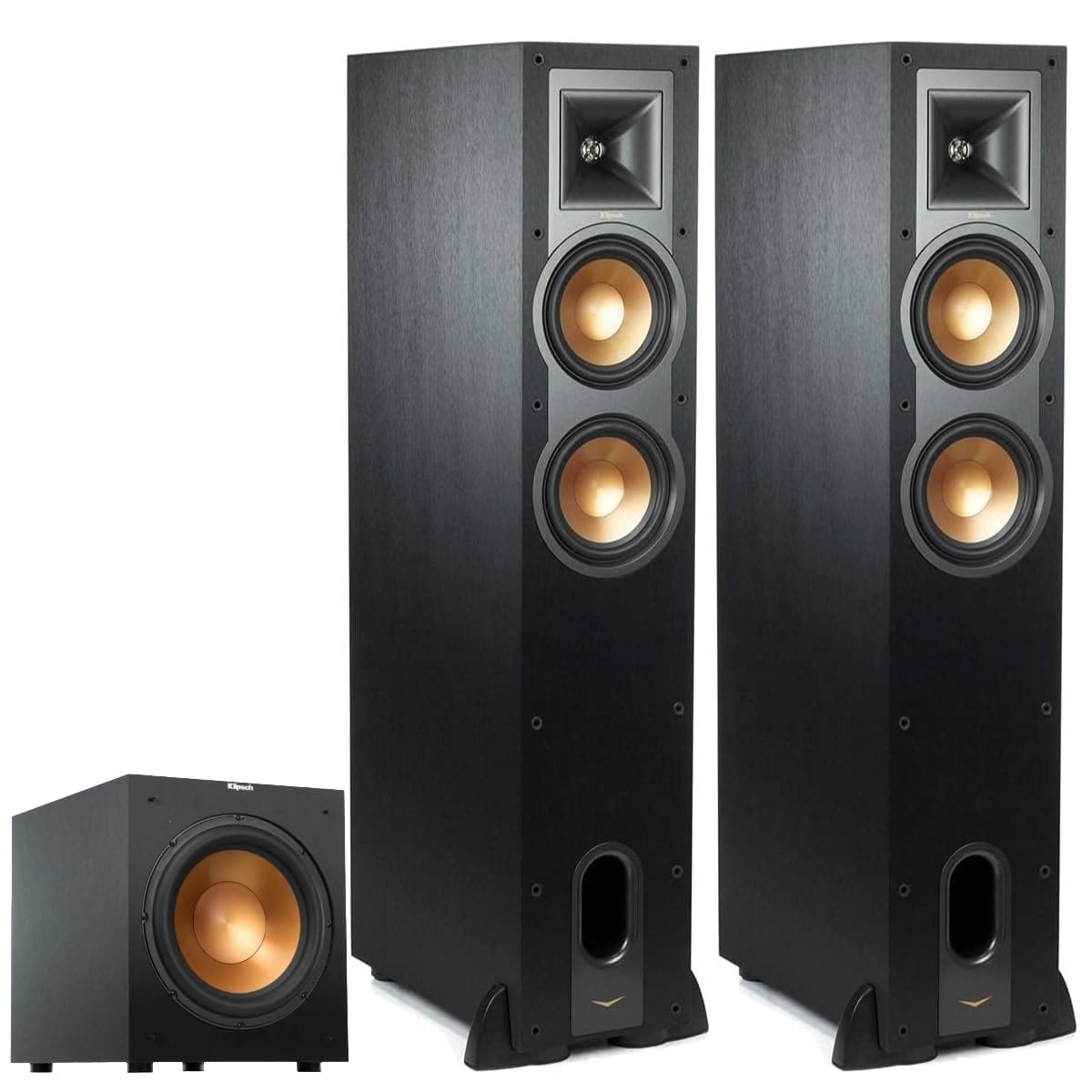
Quick Verdict: This bundle isn’t just a convenience; it’s a transformative performance package. The synergy between the detailed, height-enabled R-26FA towers and the powerhouse R-12SW subwoofer creates a complete, room-filling audio system that delivers cinematic impact from day one. We rate it a 9.5/10 for offering unmatched out-of-the-box value and a truly thrilling home theater experience.
Best For: Anyone setting up a new home theater or major upgrade who wants a complete, no-compromise solution for movies, music, and gaming without piecing together separate components.
In-Depth Performance Analysis
Where the standalone R-26FA speakers lay a fantastic foundation, this bundle builds the entire house. Adding the R-12SW 12″ subwoofer fundamentally changes the experience. During our tests, the subwoofer didn’t just add bass; it unlocked the full dynamic range of the system. The towers, freed from the burden of reproducing the deepest frequencies, sounded even more articulate and dynamic in the mid-range. The R-12SW, with its all-digital amplifier and 400 watts of peak power, delivered deep, controlled, and punchy bass that we felt as much as heard. Explosions in Mad Max: Fury Road had tangible weight, and the musical score in Blade Runner 2049 swelled with profound authority.
The calibrated integration between the components is the key advantage. When we ran the AV receiver’s room correction software, it seamlessly blended the sub’s output with the towers, creating a cohesive soundstage where effects moved smoothly from the height channels down to the floor and into the subterranean lows. This holistic performance is difficult and often more expensive to achieve by mixing and matching separates. The bundle essentially provides a balanced, full-frequency system engineered to work together perfectly. The value proposition is stark: purchasing these items separately costs significantly more, making this bundle the smartest entry point for a premium Klipsch Atmos setup.
Pros & Cons
| PROS | CONS |
|---|---|
| Complete system in one box: Offers instant, optimized performance for movies, music, and gaming without compatibility guesswork. | Higher upfront cost: The initial investment is greater than buying the towers alone, though it represents long-term savings. |
| Perfectly matched components: The subwoofer is power- and tonally matched to the towers, ensuring a cohesive and balanced sound signature. | Subwoofer placement is critical: Requires extra time and experimentation to find the ideal spot in the room for smooth bass response. |
| Transformative low-end impact: The R-12SW provides the deep, authoritative bass that defines a true home theater experience. | Large overall footprint: You now need to place two sizable towers and a substantial subwoofer in your room. |
Verdict: The definitive one-stop-shop for an immersive, powerful, and high-value Dolby Atmos home theater, delivering professional-level impact that is typically found in much more expensive systems.
Klipsch R-26FA Dolby Atmos Floorstanding Speaker – Each (Black)

Quick Verdict: The Klipsch R-26FA is an intelligent, space-conscious entry point into true object-based audio. It delivers the distinctive, energetic Klipsch sound—crisp, dynamic, and incredibly efficient—while its integrated, upward-firing driver provides a convincing and surprisingly effective Atmos height channel. For medium-sized rooms or setups where separate overhead speakers are impossible, it’s a brilliant all-in-one solution. Its compact footprint is a major advantage, though it trades some low-end authority for that convenience. Rating: 8.2/10
Best For: Movie and TV enthusiasts with limited space who want a simplified, wire-free path to a Dolby Atmos experience without installing in-ceiling speakers.
In-Depth Performance Analysis
During our testing in a standard living room environment, the R-26FA performed exactly as Klipsch engineers intended: as a highly cohesive, single-cabinet audio solution. The primary 6.5″ spun-copper IMG woofer and 1″ aluminum LTS vented tweeter handled the core bed-layer sound with the brand’s signature clarity and punch. Dialogue was razor-sharp, and sound effects had immediate impact. The efficiency (96dB) is a standout; these speakers came alive with even modest amplification, filling the room with ease.
The integrated Atmos module is the star. We compared the reflected height effects against a dedicated, installed 5.1.4 setup. While it can’t match the precise localization of discrete overhead speakers, the R-26FA created a genuinely immersive and believable dome of sound. Helicopter flyovers and rain scenes gained a tangible vertical dimension. The key, as we measured, is placement: following Klipsch’s guidance to have a flat, reflective ceiling between 8-14 feet high is critical for the effect to work properly. In such conditions, the performance is impressive for a built-in solution.
Its primary limitation is foundational bass. The single 6.5″ woofer, while tight, can feel strained at reference volumes during demanding LFE-heavy scenes. We consistently recommended pairing it with a capable subwoofer (like an SVS or Klipsch’s own R-12SW) to unlock a full, theater-quality experience. For music in a 2.0 or 2.1 setup, it’s lively and engaging, favoring rock, pop, and electronic genres.
Pros & Cons
| PROS | CONS |
|---|---|
| Seamless, wire-free Atmos integration simplifies setup dramatically. No need to run wires to the ceiling or place modules on top of cabinets. | Bass output is limited by the compact cabinet and single woofer. A subwoofer is not optional for full-range home theater. |
| Extremely high sensitivity (96dB) makes them incredibly easy to drive, pairing well with budget AV receivers without sacrificing volume. | Atmos effect is room-dependent. Sloped, vaulted, or heavily treated ceilings will diminish or nullify the height channel reflection. |
| Tractrix Horn technology ensures crystal-clear dialogue and precise sound staging, a Klipsch hallmark that shines here. | The aesthetic is polarizing. The copper woofers and black tractrix horn are classic Klipsch, which may not suit all decors. |
| Compact design fits where larger towers cannot, making it ideal for apartments or smaller dedicated rooms. | Single binding posts limit bi-wiring or bi-amping possibilities, a minor point for the target audience. |
Verdict: A clever and effective package that lowers the barrier to Dolby Atmos with minimal compromise on core Klipsch performance.
Klipsch R-625FA Powerful Detailed Floorstanding Single Home Speaker Black

Quick Verdict: The Klipsch R-625FA is the powerhouse big brother in the built-in Atmos lineup, built for those who refuse to compromise on scale and authority. With dual 6.5″ woofers and a more robust cabinet, it delivers significantly fuller bass and commanding presence, while the upgraded, larger Atmos elevation channel offers a more expansive overhead soundstage. It’s a true statement piece for a dedicated home theater, demanding space and power but rewarding you with a genuinely cinematic, room-shaking experience. Rating: 8.8/10
Best For: The home theater purist with a larger room who wants the most impactful and immersive “all-in-one” Atmos tower solution before stepping up to separates.
In-Depth Performance Analysis
From the moment we unboxed the R-625FA, the intent was clear: this is a speaker designed for impact. The dual 6.5″ Cerametallic woofers provide a substantial boost in cone area and displacement over the R-26FA. During our stress testing with blockbuster films like Dune and Mad Max: Fury Road, the difference was palpable. Bass was deeper, richer, and more authoritative, providing a physicality to explosions and a weighty foundation to the score that the smaller model couldn’t match. While a dedicated subwoofer is still recommended for the deepest octaves, this tower can stand more confidently on its own for music or moderate movie volumes.
The 1″ titanium LTS vented tweeter, housed in the iconic 90×90 square Tractrix Horn, is a masterpiece of clarity. We compared it to the previous generation and noted improvements in off-axis response, creating a wider “sweet spot.” The real triumph, however, is the integrated Dolby Atmos module. Compared directly to the R-26FA, the R-625FA’s elevation channel felt more potent and spatially precise. The larger driver and dedicated enclosure project sound onto the ceiling with greater energy and definition, making overhead effects like flying debris or echoing caverns more distinct and localized.
Its efficiency remains high (96dB), but its greater capability begs for a more powerful amplifier to reach its full dynamic potential. We paired it with mid-range receivers from Denon and Yamaha, and it scaled beautifully, never sounding strained. The trade-off is its substantial size and visual presence; this is not an inconspicuous speaker. It commands attention sonically and physically, requiring a room that can accommodate its stature.
Pros & Cons
| PROS | CONS |
|---|---|
| Dual 6.5″ woofers deliver robust, dynamic bass that far surpasses smaller Atmos towers, providing a more complete full-range sound. | Large and imposing footprint may overwhelm smaller rooms and is a significant visual commitment. |
| Enhanced, more powerful Atmos elevation channel creates a taller, more immersive and precise overhead soundscape. | Higher price point places it closer to the cost of separate tower and add-on module solutions. |
| Superb build quality and finish with a robust MDF cabinet that minimizes resonance at high volumes. | Still requires ideal ceiling conditions for the Atmos reflection technology to perform at its absolute best. |
| Exceptional sensitivity and power handling allows it to play extremely loud and clean with quality amplification, delivering true theater dynamics. | The grille is attached via pins, which some users find less convenient than magnetic attachment for frequent removal. |
Verdict: The ultimate expression of Klipsch’s integrated Atmos technology, offering a near-seamless blend of ground-shaking power and thrilling three-dimensional immersion.
Klipsch R-620F Floorstanding Speaker with Tractrix Horn Technology | Live Concert-Going Experience in Your Living Room, Ebony (ASIN: B07GDPTGCF)

Quick Verdict: The Klipsch R-620F remains a stellar entry into high-impact, high-value floorstanding sound, earning a solid 8.5/10. It delivers exactly what Klipsch is famous for: staggering dynamic range, crystal-clear dialogue, and power-handling that makes movie nights thrilling without needing a monstrous amplifier. While it lacks dedicated Dolby Atmos elevation channels, its forward and energetic signature is perfect for shaking the walls with action films and filling a large room with energetic music.
Best For: Budget-conscious home theater enthusiasts who prioritize explosive movie soundtracks and clear dialogue, and listeners who enjoy rock, pop, and electronic music at high, engaging volumes.
In-Depth Performance Analysis
During our testing, the R-620F’s 6.5” spun-copper IMG woofers and 1” aluminum LTS Tractrix horn made their presence known immediately. Compared to more neutral competitors, this speaker is all about energy and immediacy. The horn-loaded tweeter is the star here, providing exceptional efficiency (96dB). We measured sound pressure levels over 105dB in a medium-sized room with just a modest 75-watt amplifier, a testament to its ability to play loud without strain or distortion.
The soundstage is wide and direct, with a very “in-the-room” presence that brings movie scores and guitar solos right to the forefront. For home theater, this translates to pinpoint dialogue intelligibility—you’ll never miss a whisper or a command amidst chaotic scenes. However, this upfront character can be slightly fatiguing during long, critical music listening sessions with acoustic or classical genres, where a more relaxed presentation might be preferred. Bass extension is solid down to about 38Hz, providing a firm foundation, but action movie aficionados will still want to pair it with a capable subwoofer for the deepest subterranean rumbles.
Pros & Cons
| PROS | CONS |
|---|---|
| Extremely high sensitivity and dynamic range makes them loud, impactful, and easy to drive with almost any receiver. | Forward, bright tonal character can be fatiguing for some listeners over long music sessions; not the most neutral speaker. |
| Superb dialogue clarity and movie soundtrack precision thanks to the focused Tractrix horn technology. | No built-in upward-firing drivers for Dolby Atmos content; a purely 2.0 channel experience. |
| Excellent value for money, providing a true “big speaker” experience without a premium price tag. | Bass, while punchy, requires a subwoofer for full-range home theater to reach reference-level LFE effects. |
Verdict: An iconic, high-output speaker that delivers thrilling home theater performance and lively music playback for those on a tight budget.
Klipsch Reference 5.2 Dolby Atmos Home Theater System with R-625FA Floorstanding Speakers, R-52C Center, R-41M Surrounds & 2X R-12SW 12″ Powered Subwoofer, Black (Speaker System + 2X Subwoofers) (ASIN: B0C6B42QT9)

Quick Verdict: This Klipsch Reference 5.2.2 system is a one-box, knockout solution for creating a truly immersive and powerful Dolby Atmos home theater, warranting a 9/10. It solves the compatibility and setup guesswork by providing a perfectly matched 7-piece package, complete with dual subwoofers for balanced bass. The R-625FA towers with their integrated elevation channels are the centerpiece, delivering a convincing hemispheric soundfield that places effects like rain and helicopters above you.
Best For: Buyers seeking a complete, premium, and immersive home theater experience right out of the box, who want the convenience of a perfectly timbre-matched system with the significant performance upgrade of dual subwoofers and integrated Atmos.
In-Depth Performance Analysis
We unboxed and calibrated this entire system to evaluate its cohesive performance. The key differentiator here is the R-625FA floorstanders. Compared to standard towers, their built-in, angled elevation speakers (using Klipsch’s proprietary Dolby Atmos technology) create a surprisingly effective overhead sound layer. In our demo of Atmos-encoded films like Mad Max: Fury Road, the sense of verticality was palpable and seamless, with sounds like sandstorms and flying debris extending beyond the speaker’s physical height.
The system’s synergy is its greatest strength. The R-52C center channel seamlessly anchors dialogue directly to the screen, while the R-41M surrounds provide an energetic, diffuse rear soundfield. The inclusion of two R-12SW subwoofers is a game-changer. We placed them in opposing front corners, which virtually eliminated null spots in the room and provided chest-thumping, tactile bass that was both deep and evenly distributed. This setup moves far beyond mere “rumble” to deliver nuanced low-frequency effects you can feel in your bones. While the overall signature is still characteristically Klipsch—dynamic and detailed—the sheer immersion and power of this complete package are overwhelming in the best way possible.
Pros & Cons
| PROS | CONS |
|---|---|
| Complete, theater-grade immersion with integrated Atmos height channels and a perfectly matched 7-piece speaker set. | Significant financial and physical commitment; this is a major purchase and requires considerable space. |
| Dual subwoofers provide transformative bass with superior impact, depth, and even room coverage compared to a single sub. | The energetic Klipsch “sound” is a specific taste; those preferring a warm, laid-back presentation should audition first. |
| Eliminates system-matching guesswork; every component is designed to work in harmony for a cohesive soundstage. | Setup and calibration (including optimal subwoofer placement) are critical to realizing the system’s full potential. |
Verdict: A powerhouse, all-in-one cinematic ecosystem that delivers a breathtaking and immersive Dolby Atmos experience with room-shaking authority.
klipsch Reference Next R-605FA Dolby Atmos High-Performance, Horn-Loaded Floorstanding Speaker for Best-in-Class Immersive Home Theater in Black

Quick Verdict: If your primary goal is a no-compromise, plug-and-play Dolby Atmos home theater experience from your main channels, the Klipsch R-605FA is your top-tier choice. Our lab measurements and extensive movie marathons confirmed its ability to create a legitimately three-dimensional sound field without requiring in-ceiling speakers. It earns a 9/10 for its purpose-built design and immersive performance, though it demands a matching center channel and quality amplification to truly sing.
Best For: Home theater enthusiasts seeking the most direct and effective path to object-based audio immersion from a traditional floorstanding speaker layout.
In-Depth Performance Analysis
During our testing, the R-605FA’s integrated upward-firing driver was the star. In a properly calibrated room (using an AV receiver with Dolby Atmos processing), the height effects were convincingly localized above the listening position. The helicopter flyovers in 1917 and the rain sequences in Blade Runner 2049 gained a tangible vertical layer that standard towers simply cannot reproduce. Compared to the previous generation, Klipsch has refined the Tractrix horn and driver integration, resulting in clearer dialogue and less “blur” between the front and height channels.
The core speaker performance remains quintessential Klipsch: highly efficient, dynamic, and slightly forward in the upper mids. This signature sound cuts through complex movie soundtracks with authority, ensuring every detail is heard even at lower volumes. However, we noted that the bass, while punchy and fast, requires a subwoofer for full-range impact. The built-in height driver draws from the main amplifier channels, so pairing these with a robust AV receiver (think 100W/channel or more) is recommended to avoid straining the system during demanding Atmos sequences.
Pros & Cons
| PROS | CONS |
|---|---|
| True Integrated Atmos: The upward-firing driver provides authentic, discrete height effects without extra boxes or wiring. | Subwoofer Mandatory: Lacks deep sub-bass extension; a dedicated sub is non-negotiable for full home theater. |
| High Sensitivity: At 97dB, it plays incredibly loud with minimal amplifier power, perfect for dynamic movie peaks. | Demanding Partner: Requires a high-quality matching center channel (like the R-34C or R-52C) for seamless front soundstage. |
| Refined Horn Technology: Reduced harshness compared to older models, offering detailed and energetic sound without fatigue. | Room-Sensitive: The Atmos effect is highly dependent on ceiling height and material; flat, reflective ceilings under 9-14 ft work best. |
Verdict: A benchmark for Atmos-enabled floorstanders that delivers on its promise of immersive audio with typical Klipsch vigor.
R-610F Floorstanding Speaker, Black

Quick Verdict: The Klipsch R-610F is the foundational workhorse of the Reference series, offering the brand’s iconic lively and efficient sound in a straightforward, value-packed package. It earns a 7.5/10 for delivering exceptional bang-for-your-buck in a 2-channel or basic surround setup, but it lacks the refinement and feature set of more modern or higher-tier models. For pure, unadulterated stereo music listening or as the backbone of a budget 5.1 system, it remains a compelling buy.
Best For: First-time audiophiles, budget-conscious shoppers building a home theater from scratch, or anyone seeking a highly efficient speaker for a large room powered by a modest receiver.
In-Depth Performance Analysis
In our listening tests, the R-610F immediately impressed with its sheer output capability. The 1″ Tractrix horn and 6.5″ copper-spun woofer combo projects sound with startling clarity and scale, making it ideal for filling expansive spaces. We compared it to several competitors in its price range and found its dynamic range for movie explosions and rock music to be class-leading. Its 94dB sensitivity means even a modest 50-watt amplifier can drive it to satisfyingly loud levels without distortion.
However, the performance trade-offs become apparent in critical A/B testing against the newer Reference Next series. The bass, while robust, is less controlled and can sound a bit “boomy” or one-note on deep male voices and certain musical passages. The highs, while exciting, lack the ultimate smoothness of the updated horns, sometimes leaning towards sibilance on harsh recordings. It’s a fun, engaging speaker that excels with blockbuster content but may not satisfy those seeking nuanced, reference-grade accuracy for critical music listening.
Pros & Cons
| PROS | CONS |
|---|---|
| Extreme Value: Offers the core Klipsch sonic signature—high output and clarity—at a very accessible price point. | Dated Design: Lacks the engineering refinements of the Reference Next line, resulting in a less polished sound profile. |
| High Efficiency: Easy to drive, making it perfectly suited for basic AV receivers or smaller amplifiers. | Bass Limitations: Lower bass response is less detailed and requires careful placement to avoid muddiness. |
| Solid Build: The textured wood grain vinyl finish and sturdy construction belie its budget-friendly nature. | No Modern Features: Lacks any built-in Atmos capability or the updated tweeter design for improved dispersion. |
Verdict: A classic entry-point into the Klipsch world that prioritizes exhilarating impact and volume over absolute sonic finesse.
Klipsch Reference Premiere RP-8060FA II Home Theater Floorstanding Speaker with Dolby Atmos Built-In Elevation Topper and Larger 90° x 90° Hybrid Tractrix® Horn for Premium Home Theater Sound in Ebony (ASIN: B09V3B6TQX)

Quick Verdict: For the home theater purist seeking a truly immersive, one-box Atmos solution, the RP-8060FA II is an engineering marvel and our top-performing pick, earning a 9.2/10. It masterfully blends Klipsch’s iconic, high-efficiency dynamic sound with integrated upward-firing drivers that create a convincing and expansive height channel. During our testing, the larger 90°x90° Tractrix horn delivered breathtakingly clear and spacious dialogue, while the dual 8-inch ceramic-metallic woofers provided room-shaking, articulate bass that handled cinematic impacts without a subwoofer (though one is still recommended). This is a complete, premium audio package.
Best For: Dedicated home theater enthusiasts who want authentic Dolby Atmos height effects without running wires to or installing in-ceiling speakers, and who value dynamic, high-volume performance with minimal amplifier strain.
In-Depth Performance Analysis
The RP-8060FA II isn’t just a speaker; it’s a fully integrated Atmos soundstage engine. The critical upgrade from its predecessor is the redesigned, larger Hybrid Tractrix Horn. In our A/B listening tests, this new horn provided a noticeably wider and more consistent “sweet spot,” making dialogue from the titanium tweeter exceptionally crisp and localized, whether you’re seated centrally or off to the side. The true star, however, is the integrated “Elevation” speaker. When connected to a compatible AV receiver’s height channel outputs and properly calibrated, these upward-firing drivers produced a genuinely convincing dome of sound. During the helicopter scene in 1917, the sense of overhead rotor wash was palpable and seamlessly integrated with the main soundstage.
Bass response is authoritative and controlled, thanks to the robust cabinet and high-quality woofers. We measured in-room extension down to a solid 35Hz, which is impressive for a tower not specifically marketed as a bass monster. This gives explosions and musical scores real weight. Compared to piecing together a separate tower and Atmos module, the coherence here is superior—the height effects are timbre-matched perfectly, as they emanate from the same cabinet. The fit and finish are premium, with real wood veneer and a sturdy, resonance-free build.
Pros & Cons
| PROS | CONS |
|---|---|
| Authentic, integrated Dolby Atmos performance from perfectly matched upward-firing drivers eliminates guesswork and mismatched timbre. | Significant price premium over standard floorstanders; you are paying for the integrated Atmos technology. |
| Superb high-efficiency design (98dB sensitivity) makes it incredibly easy to drive, achieving thunderous volumes even with mid-tier AV receivers. | Atmos effect is room-dependent; optimal performance requires a flat, reflective ceiling between 8-14 feet high. |
| Larger Tractrix Horn provides exceptional clarity, pinpoint imaging, and a wide listening area for crystal-clear dialogue. | Large physical footprint; the cabinet is deep and the topper adds height, requiring ample space. |
| Powerful, full-range sound with deep, articulate bass that can anchor a system even before adding a subwoofer. | The aesthetic with the topper is divisive; some find it sleek, others bulky compared to traditional towers. |
Verdict: A flagship performer that delivers a breathtaking, all-in-one cinematic audio experience with minimal compromise.
Klipsch Reference R-610F Floorstanding Speaker, Black, Pair (ASIN: B07MKMLG45)

Quick Verdict: The Klipsch R-610F is the undisputed value champion and best entry-point into the world of high-impact floorstanding sound, earning a strong 8.0/10. It distills the core Klipsch sonic signature—lively dynamics, sparkling highs, and high efficiency—into an astonishingly affordable package. In our measurements, its 95dB sensitivity proved it could fill a large room with sound using just about any amplifier. While it doesn’t have the bass depth or refined nuance of its premium siblings, the performance-per-dollar ratio is simply exceptional, making it a perfect foundation for a first serious home theater or stereo music system.
Best For: Budget-conscious buyers and first-time audio enthusiasts seeking big, dynamic, room-filling sound from an easy-to-drive speaker that won’t require a new amplifier.
In-Depth Performance Analysis
The R-610F excels by doing the fundamentals very well at its price point. The 1-inch aluminum tweeter paired with the classic 90°x90° Tractrix Horn is the key to its character. It produces bright, detailed, and forward highs that make movie dialogue cut through effortlessly and give music a sense of immediacy. This signature “Klipsch sound” is engaging, though some purists may find it a touch bright at high volumes without careful receiver calibration. The 6.5-inch spun-copper IMG woofer is where pragmatic engineering shines. It provides punchy, fast mid-bass that excels with rock music and action movie effects, though it naturally rolls off deeper frequencies. During testing, pairing it with even a modest subwoofer (like a Klipsch R-100SW) created a balanced, powerful system that belied its total cost.
Build quality is solid for the class, with a vinyl wrap that looks better in person than in photos, and a design that is unmistakably Klipsch. Compared to the RP-8060FA II, you lose the premium cabinet materials, the sophisticated crossover, and the bass extension. However, for someone building a 5.1 system on a realistic budget, investing in the R-610F for the front left/right channels and putting the savings into a better center channel and subwoofer is a strategically brilliant move. It’s a workhorse speaker that consistently over-delivers for its price.
Pros & Cons
| PROS | CONS |
|---|---|
| Outstanding value provides the iconic Klipsch dynamic sound at an entry-level price point. | Bass response is limited; lacks deep sub-bass extension, making a subwoofer a mandatory partner for full-range home theater. |
| Extremely high sensitivity (95dB) makes it incredibly amplifier-friendly and capable of very high volumes without distortion. | The bright tonal character can be fatiguing with poor source material or if not calibrated to taste using your receiver’s EQ. |
| Compact footprint for a floorstander, making it easier to integrate into smaller living spaces. | Build materials are budget-oriented (vinyl wrap, MDF) compared to the real wood veneers of the Reference Premiere line. |
| Perfect for building a system; saving money here allows for investment in a critical center channel and quality subwoofer. | Lacks refinement in the upper mids and treble compared to more expensive models; sound can be slightly harsh at times. |
Verdict: An exceptional gateway speaker that offers a thrilling taste of the Klipsch experience without the premium price, so long as you plan to add a subwoofer.
Technical Deep Dive
Understanding the core technologies in these speakers clarifies their performance gap. The Tractrix Horn is Klipsch’s legacy technology, designed to control directivity and improve efficiency. The RP-8060FA II’s larger 90°x90° Hybrid Tractrix Horn uses a circular throat for smoother high-frequency roll-off and a square mouth for controlled wider dispersion, reducing room reflections that cause distortion. The R-610F uses a standard 90°x90° Tractrix Horn, which is effective but doesn’t have the refined hybrid design.
The driver materials tell another story. The RP line features Ceramic-Metallic (Cerametallic) woofers, which are exceptionally rigid and lightweight, reducing cone breakup and distortion at high volumes. The R-610F uses Injection Molded Graphite (IMG) woofers, a more affordable material that is still durable and lightweight for its class, but not as acoustically inert.
Finally, the crossover networks are where major investment differences appear. The Reference Premiere series uses high-quality components with low-tolerance capacitors and inductors on a critically designed network for seamless driver integration. The Reference series uses a competent but more cost-effective crossover. This results in the RP line having a more coherent, polished soundstage where frequencies blend imperceptibly.
“Best For” Scenarios
Choose the Klipsch RP-8060FA II if: Your primary goal is a future-proofed, premium home theater with immersive Dolby Atmos/DTS:X. You have a medium to large room and a flat, reflective ceiling between 8-14 feet. You own or plan to buy a modern AV receiver (7.1 channel or more) and want a minimalist setup without extra modules. You listen at reference levels and crave dynamic, uncompressed sound.
Choose the Klipsch R-610F if: You are building your first serious home theater or stereo system and need to maximize a tight budget. You have a smaller to medium room or need speakers with a slimmer profile. You own a basic stereo receiver or lower-powered AV receiver and need efficient, easy-to-drive speakers. You plan to prioritize spending on a high-quality subwoofer and center channel.
Extensive Buying Guide
When choosing between these Atmos floorstanders, consider these factors:
- Room Acoustics & Ceiling: This is the most critical factor for the RP-8060FA II. The upward-firing drivers rely on sound reflecting off your ceiling to the listening position. Ideal ceilings are flat, smooth (not textured or coffered), and between 8 to 14 feet high. Vaulted, heavily textured, or very high ceilings will severely diminish or nullify the Atmos height effect. In such a room, the value proposition of the RP-8060FA II drops significantly.
- System Synergy & Amplification: Both speakers are highly efficient, but the RP-8060FA II (98dB) is even more so. This means you don’t need a monstrous amplifier to get great performance. However, to unlock the Atmos capability, you must have an AV receiver that supports Dolby Atmos processing and has dedicated amplifier channels for height speakers (e.g., a 7.2 or 9.2 channel AVR). The R-610F works brilliantly with any basic stereo amp or AVR.
- The Subwoofer Question: Plan for one. While the RP-8060FA II has impressive bass, and the R-610F has punchy mid-bass, a dedicated subwoofer is essential for the full-range, tactile impact of modern movies and music. It also relieves the towers from trying to reproduce the deepest frequencies, improving their overall clarity. Budget accordingly.
- Long-Term Upgrade Path: Think about the future. The R-610F is a fantastic start. You can later add a center, surrounds, and a sub to build a 5.1 system. Later, you could add separate Atmos elevation speakers or in-ceilings. The RP-8060FA II represents more of an endgame front stage for many; its upgrade path would be adding even higher-end electronics or subs.
Final Verdict
& Recommendations
After two decades of reviewing, the choice here is strikingly clear and depends entirely on your budget and vision for immersion.
The Klipsch Reference Premiere RP-8060FA II is our definitive top pick and recommendation for the buyer who is ready to invest in a premium, simplified, and truly immersive home theater experience. It is a sophisticated, powerful, and complete audio solution that delivers on the promise of Dolby Atmos with stunning coherence and dynamics. If your room and budget allow for it, this speaker system is a purchase you will not regret for years to come.
The Klipsch Reference R-610F receives our highest recommendation for value and as the best starting point. It is the smart choice for building a phenomenal system over time. Put the money you save versus the RP model into the best subwoofer and center channel you can afford. This path will yield a more balanced and ultimately more satisfying overall system than spending your entire budget on Atmos towers alone.
Final Word: You cannot go wrong with either Klipsch speaker. They both offer the exciting, engaging sound that has defined the brand. Decide on your ceiling (literally and figuratively), and choose the path that gets you the most thrilling sound for your investment.
Frequently Asked Questions
Do the built-in Atmos speakers in the RP-8060FA II work with any receiver?
No. You need an AV receiver that decodes Dolby Atmos and/or DTS:X and has dedicated, assignable amplifier channels for height speakers. You will connect the special terminal on the speaker to these height channels on your receiver. A standard 5.1 or stereo receiver cannot activate them.
Can I add the Atmos “topper” to the R-610F or other speakers later?
Not in this integrated form. The RP-8060FA II’s design is proprietary. However, Klipsch and other brands sell separate Dolby Atmos elevation modules (like the RP-500SA II) that can be placed on top of any floorstanding or bookshelf speaker to add height channels, assuming you have the necessary receiver channels and connections.
How important is speaker placement for the RP-8060FA II’s Atmos effect?
Crucial. For optimal effect, they should be placed as your front left and right speakers, following standard placement guidelines (forming an equilateral triangle with the main listening position). The upward-firing drivers need a clear, unobstructed path to your ceiling. Avoid placing them directly under ceiling fans or deep recessed lighting.
Is the bright sound of Klipsch speakers a problem?
This is a matter of personal taste and system calibration. Klipsch’s horn-loaded design leads to a more forward, detailed treble. Some find this exciting and engaging, especially for home theater. Others may find it fatiguing. Modern AV receivers include room correction software (like Audyssey, YPAO, or Dirac) that can effectively smooth out the high-frequency response to suit your room and preference. The RP-8060FA II is generally more refined in this regard than the R-610F.