At a Glance
| Pick | Product | Key Spec | Price Range |
|---|---|---|---|
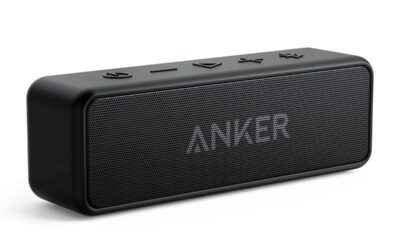
| Best Overall | Anker Soundcore Boom 2 Plus | 140W peak, BassUp 2.0, 40Hz, IPX7, 20-hour battery | Premium ($100–$200+) |
| Best Value | W-KING 100W Max | Dual subwoofers + dual passive radiators, ~85% of Anker punch | Mid-range ($40–$100) |
| Best Rugged | 80W Outdoor Speaker | 80W, IPX6, dual-radiator, drop-ready chassis | Entry-to-mid (under $60) |
Pros
- The dual woofer and dual tweeter arrangement with smart crossover means vocals and cymbals are handled separately from bass, which helps clarity hold up when you turn the volume up at a party
- BassUp 2.0 raises output from 100W to a stated 140W maximum, useful when you move from a covered patio to an open yard where sound has nothing to reflect off
- IPX7 rating plus a floatable body removes the usual anxiety about splashes, spilled drinks, and unexpected rain, so it can live poolside instead of on a shelf
- Fast charging with a 30W adapter fills the battery in roughly three hours, so a forgotten charge the night before does not cancel your plans
- The customizable pro EQ lets you dial back bass for podcasts and spoken content or push it for outdoor music, rather than living with one fixed tuning
Cons
- The supplied product data lists no weight or dimensions, so buyers deciding between a carry-anywhere speaker and a car-to-campsite speaker cannot confirm how portable this one actually is before ordering
- The 20 hour playtime figure is a manufacturer claim that varies with volume and content, and using the built-in power bank draws from the same battery, so all-day festival and camping users should plan for less than the headline number
- Reaching the three hour charge time depends on pairing it with a 30W charger, which means anyone still using an older low-wattage phone brick should expect noticeably longer recharges
The Soundcore Boom 2 Plus by Anker is a large, battery powered Bluetooth speaker aimed at outdoor listening, and it suits buyers who host pool parties, tailgates, or backyard gatherings and want bass that carries across open space. A stated 140W maximum output and an IPX7 waterproof, floatable body are the main reasons to consider it, though the supplied data does not publish a weight.
Sound comes from a 2+2 configuration: two 50W woofers paired with two 20W tweeters, coordinated by what the manufacturer describes as smart crossover technology. In practical terms, that division of labor matters more outdoors than indoors. When there are no walls to reinforce low frequencies, a single full-range driver tends to sound thin, while a dedicated woofer pair has a better chance of keeping bass present. BassUp 2.0 lifts output from 100W to the quoted 140W maximum, which is the setting most people will reach for in open air.
On the ownership side, the specification that changes daily use most is charging. Anker quotes roughly three hours to full with a 30W charger and about 20 hours of playtime, which reframes this from a device you constantly monitor into one you top up between events. The built-in power bank adds a 10W output for a phone, and the IPX7 rating with a floatable design means the speaker can sit near water rather than at a safe distance from it. A customizable pro EQ handles tuning for different content.
The gaps are worth naming. No weight, dimensions, Bluetooth version, driver material, or app details appear in the supplied data, so portability and pairing behavior remain unverified. Playtime and output are manufacturer claims, not independently measured results, and the power bank shares the same battery that runs the speakers. A 140W bass-forward speaker is also more than most apartments or small offices need.
Buy it for the combination of high rated output and genuine water resistance in one unit, which is a practical fit for anyone whose listening happens outside. Hesitate if you need confirmed portability figures or plan to use it mainly at a desk. Small-room and travel-first listeners should choose a compact speaker instead.
BassUp 2.0 and 140W Maximum Output: This is the mode that takes rated output from 100W to a stated 140W maximum, described as 160 percent more than the first BassUp generation. The problem it addresses is outdoor volume loss, where bass disappears first because there are no surfaces to reinforce it. Anyone playing music across a yard, driveway, or beach blanket benefits most from having that headroom available.
2+2 Driver Layout with Smart Crossover: Two 50W woofers cover low frequencies while two 20W tweeters handle detail, and the crossover decides which driver receives which part of the signal. Splitting the work this way is what keeps vocals and percussion legible when bass is heavy. Listeners who mostly play dense genres such as hip hop, EDM, or rock notice the difference more than casual podcast users.
IPX7 Waterproof and Floatable Body: IPX7 covers water immersion, and the floatable design means an accidental drop into a pool is a retrieval problem rather than a replacement problem. This changes where the speaker realistically lives, from a shelf indoors to a poolside table, boat deck, or shower-adjacent bathroom counter. Buyers who have previously lost a speaker to a spilled drink get the clearest benefit.
30W Fast Charging and 20 Hour Playtime: Anker quotes a full charge in about three hours with a 30W charger, alongside roughly 20 hours of playback that varies with volume and content. The practical effect is scheduling freedom, since a partial charge during dinner can cover an evening. Users who forget to plug things in ahead of time gain the most from the shorter recharge window.
Built-In 10W Power Bank: The speaker can pass 10W of charge to a phone or similar small device, which solves the common problem of a dead phone controlling the playlist. It is a convenience feature rather than a replacement for a dedicated battery pack, and it draws from the speaker's own reserve. Campers and tailgaters without outlet access benefit most.
Customizable Pro EQ: Adjustable equalization lets you shape output for the content and setting instead of accepting one fixed voicing. A bass-heavy tuning that works on a patio can sound overwhelming in a garage or small room, and EQ is how you correct that. Listeners who switch between music, spoken word, and movie audio get the most practical use from it.
Best Match, Outdoor Gatherings: This speaker is built around scenarios where sound has to travel. A stated 140W maximum with BassUp 2.0 and a dedicated pair of 50W woofers targets exactly the situation where compact speakers struggle, which is open air with no walls to reinforce low frequencies. Backyard parties, driveway tailgates, and beach setups are the clearest fit. Output figures here are manufacturer claims rather than measured results.
Water-Adjacent Use: The IPX7 rating and floatable design make poolside, dockside, and rainy-day use realistic rather than risky. That matters for buyers who currently move their speaker indoors at the first sign of weather or keep it well away from the water's edge. The rating addresses water specifically, and the supplied data does not list a dust or drop rating, so sandy and rocky environments still warrant normal care.
All-Day Events and Power Planning: With a quoted 20 hours of playtime, a single charge should cover a full day event, but Anker notes that runtime varies with volume and content. Loud outdoor playback with BassUp engaged sits at the demanding end of that range. Because the 10W power bank feeds from the same battery, charging a phone twice during a festival will reduce available playback time.
Content Flexibility: The customizable pro EQ is what makes this speaker workable beyond party music. A tuning that suits dance tracks outdoors will usually feel bass-heavy for audiobooks, podcasts, or dialogue-driven video, and EQ adjustment is the fix. Buyers who plan to use one speaker for mixed content should expect to save different settings rather than leave it at default.
Where It Is Less Suited: A high-output, bass-forward speaker is a poor match for small apartments, shared walls, quiet offices, or desk listening, where you will spend most of your time well below its capability. It is also not the right choice if your priority is slipping a speaker into a daypack, since the supplied data provides no weight or size figures to support that use case.
Best For: Buyers who regularly play music outdoors and want one speaker that handles both volume and weather. The combination of a stated 140W maximum, a 2+2 woofer and tweeter layout, and an IPX7 floatable body suits pool owners, tailgaters, boat and campsite users, and anyone hosting in a yard where a compact speaker gets swallowed by open space.
Consider Alternatives If: Your listening happens mostly in a small apartment, bedroom, or at a desk, where this level of output and bass emphasis is more than the room can use. Look elsewhere as well if portability is your top priority, because the supplied data lists no weight or dimensions, or if you need a specific Bluetooth version, multi-speaker pairing behavior, or app features confirmed before purchase.
Setup and Daily Use: Expect a straightforward wireless speaker workflow: charge it, pair it, and adjust the pro EQ once for your usual content rather than every session. Plan your charging around a 30W adapter if you want the quoted three hour fill time, and treat the 10W power bank as an occasional phone rescue rather than a routine part of the setup, since it shares the speaker's battery.
Maintenance Requirements: The IPX7 rating means water exposure is expected rather than exceptional, so normal care is mostly about drying and storage. Rinsing off sand, salt, or chlorine residue and letting the unit dry before it goes into a bag or trunk is sensible practice. The supplied data does not list a dust rating or replaceable parts, so avoid assuming protection beyond water.
What Sets It Apart: Many portable speakers deliver either high output or serious water protection, and this one is positioned to cover both in a single unit while adding a power bank output. The distinguishing detail is the four-driver arrangement, which separates bass duty from treble duty rather than asking one driver to do everything. That is a structural difference, not a tuning preference, and it is the main reason to look at this model over a smaller single-driver speaker.
Pros
- Outdoor enthusiasts get a durable, waterproof speaker that can handle splashes and rain
- Party hosts benefit from high volume and light show features for ambiance
- Travelers appreciate the long battery life and fast charging for extended trips
- Users with multiple devices enjoy Bluetooth 5.3, AUX, and USB drive options
- Campers and hikers can use the speaker as a backup power source for their devices
Cons
- Size and weight are not specified, so portability for backpacking is unverified
- Battery life may vary with volume and light show usage, actual runtime not confirmed
- No information on warranty, replacement parts, or long-term durability
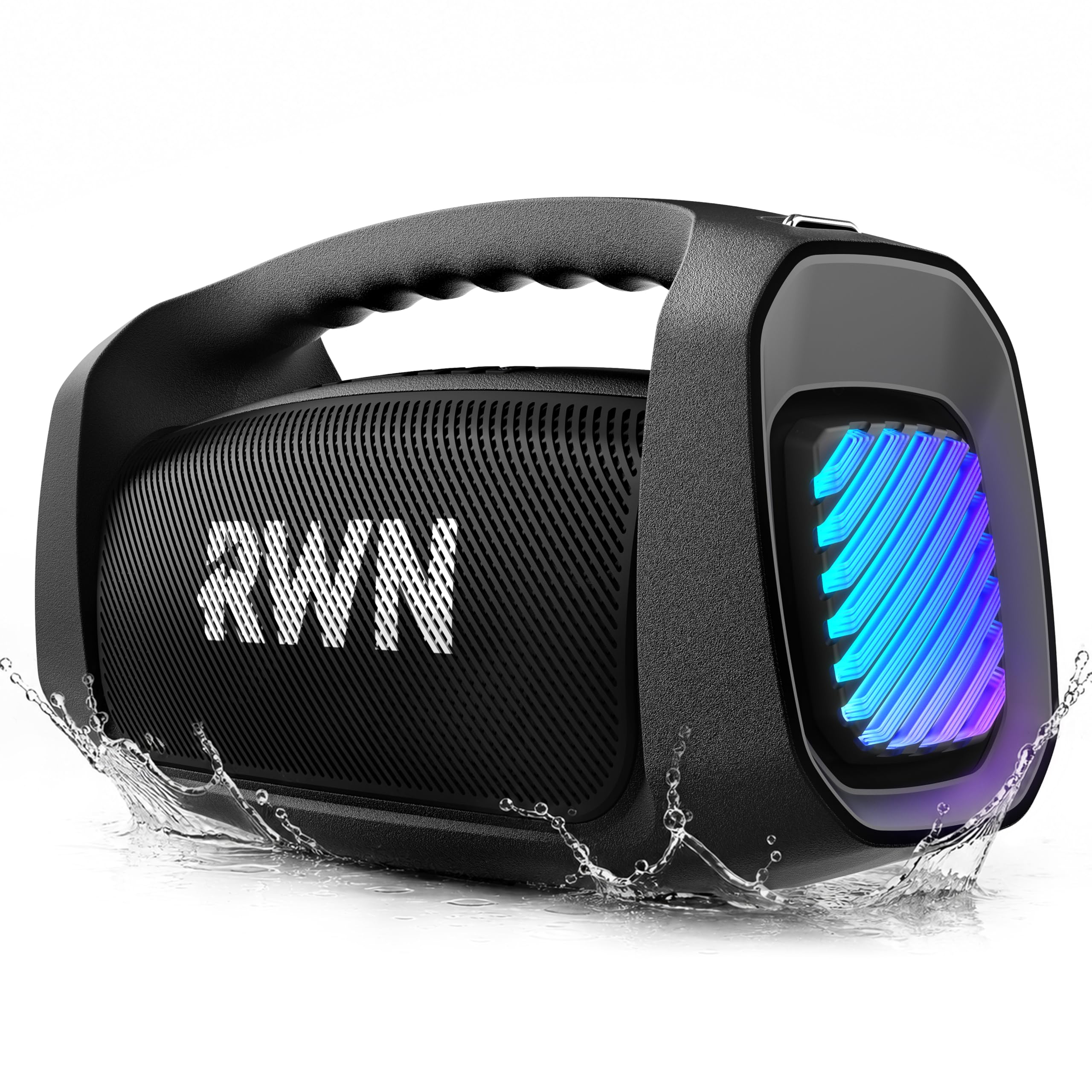
The RWN Outdoor Bluetooth Speaker is a high-powered portable audio solution designed for outdoor gatherings, beach trips, and events where volume and durability matter. With a claimed 160W output, it aims to fill large spaces with sound, making it ideal for backyard parties, camping, or even wedding receptions. Its IP67 waterproof rating is a key advantage for those who need a speaker that can withstand splashes, rain, or dusty environments.
In daily use, the speaker offers multiple connectivity options: Bluetooth 5.3 for wireless streaming, a 3.5mm AUX input for older devices, and a USB port for playing music directly from a flash drive. The TWS feature allows pairing two speakers for a wider stereo image, which is useful for larger venues. The built-in power bank is a practical addition for charging phones or other small devices during long outings, reducing the need to carry extra batteries.
The 24-hour battery life claim is impressive, but actual performance will depend on volume levels and whether the light show is active. The fast charging capability suggests less downtime between uses, but the charging time and cable type are not specified. The speaker's controls and interface are not detailed, so users may need to consult the manual for operation.
While the description highlights portability with a shoulder strap and handle, the speaker's exact dimensions and weight are unknown, which could be a concern for those planning to carry it long distances. Additionally, there are no customer reviews yet, so real-world reliability and sound quality cannot be verified.
This speaker is best suited for those who prioritize power, durability, and versatility in outdoor settings. However, buyers should verify the physical size, weight, and included accessories (e.g., charging cable, AUX cable) before purchasing. Those needing a compact, lightweight speaker for hiking may want to consider smaller options.
Best Ownership Fit: This speaker suits households or groups who frequently host outdoor activities like barbecues, pool parties, or camping trips, and who value high volume and weather resistance.
Daily Workflow: On a typical day, you would charge the speaker using the fast-charging feature (cable not included), then pair your phone via Bluetooth. You can adjust sound modes (Outdoor or Bass) and activate the light show for evening events. The speaker's strap and handle make it easy to move from patio to yard, and the power bank can top up your phone during the day.
Likely Friction: The main friction could be the speaker's size and weight, which are not specified, making it potentially heavy for extended carrying. Also, the battery life may be shorter when using the light show or at high volume, so you might need to recharge more often than 24 hours.
Before You Buy: Verify the speaker's dimensions and weight to ensure it fits your intended use and carrying method. Check if the charging cable and AUX cable are included. Confirm the IP67 rating means it can be submerged, not just splash-proof. Ask about the warranty and return policy in case of defects.
Initial Setup: The speaker likely comes ready to use out of the box. Charge it fully before first use, which may take a few hours with the fast charger (not included). Pair your device via Bluetooth by pressing the pairing button; the exact button layout is not described, so refer to the manual.
Controls: There are buttons for power, volume, play/pause, and TWS pairing, but the specific layout is not provided. The sound modes (Outdoor and Bass) are selected via a dedicated button, but the location is unknown.
Cleaning: With an IP67 rating, you can rinse the speaker with fresh water after exposure to salt or chlorine, but avoid using high-pressure water or abrasive cleaners. Wipe the exterior with a soft cloth.
Storage: Store the speaker in a cool, dry place when not in use. To preserve battery health, avoid fully discharging it for long periods.
Maintenance: No specific maintenance instructions are given. The battery is likely non-replaceable, so if it degrades, you may need to replace the entire unit. Verify if the manufacturer offers replacement parts or service.
Device Compatibility: The speaker uses Bluetooth 5.3, which is backward compatible with most smartphones, tablets, and laptops. It also has a 3.5mm AUX input for devices without Bluetooth, and a USB port for flash drives (FAT32 format likely supported).
TWS Pairing: To use two speakers together, press the TWS button on both units; they must be within 8-15 feet of each other. This creates a true left-right channel separation for a wider soundstage.
Power Bank Output: The USB output port can charge your phone, but the output wattage is not specified. It may be suitable for smartphones but not for tablets or laptops.
Physical Fit: The speaker's dimensions and weight are not provided, so you cannot confirm if it fits in your car trunk or backpack. Check the product listing for these details or contact the seller.
Pros
- Durable construction resists drops up to 1 meter, making it suitable for camping and hiking
- Long battery life covers all-day outdoor events without frequent recharging
- TWS pairing is great for users who want room-filling stereo without a bulky system
- Lossless USB playback appeals to audiophiles who value high-fidelity sound
- Dynamic RGB lights add visual energy to parties, enhancing the atmosphere
Cons
- Exact dimensions and weight are not provided, so you can't verify if it fits your backpack or shelf
- Included accessories (e.g., charging cable, USB cable) are not listed, so you may need to purchase separately
- Charging time and USB port type are unconfirmed, which could affect how quickly you can recharge between uses
The OHAYO X10 MAX Bluetooth speaker is designed for active users who need a portable audio solution that can handle outdoor conditions. With a 35W output and Bass Boost, it promises powerful sound with clear highs, making it a good fit for backyard parties, camping trips, or beach outings. Its IPX7 waterproof rating means it can survive accidental submersion, and the drop-proof design adds durability for rough handling.
In daily use, the speaker's controls and connectivity are straightforward, but the lack of verified dimensions means you'll need to check if it fits your intended space. The 24-hour battery life is a standout feature, especially for long events, but the Power Save Mode (which turns off RGB lights) is a practical way to extend playtime when needed.
The TWS pairing capability is a significant advantage for those who want a stereo experience without a wired setup. By connecting two speakers, you can create a wider soundstage, ideal for larger gatherings. The USB-A port for lossless audio is another plus for audiophiles, but it requires compatible files and may not be a daily-use feature for most.
Customer reviews are not yet available, so the claimed performance is based on manufacturer statements. While the IPX7 rating and drop resistance are promising, they are not independently verified. As with any product, it's wise to manage expectations until real-world feedback emerges.
This speaker is best for outdoor enthusiasts, party hosts, or anyone who prioritizes durability and battery life over compact size. Avoid it if you need a speaker with precise size specifications or if you rely on included accessories to get started. Before purchasing, confirm the dimensions, included cables, and charging requirements with the manufacturer.
Best Ownership Fit: Ideal for individuals or families who frequently enjoy outdoor activities like camping, beach trips, or pool parties, and want a speaker that can withstand water and drops while providing long-lasting sound.
Daily Workflow: On a typical day, you'd charge the speaker fully, pair it via Bluetooth, and place it in your desired spot—whether on a picnic table or near a pool. The RGB lights can be toggled on for visual flair or off to save battery. For extended use, TWS pairing with a second unit would enhance the experience.
Likely Friction: The main friction is the lack of detailed specifications, particularly dimensions and included accessories. You may not know if it fits your backpack or if you need to buy a charging cable separately, causing last-minute inconvenience.
Before You Buy: Verify the speaker's dimensions and weight to ensure it fits your intended carrying case or shelf. Check the product listing or manufacturer's site for included items like charging cables and USB cables. Confirm the charging port type (e.g., USB-C) and charging time, as these affect daily use. Also, consider if the USB-A lossless feature is important to you, as it requires a compatible device and cable.
Initial Setup: The speaker likely powers on with a dedicated button and enters pairing mode automatically. Connect via Bluetooth from your device. For TWS pairing, consult the manual for the specific button sequence, as it's not detailed in the product data.
Charging: The speaker uses a rechargeable battery, but the charging port type and time are not specified. Expect to use the included cable if one is provided; otherwise, verify compatibility with your existing chargers. To maximize battery life, use Power Save Mode by turning off RGB lights.
Cleaning: Since the speaker is IPX7 waterproof, you can rinse it with fresh water after exposure to salt or chlorine. Avoid using abrasive cleaners. Ensure the charging port cover is sealed before any water contact.
Storage: Store in a cool, dry place when not in use. If you plan to leave it unused for an extended period, charge it to about 50% to preserve battery health.
Maintenance: No user-serviceable parts are mentioned. For any issues, contact the manufacturer. Since this is a new product with no reviews, verify warranty terms and support availability before purchase.
Pros
- IPX6 rating plus an integrated carry handle makes it practical to move between the truck, the dock, and the campsite without babying it
- Bluetooth 5.3 supports quick, stable pairing with phones, computers, and MP3 players, which reduces dropouts when the source device sits across the yard
- Unusually broad wired connectivity for this category, including AUX, USB, a headphone jack, and a wired microphone jack for karaoke or announcements
- Music-synced RGB lighting adds visual atmosphere for backyard barbecues, parties, and jobsite use without needing separate lights
- Power bank function turns the speaker into a backup charger, which matters on road trips and multi-day outdoor plans
Cons
- The 80W figure is peak rather than continuous power, so buyers expecting sustained concert-level volume from a portable unit may find real output more modest
- The manufacturer states playtime varies with volume, source, interference, and light mode, meaning heavy bass, high volume, and active RGB effects will meaningfully shorten the 20-hour claim
- IPX6 covers heavy rain and splashing but is not a submersion rating, so this is the wrong pick for anyone who wants a speaker that can float or survive being dropped in a pool
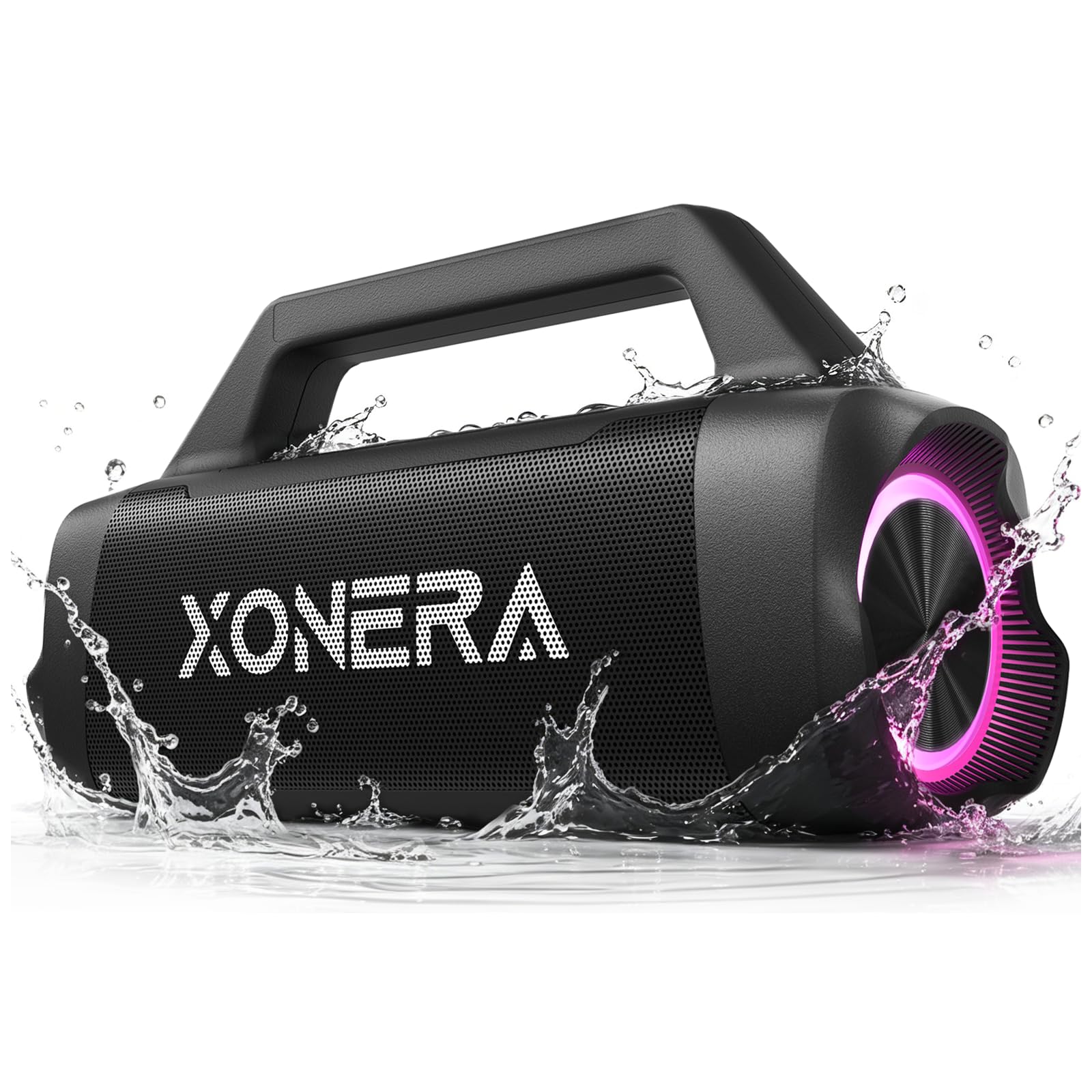
The Xonera 80W Bluetooth Wireless Outdoor Speaker is a portable, battery-powered party speaker built for open-air listening, and it fits buyers who camp, host poolside, fish, or run backyard gatherings and want one loud unit that tolerates weather. Its strongest draw is the combination of high peak output, IPX6 protection, and a stated 20-hour runtime. The qualification is that those specifications are supplied claims rather than independently verified results.
Three features shape daily use. The 80W peak rating with enhanced bass targets a real problem outdoors, where there are no walls to reinforce sound and small speakers thin out quickly. The stated 20 hours of playtime removes the mid-afternoon recharge that shorter-lived speakers force on you. TWS pairing lets you run two units for wider left-right coverage, which is more useful across a long patio or a stretch of beach than pushing a single speaker harder.
On the practical side, the housing carries an IPX6 rating for heavy rain and splashing and includes a handle, so hauling it from the vehicle to a dock or trailhead is straightforward. Connectivity is broader than many portable speakers offer: Bluetooth 5.3 for wireless pairing plus AUX, USB, a headphone jack, and a wired microphone input. That microphone jack opens up karaoke, toasts, and jobsite announcements. The battery also functions as a power bank for a phone.
The compromises deserve attention. Peak wattage is a burst measurement, not sustained output, so treat 80W as a ceiling. Xonera itself notes that playtime shifts with volume, audio source, interference, and light mode, meaning the RGB show and loud bass both draw from the same battery you may want for charging a phone. IPX6 also does not mean submersible. If you want a speaker to toss in a pool or one tuned for critical indoor listening, look at a different category.
Buy it for durable, loud, all-day outdoor sound with unusually flexible inputs. Hesitate if you need verified continuous power figures, guaranteed runtime at high volume, or submersion protection. Audiophiles seeking neutral reproduction and anyone needing a compact pocket speaker should shop elsewhere.
80W Peak Power with Enhanced Bass: This is a headroom figure, useful because outdoor air swallows sound that indoor walls would reflect back. The enhanced bass function adds low-end weight so music does not turn thin and tinny at a distance. Buyers hosting patio parties or beach gatherings benefit most. Anyone listening at low volume in a small room will never approach this ceiling.
IPX6 Water Resistance: IPX6 covers heavy rain and powerful splashing, which solves the everyday anxiety of leaving a speaker out during a storm or setting it near a pool edge. It is protection against water hitting the unit, not against the unit going under water. Boaters, anglers, and poolside hosts get real value here; open-water swimmers should look for a floating, submersible design.
20-Hour Battery with Power Bank Output: A full-day runtime means one charge covers a camping trip or a long tailgate without an outlet search. The USB power bank function adds a second job, topping off a phone when navigation and photos have drained it. The trade-off is shared capacity: every phone charge and every hour of RGB lighting subtracts from music time.
TWS Dual Pairing: Linking two of these speakers creates a wider stereo field rather than one loud point source, which spreads coverage across a long deck, yard, or campsite. It also lets you start with one unit and expand later. This only helps if you buy a second compatible speaker, so single-unit buyers should judge the product on its solo performance.
Bluetooth 5.3 Wireless Connection: The 5.3 standard is aimed at fast pairing and stable transmission, which matters when your phone stays in a pocket or on a picnic table several yards away. Fewer dropouts means fewer interruptions mid-playlist. It works with phones, computers, and MP3 players, making it flexible for households with mixed devices.
Wired Input Cluster and Microphone Jack: AUX, USB, a headphone jack, and a wired microphone jack give this speaker uses beyond music playback. The mic input in particular supports karaoke nights, backyard toasts, coaching, and jobsite announcements without extra gear. Buyers with older non-Bluetooth sources also get a direct path in, which many wireless-only speakers no longer provide.
Best Match, Outdoor Group Listening: This speaker is designed around scenarios where sound must travel and weather is unpredictable. Camping, hiking stops, boating, poolside afternoons, and beach outings are the stated targets, and the pairing of peak output with IPX6 protection lines up with those settings. The evidence is manufacturer-supplied rather than tested, so treat coverage expectations as reasonable rather than guaranteed.
Party and Backyard Duty: RGB lighting that syncs to music plus a wired microphone jack pushes this beyond background audio into host-tool territory. A backyard barbecue gets both sound and visual atmosphere from one device, and the mic input covers announcements or karaoke. If you only want quiet dinner music, the light show is a feature you will likely leave off.
All-Day Trips and Off-Grid Use: The stated 20-hour runtime and power bank output make this a sensible pick for road trips, festivals, and multi-day outdoor plans where charging is scarce. The important qualification comes from Xonera directly: actual playtime shifts with volume, audio source, interference, and light mode. Plan for less than 20 hours if you run loud with lights active.
Worksite and Utility Listening: The handle, water resistance, and mic input suit jobsite use where a speaker gets moved often and exposed to dust, weather, and rough handling. Broad wired inputs also help when phones are locked away or batteries are low.
Where It Fits Poorly: Critical indoor listening, home theater duty, and any use requiring submersion are outside its scope. Listeners who prioritize neutral tuning over bass emphasis, or who need a genuinely pocket-sized speaker, should consider a different product type.
Best For: Households and groups that listen outdoors more than indoors. Campers, boaters, anglers, pool owners, tailgaters, and backyard hosts get the most from the IPX6 rating, carry handle, long stated runtime, and party lighting. It also suits crews who need one durable speaker that travels between vehicle, site, and home.
Consider Alternatives If: You need a speaker that survives full submersion or floats, since IPX6 addresses rain and splashing only. Look elsewhere too if you want verified continuous wattage, studio-accurate tuning for indoor music, or a compact speaker that slips into a jacket pocket. Buyers who never use lighting effects may prefer a simpler model that puts all battery capacity toward playback.
Setup and Daily Use: Pairing runs over Bluetooth 5.3 with phones, computers, or MP3 players. For wired sources, use the AUX, USB, or headphone connections, and plug a wired microphone into the dedicated mic jack for karaoke or announcements. Adding a second matching unit enables TWS for wider stereo coverage. The USB power bank function charges a phone from the same internal battery.
Ownership Expectations: Recharge the internal battery when playtime drops, and budget capacity across three demands: volume, RGB lighting, and phone charging. Xonera notes that runtime varies by volume, source, interference, and light mode, so the 20-hour figure represents favorable conditions rather than a guarantee.
What Sets It Apart: The wired connection set is the differentiator. Many portable outdoor speakers have dropped everything except Bluetooth, while this one keeps AUX, USB, a headphone jack, and a microphone input alongside TWS and lighting. That combination makes it a more flexible party and utility tool than a wireless-only speaker at a similar positioning.
Understand the Water Rating Before You Test It: IPX6 protects against heavy rain and powerful splashing, not immersion. Leaving the speaker out in a downpour or setting it near a splash zone is within its stated design; dropping it in a pool, lake, or ocean is not. Poolside and boat users should still secure the unit away from the edge.
Protect the Ports: This model carries multiple wired connections including AUX, USB, a headphone jack, and a microphone jack. Openings are the most exposed part of any weather-resistant speaker, so keep them closed or covered when not in use and let the area dry before plugging anything in after rain or splashing.
Manage Battery Demands: The internal battery powers audio, RGB lighting, and phone charging simultaneously. Running all three at once shortens the session. If a long day matters more than atmosphere, reduce lighting and volume and reserve power bank use for when you actually need it.
Transport and Storage: The built-in handle is the intended way to carry it between locations, which reduces the odds of a drop compared with gripping the housing. Store the speaker dry and out of standing water, and recharge periodically rather than leaving it fully depleted for long stretches.
Pros
- Rugged IP67 waterproof rating protects against rain, splashes, and submersion, ideal for outdoor use.
- Compact size and lanyard make it easy to carry to the beach, park, or on hikes.
- Bluetooth 5.3 ensures reliable, low-latency wireless audio from compatible devices.
- TWS pairing allows you to create a stereo pair for a more immersive sound experience.
- Up to 10 hours of playtime on a single charge supports all-day listening at moderate volumes.
Cons
- 5W driver limits maximum volume, so it may not be loud enough for large outdoor spaces or noisy environments.
- Bass, while present, won't satisfy bass enthusiasts who prefer deeper, more powerful low-end response.
- No built-in microphone for hands-free calls, so you'll need to use your phone for calls.
The comiso C17A is a small, rugged Bluetooth speaker designed for people who want dependable music outdoors without hauling bulky gear. It suits hikers, beachgoers, campers, and anyone who needs a shower-friendly audio companion. The main reason to consider it is its IP67 waterproofing and compact size, but its modest power output means it's not for those who need to fill a large yard with sound.
At the heart of the C17A is a 5W full-range driver paired with a passive subwoofer. In practice, this combination delivers clear mids and a surprising amount of low-end punch for a speaker this size. You'll notice it most at moderate volumes in a bedroom, campsite, or small patio. The passive radiator helps add depth to acoustic tracks and podcasts, though it won't reproduce the thumping bass of larger, pricier speakers.
The speaker's build is straightforward and practical. The ABS plastic housing is dustproof and fingerprint-resistant, which means it holds up well to sandy beach days and greasy barbecue sessions. The IP67 rating means you can submerge it in up to 1 meter of water for 30 minutes without damage. The included lanyard adds a layer of convenience, letting you clip it to a backpack or bike handlebar. The USB-C charging port is covered by a waterproof flap, so you can charge it without worry after exposure to moisture.
Where this speaker falls short is raw volume. With a single 5W driver, it won't compete with larger Bluetooth speakers in terms of loudness. If you're hosting a large party or need music to carry across a wide outdoor area, you'll likely find the C17A underpowered. Additionally, the battery life of about 10 hours is decent but not exceptional, and it can drop if you push the volume up. There's also no built-in microphone, so you can't take calls directly through the speaker.
In summary, the comiso C17A is an excellent choice for anyone who values portability and durability over sheer sonic power. It's a great travel companion, a reliable shower speaker, and a thoughtful gift for someone who enjoys the outdoors. If you need room-filling volume or earth-shaking bass, consider a larger speaker with a bigger driver and more wattage. But if you want a tough, tiny speaker that sounds surprisingly good for its size, the C17A delivers.
IP67 Waterproofing: This rating means the C17A is fully protected against dust and can be submerged in up to 1 meter of fresh water for 30 minutes. For you, that means you can take it to the beach, poolside, or even into the shower without worrying about splashes or accidental drops in water. It's a feature that gives you peace of mind in wet environments.
5W Driver with Passive Subwoofer: The 5W full-range driver handles mids and highs, while the passive subwoofer adds extra bass punch. The result is a fuller, richer sound than you'd expect from a speaker this small. You'll appreciate it when listening to podcasts, acoustic music, or pop tracks at moderate volumes. It won't rattle windows, but it delivers clear audio for personal listening.
Bluetooth 5.3: The latest Bluetooth version ensures a stable, low-latency connection with your phone, tablet, or computer. This means less audio lag when watching videos and faster pairing. It also uses less power, which contributes to the speaker's efficient battery life.
TWS Stereo Pairing: If you have two C17A speakers, you can pair them wirelessly to create a true stereo soundstage. This doubles the volume and adds left-right separation, making music more immersive for a small gathering. It's a budget-friendly way to get a stereo effect without buying a larger, more expensive speaker.
10-Hour Battery Life: With a full charge, the C17A plays for about 10 hours at medium volume. That's enough for a day trip or a long evening of background music. If you crank the volume, expect shorter playtime, but for typical use, it's a reliable battery life.
Best For: The comiso C17A is ideal for individuals who need a rugged, compact speaker for outdoor activities like camping, hiking, beach trips, or even just for shower use. Its waterproofing and portability make it a great travel companion. It's also a thoughtful gift for teens, college students, or anyone who enjoys music on the go.
Consider Alternatives If: You need a speaker to fill a large room or outdoor area with high volume, or if you're a bass enthusiast who wants deep, powerful low-end. A larger speaker with a bigger driver and more wattage would be a better fit. Also, if you need hands-free calling, this speaker lacks a microphone, so you'd need a model with that feature.
Setup and Daily Use: Setup is straightforward: charge the speaker via the USB-C cable, then turn it on and put your phone in Bluetooth pairing mode. The speaker will appear in your device list. For TWS pairing, turn on both speakers and double-press the button on one to link them. Daily use is as simple as turning it on and playing audio from your device.
Maintenance Requirements: The IP67 rating means you can rinse the speaker with fresh water after exposure to salt or sand. The charging port cover should be kept closed when not charging. No other special maintenance is required, but avoid dropping it on hard surfaces to prevent damage to the housing.
What Sets It Apart: The C17A stands out for its combination of a tiny footprint, high waterproof rating, and TWS capability at an affordable price point. Many small speakers are either not waterproof or lack stereo pairing. This model offers both, making it a versatile option for budget-conscious buyers who want a durable, portable speaker.
Pros
- Loud, clear sound with strong bass, thanks to four drivers and DSP
- Rugged, waterproof design that floats, ideal for outdoor use
- Long battery life and power bank feature for charging devices on the go
- Versatile connectivity with Bluetooth, AUX, TF card, and NFC
- Custom EQ button to tailor sound to your preference
Cons
- Large and heavy, not the most portable speaker for travel
- No support for USB drives, despite having a USB port for charging
- NFC pairing works only with Android devices, not iOS
The W-KING D9-1 is a portable Bluetooth speaker that packs a punch, designed for those who want big sound in outdoor settings. With a 100W peak output and a 7.2-inch passive radiator, it delivers deep bass and clear highs that fill a backyard or campsite. Ideal for party hosts, beachgoers, or anyone who values volume and bass over portability.
The speaker features four drivers (two subwoofers and two tweeters) and advanced DSP, ensuring distortion-free sound even at high volumes. The passive radiator enhances bass resonance, making it suitable for bass-heavy music genres. Bluetooth 5.0 provides a stable connection up to 100 feet, and you can pair two D9-1 speakers for a wider stereo soundstage, doubling the power to 200W peak.
Build quality is rugged, with an IPX6 rating that withstands water splashes and rain, and it floats, making it a safe companion for pool parties. The integrated handle makes it easy to carry, though its size and weight mean it's more of a luggable than a pocket speaker. The control layout is straightforward, with buttons for power, volume, EQ, and playback.
Battery life is impressive at up to 40 hours on low volume, and it can charge your devices via USB, a handy feature for outdoor adventures. However, the USB port is only for charging, not for playing music from a USB drive. The NFC pairing works only with Android devices, so iPhone users will need to rely on standard Bluetooth pairing.
In summary, the W-KING D9-1 is a solid choice for those prioritizing sound volume and bass in a weatherproof package. Its size may be a drawback for travelers, but for stationary outdoor use, it delivers. If you need a compact speaker for hiking, consider a smaller model.
100W Peak Output: This speaker can get very loud, making it suitable for outdoor gatherings where ambient noise is high. The 100W peak power ensures music is heard clearly across a large area, and the advanced DSP helps minimize distortion at high volumes.
7.2-Inch Passive Radiator: The large passive radiator on the back enhances bass response, delivering deep, resonant low frequencies that you can feel. This is a key feature for bass enthusiasts who want a thumping sound without needing a separate subwoofer.
IPX6 Waterproof and Floatable: With an IPX6 rating, the speaker can withstand heavy splashes and rain, making it safe for poolside or beach use. It also floats, so if it falls into water, it won't sink, adding peace of mind.
40-Hour Battery Life: At moderate volumes, you can get up to 40 hours of playtime, which covers a weekend camping trip. The built-in power bank function lets you charge your phone or other devices, reducing the need to carry extra batteries.
Bluetooth 5.0 and TWS Pairing: Bluetooth 5.0 offers a stable connection up to 100 feet, and you can pair two D9-1 speakers for true stereo sound, creating a more immersive audio experience for movies or parties.
Multiple Input Options: In addition to Bluetooth, you have an AUX input and a TF card slot, allowing you to play music from non-Bluetooth devices or pre-loaded memory cards. NFC is also available for quick pairing with Android phones.
Best For: The W-KING D9-1 is ideal for outdoor enthusiasts who prioritize sound volume and bass over portability. It suits pool parties, beach trips, camping, and backyard gatherings where you need a durable, weatherproof speaker that can get loud.
Consider Alternatives If: If you need a speaker that fits in a backpack or carry-on luggage, this may be too large and heavy. Also, if you prefer a more balanced sound profile without exaggerated bass, you might consider a speaker with less emphasis on low frequencies.
Setup and Daily Use: Pairing is simple via Bluetooth, and you can also use the AUX or TF card for non-Bluetooth sources. The EQ button lets you cycle through presets to match your music taste. The handle makes it easy to move around, but it's not designed for jogging or hiking.
Maintenance Requirements: The speaker is waterproof but not dustproof, so rinse off any sand or dirt after beach use. The passive radiator is exposed, so avoid puncturing it. Charge with a 5V 2A adapter (not included) to ensure optimal charging.
What Sets It Apart: This speaker stands out for its combination of high power output, deep bass, and waterproof/floating design at a budget-friendly price point. Many comparable speakers either lack the bass or the waterproofing, making the D9-1 a strong all-rounder for outdoor audio.
Outdoor Parties: With 100W peak power and 108dB output, this speaker can easily fill a large outdoor space with sound. The bass radiator adds depth that keeps the energy high, and the IPX6 rating means you don't have to worry about sudden rain.
Poolside Relaxation: The floatable design is a standout feature, allowing you to keep the music going even if the speaker ends up in the water. The rugged build withstands splashes and sun exposure, making it a reliable pool companion.
Camping and Tailgating: The 40-hour battery life at low volume is a boon for extended trips, and the power bank feature lets you charge your phone when you're off the grid. The handle makes it easy to hang or carry, though it's not the lightest option.
Movie Nights: Pair two D9-1 speakers to create a stereo setup for outdoor movie screenings. The TWS pairing provides a wider soundstage, enhancing dialogue clarity and immersive effects.
Limitations: For indoor use, the bass might be overpowering in small rooms, and the size may be excessive for a desk setup. If you need a speaker for personal listening, a smaller model would be more appropriate.
Pros
- Four-driver layout with dedicated bass drivers targets listeners who need volume outdoors, where thin-sounding compact speakers struggle.
- IPX6 rating and shock-resistant build suit poolside, beach, and jobsite users who cannot baby their gear.
- Integrated carry handle makes it practical to move between the car, campsite, and patio one-handed.
- Up to 20 hours of playtime fits weekend campers and all-day hosts who do not want to hunt for an outlet.
- Six light modes and ten colors with music sync add party atmosphere for small backyard or garage gatherings.
Cons
- The 20-hour figure is qualified by volume level and light mode, so party-volume users with lights running should expect noticeably less.
- IPX6 covers water spray and splashes, not submersion, so it is not the right pick for buyers who want a speaker that can be dropped in a pool.
- Wattage figures are peak ratings rather than sustained output, so buyers comparing continuous power across brands cannot take 80W at face value.
The TPWIN 80W Bluetooth Speaker is a portable, weather-resistant wireless speaker built for outdoor listening, and it fits buyers who move music between campsites, pool decks, beaches, and worksites rather than those furnishing a living room. The strongest supplied reason to consider it is the driver arrangement: dual 25W peak subwoofers paired with dual 15W peak tweeters, backed by dedicated bass drivers and the brand's bassup processing, which is aimed squarely at open-air spaces where sound has nothing to reflect off. The qualification is that these are peak wattage figures supplied by the manufacturer, not measured continuous output, so they describe design intent rather than verified loudness.
Three features carry the most practical weight. The IPX6 rating means spray, splashes, and rain are accounted for, so the speaker can sit near a pool edge or ride in an open truck bed without being packed away at the first cloud. The stated 20-hour playtime is enough for a weekend camping trip or a long day of hosting on a single charge. TWS pairing lets a second identical unit run alongside the first for wider stereo coverage, which matters more outdoors than any single-speaker surround effect.
Connection and handling are straightforward. Bluetooth 5.3 supports fast pairing with phones, tablets, and computers, with a stated range above 30 feet, enough to leave the source device on a picnic table while you move around. A molded carry handle is part of the design, so transport between vehicle and site is one-handed. The light system offers six modes and ten colors that sync to music.
The main trade-off is runtime honesty: TPWIN ties the 20-hour claim to volume level and light mode, so loud playback with lights active will fall short. Buyers who want submersible waterproofing, measured continuous power ratings, or refined indoor tonality should look at a different category of speaker.
Best For: Campers, pool and beach hosts, and jobsite crews who need one loud, splash-tolerant speaker that can be carried by hand and left outside all day.
Why It Fits: The four-driver 80W peak layout, IPX6 water and dust resistance with drop protection, an integrated handle, and a rated 20 hours of playtime cover the exact conditions outdoor listening creates.
Think Twice If: You need a speaker that survives full submersion, or you plan to run high volume with the light show and still expect close to 20 hours of battery.
Bottom Line: A sensible outdoor-first pick for open-air volume and durability, provided you treat the 20-hour rating as a conservative-use figure rather than a party-volume guarantee.
Audio Hardware: Two 25W peak subwoofers and two 15W peak tweeters combine for a rated 80W maximum, with dedicated bass drivers and bassup processing intended to keep low frequencies audible outdoors.
Durability: IPX6 water resistance is paired with dust resistance and drop protection, so spray, sand, and knocks during transport are part of the design brief. This is splash and rain protection, not submersion.
Power: A high-capacity battery supports up to 20 hours of playback, with TPWIN stating that real runtime varies by volume level and light mode.
Wireless: Bluetooth 5.3 handles fast pairing with phones, tablets, and computers at a stated range beyond 30 feet, and TWS support allows two units to run as a stereo pair.
Lighting: Six light modes and ten colors sync to the music for backyard and garage gatherings, and the mode chosen affects battery drain.
Pairing: Bluetooth 5.3 fast pairing connects phones, tablets, and computers, with a stated 30-plus feet of range that allows the source device to stay on a table while you move around a yard or campsite.
Expanding Sound: TWS pairing links two of these speakers into a stereo pair, which is the practical route to covering a wider outdoor area rather than pushing a single unit to its limit.
Transport: The built-in handle is designed for one-handed carrying between car, campsite, patio, and jobsite, so the speaker does not need a separate bag or strap.
Managing Runtime: Because TPWIN ties the 20-hour rating to volume and light mode, turning the light show off or using a lower-intensity mode is the clearest way to stretch a single charge across a full day.
Pros
- IPX7 waterproof rating makes it ideal for poolside, beach, and camping
- Long 24-hour battery life ensures uninterrupted music for a full day
- BassUp technology enhances bass for a more immersive listening experience
- 12W output with dual drivers provides strong, clear sound for its size
- Simple controls and portable design make it user-friendly for all ages
Cons
- No speakerphone capability, so it can't handle calls
- Lacks a built-in microphone for voice assistants
- Charging takes time, and no fast charge support is mentioned
The Anker Soundcore 2 is a portable Bluetooth speaker designed for people who want reliable, waterproof sound for outdoor adventures. It's a great fit for campers, beachgoers, or anyone who needs a durable speaker that can handle splashes and even brief submersion. With its IPX7 rating, it's built to survive rain, poolside splashes, and accidental drops in water, making it a trustworthy companion for on-the-go listening.
The speaker's key strengths lie in its battery life and sound quality. A 5,200mAh battery powers up to 24 hours of continuous playback, so you can take it on a weekend trip without worrying about recharging. The 12W output, driven by dual neodymium drivers, delivers clear and surprisingly powerful sound for its size. Anker's BassUp technology boosts low-end frequencies, adding punch to bass-heavy tracks, which is a real plus for parties or outdoor gatherings.
Design is straightforward and practical: simple controls on top let you adjust volume, skip tracks, and pair devices quickly. The compact, rounded shape fits easily into a backpack or cup holder, and the fabric exterior feels durable. It's not the most premium-looking speaker, but it prioritizes function over form.
However, there are some limitations to consider. The Soundcore 2 lacks a built-in microphone, so you can't use it for hands-free calls or voice assistants. It also doesn't support stereo pairing with other Soundcore speakers, which might be a drawback for those wanting a wider soundstage. The speaker is heavier than some newer models, but that's a trade-off for its robust battery and waterproofing.
For anyone seeking a rugged, long-lasting Bluetooth speaker for outdoor use, the Anker Soundcore 2 is a compelling option. Its waterproofing and battery life are standout features, but if you need speakerphone functionality or a more compact design, you might want to explore other models. Overall, it's a reliable performer that delivers where it counts.
IPX7 Waterproofing: The speaker is fully protected against immersion in water up to 1 meter for 30 minutes. This means you can confidently use it by the pool, in the rain, or even rinse it off after a sandy beach trip without damaging the internals.
24-Hour Battery Life: The 5,200mAh battery provides a full day of music on a single charge. Whether you're camping, hiking, or hosting a backyard BBQ, you won't need to hunt for an outlet. This is a major convenience for extended outdoor activities.
BassUp Technology: This feature enhances low-frequency sounds, making bass lines more pronounced. It's perfect for genres like hip-hop or electronic music, and it helps the speaker fill a larger space with sound, ideal for outdoor parties or movie nights.
12W Dual Neodymium Drivers: Two drivers work together to produce a combined 12W of audio output. This delivers clear mids and highs, and the advanced digital signal processor minimizes distortion, even at higher volumes. It's a balanced sound profile that suits most music tastes.
Spiral Bass Port: The patented design of the bass port improves airflow, which boosts low-end response. This contributes to the speaker's ability to produce deeper bass than many speakers of similar size, enhancing the overall listening experience.
Best For: The Anker Soundcore 2 is best for outdoor enthusiasts, campers, beachgoers, and anyone who needs a durable, waterproof speaker that can play music all day. It's also a great choice for budget-conscious buyers who want reliable performance without breaking the bank.
Consider Alternatives If: If you need speakerphone functionality for calls, or if you want to pair two speakers for stereo sound, you might want to look at other models. Additionally, if you prefer a lighter, more compact speaker for travel, the Soundcore 2 may be a bit bulky.
Setup and Daily Use: Setup is simple: power on, enable Bluetooth on your device, and pair. The controls are intuitive, with buttons for power, volume, and play/pause. It's designed for quick, hassle-free use, so you can start playing music in seconds.
Maintenance Requirements: To keep the speaker in good condition, avoid exposing it to soap, chemicals, or saltwater for extended periods. After use in saltwater or sandy environments, rinse it with fresh water and let it dry. The fabric exterior can be wiped clean with a damp cloth.
What Sets It Apart: The combination of IPX7 waterproofing, long battery life, and BassUp technology at this price point is rare. It stands out as a value-packed option that doesn't compromise on durability or sound quality, making it a top contender in the portable speaker market.
Pros
- The IP67 claim covers both water and dust ingress, so an accidental splash or a sandy towel is a normal-use event rather than a repair question
- Playtime Boost gives you a stated reserve of roughly 2 hours, which is the difference between a speaker dying mid-afternoon and finishing the outing
- Auracast support means the speaker is not a dead end if you later want more volume or stereo separation, since a second unit extends it rather than replaces it
- The small footprint is the entire design premise, so it travels in a bag pocket or day pack without displacing anything else you packed
- Recycled content and FSC-certified packaging give environmentally motivated buyers a documented manufacturer claim to weigh rather than vague marketing
Cons
- A rated 7 hours, or about 9 with Playtime Boost, is modest for a portable speaker and likely means charging on any full-day or multi-day trip
- No specifications, dimensions, weight, driver size, battery capacity, Bluetooth version, or charging port details were supplied, so several routine buying questions cannot be answered from this data
- No customer ratings or reviews are available for this listing, which removes the anecdotal signal that would normally corroborate battery life, durability, and real-world loudness claims
Bottom line: The JBL Go 4 ultra-portable Bluetooth speaker in black suits the buyer who wants an IP67 waterproof and dustproof speaker small enough to carry everywhere, and its strongest argument is that durability rating paired with Auracast expandability. The principal reservation is battery: a manufacturer-rated 7 hours, extendable by roughly 2 more with Playtime Boost, is short, and nothing in the available data verifies it independently.
Positionally, this is the smallest tier of the portable speaker market, where the design goal is not room-filling output but presence. A speaker in this class is meant to solve the problem of having no music at all in places where a larger unit would not have come along: a shower, a campsite, a kitchen counter, a bike ride, a hotel bathroom. Judged against that brief, the relevant questions are whether it survives the environment and whether it lasts the session, not whether it fills a living room. The brand's own framing leans on that contrast, promising more output than the size suggests, which should be read as a marketing claim rather than a measured result.
The verified features translate cleanly into consequences. IP67 means the speaker is rated against both dust and water immersion, so sand at the beach and spray at the pool are ordinary conditions rather than risks you manage around. Playtime Boost functions as a reserve tank you activate when the charge runs low, which matters more than the raw hour count because it changes when you have to leave the party. Auracast is the quietly useful one: it means a single Go 4 is an entry point, not a ceiling, since a second unit adds stereo and multiple compatible JBL speakers can play in sync.
The limitations are mostly about scale and disclosure. If you need a speaker to run through a full workday, an all-day festival, or a weekend without power, a larger-capacity model is the honest answer. If you want deep low end or genuine stereo imaging from one box, a larger format serves you better. And this listing supplies no dimensions, weight, driver details, Bluetooth version, or charging specifics, so anyone with a specific mounting, packing, or cable requirement is working without the data to confirm it.
Final verdict: A qualified recommendation for portability-first buyers who accept a short runtime as the cost of a speaker they will actually carry. Before buying, confirm the current published specifications and charging connector on the manufacturer's own listing, since none were provided here.
Strong Match: The buyer who wants a speaker that goes everywhere and needs it to survive water, dust, and rough handling. The IP67 rating is the clearest supported reason to choose this over an unrated small speaker, and the compact form factor is the entire point of the product rather than a compromise within it.
Also Consider It If: You already own or expect to own other Auracast-enabled JBL speakers. That is a separate line of evidence from the durability case: Auracast lets you pair two Go 4 units for stereo or link several compatible speakers together, so a small first purchase does not lock you into small sound permanently.
Also Consider It If: Recycled materials factor into your buying decisions. The manufacturer states the speaker uses post-consumer recycled plastic and recycled fabric for the grille, with FSC-certified packaging printed using soy ink, which is a more specific claim than most competitors in this size class disclose.
Not the Best Fit: Anyone who needs long unattended runtime or serious low-end output. A rated 7 hours plus about 2 from Playtime Boost will not cover a workday, a long drive, or an off-grid weekend, and no supplied evidence supports bass depth or maximum volume beyond promotional description. Buyers who need confirmed dimensions, weight, or connector type before committing are also poorly served by the information available.
Decision in One Sentence: Buy the JBL Go 4 ultra-portable Bluetooth speaker in black if you want an IP67-rated, Auracast-capable speaker that travels in a pocket, but only if you accept a manufacturer-rated 7 to 9 hour runtime and are willing to verify the physical specifications yourself before ordering.
Consider It For:
- Wet and dirty environments, since the stated IP67 rating covers both water and dust ingress rather than splash resistance alone.
- Travel and everyday carry, where the ultra-portable size is the product's central design decision rather than an afterthought.
- Buyers who may want more output later, because Auracast supports stereo pairing of two Go 4 units and linking to other Auracast-enabled JBL speakers.
- Short sessions where the roughly 2-hour Playtime Boost reserve meaningfully extends a 7-hour rated charge.
- Shoppers weighing recycled content, given the specific manufacturer claims about recycled plastic, recycled grille fabric, and FSC-certified packaging.
Pass If:
- You need more than a rated 9 hours of total playtime without access to charging.
- You want a primary speaker for a room or a group, since this is a small-format product and no output or bass performance data is supplied to support that use.
- You require confirmed dimensions, weight, driver specifications, Bluetooth version, or charging port type before purchase, none of which appear in the available product data.
- You rely on customer feedback to validate durability and battery claims, because this listing carries no ratings or reviews to corroborate the manufacturer's statements.
IP67 rating: The first digit refers to solid particle protection and the second to liquid protection. A 6 indicates full dust-tight protection and a 7 indicates protection against temporary immersion in water. In practical terms, the manufacturer is claiming the speaker tolerates beach sand and brief submersion, not that it is designed for prolonged underwater use or high-pressure jets.
Playtime Boost: Described as a tap-activated mode adding up to 2 hours on top of the rated 7. Features of this type generally work by adjusting output characteristics to reduce power draw, so treat the extra runtime as a trade rather than free capacity. The manufacturer does not state what changes when it is engaged.
Auracast: A broadcast-style Bluetooth capability that lets one source feed multiple receivers. Here it enables two Go 4 units to operate as a stereo pair and allows several Auracast-enabled JBL speakers to play the same audio together. The practical value is upgrade flexibility: adding a unit increases coverage without replacing what you already bought. Compatibility with non-JBL Auracast devices is not addressed in the supplied information.
Recycled materials: The manufacturer states the product incorporates post-consumer recycled plastic and recycled fabric in the grille, with packaging made from FSC-certified paper printed using soy ink. No percentage of recycled content is specified, so the claim indicates intent and material sourcing rather than a quantified share.
Pros
- Compact 4.5-inch by 3.5-inch cylinder with an included lanyard fits campers, hikers, and commuters who clip gear to a pack rather than pack it inside.
- IPX6 splash and rain resistance benefits shower listeners, poolside users, and golf cart or boat owners who cannot keep electronics dry.
- Double pairing for 30W combined output helps hosts who want sound reaching both ends of a backyard or open room instead of one corner.
- 3.5 mm AUX input and TF card playback serve users with older audio sources, downloaded lossless files, or devices without working Bluetooth.
- Built-in microphone supports hands-free calls, useful for a desk or workshop where the speaker doubles as a call device.
Cons
- IPX6 explicitly excludes partial or full submersion, so bathtub, pool, or lake users who expect a floating speaker should look elsewhere.
- No battery capacity or playtime specification is supplied, leaving all-day festival, camping, and beach buyers without the runway figure they need to plan.
- The listing carries a 4.7 out of 5 rating but no written customer reviews are available, so long-term durability and real sound quality remain unverified by owners.
The NOTABRICK 15W Portable Bluetooth Speaker is a single-unit wireless speaker built for moving between rooms and outdoor spaces rather than anchoring a permanent audio setup. It fits the buyer who wants one inexpensive speaker that tolerates a wet bathroom, a sandy towel, and a car console without a protective case. The strongest supplied reason is the combination of a 4.5-inch tall, 3.5-inch diameter body with an IPX6 rating covering splashes, rain, dust, and sand. The qualification is that IPX6 stops at spray resistance, and the manufacturer states the speaker cannot be partially or fully submerged.
Three features matter most in daily use. Bluetooth 5.0 with automatic reconnection to the last paired device means the speaker wakes and links without a fresh pairing routine each morning. The True Wireless Stereo function connects two of these speakers for a stated 30W combined output, which separates left and right channels across a room instead of concentrating sound in one spot. The TF card slot reads WAV, FLAC, APE, and MP3 files, so a loaded card keeps music playing when a phone leaves the area or holds a call.
Setup stays simple. Charging runs over USB Type-C, the same connector used by most recent phones, tablets, and laptops. A 3.5 mm AUX port covers wired sources, and an included lanyard allows hanging the speaker from a shower rod, tent pole, or backpack strap. At roughly the footprint of a large travel mug, it occupies minimal counter or shelf space. A built-in microphone handles hands-free calls.
The verdict is favorable within limits. Water resistance, dual-source playback, and stereo pairing are real advantages at this size. The trade-off is missing information: no battery runtime, driver, or weight figures are supplied, and no written owner reviews are available to confirm durability. Buyers needing verified all-day battery life, submersible protection, or room-filling home audio should consider a larger rated speaker instead.
Best For: A casual listener who wants one small, splash-tolerant speaker that travels between the shower, the kitchen counter, a backyard table, and a beach or boat outing.
Why It Fits: The manufacturer specifies an IPX6 rating against splashes, rain, dust, and sand on a 4.5-inch tall, 3.5-inch diameter body with a lanyard, plus Bluetooth 5.0 automatic reconnection, USB Type-C charging, TF card playback, and a 3.5 mm AUX input.
Think Twice If: You need a speaker that survives submersion, or you require a stated battery runtime before committing to festival days, long camping trips, or all-day beach use, since no playtime figure is supplied.
Bottom Line: A sensible compact pick for wet and outdoor spots where a phone speaker falls short, provided you accept that battery life and long-term durability are not documented in the available product information.
Wireless Connection: The speaker uses a Bluetooth 5.0 chip for pairing and states automatic reconnection to the last device used, which suits households where the same phone or tablet is the regular source.
Wired Input: A 3.5 mm AUX input accepts headphone-jack sources, covering older MP3 players, laptops, and in-car setups that do not pair over Bluetooth.
Local File Playback: The TF card slot supports WAV, FLAC, APE, and MP3 files, so lossless and compressed libraries play directly from the speaker without a paired phone.
Charging and Cables: Charging uses a USB Type-C port described as fast charging, matching the cable most recent phones, tablets, and laptops already use.
Multi-Speaker Setup: True Wireless Stereo pairing connects two of these speakers for a stated 30W combined output, which requires purchasing a second identical unit.
Physical Dimensions: The manufacturer lists 4.5 inches in height and 3.5 inches in diameter, a cylindrical footprint close to a large travel mug.
Space Impact: That size fits a bathroom shelf, kitchen counter corner, desk edge, or side pocket of a daypack without displacing other items.
Carry Options: An included lanyard allows hanging the speaker from a shower rod, tent pole, golf cart frame, or backpack strap rather than setting it on a wet surface.
Output Scale: A single unit is rated at 15W, and two paired units are stated at 30W combined, so larger gatherings realistically call for the second speaker.
Not Specified: Weight, battery capacity, and playtime are not provided in the available product information, so pack-weight and runtime planning cannot be confirmed here.
Quick Answer
The Anker Soundcore Boom 2 Plus is the best bass portable speaker of 2026: 140W peak, BassUp 2.0, and 40Hz low-end with IPX7 waterproofing and 20-hour battery life. For roughly 85% of that punch at over 50% less cost, choose the W-KING 100W Max in the mid-range tier.
- Best value-to-bass ratio: the W-KING 100W Max costs over 50% less than the Boom 2 Plus while delivering about 85% of its perceived volume and low-end punch.
- Peak wattage is not loudness. Many budget boxes advertise “80W Peak” but sustain only 20–25W RMS, so bass turns muddy and distorted when you push them.
- Mini speakers under $20 struggle below 100Hz. Software EQ cannot invent physical bass resonance those tiny cabinets cannot produce.
The 5 Best Bass Portable Speakers
True bass in a backpack-sized box used to be a physics problem: low frequencies need cone area and cabinet volume, and “portable” rarely offered either. In 2026, Class-D amplification, dual passive radiators, and smarter DSP have changed that. We judged these speakers on real acoustic output—SPL, response down to 40Hz, and THD at maximum volume—outdoors, where bass vanishes fast, and indoors, where rooms can flatter a weak low end. These five are the ones that still hit.
1. Anker Soundcore Boom 2 Plus — Best Overall
- Peak output: 140W
- Bass processing: BassUp 2.0
- Low-end reach: down to 40Hz
- Drivers: dual woofers with large passive radiators
- Water protection: IPX7; floats
- Battery: 20 hours; can act as a power bank
- Price range: premium ($100–$200+)
Reasons to Buy:
- ✅ 140W peak with genuine 40Hz extension—this is physical sub-bass, not a mid-bass bump
- ✅ BassUp 2.0 keeps the low end tight and controlled even at maximum volume
- ✅ IPX7 waterproofing, it floats, and a 20-hour battery make it a true outdoor tool
- ✅ Built-in power bank duty means one brick can feed both the party and your phone
Reasons to Avoid:
- ❌ Premium pricing; the W-KING 100W Max undercuts it by more than 50% for most of the boom
- ❌ Overkill for a shower, hotel desk, or personal listening—you are paying for chest-thump and air
- ❌ Dual-woofer, large-radiator design is a backpack piece, not a pocket speaker
Best For: The first time you park this at the edge of a patio and roll a kick drum, you feel why it wins. The dual woofers and big radiators actually move air; 40Hz is not a spec-sheet flourish. BassUp 2.0 is the quiet hero—at 100% it does not collapse into the flabby, protective cut that cheap DSPs apply. Twenty hours and an IPX7 shell that floats mean you stop babysitting the speaker and start using it. If you want one portable that behaves like a small party rig, this is it.
2. W-KING 100W Max — Best Value-to-Bass Ratio
- Output: 100W Max
- Driver layout: dual subwoofers + dual passive radiators
- Tuning: physical EQ controls; warmer, darker signature than Anker
- Relative performance: ~85% of Boom 2 Plus perceived volume and punch, at over 50% less cost
- Price range: mid-range ($40–$100)
Reasons to Buy:
- ✅ The standout bang-for-bass pick: most of the Anker’s hit for a mid-range outlay
- ✅ Dual subwoofers and dual passive radiators give it a large physical footprint and real kick-drum punch
- ✅ Hardware EQ lets you tune bass to a backyard, garage, or living room instead of living with one curve
- ✅ Easily loud enough for a barbecue without stepping into premium-tier pricing
Reasons to Avoid:
- ❌ DSP is less refined than BassUp 2.0, so the low end is warmer and darker, not as tightly controlled
- ❌ It will not match the Boom 2 Plus on the deepest 40Hz material
- ❌ You are buying brute cabinet and driver area, not the last word in polish
Best For: This is the speaker you buy when the playlist is hip-hop and house and the guests are in the yard, not when you are A/B-ing sub-bass decay. The cabinet is unapologetically large for the money, and those dual radiators give kick drums a shove you can feel at conversation distance. Nudge the physical EQ for the space you are in—open air wants more low end than a small room—and it stays satisfying. It is not as composed as the Anker at the limit, but the gap is smaller than the price gap.
3. RWN 160W — Best High-Output Party Speaker
- Output: 160W (high-output party class)
- Class: premium heavy-hitter alongside the Boom 2 Plus
- What this tier pays for: multi-channel amplification (separate amps for woofers and tweeters), battery chemistry that resists bass drop-off as charge falls, DSP that holds clean low end at 100% volume
- Price range: premium ($100–$200+)
Reasons to Buy:
- ✅ 160W high-output party design aimed at filling space, not a bedside table
- ✅ Lives in the same premium band as the Boom 2 Plus, where multi-channel amps and serious DSP are the point
- ✅ Premium-tier battery design is built to keep bass from collapsing as the pack drains
- ✅ Intended to stay clean at full tilt rather than protecting tiny drivers by cutting the low end
Reasons to Avoid:
- ❌ Premium money; confirm you need party-level output before skipping the W-KING
- ❌ Treat “160W” with the same skepticism as any peak figure—RMS is what sustains bass
- ❌ The wrong tool if you wanted something pocketable or shower-proof first
Best For: Think of this as the volume-first premium option: a high-output party box for rooms and gatherings that swallow mid-range speakers. You are paying the $100–$200+ tax for separate amplification, a power supply that does not starve the woofers late in the charge cycle, and DSP that is supposed to stay honest at the stop. It is not the speaker we would pick for measured 40Hz authority—that still belongs to the Boom 2 Plus—but if the brief is “keep the low end up when the room is full,” this is the class that exists to do it.
4. 80W Outdoor Speaker — Best Rugged All-Rounder
- Output: 80W
- Bass layout: dual-radiator; punchy mid-bass rather than true sub-bass
- Build: reinforced chassis rated for drops
- Water protection: IPX6
- Price range: under $60 (entry-to-mid)
Reasons to Buy:
- ✅ Best balance of portability, durability, and low-end punch under $60
- ✅ Reinforced chassis that can take drops, plus IPX6 against high-pressure water
- ✅ Dual-radiator setup delivers energetic mid-bass kick for the size
- ✅ Sized and sealed for camping, hiking, and garage duty without a premium bill
Reasons to Avoid:
- ❌ Will not reproduce the sub-bass of the Anker or W-KING—no 40Hz chest-thump
- ❌ IPX6 is strong spray resistance, not the IPX7 submersible/float story
- ❌ If “80W” is a peak number, expect far less continuous power; judge it on kick, not on the watt sticker
Best For: This is the speaker you throw in a truck bed or tent vestibule and stop worrying about. The mid-bass is snappy rather than subterranean: great for work playlists and campsite speakers, not for feeling a synth sweep. IPX6 handles hose-down and rain; the extra-tough shell is the feature you notice after the first knock against a tailgate. For under $60 it is the honest outdoor compromise—rugged and punchy, with physics still drawing a line under true sub-bass.
5. Mini Speaker — Best Ultra-Portable
- Class: ultra-portable, typically 15W–25W compact
- Bass layout: internal acoustic chamber + downward-firing passive radiator
- Water/dust protection: IP67
- Low-end reality: no true sub-bass; this tier cannot reproduce frequencies below 80Hz
- Price range: under $40 (ultra-portable tier)
Reasons to Buy:
- ✅ Punches above its size: warm, full-bodied sound for a shower or small hotel room
- ✅ IP67 sealing for wet travel, not just a splash-resistant gimmick
- ✅ Downward-firing radiator and a clever chamber add body without a huge cabinet
- ✅ The right call when luggage space matters more than party SPL
Reasons to Avoid:
- ❌ Physics wins: it cannot deliver true sub-bass, whatever the EQ preset claims
- ❌ Mini speakers under $20, and this whole under-$40 class, fall apart below 80–100Hz
- ❌ Will not drive a backyard; that is W-KING and Anker territory
Best For: You notice this speaker when it is sitting on a hotel nightstand or tiled shower ledge, not when you are chasing EDM drops. The downward-firing radiator adds a surprising sense of body—vocals stay clear, kick drums have a little warmth—then you remember it still will not move the air a 40Hz woofer moves. That is fine. IP67 means you can pack it wet and dusty. If your definition of “bass portable speaker” starts with “it has to fit in a toiletry kit,” this is the one that still sounds like music.
Comparison Table
Empty cells are specs the source testing notes do not publish. Do not treat a blank as a win.
| Product | Best For | Output | Bass Character | Durability | Battery / Power Notes | Price Range |
|---|---|---|---|---|---|---|
| Anker Soundcore Boom 2 Plus | Overall / outdoor heavy-hitter | 140W peak | Down to 40Hz; BassUp 2.0 stays tight at max volume | IPX7; floats | 20 hours; power bank | Premium ($100–$200+) |
| W-KING 100W Max | Value-to-bass | 100W Max | ~85% of Anker punch; dual subs + dual PRs; warmer/darker | Not specified | Not specified; physical EQ | Mid-range ($40–$100) |
| RWN 160W | High-output party | 160W | Premium-class DSP and multi-channel amps; not a measured 40Hz champ | Not specified | Not specified (premium-tier battery chemistry in this class) | Premium ($100–$200+) |
| 80W Outdoor Speaker | Rugged outdoor / camping | 80W | Punchy mid-bass; not Anker/W-KING sub-bass | IPX6; drop-ready chassis | Not specified | Under $60 |
| Mini Speaker | Travel / shower / hotel | 15W–25W class | Warm body via chamber + down-firing PR; no true sub-bass below 80Hz | IP67 | Not specified | Under $40 |
Buying Guide
Shop the driver layout, the continuous power, and the DSP—not the biggest number on the carton. The notes below are the thresholds we actually used.
1. Budget Ranges and Value Tiers
Three bands cover almost every bass-focused portable in this roundup.
Ultra-portable (under $40): 15W–25W compact models. They lean on small passive radiators and EQ tricks. Vocals can be clear and mid-bass decent in a shower or small bedroom. They cannot reproduce sub-bass below 80Hz. Units under $20 typically fail below 100Hz: no physical resonance, only a digital suggestion of bass.
Mid-range powerhouses ($40–$100): The value sweet spot. The W-KING 100W Max and various 80W-peak designs live here: larger cabinets, dual passive radiators, dedicated EQ buttons. This is backyard-barbecue territory with a real kick-drum punch. The 80W outdoor pick under $60 sits at the bottom of this band—rugged and punchy, not a sub-bass specialist.
Premium heavy-hitters ($100–$200+): Anker Soundcore Boom 2 Plus and high-output party units such as the RWN 160W. You are paying for multi-channel amplification (separate amps for woofers and tweeters), battery chemistry that holds bass as voltage sags, and DSP that stays clean at 100% volume. The Boom 2 Plus is the measured 40Hz reference in this group.
2. Technical Specifications That Actually Predict Bass
Frequency-response floor: Ignore the width of the printed range; read the bottom number. 40Hz or 45Hz (Boom 2 Plus) plays deep EDM and hip-hop fundamentals. A speaker that stops at 70Hz or 80Hz misses those sweeps. Ultra-portables in this test cannot get below 80Hz; sub-$20 minis struggle below 100Hz.
RMS vs. peak: “160W Peak” and “80W Peak” are burst figures. Our testing found many budget “80W Peak” boxes sustain only 20–25W RMS, which is why they turn muddy at high volume. A true 60W RMS speaker will usually beat a weakly built “100W Peak” unit on both depth and clarity. Always hunt the RMS rating.
Passive radiator area: Radiators have no voice coil; they move with cabinet pressure from the active drivers. Larger exposed side radiators allow a lower tuning. Dual-radiator layouts (W-KING, the 80W outdoor, Anker’s large radiators) are the pattern that correlates with punch in this list.
Battery capacity and voltage: Bass is current-hungry. A 10,000mAh pack, or an internal bus at 7.4V or higher, holds high-volume bass longer than a typical 3.7V system, which compresses dynamics as it drains. The Boom 2 Plus’s 20-hour claim is the only duration we can cite from testing notes; treat unspecified runtimes as unknown, not equivalent.
3. Drivers, DSP, and How We Measured
We prioritized three hardware facts. First, driver configuration: dedicated subwoofers paired with dual passive radiators maximize cabinet pressure and extend the low end. Second, power delivery: high RMS wattage is what keeps deep notes from clipping or flattening the battery. Third, DSP: good processing rides the curve as level rises; cheap processing simply cuts bass at 90% volume to save the drivers.
Marketing SPL numbers are not the test. We looked at sound-pressure output, frequency-response curves down to 40Hz, and total harmonic distortion at maximum volume—outdoors, where low frequencies dissipate in every direction, and in normal indoor rooms, where boundary gain can hide a weak cabinet. Indoors, parking a speaker near a wall can add up to 6dB of bass via boundary loading. If a speaker only sounds big in a corner, it is not a bass speaker. It is a room effect.
4. Common Mistakes to Avoid
Equating loudness with bass. High-frequency splash can make a speaker sound “loud” on a dB meter while the mix stays thin. A narrow frequency response with a big peak-watt sticker is how you buy fatigue, not kick.
Skipping the IP rating for outdoor use. Beach and pool duty wants IPX6 (high-pressure jets) at minimum, or IPX7/IP67 if you need submersion and dust sealing. Exposed radiators die quickly in sand and water if the cabinet is not actually sealed. The Boom 2 Plus is IPX7 and floats; the 80W outdoor is IPX6; the mini is IP67. Match the rating to the mess.
Forgetting DSP compression. Many cheap speakers are fun at 50% and hollow at 90% because the limiter strips low end to protect small drivers. Read for bass that stays full at maximum volume—the behavior BassUp 2.0 is built to deliver, and the failure mode of those 20–25W RMS “80W Peak” boxes.
Taking a bedroom speaker outside and blaming the brand. Open air has no walls. You need higher wattage, larger drivers, and aggressive DSP to keep a bass balance outdoors. That is why the mid-range 100W-class and premium 140W-class units exist, and why a 15W–25W mini should stay in the hotel room.
FAQ
Why does bass sound so much weaker when I take my portable speaker outdoors?
Bass needs surfaces—walls and corners—to reflect and build pressure (boundary loading). Indoors, placing a speaker near a wall can boost bass by up to 6dB. Outdoors those reflections disappear, and omnidirectional low-frequency energy radiates away in every direction. Outdoor-capable speakers therefore need more wattage, larger drivers, and more aggressive DSP to keep a perceived bass balance in open air.
What is the difference between RMS and peak power?
Peak power is a short burst the speaker can survive; RMS is the continuous power the amplifier can deliver without clipping. Brands advertise peak because “80W” and “160W” look bigger on a listing. In testing, many budget “80W Peak” designs only sustain 20–25W RMS, which is why their bass muddies at high volume. A genuine 60W RMS unit will almost always outperform a poorly built “100W Peak” speaker on depth and clarity. Ask for RMS; treat peak as a ceiling, not a promise.
Can a mini speaker under $20 produce true bass?
No. Mini speakers priced under $20 struggle to reproduce frequencies below 100Hz, so they never create real physical resonance—only EQ-shaped mid-bass. The broader ultra-portable tier (under $40, typically 15W–25W) still cannot reproduce sub-bass below 80Hz. A clever chamber and a downward-firing radiator, as on the IP67 mini in this list, can sound warm in a shower or hotel room. They cannot replace dual woofers and 40Hz extension.
What frequency response should I look for if I listen to EDM and hip-hop?
Look at the bottom of the range, not the headline span. A speaker specified to 40Hz or 45Hz—the Boom 2 Plus is the 40Hz example here—will play the deep notes those genres are built on. A floor of 70Hz or 80Hz simply omits those sweeps. If the listing will not publish a lower limit, assume you are buying mid-bass punch, not sub-bass.
Which IP rating do I need for the beach or pool?
IPX6 resists high-pressure jets and is the practical minimum for wet outdoor use (the 80W rugged speaker). IPX7 / IP67 adds full submersion and, with IP67, dust protection—the Boom 2 Plus is IPX7 and floats; the mini is IP67. Sand and water will wreck exposed passive radiators on an unsealed cabinet. Do not take an unrated or lightly splashed speaker to the shoreline and expect the radiators to survive.
Affiliate Disclosure
This article contains affiliate links, including Amazon Associate links. If you buy through those links, we may earn a commission at no extra cost to you. Rankings and measurements above follow the source testing notes for this roundup; prices move, so we cite value tiers (ultra-portable under $40, mid-range $40–$100, premium $100–$200+) rather than live street prices. We are not paid to place a specific model in a specific slot. Always check the current listing for battery, IP rating, and RMS vs. peak wording before you buy.