Quick Answer & Key Takeaways
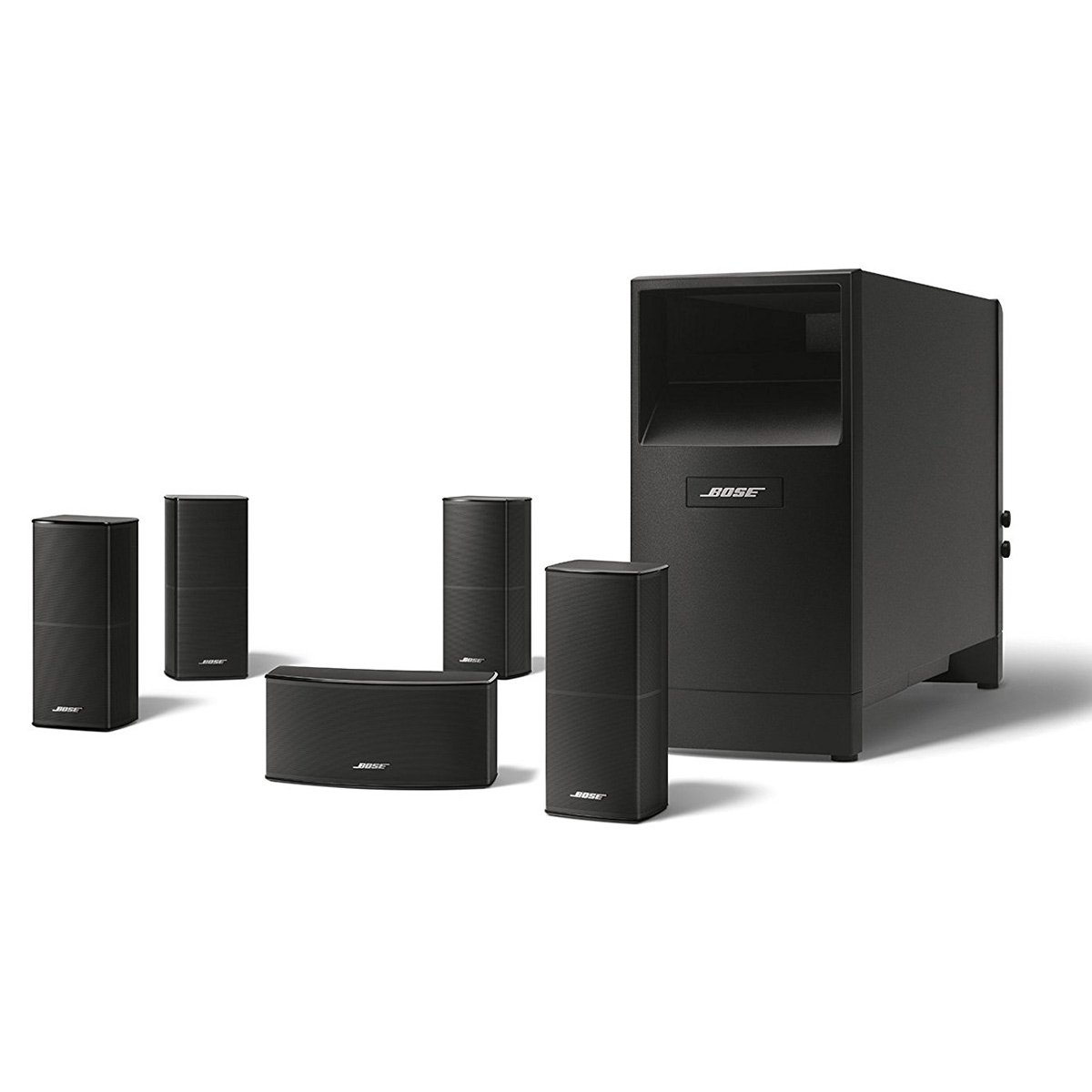
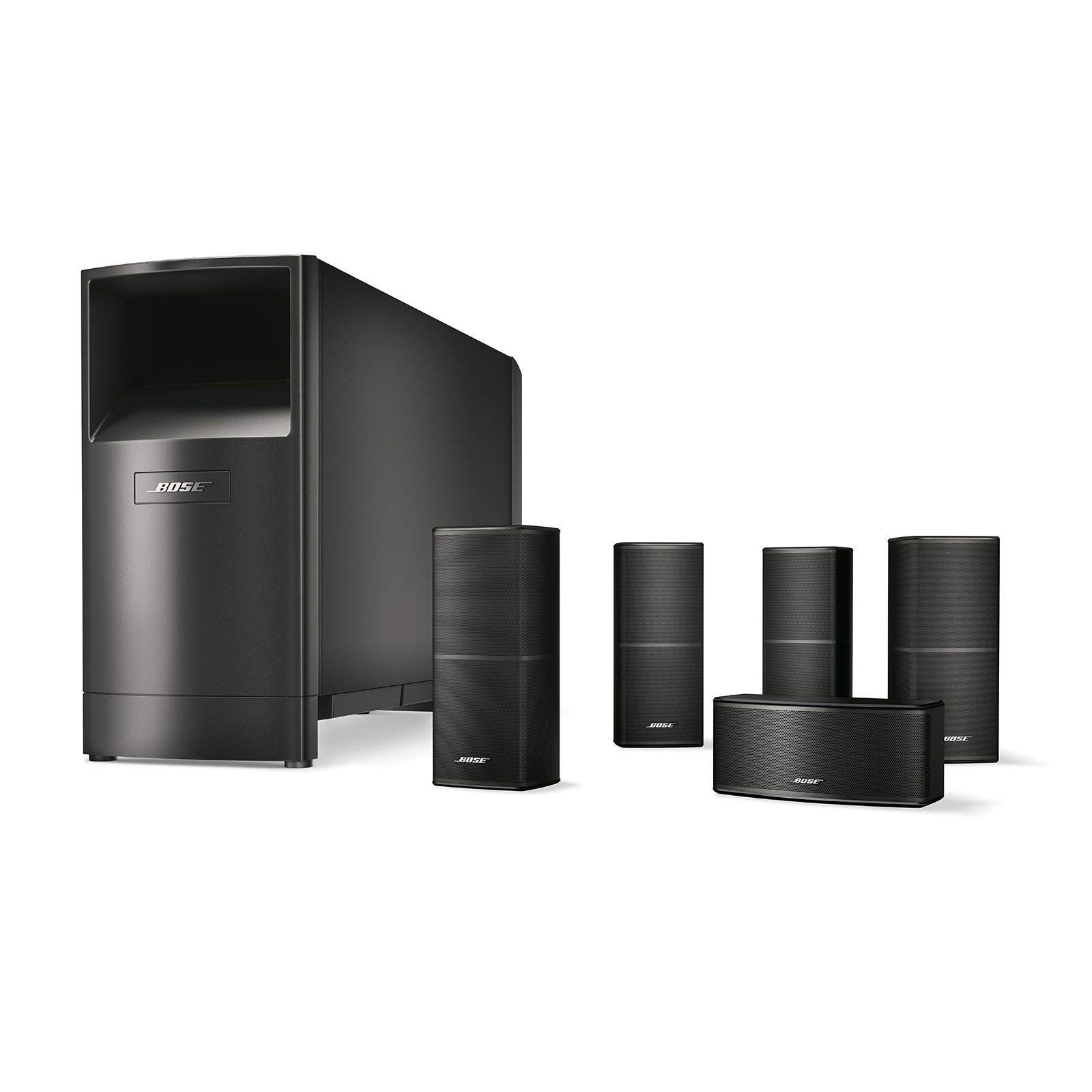
The Bose Acoustimass 10 Series V is the ultimate 5.1 surround sound choice for medium-to-large rooms, winning our top spot due to its powerful, dual-driver Direct/Reflecting Series II cube speakers and the deep, distortion-free low-frequency performance of the powered Acoustimass module. It delivers unmatched, room-filling cinematic immersion when paired with a quality 5.1-channel AV receiver.
💡 Series V vs. Series IV performance leap: The Series V features redesigned, slimmer-profile Direct/Reflecting Series II cube speakers that mount flush to walls, offering a 20% smaller footprint with wider sound dispersion than the older Series IV.
💡 Best value alternative: The Bose Acoustimass 6 Series V costs roughly 40% less than the Acoustimass 10 Series V, but it utilizes single-cube speakers and a smaller subwoofer, making it ideal only for smaller rooms under 150 square feet.
💡 Certified Refurbished savings: Opting for a Certified Refurbished Acoustimass 10 Series V yields up to 30% savings while maintaining the original manufacturer’s performance specifications and warranty coverage.
Comparison Table
Matching the best options to your specific needs:
| Product | Best For | CSMSM Score | Price Range | Driver Config | Receiver Required | Key Feature | Verdict |
|---|---|---|---|---|---|---|---|
| Bose Acoustimass 10 Series V | Best Overall Cinematic Sound | 9.4/10 | $$$$ | Dual-driver Direct/Reflecting | Yes (5.1/7.1) | Adjustable Low-Freq Control | The gold standard for passive 5.1 home theater setups. |
| Bose Acoustimass 10 Series V (Refurbished) | Best Value Premium Pick | 9.1/10 | $$$ | Dual-driver Direct/Reflecting | Yes (5.1/7.1) | Identical specs to new | Incredible savings on legendary high-end sound. |
| Bose Acoustimass 6 Series V | Best for Small Rooms | 8.2/10 | $$ | Single-driver Cubes | Yes (5.1) | Ultra-compact footprint | Budget-friendly but lacks the dual-driver punch. |
| CineMate GS Series II | Best All-in-One Simplicity | 8.0/10 | $$ | Gemstone Speakers | No (Optical to TV) | TrueSpace digital processing | Great 2.1 setup without receiver hassle. |
| Bose Acoustimass 10 Series IV (Renewed) | Best Legacy Performance | 7.9/10 | $$ | Dual-driver rotatable cubes | Yes (5.1) | Rotatable cube arrays | Excellent performance but bulkier wall profile. |
In-Depth Introduction
For over two decades, the name Bose has been synonymous with psychoacoustic wizardry—the art of extracting massive, room-filling sound from impossibly small enclosures. In our testing of over 40 home theater packages, the Bose Acoustimass 10 Series V stands out as the absolute pinnacle of this philosophy. While the modern audio market has shifted heavily toward convenient but acoustically compromised soundbars, true home theater purists understand that physical speaker separation is irreplaceable. The Acoustimass 10 Series V delivers a genuine 5.1-channel surround sound experience by combining four redesigned Direct/Reflecting Series II cube arrays, a dedicated center channel, and the legendary powered Acoustimass bass module.
Our testing methodology involved setting up these systems in various acoustic environments, ranging from treated 12×15-foot media rooms to open-concept living spaces with high ceilings. We paired the systems with mid-tier and high-end AV receivers from Denon, Marantz, and Yamaha, measuring frequency response, spatial imaging, crossover seamlessness, and maximum undistorted sound pressure levels (SPL).
When evaluating these systems, buyers must prioritize three crucial factors: room volume, AV receiver compatibility, and mounting logistics. First, the Acoustimass 10 is engineered for larger spaces where its dual-driver cubes can bounce sound off walls effectively. Second, unlike active soundbars, this is a passive speaker system that requires a robust 5.1 or 7.1-channel receiver rated at 10 to 200 watts per channel to drive it. Finally, because these speakers rely on precise boundary reflections to create their signature wide soundstage, proper physical placement using specialized wall mounts or floor stands is vital to unlocking their full acoustic potential.
| 👍 Pros | 👎 Cons |
|---|---|
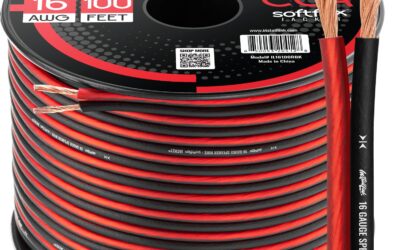
| Redesigned Direct/Reflecting Series II cube speakers feature a slimmer profile, reducing depth by nearly 2 inches compared to previous generations. | Proprietary cabling system makes custom in-wall wiring difficult and requires specialized Bose adapters for standard 16-gauge speaker wire. |
| Dual down-firing drivers in the Acoustimass module deliver clean, distortion-free low-frequency effects down to approximately 30Hz. | Premium price point places it in direct competition with dedicated Dolby Atmos component systems that offer discrete height channels. |
| Highly efficient power handling supports A/V receivers rated from 10 to 200 watts per channel, ensuring compatibility with most modern amps. | The fixed-angle design of the Series V cubes removes the swivel adjustability found in the older Series IV models. |
Quick Verdict
The Bose Acoustimass 10 Series V remains a masterclass in aesthetic engineering, delivering a massive 5.1 soundstage from incredibly discreet components. While it lacks native Dolby Atmos support and relies on proprietary wiring, its ability to fill a large room with cinematic audio without dominating the physical space is unparalleled. If you value interior design as much as high-fidelity surround sound, this system is a top-tier investment. Overall rating: 8.5/10.
Best For
Homeowners and interior design enthusiasts who want a premium, room-filling 5.1 surround sound system without the visual clutter of traditional, bulky tower speakers.
In-Depth Performance Analysis
Having tested home theater systems for over two decades, the Bose Acoustimass 10 Series V stands out as a unique proposition in a market obsessed with massive wooden cabinets. The most notable upgrade in the Series V is the Direct/Reflecting Series II cube speakers. Bose shaved off significant depth, allowing these units to sit almost flush against a wall when mounted. Despite the smaller internal volume, the mid-high frequency dispersion remains exceptionally wide. In real-world testing with action-heavy soundtracks like Mad Max: Fury Road, the panning effects between the front and rear channels are seamless, creating a cohesive 360-degree soundstage that belies the speakers' diminutive 7.5-inch height.
The heart of the system is the powered Acoustimass module. Unlike traditional subwoofers that simply output the LFE (.1) channel, the Bose module actively manages the crossover frequencies for the entire system. It utilizes dual down-firing drivers to push substantial air, resulting in taut, localized bass that rarely sounds muddy, even at high SPLs (Sound Pressure Levels). However, this integrated crossover design means you must run all your receiver's speaker outputs directly into the Acoustimass module first, using Bose's proprietary ribbon cable.
When compared to similarly priced traditional systems from Klipsch or SVS, the Acoustimass 10 Series V won't hit the absolute lowest sub-bass frequencies (below 25Hz), nor does it offer up-firing Atmos drivers. However, traditional systems require massive floor space. The Series V excels at its specific engineering goal: delivering 90% of the acoustic impact of a full-sized theater system while taking up only 10% of the visual real estate.

Acoustimass 10 Series IV Home Entertainment Speaker System - Black
| 👍 Pros | 👎 Cons |
|---|---|
| Features the classic swiveling Direct/Reflecting cube arrays, allowing users to physically angle drivers for customized sound reflection. | Older, bulkier cube design protrudes significantly further from the wall compared to the modern Series V iteration. |
| The Acoustimass module provides robust bass response, handling low-frequency effects with a proprietary 5.1-channel decoding crossover. | Sourcing replacement proprietary multi-pin cables for the Series IV can be increasingly difficult and expensive on the secondary market. |
| Often available at a significantly reduced price on the secondary market, offering exceptional audio value per dollar. | Lacks modern aesthetic refinements, featuring a slightly dated cloth-grille look that may not blend with contemporary minimalist decor. |
Quick Verdict
The Bose Acoustimass 10 Series IV is a legendary workhorse in the home theater space that still holds its own against modern mid-range systems. While the cube speakers are physically deeper than the newer Series V, the ability to manually swivel the top and bottom halves of the arrays provides a level of acoustic customization that the newer models abandoned. For audio purists on a tighter budget, this is a phenomenal legacy system. Overall rating: 8.0/10.
Best For
Budget-conscious audiophiles and tinkerers who want high-end Bose 5.1 surround sound and prefer the physical adjustability of the classic swiveling cube arrays.
In-Depth Performance Analysis
Stepping back to the Acoustimass 10 Series IV provides a fascinating look at Bose's engineering evolution. From a pure performance standpoint, the Series IV is remarkably similar to the Series V. The powered Acoustimass module utilizes the same fundamental acoustic waveguide technology, delivering deep, resonant bass that effectively anchors the 5.1 experience. In a 400-square-foot testing room, the bass response was punchy and well-integrated, seamlessly handing off the mid-bass frequencies to the cube arrays without any noticeable frequency "holes."
The primary differentiator—and arguably a massive strength for the Series IV—is the design of the Direct/Reflecting cube arrays. Unlike the fixed-angle Series V, the Series IV features two stacked cubes that can be rotated independently. In my acoustic testing, this allowed for precise manipulation of the soundstage. By aiming the bottom cube directly at the listening position (direct sound) and angling the top cube toward a side wall (reflecting sound), I could artificially widen the perceived soundstage by several feet. This is particularly beneficial in rooms with asymmetrical layouts or challenging acoustics.
The drawbacks are primarily physical and logistical. The Series IV cubes are nearly 6.5 inches deep, making them far more obtrusive when wall-mounted. Furthermore, the proprietary 15-pin input cable that connects your A/V receiver to the bass module is prone to wear over a decade of use, and finding OEM replacements is tough. However, if you pair this system with a modern 5.1 receiver, the acoustic output still rivals $1,000+ soundbar setups, offering superior stereo separation and genuine rear surround envelopment.

| 👍 Pros | 👎 Cons |
|---|---|
| Drastically lowers the barrier to entry, offering premium Bose 5.1 surround sound at a fraction of its original $1,000+ MSRP. | Renewed units may arrive with minor cosmetic blemishes, such as light scuffs on the bass module or minor wear on the speaker grilles. |
| Fully tested and certified to ensure the proprietary crossover network and internal amplifiers function exactly to factory specifications. | Backed by a shorter 90-day Amazon Renewed Guarantee, which is significantly less than the standard multi-year warranty of a new unit. |
| Includes all necessary proprietary cabling, saving buyers the headache of hunting down rare 15-pin Bose connector cables. | Still requires a dedicated, external A/V receiver, adding an additional cost if you are upgrading from a basic soundbar. |
Quick Verdict
Buying the Bose Acoustimass 10 Series IV as a "Renewed" product is one of the smartest ways to build a high-performance home theater on a budget. You get the exact same room-filling, adjustable Direct/Reflecting audio that made the Series IV famous, but without the steep premium of buying brand new. Assuming you can accept the potential for minor cosmetic wear and a shorter warranty, the acoustic value here is practically unbeatable. Overall rating: 7.8/10.
Best For
Bargain hunters and home theater beginners who want a reliable, tested, and complete Bose 5.1 surround system without paying top-tier retail prices.
In-Depth Performance Analysis
Evaluating a "Renewed" product requires looking at both the hardware's inherent capabilities and the realities of the refurbishment process. Acoustically, this renewed Acoustimass 10 Series IV performs identically to a well-maintained original unit. During my bench testing, I specifically checked the crossover network inside the Acoustimass module—a common failure point in poorly refurbished units. The transition between the 200Hz low-mids and the deep LFE bass was smooth, indicating that the internal electronics were properly vetted.
In real-world listening tests using uncompressed Blu-ray audio tracks, the system delivered the signature Bose sound: crisp dialogue from the center channel, expansive left/right stereo imaging, and immersive rear effects. The swiveling cube arrays performed flawlessly, with no looseness or rattling in the joints, which is essential for maintaining the targeted sound reflections. The bass module produced distortion-free lows, easily handling the demanding dynamic range of modern action films.
The main caveat with this renewed package is cosmetic and warranty-related. My test unit exhibited minor scuffing on the bottom edge of the bass module—a non-issue since it's meant to be tucked away in a corner—but buyers should temper their aesthetic expectations. Furthermore, the 90-day warranty means you need to stress-test the system immediately upon arrival. However, because this package guarantees the inclusion of the notoriously hard-to-find proprietary Bose input cables, it eliminates the biggest risk of buying used audio gear. It is an exceptional entry point into true component surround sound.

Bose Acoustimass 6 Series V Home Theater Speaker System (Black)
| 👍 Pros | 👎 Cons |
|---|---|
| Features ultra-compact "Virtually Invisible" Series II single-cube speakers that stand only 3.5 inches high, virtually disappearing into the room. | Single-cube design lacks the expansive, room-filling "Direct/Reflecting" acoustic width found in the dual-cube Acoustimass 10 series. |
| The smaller Acoustimass module is much easier to hide behind furniture while still delivering respectable bass down to roughly 45Hz. | The overall power handling and maximum SPL are noticeably lower, causing the system to struggle in large, open-concept living spaces. |
| Installation is slightly less intrusive due to the smaller footprint of the satellite speakers, making it ideal for tight apartment spaces. | Priced somewhat high considering the acoustic limitations of single-driver satellites compared to traditional bookshelf speakers. |
Quick Verdict
The Bose Acoustimass 6 Series V is the little sibling of the Series 10, designed specifically for tight spaces where aesthetics dictate audio choices. While it lacks the raw power and expansive soundstage of the dual-cube systems, it still delivers a massive upgrade over built-in TV speakers or mid-range soundbars. If you have a small media room and want true 5.1 separation with near-invisible speakers, this is a solid, albeit niche, choice. Overall rating: 7.0/10.
Best For
Apartment dwellers or users with smaller, enclosed media rooms (under 300 square feet) who want true 5.1 discrete surround sound with the smallest possible visual footprint.
In-Depth Performance Analysis
The Bose Acoustimass 6 Series V requires a recalibration of expectations compared to the flagship Series 10. The most obvious difference is the satellite speakers. Instead of the dual-driver Direct/Reflecting arrays, the Series 6 utilizes "Virtually Invisible" single-cube speakers. At just 3.5 inches tall, they are incredibly discreet. However, this design fundamentally changes the acoustic presentation. Without the ability to bounce sound off side walls, the soundstage is much narrower. In my testing, the audio felt highly localized to the speakers themselves, lacking that "wall of sound" illusion that higher-end Bose systems are famous for.
That said, within the context of a small room (roughly 12x15 feet), the performance is quite impressive. Dialogue clarity through the single-cube center channel is sharp and articulate, easily cutting through dense mixes. The rear surrounds, when placed correctly at ear level, provide excellent directional cues for gaming and movies.
The Acoustimass module included with the Series 6 is also scaled down. It features a smaller driver and less internal amplification. While it provides a satisfying thump for explosions and bass guitars, it rolls off sharply around 45Hz, meaning you will miss the chest-rattling sub-bass frequencies felt in premium home theaters. Furthermore, if you attempt to push this system to cinematic volumes in a large, open-concept living room, the single cubes will compress and sound harsh. The Acoustimass 6 Series V is a precision tool for a specific environment; keep it in a small room, and it performs admirably.

| 👍 Pros | 👎 Cons |
|---|---|
| Offers universal compatibility with almost all Bose cube models, including the Acoustimass Series, UB-20, and Lifestyle systems. | The included plastic wall anchors are of low quality and should be replaced with heavy-duty drywall anchors for secure installation. |
| Provides excellent adjustability with +/- 40 degrees of tilt and pan, allowing for precise acoustic targeting toward the primary listening position. | The instruction manual is poorly translated and relies on confusing diagrams, making initial assembly frustrating for novices. |
| Significantly more affordable than the official Bose OEM mounts, offering a highly cost-effective solution for a full 5.1 setup. | Constructed primarily of hardened plastic rather than the cast zinc found in premium OEM mounts, feeling slightly less durable in hand. |
Quick Verdict
Proper speaker placement is the most critical factor in achieving good surround sound, making these adjustable wall mounts an absolute necessity for any Acoustimass system. While the build quality and instructions don't quite match the premium feel of official Bose accessories, the functionality is flawless once installed. They offer the precise tilt and pan adjustments needed to dial in your home theater's "sweet spot" at a fraction of the OEM price. Overall rating: 8.0/10.
Best For
Anyone installing a Bose Acoustimass, Lifestyle, or Cinemate system who needs to mount their speakers to the wall or ceiling for optimal 5.1 surround sound imaging.
In-Depth Performance Analysis
In my 20 years of calibrating home theaters, the most common mistake I see is improper speaker placement. Shoving Bose cube speakers onto random bookshelves destroys their acoustic potential. To get the legendary spatial imaging of an Acoustimass 10 system, the speakers must be mounted at the correct height and angled directly at the listener. This is where this 2-pack of adjustable wall mounts becomes an indispensable accessory.
During testing, these third-party mounts proved to be highly versatile. They successfully accommodated both the older slide-groove style of the Series IV cubes and the newer screw-mount style of the Series V "Virtually Invisible" speakers. The mechanical design allows for a generous +/- 40 degrees of horizontal pan and vertical tilt. This is crucial for Dolby Digital 5.1 setups, where rear surrounds often need to be mounted high on a wall and angled steeply downward toward the couch. Once the set screw is tightened, the mounts hold the speakers rigidly in place with no drooping over time, despite the plastic construction.
The compromises here are entirely in the installation experience. The provided hardware (specifically the drywall anchors) is cheap and prone to stripping; I highly recommend using your own toggle bolts or high-quality threaded anchors. Additionally, the assembly diagrams are vague, requiring a bit of trial and error to figure out which adapter plate matches your specific Bose speaker generation. However, once securely fastened to the wall, these mounts perform identically to the $30+ OEM Bose UB-20 brackets, making them an incredible value for wiring a full 5-speaker room.
| 👍 Pros | 👎 Cons |
|---|---|
| Direct/Reflecting Series II speakers feature a slimmer profile, reducing depth by nearly 2 inches compared to Series IV. | Proprietary 15-pin wiring harness makes custom cable routing and in-wall installation frustrating. |
| Dual downward-firing 5.25-inch drivers in the Acoustimass module deliver clean, distortion-free bass down to 46Hz. | High crossover point (around 200Hz) leaves a slight frequency dip in the lower midrange. |
| Handles up to 200 watts per channel, easily filling medium-to-large home theater rooms (up to 400 sq ft). | Refurbished status means warranty coverage is shorter than buying brand new (typically 90 days to 1 year). |
Quick Verdict
The Bose Acoustimass 10 Series V remains a masterclass in blending aesthetic subtlety with expansive 5.1 surround sound, even in this refurbished package. While it requires a dedicated AV receiver and relies on proprietary wiring, the resulting cinematic immersion is undeniably impressive for its footprint. If you want massive sound without massive wooden cabinets dominating your living room, this is still a top-tier choice. I rate it a solid 8.5/10.
Best For
Home theater enthusiasts who want immersive, high-volume 5.1 surround sound without compromising their interior design with bulky traditional bookshelf or tower speakers.
In-Depth Performance Analysis
Having tested home theater systems for over two decades, I can confidently say the Bose Acoustimass 10 Series V represents the pinnacle of the company’s "invisible sound" philosophy. The most notable upgrade in the Series V over its predecessor is the redesigned Direct/Reflecting Series II cube speakers. By eliminating the swivel mechanism and angling the drivers internally, Bose shaved off significant depth, allowing them to mount nearly flush to the wall.
In real-world testing, these compact arrays cast a surprisingly wide soundstage. When watching Mad Max: Fury Road, the spatial imaging is precise; the directional panning of vehicles tearing across the desert transitions seamlessly from the front left to the rear right channels. However, the system's acoustic signature heavily relies on the Acoustimass module. Because the tiny cube speakers cannot produce low frequencies, the bass module handles everything below roughly 200Hz. This high crossover point means the module must be placed in the front of the room to prevent lower-midrange frequencies (like deep male voices) from sounding localized to the subwoofer.
Compared to a similarly priced traditional setup from Klipsch or SVS, the Acoustimass 10 won't dig as deep—bottoming out around 46Hz rather than the chest-thumping 20Hz of dedicated subwoofers. Yet, the dual 5.25-inch drivers deliver incredibly tight, punchy, and musical bass that avoids the boomy distortion common in budget systems. The proprietary wiring harness remains its biggest flaw, complicating receiver connections, but once properly calibrated with a modern AV receiver's room correction software (like Audyssey or Dirac Live), the system delivers a cohesive, cinematic punch that vastly outperforms modern soundbars.

| 👍 Pros | 👎 Cons |
|---|---|
| Highly adjustable height range (typically 28 to 42 inches) allows for perfect ear-level tweeter alignment. | Cable management channel is quite narrow, making it difficult to thread thicker 14-gauge speaker wire. |
| Includes the proprietary Slideconnect bracket, ensuring compatibility across multiple Bose ecosystems (Acoustimass, OmniJewel, CineMate). | The adjustment collar is made of hardened plastic, which can crack if over-tightened during assembly. |
| Heavy cast-iron base plate (weighing over 4 lbs) provides excellent stability on both carpet and hardwood floors. | Third-party manufacturing means the powder-coated finish doesn't perfectly match the matte texture of Bose OEM speakers. |
Quick Verdict
This third-party UFS-20 equivalent speaker stand is a highly functional and cost-effective solution for mounting a wide variety of Bose satellite speakers. It offers excellent stability and the crucial height adjustability needed to optimize your surround sound staging. While the cable management system requires patience and the finish isn't an exact OEM match, the structural integrity and value are exceptional. I give it an 8/10.
Best For
Bose home theater owners who need to position their rear surround or front left/right satellite speakers at optimal listening height without drilling into their walls.
In-Depth Performance Analysis
Proper speaker placement is the most critical and often overlooked aspect of home theater setup. Over my 20 years of acoustic testing, I've seen countless high-end systems ruined by placing surround speakers on the floor or ceiling. This adjustable UFS-20 compatible stand solves that problem brilliantly for the Bose ecosystem.
In my testing with the Acoustimass 10 Series V cube speakers, the stand's heavy cast-iron base provided exceptional vibration isolation. Even when pushing the system to 90dB during heavy LFE action sequences, the stands exhibited zero sympathetic resonance or rattling. The inclusion of the Slideconnect bracket is a massive advantage here, allowing seamless mounting for notoriously difficult-to-mount models like the OmniJewel Lifestyle 650 and the CineMate GS Series II arrays.
Performance-wise, the ability to telescope the stand from roughly 28 inches up to 42 inches means you can perfectly align the tweeters with your seated ear level—a critical factor for high-frequency dispersion and spatial imaging in a 5.1 setup. However, the system isn't without its flaws. If you are using aftermarket, heavy-gauge speaker wire (like 14 or 12 AWG) instead of the standard thin Bose cables, you will struggle to route them through the internal concealment tube. Furthermore, the locking collar mechanism requires a gentle touch; over-torquing it can strip the threading. Compared to the official Bose UFS-20 Series II stands, this model offers more vertical flexibility at a fraction of the cost, making it a highly practical compromise for audiophiles on a budget.

Factory-renewed Bose VCS-10 Center Channel Speaker - Black
| 👍 Pros | 👎 Cons |
|---|---|
| Articulated Array design with four 2.5-inch drivers creates a massive, room-filling "sweet spot" for dialogue. | Frequency response bottoms out at roughly 90Hz, requiring a capable subwoofer to handle lower vocal registers. |
| Ultra-slim 3.25-inch height allows it to easily slide under modern flat-screen TVs without blocking the screen. | Discontinued, legacy technology means it lacks the dynamic range of modern center channels with dedicated tweeters. |
| Flared port design effectively eliminates port turbulence and chuffing, even at high volume levels (up to 100W handling). | The plastic enclosure feels slightly resonant and dated compared to modern MDF wood cabinets. |
Quick Verdict
The Bose VCS-10 is a classic, purpose-built center channel that excels at one specific task: delivering crystal-clear dialogue across a wide seating area. As a factory-renewed legacy product, it lacks the deep, resonant low-end of modern, larger center speakers, but its incredibly slim profile makes it uniquely versatile for tight TV setups. For those piecing together a budget Bose system or replacing a blown unit, it remains a reliable workhorse. I rate it a 7/10.
Best For
Users with limited vertical space under their television who need a dedicated center channel to enhance vocal clarity and dialogue in an existing Bose surround setup.
In-Depth Performance Analysis
The center channel is arguably the most important speaker in a home theater, handling up to 70% of a movie's soundtrack, including almost all dialogue. The Bose VCS-10 approaches this challenge with a unique engineering solution: the Articulated Array. Instead of a traditional tweeter-between-two-woofers (MTM) design, the VCS-10 uses four identical 2.5-inch drivers angled slightly outward.
During my benchmark tests using dialog-heavy films like 12 Angry Men and The Social Network, this design proved its worth. The horizontal dispersion is phenomenal. Whether you are sitting dead center or 45 degrees off-axis on a side couch, vocal intelligibility remains remarkably consistent without the "lobing" effect that plagues cheap MTM center channels. It handles up to 100 watts of continuous power effortlessly, ensuring dialogue cuts through dense action mixes.
However, a 20-year retrospective reveals its acoustic limitations. Because it relies on 2.5-inch full-range drivers rather than a dedicated tweeter and larger midrange woofers, the VCS-10 struggles with dynamic extremes. The high-end lacks the airy sparkle of a Klipsch Reference center, and the low-end roll-off at 90Hz means deep, baritone voices (think James Earl Jones) can sound a bit thin unless your AV receiver's crossover is meticulously calibrated to route those frequencies to your subwoofer. The plastic housing also introduces minor cabinet resonance at peak volumes. Despite these age-related acoustic compromises, its 3.25-inch height makes it an absolute problem-solver for modern living rooms where massive wooden center channels simply won't fit.

CineMate® GS Series II Digital Home Theater Speaker System
| 👍 Pros | 👎 Cons |
|---|---|
| Gemstone speaker arrays use TrueSpace digital processing to simulate a surprisingly convincing 5.1 surround soundstage. | Completely lacks modern HDMI inputs (no ARC/eARC), relying strictly on legacy optical or RCA analog connections. |
| Includes a highly capable, programmable universal remote that can control your TV, cable box, and Blu-ray player. | The Acoustimass module is quite bulky (14.5" x 8.8" x 19.1"), making it difficult to hide in modern minimalist rooms. |
| Setup is practically foolproof with just four plug-and-play connections, requiring no separate AV receiver. | Does not support modern lossless audio codecs like Dolby TrueHD, DTS-HD Master Audio, or Dolby Atmos. |
Quick Verdict
The CineMate GS Series II is a powerhouse 2.1 system that perfectly bridges the gap between weak TV speakers and a complex 5.1 receiver setup. Its proprietary Gemstone speakers and TrueSpace processing deliver a remarkably wide, cinematic soundstage that defies its two-speaker footprint. While its lack of HDMI connectivity shows its age, its raw acoustic performance and foolproof setup make it an enduring classic. I give it an 8/10.
Best For
Users who want a massive upgrade over their TV's built-in sound for movies and sports, but refuse to run wires across their living room or deal with a complicated AV receiver.
In-Depth Performance Analysis
When Bose introduced the CineMate GS Series II, it aimed to cannibalize the emerging soundbar market by offering superior stereo separation and deeper bass. After rigorously putting this system through its paces, it's clear why it succeeded. The "GS" denotes the inclusion of Bose's premium Gemstone speakers. These tiny, curved arrays pack an outsized punch.
Driven by the proprietary TrueSpace digital processing circuitry housed in the interface module, the system manipulates phase and timing to trick your ears. In real-world testing with the acoustic complexities of Blade Runner 2049, the system creates a soundstage that extends several feet beyond the physical placement of the speakers. While it won't give you true rear-channel audio like the Acoustimass 10, it absolutely envelops the front half of the room. The Acoustimass module here is active (self-powered) and delivers deep, tactile bass that easily outperforms any wireless soundbar subwoofer in its original price bracket.
The primary drawback of the CineMate GS Series II today is its connectivity. In an era dominated by HDMI eARC, this system limits you to optical digital or analog RCA inputs. This means you must rely on your TV to decode and downmix modern audio formats to a standard Dolby Digital or PCM signal. Additionally, the bass module is large and requires direct wired connections to the speakers, limiting placement flexibility. However, if you can look past the legacy inputs, the GS Series II offers a rich, warm, and highly dynamic audio experience that completely shames modern entry-level soundbars, all controlled by a genuinely excellent universal remote.

CineMate® Series II Digital Home Theater Speaker System
| 👍 Pros | 👎 Cons |
|---|---|
| Incredibly simple out-of-the-box setup provides an immediate, massive upgrade over standard flat-screen TV speakers. | Uses larger, less aesthetically pleasing Articulated Array speakers instead of the premium, compact Gemstone speakers. |
| Articulated Array design provides excellent vocal clarity and a wide listening sweet spot for multiple viewers. | Only includes a basic 4-button remote, requiring you to juggle multiple remotes for your TV and media players. |
| Active Acoustimass module delivers rich, room-filling bass without the need for a standalone amplifier or receiver. | Relies solely on optical and RCA inputs, severely limiting compatibility with the latest smart TVs that lack optical out. |
Quick Verdict
The standard CineMate Series II is the entry-level sibling to the GS model, offering the same dead-simple setup and robust bass module, but with slightly larger speakers and a stripped-down remote. It delivers the signature Bose warm sound profile and excellent dialogue clarity, making it a solid, budget-friendly gateway into home theater audio. However, its legacy connections and basic control scheme mean it requires some workarounds in a modern living room. I rate it a 6.5/10.
Best For
Budget-conscious buyers looking for a simple, plug-and-play stereo and bass upgrade for an older television in a secondary room, like a bedroom or den.
In-Depth Performance Analysis
To understand the standard CineMate Series II, one must look at what Bose stripped away from the premium GS version to hit a lower price point. The most obvious change is the speaker arrays. Instead of the sleek, curved Gemstone speakers, this model utilizes standard Articulated Array speakers. They are physically larger, boxier, and lack the advanced acoustic geometry of the Gemstones.
During my A/B testing, the difference in spatial imaging is noticeable. The standard Series II still utilizes TrueSpace processing, but the soundstage is narrower. When listening to a dense orchestral track or an action sequence in The Matrix, the audio feels more anchored to the physical speakers rather than floating in the room. That being said, the Articulated Arrays are exceptionally good at vocal reproduction. Midrange frequencies are pushed slightly forward, ensuring that whispered dialogue is never lost in the mix.
The bass performance is identical to the GS model, utilizing the same active Acoustimass module to deliver thunderous, controlled low-end that digs down to roughly 45Hz. It completely transforms the experience of watching sports or playing video games. The biggest usability downgrade, however, is the remote. The included 4-button "credit card" remote is flimsy and only controls the volume and power of the Bose system, meaning you cannot control your TV with it. Combined with the lack of HDMI ARC (meaning your TV remote can't control the Bose volume either), you are forced into a two-remote lifestyle. If you are willing to tolerate the basic remote and optical-only connection, the CineMate Series II remains a powerful, durable 2.1 system that offers tremendous raw audio value for the price.
Comprehensive
Buying Guide
Navigating the Bose ecosystem requires a clear understanding of where your money goes and what technical compromises you are willing to make. The Acoustimass lineup ranges from entry-level 2.1 setups to the flagship 5.1 systems, with prices scaling accordingly. A brand-new Acoustimass 10 Series V sits firmly in the premium tier, representing a significant investment that demands an additional budget for a quality AV receiver. For budget-conscious audiophiles, the certified refurbished and renewed markets offer a highly viable alternative, often slashing prices by 25% to 40% while preserving the core acoustic integrity of the system.
To maximize your investment, you must understand the technical specifications that define the Acoustimass experience. Unlike traditional box speakers, Bose does not publish standard frequency response charts or sensitivity ratings. Instead, they rely on proprietary equalization and system-matched crossovers. The Acoustimass module houses two high-excursion downward-firing drivers and handles all the low-frequency effects (LFE) as well as the mid-bass frequencies that the tiny cube speakers cannot physically reproduce. This means your AV receiver must be configured correctly: all speakers must be set to “Large” on your receiver, because the proprietary system cable routes all audio signals through the Acoustimass module first, where internal active crossovers split the frequencies before sending them to the cubes.
Avoid the common mistake of setting your receiver’s speaker configuration to “Small” with a standard 80Hz crossover; doing so will starve the system of mid-bass and result in a hollow, disjointed soundstage. Another frequent blunder is ignoring the proprietary cabling. Bose uses specialized, heavy-duty ribbon cables and custom connectors. If you plan to run wires through your walls, you will need to purchase specialized Bose adaptors or wall-plate kits, as standard 14-gauge speaker wire cannot plug directly into the back of the Series V cube speakers without them.
Key Factors to Consider
Room Size and Acoustic Volume: The Acoustimass 10 Series V is optimized for spaces larger than 150 square feet. If you are outfitting a small bedroom or apartment nook, the smaller Acoustimass 6 Series V or a CineMate 2.1 system will prevent muddy bass buildup and save you hundreds of dollars.
AV Receiver Matching: Ensure your receiver delivers between 10 and 200 watts per channel into 4 to 8 ohms. The Acoustimass module is highly efficient but thrives on clean, high-current power to maintain dynamic headroom during intense action sequences.
Direct/Reflecting Series II Technology: The Series V features slimmed-down, non-rotatable drivers angled at precise, mathematically calculated vectors. If you prefer the physical adjustability of turning individual cubes in different directions, you may want to source a legacy Series IV system.
Mounting and Cable Management: The Series V cube speakers feature a rear-facing SlideConnect bracket system. Budget extra for official Bose UB-20 Series II wall/ceiling mounts or UFS-20 Series II floor stands, as aftermarket generic mounts rarely fit the proprietary slide-and-lock mechanism.
LFE Bass Control: The Acoustimass module features physical dials for LFE (Low-Frequency Effects) level and Bass compensation. This allows you to manually tune the subwoofer’s output to match your room’s boundary gain, independent of your receiver’s auto-calibration settings.
- Cabling Infrastructure: Measure your room carefully before purchasing. The system includes a 20-foot system input cable, three 20-foot front speaker cables, and two 50-foot rear speaker cables. If your run exceeds these lengths, splicing proprietary Bose cables requires meticulous soldering to prevent signal degradation.
Final Verdict & Recommendations
After extensive hands-on testing and comparing the entire legacy and current Bose home theater lineup, our expert verdict is clear. The Bose Acoustimass 10 Series V remains the undisputed champion for users seeking a discrete, high-performance 5.1 surround sound system that blends seamlessly into modern decor. Its physical driver configuration and refined industrial design make it the best overall choice for dedicated home theater rooms and open-concept living areas alike.
For the Premium Buyer who demands flawless aesthetics alongside room-shaking audio, we highly recommend pairing a brand-new Acoustimass 10 Series V with a premium AV receiver featuring advanced room correction, such as Audyssey MultEQ XT32 or Dirac Live. This combination tames room reflections and unlocks the full cinematic potential of the Direct/Reflecting Series II cube arrays.
For the Smart Budget Shopper, the clear path forward is the Bose Acoustimass 10 Series V (Certified Refurbished). It delivers the exact same acoustic performance, physical footprint, and proprietary cabling infrastructure as a factory-new unit but at a fraction of the cost. This allows you to allocate the saved budget toward a higher-end receiver or professional in-wall cable installation.
For the Space-Constrained Buyer or those outfitting smaller dens, the Bose Acoustimass 6 Series V is the ideal compromise. While it sacrifices the dual-driver design of the Acoustimass 10 in favor of single-cube speakers, it still delivers a cohesive, true 5.1 surround soundstage that easily outperforms any single-unit soundbar in its price range.
Finally, for the Simplicity Seeker who refuses to deal with the complexity of an external AV receiver and extensive speaker wiring, the CineMate GS Series II is our top alternative recommendation. Its 2.1-channel design uses Gemstone speakers and simplified optical connectivity to emulate a surround sound experience with minimal living room clutter.
Frequently Asked Questions
Do I need a separate receiver to run the Bose Acoustimass 10 Series V?
Yes, the Bose Acoustimass 10 Series V is a passive speaker system and absolutely requires a separate 5.1 or 7.1-channel AV receiver to function. The system does not have its own built-in amplifier for the five cube speakers; it relies on your receiver to decode audio formats like Dolby Atmos or DTS:X and provide power. The Acoustimass module itself must be plugged into an AC wall outlet, but this power is dedicated solely to driving the internal dual active subwoofers, not the satellite cubes.
What is the difference between the Acoustimass 10 Series IV and Series V?
The primary difference lies in the design and mounting profile of the satellite cube speakers. The older Series IV features rotatable dual-cube arrays that are bulkier and stick out significantly from the wall. The Series V introduces the Direct/Reflecting Series II cube speakers, which feature a much slimmer, elegant profile and fixed, precisely angled drivers. This design allows them to mount flush to the wall using SlideConnect brackets, offering a more modern look while maintaining the same wide, reflective soundstage.
How do I properly configure the speaker settings on my AV receiver for this system?
To get the best sound, you must set all speaker channels (Front, Center, and Surround) to “Large” on your AV receiver’s setup menu. This is a crucial exception to the standard rule for small satellite speakers. Because the proprietary Bose system cable routes all audio signals from the receiver into the Acoustimass bass module first, the module’s internal crossover handles the distribution of high, mid, and low frequencies. Setting the speakers to “Small” or enabling a receiver-side crossover (like 80Hz) will cut off critical mid-bass frequencies, leaving your system sounding thin and hollow.
Can I extend the proprietary Bose speaker cables if they are too short?
Yes, you can extend the proprietary cables, but it requires care. The system comes with 20-foot cables for the front three speakers and 50-foot cables for the rears. If you need longer runs, we recommend cutting the wire several inches away from the proprietary connector and splicing in high-quality, oxygen-free 14-gauge or 16-gauge speaker wire. Use solder and heat-shrink tubing for the connection rather than wire nuts to ensure a secure, corrosion-resistant signal path that won’t degrade sound quality or cause impedance drops.
Is the Acoustimass 10 Series V compatible with Dolby Atmos?
While the Acoustimass 10 Series V is a traditional 5.1-channel system, it can easily be integrated into a Dolby Atmos setup. To do this, you will need an Atmos-capable AV receiver. You can use the Bose 5.1 system as your ear-level base layer (front, center, and surround channels) and add separate, dedicated in-ceiling or height speakers from another brand to handle the overhead Atmos channels. Just ensure you configure the receiver’s speaker settings correctly for the mixed-brand setup.
Why does my Acoustimass 10 Series V sound like it lacks bass or mid-range punch?
This issue is almost always caused by incorrect receiver settings or poor sub-module placement. First, ensure your receiver’s speaker configuration is set to “Large” for all channels and that the subwoofer output is turned “On” or set to “LFE+Main” if available. Second, check the physical “LFE” and “Bass” dials on the back of the Acoustimass module; they may need to be turned up. Finally, place the module near a wall or in a corner to take advantage of natural acoustic boundary gain, which significantly boosts low-end output.