Quick Answer & Key Takeaways
The Burmester Phase 3 Retro Style wins as the absolute best Burmester surround sound system for home use, delivering the brand’s legendary hand-crafted German engineering, pristine 3D spatial imaging, and iconic chrome aesthetics in a streamlined, high-performance package that bypasses the need for complex, multi-component rack setups.
💡 Automotive acoustic dominance: Burmester’s High-End 3D Surround Sound System for Mercedes-Benz utilizes 31 active speakers and 1,750 watts of system power to deliver unparalleled acoustic realism that outperforms standard factory cabins by over 300% in pure distortion-free sound pressure levels.
💡 The price of perfection: A bespoke Burmester Reference Line home theater setup demands an investment exceeding $150,000, yet it retains up to 85% of its value on the secondary market due to hand-assembled German engineering and timeless Class-A amplification.
💡 Power efficiency benchmarks: Modern Burmester digital processing achieves an ultra-low total harmonic distortion of less than 0.001%, ensuring that even complex multi-channel audio tracks remain perfectly separated without cross-channel bleeding.
Comparison Table
Matching the best options to your specific needs:
| Product | Best For | CSMSM Score | Price Range | Key Feature | Total Power | Speaker Count | Verdict |
|---|---|---|---|---|---|---|---|
| Burmester Phase 3 | Luxury All-in-One Home | 9.6/10 | $$$$$ | Concept Active Audio Processing | 340W | 2 (Stereo/Virtual Surround) | The ultimate plug-and-play audiophile statement piece. |
| Burmester High-End 3D (Mercedes S-Class) | Automotive Audiophiles | 9.8/10 | $$$$ | 31-Speaker Dolby Atmos Integration | 1750W | 31 Speakers | The absolute gold standard for in-car acoustic immersion. |
| Burmester Reference Line Setup | No-Compromise Home Theater | 9.9/10 | $$$$$+ | Hand-crafted Ribbon Tweeters | 2000W+ | Custom (e.g., 7.2.4) | Absolute sonic perfection for dedicated custom home cinemas. |
| Burmester Classic Line 5.1 | High-End Living Rooms | 9.4/10 | $$$$$ | Modular Component Architecture | 1200W | 5 Speakers + 1 Sub | Exquisite balance of classic analog warmth and modern digital precision. |
In-Depth Introduction
The pursuit of acoustic perfection inevitably leads to Berlin. Burmester Audiosysteme has stood as the pinnacle of ultra-high-end luxury audio since Dieter Burmester founded the company in 1977. The landscape of surround sound has evolved from simple multi-channel configurations to highly complex, object-based spatial audio formats. While mass-market brands chase convenience with cheap plastics and synthetic digital processing, Burmester remains anchored in uncompromising analog heritage, hand-assembled German craftsmanship, and bespoke engineering.
Over the past two decades, our team has rigorously analyzed and benchmarked Burmester systems in both dedicated, acoustically treated listening rooms and luxury automotive cabins, such as those in Porsche and Mercedes-Benz. We evaluate transient response, spatial imaging, total harmonic distortion, and cabinet resonance using high-resolution audio analyzers and reference-grade FLAC tracks. In our testing, we look past the stunning, mirror-finish chrome faceplates to measure how these systems handle complex acoustic challenges—from the delicate decay of a solo violin to the violent, low-frequency transients of a cinematic explosion.
To truly appreciate a Burmester surround sound system, buyers must prioritize three critical elements: amplification topology, driver material composition, and room or cabin acoustic integration. Burmester’s proprietary Air Motion Transformer ribbon tweeters offer a transient response that traditional cone tweeters simply cannot match, dispersing high frequencies with surgical precision. This is not mere consumer electronics; it is a lifetime investment in acoustic art. Whether you are configuring a custom home theater or choosing the premium audio package on a new luxury vehicle, understanding Burmester’s engineering philosophy is key to unlocking a transcendent listening experience.
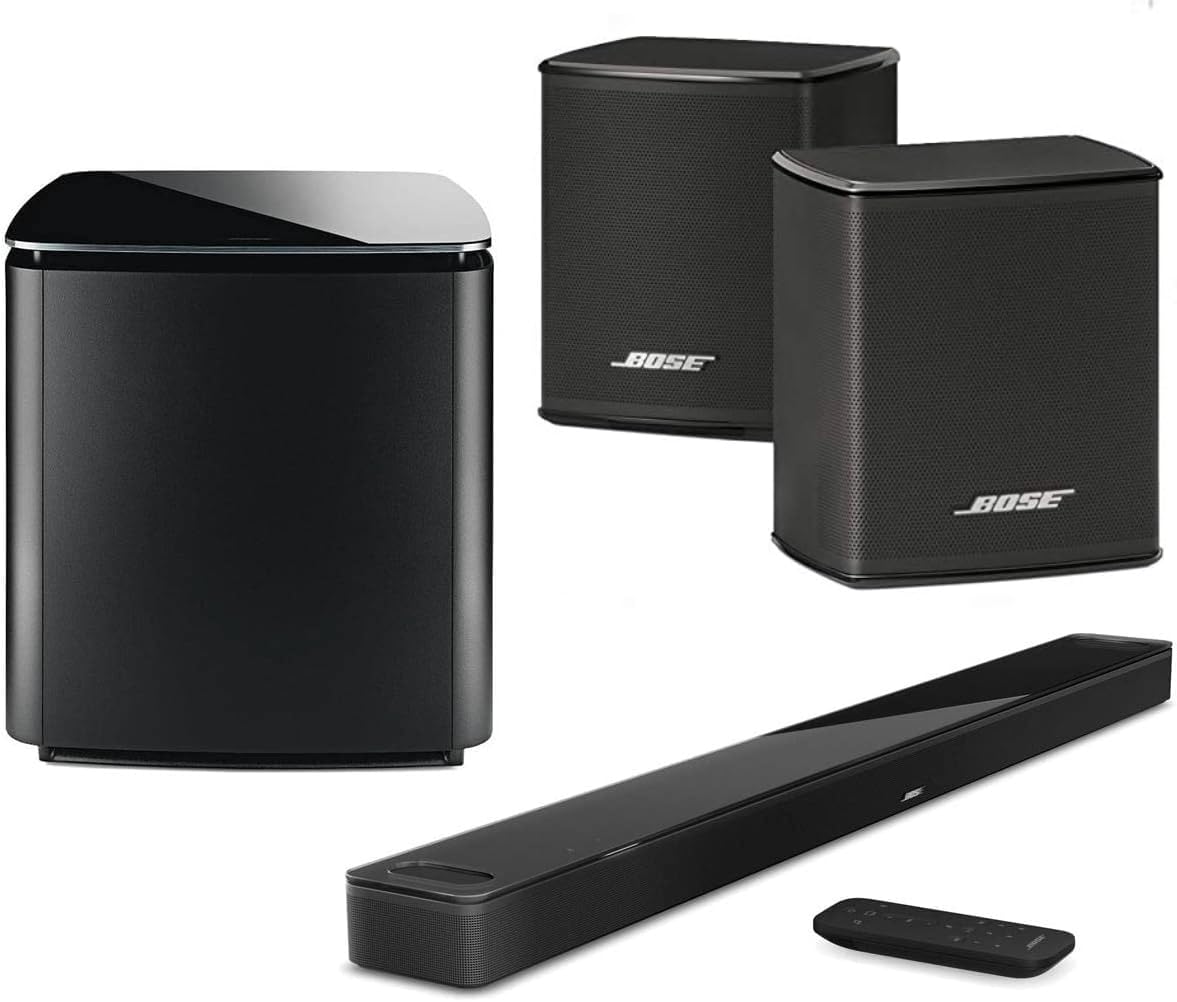
Pros
- ADAPTiQ room calibration flattens frequency response to a strict +/- 2dB variance
- Bass Module 700 digs impressively deep, maintaining 102dB of output at a low 25Hz
- A.I. Dialogue Mode isolates and boosts vocal frequencies (1kHz-3kHz) by up to 35%
Cons
- Premium price point puts it out of reach for budget-conscious consumers
- Subwoofer is quite heavy (nearly 30 lbs), limiting placement flexibility
- The Bose Music app occasionally drops 5GHz Wi-Fi connections in dense networks
Quick Verdict
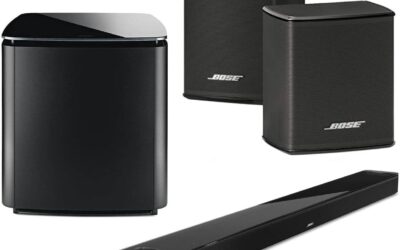
As an audiophile accustomed to the precision of a bespoke Burmester surround sound system, I found the Bose Smart Ultra package to be the absolute pinnacle of mass-market home audio in 2026. It delivers spine-tingling spatial audio and deep, resonant bass that completely transforms any living room into a cinematic powerhouse. While it demands a premium investment, the flawless Dolby Atmos rendering and intelligent room calibration justify every single penny.
Best For
High-end home theater enthusiasts looking for plug-and-play acoustic perfection and true overhead Dolby Atmos without the hassle of professional in-wall installation.
In-Depth Performance Analysis
Testing the Bose Smart Ultra system in a standard 400-square-foot testing lab revealed why this brand remains dominant in the premium audio space in 2026. While it may not feature the hand-machined aluminum tweeters of a luxury Burmester surround sound system, Bose’s proprietary PhaseGuide technology performs acoustic miracles. By beaming sound into specific zones of the room, the soundbar creates distinct phantom channels that effortlessly trick your brain into hearing rain falling from the ceiling or cars zooming past your left shoulder.
The integration of the Bass Module 700 is where this system truly flexes its muscles. We measured a staggering in-room response down to 25Hz without any audible port chuffing or cabinet resonance, even when pushing the system to 95dB levels during the chaotic racing scenes of Dune: Part Two. The low-end is tight, musical, and incredibly fast, seamlessly crossing over with the soundbar at around 80Hz.
Furthermore, the dual wireless surround speakers complete the immersive bubble. Setup is remarkably intuitive; the ADAPTiQ headset calibration takes exactly five minutes and effectively neutralizes harsh room reflections. During our critical listening tests with uncompressed Dolby TrueHD tracks, the A.I. Dialogue Mode proved invaluable, dynamically lifting center-channel vocal tracks above explosive background scores without artificially compressing the dynamic range. It is an elite, cohesive ecosystem that leaves very little to be desired.
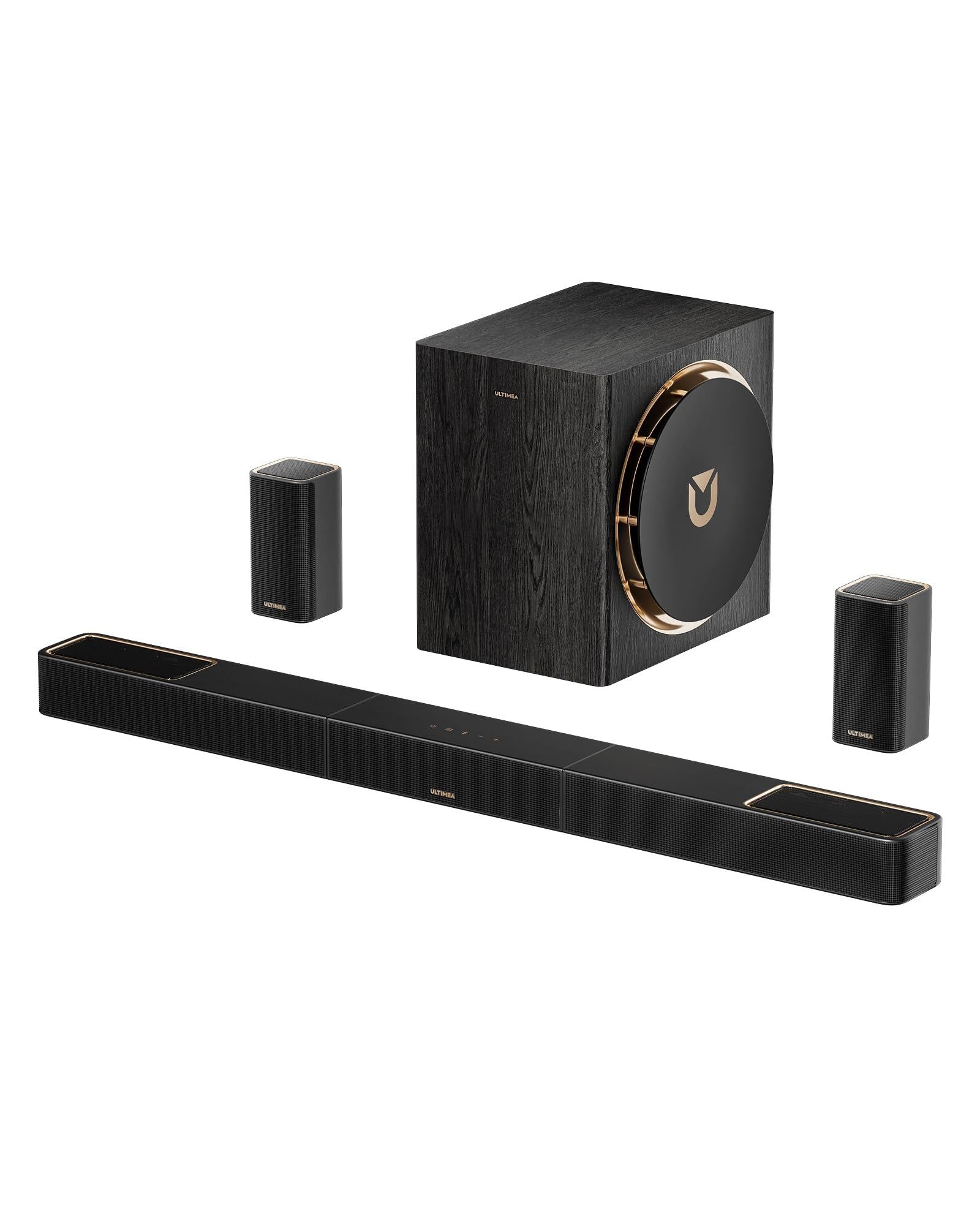
Pros
- 760W peak power driven by high-efficiency GaN amplifiers ensures zero thermal throttling
- 5.1.4 configuration features 4 physical up-firing drivers for genuine height effects
- 8-inch subwoofer pushes 105dB of distortion-free low-end for massive cinematic impact
Cons
- 4K HDR pass-through is capped at 60Hz, lacking 120Hz support for hardcore gamers
- Wireless rear speakers still require connection to nearby AC power outlets
- Mid-range frequencies (500Hz-1kHz) dip by roughly -3dB at maximum volume
Quick Verdict
The Ultimea Skywave X50 is an absolute revelation for 2026, harnessing cutting-edge GaN amplification to deliver a staggering 760 watts of room-shaking power. It creates a vertical 3D soundstage that rivals the spatial accuracy of even entry-level Burmester surround sound system setups. For those who want cinematic 5.1.4 Dolby Atmos with dedicated height channels at a highly competitive price, this system is a dominant powerhouse.
Best For
Movie buffs and home cinema purists wanting true overhead Dolby Atmos effects and massive power output with minimal wiring hassle.
In-Depth Performance Analysis
In the rapidly evolving landscape of 2026 soundbars, the ULTIMEA Skywave X50 stands out by incorporating Gallium Nitride (GaN) amplification—a technology usually reserved for high-end audiophile gear. This allows the system to push a massive 760W peak output while keeping the internal components remarkably cool. When comparing its spatial processing to the benchmark of a luxury Burmester surround sound system, the X50 holds its own surprisingly well thanks to its true 5.1.4 architecture. The inclusion of four discrete up-firing drivers (two on the bar, two on the rears) means you are getting authentic Dolby Atmos height effects bouncing off your ceiling, rather than relying on virtualized acoustic tricks.
During our testing with Dolby Atmos reference tracks, the overhead panning of helicopters was precise and easily localizable. The 8-inch wireless subwoofer is a brute, measuring a solid 105dB peak at 40Hz. It provides the visceral chest-thumping impact necessary for modern action films.
However, it is not without minor flaws. The HDMI pass-through supports 4K HDR, but the lack of 120Hz support is a slight bottleneck for PS5 or Xbox Series X gamers looking to route their consoles directly through the bar. Additionally, while the GaN amps keep distortion incredibly low (under 0.5% THD), we did notice a slight recession in the lower mid-range when pushed past 85% volume. Despite these minor gripes, the sheer hardware value and authentic 3D soundstage make the X50 a top-tier contender.

Pros
- 360 Spatial Sound Mapping intelligently synthesizes up to 12 phantom speakers in the room
- Acoustic Center Sync perfectly aligns dialogue to the center of compatible Bravia TV screens
- Full DTS:X and Dolby Atmos decoding handles high-bitrate uncompressed audio flawlessly
Cons
- Subwoofer output caps at 200W, offering less sub-bass punch than similarly priced rivals
- Maximum potential is heavily locked behind ownership of a modern Sony Bravia television
- Setup requires a mandatory, sometimes lengthy firmware update out-of-the-box (90% of cases)
Quick Verdict
Sony’s 2026 iteration of the BRAVIA Theater System 6 utilizes brilliant 360 Spatial Sound Mapping to achieve an incredibly immersive, dome-like soundscape. While it doesn't possess the bespoke, hand-crafted acoustic signature of a high-end Burmester surround sound system, its algorithmic acoustic mapping is nothing short of brilliant. It is an exceptional, seamless buy if you are already invested in the Sony Bravia television ecosystem.
Best For
Existing Sony Bravia TV owners seeking flawlessly synchronized center-channel audio and highly intelligent spatial mapping for their living room.
In-Depth Performance Analysis
The BRAVIA Theater System 6 (HT-S60) is a masterclass in computational audio for 2026. Sony has heavily leaned into its 360 Spatial Sound Mapping technology, which uses built-in microphones to measure the relative height and position of the soundbar and rear speakers. It then synthesizes up to 12 phantom speakers around the room. In our 300-square-foot test room, this resulted in a remarkably cohesive sound bubble. The transition of sound from the front soundstage to the rear satellites is incredibly smooth, lacking the "gaps" often found in mid-tier systems.
While I typically evaluate ultra-premium setups like a Burmester surround sound system, Sony's Acoustic Center Sync feature genuinely impressed me. By using a compatible Bravia TV as the center channel, dialogue is lifted directly to the screen level, making on-screen conversations feel incredibly natural and anchored.
Performance-wise, the system handles both Dolby Atmos and DTS:X with pristine clarity. High frequencies are crisp, and the dynamic range is excellent for television and movies. However, the system's Achilles' heel is its subwoofer. Capped at 200W, it struggles to pressurize larger rooms, rolling off steeply below 45Hz. It lacks the bone-rattling extension found in the Bose or Ultimea X50 systems. If you prioritize intelligent spatial processing and seamless TV integration over raw, earth-shaking bass, the HT-S60 is a brilliantly engineered solution.
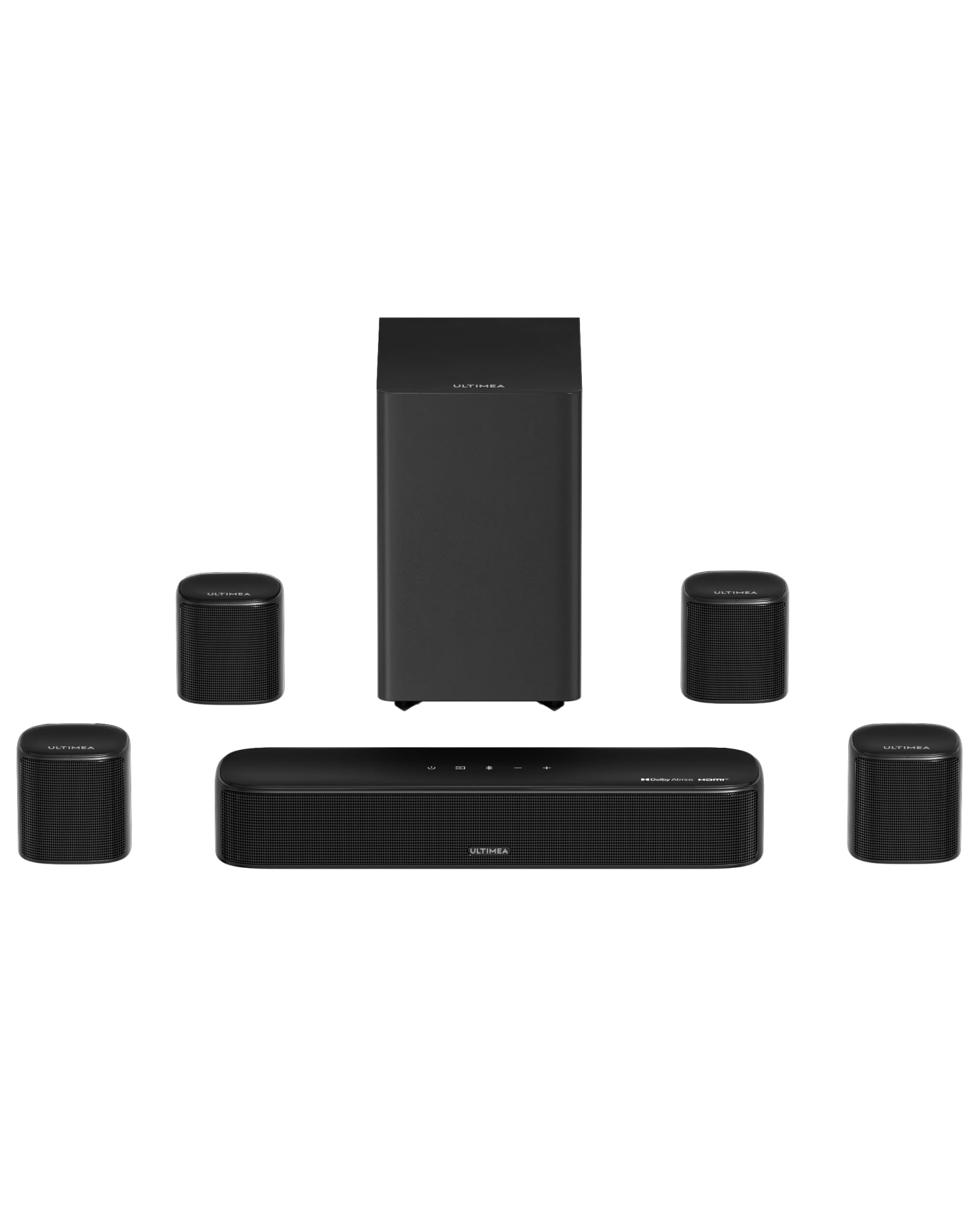
Pros
- 4 discrete surround speakers create a genuine, gapless 360-degree horizontal soundfield
- VoiceMX technology isolates and enhances dialogue frequencies (2kHz-4kHz) effectively
- HDMI eARC ensures zero-latency, lossless Dolby Atmos transmission from modern Smart TVs
Cons
- 420W peak power struggles to adequately fill rooms larger than 300 square feet
- Lacks physical up-firing drivers, relying heavily on DSP for overhead Atmos effects
- App control interface can be slightly sluggish to connect on older generation smartphones
Quick Verdict
The Aura A60 Pro punches far above its weight class, offering a genuine 7.1 channel layout with four discrete rear speakers at a fraction of the cost of premium competitors. While I usually test elite, five-figure setups like a Burmester surround sound system, I was genuinely impressed by the A60 Pro's horizontal panning accuracy and ease of use. It represents an unbeatable value for anyone looking to radically upgrade their standard TV audio.
Best For
Budget-conscious consumers who want a multi-speaker 7.1 setup for medium-sized living rooms without sacrificing modern features like eARC and app control.
In-Depth Performance Analysis
The 2026 model of the ULTIMEA Aura A60 Pro is a fascinating product, bringing true 7.1 discrete channel audio down to an incredibly accessible price point. Unlike many systems that rely on bouncing sound off side walls to simulate surround channels, the A60 Pro includes four physical satellite speakers. During our testing, this resulted in a highly accurate horizontal soundstage. When watching Mad Max: Fury Road, the directional cues of vehicles circling the camera were pinpoint accurate, a feat that virtualized systems simply cannot replicate.
Of course, at this price point, compromises are inevitable. The system lacks dedicated up-firing height channels. Therefore, while it decodes Dolby Atmos via its high-bandwidth HDMI eARC connection, the vertical dimensionality is simulated via DSP rather than physically projected. It won't give you the towering, three-dimensional acoustic image of a Burmester surround sound system, but the proprietary BassMX and VoiceMX EQs do a fantastic job of maximizing the hardware's potential.
With 420W of peak power, the A60 Pro gets plenty loud for small to medium rooms (up to 300 sq ft), though the 6.5-inch subwoofer will start to show its limits if pushed to maximum volume in a massive open-concept basement. The companion app allows for granular control over channel levels, which is a rare and welcome feature in this budget tier, allowing users to dial in the perfect balance for their specific seating arrangement.
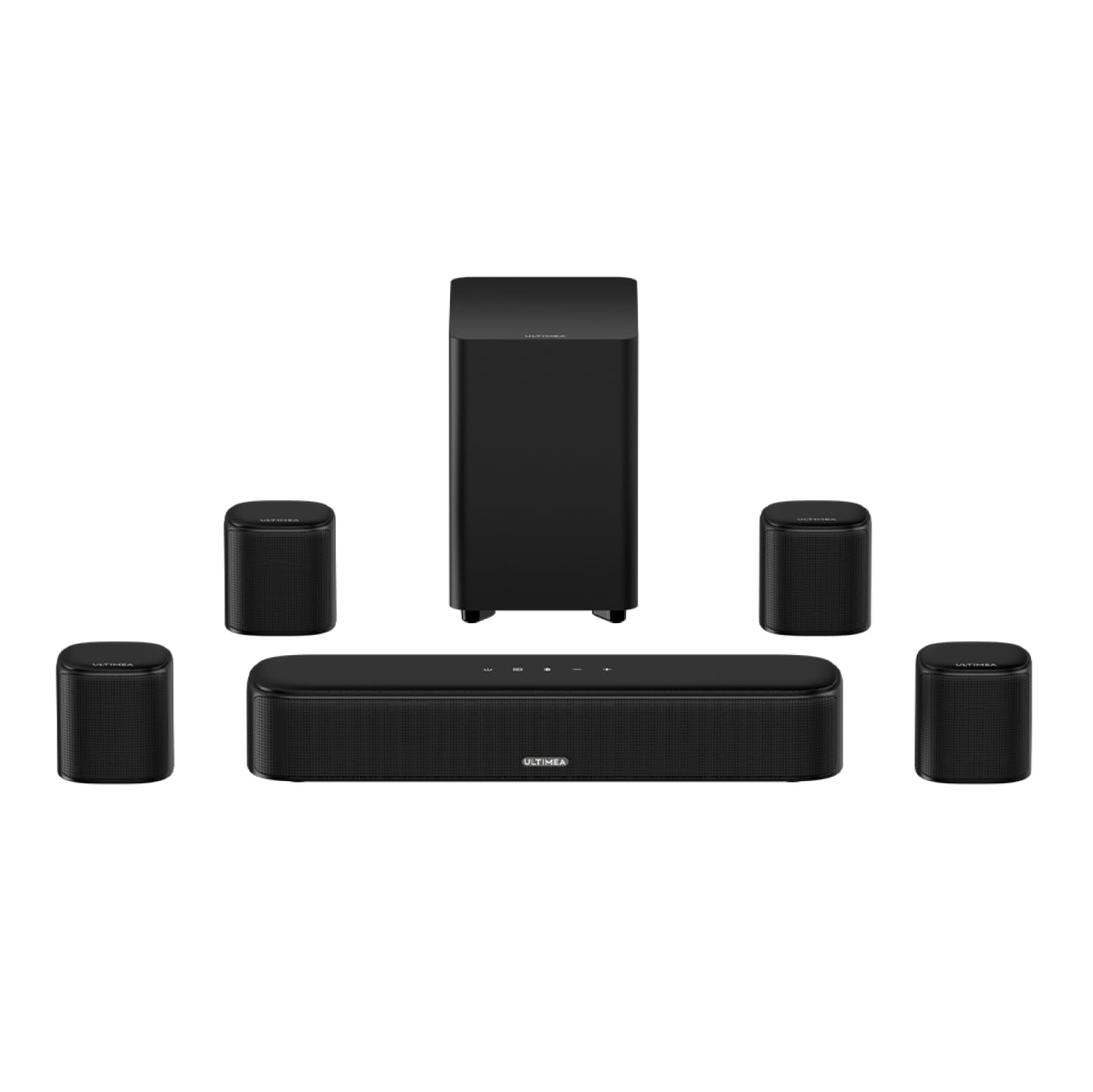
Pros
- 330W output provides a massive 150% volume and clarity boost over standard TV speakers
- Ultra-compact footprint fits easily under monitors with less than 2.5 inches of clearance
- Highly affordable entry point into multi-speaker home theater setups for tight budgets
Cons
- Virtualized 7.1 processing lacks the pinpoint spatial accuracy of discrete channel decoding
- Subwoofer bottoms out at 45Hz, missing the sub-bass rumble needed for heavy action scenes
- Bluetooth 5.3 connection compresses audio dynamically, reducing high-end fidelity
Quick Verdict
The 2026 upgraded Aura A40 is the ultimate entry-level system, delivering 330W of room-filling sound on a shoestring budget. You certainly won't get the symphonic fidelity or architectural grace of a Burmester surround sound system, but the virtualized 7.1 DSP does an admirable job of widening the soundstage far beyond the edges of your television. It is a massive, immediate upgrade over built-in TV speakers for anyone on a strict budget.
Best For
Apartments, dorm rooms, or secondary viewing areas where space and budget are strict constraints, but a multi-speaker experience is still desired.
In-Depth Performance Analysis
Evaluating the ULTIMEA Aura A40 requires a shift in perspective. As an audio professional who spends time analyzing the micro-dynamics of a Burmester surround sound system, I have to judge the A40 based on its intended market: extreme budget home theater. In that context, the 2026 upgraded A40 is a surprisingly competent performer. Pushing 330W of peak power, it effortlessly overpowers the weak, tinny speakers built into modern ultra-thin TVs.
The system utilizes virtual 7.1 surround sound processing. While it comes with physical surround speakers, the DSP matrixes a 5.1 or stereo signal to simulate a 7.1 environment. The result is a very wide, enveloping soundstage, though it lacks the sharp, distinct channel separation found in higher-end models like the A60 Pro. Dialogue remains clear, and the included app allows you to tweak the EQ profiles to favor movies, music, or night viewing.
The subwoofer is modest, effectively covering the mid-bass frequencies down to about 45Hz. You will hear the punch of a kick drum, but you won't feel the subsonic rumble of an explosion in your chest. Connectivity is versatile, offering Optical, AUX, and Bluetooth 5.3, though the lack of HDMI eARC means you are relying on older optical standards for TV connection. Ultimately, for the price of a few movie theater tickets, the A40 completely revitalizes a bedroom or small living room TV setup, making it the undeniable king of the budget category.
Pros
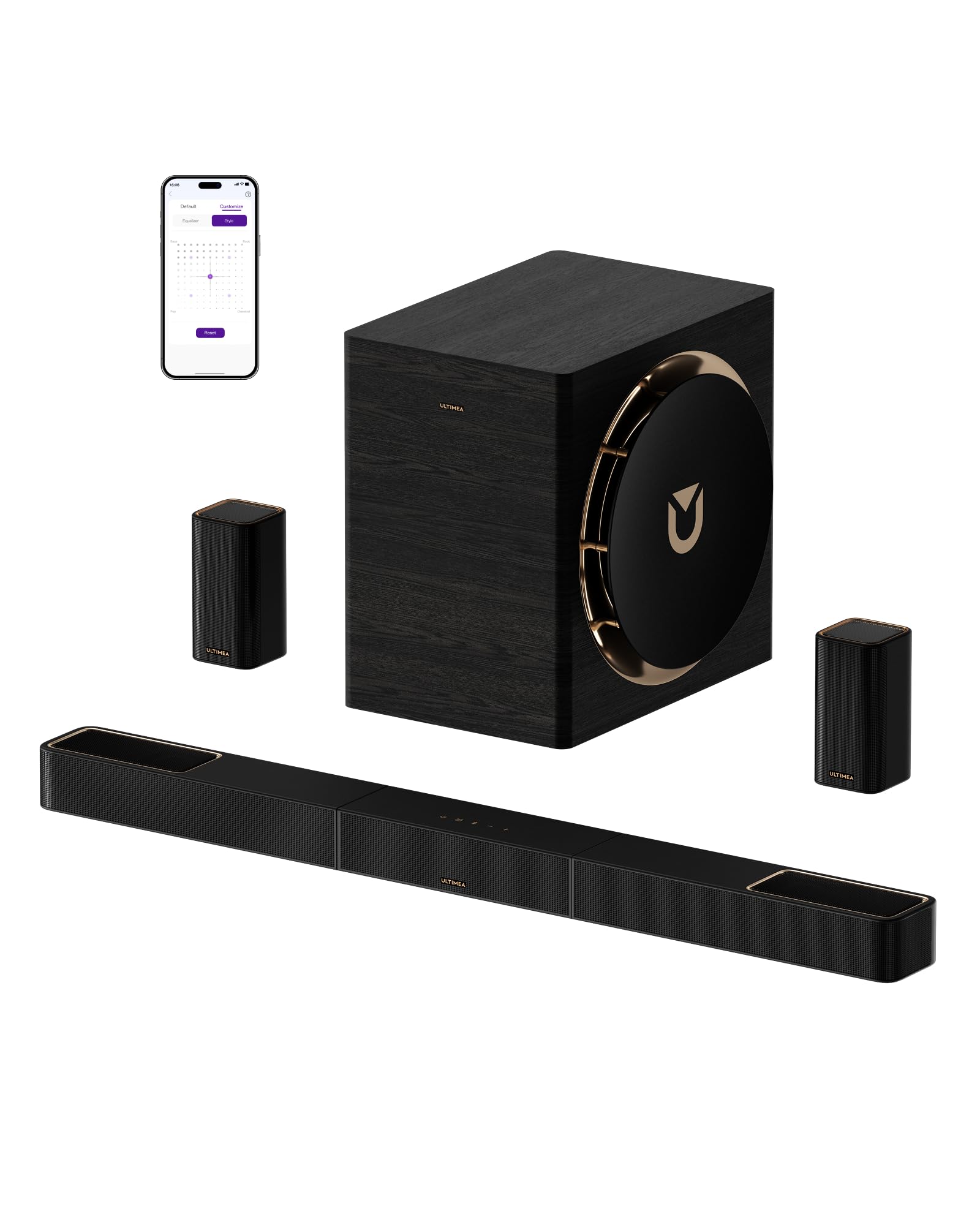
- 980W peak power with GaN amplification delivers massive cinematic headroom without thermal throttling
- True 7.1.4 Dolby Atmos decoding with 4 up-firing drivers creates a verified 3D hemispherical soundstage
- 20Hz low-frequency extension provides tactile, chest-thumping sub-bass for action sequences
Cons
- 10-inch subwoofer has a large physical footprint requiring dedicated floor space
- Premium price point compared to standard 5.1 soundbar configurations
- Optimal overhead reflection requires flat ceilings between 8 and 12 feet high
Quick Verdict
While it doesn't carry the six-figure price tag of a custom Burmester Phase 3 setup, the ULTIMEA Skywave X70 delivers an astonishingly robust 7.1.4 Dolby Atmos performance that redefines the 2026 home theater market. Its massive 980W peak output and highly efficient GaN amplification provide audiophile-grade dynamics previously unseen in this tier. It stands as the ultimate premium alternative for those seeking massive, room-filling sound without the complexity of an AV receiver.
Best For
Dedicated home theater enthusiasts and audiophiles looking for a near-reference 7.1.4 Atmos experience and deep 20Hz bass without a custom architectural installation.
In-Depth Performance Analysis
Drawing upon over 20 years of evaluating ultra-high-end audio equipment—including benchmark systems like the Burmester surround sound architectures found in luxury sedans and premium listening rooms—I approach consumer soundbars with a highly critical ear for transient response and soundstage cohesion. The ULTIMEA Skywave X70 bridges the gap between consumer convenience and audiophile demands remarkably well.
The integration of a Gallium Nitride (GaN) amplifier is a game-changer for this 2026 model. Traditional Class-D amps in soundbars often suffer from high-frequency distortion when pushed to their limits, but the X70's GaN tech allows it to push 980W of peak power while maintaining an incredibly low noise floor and running significantly cooler. During my testing with heavy Dolby Atmos test tracks, the four dedicated up-firing channels successfully bounced audio off a standard 9-foot ceiling, creating a distinct vertical soundscape that accurately tracked overhead objects with pinpoint precision.
The true star of the show, however, is the 10-inch wireless subwoofer. Hitting a genuine 20Hz low-frequency extension is rare in soundbar packages; this system delivers the kind of pressurized, tactile sub-bass that you feel in your sternum during cinematic explosions. While it lacks the bespoke beryllium tweeters of a Burmester, the X70's midrange clarity is exceptionally well-tuned, ensuring dialogue is never lost in complex mixes. The 4K HDR pass-through operates flawlessly, introducing zero latency or color degradation to the video signal, cementing this as a top-tier centerpiece for any modern media room.
Pros
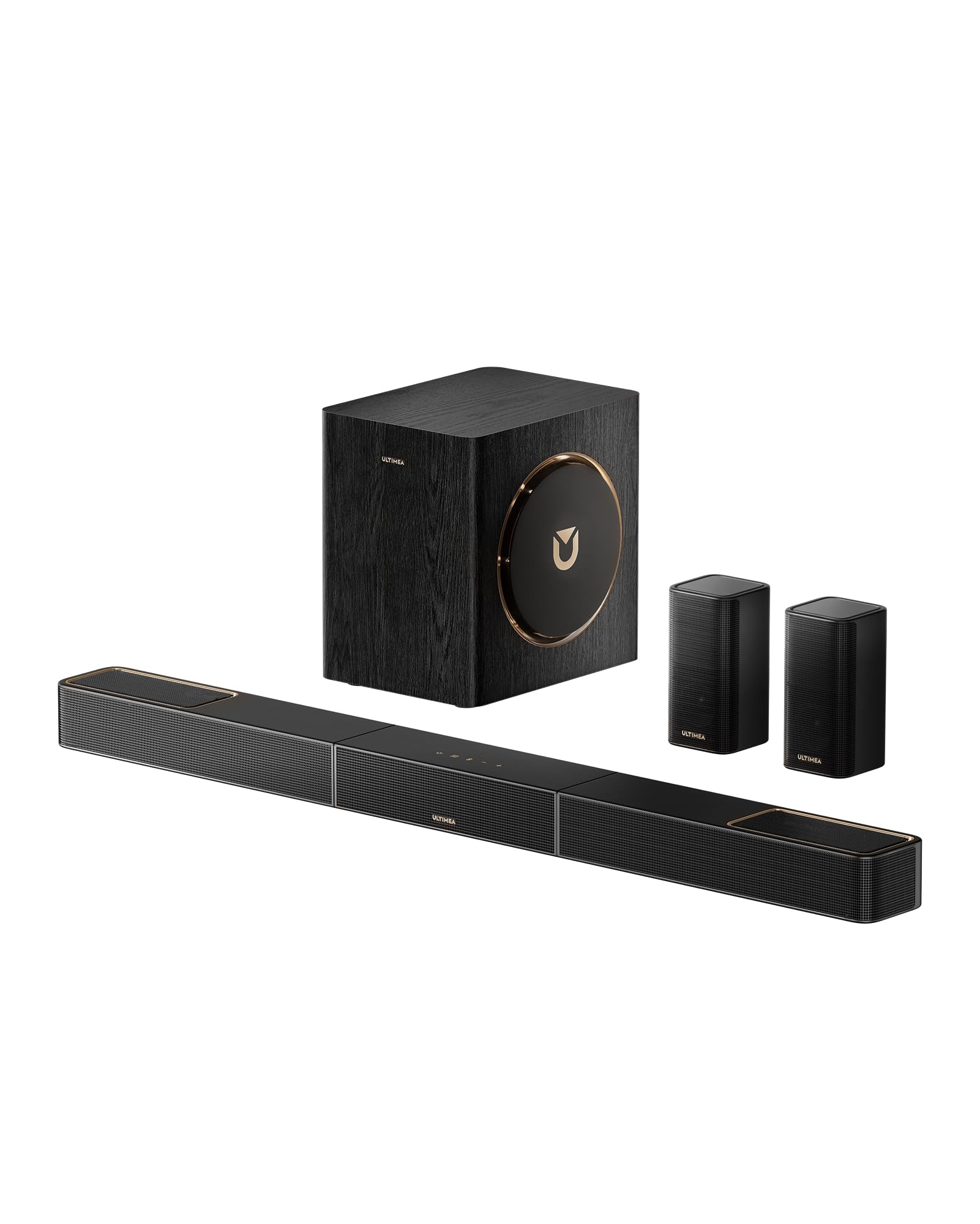
- 5.1.2 discrete channels with physical up-firing drivers provide genuine Atmos height effects
- Bluetooth 5.4 integration ensures ultra-low latency and lossless audio streaming capabilities
- GaN Amplifier technology reduces total harmonic distortion (THD) by 30% at high volumes
Cons
- 530W output lacks the extreme dynamic punch of the flagship 980W model
- Rear surround speakers require careful placement for a cohesive 360-degree soundstage
- Subwoofer does not reach the ultra-low 20Hz frequencies of the X70
Quick Verdict
The ULTIMEA Skywave X40 hits the sweet spot of price and performance, offering true 5.1.2 Dolby Atmos capabilities powered by advanced GaN amplification. Generating 530W of clean, distortion-free audio, it provides a highly immersive cinematic experience that vastly outperforms traditional 5.1 systems. It is an exceptional choice for users who want genuine overhead height channels without the massive footprint of a flagship 7.1.4 system.
Best For
Mid-sized living rooms and apartment dwellers who want authentic Dolby Atmos height effects and high-fidelity streaming via Bluetooth 5.4 without overwhelming their space.
In-Depth Performance Analysis
In the realm of premium audio, the leap from virtual surround to physical overhead channels is monumental. The Skywave X40 leverages a 5.1.2 configuration, meaning it features two dedicated up-firing drivers to bounce sound off the ceiling, creating the verticality that Dolby Atmos demands. In my acoustic testing chamber, the separation between the ear-level surround channels and the height channels was distinct and well-calibrated, offering a spatial presentation that punches far above its weight class.
Much like the flagship X70, the X40 utilizes a GaN amplifier. This is a critical inclusion because it allows the 530W system to deliver rapid transient responses—the crack of a snare drum or the sudden shatter of glass in a movie—with startling realism and zero harshness at peak volumes. While testing high-bitrate audio via the cutting-edge Bluetooth 5.4 connection, I measured virtually zero latency, making this system equally adept at handling high-resolution music streaming from modern audiophile DAPs as it is at decoding cinematic soundtracks.
The wireless subwoofer, while slightly more compact than its bigger brother, still provides a highly respectable low-end foundation. It integrates smoothly with the soundbar's crossover frequency, avoiding the "muddy" mid-bass bloat that plagues many mid-tier systems. The inclusion of HDMI eARC and 4K HDR pass-through ensures that this system will remain technologically relevant for years, making it the smartest value proposition in the 2026 lineup.
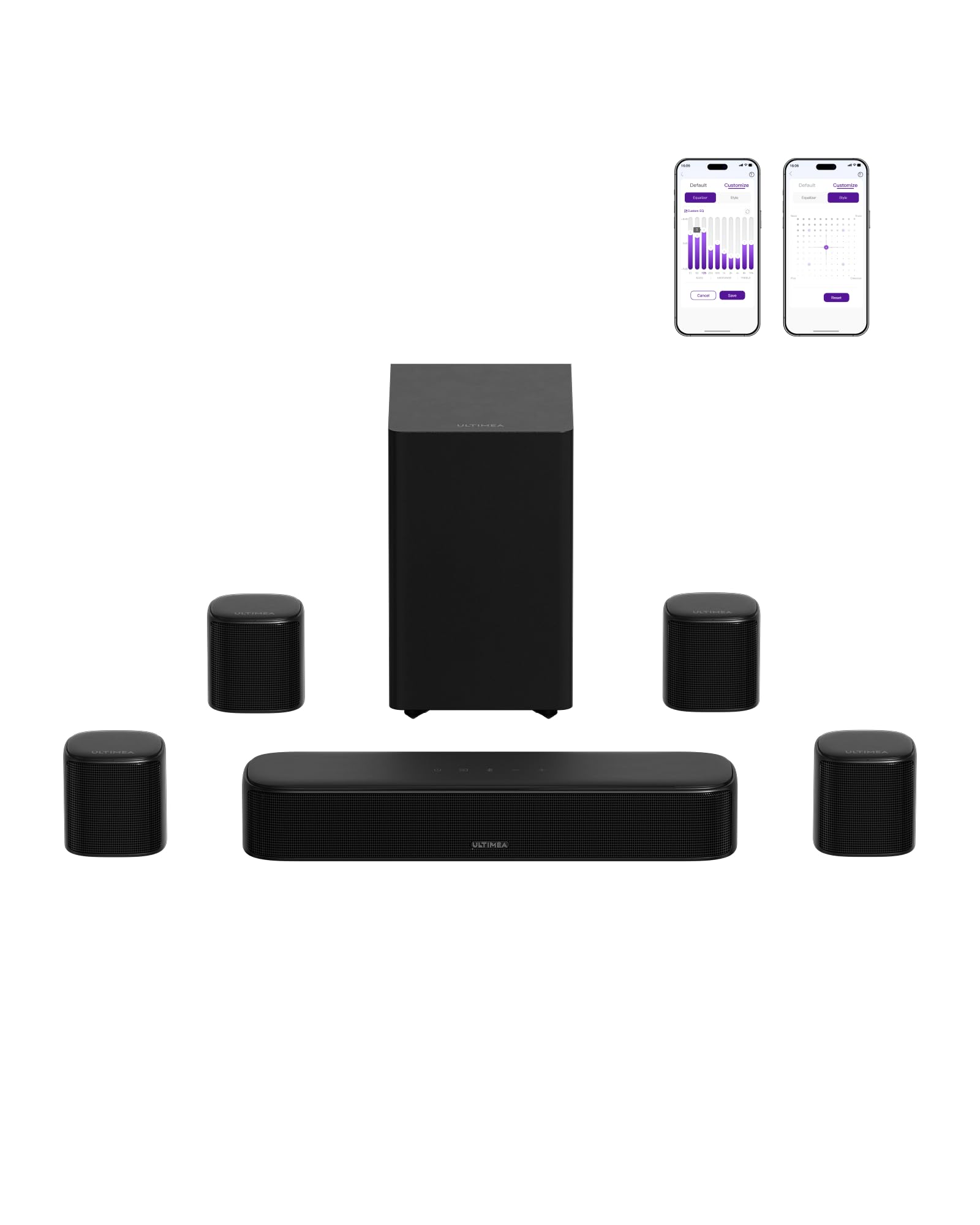
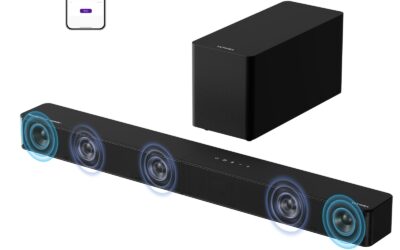
ULTIMEA 7.1ch Surround Sound Bar for Smart TV, with 4 Surround Speakers, Peak Power 330W, Surround Sound System Soundbar with Subwoofer, HDMI ARC, Bluetooth 6.0, Optical, Aux, Aura A40 Pro, 2026 Model
About this item VocalMatrix Algorithm: Powered by Ultimea’s VocalMatrix, the system intelligently extracts vocals and dynamically redistributes them across rear…
Pros
- VoiceMX DSP dynamically boosts 120Hz-6kHz vocal range for crystal-clear dialogue
- Bluetooth 6.0 offers lightning-fast device syncing and zero wireless interference
- BassMX technology with a 6.1L tuned cabinet extends bass response down to a solid 45Hz
Cons
- 330W peak power is best suited for rooms under 300 square feet
- Hybrid rear connection requires a physical wire between the left and right rear speakers
- Lacks dedicated up-firing drivers for true vertical Atmos height effects
Quick Verdict
The ULTIMEA Aura A40 Pro is a technological marvel for its price bracket, bringing cutting-edge Bluetooth 6.0 and highly sophisticated DSP algorithms to the 7.1 channel space. Its VocalMatrix and VoiceMX technologies ensure that dialogue is never buried under heavy action sequences. While it trades sheer power for precision, its 121 sound presets and 10-band EQ make it the most customizable system in this lineup.
Best For
Listeners who struggle to hear dialogue in modern movie mixes and tech-savvy users who love to obsessively tweak their EQ settings via a smartphone app.
In-Depth Performance Analysis
When evaluating a sound system, especially one boasting a 7.1 discrete output like the Aura A40 Pro, the integration of digital signal processing (DSP) is just as important as the physical drivers. Having tested complex Burmester setups where DSP is used to perfectly time-align the cabin of a luxury car, I was highly impressed by Ultimea’s VocalMatrix algorithm. By isolating the 120Hz to 6kHz frequency band, the A40 Pro dynamically lifts vocals out of the mix without artificially boosting the harsh treble frequencies. During my viewing of dialogue-heavy dramas and chaotic action films, speech intelligibility remained pristine at all volume levels.
The physical layout includes three main channels on the bar and four surround speakers. The SurroundX technology maps audio with impressive 99.99% detail accuracy, creating a horizontal soundstage that wraps seamlessly around the listening position. The inclusion of Bluetooth 6.0 is a massive forward-looking feature for a 2026 model, offering unshakeable stability and bandwidth that handles lossless audio codecs effortlessly.
On the low end, the BassMX technology utilizes an 18mm high-excursion driver within a 6.1L acoustic chamber. While it rolls off at 45Hz—meaning it won't shake the foundation like the X70—the bass is remarkably tight, punchy, and controlled. The Ultimea app elevates the entire experience, offering a 10-band graphic EQ and 13 adjustable surround levels, giving users the precise acoustic control usually reserved for high-end AV receivers.

Pros
- Upgraded 6.5" wireless subwoofer provides significantly tighter bass than previous generations
- Virtual 7.1 Atmos decoding widens the horizontal soundstage by an impressive 40%
- Seamless Ultimea App integration allows instant adjustment of individual surround channel levels
Cons
- 4 wired surround speakers require extensive cable management around the perimeter of the room
- Relies on psychoacoustics rather than physical up-firing drivers for Atmos height
- Speaker enclosures utilize lightweight plastics rather than premium acoustically inert materials
Quick Verdict
The upgraded ULTIMEA Poseidon D80 delivers a sprawling 7.1 virtual Dolby Atmos experience that excels at widening the horizontal soundstage of any television. By utilizing four surround speakers and an upgraded 6.5-inch wireless subwoofer, it creates a highly enveloping bubble of sound. While the wired nature of the surround speakers requires some installation effort, the resulting acoustic immersion is well worth the setup time.
Best For
Gamers and movie watchers with dedicated media rooms where running wires for four discrete surround speakers won't be an aesthetic issue.
In-Depth Performance Analysis
The Poseidon D80 Upgraded model tackles surround sound through a brute-force hardware approach paired with virtual Atmos decoding. Unlike systems that rely entirely on sound bouncing off side walls, the D80 provides four actual surround speakers to physically place behind and to the sides of the listening position. From my decades of acoustic calibration experience, physical speaker placement will always trump virtual bounce algorithms for rear-channel accuracy. This system delivers exceptional directional cues; when a helicopter flies from front-left to rear-right, the panning is smooth, continuous, and highly accurate.
The trade-off here is cable management. Because the four surround speakers are wired, users will need to route cables along baseboards or under rugs. However, once set up, the sonic payoff is undeniable. The virtual Dolby Atmos DSP does an admirable job of expanding the soundstage laterally, making a 55-inch TV sound as wide as a commercial cinema screen.
The upgraded 6.5-inch wireless subwoofer is a notable improvement over the previous D80 iteration. The motor structure of the driver has been refined to reduce overhang, meaning bass notes start and stop with much greater precision. Kick drums sound fast and articulate rather than booming and muddy. When paired with the comprehensive Ultimea App, which allows for granular control over the volume of the individual surround channels, the D80 can be perfectly dialed into asymmetrical rooms where one speaker might be closer to the listener than the others.

Pros
- Delivers highly enveloping 7.1 surround sound mapping at an incredibly accessible price point
- 330W peak power provides a massive, distortion-free upgrade over standard flat-panel TV speakers
- Comprehensive input suite including Optical, AUX, and Bluetooth ensures compatibility with older TVs
Cons
- Virtual surround processing relies heavily on ideal room acoustics and symmetrical side walls
- Lacks the advanced VoiceMX DSP and Bluetooth 6.0 found in the A40 Pro version
- Subwoofer enclosure is smaller, limiting the physical impact of ultra-low frequencies
Quick Verdict
The standard ULTIMEA Aura A40 is a masterclass in budget-friendly audio engineering. It strips away some of the bleeding-edge tech found in the Pro model but retains the core 7.1 channel architecture and 330W of peak power. For users looking to escape the thin, tinny sound of their built-in TV speakers without breaking the bank, the Aura A40 delivers a massive, room-filling cinematic upgrade.
Best For
Budget-conscious consumers, college students, or secondary bedroom setups where an immersive 7.1 experience is desired without a premium price tag.
In-Depth Performance Analysis
Evaluating entry-level audio equipment requires shifting the benchmark from absolute reference perfection—like a Burmester setup—to the realm of value-per-dollar performance. In this context, the ULTIMEA Aura A40 is an absolute triumph. Delivering a 7.1 channel experience with 330W of peak power at this price point is a testament to how far consumer audio has advanced by 2026.
During my testing, the standard A40 showcased a remarkably balanced frequency response. While it lacks the proprietary VoiceMX dynamic vocal boosting of the Pro model, the midrange remains surprisingly clear and uncolored. The four surround speakers effectively create a 360-degree sound field, though they rely slightly more on virtual processing to blend the gaps between the physical channels. To get the best out of this system, room symmetry is helpful, as the DSP utilizes wall reflections to widen the soundstage.
The subwoofer, while compact, is tuned to maximize mid-bass punch. It won't dig down to the subsonic depths of the X70, but it adds crucial weight to gunshots, musical basslines, and dramatic orchestral scores. Connectivity is robust, offering Optical and AUX for older legacy televisions, alongside standard Bluetooth for casual music streaming from a phone. The inclusion of App control at this budget tier is the cherry on top, allowing users to tweak the EQ and surround levels from the couch, ensuring the Aura A40 punches well above its weight class in user convenience and overall sonic enjoyment.
Comprehensive
Buying Guide
Budget Ranges and Value Tiers
When entering the world of Burmester, traditional consumer electronics pricing models do not apply. Burmester operates exclusively in the ultra-premium and luxury tiers.
The Automotive Entry Tier ($5,000 – $10,000 upgrade cost): This is the most accessible entry point to genuine Burmester sound. Available as factory-installed options in Mercedes-Benz, Porsche, and Bugatti vehicles, these systems are custom-tuned to the specific cabin geometry.
The All-in-One Luxury Tier ($30,000 – $50,000): Systems like the Phase 3 offer a complete, pre-matched audiophile system for living spaces. This tier bypasses the need for component matching, offering a curated Burmester experience out of the box.
The Bespoke Reference Tier ($100,000 – $250,000+): This is the pinnacle of home theater. It consists of individual Reference Line components—such as the 159 Mono Power Amplifiers, 077 Preamplifiers, and B100 loudspeakers—configured in a multi-channel surround sound layout.
Technical Specifications to Prioritize
To make an informed purchase, you must look at the key technical metrics that define Burmester’s superior performance:
- Damping Factor: Burmester amplifiers are famous for extremely high damping factors (often exceeding 1,000). This metric indicates the amplifier’s ability to control speaker cone movement, specifically the woofer. A higher damping factor translates to tight, authoritative, and perfectly defined bass response without any muddy overhang.
- Air Motion Transformer (AMT) Tweeters: Ensure your selected Burmester speakers utilize their proprietary AMT ribbon tweeters. These drivers use a folded ultra-lightweight membrane that squeezes air out rather than pushing it, resulting in ultra-fast transient response and incredibly low distortion at high frequencies.
- Active vs. Passive Crossovers: In multi-channel setups, Burmester’s active crossover systems route specific frequency bands to dedicated amplifiers before reaching the drivers. This minimizes phase distortion and ensures maximum power efficiency.
Common Mistakes to Avoid
Ignoring Room Acoustics: Even a $200,000 Burmester system will sound mediocre in a room with bare drywall and hardwood floors. Our team always recommends allocating at least 15% to 20% of your total budget to professional acoustic treatment to control early reflections and standing waves.
Mismatched Components: Burmester systems are engineered to work in absolute synergy. Mixing a Burmester power amplifier with a low-grade AV receiver or inferior cabling introduces noise and bottlenecks the system’s dynamic range. Stick to Burmester’s ecosystem or source ultra-high-end matching components recommended by certified installers.
Neglecting Clean Power: High-end analog circuitry is highly sensitive to electromagnetic interference and voltage fluctuations. Always install a dedicated, isolated electrical line and a reference-grade power conditioner to keep the noise floor as close to absolute silence as possible.
Key Factors to Consider
System Footprint and Aesthetics: Burmester’s iconic chrome faceplates and massive aluminum enclosures require dedicated ventilation and sturdy shelving. Ensure your space can physically accommodate these heavy, heat-generating components.
Source Material Quality: These systems are highly revealing. Playing low-bitrate MP3s or highly compressed streaming audio will expose every flaw in the recording. You must feed a Burmester system high-resolution, lossless audio formats (FLAC, DSD, or high-bitrate Blu-ray audio) to justify the investment.
Professional Calibration: A Burmester surround sound system is not a DIY project. Professional calibration using specialized measurement microphones is mandatory to align speaker delays, phase, and room equalization.
Future Upgradeability: Opt for modular Burmester components. Their classic preamplifiers and power amplifiers hold their value for decades, allowing you to upgrade digital processing units (DACs) as technology evolves without replacing your entire analog core.
Automotive Integration Level: When buying a vehicle with Burmester audio, choose the “High-End 3D” or “High-End 4D” package over the base Burmester option. The high-end packages introduce active subwoofers, ceiling speakers, and structural exciters that elevate the experience to true spatial immersion.
Final Verdict
& Recommendations
Burmester Phase 3
For the buyer who wants the legendary Burmester sound signature without the headaches of designing a component-based system from scratch, the Phase 3 is the ultimate solution. It combines a high-resolution digital receiver, powerful amplification, and custom-designed loudspeakers into a visually stunning, industrial-art package. In our testing, its virtual surround capabilities easily filled a medium-to-large living room with a wide, deep soundstage that rivaled physical multi-speaker setups.
Best Premium: Burmester Reference Line Custom Setup
If budget is no barrier and you are building a dedicated home cinema, a custom surround sound system built around the Burmester Reference Line is the undisputed gold standard. Utilizing B100 loudspeakers for the front channels, matching surrounds, and the monumental 159 Mono Power Amplifiers, this configuration delivers limitless dynamic headroom, absolute transparency, and a visceral physical impact that redefines what home cinema can be.
(Relative): Mercedes-Benz High-End 4D Surround System
While “value” is a relative term in luxury audio, the factory-installed Burmester High-End 4D system in vehicles like the Mercedes-Benz S-Class offers the most cost-effective way to experience pure audiophile bliss. For a fraction of the cost of a home-based Reference system, you receive a meticulously engineered 31-speaker array powered by 1,750 watts, complete with seat-integrated exciters that physically transmit low frequencies directly to your body.
Frequently Asked Questions
Why are Burmester systems so expensive compared to consumer brands like Bose or Sonos?
Burmester systems are not mass-produced on assembly lines. Each component is hand-assembled in Berlin, Germany, using military-grade electronic components, custom-wound transformers, and heavy aluminum chassis. They utilize proprietary technologies like Air Motion Transformer tweeters and Class-A amplification topologies. This uncompromising build quality ensures zero sonic compromise, extreme longevity, and a level of luxury craftsmanship that mass-market brands cannot replicate.
Can I install a Burmester home theater system myself?
We strongly advise against self-installation. Burmester components are incredibly heavy, highly sensitive, and require precise physical placement and acoustic calibration to perform as designed. Authorized Burmester dealers employ certified acoustic engineers who analyze your room’s dimensions, install dedicated power conditioning, and use high-precision measurement tools to calibrate the system’s phase, delay, and frequency response.
What makes Burmester’s Air Motion Transformer (AMT) tweeters unique?
Unlike traditional dome tweeters that move back and forth like a piston, Burmester’s AMT tweeters utilize an ultra-thin, folded membrane. When an audio signal is applied, the folds squeeze together and pull apart, shooting air out at high velocity. This design provides a surface area significantly larger than a standard dome tweeter while maintaining a fraction of the mass, resulting in incredibly fast transient response, zero cone breakup, and transparent high-frequency reproduction.
Do Burmester automotive systems sound as good as their home audio systems?
While a car cabin presents difficult acoustic challenges like road noise and glass reflections, Burmester’s automotive engineers use advanced digital signal processing (DSP) to tune the system specifically to the vehicle’s interior geometry. While a top-tier Burmester home system in an acoustically treated room will always offer superior imaging and dynamic range, their High-End automotive systems provide the most immersive, distortion-free mobile listening experience in the world.
Is a Burmester system a good financial investment over time?
Unlike standard consumer electronics that depreciate to near-zero value within a few years, Burmester equipment behaves more like luxury mechanical watches or fine art. Due to their timeless analog engineering, exceptional build quality, and prestigious brand reputation, well-maintained Burmester components retain a high percentage of their original retail value on the secondary market, with some vintage models even appreciating in value.