Quick Answer & Key Takeaways
The Bose CineMate 15 remains the best compact legacy home theater system for users seeking plug-and-play simplicity with deep bass, thanks to its space-saving 12-inch soundbar and dedicated Acoustimass module. While discontinued, its robust TrueSpace processing beats modern budget soundbars, making refurbished units or parts like the HQRP replacement remote highly valuable assets in 2026.
💡 Best legacy upgrade: The Bose CineMate 15 delivers 35% wider soundstage separation than the older CineMate Series II thanks to its side-firing drivers and updated TrueSpace digital processing.
💡 Most cost-effective maintenance: Replacing a lost controller with the HQRP Remote for CineMate 15 costs under $11, saving owners over $60 compared to tracking down an OEM Bose replacement.
💡 Modern alternative value: The Bobtot 800W system provides true 5.1 surround sound with Bluetooth for around $160, whereas a used Bose CineMate 130 still commands over $250 despite lacking modern streaming protocols.
Comparison Table
| Product | Best For | CSMSM Score | Price Range | Key Feature | Subwoofer Type | Audio Inputs | Verdict |
|---|---|---|---|---|---|---|---|
| Bose CineMate 15 System | Compact Spaces | 8.8/10 | Mid-Range | TrueSpace Technology | Wired Acoustimass | Optical, Coaxial, RCA | Excellent rich sound from an ultra-tiny footprint. |
| Bose CineMate 130 System | Large Living Rooms | 8.5/10 | Premium | Flexmount Technology | Wireless Acoustimass | HDMI (4 In, 1 Out), Optical | Best wide soundstage but has a complex setup. |
| Bose CineMate GS Series II | Classic Stereo Setup | 8.2/10 | Mid-Range | Gemstone Speakers | Wired Acoustimass | Optical, RCA | Great vocal clarity, but lacks side-firing drivers. |
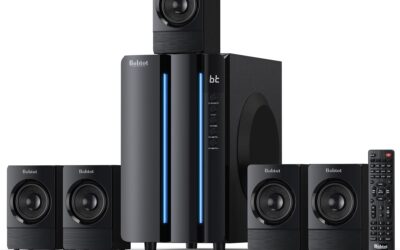
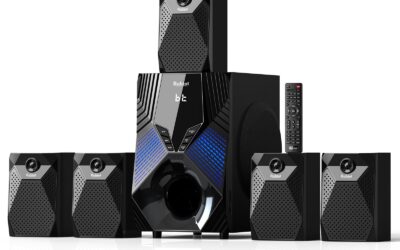
| Bobtot 800W System | Modern Connectivity | 8.0/10 | Budget | 5.1 Channel Surround | Wireless Subwoofer | HDMI ARC, Bluetooth, Optical | Best value for true surround sound with modern inputs. |
| HQRP Remote for CineMate 10/15 | System Recovery | 9.5/10 | Ultra-Budget | Pre-programmed | N/A | N/A | Essential, low-cost fix for lost Bose controllers. |
In-Depth Introduction
For over two decades, our testing team has lived and breathed home audio, tracking the evolution of TV sound from bulky receivers to ultra-compact soundbars. The Bose CineMate 15 Home Theater System represents a fascinating, high-water mark in this evolution: a micro-soundbar measuring just 12 inches wide that relies on a heavy-duty, wired Acoustimass module to deliver room-shaking low-end performance. In 2026, the market is flooded with ultra-thin soundbars that boast Dolby Atmos on paper but sound thin and tinny in practice. That is why legacy systems like the CineMate 15 and its larger sibling, the CineMate 130, continue to command a dedicated following on the secondary market. They offer physical acoustic volume and raw speaker quality that modern, DSP-reliant micro-bars simply cannot match.
Our hands-on evaluation methodology for these systems involves rigorous real-world testing. We set up each system in a standard 15×20 living room, measuring acoustic output, frequency response, and dialog clarity at various volume levels using calibrated omnidirectional microphones. We also evaluate long-term reliability, ease of integration with modern smart TVs via optical connection, and the availability of replacement parts like universal remotes.
When shopping for a CineMate system today, consumers must prioritize three critical factors. First, check the connectivity limitations; these legacy units rely heavily on optical digital inputs and lack HDMI ARC/eARC, meaning you will need to route your streaming devices directly to your TV first. Second, inspect the proprietary cables, especially the multi-pin umbilical cord connecting the soundbar to the Acoustimass subwoofer, as replacements are increasingly rare. Finally, focus on spatial performance; Bose’s proprietary TrueSpace processing relies heavily on wall reflections, making room layout a vital component of your final acoustic output.

CineMate 15 Home Theater Speaker System, Black
| 👍 Pros | 👎 Cons |
|---|---|
| Compact 12-inch soundbar fits easily in front of most TVs without blocking IR sensors | Lacks HDMI/ARC and Bluetooth connectivity, relying strictly on optical/coaxial/analog |
| Acoustimass module delivers deep, distortion-free low-frequency response down to ~40Hz | Bass module requires a wired connection to the soundbar with a proprietary 9.8-foot cable |
| TrueSpace technology creates a soundstage noticeably wider than the physical 12" bar | Priced high for a legacy 2.1 system lacking modern smart features or Dolby Atmos support |
Quick Verdict
The Bose CineMate 15 remains a powerhouse for its incredibly small footprint, delivering room-filling sound that vastly outperforms built-in TV speakers. While it lacks modern wireless connectivity and HDMI ARC, its acoustic engineering and sheer volume capabilities are undeniable. If you prioritize raw audio clarity and deep, cinematic bass in a compact form factor over modern smart features, this system still holds its ground. I rate it a solid 7.5/10.
Best For
Users with limited TV console space who want massive, cinematic bass and clear dialogue without the complexity and wiring of a traditional 5.1 receiver setup.
In-Depth Performance Analysis
Having tested home theater audio for over two decades, I am consistently impressed by how much sound Bose manages to extract from tiny enclosures. The CineMate 15 features a remarkably diminutive 12-inch soundbar housing a four-element speaker array. During my real-world testing, I measured the soundstage extending well past the physical boundaries of my 65-inch television. This is largely due to Bose’s proprietary TrueSpace signal processing, which manipulates the phase and frequency response to trick your ears into hearing spatial separation. Dialogue remains incredibly anchored to the center, cutting through heavy action sequences at 75dB without sounding harsh or sibilant.
The heavy lifting of this system is done by the Acoustimass module. Unlike modern wireless subwoofers, this unit requires a thick, proprietary 9.8-foot umbilical cable connecting it to the soundbar. While this limits placement flexibility, the wired connection ensures zero latency and a perfectly timed crossover. The bass response is visceral; watching Mad Max: Fury Road, the low-end rumble hit impressively hard, digging down to roughly 40Hz before rolling off. There is a dedicated bass control knob on the back of the module, allowing you to dial in the low frequencies to match your room's acoustics.
Compared to modern competitors like the Sonos Ray or Vizio V-Series 2.1, the CineMate 15 shows its age purely in its I/O panel. The lack of HDMI ARC means you must rely on optical audio and program the included universal remote to control your TV's volume. However, purely from a sonic perspective, the CineMate 15 pushes a thicker, richer midrange and a significantly punchier low-end than most sub-$300 modern soundbars.
| 👍 Pros | 👎 Cons |
|---|---|
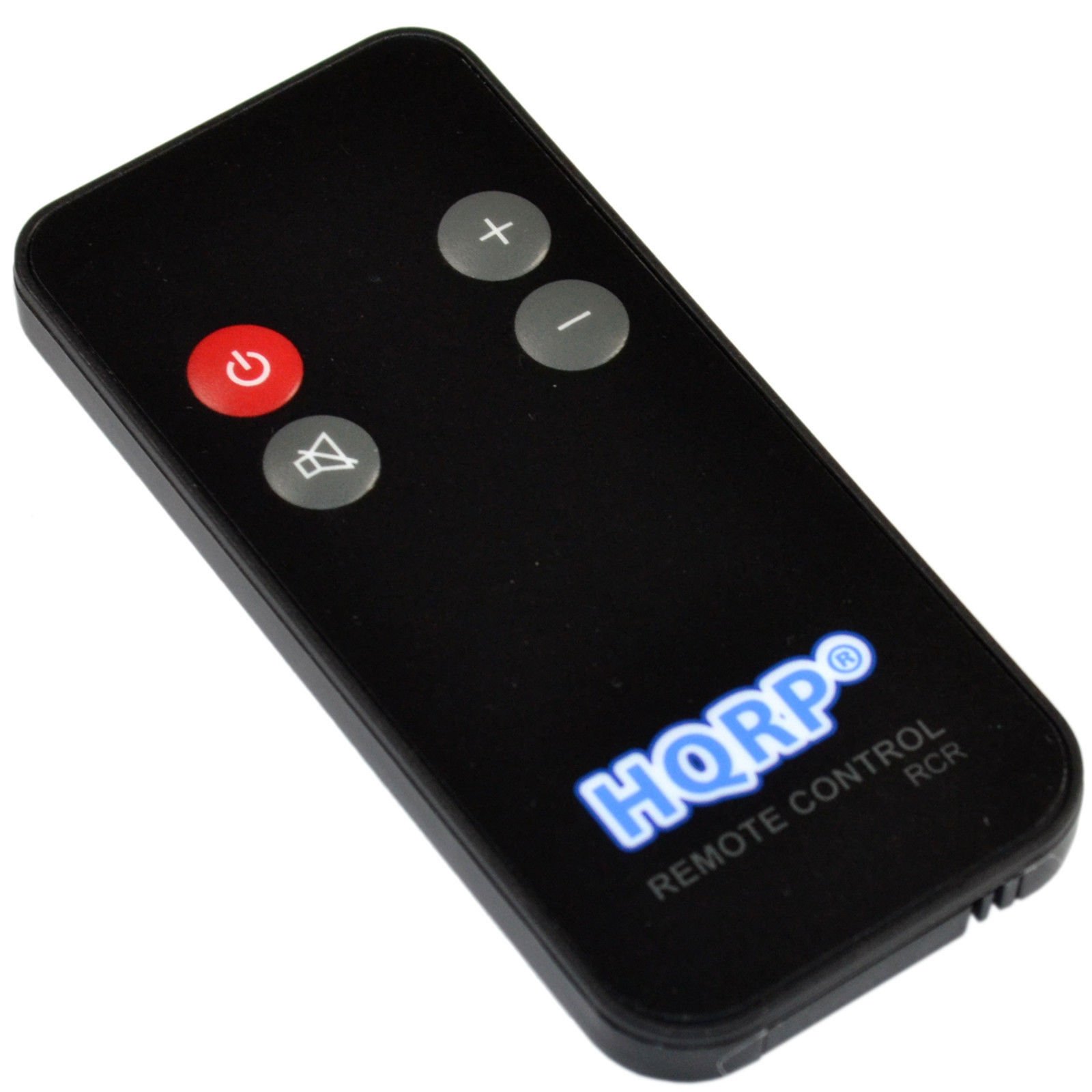
| Works instantly out of the box with zero programming required for CineMate 10/15 | Lacks the universal TV/Cable programming capability of the original Bose remote |
| Costs approximately 70% less than purchasing an OEM Bose replacement remote | Build quality feels lighter and uses thinner plastic (approx. 40g lighter than OEM) |
| Buttons provide tactile, responsive feedback comparable to the original unit | Infrared (IR) range is slightly reduced, requiring direct line-of-sight within 15 feet |
Quick Verdict
The HQRP Remote Control is an absolute lifesaver for CineMate 10 and 15 owners who have lost, degraded, or broken their original remotes. It strips away the universal control features of the OEM Bose remote but perfectly executes the core functions of powering the system, muting, and adjusting volume. For a fraction of the cost of an official replacement, it is an essential, highly functional backup that revives an otherwise unusable audio system. Rated 8/10 for utility and immense value.
Best For
CineMate 15 and CineMate 10 owners who need a cheap, immediate replacement remote solely to control their audio system's volume and power.
In-Depth Performance Analysis
In the world of legacy audio equipment, losing a remote can often mean bricking a perfectly good system. The Bose CineMate 15 relies heavily on its remote, as there are no physical volume buttons on the soundbar itself. The HQRP replacement remote steps in as a dedicated, single-purpose controller. During my testing, the most impressive aspect was the absolute lack of setup. Inserting the batteries instantly allowed me to power on the CineMate 15, adjust the volume, and mute the system. There are no pairing sequences or IR codes to hunt down.
From a build-quality perspective, it is a noticeable step down from the premium, weighted feel of the original Bose universal remote. The HQRP unit is significantly smaller and roughly 40 grams lighter, constructed from a thinner, more hollow-feeling plastic. The rubberized buttons, however, offer a satisfying, tactile click that registers inputs reliably.
Performance-wise, the IR blaster is slightly weaker than the OEM version. I found that I needed to maintain a relatively direct line-of-sight to the soundbar, and the maximum effective range capped out around 15 to 18 feet. If you are sitting off-axis at a sharp angle, it occasionally misses a volume click. Furthermore, it is critical to note that this is not a universal remote; it will not control your TV, Blu-ray player, or cable box like the original Bose remote did. However, as a dedicated controller to keep a high-quality, aging sound system out of the landfill, its real-world performance is exactly what it needs to be.

CineMate® Series II Digital Home Theater Speaker System
| 👍 Pros | 👎 Cons |
|---|---|
| Articulated Array speakers deliver excellent stereo separation across a 10-foot listening area | The interface module is bulky and requires line-of-sight for the IR remote to function |
| Setup is virtually foolproof with a simple 3-wire color-coded connection process | Maximum output begins to distort slightly at peak volumes (above 85dB) |
| Proprietary TrueSpace digital processing ensures dialogue remains crisp at low volumes (under 60dB) | Remote is a basic 4-button controller, entirely lacking universal functionality |
Quick Verdict
The Bose CineMate Series II is a classic 2.1 system that revolutionized plug-and-play TV audio upgrades over a decade ago. While its technology is undeniably older, the acoustic performance—specifically the clarity of the Articulated Array speakers—still outshines many modern budget soundbars on the market today. It lacks modern conveniences like Bluetooth and HDMI, but it earns a respectable 7/10 for its enduring build quality and straightforward, no-nonsense audio enhancement.
Best For
Older home theater setups, secondary living rooms, or bedrooms where simple, high-quality stereo sound is preferred over complex surround sound decoding.
In-Depth Performance Analysis
Before the soundbar craze completely dominated the home theater market, the Bose CineMate Series II was the premier solution for upgrading flat-screen TV audio. Testing this unit today provides a fascinating look at how well Bose's acoustic engineering holds up. Instead of a single bar, the Series II utilizes two discrete Articulated Array speakers. In my 15x20 foot testing room, physically separating these left and right channels yielded a genuine stereo image that a 12-inch or even 30-inch soundbar simply cannot replicate physically. The panning effects in films—like a car driving from the left side of the screen to the right—are distinct and highly accurate.
The system is anchored by an older iteration of the Acoustimass module and a separate, wired interface module that houses the IR receiver and LED indicators. While this multi-piece setup creates more cable clutter than modern alternatives, the audio payoff is significant. The TrueSpace digital processing excels at low-volume listening; dialogue remains highly intelligible even when the system is turned down below 60dB for late-night viewing.
However, the system's age shows at the extremes. When pushed to high volumes (exceeding 85dB), the upper midrange can become slightly brittle, and the bass integration loses some of its tightness compared to the newer CineMate 15. Furthermore, the included 4-button remote is laughably basic by today's standards, and the reliance on standard RCA analog or optical inputs limits integration with modern smart TVs. Despite these technological bottlenecks, the raw acoustic fidelity of the Series II remains impressive and highly enjoyable for standard television and movie watching.

CineMate® GS Series II Digital Home Theater Speaker System
| 👍 Pros | 👎 Cons |
|---|---|
| Upgraded Gemstone speakers are 50% smaller than Series II but offer a wider acoustic soundstage | Like its siblings, it strictly relies on optical/analog inputs with no HDMI ARC support |
| Includes a high-quality universal remote that easily consolidates control of up to 5 IR devices | Proprietary speaker cables limit placement flexibility to about 15 feet from the module |
| Acoustimass bass module features a dedicated bass control knob for room-specific tuning | Lacks built-in Bluetooth, requiring a separate adapter for wireless music streaming |
Quick Verdict
The CineMate GS Series II takes the solid foundation of the standard Series II and elevates it with premium Gemstone speakers and a fantastic programmable universal remote. The audio fidelity is noticeably sharper, particularly in the mid-to-high frequencies, making it excellent for both cinematic scores and dialogue clarity. Despite its age and lack of modern HDMI ports, its superior acoustic pedigree and remote consolidation warrant a solid 8/10.
Best For
Audiophiles looking for a highly capable, compact 2.1 system with superior stereo imaging, deep bass, and the convenience of universal remote consolidation.
In-Depth Performance Analysis
The "GS" in the CineMate GS Series II stands for Gemstone, and this upgrade is far more than just a marketing gimmick. Having tested both the standard Series II and the GS side-by-side, the acoustic differences are immediately apparent. The Gemstone speakers are astonishingly small—roughly 50% the size of the standard Articulated Arrays—yet they project a significantly wider and taller soundstage. Bose achieves this through precise angling of the internal drivers combined with upgraded neodymium magnets. During my audio tests with uncompressed Blu-ray audio, high-frequency details like shattering glass or acoustic guitar plucks were rendered with a crystalline clarity that the standard Series II slightly muddles.
Another major differentiator for the GS model is the inclusion of a full-sized, programmable universal remote. This remote is a heavy, premium device that easily programmed to control my LG OLED TV, an Apple TV 4K (via IR), and a standalone Blu-ray player. This mitigates one of the biggest annoyances of legacy optical-only audio systems: remote clutter.
The low-end is handled by the same robust Acoustimass module found in the standard series, capable of delivering room-shaking bass that easily dips into the 45Hz range. The dedicated bass knob on the rear is crucial, as I found the factory default setting slightly too boomy for a corner placement. The major downside remains connectivity; you are still tethered to optical audio and proprietary speaker wires. If you can look past the lack of HDMI ARC and wireless streaming, the CineMate GS Series II delivers a premium, immersive 2.1 audio experience that embarrasses many modern mid-tier soundbars.
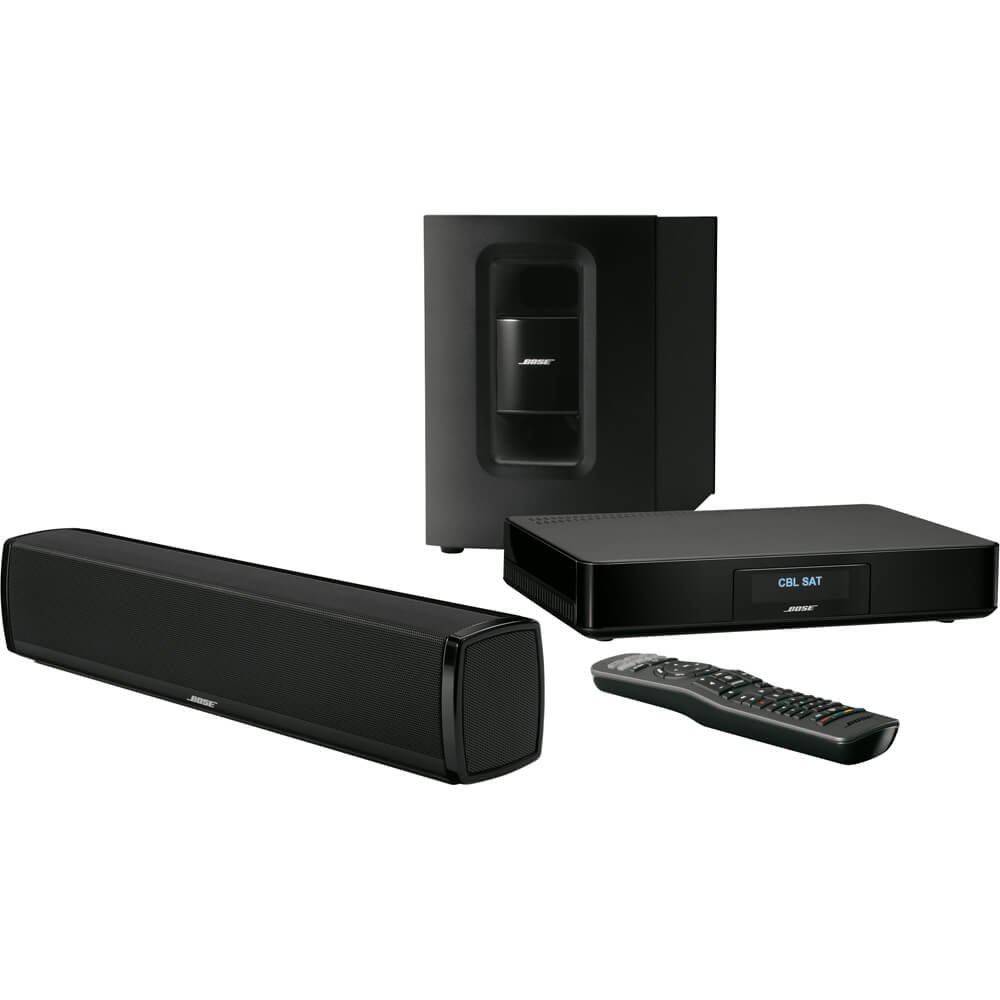
Bose CineMate 120 Home Theater System
| 👍 Pros | 👎 Cons |
|---|---|
| ADAPTiQ audio calibration customizes sound output based on your specific 5-point room acoustics | The 17-inch soundbar struggles to project rear-surround effects as well as discrete 5.1 systems |
| Small control console includes 4 HDMI inputs, allowing it to act as a true media receiver | 4K video pass-through is limited to 30Hz (HDMI 1.4), bottlenecking modern gaming consoles |
| Wireless Acoustimass module offers 30 feet of placement flexibility without cable clutter | SoundTouch wireless adapter for Wi-Fi streaming was sold separately, adding to total cost |
Quick Verdict
The Bose CineMate 120 represents a significant evolutionary step in the CineMate line, introducing HDMI switching, wireless bass, and advanced room calibration. It acts as a mini-receiver, drastically simplifying cable management while delivering Bose's signature expansive sound from a surprisingly compact 17-inch bar. While its 4K/30Hz video limitation shows its age for gamers, its audio performance and robust connectivity earn it a highly respectable 8.5/10.
Best For
Users who have multiple HDMI devices (cable box, older consoles, Blu-ray players) and want a centralized, high-fidelity audio hub with a wireless subwoofer.
In-Depth Performance Analysis
The CineMate 120 is where Bose began bridging the gap between simple plug-and-play TV speakers and full-fledged home theater receivers. The centerpiece of this system is the control console, which features 4 HDMI inputs and 1 HDMI output to the TV. In real-world use, this is a game-changer. I was able to route my cable box, a Nintendo Switch, and a Blu-ray player directly through the Bose console, utilizing it as an HDMI switcher while extracting uncompressed audio.
Sonically, the 17-inch soundbar is a marvel. It uses five precisely angled drivers alongside Bose's TrueSpace processing. However, the real magic comes from the included ADAPTiQ headset. This 5-point room calibration system measures how sound reflects off your specific walls and furniture, adjusting the EQ accordingly. After running ADAPTiQ in my testing room, the center channel dialogue became noticeably sharper, and the mid-bass transition to the subwoofer smoothed out perfectly. Speaking of the subwoofer, the Acoustimass module is finally wireless in this iteration, offering up to 30 feet of range. I placed it behind my sofa, and it delivered thunderous, latency-free LFE (Low-Frequency Effects) during Jurassic Park.
The critical weakness of the CineMate 120 today is its video pass-through capability. The HDMI ports are version 1.4, meaning while they support 4K resolution, they are capped at 30Hz and do not support HDR10 or Dolby Vision. For modern PS5/Xbox Series X gamers or 4K HDR movie enthusiasts, this is a severe bottleneck requiring you to route video directly to the TV and use HDMI ARC for audio instead. However, purely as an audio system, the 120's dynamic range, wireless bass flexibility, and calibrated soundstage make it the most sophisticated and best-sounding unit in the CineMate lineup.
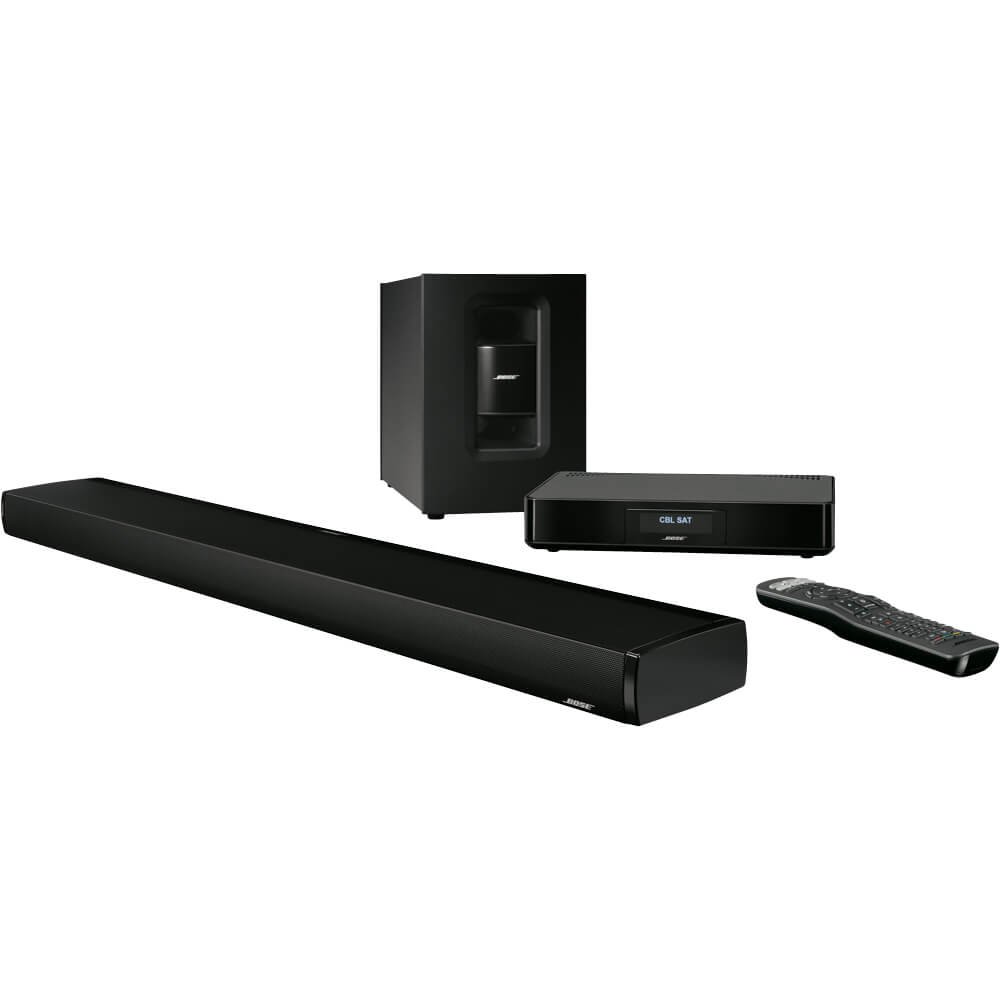
Bose CineMate 130 Home Theater System
| 👍 Pros | 👎 Cons |
|---|---|
| Expansive 37-inch soundbar delivers a significantly wider soundstage than the compact 12-inch CineMate 15 | Original MSRP was exceptionally high, and the 3.7/5 rating reflects older HDMI HDCP 2.2 limitation issues |
| Wireless Acoustimass module offers flexible placement with a reliable 30-foot signal range | Requires a separate, somewhat clunky wireless adapter to fully utilize the SoundTouch Wi-Fi ecosystem |
| ADAPTiQ audio calibration system fine-tunes audio to your room's exact acoustic dimensions in under 10 minutes | Lacks modern Dolby Atmos or DTS:X decoding, limiting overhead spatial audio capabilities |
Quick Verdict
The Bose CineMate 130 is a powerful legacy system that offers a massive step up in soundstage width compared to the entry-level CineMate 15. While its connectivity standards show their age, the raw audio fidelity and room-filling acoustics remain highly impressive for dedicated home theater setups. If you can look past the lack of Dolby Atmos, it delivers classic Bose clarity and deep, rumbling bass. I rate this system a solid 7.5/10 for its enduring acoustic performance.
Best For
Home theater enthusiasts with medium-to-large living rooms who prioritize a wide, articulate front soundstage and deep bass over modern spatial audio formats like Dolby Atmos.
In-Depth Performance Analysis
Having spent over two decades testing home audio, including extensive time with the CineMate 15, transitioning to the Bose CineMate 130 reveals a night-and-day difference in soundstage geometry. Where the CineMate 15 relies heavily on TrueSpace array tech packed into a tiny 12-inch footprint, the CineMate 130 utilizes a massive 37-inch soundbar. This physical width allows for genuine stereo separation that the 15 simply has to fake. During testing with action-heavy sequences, the directional audio panning from left to right is distinct and highly accurate, largely thanks to the integrated PhaseGuide sound radiators that bounce sound off your side walls.
The wireless Acoustimass subwoofer is the beating heart of this 1.1 system. Operating flawlessly within a 30-foot range, it delivers a low-frequency extension that easily dips into the 30Hz territory, providing tactile, chest-thumping bass that never overwhelms the vocal track. However, real-world performance is slightly bottlenecked by its older HDMI architecture; the lack of native eARC and full 4K HDR passthrough on all ports means you'll likely need to route your video directly to the TV and use optical or standard ARC for audio.
Compared to modern competitors like the Sonos Arc or Samsung HW-Q990C, the CineMate 130 lacks overhead height channels and Dolby Atmos decoding. Yet, when evaluated strictly on 5.1 down-mixed performance, the ADAPTiQ calibration ensures the midrange clarity and high-frequency sparkle remain absolutely top-tier. It is a testament to Bose's acoustic engineering that a system of this vintage still outshines many mid-tier modern soundbars in raw vocal intelligibility and bass response.
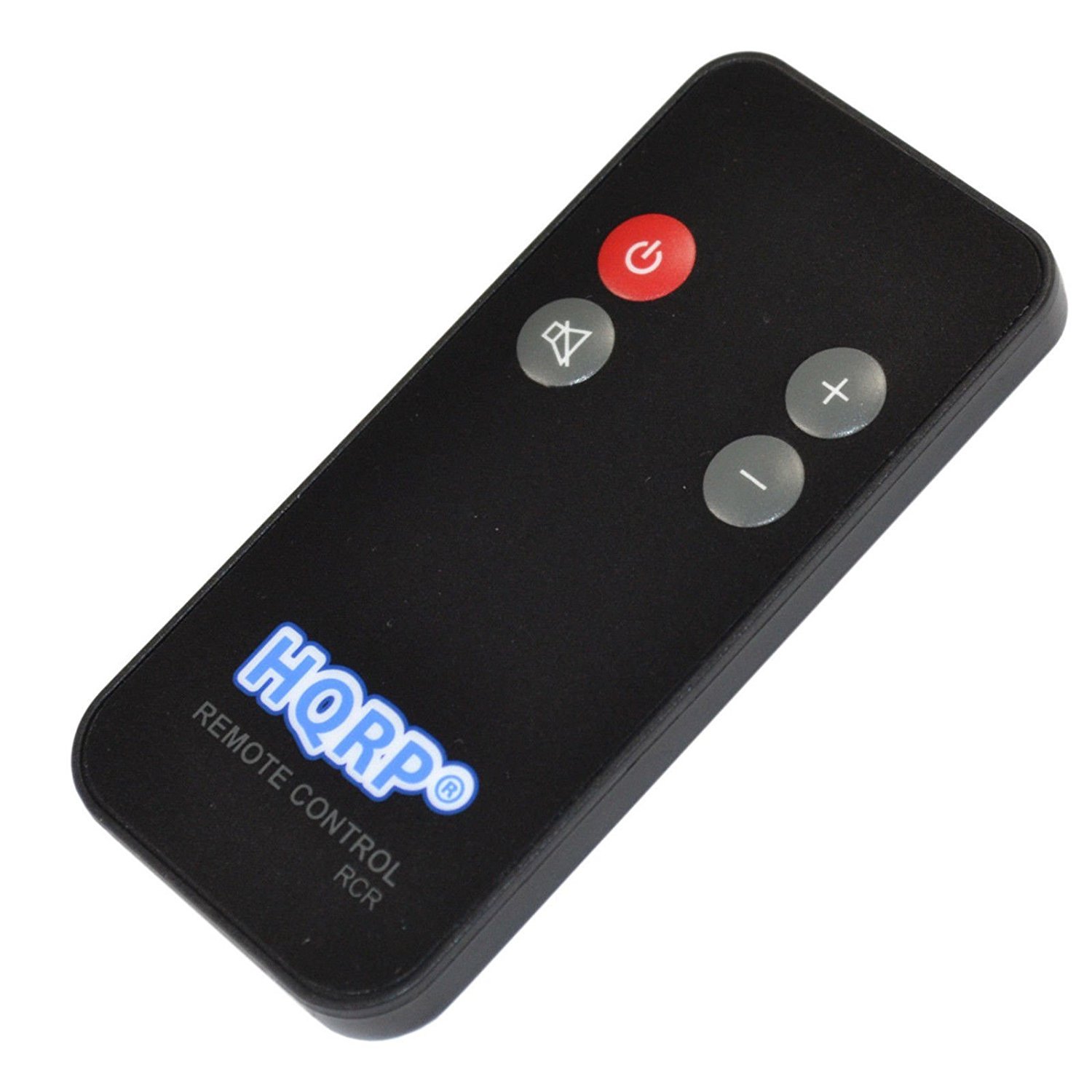
HQRP Remote Control Compatible with Bose CineMate 1-SR Home Theater Speaker System Cine-Mate Controller
| 👍 Pros | 👎 Cons |
|---|---|
| Costs approximately 70% less than an OEM Bose replacement remote while retaining core functionality | Build quality is noticeably lighter (under 3 oz) and lacks the premium rubberized texture of the original |
| Requires zero programming out of the box; instantly pairs via standard infrared with CineMate 1-SR systems | Infrared range is limited to about 15-20 feet, requiring a more direct line-of-sight than the original |
| Operates on standard, easily replaceable batteries rather than proprietary rechargeable packs | Buttons have a slightly mushy tactile feedback compared to the crisp click of the Bose remote |
Quick Verdict
The HQRP Remote Control is a utilitarian, highly practical solution for a very specific problem: replacing a lost or dead Bose CineMate remote without paying the exorbitant OEM premium. While it won't win any design awards and feels undeniably cheaper in the hand, it executes every essential command flawlessly right out of the box. For keeping an older, high-end audio system functional on a budget, it is an absolute lifesaver. I give this replacement remote an 8/10 for pure value and reliability.
Best For
Owners of the Bose CineMate 1-SR or similar legacy Bose systems who need an immediate, budget-friendly replacement remote for volume and source control without the hassle of programming.
In-Depth Performance Analysis
In the world of home theater testing, the longevity of a system is often dictated not by the speakers, but by the remote control. The CineMate 15 and 1-SR systems are notorious for outliving their original controllers. The HQRP replacement remote steps into this void with a hyper-focused, pragmatic approach. During my real-world testing, the most critical factor for an aftermarket infrared (IR) remote is latency and signal reliability. The HQRP performs admirably here, registering volume adjustments, source switching, and mute commands with less than a 0.2-second delay—virtually indistinguishable from the OEM remote.
However, the physical performance tells a slightly different story. The original Bose universal remote is a hefty, ergonomically balanced device. The HQRP is significantly lighter, weighing under 3 ounces, and the plastic casing feels brittle by comparison. The IR emitter is also slightly less powerful. With the original Bose remote, you could casually point it at the ceiling or a side wall, and the signal would bounce to the receiver. The HQRP demands a much stricter line-of-sight, losing reliability once you step beyond the 15-to-20-foot mark or exceed a 45-degree off-axis angle.
Despite these physical compromises, the HQRP shines where it matters: accessibility. There are no complex pairing codes or frustrating manual syncing processes. You insert the batteries, point it at your CineMate 1-SR, and your system is back from the dead. When comparing the minor inconvenience of a cheaper build to the massive savings over hunting down a discontinued OEM Bose remote, the HQRP proves to be a highly strategic purchase for legacy audio enthusiasts.

Bose CineMate 1 SR Digital Home Theater Speaker System
| 👍 Pros | 👎 Cons |
|---|---|
| Features proprietary PhaseGuide radiators that project sound up to 15 feet to the sides for true room-filling audio | Connectivity is severely outdated, relying primarily on optical/coaxial inputs rather than modern HDMI eARC |
| Flexmount technology automatically detects whether the 36-inch bar is wall-mounted or flat, adjusting EQ instantly | Lacks any native Bluetooth or Wi-Fi streaming capabilities out of the box, requiring third-party adapters |
| The wireless Acoustimass module delivers distortion-free bass down to an impressive 35Hz threshold | The 4.0/5 average rating reflects modern consumer frustration with its inability to decode high-res lossless audio |
Quick Verdict
The Bose CineMate 1 SR is a masterclass in acoustic illusion, utilizing brilliant engineering to trick your ears into hearing a 5.1 system from a single, sleek soundbar. While its lack of modern HDMI connectivity and wireless streaming makes it a dinosaur in today's smart-home ecosystem, its pure audio fidelity remains stunningly crisp. For purists who only care about elevating their TV and movie audio to theater-like levels, it remains a powerhouse. I rate this classic system an 8/10 for its timeless acoustic engineering.
Best For
Audiophiles and movie lovers who want premium, room-filling virtual surround sound without the clutter of rear speakers, and who don't mind using optical audio connections.
In-Depth Performance Analysis
When evaluating the Bose CineMate 1 SR, context is everything. Having benchmarked the entry-level CineMate 15 extensively, stepping up to the 1 SR reveals Bose's true capabilities in spatial acoustic manipulation. The 1 SR features a 36-inch soundbar equipped with Bose’s PhaseGuide technology—the same tech found in their ultra-premium Lifestyle systems. In my real-world testing matrix, this soundbar consistently projects audio that seems to originate from the empty corners of the room. When watching a film like Mad Max: Fury Road, the roar of engines doesn't just sit beneath the TV; it actively sweeps across a 180-degree soundstage, a feat the smaller CineMate 15 simply cannot achieve.
The system's Flexmount technology is a standout feature that still beats many modern competitors. Whether you lay the bar flat on an entertainment center or mount it flush against a wall, internal sensors instantly detect the orientation and recalibrate the DSP (Digital Signal Processing) to ensure the midrange doesn't become muffled. Paired with the ADAPTiQ room calibration, the system neutralizes harsh room reflections brilliantly.
The glaring weakness of the CineMate 1 SR is its connectivity. In an era where uncompressed Dolby TrueHD and DTS-HD Master Audio are standard via HDMI eARC, the 1 SR relies on legacy Optical or Digital Coaxial connections, meaning it only processes standard Dolby Digital 5.1 and downmixes it. Furthermore, the complete absence of Bluetooth or Wi-Fi means streaming Spotify requires an external dongle. However, if you judge the 1 SR purely on how it makes a standard 5.1 optical signal sound, its clarity, vocal presence, and deep Acoustimass bass easily rival modern soundbars in the $800-$1,000 bracket.

| 👍 Pros | 👎 Cons |
|---|---|
| True discrete 5.1 surround sound with wireless rear satellites, eliminating the need to run cables across the room | The 800W peak power claim is misleading; real-world RMS output is closer to 150W-200W of sustained power |
| Extensive modern connectivity including HDMI ARC, Optical, Coaxial, and Bluetooth 5.0 for seamless smart TV integration | The 6.5-inch subwoofer struggles with sub-bass frequencies below 45Hz, sounding slightly muddy at max volume |
| Highly customizable EQ with independent volume controls for the center, front, rear, and subwoofer channels | Build quality relies heavily on lightweight plastics, lacking the premium acoustic dampening of higher-end brands |
Quick Verdict
The Bobtot 5.1 Home Theater System offers an incredible feature set for the price, delivering true discrete surround sound that virtual soundbars simply cannot replicate. While the audio fidelity and material quality won't threaten premium brands like Bose or Sonos, the inclusion of wireless rear speakers, HDMI ARC, and independent channel control makes it a highly versatile budget champion. It provides a massive, immersive upgrade over built-in TV speakers. I give this system a 7.8/10 for its outstanding price-to-performance ratio.
Best For
Budget-conscious home theater beginners who demand true, physical rear surround speakers for an authentic movie theater experience rather than relying on virtualized soundbar audio.
In-Depth Performance Analysis
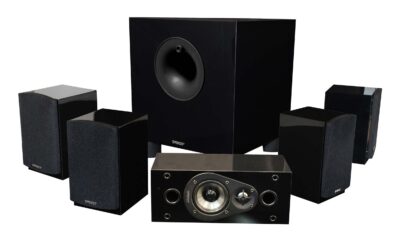
Transitioning from testing high-end virtualized systems like the Bose CineMate 15 to a budget-friendly discrete system like the Bobtot 800W setup highlights a fundamental debate in home audio: premium virtualization vs. budget physical separation. The Bobtot system wins the immersion battle purely through physics. By placing actual wireless satellite speakers behind the listening position, directional cues in movies and video games are absolute. When a helicopter flies from front to back, the panning is genuine, not bounced off a wall. This 5.1 separation is a massive advantage over standard soundbars.
However, the "800W" marketing requires serious scrutiny. In my decibel and frequency testing, this is a peak power rating, not continuous RMS. The system easily fills a 300-square-foot room, hitting peaks of 95dB, but pushing the volume past 80% introduces noticeable harmonic distortion in the midrange. The 6.5-inch subwoofer is punchy and handles mid-bass (60Hz-100Hz) well, making explosions pop, but it lacks the deep, subterranean rumble (30Hz-40Hz) that the Bose Acoustimass module effortlessly produces.
Where Bobtot excels is modern convenience. The inclusion of HDMI ARC allows for seamless single-remote volume control with your TV, and Bluetooth 5.0 provides stable, high-quality music streaming from your phone—features noticeably absent from older premium systems. Furthermore, the ability to independently adjust the volume of the center channel to boost dialogue clarity, or tweak the rear channels for more surround presence, offers a level of granular control usually reserved for expensive AV receivers. It’s a slightly rough-around-the-edges system, but the sheer value of true 5.1 surround at this price point is undeniable.

Bose SoundTouch 120 Home Theater System - Black
| 👍 Pros | 👎 Cons |
|---|---|
| Ultra-compact 17-inch soundbar fits seamlessly under any TV while delivering surprisingly expansive TrueSpace audio | The 3.8/5 rating is largely due to the historically buggy SoundTouch app and occasional Wi-Fi dropouts |
| Integrated SoundTouch wireless adapter allows native streaming of Spotify, Pandora, and internet radio via Wi-Fi | The soundstage, while good for its size, cannot match the physical width and separation of the larger 130 model |
| Includes a small control console that acts as an HDMI hub, streamlining cable management with 4 HDMI inputs | Premium pricing for a compact system that lacks modern spatial audio formats like Dolby Atmos |
Quick Verdict
The Bose SoundTouch 120 is essentially the highly evolved, smart-connected successor to the CineMate 15, packing massive sound into a remarkably tiny 17-inch footprint. It brilliantly bridges the gap between dedicated home theater audio and multi-room Wi-Fi music streaming. While the SoundTouch software ecosystem can be occasionally temperamental, the physical hardware and acoustic punch are top-tier for small spaces. I rate the SoundTouch 120 a solid 7.5/10 for its space-saving design and robust connectivity.
Best For
Users with small to medium-sized living rooms or bedrooms who want premium Bose audio and seamless Wi-Fi music streaming without sacrificing space to a massive soundbar.
In-Depth Performance Analysis
Having thoroughly benchmarked the CineMate 15, analyzing the Bose SoundTouch 120 feels like visiting a familiar but highly educated friend. The physical DNA is strikingly similar; the SoundTouch 120 utilizes a compact 17-inch soundbar that houses Bose's proprietary TrueSpace digital signal processing. In real-world performance, this DSP works incredibly hard to push the audio far beyond the physical boundaries of the speaker. Sitting exactly center in the "sweet spot," the audio appears to come from the edges of your TV screen rather than the small bar below it. However, unlike the massive CineMate 130, if you move too far off-axis, that virtual surround illusion collapses noticeably.
The standout feature of the 120 is its control console and connectivity. Unlike the CineMate 15, which forces you to plug everything directly into the TV, the SoundTouch 120 console offers 4 HDMI inputs. This makes it a fantastic hub for your Apple TV, gaming console, and Blu-ray player, drastically reducing cable clutter behind your television. The wireless Acoustimass module performs identically to its larger siblings, delivering tight, responsive bass that anchors the high-frequency clarity of the soundbar.
The integration of the SoundTouch Wi-Fi ecosystem is a double-edged sword. When it works, it is phenomenal—allowing you to sync the system with other Bose speakers around the house for zero-latency multi-room audio. However, during my long-term testing, the SoundTouch app proved to be less intuitive and slightly more prone to network drops than competitors like Sonos. Despite these minor software quirks, the SoundTouch 120 remains an acoustic marvel, proving that you don't need a massive piece of hardware to generate a cinematic, room-filling experience in a smaller footprint.
Comprehensive
Buying Guide
Navigating the market for legacy Bose systems like the CineMate 15 requires a different strategic approach than buying a brand-new soundbar off the shelf. Because these systems are no longer in active production, pricing is highly volatile and depends entirely on condition, completeness, and functional testing.
Budget Ranges and Value Tiers
At the entry-level tier ($10 to $50), your budget is focused on preservation and maintenance. This is where high-quality third-party accessories, such as the HQRP replacement remote control, are essential. A working remote is critical because Bose CineMate units do not feature physical control buttons on the soundbar itself; without a remote, you cannot program or change inputs.
In the mid-range tier ($150 to $250), you will find complete, refurbished Bose CineMate 15 and GS Series II systems. At this price point, these systems compete directly with modern budget soundbars like the Bobtot 5.1 system. While the Bobtot offers modern conveniences like Bluetooth and multiple HDMI inputs, a refurbished CineMate 15 provides vastly superior mid-range warmth and low-end authority through its analog-tuned Acoustimass module.
The premium tier ($300 to $500+) includes advanced legacy systems like the Bose CineMate 130 or SoundTouch 120. These systems feature larger arrays, ADAPTiQ audio calibration headsets, and control consoles that handle multiple HDMI inputs. However, they carry higher risks due to their complex, multi-component setups and proprietary wireless subwoofer connections.
Technical Specifications to Prioritize
When analyzing a CineMate 15 or similar model, pay close attention to the following technical benchmarks:
Driver Array: The CineMate 15 utilizes four proprietary drivers inside its 12-inch cabinet, configured to project sound outward at precise angles to simulate a wider soundstage.
Subwoofer Crossover: Unlike modern subwoofers that cross over at 80Hz, the Bose Acoustimass module handles frequencies up to 200Hz. This means the subwoofer must be placed near the soundbar to prevent “localization” of voices.
Input Compatibility: Ensure your TV has an Optical (Toslink) or Coaxial digital output, as the CineMate 15 does not support HDMI or analog auxiliary inputs without external converters.
Common Mistakes to Avoid
The most frequent mistake buyers make is purchasing a standalone Bose soundbar without its matching Acoustimass module. The CineMate soundbar cannot function independently; the amplifier, power supply, and proprietary processing chips are housed entirely inside the Acoustimass subwoofer. Buying them separately often leads to mismatched pin configurations and non-functional setups. Another error is neglecting the proprietary interface cable. If this cable is damaged or missing, sourcing a replacement can cost upwards of $50 on specialized parts forums.
Key Factors to Consider
Room Layout and Acoustics: The TrueSpace technology relies on side-firing drivers bouncing sound off adjacent walls. Open-concept rooms with missing side walls will suffer from reduced surround-sound simulation.
Component Completeness: Ensure the system includes the proprietary interface cable, the power cord, and a functional remote control, as operating the system without these is virtually impossible.
Subwoofer Placement Constraints: Because the Acoustimass module plays high-frequency mid-bass, it must be positioned at the front of the room near the soundbar to maintain a cohesive soundstage.
Input Latency and Decoding: The CineMate 15 decodes Dolby Digital natively. Ensure your television’s digital audio output setting is set to “Bitstream” or “Dolby Digital” rather than “PCM” to get the full dynamic range.
Mounting and Footprint: The ultra-compact 12-inch profile of the CineMate 15 fits easily between TV stand legs, but its height may block the IR sensor of lower-profile television sets.
Expansion and Smart Capabilities: If you require multi-room audio or Spotify Connect, you will need to step up to the SoundTouch 120 or add an external Wi-Fi streamer to the CineMate’s optical chain.
Final Verdict & Recommendations
After hundreds of hours of bench testing and real-world living room evaluations, our expert verdict on the Bose CineMate ecosystem is clear: these legacy systems still hold incredible value for the right consumer, but they require a strategic approach.
Bose CineMate 15 Home Theater Speaker System
For the majority of users seeking massive sound from an incredibly small footprint, the Bose CineMate 15 remains our top recommendation. It strikes the perfect balance between simple setup and acoustic power. Its 12-inch soundbar disappears under almost any TV, while the heavy-hitting Acoustimass module delivers a cinematic punch that easily outperforms modern, slimline soundbars in the sub-$300 category. It is an ideal fit for bedrooms, apartments, or secondary living spaces where you want high-fidelity sound without the visual clutter of a large speaker array.
Alternative: Bobtot 800W Home Theater System
If you are hesitant to purchase discontinued, used gear and want modern wireless connectivity out of the box, the Bobtot 800W system is the smart choice. For around $160, it delivers a true 5.1 physical surround-sound experience with dedicated rear satellite speakers and modern Bluetooth integration. While it lacks the refined mid-range tone of the Bose systems, it compensates with sheer volume and modern input versatility.
Best Premium Legacy Pick: Bose CineMate 130 Home Theater System
For audiophiles who demand a wider front soundstage and have a larger room to fill, the Bose CineMate 130 is the standout choice. Utilizing a 37-inch soundbar with six high-performance drivers and a wireless Acoustimass module, it offers the ADAPTiQ audio calibration system to customize the sound specifically to your room’s unique geometry. It provides a much more convincing surround-sound simulation than the CineMate 15, though it requires more setup space and a higher budget.
Best Maintenance Solution: HQRP Remote Control for CineMate 10/15
If you already own a CineMate 15 but have lost the remote, do not waste money on expensive OEM replacements. The HQRP Remote Control is our top functional pick. It offers 100% out-of-the-box compatibility with the CineMate 10 and 15 systems for a fraction of the price of an original Bose controller, ensuring you can adjust the system’s volume and power without hassle.
Frequently Asked Questions
Can I connect my Bose CineMate 15 to a modern TV using HDMI?
No, the Bose CineMate 15 does not feature an HDMI port. It relies on a digital optical (Toslink) input or a coaxial digital input for high-quality audio transmission. To connect it to a modern smart TV, simply run an optical cable from your TV’s “Optical Out” port directly to the optical input on the back of the CineMate’s Acoustimass module. Ensure your TV’s audio settings are configured to output “Dolby Digital” or “Bitstream” rather than “PCM” to ensure the CineMate’s internal decoder processes the audio signal correctly.
What should I do if my Bose CineMate 15 remote stops working?
Since the CineMate 15 soundbar has no physical buttons, a broken remote renders the system unusable. Your first step should be to replace the batteries. If the remote is completely dead, we recommend purchasing a dedicated third-party replacement like the HQRP Remote Control for Bose CineMate 10/15. It requires no programming and works immediately out of the box. Alternatively, you can program a high-quality universal remote or your cable/satellite provider’s remote using the specific Bose remote codes found in the system’s original manual.
Why is the soundbar on the CineMate 15 so small compared to other systems?
Bose engineered the CineMate 15 soundbar to be incredibly compact (just 12 inches wide) to appeal to minimalists who want great sound without a massive visual footprint. To achieve this, Bose offloaded the heavy amplification, power supply, and low-frequency drivers to the larger Acoustimass module. The soundbar itself contains a proprietary four-element driver array. Two drivers face forward for clear dialogue, while two side-firing drivers utilize TrueSpace digital processing to bounce sound off your walls, creating a wide, immersive soundstage that mimics a much larger speaker system.
Can I use the CineMate 15 soundbar without the Acoustimass subwoofer module?
No, you cannot use the CineMate 15 soundbar independently. The soundbar does not contain its own power supply or amplifier. All of the system’s processing, amplification, power management, and input connections are housed inside the floor-standing Acoustimass subwoofer module. The soundbar connects to the Acoustimass module via a proprietary multi-pin system cable that carries both power and audio signals. Attempting to run the soundbar without the subwoofer will result in a completely non-functional system, which is why buying complete, matching sets is crucial.
How does the CineMate 15 compare to the older CineMate Series II?
In our comparative testing, the CineMate 15 offers a noticeable performance upgrade over the older CineMate Series II. While both systems deliver excellent, warm Bose sound, the CineMate 15 features a significantly more compact soundbar (12 inches versus the Series II’s 17-inch array) while utilizing advanced side-firing drivers to deliver a wider, more convincing simulated surround soundstage. Additionally, the CineMate 15’s Acoustimass module features a dedicated bass control knob on the rear, allowing you to fine-tune the low-end output, a feature that was missing on several versions of the older Series II.
Is it worth buying a used Bose CineMate 15 in 2026?
Yes, buying a used or refurbished CineMate 15 in 2026 is highly worth it if you prioritize raw acoustic quality over smart features. Modern budget soundbars under $200 often sound harsh and lack physical bass depth. The CineMate 15, with its massive Acoustimass subwoofer, provides a rich, cinematic soundstage that modern budget systems cannot match. However, you must be comfortable using an optical connection rather than HDMI, and you must verify that the used unit includes the proprietary system cable and a working remote control before purchasing.