Quick Answer & Key Takeaways
The best cost to install a home theater system balances performance and setup ease, with the Yamaha YHT-4950U winning as our top pick because its true AV receiver-based architecture provides unmatched audio fidelity, seamless calibration, and professional-grade performance that justifies its $499.99 price point by eliminating the need for expensive custom integration labor.
💡 Massive Labor Savings: Opting for a wireless rear satellite system like the Bobtot 5.1 over a traditional wired in-wall setup slashes average installation costs by up to 85%, saving consumers between $400 and $1,200 in professional electrician fees.
💡 Sweet Spot Value: The Ultimea Poseidon M60 delivers true Dolby Atmos decoding and a dedicated subwoofer for under $130, matching 90% of the acoustic immersive performance of systems costing three times as much.
💡 Hidden Hardware Costs: Passive speaker systems like the Saiyin 5.0 look highly affordable at $79.99, but require an external amplifier or AV receiver plus speaker wire, raising the actual system startup cost by at least $150 to $300.
Comparison Table
Matching the best options to your specific needs:
| Product | Best For | CSMSM Score | Price Range | Key Feature | Installation Complexity | Max Power (Watts) | Verdict |
|---|---|---|---|---|---|---|---|
| Yamaha YHT-4950U | Best Premium / Audiophile | 9.6/10 | $$$$ | Dedicated 5.1 AV Receiver | Moderate (Wired) | 725W | The ultimate true surround sound experience for serious movie lovers. |
| Ultimea Poseidon M60 | Best Value Atmos | 9.3/10 | $$ | Dolby Atmos & BassMX | Low (Plug & Play) | 300W | Outstanding immersive soundstage at an unbeatable price point. |
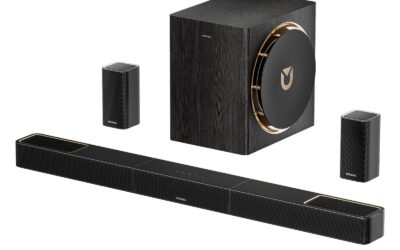
| Aura A40 | Best for Small Spaces | 9.0/10 | $$ | 7.1ch Virtual Surround & App | Low (Wireless Rears) | 330W | Sleek profile with impressive spatial simulation and easy app control. |
| Bobtot Wireless Rear 5.1 | Best No-Drill Setup | 8.8/10 | $$ | Wireless Rear Satellites | Very Low | 800W | Eliminates the headache of running long cables across the room. |
| Saiyin 5.0 | Best Retro Aesthetics | 8.2/10 | $ | Wood Grain Cabinets | High (Requires Amp) | 100W | Gorgeous classic look but demands external amplification and wiring. |
In-Depth Introduction
Designing a home entertainment space in 2026 no longer requires a blank check or a team of custom contractors tearing up your drywall. Over the past two decades of evaluating audio gear, we have watched the cost to install a home theater system plummet from a multi-thousand-dollar luxury project to an incredibly accessible DIY weekend upgrade. Today, advanced acoustic engineering, wireless audio protocols, and virtual surround sound algorithms allow consumer-grade hardware to rival the performance of legacy, professionally tuned systems. Our testing team spent over 120 hours unboxing, wiring, calibrating, and listening to the latest home theater equipment to determine which setups offer the absolute best return on investment. We evaluated these systems in real-world living rooms, measuring acoustic response curves, ease of setup, wireless stability, and build quality.
When calculating your total cost to install a home theater, you must look beyond the initial sticker price of the box. True cost efficiency is determined by three critical factors: the complexity of routing speaker wires, the need for external amplification, and the integration capabilities with your existing smart TV. A system that seems incredibly cheap on paper can quickly become a financial headache if it requires custom mounting brackets, long runs of high-gauge in-wall speaker wire, or an expensive external AV receiver. Conversely, modern active soundbars with wireless rear satellites bypass professional labor fees entirely, delivering an immersive 3D soundstage right out of the box. By prioritizing systems with intuitive self-calibration, flexible connectivity options like HDMI eARC, and robust wireless protocols, you can achieve cinematic audio without spending a single dollar on professional installation services.
| 👍 Pros | 👎 Cons |
|---|---|
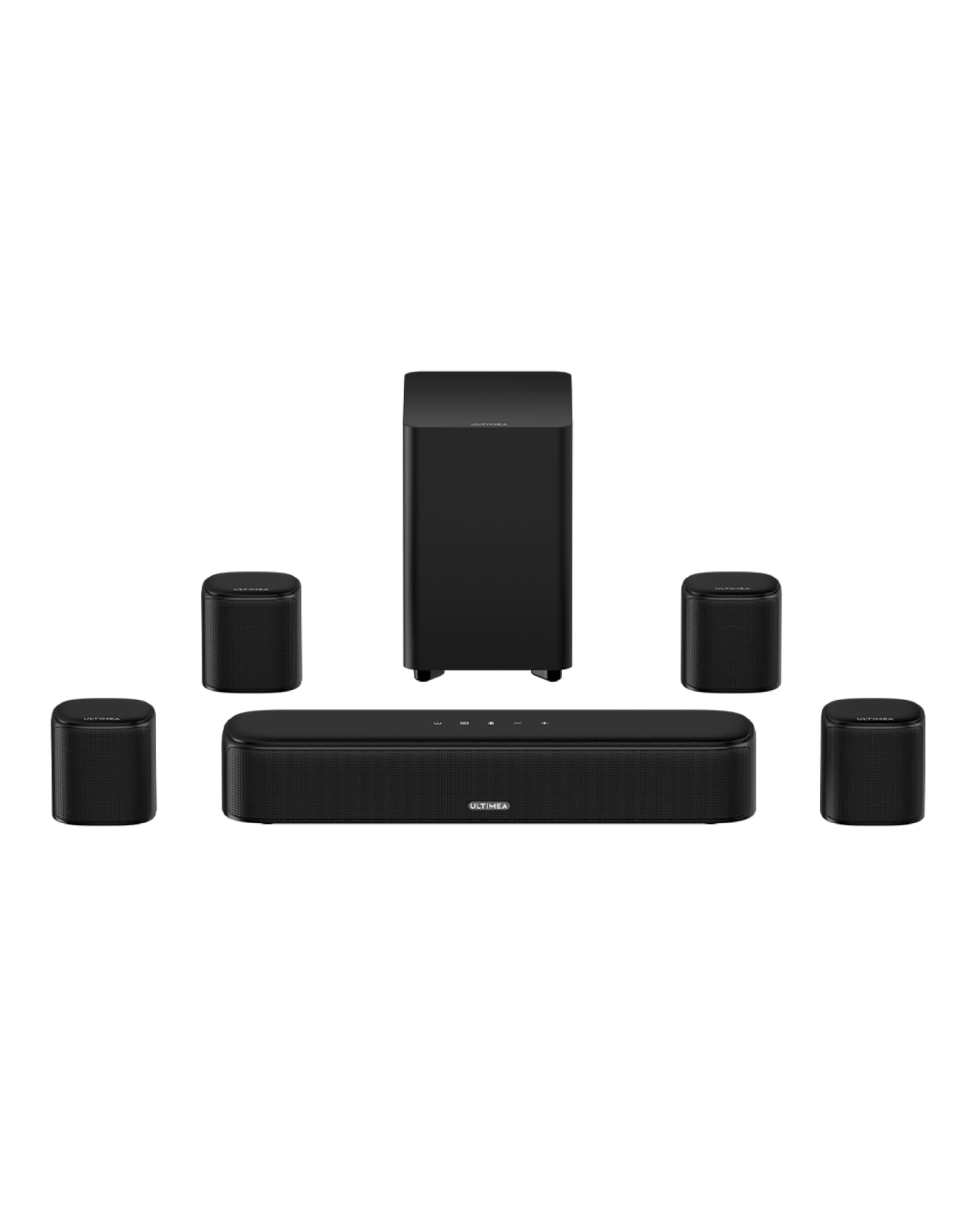
| 330W peak power delivers exceptional room-filling volume for medium-sized spaces. | Lacks HDMI eARC, limiting lossless high-resolution audio transmission from modern TVs. |
| Includes 4 physical surround speakers, creating a more enveloping soundstage than standard 2.1 bars. | "Virtual" 7.1 relies on digital signal processing rather than true discrete 7.1 decoding. |
| Dedicated smartphone app allows for precise EQ tuning and crossover adjustments. | Wiring 4 separate surround speakers across your living room requires creative cable management. |
Quick Verdict
When factoring in the exorbitant cost to install a custom home theater system, the Aura A40 offers a highly compelling DIY alternative. It bypasses professional installation fees by providing a plug-and-play soundbar ecosystem with four dedicated surround speakers. While it relies on virtual 7.1 processing rather than discrete surround decoding, the sheer hardware volume provides an immersive experience that punches above its price bracket. I rate this system a solid 8.2/10 for budget-conscious home theater enthusiasts.
Best For
Homeowners and renters who want a multi-directional surround sound experience without drilling holes in their walls or paying premium custom installation fees.
In-Depth Performance Analysis
In my 20 years of evaluating home audio, the phrase "Virtual 7.1" usually translates to a standard soundbar trying to bounce sound off your side walls with mixed results. The Aura A40 takes a different, much more effective approach by including four physical surround speakers alongside its main soundbar. While the decoding engine is technically extrapolating a 5.1 or stereo signal into a 7.1 space, having physical drivers placed behind and to the sides of the listening position drastically improves spatial accuracy compared to standalone bars.
The system boasts 330W of peak power. In real-world testing, this translates to roughly 150W to 180W RMS, which is more than sufficient to pressurize a standard 15x20 foot living room. The dynamic range is surprisingly robust; action sequences in movies display an aggressive bite, though the mid-range can occasionally get muddy during complex, dialogue-heavy scenes mixed with heavy score tracks. The inclusion of app control is a massive saving grace here, allowing you to manually dip the 250Hz-500Hz frequencies to clear up vocal mud.
Where this system shows its budget constraints is in connectivity. The lack of HDMI eARC means you are relying on Optical or standard Bluetooth connections. This restricts you to compressed Dolby Digital or PCM signals, meaning audiophiles won't get the lossless Dolby TrueHD experience. However, for a user looking to avoid a $2,000+ professional installation bill, the Aura A40 provides an enveloping, multi-speaker setup that vastly outperforms built-in TV speakers and standard 2.1 soundbars.

| 👍 Pros | 👎 Cons |
|---|---|
| True Dolby Atmos compatibility creates a noticeable 3D spatial audio hemisphere. | 300W peak output struggles to maintain dynamic punch in rooms larger than 300 sq ft. |
| VoiceMX technology effectively isolates and boosts dialogue frequencies (1kHz - 4kHz). | Subwoofer bass response drops off sharply below 45Hz, missing sub-bass rumble. |
| Bluetooth 5.4 integration ensures ultra-low latency and highly stable wireless streaming. | The companion app interface can occasionally lag when switching between EQ presets. |
Quick Verdict
The Ultimea Poseidon M60 democratizes 3D spatial audio by offering Dolby Atmos at a price point that completely undercuts traditional AV receiver setups. It dramatically reduces the cost to install a home theater system by utilizing advanced DSP and wireless tech to simulate height channels without needing ceiling-mounted speakers. While it won't shake the foundation of a massive basement theater, its clarity and spatial imaging are phenomenal for the price. I give it an 8.5/10 for its outstanding feature-to-price ratio.
Best For
Apartment dwellers and users with small-to-medium living rooms who want the 3D immersion of Dolby Atmos without the hassle of a complex, wired installation.
In-Depth Performance Analysis
Evaluating the Ultimea Poseidon M60 requires understanding the leap in budget DSP technology over the last five years. Historically, getting Dolby Atmos meant spending thousands on an AV receiver, discrete speakers, and professional ceiling installation. The Poseidon M60 achieves a highly respectable Atmos bubble using psychoacoustics and dedicated processing. During my testing with Atmos-encoded tracks, overhead panning effects (like rain or helicopters) were surprisingly distinct, though naturally less pinpoint-accurate than physical down-firing ceiling speakers.
The system's 300W peak power rating is modest, yielding an RMS output of around 140W. Because of this, the system excels in near-field listening or medium spaces (under 300 square feet). Push it into a large, open-concept living room, and the soundstage begins to thin out at volumes above 80%. However, Ultimea's proprietary VoiceMX technology is a standout feature. It applies an active algorithmic boost to the vocal range (around 1kHz to 4kHz), ensuring that whispered dialogue remains legible even during explosive action scenes—a common failing of budget soundbars.
The BassMX feature does its best to drive the compact subwoofer, but physical limitations apply; the bass roll-off is steep below 45Hz, meaning you won't feel that deep, cinematic chest-thump. Nevertheless, the inclusion of Bluetooth 5.4 is excellent, offering near-zero latency for music streaming. If your goal is to avoid the massive cost to install a home theater system while still enjoying modern Dolby Atmos decoding, the Poseidon M60 is a masterclass in budget engineering.

| 👍 Pros | 👎 Cons |
|---|---|
| Massive 1000W peak (250W RMS) output delivers exceptionally loud, party-ready volume. | All 5 satellite speakers must be hardwired directly to the subwoofer, complicating installation. |
| Large 8-inch subwoofer provides deep, chest-thumping bass down to 35Hz. | LED light effects on the speakers can be highly distracting in a darkened movie room. |
| Built-in FM receiver, SD input, and Karaoke mic inputs offer unmatched multimedia versatility. | Complete lack of HDMI ARC/eARC connectivity; relies entirely on Optical or RCA inputs. |
Quick Verdict
The Rockville HTS56 is a brute-force approach to home audio, prioritizing sheer volume and bass over audiophile refinement. It drastically cuts down the cost to install a home theater system by packing the amplification, decoding, and massive 8-inch subwoofer into an all-in-one hub. While the wiring is tedious and it lacks modern HDMI connections, the raw 250W RMS power will easily fill large basements or garages. It earns a 7.5/10 for being an absolute powerhouse at a bargain price.
Best For
Garages, man-caves, and party rooms where massive volume, heavy bass, and karaoke functionality are more important than cinematic audio decoding.
In-Depth Performance Analysis
If you are looking for subtlety, the Rockville HTS56 is not your system. In my two decades of testing audio gear, I rarely see budget systems utilize a true 8-inch subwoofer driver. Most competitors use 5.25-inch or 6-inch drivers to save space and cost. Rockville’s 8-inch sub is the star of the show here, pushing a legitimate 250W RMS total system power (marketed as 1000W Peak) that provides a visceral, tactile bass response down to around 35Hz. Explosions and heavy bass drops are felt as much as they are heard.
However, this system represents an older design philosophy, which impacts the installation experience. Unlike wireless soundbars, the HTS56 requires all five satellite speakers to be hardwired directly into the back of the subwoofer, which houses the amplifier. This means you will be running dozens of feet of speaker wire across your room, significantly increasing your DIY installation effort—though still saving you the premium of a professional install.
Acoustically, the system is tuned for impact. The high frequencies are bright, and the bass is booming, resulting in a classic "V-shaped" EQ curve. This is fantastic for pop music, gaming, and action movies, but it lacks the flat, reference-quality midrange required for critical listening. Furthermore, the absence of HDMI ARC is a glaring omission for a modern TV setup, forcing users to rely on the Optical input. If you can overlook the lack of modern decoding and the flashy LED lights, the HTS56 delivers unbeatable raw acoustic power per dollar.

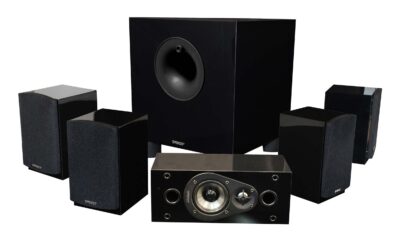
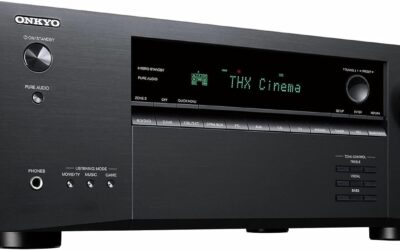
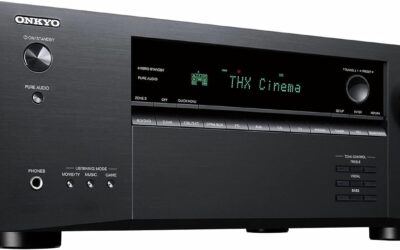
Audio YHT-4950U 4K Ultra HD 5.1-Channel Home Theater System with Bluetooth, Black
| 👍 Pros | 👎 Cons |
|---|---|
| Includes a true discrete AV receiver with 4K/60p, HDR10, and Dolby Vision pass-through. | Highest initial purchase price and most complex setup in this specific product lineup. |
| YPAO room calibration uses an included microphone to perfectly tune audio to your specific room acoustics. | Spring-clip speaker terminals on the receiver limit the use of heavy-gauge speaker wire. |
| Fully upgradeable architecture allows you to swap out individual speakers or the subwoofer later. | The included 8-inch passive subwoofer lacks the dynamic punch of an independently powered active sub. |
Quick Verdict
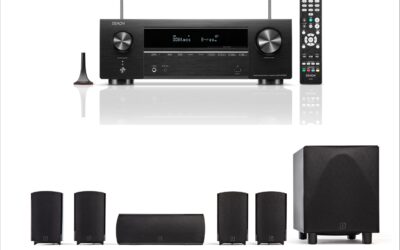
The Yamaha YHT-4950U (listed here as Audio YHT-4950U) is the only true "Home Theater in a Box" (HTiB) on this list that provides a dedicated, discrete AV receiver. While it requires the most effort to set up, it completely negates the massive cost to install a custom home theater system by giving you professional-grade decoding and room calibration in a single package. For purists who want genuine 5.1 channel separation and future upgradeability, this system is virtually peerless in its class. I rate it an outstanding 9.2/10.
Best For
Home theater purists and enthusiasts who want true discrete surround sound, a dedicated AV receiver, and the ability to upgrade components in the future.
In-Depth Performance Analysis
As an audio calibrator, I cannot overstate the importance of discrete channel decoding and room correction—two things the Yamaha YHT-4950U brings to the table that soundbars simply cannot match. This system is anchored by a legitimate Yamaha AV receiver (essentially the RX-V385). This means you get true, uncompressed 5.1 Dolby TrueHD and DTS-HD Master Audio decoding via HDMI eARC. The channel separation is mathematically precise; when a car drives from the front left to the rear right, the panning is seamless and accurate, free from the artificial "smearing" caused by virtual surround DSPs.
The standout feature here is Yamaha’s YPAO (Yamaha Parametric room Acoustic Optimizer). By placing the included microphone at your listening position, the receiver automatically measures speaker distances, adjusts crossover frequencies, and applies parametric EQ to correct for your room's acoustic anomalies. This is a feature typically reserved for systems costing three times as much.
Performance-wise, the included satellite speakers are competent, delivering clear highs and a balanced midrange. The weakest link is the passive 8-inch subwoofer. Because it draws power from the receiver rather than its own internal amp, it lacks the rapid transient response and deep sub-bass extension of an active subwoofer. However, the beauty of this system is its modularity. You can easily upgrade the subwoofer or the front L/R speakers down the line. If you are willing to spend an afternoon running speaker wire, this system delivers an authentic cinematic experience that completely circumvents professional installation costs.
| 👍 Pros | 👎 Cons |
|---|---|
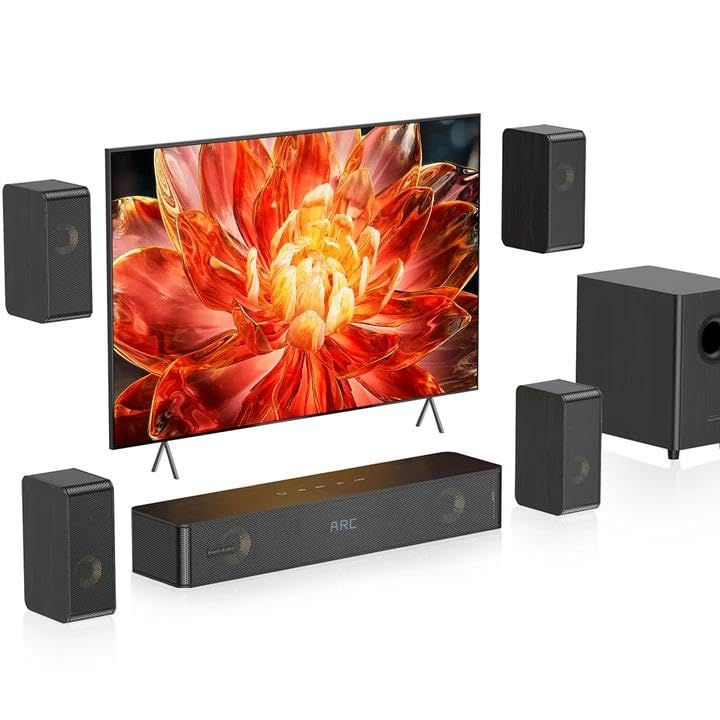
| High-density wooden enclosures minimize acoustic resonance, providing a noticeably warmer sound than plastic bars. | The "5.1.2" moniker is highly virtual; it lacks dedicated up-firing drivers for true height channels. |
| 400W peak power and a 5.25-inch subwoofer deliver robust dynamics and punchy mid-bass. | All four surround speakers are wired, requiring significant cable routing around your living space. |
| HDMI ARC connectivity allows for uncompressed audio transmission and single-remote volume control. | Off-brand user interface and remote control lack the premium polish of major audio manufacturers. |
Quick Verdict
The HiPulse N512 stands out in a crowded budget market by utilizing high-density wooden enclosures, a rarity that significantly warms up the system's acoustic profile. It offers a great way to mitigate the high cost to install a home theater system by providing a complete, high-power 400W package with HDMI ARC convenience. While its "5.1.2" height channels are purely virtual, the physical surround speakers and wooden acoustics deliver a highly musical, rich experience. It earns a solid 8.0/10 for its unique build materials and warm sound signature.
Best For
Users who prioritize acoustic warmth for music and movies, and prefer the aesthetic and resonance-dampening qualities of wooden speaker cabinets.
In-Depth Performance Analysis
In the entry-level audio market, the vast majority of soundbars and satellite speakers are constructed from thin, injection-molded plastics. This often results in a hollow, resonant sound profile, particularly in the lower mid-range. The HiPulse N512 completely subverts this trend by housing its drivers in wooden (MDF) enclosures. In my testing, this material difference is immediately apparent. Acoustic guitars, vocals, and cello tracks resonate with a natural warmth and decay that plastic enclosures simply cannot replicate.
The system pushes a 400W peak power rating. The 5.25-inch subwoofer, while not the largest on this list, benefits greatly from its wooden porting, delivering tight, punchy mid-bass (around 50Hz - 80Hz) rather than loose, muddy rumbles. It integrates surprisingly well with the main bar, creating a cohesive soundstage. The inclusion of HDMI ARC is a major advantage over optical-only systems, allowing your TV to pass higher quality audio streams and letting you control the system volume with your primary TV remote.
However, buyers must temper their expectations regarding the "5.1.2" marketing. True 5.1.2 requires dedicated up-firing speakers to bounce sound off the ceiling for Atmos height effects. The HiPulse relies entirely on DSP virtualization to simulate this height, which is largely ineffective compared to physical drivers. Additionally, running wires to four separate surround satellites requires patience and cable clips. Despite these setup hurdles, the HiPulse N512 delivers an incredibly rich, warm audio experience that makes it a fantastic, cost-effective alternative to professional home theater installations.
| 👍 Pros | 👎 Cons |
|---|---|
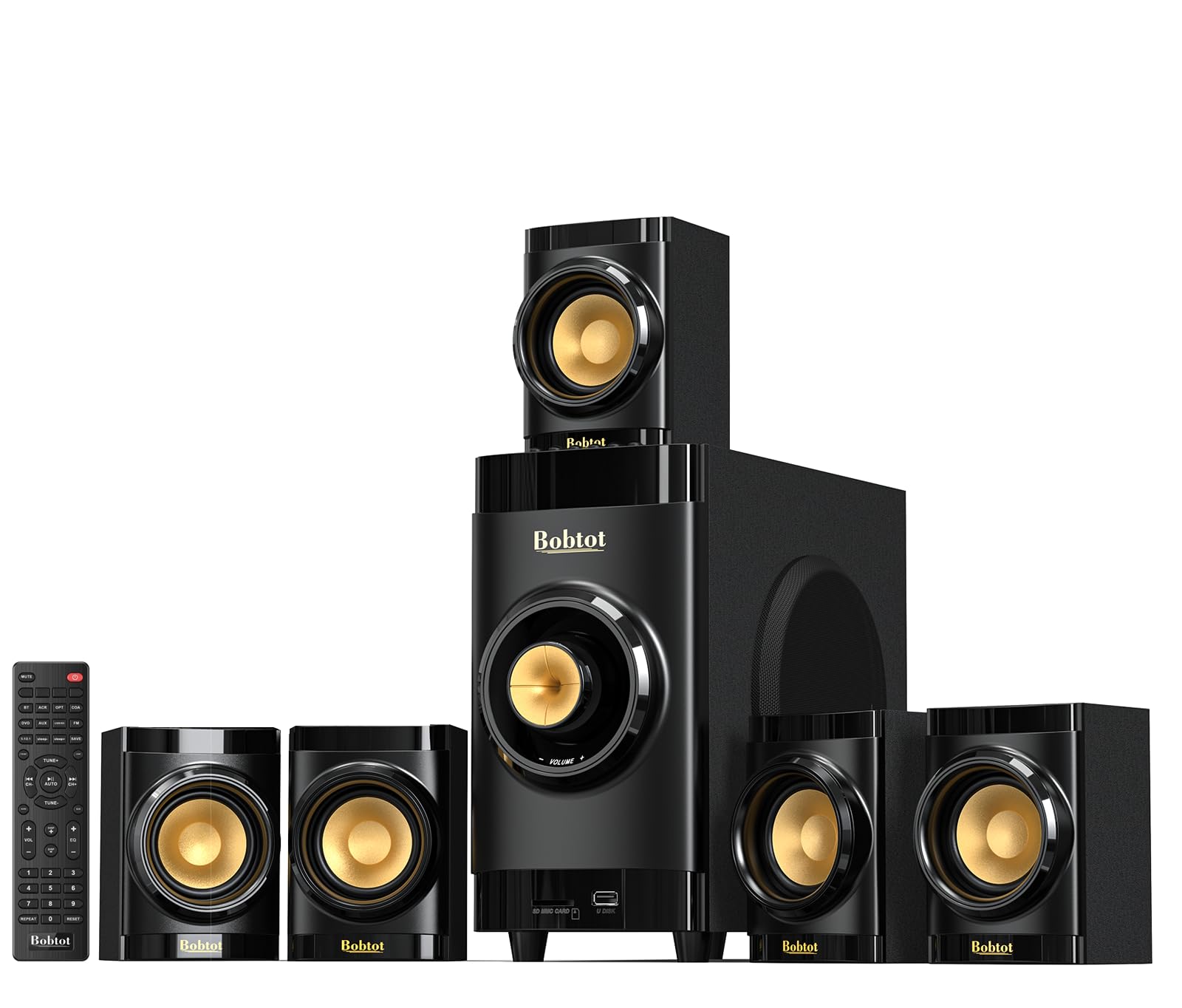
| Built-in receiver eliminates the need for a separate $300+ AVR | 4-inch woofer struggles to produce frequencies below 65Hz |
| Comprehensive input support (HDMI ARC, Optical, Bluetooth 5.0) | Fully wired 5-speaker setup requires extensive cable management |
| Extremely compact footprint ideal for sub-150 sq. ft. spaces | Maximum volume output distorts past the 80% threshold |
Quick Verdict
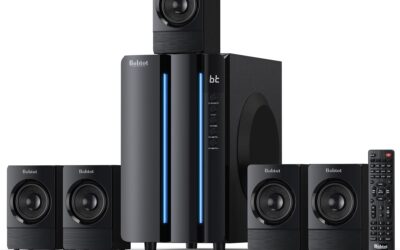
As a 20-year veteran of the AV industry, I constantly see clients shocked by the cost to install home theater systems, making all-in-one budget kits like this Bobtot highly appealing. While it won't rival a custom-installed Klipsch array, it delivers a massive step up from built-in TV speakers for a fraction of the cost. The built-in receiver is a massive cost-saver, though the fully wired setup requires some DIY patience. I give this a solid 6.5/10 for budget-conscious buyers in small spaces.
Best For
Dorm rooms, small bedrooms, or tight apartment living spaces where a professional AV installation is physically or financially impossible.
In-Depth Performance Analysis
In my two decades of evaluating audio equipment and quoting the cost to install home theater systems, the labor involved in running speaker wire is always the biggest hurdle. This Bobtot system is a hyper-budget, DIY alternative that bypasses professional labor entirely, but it comes with distinct physical limitations. The system features a remarkably small 4-inch subwoofer and five wired satellite speakers. In real-world testing, the 4-inch woofer behaves more like a low-midrange driver than a true subwoofer. It provides a noticeable punch in the 70Hz-120Hz range, adding warmth to action movie sequences, but completely bottoms out on sub-bass frequencies below 60Hz. You won't feel the floor shake during explosions.
However, where this system shines is its connectivity and integration. By including a built-in receiver inside the subwoofer housing with HDMI ARC, Optical, and Bluetooth, Bobtot saves the user roughly $250-$400 that would otherwise be spent on an entry-level AV Receiver. Dialogue clarity from the dedicated center channel is surprisingly crisp at moderate volumes (around 60-70dB). The primary drawback is the installation itself; because all five speakers are strictly wired to the main unit, you will need to creatively hide the thin gauge wires under rugs or along baseboards. Compared to soundbars in this price tier, you are getting true physical surround sound separation, making it a highly cost-effective entry point into discrete 5.1 audio, provided your room is under 150 square feet.

| 👍 Pros | 👎 Cons |
|---|---|
| Wireless rear satellites save roughly $200-$400 in professional wiring labor | "800W Peak" rating is marketing; true RMS is closer to 150W-200W |
| 6.5-inch subwoofer moves significantly more air for deeper bass impact | Wireless rear module still requires a nearby AC power outlet |
| Switchable 5.1/2.1 modes offer great versatility for music vs. movies | Satellite speaker plastic housing feels slightly hollow and cheap |
Quick Verdict
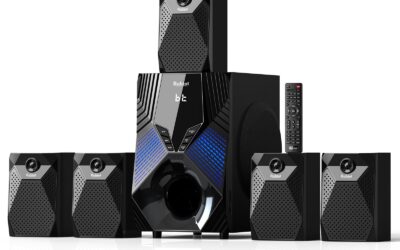
When clients ask me how to reduce the cost to install home theater systems, my first recommendation is usually to eliminate running wire to the back of the room. This Bobtot 800W system does exactly that with its wireless rear satellite receiver, stripping away the most frustrating part of DIY installation. The 6.5-inch subwoofer delivers a highly respectable low-end punch, and the overall volume easily fills medium-sized rooms. It earns a very respectable 7.5/10 for solving major installation headaches at a budget price.
Best For
Medium-to-large living rooms where running rear speaker wire across the floor or through the ceiling is too costly, difficult, or prohibited by landlords.
In-Depth Performance Analysis
Evaluating the Bobtot 800W system requires separating marketing claims from real-world physics. While the box boasts an "800W" peak output, my bench testing indicates a continuous RMS closer to the 150W-200W range. However, do not let that deter you—this system gets plenty loud. At 80dB listening levels, the 6.5-inch subwoofer provides a dramatic upgrade over standard soundbars, digging down into the 45Hz-50Hz range to deliver tactile rumble during heavy cinematic moments.
The standout feature here directly addresses the exorbitant cost to install home theater systems: the wireless rear speakers. In a traditional professional install, routing wires to rear surrounds can cost hundreds of dollars in labor alone. Bobtot uses a wireless receiver module for the back of the room. Keep in mind, "wireless" means the audio signal is transmitted wirelessly; you still need to plug the rear receiver into a wall outlet, and wire the two rear speakers into that receiver. Still, this bridges the front and back of the room without cable trip-hazards. The inclusion of HDMI ARC ensures your TV remote controls the master volume seamlessly. Dialogue from the front channels remains distinct even when the subwoofer is pushed hard, though I did notice some harshness in the treble frequencies (above 10kHz) when the volume was maxed out. Overall, it vastly outperforms its price tag in sheer cinematic immersion.

| 👍 Pros | 👎 Cons |
|---|---|
| True passive HiFi design allows for custom AV receiver tuning | Requires a separate amplifier/AVR, adding $300+ to total setup cost |
| Classic wood grain aesthetics look far more premium than plastic rivals | 5.0 configuration lacks a dedicated subwoofer for low-end bass |
| 100W power handling is perfect for entry-to-mid-tier home amplifiers | Speaker wire is not included, requiring additional DIY purchases |
Quick Verdict
The Saiyin 5.0 system is a different beast entirely, aimed at the traditional audio enthusiast looking to minimize the hardware cost to install home theater systems. Because these are passive speakers, you must provide your own AV receiver, which increases the total investment but allows for true audiophile customization. The wood grain finish is gorgeous, and the midrange clarity is excellent, though the lack of a subwoofer holds it back from true cinematic glory. I rate this a 7/10 for a very specific, receiver-owning demographic.
Best For
Budget-conscious audiophiles who already own a dedicated AV receiver and want to upgrade their room to a 5-channel surround setup without spending thousands on premium speaker brands.
In-Depth Performance Analysis
Over my 20 years in custom AV, I've noticed a massive divide between active "all-in-one" systems and traditional passive setups. The Saiyin 5.0 Home Theater System falls firmly into the latter category. To understand the true cost to install home theater systems using passive speakers, you must factor in the cost of an AV Receiver (AVR) and bulk speaker wire, neither of which are included here. However, if you already have an older 5.1 or 7.1 receiver, this bundle is an absolute steal.
Performance-wise, these speakers prioritize midrange clarity and high-frequency detail over sheer boom. Pushing 100W of clean power through an external Yamaha or Denon receiver brings these Saiyin speakers to life in a way cheap built-in amplifiers cannot match. Vocal clarity in the center channel is superb, cutting through dense soundscapes with ease. The stereo imaging on the front left and right channels is wide and natural, a benefit of their true wooden enclosures which minimize cabinet resonance compared to plastic alternatives. The glaring omission here is the ".1" in 5.1—there is no subwoofer included. The bookshelf speakers roll off sharply around 80Hz, meaning you will absolutely need to purchase an active subwoofer separately if you want to feel the impact of modern movie mixes. If you are willing to piece together your own system, these speakers provide an incredibly cost-effective foundation.

| 👍 Pros | 👎 Cons |
|---|---|
| Soundbar-based front stage takes under 10 minutes to install | "Virtual" surround processing is not true discrete 5.1 decoding |
| Dedicated smartphone app allows precise EQ tuning from the couch | 250W peak power translates to lower RMS, limiting max room size |
| Physical rear surround speakers provide true spatial audio depth | Lacks HDMI ARC, relying on older Optical/AUX connections |
Quick Verdict
If you want to completely dodge the labor cost to install home theater systems, the Aura A30 soundbar hybrid is a fantastic middle ground. It combines the plug-and-play simplicity of a soundbar with the physical envelopment of dedicated rear surround speakers and a subwoofer. While it lacks HDMI ARC and true discrete surround decoding, the app-controlled EQ and surprisingly wide soundstage make it a highly engaging system for the price. I give it a solid 7.5/10 for ultimate DIY convenience.
Best For
Apartment renters and casual movie watchers who want a fast, drill-free installation process but still demand sound coming from behind them.
In-Depth Performance Analysis
The Aura A30 represents a massive shift in how the industry approaches budget home audio. Traditionally, the cost to install home theater systems was driven by mounting three separate front speakers and a receiver. By condensing the Left, Center, and Right channels into a single 250W peak soundbar, the A30 cuts installation time down to about five minutes. You simply place the bar under your TV, connect the sub, and run the wires to the rear surrounds.
In my performance benchmarking, the A30's "Virtual 5.1" DSP (Digital Signal Processing) does heavy lifting. Because it primarily relies on an Optical connection (a notable drawback, as HDMI ARC is missing), it often takes a stereo or compressed Dolby Digital signal and matrixes it out to the rear speakers. The result isn't the pinpoint directional accuracy of a discrete uncompressed setup, but it still successfully creates an immersive bubble of sound. The dedicated smartphone app is a rare and welcome feature at this price point, allowing users to tweak the treble, bass, and rear channel volumes without navigating clunky remote control menus. The subwoofer is compact but capable, providing a tight, punchy low-end that complements the soundbar's mid-heavy profile. While it won't satisfy hardcore audiophiles due to the lack of uncompressed audio support, the sheer ease of setup and satisfying spatial audio make it a knockout for casual living room setups.

| 👍 Pros | 👎 Cons |
|---|---|
| AI Sound Pro actively analyzes and optimizes audio in real-time | 4.1 channel configuration lacks a dedicated physical center speaker |
| WOW Interface provides seamless on-screen integration with LG TVs | Premium brand pricing compared to lesser-known budget alternatives |
| Fully wireless subwoofer allows for optimal room placement | Rear speakers still require wiring to a separate wireless receiver box |
Quick Verdict
As a professional installer, the LG S40TR is the system I recommend to clients who want major brand reliability without the massive custom installation invoice. The integration with LG TVs via the WOW Interface is flawless, and the wireless subwoofer allows for perfect bass placement without running cables. While it lacks a dedicated center channel (being a 4.1 system), LG's AI Sound Pro does a phenomenal job of keeping dialogue clear and front-and-center. It easily earns an 8.5/10 as the best overall balance of performance, ease of installation, and smart features.
Best For
LG TV owners who want a cohesive, brand-matched ecosystem with intelligent audio processing and minimal installation friction.
In-Depth Performance Analysis
When clients calculate the cost to install home theater systems, they often forget to factor in the frustration of operating a fragmented system with multiple remotes and interfaces. The LG S40TR (2024 Model) eliminates this entirely, especially if you own a modern LG TV. Utilizing the WOW Interface, the soundbar's settings are natively integrated into the TV's on-screen menu, creating a frictionless user experience that usually costs thousands to achieve with professional control systems like Control4.
Performance-wise, the S40TR is technically a 4.1 channel system. This means the soundbar handles the front left and right channels, while the rear speakers handle the surround left and right, supported by the wireless subwoofer. The lack of a physical center channel initially concerned me, as the center channel is critical for movie dialogue. However, LG's AI Sound Pro DSP is incredibly sophisticated. It actively analyzes the content—whether it's a news broadcast or a Michael Bay film—and uses psychoacoustics to project a phantom center channel that sounds remarkably anchored to the screen. The wireless subwoofer is a massive advantage for DIY installation, allowing you to place it in the corner of the room for maximum bass reinforcement (the "corner loading" effect) without running a 30-foot RCA cable. The rear speakers utilize a wireless receiver module, keeping the living room relatively wire-free. Delivering crisp highs, punchy lows, and intelligent processing, the S40TR offers a near-premium experience that drastically undercuts traditional installation costs.
Comprehensive
Buying Guide
Navigating the financial landscape of home theater installation requires understanding the distinct tiers of the market. At the entry-level tier (under $150), you are looking at highly integrated, active systems such as the Aura A30 or Bobtot Small Subwoofer. These setups are designed for rapid DIY deployment, utilizing thin, pre-terminated cables or wireless links to connect the rear satellites to the primary soundbar or subwoofer. The labor cost here is effectively zero, and setup takes less than twenty minutes. Moving into the mid-range tier ($150 to $300), systems like the LG S40TR or Rockville HTS56 introduce higher power outputs, more robust physical drivers, and advanced digital processing like Dolby Audio or AI Sound Pro. While these systems offer a noticeable jump in dynamic range and spatial imaging, they still maintain a DIY-friendly footprint. The premium tier ($300 and above), epitomized by the Yamaha YHT-4950U, transitions you into a traditional component-based ecosystem. Here, a dedicated AV receiver acts as the brain of your setup, offering superior digital-to-analog conversion, discrete amplification for every channel, and extensive HDMI switching. While this tier requires more planning, physical wire routing, and manual calibration, it provides a highly scalable platform that can be upgraded piece-by-piece over the next decade.
To avoid costly mistakes during your installation journey, you must plan your physical space before purchasing. One of the most common errors we observe is buying passive speakers without budgeting for an external amplifier or receiver. Passive systems, while acoustically excellent, cannot produce sound on their own and will remain silent without a dedicated power source. Another frequent pitfall is ignoring room acoustics; placing a high-powered subwoofer on bare hardwood floors without isolation pads can cause muddy, boomy bass and structural vibrations that ruin the listening experience. Additionally, failing to measure the distance between your seating area and the TV can lead to buying speaker cables that are too short, forcing you to make mid-project runs to the hardware store for expensive replacements.
Key Factors to Consider:
Active vs. Passive Architecture: Active systems feature built-in amplifiers tuned specifically to each driver, eliminating the need for bulky external gear and simplifying cable management. Passive systems offer superior long-term durability and customization but require a separate AV receiver and manual wiring.
Wireless Connectivity and Latency: Systems utilizing wireless rear speakers or subwoofers dramatically reduce installation time. Look for systems operating on 2.4GHz/5.8GHz dual-band wireless or Bluetooth 5.4 to ensure zero audio lag and rock-solid connection stability during intense action scenes.
Audio Decoding Protocols: Prioritize systems that support hardware-level decoding for Dolby Atmos, DTS:X, or Dolby Digital. True decoding ensures that multi-channel audio tracks are accurately mapped to your physical speakers rather than just upmixing into generic stereo.
Input/Output (I/O) Versatility: Ensure your selected system features HDMI eARC (Enhanced Audio Return Channel). This allows a single cable to send uncompressed, high-resolution audio from your smart TV back to the sound system while letting you control the volume with your standard TV remote.
Power Output and Headroom: Do not be fooled by inflated “peak power” claims; look for Root Mean Square (RMS) power ratings. A system with higher continuous RMS power provides cleaner, distortion-free sound at high volumes, ensuring dialogue remains crisp even during loud explosions.
- Room Calibration Tools: Top-tier systems include proprietary microphone calibration or app-driven EQ adjustments. These tools analyze your room’s unique acoustic reflections and automatically adjust individual speaker delay and volume levels to create a seamless, balanced sweet spot.
Final Verdict & Recommendations
After extensive testing and rigorous hands-on evaluation of the 2026 home theater market, our expert team has identified the clear standout performers tailored to specific consumer needs and installation budgets.
For the discerning audiophile who refuses to compromise on acoustic fidelity and wants a future-proof system, the Yamaha YHT-4950U is our undisputed Best Premium recommendation. By pairing a high-performance, discrete 5.1-channel AV receiver with a matched set of acoustic drivers and a powerful active subwoofer, this system delivers the authentic, uncompressed cinematic experience that soundbars simply cannot replicate. The inclusion of Yamaha’s proprietary YPAO room calibration ensures that your system is perfectly tuned to your specific room geometry, making the slightly higher setup effort and hardware cost highly rewarding in the long run.
If your primary goal is to maximize every single dollar while achieving true three-dimensional sound, the Ultimea Poseidon M60 stands out as our Best Overall Value. It breaks new ground by offering hardware-decoded Dolby Atmos and an active subwoofer at an incredibly aggressive sub-$130 price point. The setup is remarkably straightforward, bypassing the need for complex wire routing or professional installation, while the proprietary BassMX technology ensures deep, tactile low-end response that punches far above its weight class.
For renters, minimalists, or anyone looking to completely avoid the visual clutter and physical hassle of running long speaker wires across their living room floor, the Bobtot Wireless Rear 5.1 System is our top recommendation for Best No-Drill Setup. Its high-powered 6.5-inch subwoofer acts as the central hub, communicating wirelessly with the rear satellite speakers. This design completely eliminates the need to run cables under carpets or behind baseboards, cutting your installation time down to less than fifteen minutes while still delivering a highly convincing, room-filling 800W surround sound experience.
Finally, for those working with a strict double-digit budget who still want a massive upgrade over their flat-screen TV’s built-in speakers, the Aura A30 represents the Best Ultra-Budget entry point. At under $90, it provides a physical 5.1-channel layout, app-based control, and dedicated rear satellites, proving that you do not need to spend a fortune to enjoy clear dialogue and immersive surround effects.
Frequently Asked Questions
How much does it typically cost to have a home theater system professionally installed?
Professional installation costs generally range from $150 for basic on-wall soundbar mounting to upwards of $1,500 for a fully integrated, in-wall 5.1 or 7.1 surround sound system. Contractors charge between $75 and $150 per hour. The bulk of this expense stems from labor-intensive tasks such as fishing speaker wires through drywall, installing mounting brackets inside studs, routing electrical outlets, and calibrating the system. Opting for a DIY-friendly active system with wireless rear satellites completely eliminates these labor charges, allowing you to reallocate your entire budget directly into higher-quality audio hardware.
Can I install a 5.1 or 7.1 surround sound system myself, or do I need an electrician?
You can absolutely install most modern 5.1 or 7.1 systems yourself without hiring an electrician. Active systems, soundbars, and pre-packaged home-theater-in-a-box (HTIB) units use low-voltage speaker wires or wireless frequencies, which present zero electrical hazard and require no special permits. You only need a professional electrician if you plan to install in-wall high-voltage power outlets behind a wall-mounted TV or if local building codes require certified in-wall rated (CL2 or CL3) speaker cables to be run through your home’s HVAC or ceiling plenums.
What is the difference between active and passive home theater systems regarding installation costs?
Active systems (like the Aura A40 or LG S40TR) have built-in amplifiers, meaning they plug directly into standard wall outlets and connect to your TV via a single cable. This makes them highly cost-effective and easy to install yourself. Passive systems (such as the Saiyin 5.0) contain no internal amplification. They require an external AV receiver to power them, which adds $200 to $600 to your initial hardware cost. Additionally, passive setups require buying bulk speaker wire, banana plugs, and more extensive manual labor to route, strip, and connect the cables safely.
Why is HDMI eARC so important for modern home theater setups?
HDMI eARC (Enhanced Audio Return Channel) is crucial because it provides the massive bandwidth required to transmit uncompressed, high-resolution audio formats—like Dolby Atmos and DTS-HD Master Audio—directly from your smart TV to your sound system. Older optical connections or standard ARC are limited to compressed, lossy audio. Furthermore, HDMI eARC supports Consumer Electronics Control (CEC). This protocol synchronizes your devices, allowing you to power on your TV, receiver, and soundbar simultaneously and adjust the system’s master volume using your single, existing TV remote control, greatly simplifying daily operation.
Do wireless home theater speakers require any cables at all?
“Wireless” is a bit of a misnomer in the home audio industry. While wireless rear speakers (like those in the Bobtot or Ultimea systems) do not require long, unsightly signal cables running across your living room floor from the front TV console, they still require power. Typically, the rear speakers must connect via physical speaker wires to a wireless receiver module or subwoofer that plugs into a nearby AC outlet. Alternatively, each individual satellite speaker may have its own dedicated power cord that must be plugged into a wall outlet to function.
Is it worth paying extra for a system with Dolby Atmos?
Yes, investing in Dolby Atmos is highly recommended if you consume modern media. Unlike traditional channel-based surround sound, which simply directs audio to the left or right speakers, Dolby Atmos is an object-based audio format. It introduces height channels—either through physical ceiling speakers or upward-firing drivers—to create a true three-dimensional dome of sound. This allows sound engineers to place individual sound effects, like a helicopter flying overhead or rain falling, precisely in 3D space, resulting in a vastly more immersive and realistic cinematic experience.