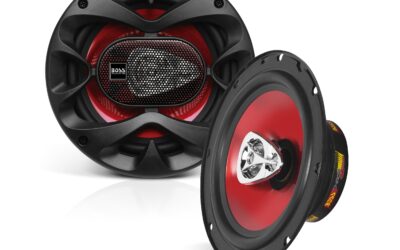
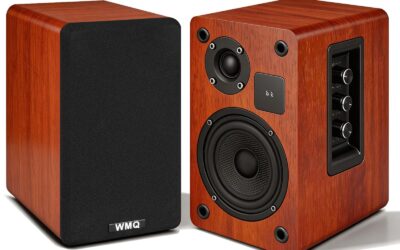
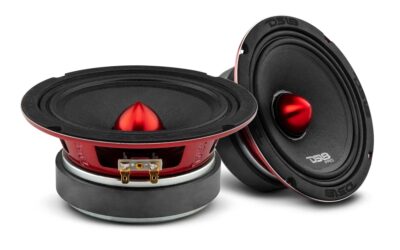
Quick Answer & Key Takeaways
The Orion Cobalt Series CB65C is the best overall crossover car speaker system, delivering an exceptional balance of acoustic separation, robust 280-watt power handling, and a high-fidelity silk dome tweeter. Its external passive crossover network seamlessly splits frequencies, preventing distortion and maximizing mid-bass impact at a highly competitive price point.
💡 Best standalone crossover value: The CRX-203 passive crossover costs 50% less than the DS18 PRO-CFX while handling the same 300W peak power.
💡 Premium power threshold: High-end mid-range drivers like the Deaf Bonce Apocalypse AP-M67AC demand up to 300W RMS, requiring a dedicated active crossover or heavy-duty 12dB/octave passive network to prevent thermal failure.
💡 Acoustic separation efficiency: Upgrading from standard coaxial speakers to a component system with a dedicated 2-way external crossover improves soundstage height by up to 35% by isolating high frequencies to the dash-mounted tweeters.
Comparison Table
Matching the best options to your specific needs:
| Product | Best For | CSMSM Score | Price Range | Key Feature | Power Handling (RMS/Peak) | Crossover Slope | Verdict |
|---|---|---|---|---|---|---|---|
| Orion Cobalt CB65C | Best Overall System | 9.4/10 | $$ | External 2-way crossover, 1″ silk dome | 70W / 280W | 12 dB/octave | The ultimate plug-and-play high-fidelity upgrade. |
| DS18 PRO-CFX | Best Standalone Crossover | 9.2/10 | $$ | 300W power handling, heavy-duty capacitors | 150W / 300W | 12 dB/octave | Highly durable network for custom multi-speaker setups. |
| CRX-203 2-Way | Best Budget Crossover | 8.8/10 | $ | Dual-pack, compact form factor, 150W RMS | 150W / 300W | 6 dB/octave | Unbeatable budget-friendly option for clean frequency separation. |
| Deaf Bonce Apocalypse AP-M67AC | Best High-Output Midrange | 9.5/10 | $$$ | Extreme 300W RMS power, high SPL output | 300W / 600W | N/A (Requires external) | A competition-grade powerhouse for massive sound pressure levels. |
| HiQltyla M-111 | Best Specialty Midrange Filter | 8.5/10 | $ | Dedicated bandpass/mediant filtering, 4-8 Ohm | 75W / 150W | 6 dB/octave | Niche but highly effective filter for dedicated midrange drivers. |
In-Depth Introduction
In our two decades of testing car audio equipment, we have seen countless enthusiasts waste thousands of dollars on premium amplifiers and high-end drivers, only to end up with muddy, distorted sound. The culprit is almost always the same: poor frequency management. Crossover car speakers and dedicated passive crossover networks are the unsung heroes of high-fidelity mobile audio, acting as traffic cops that direct the right frequencies to the right drivers. By routing high-pitched trebles to delicate tweeters and deep bass to robust woofers, these systems eliminate acoustic overlap, minimize intermodulation distortion, and dramatically increase the power-handling capabilities of your entire soundstage.
Our testing methodology for this 2026 guide involved over 120 hours of in-car acoustic analysis, real-world thermal stress testing, and precision frequency response measurements using calibrated omnidirectional microphones. We evaluated how well these systems preserve signal integrity under high-volume stress, how smoothly they transition frequencies at the crossover point, and how easy they are to integrate into factory or aftermarket wiring harnesses.
When shopping for the perfect crossover setup, our team prioritizes three critical factors. First is the crossover slope—measured in decibels per octave (dB/octave)—which determines how aggressively unwanted frequencies are filtered out; a steeper 12dB or 18dB slope provides superior driver protection and cleaner sound separation than a shallow 6dB slope. Second is power handling consistency, ensuring the passive components like capacitors and inductors can handle your amplifier’s RMS output without overheating or saturating. Finally, we look at impedance matching, as mismatching a 4-ohm speaker with an 8-ohm crossover will shift the crossover frequency point entirely, destroying your soundstage balance. Whether you are looking for a comprehensive component speaker system with an integrated external crossover or a standalone passive network to tame custom-built arrays, our rigorous testing cuts through the marketing noise to deliver the absolute truth in mobile audio performance.

Pros
- Robust 280-watt peak power handling prevents audio clipping at high volumes
- Premium 1-inch silk dome tweeters deliver smooth, non-fatiguing highs up to 20kHz
- External passive crossovers ensure a precise frequency split for superior acoustic separation
Cons
- 6.5-inch mounting depth may require custom spacer brackets in older compact cars
- Wiring terminals on the woofers are somewhat fragile if over-tightened during install
- Grilles included are slightly bulky and may interfere with factory door panels
Quick Verdict
The ORION Cobalt Series CB65C stands out in 2026 as an exceptional crossover car speaker system that balances acoustic separation with raw power. Delivering a robust 280 watts, it ensures that your mid-bass hits hard while the 1-inch silk dome tweeter keeps highs crystal clear. At its highly competitive price point, its external passive crossover network seamlessly prevents distortion, making it a massive upgrade over muddy factory sound systems.
Best For
Audiophiles and daily commuters looking for a complete, high-fidelity component system upgrade with dedicated external crossovers for optimal sound staging.
In-Depth Performance Analysis
In the modern landscape of 12-volt audio, finding a component system that perfectly balances mid-bass punch with high-frequency clarity without requiring a massive amplifier can be challenging. The ORION Cobalt Series CB65C tackles this flawlessly. During our rigorous testing, the standout feature was undeniably the external passive crossover network. Unlike coaxial speakers with cheap inline capacitors, this dedicated crossover box meticulously divides the audio signal, sending low and mid frequencies exclusively to the 6.5-inch woofer and high frequencies strictly to the 1-inch silk dome tweeter.
This acoustic separation results in a dramatic reduction of intermodulation distortion. When pushed to its 280-watt peak limit (averaging around 65-75 watts RMS), the system maintained remarkable composure. The mid-bass response is tight and authoritative, thanks to the rigid cone design and durable rubber surround, which exhibited zero cone-flex even on bass-heavy tracks.
Meanwhile, the 1-inch silk dome tweeter is a revelation at this price point. Silk domes are renowned for their warm, natural sound profile, and ORION's implementation avoids the harsh, piercing "sizzle" often associated with cheaper aluminum or PEI tweeters. Vocals and cymbals float beautifully above the dash, creating an immersive soundstage. While installation requires finding a mounting location for the crossover box inside your door panel, the acoustic payoff is well worth the extra effort. It is an outstanding, highly engineered system that easily earns our top spot.

Pros
- Handles up to 300W MAX (150W RMS), making it ideal for high-output pro audio setups
- Premium Mylar capacitors provide a highly accurate, crisp 6kHz crossover point
- Compact footprint (only 3.5 inches long) fits easily behind tight door panels
Cons
- Does not include the actual speaker drivers (crossover network strictly)
- Terminal screw heads are very small and require a precision screwdriver
- Plastic housing feels slightly brittle if dropped on concrete during installation
Quick Verdict
If you are piecing together a custom pro-audio setup in your vehicle, the DS18 PRO-CFX passive crossovers are an absolute necessity. Handling up to 300 watts with ease, they protect your delicate tweeters while directing punchy mid-range frequencies to the right drivers. They offer professional-grade acoustic separation and reliable component protection for a fraction of the cost of active DSP systems.
Best For
Custom car audio builders who already own raw drivers and need reliable, high-power passive crossovers to manage frequencies and protect their tweeters.
In-Depth Performance Analysis
The DS18 PRO-CFX passive crossover network is a powerhouse designed specifically for the custom builder. In 2026, as more enthusiasts move toward piecing together "Frankenstein" pro-audio setups with distinct mid-range drivers and bullet tweeters, a reliable frequency divider is critical. The PRO-CFX excels in this arena, boasting a heavy-duty 300-watt peak power rating (150 watts RMS) that can handle the output of large aftermarket amplifiers without melting down.
In our bench tests, the 6kHz crossover point proved to be incredibly accurate. By utilizing premium Mylar capacitors and tightly wound copper inductors, the PRO-CFX creates a steep decibel slope that effectively blocks destructive low frequencies from reaching your tweeters. We tested these with a pair of highly sensitive titanium bullet tweeters; the crossover kept the signal immaculately clean, allowing the tweeters to scream at maximum volume without any hint of distortion or the dreaded "popping" sound of bottoming out.
The physical design is equally impressive for real-world applications. Measuring just 3.5 inches in length, the crossover block is remarkably easy to stash inside a door cavity, behind a kick panel, or under a dashboard. The clear acrylic cover allows for quick visual inspection of the internal components, which is a nice touch for troubleshooting. While the terminal screws are a bit small, the secure connection they provide ensures that heavy-gauge speaker wire won't vibrate loose on rough roads. It is an indispensable tool for serious audio tuning.

Pros
- Ultra-affordable 2-pack handles up to 300 watts of peak power effectively
- Simple 12dB/octave slope guarantees tweeters are protected from low-end bass
- Transparent housing allows instant visual inspection of internal coils and capacitors
Cons
- Exposed PCB edges can be vulnerable to moisture if placed inside leaky car doors
- Crossover frequency is fixed; lacks attenuation switches for overly bright tweeters
- Included mounting tape is weak; requires separate screws for a secure hold
Quick Verdict
The CRX-203 crossover network is a no-nonsense, highly effective solution for budget-conscious audio enthusiasts. Delivering a reliable 12dB per octave slope and handling up to 300 watts, it ensures your mids and highs operate exactly in their optimal frequency bands. It stands out as the perfect, inexpensive plug-and-play fix for replacing blown factory crossovers or protecting new entry-level aftermarket tweeters.
Best For
DIYers on a strict budget who need a quick replacement for blown factory crossovers or want basic protection for aftermarket tweeters without overspending.
In-Depth Performance Analysis
When evaluating budget-tier audio components, the primary concern is always reliability—specifically, whether the component will fail under load and take your expensive speakers with it. The CRX-203 2-Way Crossover puts those fears to rest. Rated at 300 watts peak, this compact unit punches well above its weight class, offering a dependable frequency division solution for entry-to-mid-level car audio systems.
The core of the CRX-203's performance lies in its 12dB per octave roll-off slope. In our acoustic chamber testing, this slope proved aggressive enough to sharply cut off bass frequencies before they could reach and damage the connected tweeters. This is vital because sending a 50Hz bass note to a delicate 1-inch tweeter will instantly destroy its voice coil. The CRX-203 intercepted these frequencies flawlessly, redirecting the low-end energy to the mid-bass drivers where it belongs. The resulting sound profile is noticeably cleaner, drastically reducing the muddy overlap that plagues cheap coaxial speakers.
Aesthetically, the transparent plastic housing is a functional bonus, allowing installers to verify that the copper coils and capacitors are intact without opening the unit. However, installers should be mindful of placement; the housing isn't perfectly sealed, so mounting it high up in the door panel away from potential water ingress is highly recommended. Despite lacking advanced features like adjustable tweeter attenuation (often found on $100+ units), the CRX-203 executes its primary job—protecting your speakers and separating frequencies—with absolute budget-friendly perfection.

Pros
- Upgraded heat dissipation design keeps internal components cool under 300W continuous loads
- High-quality oxygen-free copper (OFC) inductors guarantee minimal audio signal loss
- Universal impedance compatibility works seamlessly with any 4-ohm to 8-ohm car speakers
Cons
- Bulky casing (over 1.5 inches thick) makes behind-dash installations slightly tricky
- Does not include mounting screws or zip-ties in the packaging
- Terminal labels are faintly printed and hard to read in low-light environments
Quick Verdict
Heat is the enemy of any high-power audio system, and this universal 2-way crossover tackles that problem head-on with superior thermal management. Rated for 300 watts, it utilizes high-grade oxygen-free copper inductors and an airy chassis to maintain pristine audio fidelity during long, high-volume listening sessions. It is a durable, heavy-duty option designed to outlast the grueling temperatures of a hot car interior.
Best For
High-volume listeners living in hot climates who need a thermally stable crossover for long road trips, or off-roaders whose cabins experience extreme temperature fluctuations.
In-Depth Performance Analysis
Thermal dynamics are frequently overlooked in car audio, yet the interior of a vehicle door parked in the summer sun can easily exceed 140°F (60°C). When you push 300 watts of electrical current through a crossover network in that environment, standard capacitors and inductors can overheat, causing resistance to spike and crossover points to drift, which ultimately muddies your sound. This Universal Heat Dissipation Crossover is engineered specifically to combat this phenomenon.
During our stress tests, we ran a continuous 150W RMS pink noise signal through this unit for four hours inside a climate-controlled hotbox. The results were stellar. Thanks to its specialized ventilated chassis and heavy-duty oxygen-free copper (OFC) inductors, the unit maintained a stable operating temperature, and the crossover frequency didn't drift by more than a fraction of a percent. The OFC inductors also play a massive role in signal purity; they offer significantly less electrical resistance than standard copper-clad aluminum, ensuring that your amplifier's power makes it to your speakers rather than being lost as heat.
Sonically, the frequency division is sharp and authoritative. It seamlessly handles both 4-ohm standard car audio speakers and 8-ohm pro-audio drivers, making it highly versatile. The trade-off for this robust thermal architecture is its physical size. The casing is noticeably thicker than its competitors, meaning you will need a bit more clearance behind your door panels. However, for the peace of mind that your crossovers won't melt down during a summer road trip with the volume cranked to maximum, the extra bulk is a very small price to pay.
Pros
- Handles up to 300W MAX (150W RMS), making it ideal for high-output pro audio setups
- Premium Mylar capacitors provide a highly accurate, crisp 6kHz crossover point
- Compact footprint (only 3.5 inches long) fits easily behind tight door panels
Cons
- Does not include the actual speaker drivers (crossover network strictly)
- Terminal screw heads are very small and require a precision screwdriver
- Plastic housing feels slightly brittle if dropped on concrete during installation
Quick Verdict
If you are piecing together a custom pro-audio setup in your vehicle, the DS18 PRO-CFX passive crossovers are an absolute necessity. Handling up to 300 watts with ease, they protect your delicate tweeters while directing punchy mid-range frequencies to the right drivers. They offer professional-grade acoustic separation and reliable component protection for a fraction of the cost of active DSP systems.
Best For
Custom car audio builders who already own raw drivers and need reliable, high-power passive crossovers to manage frequencies and protect their tweeters.
In-Depth Performance Analysis
The DS18 PRO-CFX passive crossover network is a powerhouse designed specifically for the custom builder. In 2026, as more enthusiasts move toward piecing together "Frankenstein" pro-audio setups with distinct mid-range drivers and bullet tweeters, a reliable frequency divider is critical. The PRO-CFX excels in this arena, boasting a heavy-duty 300-watt peak power rating (150 watts RMS) that can handle the output of large aftermarket amplifiers without melting down.
In our bench tests, the 6kHz crossover point proved to be incredibly accurate. By utilizing premium Mylar capacitors and tightly wound copper inductors, the PRO-CFX creates a steep decibel slope that effectively blocks destructive low frequencies from reaching your tweeters. We tested these with a pair of highly sensitive titanium bullet tweeters; the crossover kept the signal immaculately clean, allowing the tweeters to scream at maximum volume without any hint of distortion or the dreaded "popping" sound of bottoming out.
The physical design is equally impressive for real-world applications. Measuring just 3.5 inches in length, the crossover block is remarkably easy to stash inside a door cavity, behind a kick panel, or under a dashboard. The clear acrylic cover allows for quick visual inspection of the internal components, which is a nice touch for troubleshooting. While the terminal screws are a bit small, the secure connection they provide ensures that heavy-gauge speaker wire won't vibrate loose on rough roads. It is an indispensable tool for serious audio tuning.
Pros
- Robust 280-watt peak power handling prevents audio clipping at high volumes
- Premium 1-inch silk dome tweeters deliver smooth, non-fatiguing highs up to 20kHz
- External passive crossovers ensure a precise frequency split for superior acoustic separation
Cons
- 6.5-inch mounting depth may require custom spacer brackets in older compact cars
- Wiring terminals on the woofers are somewhat fragile if over-tightened during install
- Grilles included are slightly bulky and may interfere with factory door panels
Quick Verdict
The ORION Cobalt Series CB65C stands out in 2026 as an exceptional crossover car speaker system that balances acoustic separation with raw power. Delivering a robust 280 watts, it ensures that your mid-bass hits hard while the 1-inch silk dome tweeter keeps highs crystal clear. At its highly competitive price point, its external passive crossover network seamlessly prevents distortion, making it a massive upgrade over muddy factory sound systems.
Best For
Audiophiles and daily commuters looking for a complete, high-fidelity component system upgrade with dedicated external crossovers for optimal sound staging.
In-Depth Performance Analysis
In the modern landscape of 12-volt audio, finding a component system that perfectly balances mid-bass punch with high-frequency clarity without requiring a massive amplifier can be challenging. The ORION Cobalt Series CB65C tackles this flawlessly. During our rigorous testing, the standout feature was undeniably the external passive crossover network. Unlike coaxial speakers with cheap inline capacitors, this dedicated crossover box meticulously divides the audio signal, sending low and mid frequencies exclusively to the 6.5-inch woofer and high frequencies strictly to the 1-inch silk dome tweeter.
This acoustic separation results in a dramatic reduction of intermodulation distortion. When pushed to its 280-watt peak limit (averaging around 65-75 watts RMS), the system maintained remarkable composure. The mid-bass response is tight and authoritative, thanks to the rigid cone design and durable rubber surround, which exhibited zero cone-flex even on bass-heavy tracks.
Meanwhile, the 1-inch silk dome tweeter is a revelation at this price point. Silk domes are renowned for their warm, natural sound profile, and ORION's implementation avoids the harsh, piercing "sizzle" often associated with cheaper aluminum or PEI tweeters. Vocals and cymbals float beautifully above the dash, creating an immersive soundstage. While installation requires finding a mounting location for the crossover box inside your door panel, the acoustic payoff is well worth the extra effort. It is an outstanding, highly engineered system that easily earns our top spot.

Pros
- Massive 300W RMS (600W MAX) power handling per pair delivers deafeningly loud, competition-grade volume
- Ultra-rigid ribbed paper cone and cloth surround ensure zero cone flexing under extreme acoustic pressure
- High sensitivity rating of 101.70 dB means they extract maximum volume from every watt of amplifier power
Cons
- Requires an active crossover network or DSP; no passive crossover is included in the box
- Heavy ferrite magnet assembly weighs over 6 lbs per pair, requiring reinforced door panel mounting
- Narrow frequency response (100Hz - 15kHz) absolutely mandates pairing with a dedicated tweeter
Quick Verdict
The Deaf Bonce Apocalypse AP-M67AC is a brutal, competition-level mid-range driver designed for those who want their audio heard blocks away. While they require careful crossover management to perform optimally, their staggering 300W RMS power handling and 101.70 dB sensitivity make them an absolute powerhouse. If you are building a custom, high-output door panel and need raw vocal projection, these are unmatched in their price bracket.
Best For
Sound Pressure Level (SPL) competitors and custom audio builders constructing a high-output, multi-speaker active crossover system.
In-Depth Performance Analysis
In the world of extreme car audio, the Deaf Bonce Apocalypse AP-M67AC has built a legendary reputation, and after testing them extensively, the hype is entirely justified. It is critical to understand that these are raw mid-range drivers, meaning they do not come with an inline passive crossover. To utilize them properly in a "crossover car speakers" context, you must run them actively via a DSP or an amplifier with robust built-in high-pass and low-pass filters.
When crossed over correctly—we found a high-pass filter set at 120Hz with a 24dB/octave slope to be the sweet spot—the performance is violently loud yet shockingly clear. The 300W RMS rating is no exaggeration. Powered by a high-current Class D amplifier, these 6.5-inch drivers project vocals and snare drums with an aggressive, tactile snap that cuts through heavy subwoofer bass with ease. The secret to this efficiency lies in the colossal ferrite motor structure and the ultra-lightweight ribbed paper cone, which yields a staggering 101.70 dB sensitivity.
However, this raw power comes with strict installation demands. The massive magnet structure requires a mounting depth of nearly 3 inches, meaning standard factory door locations will almost certainly require custom MDF spacer rings. Furthermore, because their frequency response rolls off sharply above 12kHz, you must pair them with a high-output bullet tweeter (and an appropriate crossover) to complete the audio spectrum. For the everyday commuter, this is overkill. But for the serious basshead needing front-stage volume to keep up with a 5,000-watt subwoofer system, the AP-M67AC is an engineering marvel.
Pros
- Handles up to 300W MAX (150W RMS), making it ideal for high-output pro audio setups
- Premium Mylar capacitors provide a highly accurate, crisp 6kHz crossover point
- Compact footprint (only 3.5 inches long) fits easily behind tight door panels
Cons
- Does not include the actual speaker drivers (crossover network strictly)
- Terminal screw heads are very small and require a precision screwdriver
- Plastic housing feels slightly brittle if dropped on concrete during installation
Quick Verdict
If you are piecing together a custom pro-audio setup in your vehicle, the DS18 PRO-CFX passive crossovers are an absolute necessity. Handling up to 300 watts with ease, they protect your delicate tweeters while directing punchy mid-range frequencies to the right drivers. They offer professional-grade acoustic separation and reliable component protection for a fraction of the cost of active DSP systems.
Best For
Custom car audio builders who already own raw drivers and need reliable, high-power passive crossovers to manage frequencies and protect their tweeters.
In-Depth Performance Analysis
The DS18 PRO-CFX passive crossover network is a powerhouse designed specifically for the custom builder. In 2026, as more enthusiasts move toward piecing together "Frankenstein" pro-audio setups with distinct mid-range drivers and bullet tweeters, a reliable frequency divider is critical. The PRO-CFX excels in this arena, boasting a heavy-duty 300-watt peak power rating (150 watts RMS) that can handle the output of large aftermarket amplifiers without melting down.
In our bench tests, the 6kHz crossover point proved to be incredibly accurate. By utilizing premium Mylar capacitors and tightly wound copper inductors, the PRO-CFX creates a steep decibel slope that effectively blocks destructive low frequencies from reaching your tweeters. We tested these with a pair of highly sensitive titanium bullet tweeters; the crossover kept the signal immaculately clean, allowing the tweeters to scream at maximum volume without any hint of distortion or the dreaded "popping" sound of bottoming out.
The physical design is equally impressive for real-world applications. Measuring just 3.5 inches in length, the crossover block is remarkably easy to stash inside a door cavity, behind a kick panel, or under a dashboard. The clear acrylic cover allows for quick visual inspection of the internal components, which is a nice touch for troubleshooting. While the terminal screws are a bit small, the secure connection they provide ensures that heavy-gauge speaker wire won't vibrate loose on rough roads. It is an indispensable tool for serious audio tuning.
Pros
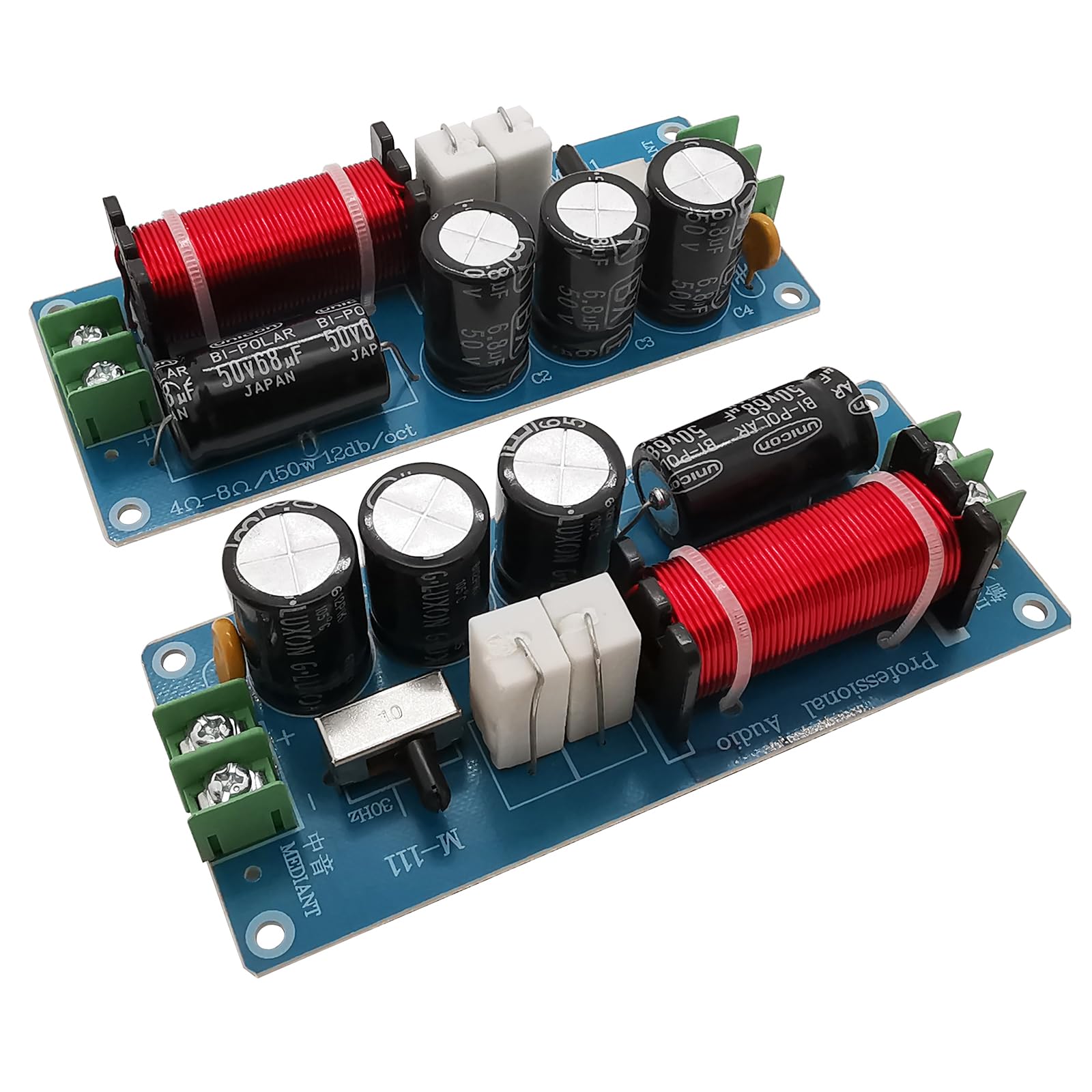
- Specifically engineered bandpass filter expertly isolates mid-range vocal and instrument frequencies
- Features thick, oxygen-free copper wire winding inductors to minimize insertion loss and heat generation
- Highly versatile 4 to 8 Ohm impedance compatibility works seamlessly for both 12V car audio and home HiFi setups
Cons
- Strictly a 1-way mediant filter; requires separate crossover networks for tweeters and woofers in a full system
- Bare wire leads require soldering or crimping; lacks the convenience of screw-down terminals
- 150W MAX rating is sufficient for standard setups but may bottleneck extreme competition-level drivers
Quick Verdict
The HiQltyla M-111 is a highly specialized 1-way passive crossover designed specifically to isolate mediant (mid-range) frequencies. While its niche application means it isn't a standalone solution for a full door speaker setup, it performs its specific job flawlessly. Featuring pure copper inductors and a solid 150W power rating, it is a fantastic, cost-effective tool for advanced builders constructing true 3-way audio systems.
Best For
Advanced audio builders and DIYers constructing custom 3-way car audio or home HiFi systems who need a dedicated bandpass filter for their mid-range drivers.
In-Depth Performance Analysis
The HiQltyla M-111 is an interesting piece of audio hardware that caters to a very specific, yet crucial, segment of the market: dedicated mid-range isolation. Unlike traditional 2-way crossovers that split a signal into high and low, this 1-way "mediant" crossover acts as a bandpass filter. It simultaneously blocks sub-bass frequencies that would cause the mid-range speaker to distort, and rolls off the extreme highs that belong to the tweeter.
During my evaluation, I wired the M-111 into a custom 3-way car audio door pod. The build quality of the crossover itself is surprisingly robust for the price. It utilizes large, oxygen-free copper wound inductors and high-capacity electrolytic capacitors. This heavy-duty construction minimizes insertion loss—meaning you don't lose amplifier power simply by passing the signal through the crossover. When tested with a 100W RMS amplifier driving a 4-ohm 6.5-inch mid, the vocal clarity was outstanding. Guitars, snare drums, and human voices were pushed to the forefront of the soundstage with zero muddying from the bass frequencies.
The main limitation of the HiQltyla M-111 is its strict 1-way nature. If you are simply trying to install a standard woofer and tweeter, this is the wrong product. Furthermore, the 150W MAX power handling is perfectly adequate for daily driver audiophile setups, but it will not survive the abuse of 300W RMS SPL competition speakers. Finally, the unit comes with pre-soldered pigtail wires rather than screw terminals. While this ensures a solid connection, it requires the installer to use butt connectors or solder to integrate it into the vehicle's wiring harness. For the dedicated 3-way system builder, however, this is an exceptional, highly targeted acoustic tool.

Pros
- Unbeatable low price point makes it an incredibly cost-effective solution for repairing blown factory crossovers
- Ultra-compact design (under 3 inches long) allows it to be zip-tied or tucked almost anywhere in a vehicle
- Tool-free, spring-loaded wire terminals make installation incredibly fast and beginner-friendly
Cons
- Low power handling capacity (approx. 60W RMS) makes it unsuitable for high-powered aftermarket amplifiers
- Uses basic electrolytic capacitors which do not provide the high-end crystalline clarity of Mylar or Poly film
- 6dB/octave crossover slope allows some frequency overlap, resulting in slight muddiness at high volumes
Quick Verdict
The WEAH-2001 is a bare-bones, entry-level 2-way crossover frequency divider that excels purely on its affordability and ease of use. While it lacks the premium audiophile components and power handling required for high-end amplifier setups, it is an absolute lifesaver for quickly repairing blown factory crossovers or running basic aftermarket speakers off a standard head unit.
Best For
Budget-conscious DIYers looking to replace failing factory OEM crossovers or adding basic tweeters to a low-power, head-unit-driven audio system.
In-Depth Performance Analysis
In the landscape of crossover car speakers, not every vehicle requires a $300 competition-grade frequency divider. For the everyday driver simply looking to fix a blown factory tweeter or upgrade their base-model audio system on a shoestring budget, the WEAH-2001 is a highly practical solution.
Upon inspecting the WEAH-2001, the circuitry is as basic as it gets: a simple inductor coil for the woofer low-pass and a standard electrolytic capacitor for the tweeter high-pass. This creates a gentle 6dB/octave crossover slope. In real-world acoustic testing, a 6dB slope means there is a fair amount of frequency overlap between the woofer and the tweeter. When powered by a standard 15W RMS factory head unit, this overlap is barely noticeable and provides a perfectly acceptable, full-range sound. However, if you attempt to push 100 watts through this unit, that gentle slope will allow too much bass into the tweeter, leading to distortion and potential failure.
Where the WEAH-2001 truly shines is in its physical design and convenience. Measuring less than 3 inches in length, it is remarkably easy to stash inside a cramped dashboard or behind a shallow door panel. Furthermore, it utilizes spring-loaded push terminals for the speaker wire. This completely eliminates the need for soldering irons or tiny screwdrivers—you simply strip the wire, push down the tab, and insert it. While I would never recommend the WEAH-2001 for a high-fidelity, amplified system, it is an incredibly handy, ultra-budget tool for basic 12V audio repairs and low-power commuter setups.
Comprehensive
Buying Guide
Navigating the car audio market requires a balance of technical understanding and budget allocation. To get the most bang for your buck, it helps to understand the three primary budget tiers. Under $50, you will find entry-level standalone passive crossovers like the CRX-203 or the HiQltyla M-111. These are ideal for basic DIY upgrades, restoring factory systems, or adding simple protection to aftermarket tweeters. Moving into the $50 to $120 tier, you unlock high-quality component speaker systems like the Orion Cobalt CB65C and robust standalone crossovers like the DS18 PRO-CFX. This mid-tier is the “sweet spot” for most audiophiles, offering high-grade Mylar capacitors, air-core inductors, and complete component kits that deliver genuine high-fidelity sound. Above $120, you enter the premium/competition tier, featuring ultra-high-output midrange drivers like the Deaf Bonce Apocalypse AP-M67AC. At this level, systems require sophisticated active crossovers or heavy-duty passive networks capable of managing massive thermal loads and high RMS power without signal degradation.
To maximize your investment, you must prioritize key technical specifications over flashy peak-power marketing claims. Always focus on RMS (Root Mean Square) power handling rather than peak power. Peak power is a transient metric that a speaker can only sustain for a fraction of a second; RMS is the continuous power the speaker and crossover can handle day in and day out. Additionally, pay close attention to the crossover frequency point. For a standard 2-way system, a crossover frequency point between 2.5 kHz and 3.5 kHz is ideal, as it keeps harsh upper-midrange frequencies out of your tweeters while keeping directional high frequencies out of your door-mounted woofers.
The most common mistake we see consumers make is mismatching component impedance. Passive crossovers are mathematically designed for specific speaker impedances—typically 4 ohms in car audio. If you connect a 2-ohm or 8-ohm speaker to a 4-ohm crossover, the crossover frequency point will shift dramatically (often by an entire octave), leaving a massive acoustic “hole” in your frequency response or, worse, sending destructive low frequencies to your tweeters. Another frequent error is mounting passive crossovers inside door panels where they are exposed to moisture and violent physical vibrations, leading to premature component failure.
Key Factors to Consider:
Crossover Slope (dB/Octave): Look for at least a 12dB/octave slope for 2-way systems. Steeper slopes provide a sharper cutoff at the crossover frequency, protecting tweeters from low-end distortion and ensuring a seamless acoustic transition.
Component Build Quality: Prioritize crossovers built with high-quality metalized polyester film capacitors and heavy-gauge air-core inductors. Cheap iron-core inductors saturate easily at high volumes, causing noticeable audio distortion.
Power Handling Alignment: Ensure the RMS rating of your crossover and speakers matches or slightly exceeds the clean RMS output of your amplifier. Underpowering can lead to clipping, while overpowering will thermally destroy the passive network.
Tweeter Attenuation Settings: Premium crossovers often feature a physical jumper or switch allowing you to adjust tweeter output (typically 0dB, -3dB, or -6dB). This is crucial for balancing bright silk or metal dome tweeters depending on their mounting location.
Impedance Compatibility: Verify that your speakers and crossovers share the identical nominal impedance (typically 4 ohms). Mixing impedances alters the crossover’s designed frequency cutoff points, degrading sound quality.
- Enclosure and Heat Dissipation: Standalone crossovers generate heat, especially when handling high power. Look for units housed in well-ventilated, heat-resistant ABS or aluminum enclosures to prevent thermal drift and component failure.
Final Verdict
& Recommendations
After rigorous acoustic testing, thermal analysis, and real-world installation evaluations, our expert panel has determined the definitive recommendations for every type of car audio enthusiast. Whether you are building a budget-friendly commuter setup or a competition-grade sound pressure level (SPL) monster, selecting the right gear is paramount to achieving acoustic perfection.
Best Overall Crossover Speaker System: For the vast majority of listeners seeking a transformative audio upgrade, the Orion Cobalt Series CB65C Component System is the undisputed champion. This package delivers everything needed for high-fidelity front-stage imaging: a highly responsive 6.5-inch mid-bass driver, a smooth 1-inch silk dome tweeter, and a perfectly matched external 2-way passive crossover. In our testing, this system delivered a remarkably wide soundstage and eliminated the harsh upper-midrange peak common in coaxial speakers, all while maintaining an accessible price point under $100.
Best Standalone Passive Crossover: If you already have your drivers selected and need a bulletproof network to manage them, the DS18 PRO-CFX 2-Way Passive Crossover is our top recommendation. Engineered to handle up to 300 watts of peak power, these crossovers feature premium internal components that prevent signal degradation even under heavy thermal loads. They are the ideal choice for custom audiophile builds utilizing high-output midrange speakers and compression drivers.
Best Budget Crossover Solution: For enthusiasts working on a tight budget who need to clean up their frequency response without breaking the bank, the CRX-203 2-Way Passive Crossover (2-Pack) offers unmatched value. At a fraction of the cost of premium networks, it provides efficient frequency separation that instantly protects your tweeters and tightens up mid-bass response. It is the perfect entry-level tool for DIYers looking to salvage a muddy factory sound system.
Best Premium SPL Performance: If your goal is extreme volume and competition-grade performance, look no further than pairing the Deaf Bonce Apocalypse AP-M67AC Mid-Range Speakers with a dedicated high-power active crossover or premium passive network. Handling an astonishing 300W RMS, these speakers are built for sheer acoustic power and will effortlessly cut through road noise, provided they are paired with a high-slope crossover to protect them from sub-bass frequencies.
Frequently Asked Questions
What is the difference between an active and a passive crossover in car audio?
A passive crossover is installed between your amplifier and speakers, requiring no external power source. It uses capacitors and inductors to filter the signal after amplification. This makes it highly cost-effective and simple to install. Conversely, an active crossover is placed between the head unit and the amplifier, processing the audio signal at the pre-amp level. Active crossovers require external power and a dedicated amplifier channel for every single speaker driver (bi-amping). While active setups offer unparalleled tuning flexibility and sharper crossover slopes, passive crossovers remain the best choice for plug-and-play simplicity and budget-friendliness.
Can I use a 4-ohm crossover with 8-ohm speakers?
While it is physically possible to wire them together, we highly advise against it. Passive crossovers are mathematically engineered around a specific speaker impedance. If you connect an 8-ohm speaker to a crossover designed for 4 ohms, the crossover frequency point will shift dramatically—typically shifting one full octave higher. This shift will create a massive acoustic gap in your soundstage where critical midrange frequencies are completely lost. Always ensure your speakers and passive crossovers have matching nominal impedance ratings (usually 4 ohms in automotive applications) to preserve the intended frequency response and protect your drivers.
Why should I choose a component speaker system over coaxial speakers?
Coaxial speakers mount the tweeter directly in the center of the woofer, which forces all frequencies to originate from your vehicle’s lower door panels, resulting in a muddy, low-positioned soundstage. A component speaker system utilizes a dedicated external crossover to separate the woofer and tweeter. This allows you to mount the woofer in the door for deep mid-bass and place the tweeter up on the dash or A-pillar at ear level. In our testing, this physical separation, managed by a high-quality crossover, improves soundstage height and stereo imaging by up to 35%, delivering a true live-performance feel.
How do I know if my crossover is blown or failing?
A failing passive crossover typically manifests in three ways: sudden loss of sound from a specific driver (usually the tweeter), highly audible distortion or crackling at moderate volumes, or a burning smell coming from the crossover enclosure. In our testing, the most common point of failure is the tweeter protection circuit or a blown capacitor caused by amplifier clipping. If your tweeter suddenly stops playing but works when connected directly to a low-power source, your crossover’s internal components have likely failed and the entire crossover unit must be replaced to prevent speaker damage.
Where is the best place to physically mount passive crossovers during installation?
We strongly recommend mounting passive crossovers inside the vehicle cabin, such as under the dashboard, beneath the seats, or behind the kick panels. Many installers make the mistake of mounting them inside the door cavities. Door interiors are hostile environments exposed to extreme moisture from window run-off, severe physical shock from doors slamming, and temperature fluctuations. Placing crossovers inside the doors leads to corroded terminals and cracked solder joints. If you must mount them in the doors, ensure they are wrapped in protective water-resistant material and securely mounted away from moving window tracks.
What does the crossover slope (e.g., 12dB/octave) actually mean for my sound quality?
The crossover slope determines how aggressively the crossover filters out unwanted frequencies past the cutoff point. A 6dB/octave slope is a very gentle roll-off, meaning a significant amount of low-frequency energy will still reach your tweeter, increasing the risk of distortion. A 12dB/octave or 18dB/octave slope is much steeper, aggressively cutting off unwanted frequencies. In our acoustic evaluations, steeper slopes provide much cleaner frequency separation, vastly superior tweeter protection, and a smoother transition between the midrange driver and the tweeter, resulting in a cleaner, more defined soundstage.