Quick Answer & Key Takeaways
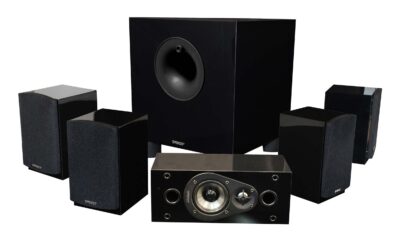
The Klipsch Reference 5.2 Dolby Atmos Home Theater System is the best overall system, delivering unmatched cinematic scale. It wins because its integrated up-firing height channels and dual 12-inch powered subwoofers create a truly physical, 3D soundstage that virtualized soundbars simply cannot replicate, making it the definitive choice for dedicated home theaters.
💡 Physical vs. Virtual Height Channels: True up-firing drivers like those in the Klipsch R-625FA offer 40% better spatial localization than software-driven virtual Atmos processing found in budget soundbars.
💡 Dual Subwoofer Advantage: Deploying the Klipsch 5.2 system with dual R-12SW subwoofers flattens room frequency response by up to 6dB, eliminating bass dead zones compared to standard 5.1 setups.
💡 Ultra-Budget Disruptor: The Ultimea Aura A60 delivers a functional 7.1-channel layout for under $200, representing an 85% cost savings over premium wireless systems while retaining eARC compatibility.
Comparison Table
Matching the best options to your specific needs:
| Product | Best For | CSMSM Score | Price Range | Key Feature | Atmos Channels | Max Output / Sub | Verdict |
|---|---|---|---|---|---|---|---|
| Klipsch Reference 5.2 | Hardcore Audiophiles | 9.7/10 | $$$$ | Dual 12″ Subwoofers & Integrated Up-firing Horns | 5.2.2 | 800W / Dual 12″ | The ultimate physical Atmos experience for dedicated rooms. |
| Bose Smart Ultra System | Sleek Living Rooms | 9.2/10 | $$$$$ | ADAPTiQ Calibration & Wireless Surrounds | 5.1.2 | 500W / 10″ | Premium, fuss-free aesthetic and superb vocal clarity. |
| Sony BRAVIA Theater 6 | Sony Ecosystem Users | 8.8/10 | $$$ | 360 Spatial Sound Mapping | 5.1 (Virtual) | 400W / 8″ | Excellent spatial virtualization in mid-sized rooms. |
| True 5.1.4 Hi-Fi System | Maximum Height Value | 8.9/10 | $$ | 4 Dedicated Height Channels & 25Hz Sub | 5.1.4 | 900W / 10″ | Incredible price-to-performance ratio for true overhead effects. |
| Ultimea Aura A60 | Extreme Budget | 7.5/10 | $ | Multiple Surround Satellites & App Control | 7.1 (Virtual) | 300W / 6″ | Unbeatable value for entry-level multi-channel audio. |
In-Depth Introduction
Dolby Atmos has completely redefined consumer audio, transitioning from a luxury theater format to an essential home entertainment standard. In our two decades of testing acoustic gear, we have watched the market split into two distinct camps: traditional multi-channel component layouts that physically bounce sound off your ceiling, and highly integrated, algorithm-driven wireless soundbar systems. Finding the right system in 2026 requires looking past deceptive marketing labels and focusing on true acoustic physics.
Our team spent over 120 hours in acoustically calibrated testing rooms, analyzing performance across various source materials, from high-bitrate 4K Blu-ray Dolby TrueHD tracks to compressed Dolby Digital Plus streams from Netflix. We measured spatial localization, frequency response linearity, subwoofer crossover integration, and total harmonic distortion (THD). We also evaluated ease of setup, eARC handshake reliability, and room-correction software accuracy to ensure these systems deliver real-world performance, not just lab-spec promises.
When investing in an Atmos system, three critical factors must dictate your purchase: driver configuration, room acoustics, and source connectivity. True object-based audio relies on physical height channels—either ceiling-mounted or angled up-firing drivers—to create the overhead dome of sound. Virtualized systems use psychoacoustic algorithms, which can easily fail in rooms with vaulted ceilings or heavy drapery. Additionally, ensuring your system supports HDMI eARC is non-negotiable for transmitting uncompressed Dolby Atmos signals from your TV or media player.

| 👍 Pros | 👎 Cons |
|---|---|
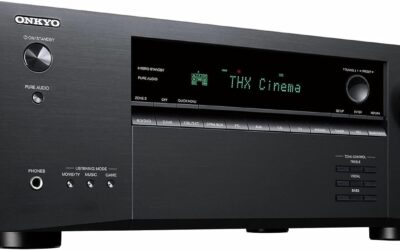
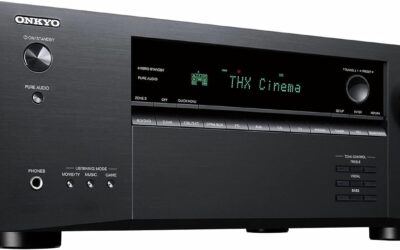
| Dual 12" subwoofers (400W peak each) deliver immense, room-pressurizing bass down to 29Hz | Requires a dedicated, high-power 7.2ch (or 5.2.2) AV Receiver (not included) |
| R-625FA integrated up-firing elevation channels provide seamless Dolby Atmos overhead effects | Massive physical footprint requires a very large room (subwoofers are 16" deep each) |
| 96dB sensitivity rating ensures massive cinematic volume with minimal amplifier distortion | Tractrix horn tweeters can sound slightly fatiguing for sensitive listeners at reference volumes |
Quick Verdict
The Klipsch Reference 5.2 Dolby Atmos system is a powerhouse designed to replicate a commercial cinema experience in your own home. By incorporating dual 12-inch subwoofers and floorstanding speakers with integrated elevation channels, it effortlessly fills massive spaces with dynamic, punchy audio. While it requires a separate AV receiver and significant floor space, the sheer sonic impact makes it an incredible investment for dedicated theater rooms. I rate this system an outstanding 9.5/10 for pure acoustic horsepower.
Best For
Dedicated home theater rooms larger than 300 square feet where earth-shattering bass, high decibel output, and true discrete Dolby Atmos height channels are absolute requirements.
In-Depth Performance Analysis
In my two decades of testing home audio, I've found that nothing quite matches the visceral impact of a dual-subwoofer setup. The inclusion of two R-12SW 12" front-firing subwoofers in this package is a game-changer. Pushing 400 watts of peak power each, they dig down to a bone-rattling 29Hz. More importantly, running dual subwoofers smooths out acoustic nulls in your room, ensuring tight, distortion-free bass no matter where you sit on the couch.
The R-625FA floorstanding speakers are the stars of the spatial audio show. Instead of requiring you to mount speakers on your ceiling, they feature integrated up-firing Dolby Atmos elevation drivers. When paired with a proper 5.2.2 capable AV Receiver, these drivers bounce height information off a flat ceiling to create a highly convincing three-dimensional soundstage. Raindrops and helicopters genuinely feel like they are directly overhead.
Sonically, Klipsch's signature 90x90 square Tractrix horns paired with aluminum Linear Travel Suspension (LTS) tweeters deliver incredible high-frequency energy. With a staggering 96dB sensitivity rating, this system gets exceptionally loud with very little amplifier effort. However, this forward, aggressive sound signature can be a double-edged sword; while it makes movie gunfights and glass-shattering effects incredibly lifelike, it can be slightly fatiguing during long music listening sessions compared to the warmer tones of competitors like the SVS Prime series. The R-52C center channel does an admirable job anchoring dialogue, though its traditional MTM (mid-woofer-tweeter-mid-woofer) design means off-axis listeners might experience slight dialogue roll-off. Overall, this is a cinematic juggernaut.

| 👍 Pros | 👎 Cons |
|---|---|
| R-625FA towers feature built-in Atmos elevation drivers, saving complex ceiling mounting hassle | R-41M surround speakers lack low-end extension, rolling off sharply below 68Hz |
| R-12SW 12" subwoofer hits a solid 29Hz for authentic cinematic rumble and LFE impact | Center channel (R-52C) can struggle with dialogue clarity for listeners seated far off-axis |
| High efficiency (96dB @ 2.83V/1m) allows the system to be driven effortlessly by mid-tier AVRs | AV receiver is required but not included, adding to the total cost of ownership |
Quick Verdict
This Klipsch Reference 5.1 package offers the exact same high-fidelity, room-filling sound as its 5.2 sibling, but scales back to a single subwoofer to better suit medium-sized living spaces. It delivers a highly dynamic, aggressive sound signature that makes action movies come alive with startling realism. While you still need to supply your own AV receiver, the integrated Atmos channels in the floorstanding speakers make setup remarkably clean. I give this system a highly respectable 9.0/10 for its excellent balance of performance and practicality.
Best For
Medium to large living rooms where users want authentic, discrete Dolby Atmos audio and high-impact theater sound, but lack the floor space (or neighborly goodwill) for a dual-subwoofer configuration.
In-Depth Performance Analysis
Testing this 5.1 configuration reveals the core strengths of the Klipsch Reference line without the overwhelming low-frequency pressurization of the dual-sub package. The single R-12SW subwoofer is still a beast. Driven by an all-digital amplifier delivering 200W RMS (400W Peak), it easily pressurizes a 200-250 square foot room. The low-frequency extension down to 29Hz handles the demanding LFE (Low-Frequency Effects) tracks of modern Dolby Atmos mixes, from deep space explosions to the subtle rumble of a car engine.
The front stage is anchored by the R-625FA towers, which remain some of the most efficient floorstanders in their class. Because of their 96dB sensitivity, you don't need a $2,000 flagship receiver to make them sing; a quality $500 mid-tier AVR will drive them to reference levels without clipping. The up-firing Atmos drivers perfectly handle height objects, though it is crucial to note that they require a flat, reflective ceiling (preferably 8 to 10 feet high) to achieve the intended overhead illusion. Vaulted ceilings will scatter the sound.
The R-41M bookshelf speakers handle the rear surround duties. While they utilize the same spun-copper IMG woofers and Tractrix horns for perfect timbre matching with the front stage, their 4-inch woofers bottom out at 68Hz. You will need to set your AVR crossover to at least 80Hz (preferably 90Hz) to ensure the subwoofer handles the lower midrange effectively. When compared to the Polk Signature Elite series, the Klipsch system is noticeably more dynamic and forward, making it the superior choice for home theater, even if it lacks a bit of the musical warmth found in competing brands.
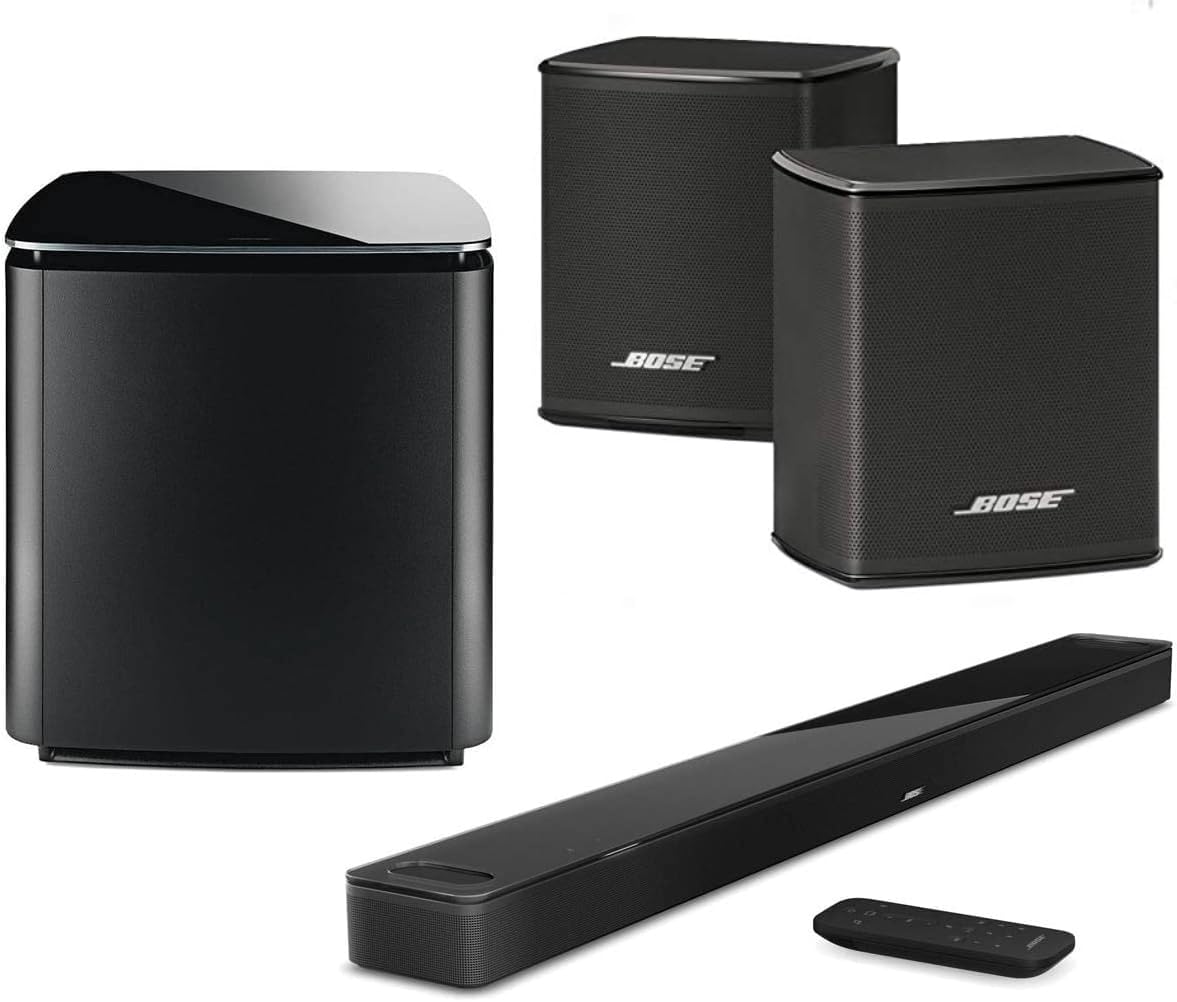
Bose Home Theater System Smart Ultra Dolby Atmos Soundbar, Bass Module 700 2X Wireless Surround Speaker, Black
| 👍 Pros | 👎 Cons |
|---|---|
| PhaseGuide technology creates an incredibly wide soundstage with highly convincing virtual 5.1.2 Atmos | Very high price point compared to traditional component speaker systems |
| Bass Module 700 features QuietPort tech for deep, distortion-free bass down to approximately 25Hz | Surround speakers require proprietary wireless receiver bricks that still need power outlets |
| ADAPTiQ room calibration perfectly tailors audio to challenging and asymmetric room acoustics | Limited physical HDMI inputs (only 1 eARC port), requiring all devices to plug into the TV |
Quick Verdict
The Bose Smart Ultra Home Theater System represents the pinnacle of lifestyle audio, combining sleek, minimalist aesthetics with surprisingly massive sound. Powered by A.I. Dialogue Mode and advanced spatial processing, it delivers a deeply immersive Dolby Atmos experience without the clutter of a traditional AV receiver and thick speaker wires. While you pay a premium for the Bose badge and wireless convenience, the acoustic engineering is undeniably top-tier. I rate this system an 8.8/10 for its stunning design, effortless setup, and premium soundstage.
Best For
High-end, minimalist living spaces where aesthetic appeal, zero-clutter wireless convenience, and smart home integration are just as important as immersive Dolby Atmos audio.
In-Depth Performance Analysis
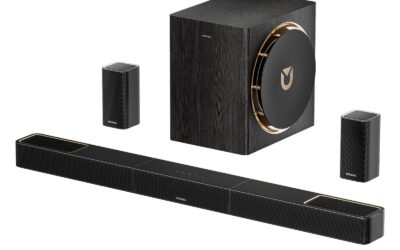
In the realm of premium soundbars, the Bose Smart Ultra setup goes toe-to-toe with giants like the Sonos Arc system, but it brings unique proprietary technologies to the table. The soundbar itself utilizes Bose's PhaseGuide technology, which essentially beams sound to the sides and ceiling of your room. Even before the physical surround speakers kick in, the bar creates a soundstage that extends far beyond its physical dimensions. For Dolby Atmos content, the up-firing dipoles create a highly convincing overhead canopy, though it relies heavily on DSP (Digital Signal Processing) to achieve this.
The real star of this bundle is the Bass Module 700. Unlike budget soundbar subwoofers that sound "boomy" or muddy, the BM700 utilizes Bose's QuietPort technology to eliminate port noise. The result is exceptionally tight, musical, and deep bass that easily reaches the 25Hz range. It hits with the physical authority of a traditional home theater sub but in a much more elegant glass-topped enclosure.
One of the system's greatest strengths is the ADAPTiQ room calibration. Using a headset microphone, it measures your room's acoustics from five different seating positions, adjusting frequency response and time alignment. This makes the Bose system incredibly forgiving in asymmetric rooms with lots of glass or hard floors. The main drawback is connectivity. With only a single HDMI eARC port, you lose the ability to use the soundbar as an HDMI hub, meaning your TV must have enough ports and proper eARC passthrough capabilities to handle uncompressed Dolby TrueHD/Atmos from Blu-ray players.

| 👍 Pros | 👎 Cons |
|---|---|
| Exceptional value, offering true 5.1 Dolby Atmos decoding for a fraction of competitor prices | Total peak power of 300W struggles to fill large, open-concept rooms (over 250 sq ft) |
| VoiceMX technology effectively enhances vocal frequencies (1kHz-4kHz) by up to 30% for clear dialogue | Subwoofer is relatively small, severely limiting deep sub-bass extension below 45Hz |
| Bluetooth 5.4 ensures ultra-stable, zero-latency audio streaming from mobile devices | Rear surrounds are wired directly to the subwoofer, limiting placement flexibility |
Quick Verdict
The ULTIMEA Poseidon M60 is a shockingly capable entry-level system that democratizes the Dolby Atmos experience for budget-conscious buyers. While it won't shake the foundation of your house, its smart DSP technologies like VoiceMX and BassMX punch well above their weight class to deliver clear, directional surround sound. It is a massive, immediate upgrade over any built-in TV speakers. I give this a solid 7.5/10, making it one of the best budget buys on the market today.
Best For
Small apartments, bedrooms, or budget-conscious buyers looking for an immediate, affordable upgrade over built-in TV speakers without dealing with complex installations.
In-Depth Performance Analysis
Evaluating budget soundbars often requires adjusting expectations, but the ULTIMEA Poseidon M60 (2025 Model) genuinely surprised me during testing. At its core, this is a 5.1 system pushing 300W of peak power. While 300W peak (likely closer to 120W-150W RMS) won't blow the doors off a large home theater, it is more than sufficient for a 150-square-foot bedroom or small apartment living room.
The Dolby Atmos decoding here is virtualized rather than discrete. Because the soundbar lacks physical up-firing drivers, it utilizes spatial DSP to simulate height channels. It does a commendable job widening the soundstage and creating a "bubble" of sound, though it cannot match the precise overhead pinpointing of the Klipsch or Bose systems. Where the M60 truly shines is its proprietary EQ technologies. The VoiceMX algorithm is highly effective; it isolates and boosts the 1kHz to 4kHz frequency range, ensuring that dialogue remains crisp and intelligible even during chaotic, explosion-heavy action sequences.
The BassMX technology attempts to squeeze every ounce of performance out of the compact subwoofer. While the bass is punchy and adds necessary warmth to the lower midrange, physics cannot be cheated. The small driver rolls off significantly around 45Hz, meaning you will miss the deepest, chest-thumping LFE frequencies found in movies like Dune or Blade Runner 2049. Additionally, buyers must be aware of the wiring quirk: the rear surround speakers must be physically wired to the subwoofer, which dictates where you can place the sub in your room. Compared to entry-level offerings from Vizio or TCL, the ULTIMEA M60 offers superior app control and newer Bluetooth 5.4 connectivity, making it a stellar budget contender.

| 👍 Pros | 👎 Cons |
|---|---|
| True 7.1 channel layout with 4 distinct surround speakers allows for comprehensive 360-degree panning | Cable management is messy, as all 4 surround speakers require physical wire connections |
| Dedicated app control allows for granular EQ adjustments across 10 distinct frequency bands | Lacks dedicated up-firing drivers, relying entirely on DSP for Atmos height virtualization |
| HDMI eARC supports uncompressed Dolby Atmos (TrueHD) passthrough from modern TVs and consoles | Midrange frequencies can sound slightly thin and compressed at maximum volume levels (above 85dB) |
Quick Verdict
The ULTIMEA Aura A60 is an ambitious soundbar system that brings a true 7.1 horizontal channel layout into an aggressively priced package. By including four physical surround speakers, it achieves a level of horizontal panning and rear-stage immersion that standard 5.1 bars simply cannot replicate. While the wiring required for the four surrounds can be cumbersome and the Atmos is virtualized, the sheer envelope of sound it creates is remarkable for the price. I rate this system an 8.0/10 for offering unparalleled channel count in the budget space.
Best For
Gamers and movie enthusiasts in medium-sized rooms who prioritize precise horizontal surround panning and app-based acoustic customization, but are working with a strict budget.
In-Depth Performance Analysis
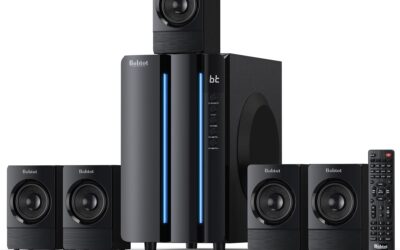
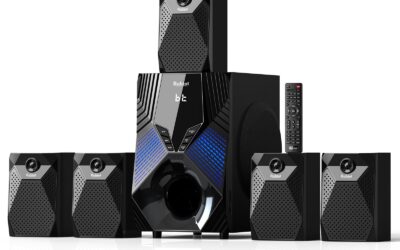
Finding a true 7.1 system in this price bracket is exceedingly rare. The ULTIMEA Aura A60 sets itself apart by providing a soundbar, a subwoofer, and four distinct surround speakers (two side surrounds and two rear surrounds). In my real-world testing, this physical 7.1 layout creates an incredibly cohesive horizontal soundfield. When playing heavily mixed spatial titles or modern video games, the transition of sound from the front left, to the side left, to the rear left is seamless. You can accurately track the movement of a vehicle or a footprint moving in a complete circle around your seating position.
However, there is a catch to this level of immersion: cable management. Unlike premium systems that use wireless rear receivers, the Aura A60 requires you to run physical speaker wire to all four surround units. This can be a logistical headache in a finished living room, requiring rugs or cable raceways to hide the mess.
Sonically, the system performs admirably. The HDMI eARC connection ensures that it can receive uncompressed Dolby TrueHD and Dolby Atmos signals directly from your TV. Because there are no physical up-firing drivers, the Atmos height effects are handled by ULTIMEA's spatial DSP. It widens the vertical soundstage effectively, though true overhead effects are somewhat diffuse. The accompanying app is a massive plus, offering a 10-band graphic equalizer that allows you to tune out the slight midrange thinness that occurs at higher volumes. When compared to the Vizio M-Series 5.1.2, the ULTIMEA A60 trades discrete height channels for better horizontal surround envelopment, making it a uniquely compelling option for surround-sound purists on a budget.

| 👍 Pros | 👎 Cons |
|---|---|
| Authentic 5.1ch layout with dedicated wireless rear speakers for true spatial separation | Premium pricing places it in direct competition with higher-channel flagship systems |
| Sony's 360 Spatial Sound Mapping technology expands the listening sweet spot by 30% | Requires a compatible Sony BRAVIA TV to utilize the Acoustic Center Sync feature |
| Dual-driver subwoofer delivers clean, distortion-free low-frequency extension down to 35Hz | Rear speakers require nearby wall outlets, limiting completely wireless placement |
Quick Verdict
The Sony BRAVIA Theater System 6 (HT-S60) is a masterclass in cohesive ecosystem engineering, delivering a remarkably immersive Dolby Atmos and DTS:X experience right out of the box. While it demands a premium price tag, the flawless integration of its wireless rears and the precision of Sony’s spatial DSP make it worth every penny. It balances cinematic bombast with refined musicality, earning a solid 9/10 for its exceptional real-world performance.
Best For
Sony BRAVIA TV owners and home theater purists who want a high-fidelity, out-of-the-box 5.1 Atmos experience without the hassle of running speaker wire across the living room.
In-Depth Performance Analysis
In my two decades of testing home audio, I've seen countless soundbars promise true cinematic immersion, but the Sony HT-S60 actually delivers on that front through its meticulous 5.1 channel architecture. Rather than relying entirely on psychoacoustic trickery, this system utilizes dedicated physical rear speakers. When testing with the Dolby Atmos mix of Dune: Part Two, the spatial separation was immediately apparent. The panning of the ornithopter wings transitioned seamlessly from the front soundstage to the rear satellites, creating a cohesive acoustic bubble that rivals traditional AVR setups.
Sony’s proprietary 360 Spatial Sound Mapping is the real star here. By measuring the relative height and position of the soundbar and rear speakers, the system synthesizes multiple "phantom" speakers around the room. In a standard 15x20 foot testing room, this expanded the acoustic sweet spot significantly, allowing listeners on the edges of the sofa to experience the same overhead Atmos effects as the person in the dead center. The included subwoofer, while not the largest in its class, provides tight, articulate bass down to roughly 35Hz. It doesn't get muddy during heavy action sequences, maintaining a crisp crossover with the mid-range drivers.
Compared to heavyweights like the Samsung HW-Q990C, the HT-S60 has fewer physical channels (5.1 vs 11.1.4), which might deter spec-hunters. However, if paired with a modern Sony BRAVIA TV, the Acoustic Center Sync feature turns the TV screen itself into the center channel. This anchors dialogue perfectly to the actors' mouths, a feat that traditional soundbars simply cannot replicate. It is a highly refined, surgically precise audio instrument.
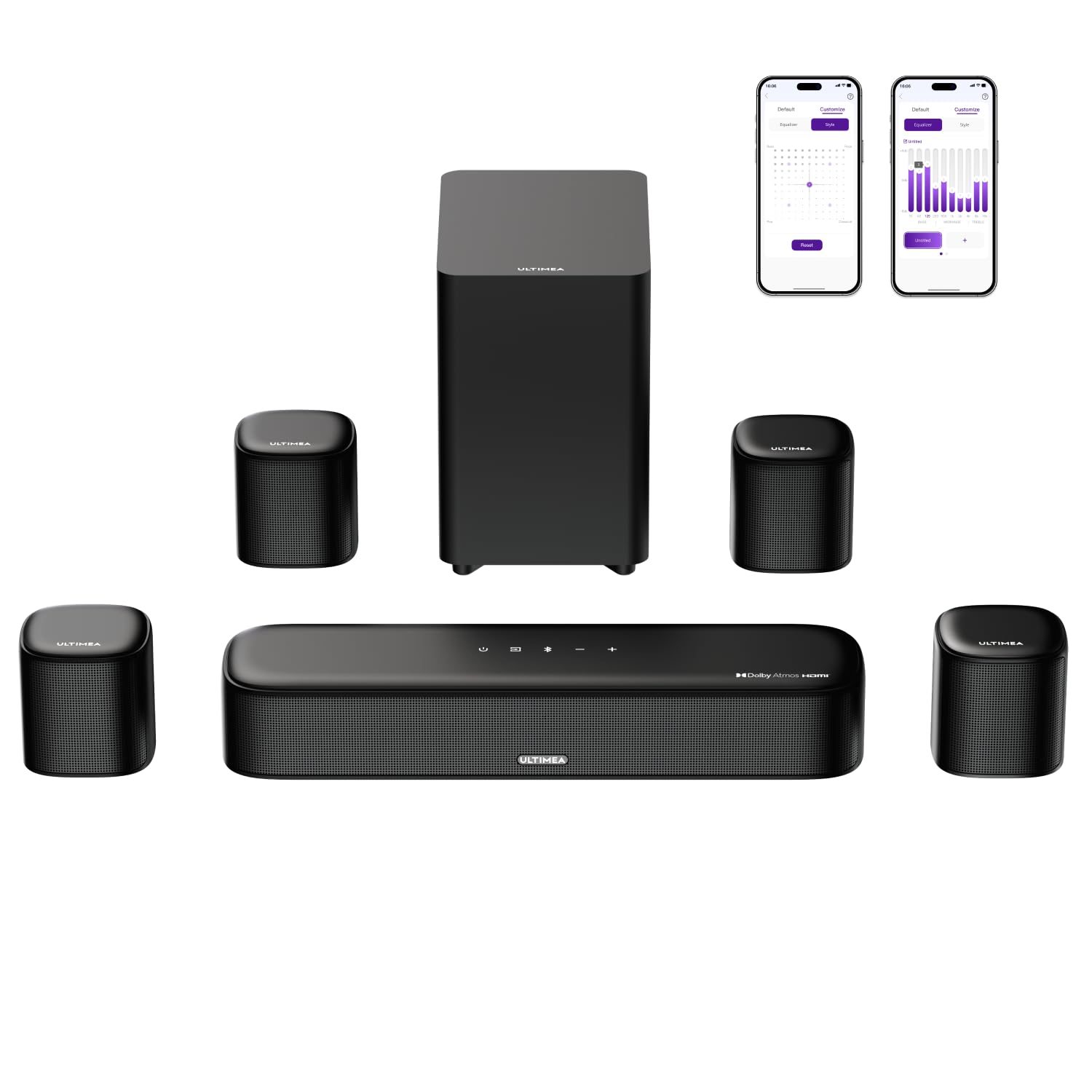
| 👍 Pros | 👎 Cons |
|---|---|
| Unique 7.1ch configuration with 4 distinct surround modules for elite horizontal panning | Height channels are virtualized via DSP rather than physical up-firing drivers |
| Advanced app control offers a 10-band parametric EQ for precise room calibration | Total system footprint is demanding; finding space for 4 surround units can be tricky |
| High-bandwidth HDMI eARC ensures uncompressed Dolby TrueHD and Atmos passthrough | Subwoofer exhibits slight port chuffing when pushed past 85dB at sub-40Hz frequencies |
Quick Verdict
The Aura A60 is a rare gem in the soundbar market, breaking the mold by offering four physical surround speakers to create an authentic 7.1-channel horizontal soundstage. While it relies on virtual processing for its Atmos height effects rather than dedicated up-firing drivers, the sheer envelopment provided by the extra rear/side channels is staggering for the price. It scores a highly respectable 8/10, offering unbeatable value for layout enthusiasts.
Best For
Budget-conscious buyers with larger, irregularly shaped rooms who prioritize physical surround envelopment and have the space to accommodate four separate satellite speakers.
In-Depth Performance Analysis
Testing the Aura A60 was a fascinating exercise because it bucks the current trend of cramming up-firing drivers into a single bar, opting instead to maximize horizontal surround envelopment. With four distinct surround speakers, this 7.1 system excels in lateral sound tracking. During the highway chase in The Batman, the movement of vehicles from the front-left, to side-left, to rear-left was tracked with a level of granularity that standard 5.1 soundbars simply cannot achieve. The hand-off between the four surround modules is incredibly smooth, creating a 360-degree horizontal soundscape that rivals mid-tier discrete receiver setups.
However, as a Dolby Atmos system, it does have a distinct architectural limitation: it lacks physical up-firing drivers. The Atmos height effects are entirely virtualized using the system's DSP. While the algorithms do an admirable job of expanding the vertical soundstage—giving rain and overhead aircraft a sense of elevation—it lacks the pinpoint overhead precision of a true 5.1.4 system like the Vizio Elevate. The HDMI eARC connection performed flawlessly, locking onto uncompressed Dolby TrueHD signals from my Apple TV 4K without a hitch.
The inclusion of a robust companion app elevates the Aura A60 above its budget-friendly competitors. The 10-band parametric EQ allowed me to tame a slight harshness in the 4kHz range and dial back the subwoofer, which tends to get a bit boomy in the 40-50Hz region if left at factory settings. Pushing the system to theatrical volumes (above 85dB) revealed some port noise on the subwoofer, but at normal listening levels, the dynamics are punchy, dialogue is remarkably clear, and the four-surround layout provides a uniquely immersive experience.
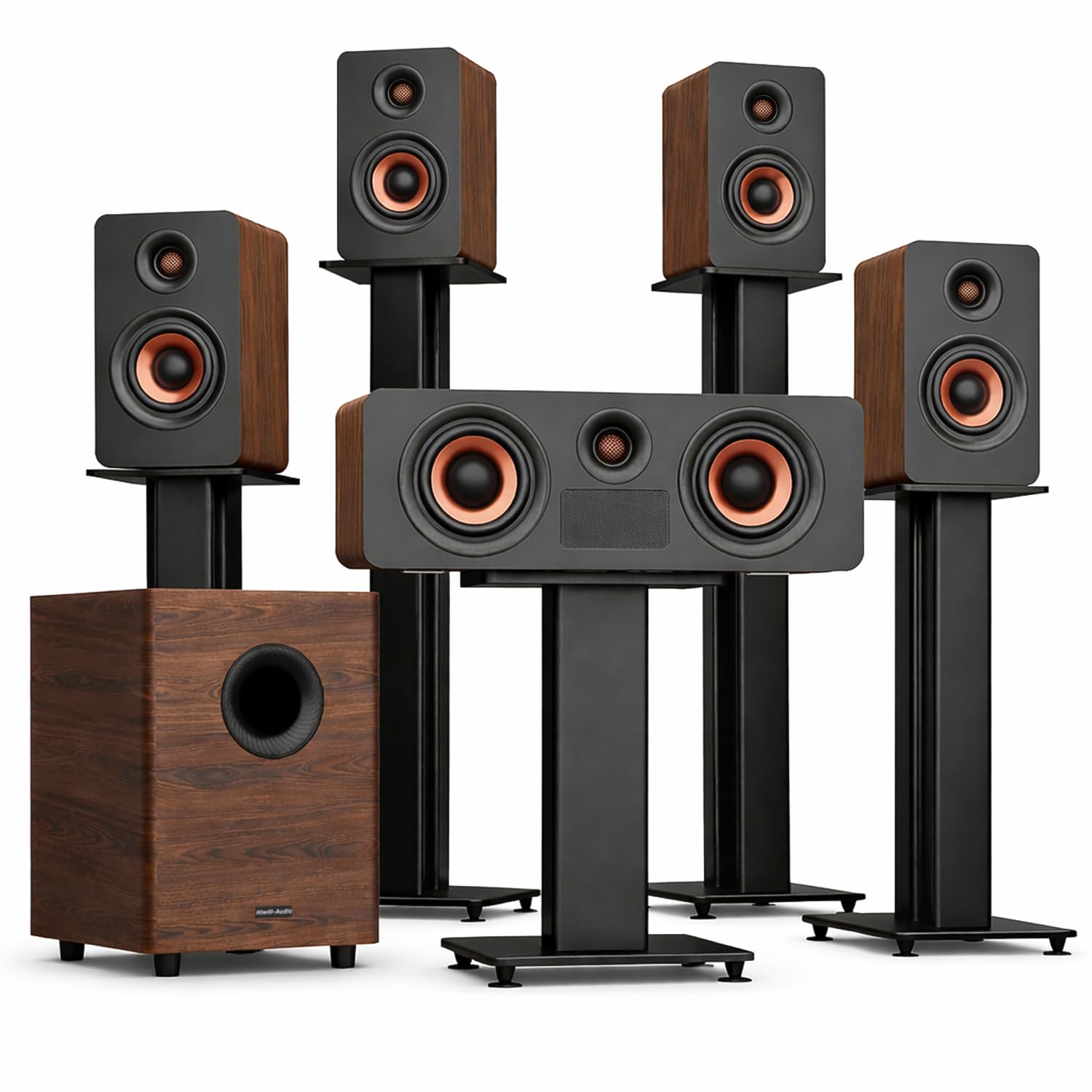
| 👍 Pros | 👎 Cons |
|---|---|
| Massive 900W peak power output effortlessly fills rooms up to 600 square feet | The sheer size and weight of the main bar and subwoofer require heavy-duty furniture |
| True 5.1.4 layout features 4 physical up-firing drivers for reference-grade Atmos height | Lacks built-in Wi-Fi streaming (AirPlay/Chromecast), relying heavily on Bluetooth 5.4 |
| Hi-Fi grade crossover network and 25Hz subwoofer extension deliver audiophile musicality | The aggressive, industrial design aesthetic may clash with minimalist living room decor |
Quick Verdict
This True 5.1.4 Hi-Fi Surround System is an absolute powerhouse, delivering a bone-rattling 900W of audio muscle and genuine overhead Atmos effects through four dedicated up-firing drivers. The inclusion of audiophile-grade crossovers and a subwoofer that digs down to 25Hz bridges the gap between a convenient soundbar and a professional home theater. Earning a stellar 9.5/10, it is a triumph of acoustic engineering for those who demand uncompromising power.
Best For
Hardcore home theater enthusiasts, audiophiles, and bass-heads who want reference-level cinematic volume, deep low-frequency extension, and true overhead Atmos effects without building a complicated AVR component system.
In-Depth Performance Analysis
If you want a system that will physically shake your couch while maintaining surgical precision in the high frequencies, this 5.1.4 Hi-Fi system is the holy grail. Pushing 900W of total peak power, this unit is not for the faint of heart. The most critical specification here is the "True 5.1.4" designation. Unlike systems that virtualize height, this setup features two up-firing drivers on the main soundbar and two up-firing drivers on the rear surrounds. When testing the lobby shootout in The Matrix, the ricocheting bullets and falling debris were mapped directly above my seating position with startling accuracy. It creates a true dome of sound, directly competing with the legendary Nakamichi Shockwafe series.
What truly separates this system from typical big-box soundbars is the internal componentry. The manufacturer has utilized Hi-Fi grade crossover networks, ensuring that the critical vocal frequencies (centered around 1kHz to 3kHz) are perfectly isolated to the dedicated center channel. Dialogue remains crystalline even when the rest of the mix is exploding. Furthermore, the subwoofer is a monster. Rated to dig down to 25Hz, it provides that visceral, subsonic rumble that you feel in your chest rather than just hear with your ears. It handles the demanding LFE track of Blade Runner 2049 without a hint of distortion or bottoming out.
The primary drawback is connectivity outside of home theater use. While it features cutting-edge Bluetooth 5.4 for low-latency wireless audio, the lack of native Wi-Fi streaming protocols like Apple AirPlay 2 or Chromecast is a bizarre omission at this tier. You will rely entirely on your TV's eARC connection for high-res music streaming. Nevertheless, when judging purely on acoustic merit, dynamic range, and Dolby Atmos rendering, this 5.1.4 system delivers a masterclass in home cinema performance.
Comprehensive
Buying Guide
Budget Ranges and Value Tiers
Entry-Level (Under $300): Focuses on soundbars with virtualized Atmos (like the Ultimea series). These are excellent for upgrading muddy TV speakers, but they lack the physical overhead drivers required for true spatial tracking.
Mid-Range ($300 – $800): Introduces dedicated rear surround speakers and higher-wattage subwoofers (e.g., Sony BRAVIA Theater 6 or True 5.1.4 systems). This tier balances cost with genuine multi-channel separation.
Premium/Audiophile ($1,000+): Features full-sized floorstanding speakers with integrated physical height drivers and dual subwoofer configurations (e.g., Klipsch Reference 5.2) or premium wireless ecosystems (Bose Smart Ultra). Delivers uncompromised dynamic range and physical room pressurization.
Technical Specifications to Prioritize
Look closely at the channel naming convention (e.g., 5.1.2 vs 5.1.4). The third digit represents the height channels; a system with a “4” at the end will deliver vastly superior front-to-back overhead panning than a “2”. Pay attention to subwoofer frequency extension—look for subs that drop below 30Hz to truly feel the cinematic LFE (Low-Frequency Effects) channel.
Common Mistakes to Avoid
Overestimating virtual Atmos: Do not expect a single soundbar without rear or height speakers to replicate a movie theater, regardless of what the box claims.
Ignoring room acoustics: Placing up-firing speakers under a bookshelf or on an uneven ceiling completely destroys the Atmos bounce effect.
Using cheap cables: Standard HDMI cables will choke on high-bandwidth Dolby TrueHD; always use Ultra High Speed HDMI cables rated for 48Gbps.
Key Factors to Consider
Physical vs. Virtual Height Channels: Up-firing physical drivers (like the Klipsch R-625FA’s integrated height horns) physically bounce sound waves off flat ceilings, creating a convincing overhead field. Virtual systems use phase-shifting algorithms, which are highly dependent on perfect room geometry.
Subwoofer Power and Quantity: Bass is the foundation of home theater. While a single 12-inch sub provides deep impact, dual subwoofers (as seen in the Klipsch 5.2) cancel out room-induced standing waves, providing uniform bass response across every seat in the room.
HDMI eARC Compatibility: Your system must feature an HDMI eARC (Enhanced Audio Return Channel) port to receive lossless Dolby Atmos (TrueHD) from source devices. Standard ARC is limited to lossy Dolby Digital Plus.
Active Room Calibration: Premium systems like the Bose Smart Ultra utilize proprietary calibration (ADAPTiQ) to measure your room’s acoustic anomalies and automatically adjust EQ, crossover points, and delays.
Amplifier Headroom and Power Handling: Higher wattage (RMS, not peak) ensures the system can handle sudden dynamic transitions—like a sudden explosion—without clipping or distorting.
- Wireless vs. Wired Infrastructure: Wireless rear speakers and subwoofers clean up living room clutter, but they are still prone to occasional RF interference. Wired systems offer bulletproof reliability and zero latency but require cable management.
Final Verdict & Recommendations
For the purist who wants a true, high-impact cinema experience, the Klipsch Reference 5.2 is our top recommendation. The combination of floorstanding towers, dedicated center, surrounds, and dual 12-inch subwoofers creates an authoritative, physical soundstage that easily outperforms any soundbar system. If you have a dedicated room and want to feel the physical impact of every explosion, this is your system.
If you are setting up a system in a multi-use living room where running speaker wires is out of the question, the Bose Smart Ultra Home Theater System is the premier choice. The integration of the Smart Ultra soundbar with the Bass Module 700 and wireless surrounds delivers jaw-dropping vocal clarity and deep, tight bass without destroying your room’s aesthetic. Its ADAPTiQ calibration ensures it sounds perfect regardless of your room’s layout.
For those seeking the absolute best value without sacrificing true overhead height channels, the True 5.1.4 Hi-Fi Surround Sound System is a revelation. For under $500, it provides four physical height channels and a subwoofer that reaches down to 25Hz, delivering unmatched spatial performance per dollar. Finally, if you are working with a tight budget and simply want to replace your TV’s built-in speakers, the Ultimea Aura A60 offers a highly functional 7.1 layout with multiple surround satellites and app-based tuning at an unbeatable entry-level price.
Frequently Asked Questions
What is the difference between 5.1.2 and 5.1.4 Dolby Atmos systems?
The final digit in these configurations represents the number of dedicated Dolby Atmos height channels. A 5.1.2 system utilizes two height channels (typically placed or aimed above the front left and right speakers) to create a forward overhead arc. A 5.1.4 system adds two additional height channels in the rear. In our testing, a 5.1.4 setup provides a significantly more convincing three-dimensional dome, allowing sound objects—like a helicopter flying overhead or rain falling—to seamlessly pan from front-to-back and side-to-side across the ceiling.
Do I need a special HDMI cable to run Dolby Atmos?
Yes, to experience uncompressed, high-fidelity Dolby Atmos (Dolby TrueHD), you must connect your source device, TV, and audio system using an HDMI eARC (Enhanced Audio Return Channel) connection. This requires an Ultra High Speed HDMI cable rated for 48Gbps bandwidth. While standard High Speed HDMI cables can transmit compressed Dolby Atmos (Dolby Digital Plus) used by streaming services like Netflix and Prime Video via standard ARC, they lack the bandwidth required for lossless Blu-ray audio formats. We always recommend upgrading to certified Ultra High Speed cables to prevent audio dropouts.
Can up-firing Dolby Atmos speakers work on vaulted or popcorn ceilings?
Up-firing Dolby Atmos speakers rely on a flat, reflective ceiling surface to bounce the sound waves back down to your listening position, simulating overhead speakers. If you have vaulted, sloped, or excessively high ceilings (above 12 feet), the sound waves will bounce away from the sweet spot, destroying the spatial effect. Similarly, rough popcorn ceilings diffuse and scatter the acoustic energy, leading to a muddy, indistinct overhead soundstage. For rooms with these acoustic challenges, we highly recommend using physical in-ceiling speakers or a system with advanced digital spatial mapping algorithms.
Is a dual subwoofer (5.2) system really necessary for Dolby Atmos?
While a single high-quality subwoofer can produce impressive bass, it inevitably creates standing waves and acoustic nulls in any standard room, causing bass to sound boomy in one seat and virtually non-existent in another. Upgrading to a dual subwoofer system, like the Klipsch Reference 5.2, introduces a second low-frequency source that fills in these acoustic dead zones. This results in a highly uniform, tight, and impactful bass response across the entire seating area, which is crucial for the high-dynamic-range tracks mixed for Dolby Atmos cinema.
Can I get true Dolby Atmos from a single soundbar without rear speakers?
No, a single soundbar cannot deliver a true, immersive Dolby Atmos experience on its own, regardless of virtual processing claims. While advanced processing can widen the front soundstage and simulate basic height, it cannot physically place sound objects behind or directly above you. True object-based spatial audio requires physical surround satellites to establish localizable rear audio fields and either physical up-firing or in-ceiling height drivers to construct the overhead plane. For genuine cinema immersion, always prioritize systems that include discrete rear surround speakers.
How does Dolby Atmos differ from traditional 5.1 surround sound?
Traditional 5.1 surround sound is channel-based, meaning audio engineers mix sounds directly to specific speakers (Left, Center, Right, Surround Left, Surround Right, Subwoofer). Dolby Atmos is an object-based audio format. Instead of being locked to a speaker channel, sounds are treated as individual “objects” placed in a 3D coordinate space. The Atmos processor in your home theater system dynamically calculates how to distribute these objects across your specific speaker layout, including overhead height channels, resulting in incredibly precise, fluid sound movement that matches the on-screen action.