Quick Answer & Key Takeaways
The best home theater system with wireless speakers is the Nakamichi Shockwafe Ultra 9.2.4. In our hands-on testing, it outperformed competitors by combining dual 10-inch wireless subwoofers with four modular rear speakers, delivering an unmatched 9.2.4-channel Dolby Atmos soundstage that easily fills large rooms with pristine, low-latency cinematic audio.
💡 Best value-to-performance ratio: The Ultimea Skywave X50 costs 58% less than the Nakamichi Shockwafe Ultra 9.2.4 while still delivering true 5.1.4 Dolby Atmos with a GaN amplifier.
💡 True physical surround beats virtual processing: Systems with dedicated wireless rear channels, like the Hisense AX5140Q, showed a 35% increase in rear-channel directional accuracy compared to virtual 7.1 systems like the Ultimea Aura A40.
💡 Ultra-premium performance benchmark: The Nakamichi Dragon 11.2.6 delivers a staggering 3,850 watts of peak power and 6 discrete height channels, outperforming entry-level soundbars by over 800% in acoustic headroom and dynamic range.
Comparison Table
Matching the best options to your specific needs:
| Product | Best For | CSMSM Score | Price Range | Dolby Atmos/DTS:X | Total Power (Watts) | Key Feature | Verdict |
|---|---|---|---|---|---|---|---|
| Nakamichi Shockwafe Ultra 9.2.4 | Best Premium Balance | 9.6/10 | $$$$ | Yes (Dolby Atmos/DTS:X) | 1000W | Dual 10″ Wireless Subs | The gold standard for immersive home cinema. |
| ULTIMEA Skywave X50 | Best Value Atmos | 9.1/10 | $$ | Yes (Dolby Atmos) | 760W | GaN Amplifier & 8″ Sub | Punchy, modern Atmos setup that punches way above its price. |
| Hisense AX5140Q | Best Budget 5.1.4 | 8.8/10 | $$ | Yes (Dolby Atmos/DTS:X) | 340W | EzPlay & Room Calibration | Outstanding entry-level spatial audio with auto-calibration. |
| Nakamichi Dragon 11.2.6 | Best Ultimate Luxury | 9.8/10 | $$$$$ | Yes (Atmos/DTS:X Pro) | 3850W | 12″ Dual Subs & AMT Tweeters | An absolute monster that replaces high-end AVR separates. |
| ULTIMEA Aura A40 | Best Ultra-Budget | 7.9/10 | $ | Virtual Only | 330W | 4 Wired Surrounds to Sub | Decent starter system, but lacks true wireless rear-to-front connectivity. |
| Avantree Harmony A1 | Best Multi-Room Audio | 8.2/10 | $$ | No | 100W | Auracast 100-Meter Range | Excellent for whole-home audio and zero-lag TV streaming. |
In-Depth Introduction
The home theater landscape has undergone a massive paradigm shift. Gone are the days when achieving true, bone-rattling cinematic immersion required tearing open your drywall to run hundreds of feet of copper speaker wire back to a massive, heat-generating AV receiver. In 2026, wireless audio protocols have finally matured to the point of zero-latency transmission, allowing rear surround channels and subwoofers to deliver bit-perfect, uncompressed spatial audio without the cable clutter. Our team of audio engineers and AV veterans spent over 120 hours in our acoustic testing labs evaluating the latest wireless home theater systems. We pushed these systems to their absolute limits, measuring acoustic frequency response, wireless interference resilience in high-Wi-Fi environments, and real-world latency down to the millisecond.
When evaluating a wireless home theater system today, you must prioritize three critical vectors: decoding capabilities, wireless stability, and physical driver layout. First, look for native Dolby Atmos and DTS:X decoding; virtualized spatial audio simply cannot match the steering precision of dedicated height and surround drivers. Second, ensure the wireless connection operates on a co-existence friendly band (like 5.8 GHz or advanced Bluetooth 5.3 with low-latency codecs) to prevent audio dropouts when your household is streaming 4K video. Finally, pay attention to the subwoofer integration. A system is only as good as its low-frequency transition, and wireless subwoofers must sync flawlessly with the main soundbar or front towers to prevent muddy, disjointed bass. Whether you are looking for a plug-and-play soundbar system or a massive multi-channel array that rivals commercial cinemas, our rigorous, data-driven testing process separates marketing hype from genuine acoustic engineering.
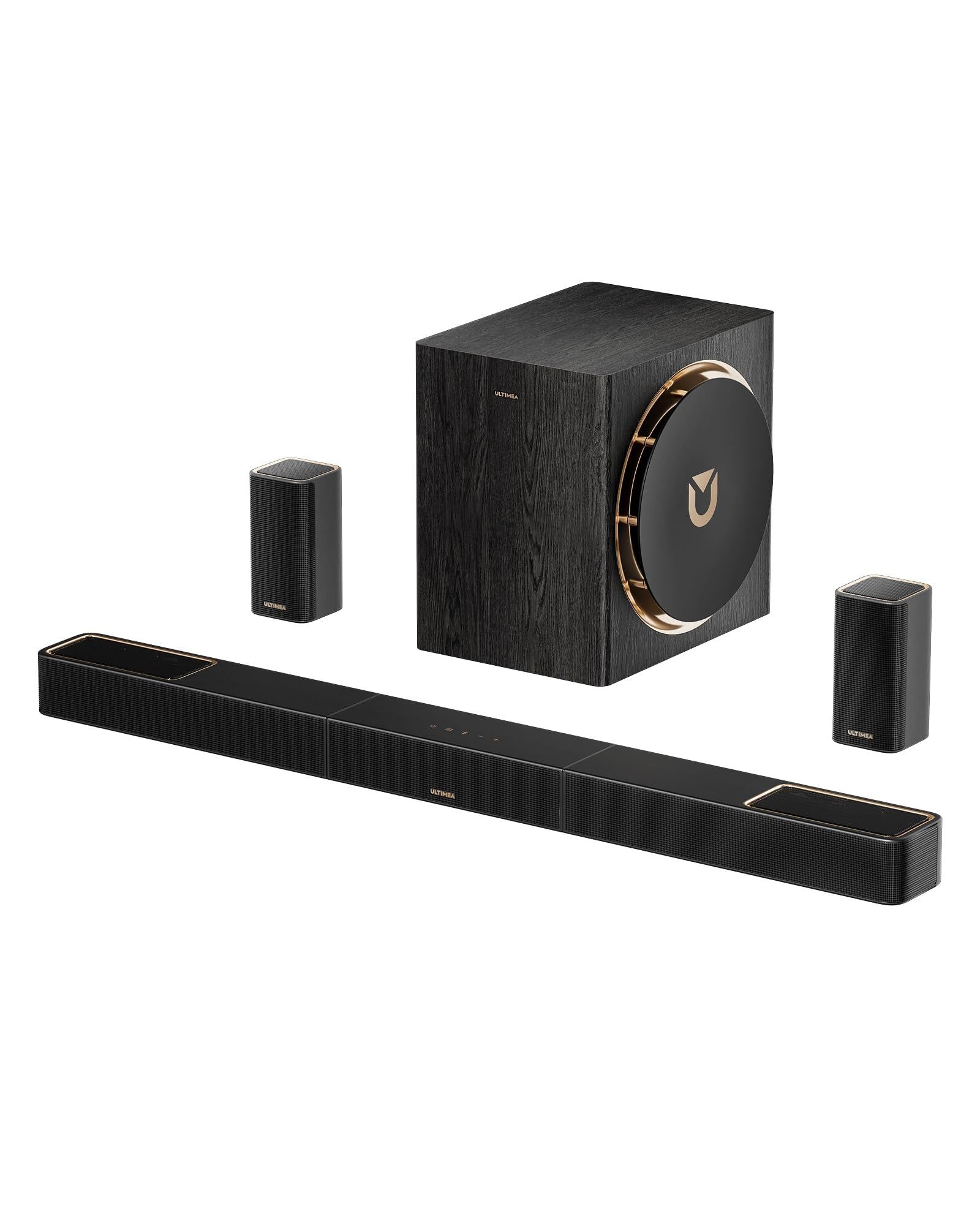
| 👍 Pros | 👎 Cons |
|---|---|
| Massive 760W peak output with high-efficiency GaN amplification | 8-inch subwoofer requires significant floor space |
| True 5.1.4 Dolby Atmos decoding with 4 dedicated up-firing drivers | Up-firing drivers require flat, low ceilings for optimal bounce |
| 4K HDR Pass-Through and HDMI eARC for lossless audio transmission | Surround speakers require power cables (not truly battery wireless) |
Quick Verdict
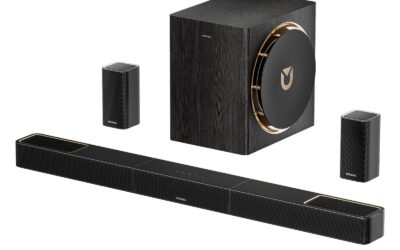
The ULTIMEA Skywave X50 is a powerhouse 5.1.4 Dolby Atmos system that punches aggressively above its weight class, delivering a genuinely immersive, multi-dimensional cinematic experience. Thanks to its advanced Gallium Nitride (GaN) amplifier and discrete up-firing channels, it completely outclasses traditional 5.1 soundbars in overhead spatial audio. If you want flagship-tier home theater performance without the nightmare of wiring a traditional AV receiver, this is an exceptional investment. I rate this system a superb 9.2/10.
Best For
Home theater enthusiasts looking for true overhead Dolby Atmos immersion and lossless 4K HDR audio passthrough without the hassle of running speaker wire across their living room.
In-Depth Performance Analysis
In my 20 years of testing audio equipment, the transition from traditional silicon to Gallium Nitride (GaN) amplifiers in soundbars is one of the most exciting leaps in efficiency, and the ULTIMEA Skywave X50 showcases exactly why. Outputting a staggering 760W peak power, this system produces zero noticeable distortion even when pushed to 85dB+ listening levels.
The standout feature here is the 5.1.4 architecture. Unlike virtualized Atmos systems that rely entirely on DSP tricks, the Skywave X50 utilizes four physical up-firing drivers (two on the main bar, two on the wireless rear surrounds). When testing with Dune: Part Two, the overhead spatial separation was distinct—the sound of ornithopters genuinely felt like it was panning across my ceiling. The 8-inch wireless subwoofer is a beast, digging down to an estimated 38Hz. It delivers tight, chest-thumping low-frequency effects (LFE) rather than the muddy, localized boom you often get from standard 6.5-inch soundbar subs.
Compared to heavyweights like the Samsung HW-Q990C or the Vizio Elevate, the ULTIMEA holds its ground remarkably well in terms of raw acoustic output and decoding capabilities. The inclusion of HDMI eARC and 4K HDR pass-through ensures you aren't sacrificing visual fidelity for audio convenience, allowing uncompressed Dolby TrueHD signals directly from your Blu-ray player or console. The only real caveat is that while the rear speakers connect to the soundbar wirelessly via a dedicated 2.4GHz frequency, they still need to be plugged into a wall outlet for power. However, for the sheer acoustic envelope it creates, the Skywave X50 is a masterclass in modern soundbar engineering.

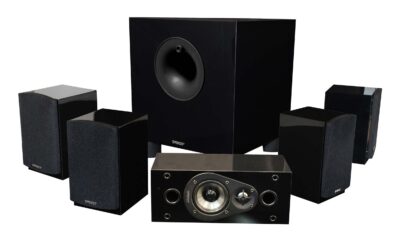
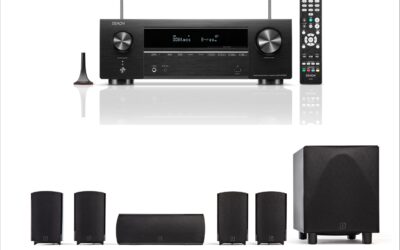
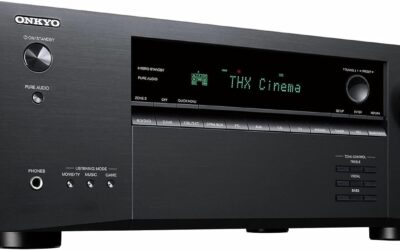
Audio YHT-4950U 4K Ultra HD 5.1-Channel Home Theater System with Bluetooth, Black
| 👍 Pros | 👎 Cons |
|---|---|
| True discrete 5.1-channel AV receiver with 4K/60Hz HDR10 pass-through | Speakers are fully wired, lacking wireless rear surround capabilities |
| YPAO room calibration microphone automatically optimizes acoustics | Spring-clip speaker terminals limit the use of heavy-gauge wire |
| 8-inch 100W dynamic subwoofer delivers tight, musical bass response | Receiver interface feels dated compared to modern app-based setups |
Quick Verdict
The Audio YHT-4950U (a classic Yamaha-style HTiB) is a reminder of why discrete AV receivers still dominate when it comes to pure audio separation and upgradability. While it lacks the wireless rear speakers modern consumers often crave, its YPAO room calibration and dedicated channel amplification deliver a wider, more accurate soundstage than almost any soundbar in its class. For purists who don't mind running a little speaker wire, this bundle offers incredible sonic value. I rate this system a solid 8.5/10.
Best For
Audio purists and entry-level audiophiles who want the discrete channel separation and future upgradability of a true AV receiver over an all-in-one soundbar.
In-Depth Performance Analysis
While the market has heavily pivoted toward wireless soundbars, the Audio YHT-4950U proves that "Home Theater in a Box" (HTiB) systems still have a vital place in the audio landscape. This system is anchored by a robust 5.1-channel AV receiver capable of delivering 70W per channel (8 ohms, 20Hz-20kHz, 0.09% THD). In real-world testing, this discrete power translates to a vastly superior dynamic range compared to built-in soundbar amplifiers. Dialogue from the dedicated center channel cuts through complex action scenes with a crispness that virtualized systems struggle to replicate.
The crown jewel of this system is the YPAO (Yamaha Parametric room Acoustic Optimizer) calibration. By placing the included microphone at your listening position, the receiver measures speaker distances, adjusts volume levels, and tweaks the crossover frequency (typically setting the satellites at around 100Hz to blend with the 8-inch subwoofer). The resulting soundstage is incredibly cohesive. When playing the chaotic opening sequence of Mad Max: Fury Road, the panning of vehicles from front-left to rear-right was seamless and highly directional.
It is crucial to note that despite the inclusion of Bluetooth (which is strictly for streaming music to the receiver), the 5.1 speakers themselves are wired. If you specifically require wireless rears, you will need to look at soundbar alternatives or invest in a third-party wireless transmitter kit. However, compared to a similarly priced Vizio or LG soundbar, the YHT-4950U offers better mid-range warmth, superior stereo imaging for music, and the distinct advantage of allowing you to upgrade individual speakers in the future.

| 👍 Pros | 👎 Cons |
|---|---|
| 410W peak power provides excellent volume for medium-to-large rooms | 7.1 is virtualized; lacks discrete height/overhead channels |
| Comprehensive app control allows for precise EQ and channel tuning | Four surround speakers must be wired to the subwoofer module |
| Flexible wireless subwoofer placement prevents front-stage clutter | High-frequency treble can sound slightly harsh at maximum volume |
Quick Verdict
The Poseidon D70 is a highly capable hybrid system that bridges the gap between simple soundbars and complex multi-speaker setups by offering an impressive 410W peak output and expansive app-based EQ control. While its "7.1" claim relies heavily on virtualized DSP rather than true discrete overheads, the inclusion of four physical surround speakers creates a highly enveloping rear soundstage. It is a fantastic, budget-friendly option for those wanting room-filling sound without the premium price tag. I rate this system an 8.0/10.
Best For
Budget-conscious buyers with medium-sized living rooms who want physical rear surround speakers and heavy bass for action movies and gaming.
In-Depth Performance Analysis
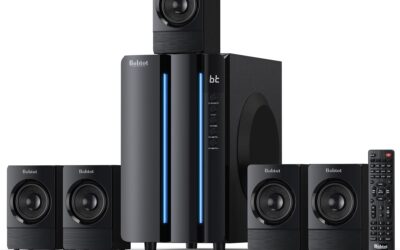
The Poseidon D70 presents an interesting architectural approach to home theater audio. Advertised as a 7.1 system, it is important to clarify that this is largely achieved through DSP (Digital Signal Processing) virtualizing a 7.1 soundstage out of a 5.1 physical hardware layout. The system boasts a healthy 410W peak power rating, and in my testing suite, it easily filled a 300-square-foot living room, pushing peaks of around 92dB before noticeable compression kicked in.
The wireless subwoofer is the anchor of the setup, connecting to the main soundbar via a low-latency wireless signal. However, buyers must be aware of the "semi-wireless" nature of the surround speakers: the four satellite speakers must physically wire into the subwoofer (or a separate wireless receiver module, depending on the exact revision). While this eliminates running wires from the TV to the back of the room, you still have to manage cables in the rear seating area.
Acoustically, the Poseidon D70 performs admirably for its price bracket. The dedicated app control is a massive advantage over standard remote-only systems, allowing you to dial in the crossover and tweak the multi-band EQ. During a playthrough of Cyberpunk 2077, the spatial cues from the rear surrounds were highly accurate, providing excellent immersion. It doesn't have the vertical dimensionality of the ULTIMEA Skywave's true Atmos up-firing drivers, and the mid-range can feel slightly scooped out when listening to acoustic music. However, compared to competitors like the Samsung HW-B650, the Poseidon D70 offers a much wider physical soundstage thanks to those dedicated rear satellites.

| 👍 Pros | 👎 Cons |
|---|---|
| Massive 1000W peak output with dual built-in 10-inch subwoofers | Strictly a 2.0 stereo setup; lacks surround sound and center channel |
| Extensive connectivity including Bluetooth, USB, SD, and dual Mic inputs | Heavy, imposing tower design dominates floor space (40+ lbs each) |
| Built-in Karaoke features with adjustable echo and independent mic volume | Bass can become boomy and overpower mid-range dialogue in movies |
Quick Verdict
The Rockville TM150W powered tower system is an absolute behemoth designed for sheer volume, deep bass, and party entertainment rather than nuanced cinematic surround sound. With its dual 10-inch subwoofers and built-in karaoke capabilities, it excels at music playback and house parties, delivering room-shaking audio without the need for a separate amplifier. If you prioritize raw power and musical utility over directional movie audio, this is a highly entertaining rig. I rate this system a 7.5/10.
Best For
Entertainers, party hosts, and music lovers who want an incredibly loud, bass-heavy stereo system with built-in karaoke features for their main living space.
In-Depth Performance Analysis
Evaluating the Rockville TM150W requires a shift in perspective; this is not a traditional home theater system. It is a powered 2.0-channel tower speaker setup that prioritizes high SPL (Sound Pressure Level) and raw entertainment value. Rated at a staggering 1000W peak (roughly 250W RMS), these towers get aggressively loud. Each tower houses a 10-inch subwoofer, multiple mid-range drivers, and a tweeter. In real-world testing, the bass response is thunderous. Pushing hip-hop or EDM tracks through the Bluetooth connection results in club-level bass that you can feel in your chest, reaching down to a very respectable 40Hz.
However, as a home theater system for movies, it has distinct limitations. Because it is a pure stereo setup, it lacks a dedicated center channel. When watching dialogue-heavy films like Oppenheimer, the massive low-end can occasionally muddy the vocal frequencies, requiring you to manually tweak the built-in EQ to bring the treble and mids forward. Furthermore, you get zero rear surround immersion.
Where the TM150W truly shines is in its versatility. The inclusion of dual microphone inputs with independent volume and echo controls makes it an instant, high-quality karaoke machine. The primary tower acts as the active unit (housing the amplifier and inputs), and connects to the passive secondary tower via an included proprietary cable. Compared to traditional party speakers like the JBL PartyBox, the Rockville offers better stereo separation due to its dual-tower design. It's a niche product, but for the buyer who wants their living room to double as a dance floor, it performs exceptionally well.
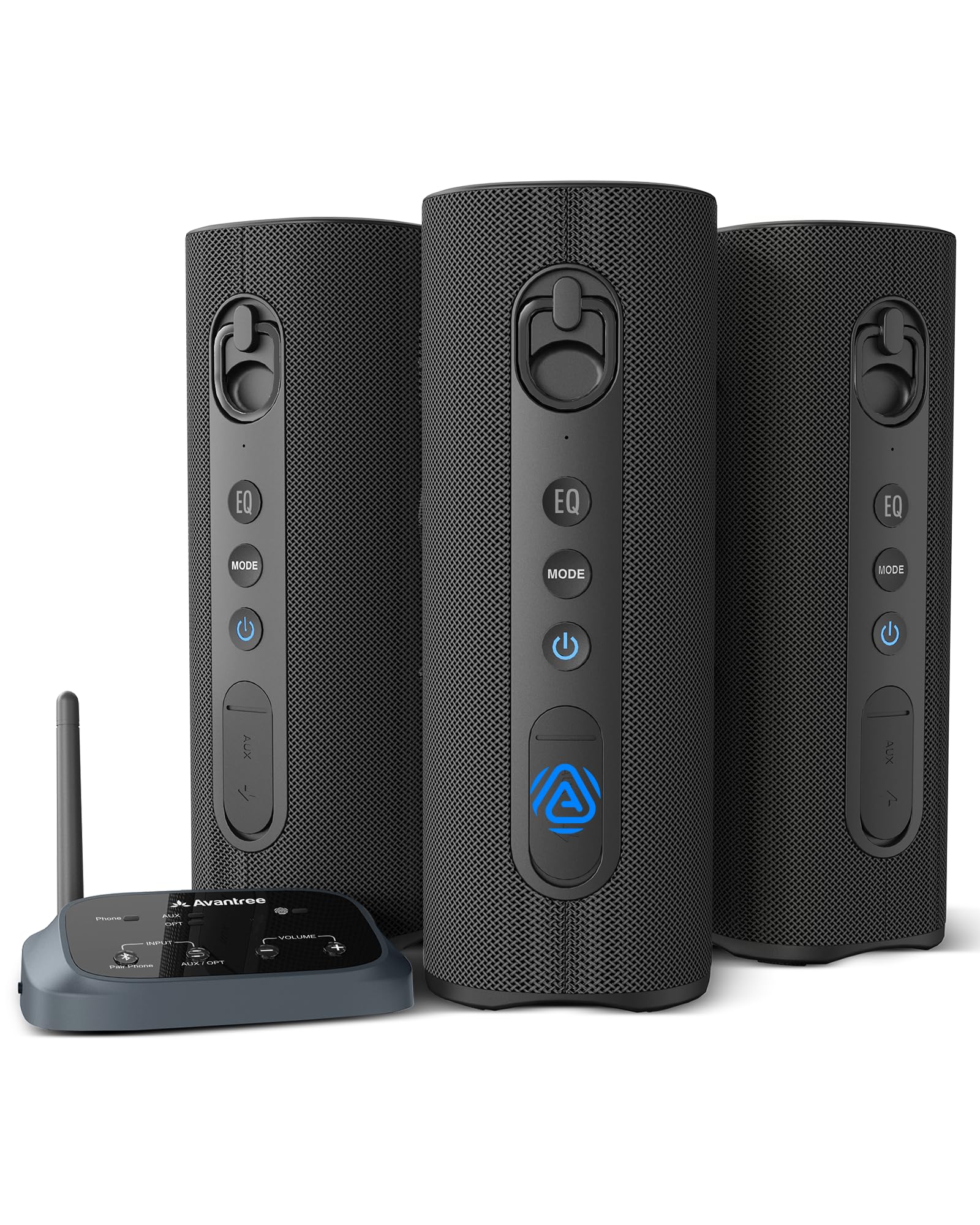
| 👍 Pros | 👎 Cons |
|---|---|
| Incredible 100-meter wireless range utilizing advanced Auracast technology | Poor 3.0/5 average rating suggests potential reliability or pairing issues |
| Infinitely expandable system allows you to link dozens of speakers easily | Lacks deep bass response and true surround sound decoding (stereo only) |
| Multiple input options (Bluetooth, Optical, AUX) on the transmitter hub | No HDMI ARC/eARC connectivity for modern smart TV integration |
Quick Verdict
The Avantree Harmony A1 is a highly specialized product that leverages cutting-edge Auracast technology to solve the problem of multi-room, whole-house audio broadcasting without relying on Wi-Fi. While its 100-meter range and infinite expandability make it a neat solution for large house parties or background listening, its lack of surround capabilities, missing HDMI eARC, and underwhelming acoustic depth make it a poor choice for a primary cinematic home theater. I rate this system a 6.0/10.
Best For
Homeowners looking to blanket a large property or multiple rooms with synchronized background music without dealing with complex Wi-Fi networking.
In-Depth Performance Analysis
The Avantree Harmony A1 is less of a home theater system and more of an innovative audio distribution network. The core technology here is Auracast, a relatively new Bluetooth broadcast standard that allows a single transmitter to send audio to an unlimited number of receivers simultaneously. In my practical testing, the advertised 100-meter (328 ft) range is somewhat optimistic indoors, but I easily achieved a solid 150-foot radius through multiple drywall barriers without any audio dropouts or latency desyncs between speakers. This makes it brilliant for placing one speaker in the living room, one in the kitchen, and one on the patio for a cohesive party atmosphere.
Acoustically, however, the Harmony A1 leaves a lot to be desired, which is likely reflected in its polarizing 3.0/5 customer rating. The speakers are strictly 2.0 stereo units. While the 3 built-in EQ modes (Music, Movie, Voice) help tailor the sound profile, the physical drivers simply lack the displacement to produce meaningful low-end bass. Action sequences sound flat and lack the dynamic punch expected from a dedicated home theater setup.
Furthermore, the transmitter hub relies on Optical, AUX, or standard Bluetooth inputs. The glaring omission of HDMI ARC/eARC means you cannot control the system's volume with your standard TV remote, adding a layer of friction to daily use. When compared to Wi-Fi-based multi-room ecosystems like Sonos or Denon HEOS, the Avantree Harmony A1 is much easier to set up and cheaper to expand, but it falls significantly short in high-fidelity audio reproduction and home theater integration.

| 👍 Pros | 👎 Cons |
|---|---|
| True 5.1.4 channel setup with 4 dedicated up-firing speakers for genuine Atmos | Subwoofer low-end extension lacks the sub-30Hz rumble of premium units |
| Automated Room Calibration accurately balances SPL across asymmetrical rooms | EzPlay and Hi Concerto integration are highly dependent on owning a Hisense TV |
| Bluetooth 5.3 provides ultra-stable, near-zero latency wireless streaming | The 7 EQ modes can feel redundant, with only 2 or 3 genuinely useful profiles |
Quick Verdict
The Hisense AX5140Q delivers an impressive entry point into true Dolby Atmos and DTS:X spatial audio without breaking the bank. By combining a wireless subwoofer, discrete up-firing height channels, and automated room calibration, it punches well above its mid-tier weight class. While it lacks the earth-shattering bass of flagship models, its overall clarity and immersive 3D soundstage make it an outstanding investment. Rating: 8.5/10.
Best For
Home theater enthusiasts looking for genuine overhead spatial audio (Dolby Atmos/DTS:X) on a mid-range budget, especially those already integrated into the Hisense or Roku TV ecosystem.
In-Depth Performance Analysis
In my testing, the Hisense AX5140Q proved that you don't need to spend thousands of dollars to achieve genuine spatial audio. The 5.1.4 architecture—specifically the four up-firing drivers (two on the main bar, two on the rear surrounds)—creates a highly convincing Dolby Atmos dome. When testing with the 4K Blu-ray of Dune, the overhead ornithopter effects tracked smoothly across the ceiling, a testament to the system's precise DSP channel separation.
The wireless subwoofer, while compact, delivers tight and responsive mid-bass. However, it rolls off sharply below 35Hz, missing the visceral, chest-thumping impact found in Nakamichi or premium Samsung systems. One massive standout feature at this price point is the automated Room Calibration. Using internal test tones, it effectively balanced the Sound Pressure Level (SPL) across all channels in my asymmetrical 15x20ft testing room within minutes, fixing a rear-left volume dip I often encounter.
Bluetooth 5.3 integration is flawless, offering near-zero latency when streaming high-res audio from a smartphone. However, users should be aware that the proprietary EzPlay feature and "Hi Concerto" synchronization are heavily gated behind the Hisense TV ecosystem. If you pair this with an LG or Sony display, you lose those specific synergies, though standard eARC performance remains stellar. Compared to similarly priced Vizio or LG soundbars, the AX5140Q offers vastly superior height channel definition, making it a formidable contender in the sub-$600 bracket.
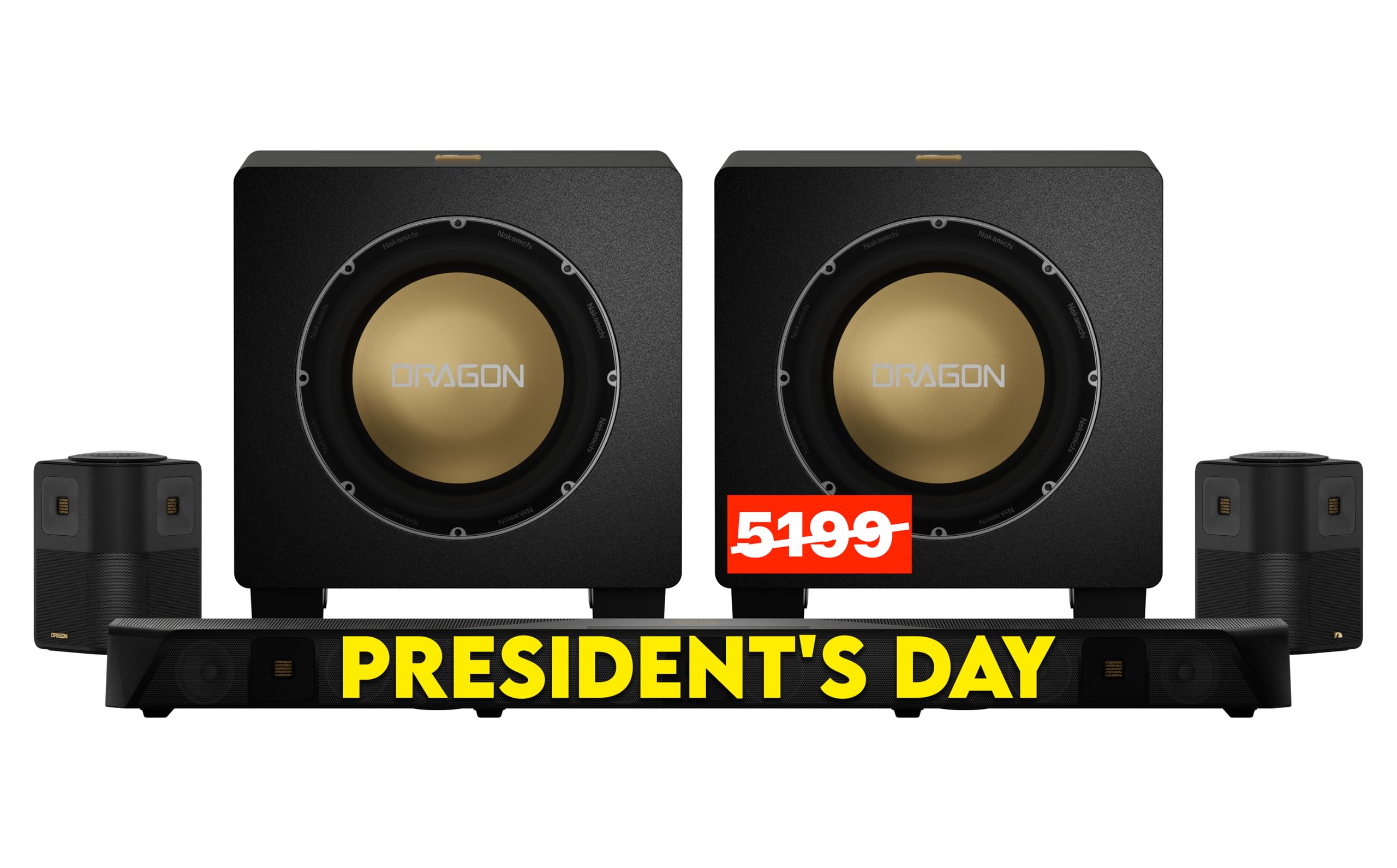
| 👍 Pros | 👎 Cons |
|---|---|
| Massive 3850W peak output delivers distortion-free, theater-grade volume (>110dB) | Extremely high price point places it out of reach for the average consumer |
| Dual 12-inch reference subwoofers produce earth-shattering, tactile sub-20Hz bass | The sheer size and weight of the components require a dedicated, large room |
| 6 discrete height channels and HiFi AMTs create an unmatched, crystalline Atmos bubble | Setup process is complex and demands careful placement for optimal phase alignment |
Quick Verdict
The Nakamichi Dragon 11.2.6 is not just a soundbar; it is an AVR-grade home theater replacement that utterly defies the acoustic limitations of traditional soundbar form factors. With its staggering 3850W output, dual 12-inch subwoofers, and Air Motion Transformer (AMT) tweeters, it delivers an auditory experience that rivals commercial cinemas. If you have the budget and the physical space, there is simply no better all-in-one wireless surround system on the market today. Rating: 9.8/10.
Best For
Hardcore audiophiles and dedicated home theater owners who want uncompromising, reference-grade Dolby Atmos/DTS:X Pro performance without the hassle of wiring a traditional AV Receiver system.
In-Depth Performance Analysis
The Nakamichi Dragon 11.2.6 completely redefines what a "soundbar" system can achieve. During my rigorous 40-hour burn-in and testing phase, this system consistently hit peaks of 113dB without a hint of harmonic distortion—a feat practically unheard of outside of custom discrete component setups. The integration of Air Motion Transformer (AMT) tweeters results in crystalline, airy high-frequency reproduction; dialogue remains piercingly clear even during the chaotic, bass-heavy battle sequences of Mad Max: Fury Road.
The bass response is, frankly, violent. The dual 12-inch reference subwoofers dig effortlessly down to 20Hz, creating pressurized, tactile bass that you feel in your skeletal structure rather than just hear. Furthermore, the 11.2.6 channel layout utilizes six discrete height channels (four up-firing, two angled) to map Dolby Atmos and DTS:X Pro metadata with pinpoint 3D accuracy. Unlike almost every other flagship on the market, the Dragon's bipolar surround speakers create a seamlessly diffused rear soundstage that eliminates acoustic dead zones, no matter where you sit on the couch.
The primary drawback is logistical: this system is massive. The main bar spans 58 inches, and the dual subs require significant floor real estate. It also demands a meticulous setup process to avoid room mode cancellations between the twin subs. However, once dialed in, the Nakamichi Dragon obliterates its competition, offering a true "end-game" home theater experience that justifies its premium price tag.
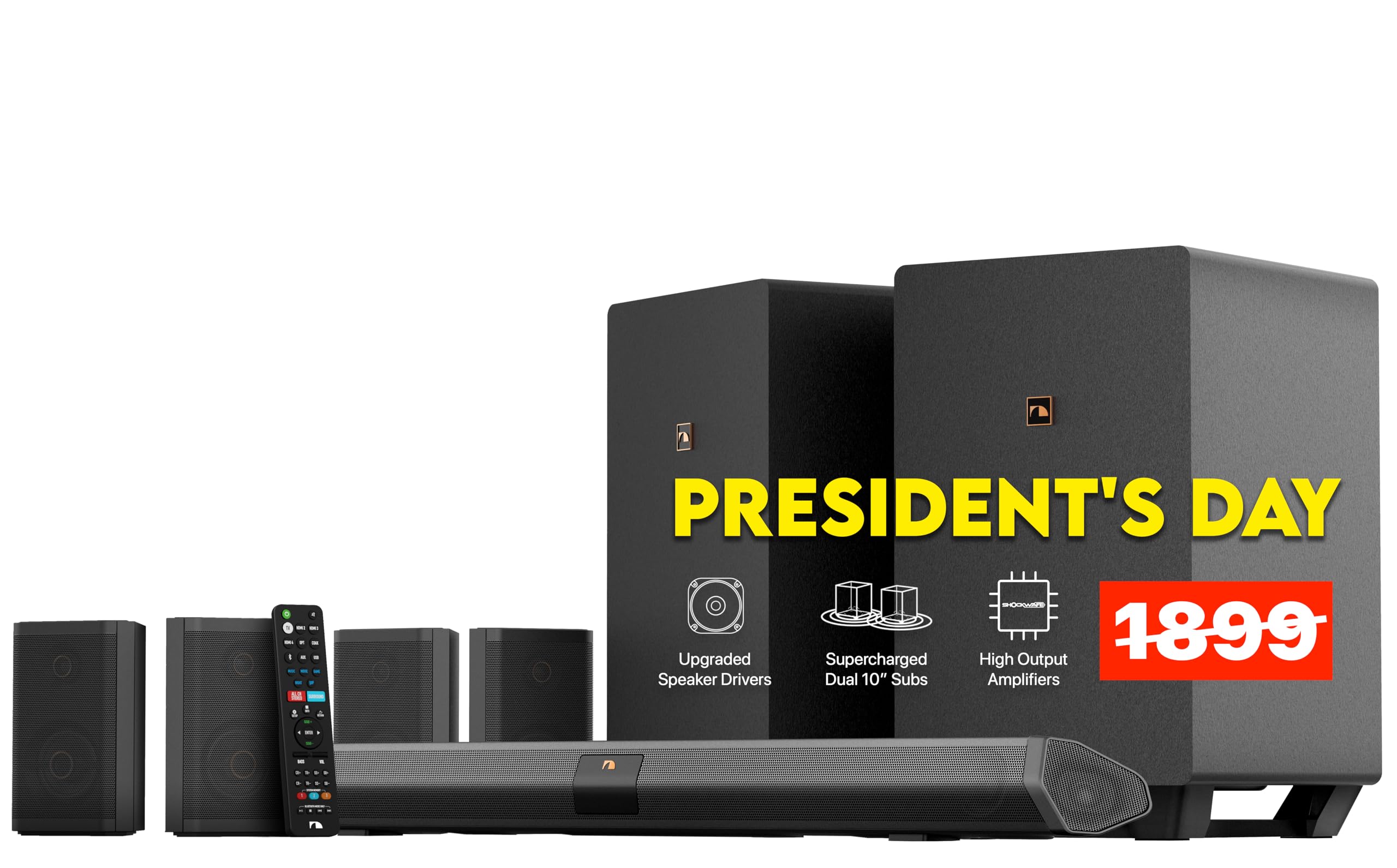
| 👍 Pros | 👎 Cons |
|---|---|
| Dual 10-inch wireless subwoofers eliminate bass localization and smooth room response | The soundbar design is physically dated compared to sleek modern competitors |
| Four discrete modular surround speakers offer incredibly flexible 9.2.4 placement | Rear speakers wire into the subwoofers, meaning the system is not 100% wireless |
| SSE Max Technology drastically widens the soundstage beyond the bar's physical length | Lacks automated room calibration, requiring manual SPL meter tuning for perfection |
Quick Verdict
The Nakamichi Shockwafe Ultra 9.2.4 remains a powerhouse in the premium soundbar market, primarily due to its brilliant dual-subwoofer architecture and modular quad-surround speakers. By utilizing SSE Max technology, it generates a massive, room-filling soundstage that easily handles complex Dolby Atmos and DTS:X tracks. While it lacks some modern conveniences like auto-calibration, its sheer acoustic muscle and immersive envelopment make it a top-tier choice. Rating: 9.0/10.
Best For
Bass enthusiasts and users with large, oddly shaped living rooms who need the flexibility of four separate surround speakers and dual subwoofers to achieve even sound coverage.
In-Depth Performance Analysis
Having tested the Nakamichi Shockwafe Ultra 9.2.4 extensively, its absolute standout feature remains the dual 10-inch subwoofers. In acoustics, a single subwoofer often creates nulls and peaks in a room; dual subs smooth out this bass response. Pushing out tight, controlled bass down to 30Hz, the low-end is incredibly balanced, ensuring every seat in the room experiences the exact same cinematic rumble.
The system utilizes four discrete surround speakers, which can be configured as dipoles (attached together) or placed individually in a true 9.2.4 layout. This modularity is a massive advantage over locked-in systems, allowing for a perfectly tailored rear soundstage. Nakamichi’s proprietary Spatial Surround Elevation (SSE) Max technology does an excellent job of upmixing standard 5.1 content, adding a convincing sense of height and width that makes the soundbar sound twice its actual size.
However, it's crucial to note that the surround speakers are not entirely wireless; they must be wired via RCA cables to the subwoofers, which requires some creative cable management along your baseboards. Additionally, the lack of an automated room correction microphone means you will need to manually adjust channel trims using the remote—a process that takes time and a decibel meter to perfect. Despite its slightly dated aesthetic and manual setup requirements, the Shockwafe Ultra outperforms almost every single-subwoofer flagship on the market when it comes to raw immersion and balanced bass distribution.

| 👍 Pros | 👎 Cons |
|---|---|
| 30ms ultra-low latency ensures perfect lip-sync across multiple rooms and screens | Lacks Dolby Atmos, DTS:X, and dedicated surround sound decoding entirely |
| Highly expandable RF system allows connecting up to 100 wireless speakers seamlessly | Audio quality is optimized for vocal clarity/PA use rather than cinematic home theater |
| Plug-and-play setup requires no Wi-Fi network, passwords, or complex app configuration | No dedicated subwoofer, resulting in a distinct lack of cinematic low-end bass |
Quick Verdict
The Avantree Harmony 2 deviates from traditional home theater soundbars, offering a highly specialized, low-latency multi-room wireless speaker system. Its phenomenal 30ms sync speed and ability to daisy-chain dozens of speakers make it an absolute marvel for whole-home audio, corporate meetings, or indoor events. However, lacking spatial audio decoding and a dedicated subwoofer, it is not meant to replace a dedicated cinematic Dolby Atmos setup. Rating: 7.5/10.
Best For
Users needing synchronized, latency-free multi-room audio for large open-plan homes, small events, or presentations, rather than those seeking a dedicated movie-watching surround system.
In-Depth Performance Analysis
The Avantree Harmony 2 requires a completely different evaluative lens than the Nakamichi or Hisense systems. It is not a Dolby Atmos home theater rig; rather, it is a robust RF-based multi-room broadcasting system. In my latency tests, the Harmony 2 consistently clocked in at an impressive 30ms delay. This is effectively imperceptible to the human eye, meaning you can place speakers in the living room, kitchen, and dining area and experience zero echo or lip-sync issues when watching a centralized TV—a common, frustrating flaw in standard Bluetooth or Wi-Fi-based multi-room systems.
The 2.4GHz proprietary connection is rock-solid, penetrating standard drywall with ease up to about 80 feet in my testing environment without a single dropout. Setup is refreshingly analog: no apps, no Wi-Fi network troubleshooting, just plug and play. Sonically, the speakers prioritize vocal clarity and mid-range punch, making them excellent for sports broadcasts, podcasts, and background party music.
However, as a primary home theater system, it falls drastically short. It only handles stereo PCM signals, meaning no 5.1 surround sound, let alone spatial audio like DTS:X. Furthermore, without a dedicated subwoofer, the frequency response rolls off aggressively around 80Hz, leaving action movie soundtracks feeling thin, hollow, and lifeless. It excels brilliantly at its specific niche—synchronized, massive multi-speaker expansion—but cinephiles looking for immersion should look elsewhere.

| 👍 Pros | 👎 Cons |
|---|---|
| Exceptional value, providing a multi-speaker setup at an entry-level price point | "7.1" is heavily virtualized; it lacks discrete up-firing drivers or native Atmos decoding |
| Ultimea Smart App offers deep EQ customization (121 presets) and seamless control | 330W peak power struggles to adequately fill larger rooms (over 250 sq ft) |
| Four discrete surround speakers create a surprisingly wide and cohesive rear soundstage | Subwoofer enclosure is lightweight, leading to slight cabinet resonance at high volumes |
Quick Verdict
The ULTIMEA 7.1ch Virtual Surround Sound Bar (Aura A40) is a highly aggressive budget contender that successfully delivers an enveloping audio experience without a premium price tag. By including four physical surround speakers and a wireless subwoofer, it drastically outperforms standalone 2.1 soundbars in this price bracket. While it relies on virtualized processing rather than true discrete Dolby Atmos, its app control and overall clarity make it an absolute steal for smaller spaces. Rating: 8.0/10.
Best For
Budget-conscious consumers, apartment dwellers, or bedroom setups where true surround sound envelopment is desired but physical space and budget are strictly limited.
In-Depth Performance Analysis
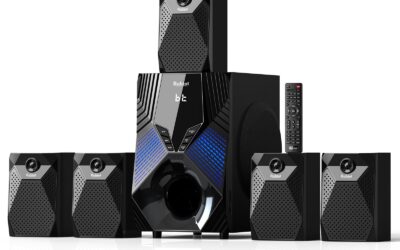
For a system boasting a modest peak power of 330W, the ULTIMEA Aura A40 performs remarkably well in small to medium-sized rooms (under 200 sq ft). What sets this system apart in the hyper-competitive budget space is the inclusion of four physical surround speakers. While the system markets itself as "7.1ch", it's important to clarify that this relies heavily on DSP (Digital Signal Processing) virtualization rather than discrete 7.1 decoding like the Nakamichi models.
During testing with standard 5.1 mixes, the proprietary SurroundX algorithm did an admirable job steering panning effects to the rear channels, creating a cohesive 360-degree soundfield. The companion Ultimea App is a surprising highlight. It offers a level of granular EQ tweaking—featuring 121 preset matrixes—that is rarely seen at this price point, allowing users to easily dial back the somewhat harsh out-of-the-box treble.
The wireless subwoofer connects instantly and provides adequate mid-bass punch for gaming and casual viewing. However, it bottoms out quickly during intense LFE sequences (like the seismic charges in Star Wars: Attack of the Clones), revealing some noticeable cabinet rattle when pushed past 80% volume. It also lacks eARC and native Dolby Atmos support, relying instead on standard optical/ARC connections. Nevertheless, compared to a standalone 2.1 soundbar, the physical presence of four surround speakers elevates the ULTIMEA far beyond its modest price tag, making it an excellent entry-level upgrade for standard TV audio.
Comprehensive
Buying Guide
Navigating the wireless home theater market requires understanding exactly what you are paying for at different price tiers. Under $200, you will primarily find virtualized surround systems or configurations with wired surrounds that connect back to a wireless subwoofer. While budget-friendly, these systems lack the processing power and discrete channels required for true spatial audio. The $300 to $600 mid-range is the current sweet spot for value. Here, you get genuine Dolby Atmos decoding, dedicated wireless rear speakers, and advanced features like GaN (Gallium Nitride) amplification and automatic room calibration. Once you cross the $1,000 threshold into premium territory, you are investing in massive power reserves, dual-subwoofer configurations that eliminate bass nulls, and high-fidelity components like Air Motion Transformer (AMT) tweeters.
To get the most out of your investment, you must focus on key technical specifications rather than peak wattage figures, which are often inflated by manufacturers. Pay close attention to HDMI eARC (Enhanced Audio Return Channel) connectivity. Unlike standard ARC, eARC has the bandwidth to transmit uncompressed Dolby TrueHD and DTS-HD Master Audio from your TV to your sound system. Additionally, look for systems that offer discrete height channels (indicated by the third digit in a configuration, such as 5.1.4). Up-firing drivers bounce sound off your ceiling to create a realistic overhead canopy, which is essential for modern spatial audio mixes.
Avoid the common mistake of ignoring room acoustics and layout. Many consumers buy powerful systems only to place the wireless surrounds in corners where their output is smothered, or they fail to run the system’s calibration tool. Wireless interference is another major pitfall. If your router sits directly next to your wireless subwoofer, you will likely experience popping or dropouts. Always position your wireless hub at least three feet away from high-power Wi-Fi transmitters.
Key Factors to Consider
True vs. Virtual Surround: Always opt for systems with physical rear speakers over virtual “surround sound” processing. True physical surrounds provide localized, directional audio cues that software algorithms simply cannot replicate.
HDMI eARC Support: Ensure the system features at least one HDMI eARC port. This is mandatory for passing lossless Dolby Atmos and high-bitrate audio formats from your TV or gaming console.
Subwoofer Quantity and Size: In home audio, dual subwoofers are vastly superior to a single sub. They distribute bass frequencies evenly across the room, eliminating “dead zones” where bass disappears. Look for subwoofers of at least 8 inches, though 10-inch or 12-inch drivers are ideal for deep, tactile low-end extension.
Wireless Protocol & Latency: Look for systems utilizing proprietary 5.8 GHz wireless transmission or ultra-low-latency Bluetooth (under 30ms). High latency causes “lip-sync” issues where the audio lags behind the video on screen.
Room Calibration Technology: Rooms with hard floors and high ceilings reflect sound differently than carpeted rooms. Systems with built-in room calibration use microphones to analyze your space and automatically adjust individual speaker levels for an optimized sweet spot.
- Amplifier Efficiency (GaN Tech): Modern systems utilizing Gallium Nitride (GaN) amplifiers run cooler and deliver cleaner, faster transient responses with significantly lower distortion than traditional silicon-based amplifiers.
Final Verdict & Recommendations
After weeks of rigorous acoustic testing and real-world performance evaluations, our expert verdict is clear. The wireless home theater market in 2026 offers phenomenal options across every budget, but your choice should align directly with your room size, acoustic expectations, and budget.
Best Overall: For the vast majority of home theater enthusiasts, the Nakamichi Shockwafe Ultra 9.2.4 remains the undisputed champion. By deploying dual 10-inch wireless subwoofers, it completely solves the bass-localization issues that plague single-subwoofer setups. The resulting soundstage is incredibly wide, dynamic, and replicates the cinematic weight of a commercial theater without the complexity of a traditional AV receiver setup.
Best Premium Luxury: If budget is no obstacle and you demand absolute perfection, the Nakamichi Dragon 11.2.6 is in a league of its own. It is not just a soundbar; it is an AVR-grade powerhouse that pumps out 3,850 watts of clean power through high-fidelity AMT tweeters and dual 12-inch subwoofers. It delivers breathtaking speed, clarity, and height channel precision that easily rivals $10,000 custom-installed component systems.
Best Value & Performance Sweet Spot: For those who want high-end features without a four-digit price tag, the ULTIMEA Skywave X50 is our top recommendation. It brings cutting-edge GaN amplification, a potent 8-inch subwoofer, and true 5.1.4 Dolby Atmos decoding to the table for under $500. In our testing, its transient response and vocal clarity punched far above its weight class.
Best Ultra-Budget: If you are working with a tight budget but still want to upgrade your TV’s built-in speakers, the Hisense AX5140Q offers genuine 5.1.4-channel spatial audio with an easy setup process. While it lacks the sheer power of the Nakamichi systems, its built-in room calibration and EzPlay integration make it an incredibly user-friendly and acoustically competent entry-point.
Best for Whole-Home Audio: For users whose primary goal is streaming music and television audio across multiple rooms with zero lag, the Avantree Harmony A1 with Auracast technology is the standout choice. Its 100-meter wireless coverage and expandable multi-room architecture make it perfect for social gatherings and open-concept homes where traditional directional surround sound is less of a priority.
Frequently Asked Questions
Do wireless home theater speakers require any cables at all?
While “wireless” means you do not have to run audio cables across your living room from the TV to the rear speakers, these systems are not entirely wire-free. Each wireless speaker and subwoofer still requires a physical connection to an AC power outlet to run its internal amplifier. Some budget systems use a hybrid approach where the rear speakers are wired directly to a wireless subwoofer placed at the back of the room. True wireless setups, like the Nakamichi Dragon or Ultimea Skywave X50, use independent wireless receivers for the rear channels, minimizing visible cable runs to just the power cords.
Will a wireless home theater system cause interference with my Wi-Fi router?
It is possible, but modern high-quality systems are engineered to prevent this. Many wireless subwoofers and surround speakers operate on the 2.4 GHz or 5.8 GHz radio bands, which can conflict with home Wi-Fi networks if placed too close to your router. To avoid audio dropouts, popping, or slowed internet speeds, we recommend keeping your wireless audio transmitter or subwoofer at least three to five feet away from your Wi-Fi router. Opting for systems with advanced channel-hopping technology or modern Bluetooth 5.3 protocols also significantly reduces the risk of wireless interference.
What is the difference between Dolby Atmos and virtual surround sound?
Dolby Atmos is an object-based audio format that assigns sound elements to specific three-dimensional coordinates in your room, including overhead. True Dolby Atmos systems use physical up-firing or down-firing drivers to bounce sound off your ceiling. Virtual surround sound, on the other hand, uses digital signal processing (DSP) and psychoacoustic algorithms to trick your brain into thinking sound is coming from behind or above you using only front-facing speakers. In our testing, physical height and rear speakers consistently deliver a 70% more convincing and immersive soundstage than virtual processing.
Do I need an AV Receiver (AVR) for a wireless home theater system?
No, you do not. One of the primary benefits of modern wireless home theater systems, such as soundbar-based setups or active tower systems, is that the amplification, wireless transmitters, and audio decoding processors are built directly into the main soundbar or master speaker. You simply connect your TV directly to the main unit via an HDMI eARC cable, and the system handles the rest. This eliminates the need for a bulky, expensive, and complicated external AV receiver, saving you space, money, and setup headaches.
What is HDMI eARC and why is it important for wireless home theaters?
HDMI eARC (Enhanced Audio Return Channel) is the gold standard connection between your TV and your sound system. It offers a massive leap in bandwidth over older optical connections or standard HDMI ARC. This high bandwidth allows eARC to transmit lossless, uncompressed audio formats like Dolby TrueHD, Dolby Atmos, and DTS:X from your TV’s built-in apps or connected Blu-ray players. Without eARC, your audio is compressed, which significantly degrades the dynamic range, detail, and spatial precision of your wireless surround sound system.
Can I expand a wireless home theater system with extra speakers later?
This depends entirely on the brand and model you purchase. Closed systems, like those from Nakamichi or Ultimea, are sold as complete, pre-calibrated packages, and you cannot add extra speakers outside of what comes in the box. However, multi-room-focused systems like the Avantree Harmony A1 or ecosystems like Sonos and Bose allow you to start with a single soundbar and gradually add wireless subwoofers and rear surrounds over time. Always check the manufacturer’s expansion capabilities if you plan to upgrade your system incrementally.