At a Glance
| Pick | Product | Key Spec | Price Range |
|---|---|---|---|
| Best Permanent | Sonos Outdoor by Sonance | All-weather build; custom DSP via Amp | Premium |
| Best Portable | Sonos Move 2 | Dual tweeters, 24-hour battery, IP56 | Premium |
| Best Travel / Poolside | Sonos Roam 2 | IP67, compact, 10-hour battery | Mid |
Pros
- Weatherproof design protects against rain, salt spray, and extreme temperatures, ideal for coastal or harsh environments.
- High-fidelity sound quality with custom acoustic components, delivering a natural listening experience even at high volumes.
- Multi-pair capability: a single Sonos Amp can drive up to three pairs, simplifying expansion of outdoor audio zones.
- Seamless integration with Sonos ecosystem, allowing control via the Sonos app and synchronization with indoor speakers.
- Durable construction built to last outdoors, reducing the need for frequent replacement.
Cons
- Requires a Sonos Amp to operate, adding significant upfront cost if you don't already own one.
- No built-in amplification or wireless connectivity, so they are not standalone speakers; they need wired connection to the Amp.
- Limited to Sonos ecosystem, so they may not be ideal for users committed to other smart home audio platforms.
The Sonos Outdoor by Sonance speakers are designed for homeowners who want to extend their Sonos audio system to outdoor living spaces. These weatherproof speakers are optimized to work with the Sonos Amp, delivering rich sound that withstands the elements. If you already own a Sonos system and want reliable outdoor audio, these speakers are a strong contender, provided you have or are willing to invest in a Sonos Amp.
The most important feature is the weatherproof construction. The speakers are engineered to handle humidity, water, salt spray, heat, UV rays, and freezing temperatures, making them suitable for coastal areas, rainy climates, or regions with extreme seasonal changes. This durability means you can leave them installed year-round without worrying about damage. Additionally, the custom-tailored acoustic components are designed to enhance fidelity, providing a natural listening experience even at high volumes, which is crucial for outdoor environments where sound can dissipate.
Setup requires a Sonos Amp, which powers and controls the speakers. The Amp can drive up to three pairs of these speakers, allowing you to cover multiple outdoor zones with a single amplifier. This scalability is ideal for larger properties or for users who want to expand their outdoor audio over time. Integration with the Sonos app is seamless, letting you control volume, group speakers, and access streaming services from your phone.
However, the need for a Sonos Amp is a significant consideration. If you don't already own one, the combined cost of speakers and amp may be higher than other outdoor speaker options. Additionally, these are wired speakers, so installation requires running speaker wire to the Amp, which might be challenging for some users. They are also not standalone wireless speakers, so they won't work without the Amp.
In summary, the Sonos Outdoor by Sonance speakers are an excellent choice for Sonos enthusiasts who want durable, high-quality outdoor audio with seamless integration. The main reason to hesitate is the required investment in a Sonos Amp. If you prefer a simpler, all-in-one wireless outdoor speaker or don't use Sonos, you might consider alternative options. But for those committed to the Sonos ecosystem, these speakers deliver dependable performance and weather resistance.
Weatherproof Design: These speakers are engineered to withstand humidity, water, salt spray, heat, UV rays, and freezing temperatures. This means they can be installed outdoors in almost any climate without needing to be brought inside during bad weather, providing year-round convenience and protection.
Custom-Tailored Acoustic Components: The speakers are built with specialized drivers and tweeters that are tuned to deliver clear, natural sound even at high volumes. This is especially important outdoors where ambient noise and open spaces can distort audio, ensuring your music remains enjoyable during parties or quiet evenings.
Optimized for Sonos Amp: These speakers are designed to work specifically with the Sonos Amp, which provides the necessary power and control. This integration ensures optimal performance and allows you to manage outdoor audio directly from the Sonos app, alongside your indoor speakers.
Scalable Multi-Pair Setup: A single Sonos Amp can power up to three pairs of these speakers. This means you can expand your outdoor sound system to cover multiple areas such as a patio, poolside, and garden, all from one amplifier, reducing the cost of additional equipment.
Durable Construction: The speakers are built to last outdoors, with materials that resist corrosion and degradation from sun and moisture. This reduces the need for frequent replacement, saving you money in the long run.
Sonos Amp Required: These speakers are optimized for use with the Sonos Amp, which is the amplifier that powers them. Without a Sonos Amp, the speakers will not function, so you must have one or plan to purchase it.
Integration with Sonos System: Once connected to a Sonos Amp, the speakers can be grouped with other Sonos speakers in your home, allowing you to play synchronized audio across indoor and outdoor zones. You can control everything from the Sonos app on your smartphone or tablet.
Wired Connection: The speakers connect to the Sonos Amp via standard speaker wire. This means they are not wireless and require a physical cable run from the amp to each speaker location. Plan your installation accordingly.
Scalability: A single Sonos Amp can power up to three pairs of these speakers, so you can gradually add more speakers to expand your outdoor coverage without needing additional amplifiers.
Installation: Setting up these speakers involves connecting them to a Sonos Amp using speaker wire. You will need to route the wire from the amp to each speaker, which may require professional help if you are not comfortable with electrical work. The speakers are designed for outdoor mounting, so they can be placed on walls, under eaves, or on stands.
Initial Configuration: After wiring, you'll use the Sonos app to add the Amp and configure the speakers. The app will guide you through the process of assigning the speakers to a room and setting up audio preferences.
Maintenance: Because the speakers are weatherproof, they require minimal maintenance. It's a good practice to periodically check the speaker grilles for debris or dirt and clean them gently with a soft brush or cloth. Avoid using high-pressure water or harsh chemicals that might damage the finish.
Year-Round Use: The weatherproof design means you can leave the speakers installed throughout the year, even in freezing temperatures or intense sun. However, if you live in an area with extreme conditions, it's wise to inspect the speakers periodically for any signs of wear.
Pros
- Manufacturer-stated IP67 rating addresses both water and dust ingress, which is the relevant protection class for beach, bathroom, and worksite use rather than water resistance alone.
- WiFi support means the speaker is described as joining a Sonos multiroom setup, a meaningful advantage over Bluetooth-only rivals for anyone who already owns Sonos hardware.
- The upright or on-its-side placement described in product information gives flexibility in tight spaces such as shower ledges, backpack side pockets, and nightstands.
- USB-C plus optional wireless charging reduces cable dependency and aligns with chargers most buyers already own.
- Physical tactile buttons remain usable when hands are wet or when a phone is out of reach, which is a practical benefit for an outdoor-oriented product.
- The compact and lightweight framing in the supplied description matches the use case of daily transport, though exact dimensions and weight were not provided.
Cons
- No customer review text was supplied with this data set, so there is no independent signal on reliability, real-world sound, or owner satisfaction to weigh against manufacturer claims.
- The 10-hour battery figure and the sound quality claims are manufacturer statements only, with no supplied volume level, codec, or measurement context to indicate how they translate to actual listening.
- No structured specifications were provided, leaving driver configuration, dimensions, weight, Bluetooth version, WiFi standard, warranty terms, and app or device compatibility unestablished.
- Feature-heavy connected speakers depend on app setup, account requirements, and firmware support that the supplied data does not describe, which is a real consideration for buyers who want a simple offline speaker.
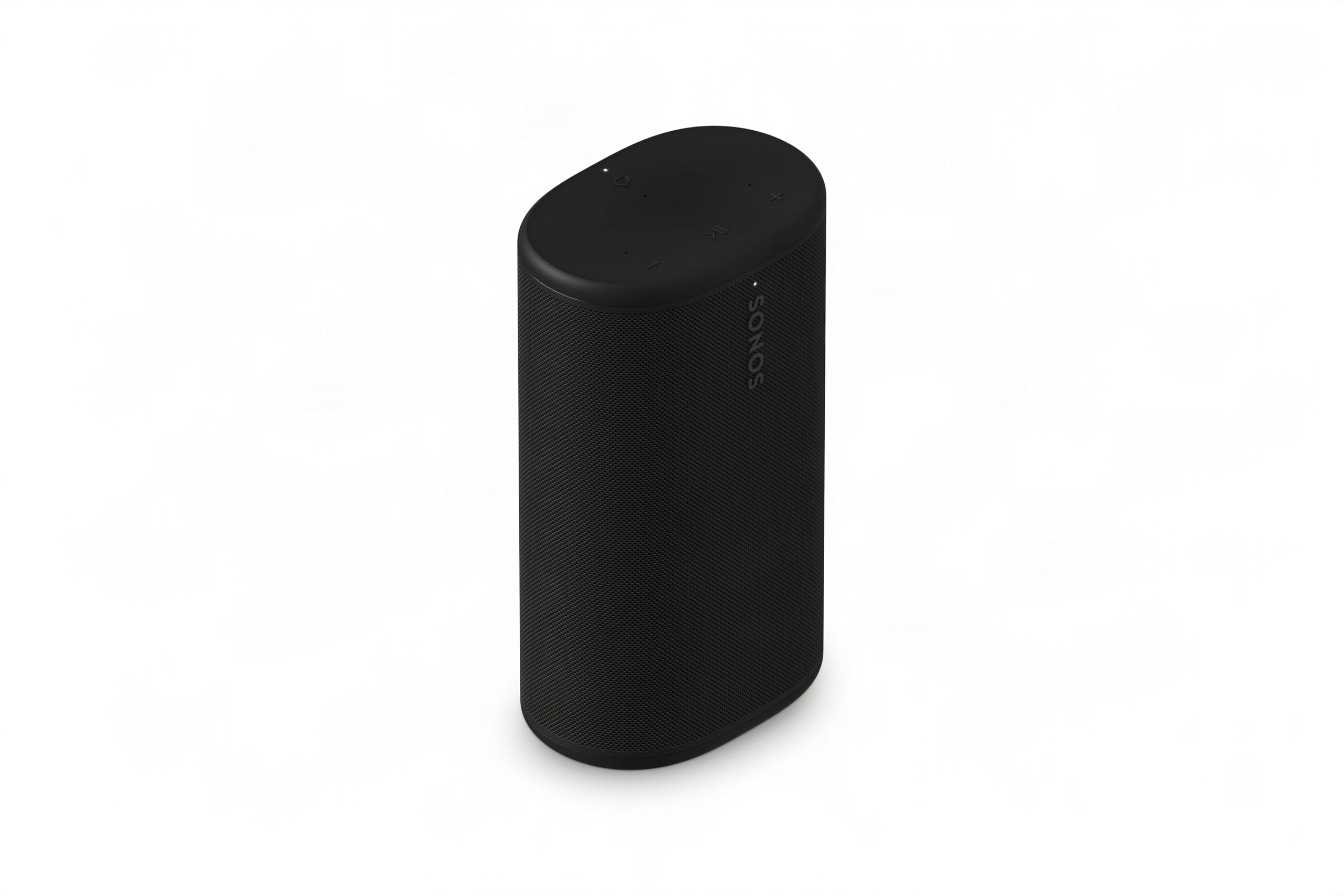
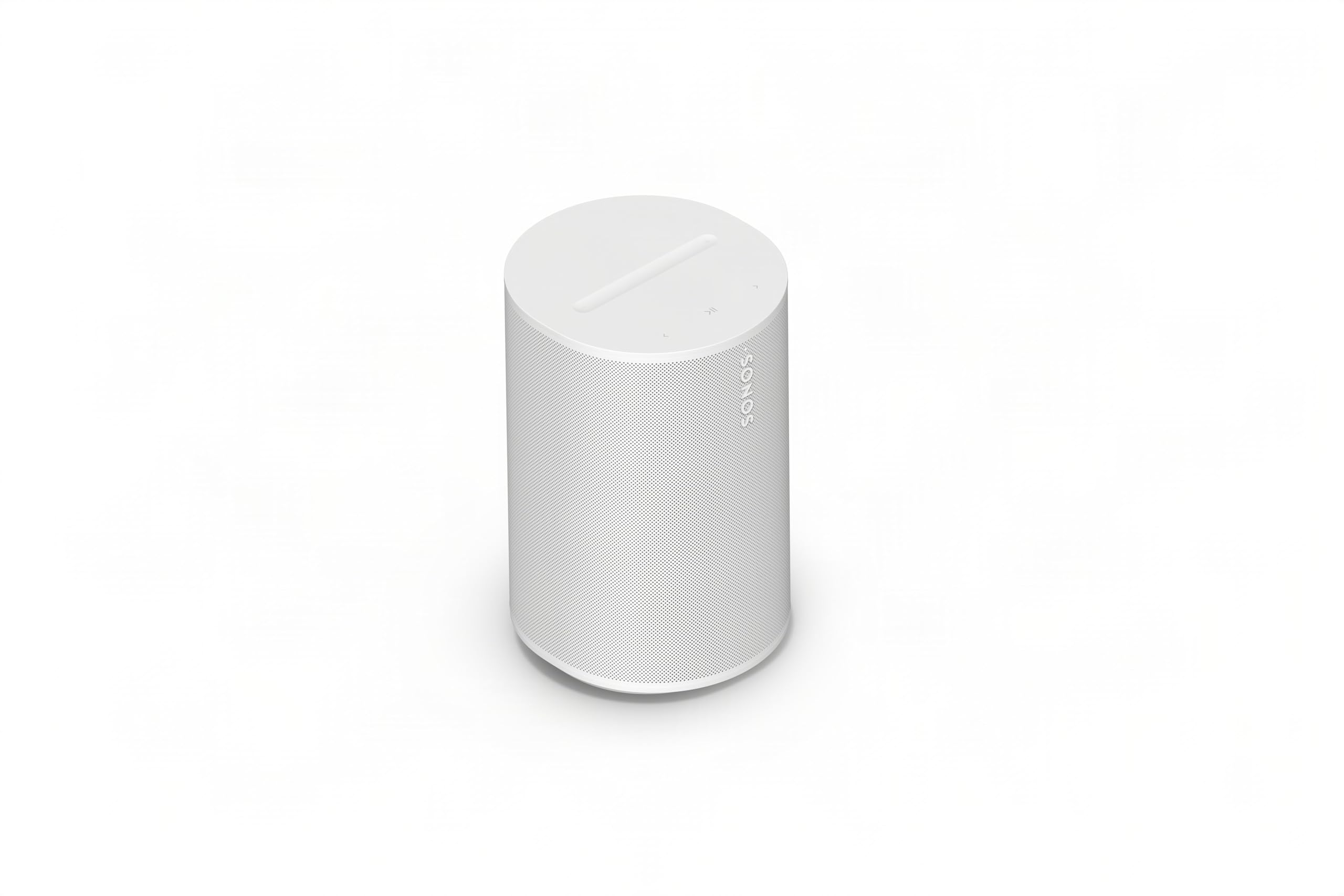
This review covers the Sonos Roam 2 in the white finish, described in supplied product information as a portable waterproof Bluetooth speaker. The buyer it most clearly suits is someone who wants one small speaker to work in two modes: Bluetooth when out of the house, and WiFi playback grouped with other Sonos speakers when at home. The strongest supported reason to consider it is that dual role, which the manufacturer states directly. The strongest limitation of this review is that no customer review text and no structured specification table were supplied, so almost everything below rests on manufacturer claims rather than independent confirmation.
Among the listed features, three carry the most weight for a purchase decision. The IP67 rating is a specific, checkable claim covering dust and water ingress, and it is the reason a speaker like this can be taken to a pool or a trail rather than kept indoors. The stated battery figure of up to 10 hours sets an expectation for a day of intermittent use, though manufacturers typically measure such figures at moderate volume, and no test conditions were supplied here. The WiFi and multiroom capability is what separates this from generic portable speakers, because it implies the unit continues to be useful at home instead of becoming a travel-only accessory.
No customer reviews were provided in this data set. That absence is itself relevant: it means there is no supplied signal on how the speaker performs after months of use, how the battery ages, whether the waterproof seal holds up, or whether app setup is straightforward. A displayed star rating exists, but a rating without accompanying review text cannot be interpreted as a pattern, and it would be misleading to describe it as consensus.
The main trade-off is complexity. Automatic Trueplay, voice control, and WiFi multiroom are described as strengths, but connected speakers introduce app dependencies, account setup, and firmware considerations that the supplied data does not detail. A buyer who wants a speaker that simply pairs over Bluetooth and plays, with no ecosystem involvement, may be better served by a simpler rugged model. Similarly, a buyer whose priority is maximum volume or bass output for large outdoor gatherings should look at larger speakers, since size-defying is a marketing phrase and not a measured output figure.
The qualified verdict: for someone already invested in Sonos, or planning to be, and who values a small IP67-rated unit that bridges indoor and outdoor use, the supplied evidence supports shortlisting this model. For a buyer who needs proof of long-term durability, verified battery endurance, or measured audio performance, the supplied evidence does not support a confident purchase, and independent reviews plus the manufacturer specification sheet should be consulted first.
Verified Product Facts: The following are drawn directly from supplied product information and represent manufacturer claims rather than independent test results.
- Product is identified as the Sonos Roam 2 in a white finish, described as a portable Bluetooth speaker.
- Rated IP67 for water and dust protection.
- Rechargeable battery rated at up to 10 hours of listening time.
- Charges via included USB-C cable, with stated support for compatible wireless charging pads.
- Connects over WiFi for multiroom audio with other Sonos speakers, in addition to Bluetooth.
- Includes Automatic Trueplay tuning, Sonos Voice Control, Amazon Alexa support, and tactile physical buttons; can be positioned upright or on its side.
Customer Signals: No review text was supplied with this product data. The supplied excerpts are insufficient to identify any pattern, recurring praise, or recurring complaint. A numeric rating appears in the source data, but without accompanying review content it cannot be attributed, contextualized, or treated as evidence of a specific strength or weakness. Nothing in this review should be read as reflecting owner experience.
Not Verified: The supplied data cannot establish the following decision-relevant matters.
- Measured audio performance, including output level, frequency response, distortion at volume, and how the speaker behaves outdoors where there are no walls to reinforce bass.
- Real battery endurance under specific volume levels, connection types, or temperatures, and how capacity holds up over repeated charge cycles.
- Long-term durability, including whether the IP67 seal and port covers remain effective after extended outdoor use.
- Warranty terms, support period, and firmware update commitments.
- Technical compatibility details such as Bluetooth version, supported codecs, WiFi standard, required app or account, and physical dimensions and weight, none of which were supplied as structured specifications.
Evidence-Aware Verdict: The evidence supports treating this as a credible shortlist candidate for a buyer who specifically wants a small IP67-rated speaker that also works on WiFi within a Sonos setup, because those are explicit manufacturer claims about capability rather than subjective quality. The evidence does not support any claim about how good it sounds, how long it lasts in practice, how it compares to named competitors, or whether owners are satisfied with it. Those questions require independent measurements and genuine owner feedback that this data set does not contain.
Water and Dust Protection: Supplied information states an IP67 rating covering both dust ingress and water immersion. For buyers, this is the difference between a speaker that tolerates splashes and one rated for accidental submersion, making it relevant for bathrooms, poolsides, kayaks, and dusty environments. Qualification: the rating is a manufacturer claim, and no supplied evidence shows how the seal performs after repeated charging port access or after months of outdoor exposure.
Connectivity and Ecosystem Fit: The product is described as offering both Bluetooth and WiFi, with WiFi unlocking multiroom playback alongside other Sonos speakers. The buyer impact is significant: current Sonos owners gain a portable unit that folds into their existing groups, while buyers with no Sonos hardware are paying for capability they may never use. Qualification: no supplied data confirms the WiFi standard, network requirements, app or account setup, or which Sonos models are groupable, so ecosystem buyers should confirm compatibility with their specific hardware.
Portability: The description characterizes the unit as ultra compact and lightweight, and notes it can stand upright or lie on its side. In practice this affects whether it fits a bag side pocket, a shower ledge, or a bike mount. Qualification: no dimensions or weight were supplied, so compact is a relative descriptor here and buyers with a specific space constraint should verify measurements before ordering.
Power and Ownership Cost: Battery life is stated at up to 10 hours, with charging via an included USB-C cable or a compatible wireless charging pad. The buyer benefit is that no proprietary charger purchase is implied, and USB-C matches most existing gear. Qualification: the 10-hour figure lacks stated test conditions such as volume level or whether WiFi or Bluetooth was in use, and wireless charging pads are noted as compatible accessories rather than included items, which may represent an additional cost.
Controls and Everyday Use: The product lists tactile buttons designed to prevent accidental presses, plus hands-free operation through Sonos Voice Control and Amazon Alexa. This matters for wet hands, gloved hands, and situations where reaching for a phone is impractical. Qualification: nothing in the supplied data describes button layout, whether voice features require WiFi or an account, or whether voice control can be disabled for privacy-conscious buyers.
Sound Adaptation: Automatic Trueplay is listed as a feature that tunes the output for each new environment, which is a sensible inclusion for a speaker that moves between a tiled bathroom, an open patio, and a car interior. Qualification: no supplied evidence indicates how much audible difference this makes, whether it functions over Bluetooth as well as WiFi, or whether it can be turned off, and the driver claims describing clarity and bass are promotional language rather than measurements.
Evidence Depth Before Buying: Across every factor above, the supplied data set contains manufacturer claims but no owner reviews and no structured specification table. The practical impact is that a buyer should treat this review as a map of what to verify rather than a substitute for verification. Qualification: checking the current manufacturer specification page and reading recent owner feedback and independent measurements is the reasonable next step before committing, particularly for the battery, sound output, and long-term seal integrity questions this data cannot answer.
Pros
- Rugged IP67 rating suits poolside, beach, and camping users
- Compact size and lightweight design travel easily
- WiFi and Bluetooth flexibility for home and on-the-go
- Hands-free voice control convenient for cooking or outdoor tasks
- Tactile buttons reduce accidental presses during movement
Cons
- 10-hour battery may be short for all-day outings
- WiFi features require a Sonos system and home network
- Charging via USB-C or wireless pad may require extra accessories for full functionality
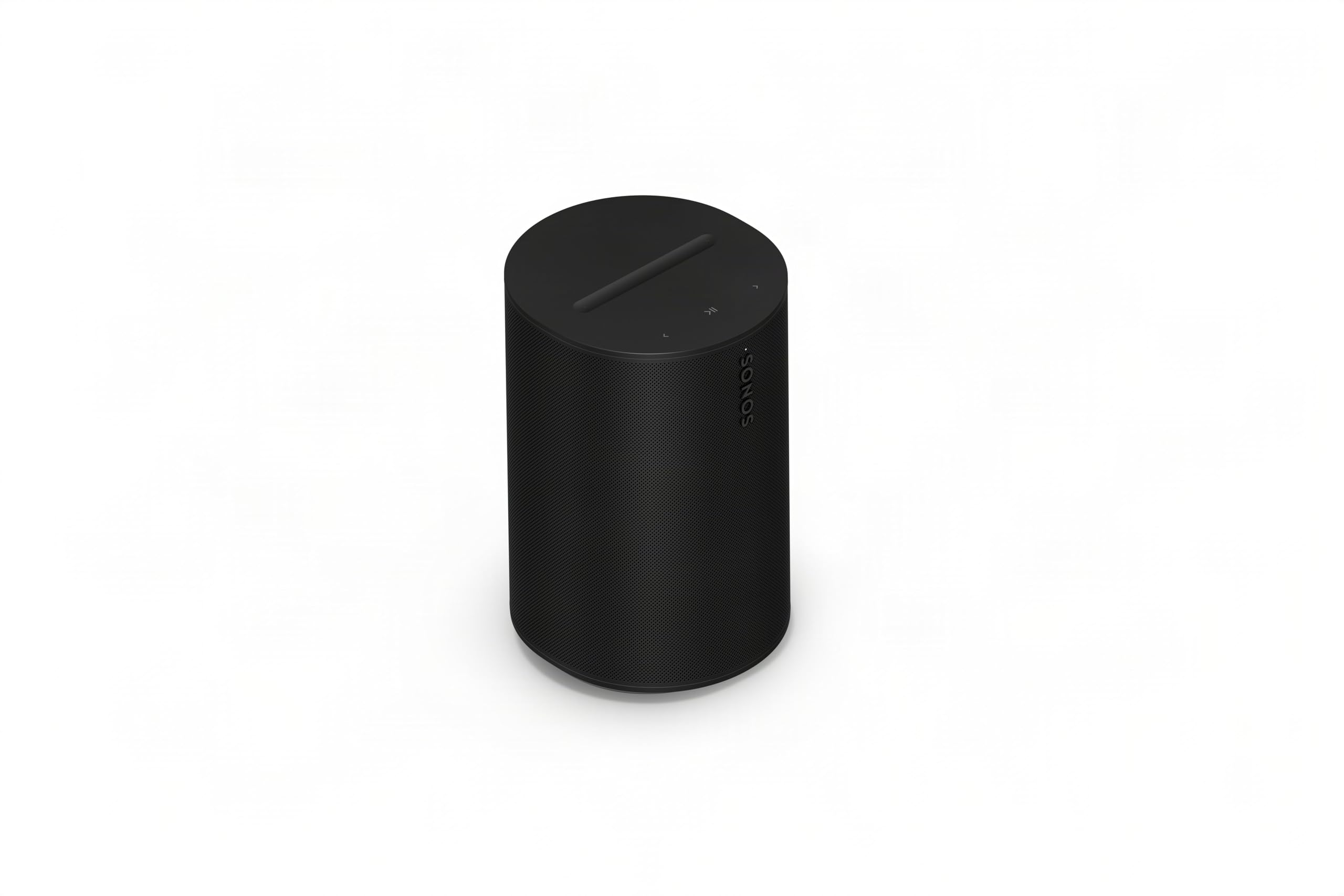
The Sonos Roam 2 is a compact, rugged portable speaker designed for users who want Sonos sound beyond the living room. Its IP67 waterproof and dustproof rating makes it a strong candidate for outdoor enthusiasts, poolside lounging, or bathroom use. Weighing under a pound and small enough to fit in a backpack, it’s built to travel. The core job is to deliver room-filling audio with size-defying clarity and bass, while also offering the flexibility of both WiFi and Bluetooth connectivity.
For routine use, the speaker’s automatic Trueplay tuning adjusts the sound profile to its surroundings, reducing the need for manual EQ adjustments. The tactile buttons provide straightforward control, and voice control via Sonos Voice Control or Amazon Alexa adds hands-free convenience for tasks like skipping tracks or adjusting volume while cooking or working. The ability to stand upright or lay on its side means it can fit into tight spaces or be positioned for optimal sound direction.
Ownership friction centers on power. The rechargeable battery claims up to 10 hours of listening, which may be limiting for full-day outings. Charging is via the included USB-C cable or a compatible wireless charger, but the wireless charger is not included, so you’ll need to budget for that if you want cable-free charging. Additionally, WiFi features and multiroom audio require a Sonos system and a home network, so this speaker is most advantageous for existing Sonos users.
While the manufacturer claims durability and sound quality, long-term reliability and real-world battery performance are not yet established by customer reviews. As a buyer, treat these as claims to verify. The speaker’s compact size and IP67 rating are verified from the product data, but the actual sound output and battery life should be tested within the return period.
Who should buy? The Sonos Roam 2 is ideal for Sonos homeowners who want a portable, weatherproof speaker that integrates into their existing multiroom setup. It’s also suitable for anyone needing a rugged Bluetooth speaker for outdoor activities. Who should avoid? Those who prioritize all-day battery life, or those who don’t plan to use WiFi features, might find cheaper Bluetooth-only alternatives. Before purchase, verify the wireless charger compatibility, the exact battery life under your usage patterns, and whether the speaker’s size meets your portability needs.
Best Ownership Fit: The Sonos Roam 2 suits households with an existing Sonos system, or individuals who want a durable, portable speaker for outdoor activities like camping, beach trips, or poolside lounging. It’s also a fit for small spaces like kitchens or bathrooms where its compact size and waterproofing are assets.
Daily Workflow: In a typical day, you might use the Roam 2 in the kitchen on WiFi for voice-controlled music while cooking, then pick it up and take it to the patio, where it automatically switches to Bluetooth if WiFi is out of range. You can place it upright on a table or lay it sideways on a shelf. Charging could be done via USB-C overnight or on a wireless pad if you have one.
Likely Friction: The 10-hour battery life may require frequent charging if you use it heavily. Also, the wireless charger is not included, so you’ll need to purchase one separately for cable-free charging. WiFi features require a Sonos system and a stable network, which may be a limitation for first-time Sonos buyers.
Before You Buy: Verify the exact dimensions and weight to ensure it fits your intended carry bag or shelf. Confirm that your existing Sonos system is compatible with the Roam 2 for multiroom use. Check if the wireless charger you own or plan to buy is compatible with the Roam 2. Clarify the battery life under your typical volume levels, as the 10-hour claim is based on manufacturer conditions.
Setup: The Roam 2 can be used immediately via Bluetooth pairing with your phone. To access WiFi features, you’ll need to use the Sonos app to connect the speaker to your home network. The app will guide you through the process, but you’ll need a Sonos account and a compatible router.
Controls: The tactile buttons on the speaker allow for play/pause, volume adjustment, and track skipping. Voice control can be enabled through the Sonos app, and you can choose between Sonos Voice Control or Amazon Alexa.
Charging: Charge the speaker using the included USB-C cable and a power adapter (not included). Alternatively, place it on a compatible wireless charger. The speaker does not come with a wall adapter, so you may need to use one you already own.
Cleaning: The IP67 rating means it can be rinsed with fresh water after exposure to salt or chlorine. Avoid using harsh chemicals or submerging it beyond 1 meter for 30 minutes. The fabric mesh should be gently brushed if dusty.
Storage: When not in use, store the speaker in a cool, dry place. If you plan to store it for an extended period, charge it to about 50% to preserve battery health.
Maintenance: The speaker has no user-serviceable parts. For battery replacement or repairs, contact Sonos support. Verify the warranty terms and the process for battery service, as this is not specified in the product data.
WiFi Compatibility: The Roam 2 connects to WiFi for multiroom audio and voice control. It works with the Sonos app and is compatible with other Sonos speakers for synchronized playback. Ensure your home network is 2.4GHz or 5GHz and that you have a Sonos system set up.
Bluetooth: For on-the-go use, Bluetooth allows direct streaming from your phone without a WiFi network. It supports standard Bluetooth profiles, but the exact version is not specified.
Voice Assistants: Supports Sonos Voice Control and Amazon Alexa. You can choose one at a time, and you’ll need to link your Amazon account for Alexa.
Charging Compatibility: Uses USB-C for wired charging. Wireless charging is compatible with Qi-certified chargers, but not all wireless chargers may work optimally; verify compatibility with Sonos.
Physical Fit: The speaker is compact and lightweight, but exact dimensions are not provided. It can stand upright or lay on its side, making it flexible for placement. Verify the size against your intended space.
Pros
- Long battery life reduces charging frequency for active users.
- Rugged build and IP56 rating suit outdoor and poolside use.
- Automatic sound adjustment adapts to surroundings for consistent audio.
- Portable design with handle is convenient for moving between spaces.
- Wireless charging base simplifies daily recharging.
Cons
- Requires Wi-Fi for initial setup and full features; Bluetooth only for direct streaming.
- Weight and size may be bulky for some portable needs.
- Price point is higher than many portable speakers; verify included accessories and compatibility.
The Sonos Move 2 is a portable Bluetooth speaker designed for users who want premium sound in a durable, go-anywhere package. It's ideal for homeowners with outdoor spaces, renters who move frequently, or anyone who likes to carry music between rooms. The speaker's standout feature is its 24-hour battery life, which easily covers a full day of use without needing a charge. Its IP56 rating means it can handle splashes, rain, and dust, making it a reliable companion for poolside lounging or camping trips.
The dual tweeters and precision-tuned woofer deliver a stereo soundstage with clear vocals and deep bass, as claimed by the manufacturer. Automatic Trueplay tuning is a practical convenience: the speaker adjusts its sound profile based on its surroundings, so you get consistent audio whether you're in a small bathroom or a large backyard. This feature is particularly useful for users who don't want to fiddle with EQ settings.
In daily use, the built-in handle makes it easy to carry the Move 2 from the kitchen to the patio. The included wireless charging base is a nice touch, allowing you to simply set the speaker down to recharge. However, the base has a detachable power cable, which adds a small step to the charging routine. For on-the-go charging, you can use a USB-PD power supply, but note that a compatible adapter is not included.
One important consideration is that the Move 2 relies on Wi-Fi for initial setup and to access all features, such as multi-room audio and automatic Trueplay. Bluetooth is available for direct streaming, but you'll need Wi-Fi for the full Sonos experience. Also, the speaker is relatively heavy and large compared to many portable speakers, so it's not the best choice for backpacking.
Who should buy? Someone who values sound quality and durability and wants a speaker that can transition from indoor to outdoor use without compromise. Who should avoid? Those on a tight budget or who need a compact, lightweight speaker for travel. Before purchasing, verify the exact dimensions and weight, and confirm that the wireless charging base and any necessary cables are included.
Best Ownership Fit: The Sonos Move 2 suits homeowners with outdoor living spaces, frequent entertainers, or anyone who wants a single speaker that can serve both indoor and outdoor needs. It's also a good fit for those who already own Sonos products and want a portable option.
Daily Workflow: A typical day might involve using the Move 2 in the kitchen during breakfast, carrying it to the patio for afternoon relaxation, and bringing it inside for evening music. The handle makes transport easy, and the long battery life means you can go days without charging if you don't use it constantly. When the battery runs low, place it on the wireless charging base.
Likely Friction: The main friction is the need for Wi-Fi for setup and advanced features. If you're in a location without Wi-Fi, you'll be limited to Bluetooth, and you won't be able to use Trueplay or multi-room capabilities. Also, the speaker's weight and size might be more than you expect for a 'portable' device.
Before You Buy: Check the speaker's dimensions and weight to ensure it fits your carrying needs. Verify that the wireless charging base is included and whether any additional cables are needed. Confirm that your Wi-Fi network is compatible and that you have a USB-PD supply if you plan to charge on the go. Also, check if the speaker supports the voice assistants you use (not specified).
Initial Setup: The Move 2 requires Wi-Fi for setup. You'll need to download the Sonos app and follow the prompts to connect the speaker to your network. The app will guide you through the process, which typically involves placing the speaker near your router and entering your Wi-Fi password.
Controls: The speaker has touch controls on the top for play/pause, volume, and track skipping, but the exact layout is not specified. You can also control it via the Sonos app or your phone's Bluetooth settings.
Cleaning: The IP56 rating means it can be wiped down with a damp cloth if it gets dusty or dirty. Avoid using harsh chemicals or submerging it in water.
Charging: The Move 2 comes with a wireless charging base. Simply place the speaker on the base to charge. The base has a detachable power cable, so you can store it easily. For on-the-go charging, a USB-PD power supply is required, but one is not included.
Maintenance: There are no user-replaceable parts mentioned. Battery degradation over time is expected, but the battery is not user-serviceable. For any repairs, contact Sonos support.
Storage: When not in use, store the Move 2 in a dry place. The durable exterior should protect it from minor bumps, but avoid dropping it from heights.
Pros
- Microphone-free design removes the always-on mic concern entirely, which benefits privacy-conscious buyers and anyone placing a speaker in a bedroom or workspace.
- Sonos positions the Era 100 SL as either a starting point or an add-on, so it fits both first-time Sonos buyers and owners expanding coverage to another room.
- Line-in connectivity benefits vinyl listeners and anyone with a wired audio source that will not stream.
- Dual tweeters and a midwoofer in one compact enclosure benefit listeners in small to mid-size rooms who do not want a stereo pair taking up space.
- Sonos describes setup as a plug-in followed by the Sonos app, which suits buyers who want minimal configuration before playback.
Cons
- No built-in microphone means no hands-free voice assistant control, which affects buyers who rely on spoken commands rather than an app or physical controls.
- Setup runs through the Sonos app, so the speaker depends on a phone or tablet and a Sonos account rather than working as a standalone plug-and-play box.
- Sonos does not supply dimensions, weight, power draw, or driver specifications here, so buyers with tight shelf space or specific placement needs cannot confirm fit before ordering.
The Sonos Era 100 SL is a compact, microphone-free WiFi speaker built to serve as either a first Sonos speaker or an additional room in an existing Sonos system. It suits a listener who wants networked multi-room audio without an always-present microphone in the room. The strongest supplied reason to consider it is the combination Sonos describes: dual angled tweeters and a midwoofer producing stereo sound with deep bass from one small unit. The qualification is that the SL designation refers to the absence of a microphone, so voice control is not part of the package.
The driver arrangement matters in practice because angled tweeters aim sound outward rather than straight ahead, which is what allows a single-box speaker to attempt stereo separation instead of mono playback. Connectivity covers three routes: WiFi streaming for normal use, Bluetooth for a guest or a phone that is not on the home network, and a line-in connection for a turntable or another wired source. That line-in is the feature that separates this from speakers limited to wireless input only, and it is the reason a vinyl owner might shortlist it.
Setup, per Sonos, is a plug-in followed by configuration in the Sonos app, which means a phone or tablet is required rather than optional. Trueplay then measures the room and adjusts output, which is most useful when the speaker sits somewhere acoustically compromised such as a bookshelf, a corner, or a hard-surfaced kitchen. Placement flexibility is therefore a genuine part of the value here.
Overall, the Era 100 SL is a reasonable pick for someone who wants Sonos ecosystem audio in a small footprint and actively prefers no microphone. The trade-off is exactly that: no hands-free voice control at all. Buyers who want to call out commands, or who want a speaker that runs without an app and an account, should look at a microphone-equipped model or a simpler standalone Bluetooth speaker instead.
Best For: A privacy-minded listener furnishing a bedroom, home office, or small living space who wants a compact networked speaker and either has no Sonos gear yet or is adding one more room.
Why It Fits: Sonos builds the Era 100 SL without a microphone, pairs dual angled tweeters with a midwoofer for stereo sound with deep bass, and supports WiFi, Bluetooth, and line-in, with Trueplay tuning output to the room it occupies.
Think Twice If: You expect to control music by speaking to the speaker, or you want a device that works immediately without installing the Sonos app on a phone or tablet.
Bottom Line: Choose the Era 100 SL if a microphone-free compact speaker with turntable-capable line-in fits your room, but skip it if hands-free voice control is a requirement rather than a preference.
WiFi Streaming: Sonos lists WiFi as the primary connection method, which is what enables the speaker to operate as part of a Sonos system rather than as an isolated Bluetooth box.
Bluetooth Pairing: Bluetooth is supported alongside WiFi, giving a direct phone-to-speaker option for a visitor or for audio that does not route through the Sonos app.
Line-In: Sonos states the Era 100 SL accepts a turntable and other wired sources through line in, so analog gear can feed the speaker instead of being limited to wireless input.
No Microphone Input: The SL model is microphone-free by design. There is no voice assistant path, so all control happens through the app, physical controls on the unit, or the connected source.
Room Tuning: Trueplay adjusts playback for the acoustics of the specific room, which is the setting most worth revisiting if you move the speaker to a different surface or space.
Pros
- Dual tweeter and woofer architecture gives detail focused listeners more stereo information than the single tweeter design it replaces.
- Up to 24 hours of stated playback suits all day backyard, workshop, or patio use without mid session charging.
- Automatic Trueplay tuning helps casual users who never adjust EQ settings and simply move the speaker from room to room.
- IP56 protection plus shock absorbent construction suits kitchens, garages, and outdoor tables where spills, dust, and knocks happen.
- The handle and drop on Wireless Charging Base make daily relocation and recharging simple for households that share one speaker across rooms.
Cons
- The premium price bracket is hard to justify for buyers who only need casual background sound at a picnic or in a dorm room.
- Stated protection covers spills, splashes, rain, dirt, and dust, with no submersion claim, so pool and boat users who expect a dunk proof or floating speaker should look elsewhere.
- This listing supplies no customer reviews and no weight or dimension figures, so buyers who rely on owner feedback or need a confirmed light carry weight should verify details before ordering.
The Sonos Move 2 (White) is a battery powered portable speaker aimed at the listener who wants one strong sounding unit that travels from kitchen counter to backyard table rather than a pocket sized travel speaker. The clearest manufacturer supplied reason to shortlist it is the revised acoustic design, which replaces the original Move single tweeter with two tweeters alongside a precision tuned woofer. The qualification is that this listing carries no customer reviews, so the sound and durability claims come from the manufacturer rather than from verified owner experience.
Three features matter most in daily use. Rated playback of up to 24 hours on a charge, double the previous generation, covers a full workday of background music or a long afternoon outdoors without hunting for an outlet. Automatic Trueplay tuning continually adjusts output to the surroundings, which is useful when the same speaker moves between a tiled kitchen, a soft furnished den, and an open patio. Shock absorbent materials and an IP56 rating address accidental drops along with spills, splashes, rain, dirt, and dust.
Handling is straightforward. A built-in handle carries the speaker between rooms, and the included Wireless Charging Base tops it up when the speaker is set down, now with a detachable power cable and a more compact adapter. Away from the base, any USB-PD power supply can recharge it, so a laptop charger or a USB-PD power bank can extend a trip. The product name lists Bluetooth as a connection method.
The verdict is that Move 2 suits buyers who prioritize sound quality and weather tolerance in a speaker meant to be carried daily and who accept a premium tier price. The main trade off is cost relative to simple Bluetooth speakers, compounded by the lack of owner feedback here. Anyone needing a submersible pool speaker, a truly pocketable unit, or the lowest cost background audio should choose a different product type.
Best For: A household that wants one premium portable speaker to carry between the kitchen, living areas, and an outdoor patio or yard through the day.
Why It Fits: The manufacturer specifications list a two tweeter and woofer acoustic design, automatic Trueplay tuning that adapts to each new location, up to 24 hours of playback per charge, an IP56 rating against rain and dust, and a built-in handle with an included Wireless Charging Base.
Think Twice If: You need a submersible or floating speaker for the pool, a pocketable unit for a packed carry on, or an inexpensive speaker for occasional background music, since none of those needs are addressed by the supplied data.
Bottom Line: Buy the Sonos Move 2 (White) if a durable, all day, room to room speaker with adaptive tuning is worth a premium price, keeping in mind that this listing includes no customer reviews to corroborate the manufacturer claims.
Placement And Tuning: Automatic Trueplay tuning is described as continually optimizing sound for the surroundings, so the speaker is intended to be set down and used without manual sound adjustment after each move.
Carrying: A built-in handle is provided for moving the speaker between rooms or out to a yard, which suits households that relocate one speaker several times a day.
Charging At Home: The included Wireless Charging Base recharges the speaker when it is set on top, and the base now uses a detachable power cable with a more compact adapter, which simplifies packing the base itself for a trip.
Charging Away: Any USB-PD power supply can charge the speaker on the go, so an existing laptop charger or USB-PD power bank can serve as a backup instead of a proprietary accessory.
Outdoor Handling: The IP56 rating covers spills, splashes, rain, dirt, and dust, and shock absorbent materials are included for accidental drops, though submersion is not claimed anywhere in the supplied data.
Pros
- Consolidates amplification, streaming, and multiroom control into a single component, which reduces cabinet clutter and the number of devices a household has to learn.
- Rack mounting plus a purpose described heatsink suggests the unit is meant to live inside an AV cabinet, the environment where heat most often shortens amplifier life.
- Wall mounting and a reduced port count are practical for installs where the amplifier is visible or tucked into a shallow space rather than hidden in a closet.
- Stated support for outdoor speakers means a backyard zone can be added without buying a second amplifier or a separate outdoor audio system.
- The ability to add two Sonos One speakers wirelessly as surrounds gives a stereo TV setup a later upgrade route without pulling new speaker cable.
Cons
- The supplied information publishes no power output per channel, no speaker impedance range, no dimensions or rack height, and no input and output list, so speaker matching and physical fit cannot be confirmed in advance.
- The aggregate customer score is favorable, but no customer review text accompanies it in the material reviewed, leaving no anecdotal signal on long-term reliability, network behavior, or heat inside a closed cabinet.
- Key capabilities are framed entirely within one manufacturer's platform, and the material does not state app, account, network, or phono preamp requirements, all of which are decision relevant for turntable owners and anyone avoiding proprietary ecosystems.
The Sonos Amp (Black) suits an existing or prospective Sonos owner who wants passive speakers, a turntable, or a TV folded into a whole home streaming system, and its strongest argument is that versatility in one rack or wall mountable box. The reservation is that the supplied material lists no power rating, port list, or measurements, leaving the core amplifier claims unverifiable.
Positioned as a system component rather than a standalone hi-fi integrated amplifier, the Amp appears aimed at the buyer who has already committed to architectural or outdoor speakers and does not want a separate receiver, streamer, and control app stacked together. The manufacturer frames it as the bridge between wired speakers and a wireless multiroom platform, and specifically pairs it with the Sonos Architectural by Sonance in-ceiling, in-wall, and outdoor ranges.
Several supplied claims carry real consequences. Rack mounting and a heatsink described as purpose built for airflow matter if the unit will live in a closed cabinet, where heat rather than sound quality tends to end an amplifier's life. The stated simplified port arrangement and wall mount option help in installations where the unit stays visible. The direct digital input, which the manufacturer says removes an analog conversion stage, is a design claim rather than a measured result, though it is consistent with a device built to receive streams and TV audio digitally. The option to add a pair of Sonos One surrounds wirelessly gives a stereo TV setup a later upgrade path without new wiring.
The gaps matter more than the features here. With no published watts per channel, impedance range, dimensions, or connector list in the supplied information, a buyer cannot confirm whether the Amp will drive demanding passive speakers, whether a turntable needs an external phono preamp, or whether it fits a specific rack space. Anyone chasing measured amplifier performance, multichannel home theater rather than stereo plus optional surrounds, or independence from a single manufacturer's app should weigh a conventional AV receiver or a separate streamer and integrated amplifier, where those specifications are usually published in full.
Treated as a Sonos ecosystem product, the Amp is a defensible choice for a buyer who values one tidy box, multiroom expansion, and speaker flexibility over published performance data. Treated as a general purpose amplifier, it asks for more trust than the available information supports. Before ordering, confirm current power output, speaker impedance compatibility, phono support, and the exact input and output list against the manufacturer's own specification page for this model.
Strong Match: The buyer running, or about to install, in-ceiling, in-wall, or outdoor passive speakers who wants them controlled alongside other Sonos zones. The manufacturer designs the Amp for exactly this pairing, calls out rack and wall mounting, and describes a heatsink for heat management, which together suit a permanent installation in a cabinet or utility space.
Also Consider It If: You want one unit to serve a modest living room television and a record player without adding a receiver. The supplied description covers stereo TV sound, turntable and stereo connections, stored files, and streaming, with an option to add two Sonos One speakers wirelessly as surrounds later, so the setup can start simple and grow.
Not the Best Fit: Buyers who need full multichannel home theater processing, who intend to drive power hungry or unusual impedance speakers, or who want an amplifier that works independently of a proprietary app and network. None of those needs can be confirmed from the supplied information, and the material does not state power output, impedance support, or app and account requirements.
Decision in One Sentence: Buy the Sonos Amp (Black) if you are building a Sonos based system around wired or outdoor speakers and value single box simplicity, but only after verifying its published power, impedance, phono, and connector details against your specific speakers and rack space.
Consider It For:
- Bringing wired passive speakers, including outdoor pairs, into an existing Sonos setup without adding a separate streamer.
- Permanent installs where rack mounting, wall mounting, and stated heat management are worth more than a long feature list.
- A stereo television setup that may later gain a pair of Sonos One speakers as wireless surrounds.
- Households that want a turntable, stored files, and streaming handled through one control app rather than several remotes.
Pass If:
- You require published power output, impedance range, and dimensions before buying, since the supplied material provides none of them.
- You want multichannel home theater processing rather than stereo with optional wireless surrounds.
- You prefer equipment that runs without dependence on one manufacturer's app, account, and network, none of whose requirements are stated here.
- You want to weigh real owner experience first, because no customer review text accompanies the aggregate score in this listing data.
Stated as supported by the manufacturer:
- Wired passive speakers, including outdoor speakers, plus the Sonos Architectural by Sonance in-ceiling, in-wall, and outdoor ranges described as optimized for this amplifier.
- A turntable and stereo components, stored audio files, and streaming sources.
- Television audio in stereo, with the option to add two Sonos One speakers wirelessly as surrounds.
- Standard equipment racks and wall mounting, with a corded electric power source and an AC power cord included.
Confirm before you buy, because the supplied material does not state it:
- Power output per channel and supported speaker impedance, which determine whether your specific speakers are a safe match.
- The exact input and output list, including whether a turntable requires an external phono preamp and how the television connection is made.
- Physical dimensions and rack height, needed to confirm the unit fits your cabinet or rack opening.
- App, account, network, and any subscription or service requirements tied to the Sonos platform, along with current warranty terms from the manufacturer.
Pros
- Versatile connectivity: WiFi for home integration and Bluetooth for on-the-go use, covering both stationary and portable scenarios.
- IP67 rating offers robust protection against water and dust, suitable for outdoor activities.
- Long claimed battery life (up to 24 hours) supports extended listening sessions without frequent recharging.
- Included wireless charging base adds convenience and reduces cable clutter.
- Drop-resistant construction enhances durability for travel and outdoor use.
Cons
- No verified customer reviews yet, so real-world performance and reliability are unconfirmed.
- Battery life and sound quality are manufacturer claims, not independently tested.
- Long-term durability and warranty details are not provided in the supplied data.
The Sonos Play Portable Bluetooth Speaker in Black is a take-anywhere audio device that combines WiFi streaming for home integration with Bluetooth for outdoor flexibility. It is best suited for buyers who already own a Sonos system or want a rugged, portable speaker that can transition between indoor and outdoor use. The strongest supported reason to consider this speaker is its IP67 waterproof and dustproof rating, which is a verified feature that directly addresses durability in challenging environments.
However, the supplied data is primarily manufacturer claims. There are no verified customer reviews or independent test results to confirm sound quality, battery life, or long-term reliability. The 24-hour playback claim and drop-resistance are stated features, but their real-world performance remains unverified.
The speaker's dual connectivity is a practical advantage: at home, you can stream over WiFi as part of a multi-room Sonos setup, and when you leave, Bluetooth ensures you can still play music from your phone. The included Wireless Charging Base is a convenient addition, though its charging speed is not specified.
Customer signals are limited to the product description and features; no actual user reviews are available. This lack of feedback means we cannot assess common issues like battery degradation, Bluetooth range, or pairing stability.
Given the evidence, this speaker is a promising choice for those who prioritize portability and durability and are willing to accept the uncertainty of unverified performance. If you require proven long-term reliability or specific sound quality benchmarks, you might consider alternatives with more extensive verified reviews.
Verified Product Facts: The speaker supports WiFi and Bluetooth streaming, has an IP67 waterproof and dustproof rating, offers up to 24 hours of claimed playback, includes a Wireless Charging Base, and is described as drop-resistant.
Customer Signals: The supplied data includes no customer reviews, so there are no recurring themes or attributed feedback to summarize. The only signals are the product description and feature list, which are manufacturer-provided.
Not Verified: The supplied data cannot establish long-term durability, actual battery life under real-world conditions, sound quality measurements, warranty terms, or compatibility with specific Sonos components and Bluetooth codecs.
Evidence-Aware Verdict: The evidence supports that this is a feature-rich portable speaker with robust ingress protection and dual connectivity. It does not support claims of superior sound quality, battery longevity, or long-term reliability, as these remain unverified.
Connectivity: WiFi and Bluetooth are both supported, allowing seamless use at home and on the go. This is a key advantage if you have a Sonos multi-room setup, but note that Bluetooth performance (codec support, range) is not specified.
Portability: The IP67 rating and drop-resistant design indicate the speaker is built for outdoor and travel use. The included wireless charging base adds convenience, but its weight and dimensions are not provided, so assess whether it fits your carrying needs.
Battery: The claimed 24-hour playback is a significant selling point, but without independent testing, real-world battery life may vary. Power management features are mentioned, but their effectiveness is unknown.
Durability: IP67 waterproofing and dustproofing are verified specifications, providing confidence against water and dust ingress. However, drop-resistance is a claim without a specific drop-test standard.
Ownership Cost: At $299.00, this is a premium-priced portable speaker. The lack of verified reviews and warranty details means the total cost of ownership is uncertain. Consider whether the brand reputation justifies the price.
Pros
- Compact footprint is intended for shelves, counters, desks, and nightstands, so it fits spaces where a floor speaker or soundbar would not
- Dual tweeters produce stereo separation from one unit, which matters if you want music to sound wider than a typical single-driver smart speaker
- Alexa support means hands-free control while cooking, working, or getting ready without reaching for your phone
- Bluetooth pairing with a button press gives you a fallback when a device or service is not available over WiFi
- Trueplay room correction lets you re-tune the speaker after moving it instead of living with whatever the room does to the sound
Cons
- Turntable and other analog sources need the Sonos Line-In Adapter and an auxiliary cable, an extra purchase that vinyl owners should budget for
- The experience is tied to the Sonos app for setup and Trueplay tuning, which will not appeal to buyers who prefer a plug-and-play speaker with no account or app dependency
- It requires AC power and a WiFi network for full functionality, so it is not a portable speaker for the patio, beach, or travel
The Sonos Era 100 in black is a compact, mains-powered wireless smart speaker built for one-room listening in a kitchen, bedroom, office, or living room shelf. It suits buyers who want app-driven multi-service streaming with Alexa voice control and are comfortable running setup through the Sonos app. Listeners who want a battery-powered speaker to carry outdoors should look elsewhere.
Sound is handled by a dual-tweeter acoustic architecture that, according to Sonos, creates detailed stereo separation, paired with a midwoofer described as 25% larger than the previous generation for deeper bass. In practical terms, two tweeters in one cabinet are aimed at giving a wider sense of left and right from a single box, which matters most when the speaker sits alone on a shelf rather than in a stereo pair. Sonos also cites a 47% faster processor behind the design. These are manufacturer figures relative to the earlier model, not independently verified measurements, and the actual sense of width will depend heavily on placement and room shape.
The physical concept is straightforward: a compact enclosure meant to sit on a bookshelf, kitchen counter, desk, or nightstand. Setup is described as a few minutes of work, involving plugging in the power cable, connecting your phone or tablet to WiFi, and opening the Sonos app. Once running, Trueplay tuning analyzes your room's acoustics with a tap in the app and adjusts EQ, which is genuinely useful when a speaker ends up in a corner or against a wall.
The main compromises are ecosystem and connectivity related. Full functionality runs through the Sonos app, so buyers who dislike account-based setup will find it heavier than a simple Bluetooth speaker. Analog sources such as a turntable require both an auxiliary cable and the Sonos Line-In Adapter, sold separately. It also needs AC power, ruling it out as a travel or poolside speaker.
Buy the Era 100 if you want a small WiFi speaker with stereo-oriented drivers, Alexa control, and room tuning for a specific spot in your home. Hesitate if you rely on analog inputs or want portability. Anyone needing TV audio or whole-room theater sound should consider a soundbar instead.
Dual-Tweeter Acoustic Architecture: Two tweeters instead of one are intended to spread high frequencies left and right, giving a single speaker a wider stereo image. This matters most when the Era 100 is your only speaker in a room and you listen to music with distinct instrument placement. If you plan to run two units as a stereo pair from the start, the benefit is less decisive.
Larger Midwoofer: Sonos describes the midwoofer as 25% larger than the prior generation, aimed at deeper bass output. For everyday use, that means bass-forward genres and movie dialogue backing tracks should carry more weight than a typical tiny smart speaker. Bass performance still depends on placement, and a shelf or corner will change results.
WiFi Streaming Plus Bluetooth: WiFi handles your streaming services through the Sonos app, while a button press pairs a Bluetooth device directly. The practical benefit is flexibility: household members can use the app for daily listening, and a guest with an unsupported app can still play audio without joining your network.
Trueplay Tuning: Trueplay analyzes your room's acoustics through the app and adjusts the speaker's EQ automatically. This solves the common problem of a speaker sounding boomy against a wall or thin in an open kitchen. It is most valuable for people who move the speaker between rooms or place it in acoustically awkward spots.
Alexa Voice Control: Built-in Alexa support allows hands-free playback commands, which is genuinely useful in a kitchen while cooking or in a bedroom at night. Buyers who prefer not to have a voice assistant listening in a private space should weigh this before purchasing.
Line-In Capability: The Era 100 can accept a turntable or other analog source using an auxiliary cable and the Sonos Line-In Adapter. That keeps vinyl playback possible, but both accessories are additional items rather than included parts, so factor them into your total cost.
Best For: Households that want a compact WiFi speaker for a single room and already use, or are willing to adopt, the Sonos app for streaming. It fits kitchen counters, bedside tables, home office desks, and bookshelves where a larger speaker would not work, and Alexa support makes it practical for hands-free control while your hands are busy.
Consider Alternatives If: You need portability, since this speaker runs on AC power and relies on WiFi for its main experience. A soundbar is a better fit for TV audio, and a simple Bluetooth speaker makes more sense if you want zero app setup or no voice assistant in the room. Vinyl-first listeners should confirm they are willing to buy the Line-In Adapter and cable separately.
Setup and Daily Use: Sonos describes the process as plugging in the power cable, connecting your phone or tablet to WiFi, and opening the Sonos app to finish. Day to day, you can stream over WiFi through the app, press the Bluetooth button to pair a device directly, or run Trueplay from the app after moving the speaker to a new spot.
What Sets It Apart: The combination of dual tweeters for stereo separation, a larger midwoofer, room-correcting Trueplay tuning, and both WiFi and Bluetooth in one compact cabinet is the core argument. Many compact smart speakers offer voice control and streaming, but automatic room tuning plus optional analog line-in gives this one broader source flexibility for a small unit.
Network and App Requirements: Plan on a working WiFi network and a phone or tablet running the Sonos app, since setup and Trueplay tuning both happen there. If your listening spot has weak WiFi coverage, address that first, because the app-based streaming experience is the speaker's primary mode of operation.
Streaming Services: Sonos states that you can stream from your favorite services over WiFi through the app. Service availability changes over time, so confirm your specific subscriptions are supported before buying if you depend on one particular platform.
Bluetooth Devices: A button press pairs a Bluetooth source directly to the speaker. This is the simplest path for guests, work laptops, or any app that does not integrate with Sonos, and it does not require the visiting device to join your home network.
Turntables and Analog Sources: Connecting a turntable or other analog audio source is possible using an auxiliary cable together with the Sonos Line-In Adapter. Both are separate items in the product description rather than included accessories, so vinyl owners should verify they have the right cable and adapter for their setup.
Voice Assistant: The speaker is Alexa enabled, which suits homes already using Alexa routines and smart home devices. If your household is built around a different assistant, check that your preferred voice control option is supported before committing.
Pros
- Rich, balanced stereo sound with deep bass from dual angled tweeters and a midwoofer.
- Multiple connectivity options: WiFi, Bluetooth, and line-in for turntables or other audio devices.
- Trueplay room calibration optimizes sound for your specific space.
- Quick and easy setup with the Sonos app.
- Microphone-free design offers privacy and simplicity.
Cons
- No built-in microphone means no voice control or smart assistant features.
- Requires the Sonos app for setup and control, which may be a hurdle for some users.
- Line-in adapter may be sold separately (not confirmed), adding to the cost for turntable users.
The Sonos Era 100 SL is a compact, microphone-free speaker that aims to deliver high-quality audio with the convenience of multi-room streaming. It is best suited for those who prioritize sound quality and privacy over voice control. The speaker's dual angled tweeters and powerful midwoofer provide a rich, balanced soundstage with impressive bass for its size, making it a strong contender in the compact speaker market.
Positioned as an accessible entry point into the Sonos ecosystem, the Era 100 SL is designed for users who want a simple, high-fidelity speaker that can be used alone or as part of a larger system. Its microphone-free design is a deliberate choice, appealing to those who are concerned about always-on listening or simply prefer not to have voice assistants in their living spaces.
Key features include WiFi streaming, Bluetooth pairing, and line-in connectivity (via an adapter, which may be sold separately). Trueplay technology automatically tunes the speaker to the room's acoustics, ensuring optimal sound regardless of placement. Setup is straightforward: plug in, open the Sonos app, and follow the prompts. The speaker also supports stereo pairing with another Era 100 SL for a wider soundstage.
However, the lack of a microphone means no voice control or smart assistant integration, which may be a dealbreaker for some. Additionally, while Bluetooth is available, the full potential of the speaker is unlocked through WiFi and the Sonos app, which may be a limitation for those who prefer a more traditional Bluetooth-only experience. For users who want a single speaker with voice control, the standard Sonos Era 100 (with mic) might be a better fit, though it likely costs more.
In summary, the Sonos Era 100 SL is a well-rounded compact speaker that excels in sound quality and connectivity. Its microphone-free design is both a feature and a limitation. Before purchasing, check whether the line-in adapter is included or if it requires an extra purchase, and consider if the lack of voice control aligns with your needs.
Strong Match: The Sonos Era 100 SL is ideal for audio enthusiasts who want a high-quality, compact speaker without voice assistant features. If you value privacy and prefer to control your music via the Sonos app or Bluetooth, this speaker is a strong match.
Also Consider It If: You are looking to start or expand a Sonos multi-room system. The Era 100 SL can be paired with other Sonos speakers for a seamless whole-home audio experience, and its microphone-free design makes it suitable for bedrooms or offices where you don't want a mic.
Not the Best Fit: If you rely on voice control (e.g., Alexa or Google Assistant) to play music, adjust volume, or control smart home devices, this speaker lacks the necessary microphone. You would need to consider the Sonos Era 100 (with mic) or another smart speaker.
Decision in One Sentence: The Sonos Era 100 SL is a great choice for privacy-conscious listeners who want excellent sound and versatile connectivity, provided they are comfortable using the Sonos app and don't need voice control.
Consider It For:
- Rich stereo sound with deep bass in a compact form factor.
- Multiple input options: WiFi, Bluetooth, and line-in for turntables or other devices.
- Trueplay room calibration ensures optimal audio in any space.
- Easy setup with the Sonos app.
- Microphone-free design offers privacy and simplicity.
Pass If:
- You need voice control or smart assistant integration.
- You prefer a speaker that works entirely standalone without an app for initial setup.
- You want to connect a turntable but are not willing to purchase a separate line-in adapter if required.
Pros
- Sonos users get a seamless multi-room audio extension outdoors
- Weather-resistant construction suits coastal or rainy climates
- Stereo pair provides balanced sound across patios or yards
- Included brackets reduce additional mounting hardware costs
- Optimized for outdoor acoustics, enhancing listening experience
Cons
- No customer reviews yet, so real-world performance and durability are unverified
- Lacks specifications like dimensions, weight, and power handling, making fit unclear
- Requires a Sonos system and possibly professional installation for best results
The Sonos Outdoor by Sonance is a pair of weather-resistant outdoor speakers designed for Sonos wireless audio systems. Ideal for homeowners with existing Sonos setups who want to extend music to patios, decks, or pool areas. The strongest verified convenience is the included stereo pair and mounting brackets, which simplify setup for immersive sound coverage.
In routine use, these speakers are built to withstand environmental stressors like rain, humidity, salt spray, heat, and UV rays, making them suitable for year-round outdoor installation. The stereo pairing capability ensures balanced audio across the listening area, while the mounting options allow placement on walls, under eaves, or on outdoor structures. However, the lack of specifications means you cannot verify dimensions, weight, or mounting hole patterns before purchase.
Seamless integration with Sonos systems is a key advantage, as users can control outdoor audio through the same app and group speakers with indoor units. Yet, this also means the speakers are not standalone; they require a Sonos ecosystem, which limits their use for those without one.
Customer reviews are currently unavailable, so independent validation of sound quality and durability is missing. The manufacturer's claims about premium components are not independently verified. Therefore, treat these claims as promotional until more user feedback emerges.
Who should buy: Sonos enthusiasts seeking a weather-resistant outdoor audio solution with easy mounting. Who should avoid: Those not invested in Sonos or needing standalone speakers. Before purchase, verify dimensions, mounting compatibility, and whether professional installation is recommended.
Best Ownership Fit: This speaker pair suits tech-savvy homeowners who already use Sonos and want reliable outdoor audio without frequent maintenance. Ideal for medium to large patios or yards where stereo sound is desired.
Daily Workflow: Once installed and connected to a Sonos system, daily use involves selecting music via the Sonos app and adjusting volume. The speakers are designed to remain outdoors, so no daily setup or takedown is needed. Stereo pairing is configured during initial setup.
Likely Friction: The most significant friction is the absence of detailed specifications and user reviews, leaving you uncertain about physical fit and long-term performance. Also, installation may require running speaker wire and making connections, which could be challenging for novices.
Before You Buy: Verify the physical dimensions and weight to ensure they fit your intended mounting locations. Check the mounting bracket compatibility with your wall or eave material. Confirm that your Sonos system supports outdoor speakers and whether a Sonos Amp or Connect is required for power. Also, consider the need for professional installation if you're not comfortable with wiring.
Installation: The product includes mounting brackets, but specific instructions are not provided. Verify whether the brackets are compatible with standard outdoor surfaces and if any additional hardware is needed. If you're not experienced with speaker installation, consider hiring a professional to ensure proper mounting and wiring.
Wiring: These are passive speakers, so they require connection to a Sonos Amp or similar amplifier. You'll need to run speaker wire from the amp to each speaker, which may involve routing through walls or underground. The length and gauge of wire are not specified, so consult with an installer.
Cleaning: The weather-resistant design suggests they can be cleaned with a soft cloth and mild soap. Avoid high-pressure water or abrasive cleaners that could damage the finish. Regular inspection for debris or insect nests is advisable.
Maintenance: Because they are weather-resistant, they may require less frequent maintenance than non-outdoor speakers. However, over time, seals and connections may need checking. No specific maintenance schedule is provided, so refer to the manufacturer's guidelines.
Replacement Parts: No information is available on replacement parts or consumables. If a component fails, contact Sonos or Sonance for support.
Pros
- Whole-home coverage: four speakers let you build multi-room audio without running wires between rooms.
- Privacy-friendly hardware: no microphone means the speakers never listen for a wake word, and voice control stays on your device.
- AirPlay 2 compatibility: iPhone and iPad users can stream directly and keep playback inside the Apple ecosystem.
- Humidity resistance: safe placement in bathrooms and kitchens expands where you can put the speakers.
- Surround sound potential: pairs with Sonos soundbars to extend a TV setup into wireless rear channels.
Cons
- No built-in voice assistant: you cannot talk to the speakers directly, so voice commands depend on Siri running on your phone or tablet.
- Requires the Sonos app and a stable home Wi-Fi network for setup and daily playback, so it is not a portable Bluetooth speaker.
- Four speakers is a lot of hardware for one person or a small apartment; the bundle only pays off if you have multiple rooms to fill.
The Sonos One SL four-room set is a bundle of four microphone-free wireless speakers designed to stream music across multiple rooms through the Sonos app or Apple AirPlay 2. It suits households that want whole-home audio without voice assistant hardware built into each speaker. The main qualification is that all control happens from a phone or tablet, since the speakers themselves have no microphone.
The bundle's core value is coverage: you can place one speaker in each of several rooms and play the same track everywhere or different audio in each space. The Sonos app handles grouping, volume, and source selection, while Apple AirPlay 2 lets iPhone and iPad users stream directly and use Siri on their device to start Apple Music. For a household spread across a living room, kitchen, bedroom, and office, this removes the need to wire speakers between rooms.
Each unit uses a compact design that the listing says fits just about any space, and the black finish keeps the speakers visually quiet on shelves or side tables. The build is humidity resistant, so bathrooms and kitchens are reasonable placements where many speakers would be at risk. The listing gives the bundle a footprint of 6 x 10 x 6 inches and a 10-pound total weight.
The main limitation is the lack of a microphone. You cannot talk to the speakers directly, so voice control depends on Siri running on your iPhone or iPad, and guests who do not use the Sonos app or AirPlay will need guidance. The system also relies on a stable home Wi-Fi network rather than Bluetooth pairing, so it is not a portable speaker you can toss in a bag. Buyers who only need sound in one room will find four speakers excessive.
For households that genuinely want music in multiple rooms, the strongest reason to choose this set is the combination of four-room coverage, app-based control, and a microphone-free design that keeps listening hardware out of your living spaces. The main reason to hesitate is the absence of built-in voice control and the dependence on the Sonos ecosystem. If you want a single portable speaker, direct voice commands, or a system that works without an app, a different product type will serve you better.
Four-Room Bundle: This set includes four Sonos One SL speakers so you can place one in each of several rooms and play the same song everywhere or different audio in each space. The practical payoff is whole-home music without wiring between rooms. Households with a living room, kitchen, bedroom, and home office are the clearest fit for this size bundle.
Microphone-Free Design: Each speaker has no microphone, so it never listens for a wake word and nothing in the room is captured for voice features. Privacy-minded buyers get the audio experience of a smart speaker without always-listening hardware. The trade-off is that you cannot talk directly to the speaker; voice commands go through your phone or tablet instead.
Sonos App Control: The Sonos app is the central control point for grouping speakers, choosing music, and adjusting volume across rooms. That matters because multi-room audio becomes messy when each speaker is managed separately. Anyone who wants one interface for the whole house will find this simpler than juggling multiple Bluetooth connections.
Apple AirPlay 2: AirPlay 2 lets you stream directly from an iPhone or iPad and ask Siri on that device to play Apple Music on the speakers. For Apple households, this removes the need to open a separate app for everyday listening. Because the speakers have no microphone, Siri requests originate from your Apple device rather than the speaker itself.
Humidity Resistance: The humidity-resistant build means the speakers can sit in bathrooms, kitchens, or laundry rooms where moisture would threaten ordinary electronics. That extends placement options well beyond a living room shelf. The listing describes humidity resistance rather than waterproofing, so treat damp indoor rooms as the intended environment rather than rain or submersion.
Surround Sound Pairing: Pair two One SL speakers with a Sonos Playbar, Playbase, or Beam to create wireless surround sound for TV and movies. This extends the bundle beyond music into home theater use, which helps if you already own or plan to buy a Sonos soundbar. Without one of those soundbars, the speakers work as standalone music speakers.
Best For: This four-speaker set fits households that want synchronized music in several rooms at once, especially Apple users who will stream from an iPhone or iPad. It also suits anyone who prefers speakers without built-in microphones for privacy reasons. If you only listen in one or two rooms, a smaller configuration would likely serve you better.
Consider Alternatives If: Consider a different setup if you want to talk directly to your speakers, since the One SL has no microphone and voice control depends on your phone. Buyers who want a portable speaker they can carry outside or on trips should look at Bluetooth models instead, because this system is designed to stay in place on a home Wi-Fi network. And if you do not already have a Sonos soundbar, the surround sound feature is not immediately usable.
Setup and Daily Use: Setup runs through the Sonos app, which is also where you group speakers, pick sources, and adjust volume day to day. The listing describes control as simple through the app and AirPlay 2, so expect the iPhone or iPad to be your main remote. Each speaker needs a spot with power and a stable Wi-Fi connection to stream reliably.
What Sets It Apart: Few bundles combine four microphone-free speakers with app-based multi-room control and Apple AirPlay 2 in one box. The privacy angle is the clearest distinction: you get whole-home audio without wake-word listening hardware. The trade-off is that convenience depends on your phone, your Wi-Fi, and the Sonos ecosystem rather than on the speakers alone.
Apple Devices: AirPlay 2 support means iPhones and iPads can stream directly to the speakers, and Siri on your device can start Apple Music playback. The speakers themselves are microphone-free, so voice requests originate from the Apple device, not the speaker.
Sonos App: The Sonos app is the primary control surface for grouping rooms, managing playback, and adjusting settings. This matters for day-to-day use because it gives you one place to manage all four speakers rather than pairing each one separately.
Sonos Soundbars: Two One SL speakers can pair with a Playbar, Playbase, or Beam to act as wireless surround channels for TV audio. This makes the bundle useful beyond music if you plan a Sonos-based home theater, but it requires owning one of those soundbars.
Network Requirements: Multi-room streaming over AirPlay 2 and the Sonos app depends on a home Wi-Fi network, so the speakers are designed to stay in one place rather than travel. Make sure each room you plan to use has reliable Wi-Fi coverage and access to power.
Color: Black
Dimensions: 6 x 10 x 6 inches
Weight: 10 pounds
Product Group: Electronics
Binding: Electronics
ASIN: B07XQN89Q8
Pros
- Trueplay calibration runs automatically through the Sonos Amp, so heavily furnished or oddly shaped rooms get balanced sound without manual EQ
- Grilles that take ceiling paint keep living spaces visually clean, which matters in open plans and finished basements
- Overhead placement removes the need for floor stands or shelf space while keeping the listening area free of clutter
- Expanding from one room to several is straightforward since a single Amp drives up to three pairs
- Stated specs such as 90-degree coverage and 120 mm installation depth help installers verify ceiling fit before any cutting
Cons
- A separate Sonos Amp is mandatory and is a significant cost on top of the speakers themselves
- Permanent in-ceiling installation with running speaker wire is hard to reverse, so it favors owners over renters
- There is no built-in amplifier, so the speakers are silent until they are wired to a compatible Amp
The Sonos in-Ceiling by Sonance INCLGWW1 is a flush-mount architectural speaker built for use with a Sonos Amp, making it a fit for homeowners who want whole-room audio without speakers on shelves or stands. Its main appeal is room-tuned sound from above with grilles that blend into the ceiling. Shoppers without an Amp or with limited ceiling access for wiring should weigh those prerequisites first.
Trueplay tuning and ceiling placement shape daily use. Paired with an Amp, Trueplay accounts for the room's size, construction, and furnishings, then adjusts output for that specific space instead of applying one generic setting. Downward-firing sound spreads from above, so ambient listening stays comfortable across the room rather than anchored to one seat. The 25 mm tweeter and 165 mm woofer deliver 36 Hz to 20 kHz with DSP, and the 90-degree coverage angle explains why a single speaker can fill a broad seating area.
Visibility and installation fit drive the design. The round grille, with an optional square grille, can be painted to match the ceiling so the speaker nearly disappears. The 152 mm speaker needs 120 mm of installation depth and arrives in white at about five pounds with outer dimensions of 9.13 by 4.84 by 9.13 inches. Installers should confirm ceiling cavity clearance before cutting, because that 120 mm depth is the dimension most likely to conflict with shallow joist space.
The real compromises are the Amp requirement and permanent installation. These speakers have no built-in amplifier, so a Sonos Amp is mandatory, adding expense on top of each pair. Ceiling installation means cutting holes in drywall and running speaker wire, making the system hard to relocate when rooms or furniture change. Because customer reviews are still limited, buyers should lean on the published specifications and the Sonos ecosystem rather than a long owner track record.
Choose this speaker when you already run, or plan to run, a Sonos Amp and want audio that disappears into the architecture of the room. Hesitate if the separate Amp cost or permanent in-wall work gives you pause. Renters, frequent movers, and anyone after a quick plug-and-play upgrade would do better with free-standing or portable speakers, while this model rewards owners ready to commit to wiring and ceiling work.
Trueplay Room Tuning: When these speakers are connected to a Sonos Amp, Trueplay accounts for the room's size, construction, and furnishings and adjusts the sound automatically. That matters because ceiling speakers fire into a space rather than at a listener, and no two rooms behave the same. Owners with open floor plans or heavily furnished rooms benefit most, since the tuning compensates for how the room itself changes the sound.
Sonos Amp Requirement: This speaker has no built-in amplifier and is optimized for the Sonos Amp, which supplies power and access to the Sonos streaming experience. Treat the Amp as part of the system cost rather than an optional extra. This setup suits households already in the Sonos ecosystem or those planning a multiroom system from the start, and it will not work on its own.
All-Around Ceiling Sound: The 90-degree nominal coverage angle and overhead placement spread sound evenly through the room, which suits ambient listening, dinner parties, and background music more than critical near-field listening. Because the speaker is overhead, people can move around without the audio collapsing into a single sweet spot, and floors and countertops stay clear of gear.
Paintable Disappearing Grilles: The round grille, or the optional square grille, can be painted to match the ceiling, letting the speaker blend into the room instead of becoming a focal point. This is a genuine advantage for design-conscious owners who want full audio without visible equipment. The grilles can be repainted whenever the room changes color, so the install does not look dated after a refresh.
Multi-Pair Expansion: A single Sonos Amp can power up to three pairs of these architectural speakers, letting one amplifier cover several zones or a long open floor plan. Buyers planning whole-home audio can start with one room and add pairs later without buying a new Amp for every space, as long as the total stays within three pairs per Amp.
Speaker Type: 152 mm in-ceiling speaker
Woofer: 165 mm
Tweeter: 25 mm
Frequency Response: 36 Hz to 20 kHz ±3 dB (with DSP)
Maximum Output: 110 dB at 1 m
Coverage Angle: 90° nominal
Installation Depth: 120 mm
Dimensions: 9.13 x 4.84 x 9.13 inches
Weight: 5.0 pounds
Color: White
Required Amplifier: This speaker is optimized for the Sonos Amp and has no built-in amplifier, so the Amp is a firm requirement rather than an accessory. Confirm Amp ownership or budget before buying, because the speaker alone cannot produce sound.
System Capacity: One Sonos Amp can drive up to three pairs of these speakers, so a single amplifier can serve a large open area or multiple rooms. Keep the three-pair ceiling in mind when planning zones so you do not exceed what one Amp can handle.
Room Tuning Integration: Trueplay calibration runs through the Amp and accounts for the room's size, construction, and furnishings, meaning the speakers inherit the intelligence of the amplifier instead of relying on manual adjustments. This keeps the system streamlined for users inside the Sonos ecosystem.
Installation Fit: In-ceiling placement requires 120 mm of installation depth plus speaker wire routed to the Amp, so the speaker fits best where ceilings have adequate cavity space and practical wiring paths. Homes with shallow ceiling voids or no existing wire routes should be checked by an installer before purchase.
Pros
- Compact design fits easily in small spaces
- Dolby Atmos support adds height and dimension to sound
- Multiple control options: app, remote, AirPlay 2, voice
- Versatile: works as a music speaker when TV is off
- Expandable with additional Sonos speakers for surround sound
Cons
- May lack deep bass compared to larger soundbars with subwoofers
- Requires Sonos ecosystem for full features, may not suit non-Sonos users
- No built-in subwoofer, so bass response may be limited for music
The Sonos Beam Gen 2 is a compact soundbar designed to upgrade your TV's audio with clear dialogue and immersive sound. It's ideal for apartment dwellers or anyone with a small to medium-sized living room who wants better sound without a bulky system. The standout feature is Dolby Atmos, which creates a three-dimensional soundstage that makes movies and shows more engaging.
Beyond TV, the Beam Gen 2 functions as a wireless speaker for music, podcasts, and more. You can stream from popular services when the TV is off, making it a versatile addition to any room. Control is flexible: use the Sonos app, your TV remote, Apple AirPlay 2, or your voice. This integration means you can adjust volume or skip tracks without juggling remotes.
Setup is straightforward with just two cables, and Trueplay tuning automatically adjusts the sound to your room's acoustics. The design is sleek and unobtrusive, fitting neatly under most TVs. While it doesn't come with a separate subwoofer, you can expand the system over time by adding Sonos speakers for true surround sound or multiroom audio.
However, because of its compact size, the Beam Gen 2 may not deliver the deep, room-shaking bass that home theater enthusiasts crave. For music with heavy bass, you might find it lacking. Also, to get the most out of its features, you'll likely want to stay within the Sonos ecosystem, which could be a consideration if you prefer a more open system.
In summary, the Sonos Beam Gen 2 is an excellent choice for those who want to improve TV dialogue and enjoy music streaming in a compact package. Its main limitation is bass output, so if you're looking for a cinematic, booming experience, you might consider adding a subwoofer or opting for a larger soundbar. Otherwise, it's a balanced, user-friendly upgrade.
Dolby Atmos: This feature creates a three-dimensional sound field, adding height and depth to audio. It makes movies and games feel more immersive by placing sounds around you. Best for viewers who want a cinematic experience without a full surround sound system.
Streaming Capabilities: With the TV off, the Beam Gen 2 can stream music, radio, podcasts, and audiobooks from your favorite services. This turns your soundbar into a versatile speaker for everyday listening. Ideal for those who want all-in-one audio.
Multiple Control Options: You can control the soundbar using the Sonos app, your TV remote, Apple AirPlay 2, or your voice. This flexibility ensures you can adjust volume or change tracks in the way that's most convenient for you. Perfect for households with mixed device preferences.
Trueplay Tuning: This smart feature automatically adjusts the sound based on your room's acoustics and the soundbar's placement. It ensures optimal audio quality without manual calibration. Great for renters or those who frequently rearrange furniture.
Expandable System: The Beam Gen 2 can be paired with other Sonos speakers to create a full surround sound setup or multiroom audio. This scalability means you can start small and build up over time. Suitable for those who want to grow their audio system gradually.
Best For: The Sonos Beam Gen 2 is best for individuals or families living in apartments or smaller homes who want to improve TV dialogue clarity and enjoy music streaming without a bulky system. It's also great for those already invested in the Sonos ecosystem or who value multiroom audio.
Consider Alternatives If: If you're a home theater enthusiast who craves deep, powerful bass for action movies, or if you prefer a soundbar with a dedicated subwoofer included, you might want to consider a larger soundbar or a system with a separate sub. Also, if you don't want to rely on the Sonos app and ecosystem, other soundbars with more traditional remote controls might be simpler.
Setup and Daily Use: Setup involves connecting the soundbar to your TV via HDMI (or optical) and power, then using the Sonos app to configure Wi-Fi and Trueplay tuning. Daily use is straightforward: it automatically turns on with your TV, and you can control it with your TV remote or the app. For music, you can stream directly from your phone using AirPlay 2 or the app.
Maintenance Requirements: The Beam Gen 2 requires minimal maintenance. Keep it dust-free by wiping with a dry cloth. Software updates are handled automatically through the app, ensuring you get the latest features and improvements. No regular calibration is needed after initial Trueplay setup.
What Sets It Apart: Unlike many soundbars that focus solely on TV audio, the Beam Gen 2 doubles as a smart speaker for music streaming. Its compact size, combined with Dolby Atmos support and Trueplay tuning, gives it an edge for those wanting high-quality audio in a small package. The ability to expand with other Sonos speakers also sets it apart from non-ecosystem soundbars.
TV and Movies: The Beam Gen 2 significantly improves dialogue clarity and adds a sense of space to movie soundtracks. With Dolby Atmos, you'll notice sounds coming from above and around you, making action scenes more engaging. It's particularly effective for TV shows and movies in small to medium rooms.
Music Streaming: When the TV is off, the Beam Gen 2 acts as a high-quality wireless speaker. You can stream from services like Spotify, Apple Music, and more via AirPlay 2 or the Sonos app. The sound is well-balanced, though bass might not be as deep as a dedicated music speaker with a subwoofer.
Voice Control: If you have a compatible voice assistant, you can control the Beam Gen 2 with voice commands. This allows you to adjust volume, skip tracks, or even ask for the weather without using a remote. It's convenient for hands-free operation.
Multiroom Audio: If you have other Sonos speakers, you can group the Beam Gen 2 with them to play music throughout your home. This creates a seamless multiroom experience, perfect for parties or daily listening as you move around the house.
Pros
- Spatial audio: The multi-driver design with upward-firing drivers creates a three-dimensional soundstage that fills the room.
- Versatile connectivity: WiFi, Bluetooth, and line-in (with adapter) cover most audio sources, from streaming to turntables.
- Home theater expansion: Pairs with Sonos Arc or Beam (Gen 2) for a multichannel surround experience.
- Privacy-focused voice control: Sonos Voice Control works hands-free without compromising privacy.
- Future-proof: Regular software updates add features and services over time.
Cons
- Price: The premium cost may be a barrier for budget-conscious shoppers.
- No built-in voice assistant: Sonos Voice Control is limited compared to Alexa or Google Assistant, and it may not be enough for those wanting full smart assistant integration.
- Line-in adapter sold separately: To connect a turntable or other audio source, you need to purchase the Sonos Line-In Adapter, adding extra cost.
The Sonos Era 300 is a premium wireless smart speaker designed for music enthusiasts who crave an immersive listening experience. Its core purpose is to deliver spatial audio with Dolby Atmos Music, projecting sound in all directions to create a room-filling soundstage. It's best suited for listeners who prioritize sound quality and are willing to invest in a high-end speaker that can also serve as part of a home theater system.
The standout feature is the six optimally positioned drivers, including side-firing and upward-firing drivers, which work with custom waveguides to disperse sound right, left, forward, and above. This creates a sensationally spacious stereo soundstage that can make you feel like you're inside the music. Whether you're streaming from Spotify, Apple Music, or any other service over WiFi, the audio quality is exceptional.
In terms of design and controls, the Era 300 is sleek and modern, with a minimalist aesthetic that fits any decor. It offers multiple connectivity options: WiFi for streaming, Bluetooth for quick pairing from any device, and a line-in port for turntables (with the separately sold Sonos Line-In Adapter). The touch controls are intuitive, and the Sonos app provides easy setup and management.
However, there are some drawbacks. The price is on the higher end, and the line-in adapter is an additional purchase. Also, while Sonos Voice Control offers hands-free operation with privacy, it lacks the full smart assistant capabilities of Alexa or Google Assistant. For those who rely heavily on voice commands for smart home control, this could be a limitation.
In conclusion, the Sonos Era 300 is a top-tier choice for audiophiles who want a versatile, immersive speaker. Its strongest selling point is the Dolby Atmos performance that brings music to life. The main reason to hesitate is the cost, especially if you need to buy the adapter for wired sources. If you're on a budget or prefer a speaker with built-in Alexa or Google Assistant, you might consider other options.
Dolby Atmos Music Support: Six drivers and custom waveguides project sound from all directions, creating a three-dimensional soundstage. This feature is ideal for listeners who want to experience music with spatial audio, making them feel like they are in the middle of the performance.
WiFi and Bluetooth Streaming: Stream from all your favorite services over WiFi, or pair a Bluetooth device with the press of a button. This flexibility ensures you can play music from virtually any source, whether it's a streaming service or a friend's phone.
Line-In Connectivity: Connect a turntable or other audio source using an auxiliary cable and the Sonos Line-In Adapter (sold separately). This expands the speaker's versatility, making it a hub for both digital and analog audio.
Home Theater Expansion: Pair two Era 300 speakers with Sonos Arc or Beam (Gen 2) to create a multichannel surround sound system. This transforms your living room into a cinema, with lateral and overhead channels enveloping you in the story.
Sonos Voice Control: Play music with hands-free ease while maintaining unmatched privacy. Sonos Voice Control is built into the speaker, allowing you to control playback and volume without compromising your privacy.
Regular Software Updates: Access new features and services with regular software updates. This keeps the speaker relevant and ensures you have the latest improvements without needing to buy new hardware.
Best For: The Sonos Era 300 is ideal for music enthusiasts who want a premium, immersive listening experience. It's also great for those looking to build a home theater system with Sonos products, as it can serve as surround speakers when paired with a Sonos Arc or Beam (Gen 2).
Consider Alternatives If: You are on a tight budget, prefer a speaker with built-in Alexa or Google Assistant for smart home control, or do not want to purchase the line-in adapter separately for wired connections. In such cases, other smart speakers might be more suitable.
Setup and Daily Use: Setup is straightforward using the Sonos app, which guides you through connecting to WiFi and adding the speaker to your system. Daily use involves streaming music from your favorite services via the app or using Bluetooth for quick pairing. Voice control with Sonos Voice Control is available for hands-free operation.
Maintenance Requirements: The speaker requires minimal maintenance. Keep it clean by wiping the surface with a soft, dry cloth. Regular software updates are automatic and ensure the speaker stays current.
What Sets It Apart: The Era 300 stands out for its immersive Dolby Atmos soundstage, which is rare in a single speaker. Its ability to pair with other Sonos products for a full surround sound experience adds to its value for home theater enthusiasts.
Streaming Services: Stream from all your favorite services over WiFi, including popular platforms like Spotify, Apple Music, and more, as long as they support Sonos.
Bluetooth Devices: Pair a Bluetooth device with the press of a button, making it easy to play music from any smartphone, tablet, or computer.
Line-In Sources: Connect a turntable or other audio source using an auxiliary cable and the Sonos Line-In Adapter (sold separately). This allows you to play vinyl or other analog sources through the speaker.
Sonos Ecosystem: Pair two Era 300 speakers with Sonos Arc or Beam (Gen 2) to create a multichannel surround sound system. This integration is seamless and expands your home theater capabilities.
Sonos Voice Control: The built-in Sonos Voice Control offers hands-free operation, but it's important to note that it does not support other voice assistants like Alexa or Google Assistant. If you rely on those for smart home control, you may need to use the Sonos app instead.
Pros
- Dual-tweeter design delivers detailed stereo separation from each unit, so listeners get a wider soundstage without adding separate surround speakers.
- The larger midwoofer deepens bass, which helps music fans who want fuller low end without a separate subwoofer.
- Built-in Alexa enables hands-free playback and voice commands, useful for busy households that want to control music by voice.
- One-button Bluetooth pairing lets guests or devices outside your WiFi play audio quickly, convenient for parties or visitors.
- Trueplay tuning tailors the EQ to each room, benefiting buyers placing speakers on shelves, counters, or corners with uneven acoustics.
Cons
- Published customer feedback is not yet available for this listing, so long-term reliability is unverified; cautious buyers may want to wait for hands-on reports.
- Each speaker must be plugged into a wall outlet and has no battery, so outdoor or travel use is not possible; this affects anyone expecting portability.
- Wired sources such as a turntable connect only through the Sonos Line-In Adapter plus an auxiliary cable, which is an extra step for vinyl listeners.
The Sonos Era 100, sold here as a two-pack in White, is a WiFi-connected smart speaker with built-in Alexa that best fits households building a multi-room Sonos system or wanting a stereo pair in a larger room. The strongest verified reason to consider it is the dual-tweeter acoustic design, powered by a processor the manufacturer rates 47% faster, which is said to deliver detailed stereo separation while a midwoofer 25% larger than the prior design deepens the bass. The main qualification is that customer reviews are not yet published for this listing, so real-world performance and reliability remain unverified.
Each speaker streams over WiFi from your favorite services and pairs with a Bluetooth device at the press of a button, so a guest can play audio without joining your home network. The compact design fits a bookshelf, kitchen counter, desk, or nightstand, which lets the two units cover separate rooms or work as a left-right stereo pair. A turntable or another wired audio source connects through the Sonos Line-In Adapter and an auxiliary cable.
Setup takes a few minutes: plug in the power cable, connect your phone to WiFi, and open the Sonos app. Both speakers rely on a plugged-in power cable, so placement is limited to spots near an outlet, and there is no battery for outdoor use. The Sonos app offers Trueplay tuning, which adjusts the speaker EQ to the space around it, so a quick tap can correct for kitchens, corners, or shelves.
For buyers already in the Sonos ecosystem, or anyone who wants two rooms of voice-controlled sound from one order, this two-pack offers detailed stereo, deeper bass, and flexible inputs. The trade-off is the size of the commitment: if only one room needs a speaker, a single unit is the simpler purchase, while anyone who wants a take-anywhere battery speaker should choose a portable Bluetooth model.
Best For: A household building a multi-room Sonos setup that wants two voice-controlled speakers from a single order, or a listener creating a left-right stereo pair in one larger room.
Why It Fits: The pack covers two spaces at once, and each unit carries dual tweeters, a 25% larger midwoofer, WiFi streaming, one-button Bluetooth pairing, and Trueplay room tuning, which together support both whole-home and stereo listening.
Think Twice If: You need only one room covered, you want a battery-powered speaker for outdoor or travel use, or you expect to connect a turntable without adding the Sonos Line-In Adapter.
Bottom Line: Buy the Era 100 two-pack if you want two rooms of detailed, Alexa-enabled Sonos sound from one order, with the caveat that customer feedback on this listing is not yet available.
Stereo Separation: Each speaker uses dual tweeters driven by a processor the manufacturer rates 47% faster, producing detailed left-right separation from a single unit.
Deeper Bass: A midwoofer 25% larger than the prior design extends low-end response without a separate subwoofer.
Flexible Placement: The compact body fits a bookshelf, kitchen counter, desk, or nightstand, so the pair can split across rooms.
Dual Connectivity: WiFi streaming covers your music services, and a button press pairs a Bluetooth device for guests or temporary sources.
Room Tuning: Trueplay in the Sonos app measures your space and sets the EQ automatically. A turntable or other wired source connects with the Sonos Line-In Adapter and an auxiliary cable.
Color: White.
Pack Contents: Two Era 100 speakers sold together as a single bundle.
Dimensions: The listing specifies 7 x 5.1 x 7.22 inches.
Weight: The listing specifies about 8.9 pounds.
Connectivity: WiFi-based wireless operation with Bluetooth pairing and built-in Alexa voice control.
Power: Wired connection required; this is not a battery-powered portable speaker.
Pros
- Rich, balanced sound for music lovers who want quality without a huge footprint
- Wi-Fi streaming allows seamless multiroom playback for households with multiple Sonos speakers
- Bluetooth pairing offers flexibility for guests or non-Sonos devices
- Line-in enables turntable connection for vinyl enthusiasts (adapter may be needed)
- Trueplay adapts sound to room, benefiting renters or those with odd-shaped spaces
Cons
- No built-in microphone, so no voice control; must rely on app or phone
- No physical volume buttons on speaker? (verify) - or if present, they are touch-sensitive
- Line-in requires separate adapter (not included), an extra purchase to consider
The Sonos Era 100 SL (Black, 2-Pack) is a two-speaker set designed for buyers who want a straightforward, multiroom audio system without the need for voice assistants. With dual angled tweeters and a midwoofer, these speakers promise rich, balanced stereo sound and deep bass, making them a solid choice for music enthusiasts who prioritize audio quality in a compact form. The strongest convenience is the quick setup: plug in, open the Sonos app, and you're ready to stream in minutes. This is ideal for users who are not tech-savvy or who want a hassle-free installation.
In daily use, the speakers offer flexible connectivity: you can stream over Wi-Fi for seamless multiroom playback, pair via Bluetooth for quick sharing from any device, or connect a turntable via line-in (though an adapter may be required). The Trueplay feature automatically fine-tunes the audio to your room's acoustics, which is a practical benefit for rooms with irregular shapes or furniture placement. However, note that the SL version lacks a microphone, so you'll control playback through the app or your phone, not via voice commands.
Ownership friction may arise from the lack of included accessories: the line-in adapter is sold separately, so if you plan to connect a turntable, factor in that extra cost. Also, since there are no user reviews provided, long-term reliability and durability are unverified. You should check the speaker's dimensions and power requirements to ensure they fit your intended spaces.
Who should buy: music lovers who want a simple, two-room audio setup with excellent sound and app-based control, and who don't need voice assistants. Who should avoid: those who prefer voice control or who want a single speaker with more built-in connectivity options. Before purchasing, verify the line-in adapter compatibility, speaker dimensions, and whether the 2-pack meets your room size needs.
Best Ownership Fit: Ideal for households or small offices that want synchronized audio in two rooms, such as a living room and kitchen, without the complexity of a full home theater system. Suitable for users comfortable with app-based control and who value sound quality over voice assistant integration.
Daily Workflow: After initial setup via the Sonos app, you can group both speakers for simultaneous playback or play different content in each room. Use the app to adjust volume, select sources, and manage playlists. Bluetooth pairing allows quick playback from a guest's phone, and line-in can connect a turntable for analog listening sessions.
Likely Friction: The absence of a microphone means you must use the app or your phone for all controls, which may be inconvenient if your phone is not nearby. Also, the need for a separate line-in adapter could be an unexpected extra purchase if you plan to use a turntable.
Before You Buy: Verify the physical dimensions of each speaker to ensure they fit your shelf or table space. Check if the line-in adapter is included or must be purchased separately. Confirm that your Wi-Fi network is compatible with Sonos requirements, and consider whether you need voice control, as the SL version lacks that feature.
Initial Setup: The product claims a quick plug-in and Sonos app setup. You will need to download the Sonos app, create an account, and follow the in-app instructions to connect the speakers to your Wi-Fi network. No physical tools are mentioned.
Controls: Since the SL version has no microphone, all controls are managed via the Sonos app on your smartphone or tablet. Some speakers may have touch controls on the top, but this is not confirmed in the provided data.
Cleaning: The product data does not specify cleaning instructions. Generally, you should wipe the exterior with a dry cloth, but verify with the manufacturer's guidelines to avoid damaging the speaker.
Maintenance: The speakers may receive firmware updates through the Sonos app to improve performance. No other maintenance is mentioned, but you should ensure the speakers are placed in a well-ventilated area to prevent overheating.
Compatibility: The line-in feature requires an adapter that may not be included. Verify the type of adapter needed (e.g., 3.5mm to USB-C) and whether it is sold separately. Also, check the Sonos app compatibility with your phone's operating system.
Pros
- Weather-resistant construction: UV-resistant cabinet and non-corrosive grille stand up to outdoor elements.
- Clear, dynamic audio: Horn-loaded tweeter and 6.5-inch woofer deliver well-defined sound for outdoor settings.
- Versatile mounting options: Includes C-bracket and threaded insert for flexible placement.
- Durable build: Zinc bracket and sealed input cup enhance longevity outdoors.
- Pair configuration: Comes as a pair, saving time and ensuring matching sound.
Cons
- Requires external amplification: Not powered, so you need a separate stereo receiver or amp.
- No built-in Bluetooth or wireless: Wired connection only, which may limit placement flexibility.
- Price point: At $349 for a pair, it's an investment that may not suit budget-conscious buyers.
The Klipsch AW-650 is a pair of indoor/outdoor speakers designed for homeowners who want quality audio in open-air spaces like patios, decks, or pool areas. They are best suited for those who already own an amplifier or receiver and prioritize durable, weather-resistant performance over wireless convenience. While they deliver on Klipsch's reputation for clear, dynamic sound, they require a wired setup and an external power source.
The most important features are the 6.5-inch IMG woofer and the 1-inch titanium dome tweeter mated to a square Tractrix Horn. The horn-loaded tweeter helps project high frequencies efficiently, making music and dialogue intelligible across a wide area, which is critical outdoors where sound disperses quickly. The woofer provides solid bass response for a speaker its size, ensuring a full-range experience that's often missing in outdoor speakers. Together, they deliver clean, clear audio that can fill a backyard without distortion at moderate volumes.
Design and build quality are geared toward outdoor survival. The enclosure is UV-resistant, preventing sun damage that can cause cracking or fading. The grille is non-corrosive, so it won't rust in humid or coastal environments. The input cup is designed to drain water, protecting the internal connections from moisture. The included heavy-gauge zinc C-bracket and a 3/8-inch threaded insert offer flexible mounting options, allowing you to attach the speakers to walls, eaves, or poles with ease. This versatility is a practical benefit for users with varied outdoor layouts.
However, there are limitations to consider. These speakers are passive, meaning they require a separate amplifier or stereo receiver to power them. They also lack wireless connectivity, so you'll need to run speaker wire from your audio source to each speaker, which can be challenging if your outdoor space is far from your indoor equipment. The price point, while reflecting the build quality and brand reputation, may be higher than some all-in-one Bluetooth outdoor speakers that offer convenience at a lower cost.
In summary, the Klipsch AW-650 is a strong choice for audiophiles and homeowners who value sound quality and durability and already have an amplifier setup. The main reason to buy is the combination of weather resistance and Klipsch's signature horn-loaded clarity. The main reason to hesitate is the need for wired installation and external amplification. If you prefer a plug-and-play wireless solution or have a tight budget, you might look at self-powered Bluetooth speakers instead.
6.5-inch IMG Woofer: This woofer is designed to produce robust bass and midrange frequencies. It matters because outdoor environments lack the reflective surfaces of indoor rooms, so you need a driver that can move air efficiently to create a solid soundstage. It benefits anyone who wants music to sound full and rich, not thin or tinny, when listening on a patio or by a pool.
1-inch Titanium Dome Tweeter with Tractrix Horn: The tweeter is responsible for high frequencies, and the Tractrix Horn helps control and direct those sounds. This matters because in open spaces, high frequencies can get lost or become harsh. The horn ensures that highs are clear and reach the listener with less dispersion, improving intelligibility of vocals and cymbals. This benefits anyone who wants crisp, detailed audio for music or announcements.
UV-Resistant Enclosure: The cabinet is made to resist damage from sunlight. This matters because prolonged exposure to UV rays can cause plastics and paints to fade, crack, or become brittle. By using UV-resistant materials, the speakers maintain their appearance and structural integrity over years of outdoor use. This benefits homeowners in sunny climates who want speakers that won't degrade quickly.
Non-Corrosive Grille: The grille is made from materials that resist rust and corrosion. This is crucial for outdoor speakers, especially in humid or coastal areas where salt air can quickly damage metal parts. The non-corrosive grille ensures that the speaker's front face remains intact and functional, protecting the drivers inside. This benefits anyone living near the ocean or in high-humidity regions.
Heavy-Gauge Zinc C-Bracket and 3/8-inch Threaded Insert: These mounting components allow for flexible and secure installation. The C-bracket lets you angle the speaker toward the listening area, while the threaded insert provides an alternative mounting point for compatible brackets. This matters because it gives you options for placement, whether on a wall, under an eave, or on a pole, ensuring you can direct sound where you need it. This benefits DIY installers who want to customize their setup.
Wiring and Amplification: The AW-650 speakers are passive, so they need to be connected to an amplifier or receiver via standard speaker wire. You'll need to run wires from your audio source to each speaker, which may involve routing them through walls, under decks, or along outdoor paths. Ensure your amplifier can handle the impedance and power requirements; the speakers are designed for typical home stereo use.
Mounting: The included C-bracket and threaded insert offer two mounting methods. The C-bracket attaches to a surface and allows you to angle the speaker. The threaded insert can be used with a third-party mount that fits a 3/8-inch thread. Choose a location that is protected from direct water spray if possible, even though the speakers are weather-resistant, to extend their lifespan.
Weatherproofing Connections: The input cup is designed to drain water, but you should still ensure that wire connections are secure and sealed if possible. Use outdoor-rated speaker wire and consider applying dielectric grease or silicone sealant around the connections to prevent moisture ingress. This helps maintain signal integrity and prevents corrosion over time.
Cleaning and Care: To keep the speakers looking and performing well, periodically wipe down the enclosure and grille with a soft, damp cloth. Avoid using harsh chemicals or abrasive cleaners that could damage the UV-resistant finish. Check the grille for debris or insect nests and gently clean if needed. Inspect the mounting brackets for tightness after storms or high winds.
Seasonal Considerations: While the speakers are designed for all-weather use, extreme conditions like heavy snow or ice accumulation may require you to clear snow from the top of the speakers to prevent weight damage. If you live in an area with severe winters, you might consider removing or covering the speakers during the worst weather, though the construction should handle typical outdoor conditions.
Patio and Deck Listening: The AW-650 speakers are ideal for moderate-size patios or decks where you want background music that is clear and full. The horn-loaded tweeter ensures that highs cut through ambient noise like wind or traffic, while the woofer provides enough bass to make music enjoyable without needing a subwoofer. You can mount them on walls or under eaves to direct sound toward seating areas.
Poolside Audio: For pool areas, the weather-resistant design is a major advantage. The non-corrosive grille and UV-resistant cabinet withstand splashes, chlorine, and sun exposure. The speakers can be mounted on fence posts or poles to cover a wide area. However, keep in mind that sound travels differently over water, so placement should be adjusted to avoid echoing or dead spots.
Yard Parties and Gatherings: If you host outdoor gatherings, these speakers can provide a solid sound field for music that keeps the party lively. Their dynamic range allows them to handle both quiet background tunes and louder party volumes without distortion, provided your amplifier has enough power. They are not designed to fill a large stadium, but for a typical backyard, they perform admirably.
Limitations in Very Large Spaces: In expansive yards or open fields, the speakers may struggle to deliver even coverage at high volumes. You might need additional speakers or a more powerful system to cover larger areas. Also, since they are not wireless, running wires across long distances can be a hassle. Consider your listening area size before committing.
Best for Music and Voice: These speakers are versatile enough for both music and voice announcements, such as sports events or intercom systems. The clear midrange and treble make speech intelligible, which is a plus if you plan to use them for more than just music.
Pros
- Streams over WiFi at home and Bluetooth away, so one speaker covers both indoor multiroom listening and off-network trips
- Up to 24 hours of stated playback reduces how often you interrupt a gathering to find a charger
- Wireless charging base is included rather than sold separately, so the speaker has a natural docking spot when it lives indoors
- IP67 protection against water and dust means splashes, rain, sand, and poolside spray are not a reason to move it inside
- Battery swaps are described as quick and easy, which gives the speaker a longer practical lifespan than sealed-battery designs
Cons
- Stereo sound from a single portable chassis has physical limits, so buyers wanting wide separation for a large room may prefer a pair of speakers or a home soundbar setup
- The WiFi side of the feature set delivers the most value inside an existing Sonos system, so anyone with no other Sonos gear is paying for capability they may never use
- Published specifications such as weight, dimensions, driver details, and battery replacement pricing are not supplied here, which makes it harder to judge portability and long-term ownership cost before buying
The Sonos Play Portable Bluetooth Speaker in white is a rugged, battery-powered speaker built to work two ways: as a WiFi endpoint inside a Sonos system at home, and as a standalone Bluetooth speaker anywhere else. It fits listeners who already own Sonos gear and want portability without leaving that ecosystem. Buyers with no Sonos setup will use only half of what they are paying for.
The feature that shapes daily use most is dual connectivity. On WiFi, the speaker joins the rest of a Sonos system, which matters for grouped playback and app-driven control at home. Step outside network range and Bluetooth takes over, so the same unit handles a hotel room, a campsite, or a car tailgate. Stated playback runs up to 24 hours, and the manufacturer credits optimized power management for that figure. In practice, a rating in that range usually means a full day of casual listening rather than 24 straight hours at high volume, since output level always affects real battery life.
Durability is a genuine part of the design rather than an afterthought. The IP67 rating covers both dust and water ingress, which is the practical difference between a speaker you keep away from the pool and one you set on the edge of it. Drop resistance is also claimed, useful for anyone who moves a speaker between decks, truck beds, and gravel. The included wireless charging base is a meaningful convenience: at home the speaker gets a fixed landing spot, and charging happens by placing it down instead of plugging in.
The main hesitation is value alignment. Stereo separation from one portable enclosure is inherently narrow, so a large living room may be better served by a pair of speakers or a dedicated home system. Detailed specifications including weight, dimensions, and driver configuration are not supplied, which limits how precisely you can judge carry comfort. Battery replacement is described as easy but replacement cost is unstated.
Buy it for the combination of WiFi plus Bluetooth, real weather sealing, and a serviceable battery. Hesitate if you own no other Sonos products or need room-filling stereo width, in which case a cheaper Bluetooth-only speaker or a fixed home audio setup makes more sense.
WiFi and Bluetooth Dual Streaming: This is the feature that justifies the speaker's positioning. At home it streams over WiFi as part of a Sonos system, which is what allows it to behave like the rest of your setup rather than a disconnected accessory. Away from the network it falls back to Bluetooth for direct phone pairing. Owners of existing Sonos equipment benefit most, since they gain portability without adding a second app or workflow.
Up to 24 Hours of Playback: A stated 24-hour rating changes how you plan around charging. Weekend campers, market vendors, and anyone hosting an all-day event can leave the charger behind rather than rationing volume. The manufacturer attributes the figure to optimized power management. Treat it as a ceiling measured under favorable conditions, because loud outdoor listening will pull the real number down.
Included Wireless Charging Base: Because the base ships with the speaker, charging becomes a place rather than a task. You set the unit down and it refills, which suits households where the speaker lives on a shelf or counter between trips. It also removes repeated cable insertion from the routine, a small durability advantage for a product that spends time around water and sand.
IP67 Waterproof and Dustproof Rating: IP67 means the enclosure is sealed against dust and rated for water immersion, not merely splash resistant. Practically, that covers rain on a patio, spray at a pool, and sand at the beach without special handling. Anyone who has retired a speaker after one soaking or one dusty jobsite will value this more than any audio specification on the list.
Drop-Resistant Construction: Drop resistance addresses the most common way portable speakers die, which is impact rather than failure. For users who move a speaker between a deck rail, a truck bed, and a garage bench, this reduces the mental overhead of transporting it. It is a claimed design characteristic rather than a guarantee against every fall, so a hard drop onto concrete is still worth avoiding.
Replaceable Battery: A user-swappable battery extends the useful ownership window well past the point where a sealed rival becomes disposable. Every lithium cell degrades, so on a speaker meant to last years, the ability to install a replacement quickly is a real ownership benefit. Buyers planning long-term use should factor this in, though replacement cost and availability are not detailed here.
Best Overall Use Case: This speaker performs its clearest role as the mobile member of a home Sonos system. Indoors it streams over WiFi alongside your other Sonos devices; outdoors or off-network it becomes a self-contained Bluetooth speaker. Households that want one speaker to cover the kitchen counter on weekdays and a campsite on weekends get the most out of that dual design.
Outdoor and Poolside Listening: IP67 sealing and drop resistance make outdoor listening the strongest practical scenario. Rain on a patio table, spray near a pool, and dust on a trail are conditions the enclosure is rated to handle, which removes the usual routine of moving a speaker indoors at the first sign of weather. Pair that with up to 24 hours of stated playback and a full day outside becomes realistic on one charge.
Travel and Temporary Setups: For hotel rooms, rentals, dorms, and job sites where there is no trusted WiFi to join, Bluetooth mode keeps the speaker useful without configuration. This matters for buyers who move frequently, since a WiFi-only speaker often becomes dead weight away from its home network.
Where Expectations Should Be Managed: Stereo output from one portable body is limited by cabinet width, so the sense of left-right separation will be narrower than a two-speaker arrangement. For a large open-plan living room or a party area where audio needs to reach several distinct zones, a pair of speakers or a fixed home system remains the more suitable choice.
Battery Behavior in Real Use: Treat the 24-hour figure as an upper bound rather than a planning number for loud use. Manufacturer runtime ratings are typically measured at moderate volume, and outdoor listening usually runs louder. Buyers who need guaranteed multi-day operation without power access should plan on the charging base or a spare battery.
Best For: Current Sonos owners who want portability without leaving the system, plus buyers who genuinely take a speaker outdoors. If your listening splits between a kitchen or living room on WiFi and a beach, boat, patio, or worksite on Bluetooth, this speaker is built around exactly that pattern. Households that already group Sonos rooms together will notice the integration most.
Consider Alternatives If: You own no Sonos equipment and have no plans to build a system, in which case the WiFi capability adds cost without adding function and a Bluetooth-only speaker covers your needs for less. Also look elsewhere if you primarily want to fill a large room with wide stereo imaging, since a single portable enclosure cannot match a properly spaced pair or a dedicated home setup. Buyers who need a speaker that lives permanently on one shelf and never travels are paying for ruggedness and a battery they will not use.
Setup and Daily Use: Expect two operating modes. At home the speaker joins your WiFi and participates in your Sonos system; away from that network you pair a phone or tablet over Bluetooth directly. Charging happens on the included wireless base, so the practical daily routine is to set the speaker down when you are done and pick it up when you leave.
Maintenance Requirements: Upkeep is minimal because the IP67 sealing tolerates dust and water exposure, so a rinse or wipe after beach or jobsite use is reasonable. The one long-term consumable is the battery, which the manufacturer says can be swapped quickly. Plan for that eventual replacement if you intend to keep the speaker for several years.
What Sets It Apart: The combination is what distinguishes it: many portable speakers offer Bluetooth and weather sealing, and many home speakers offer WiFi streaming, but a single unit that does both while accepting a replaceable battery narrows the field considerably. Whether that combination is worth the outlay depends almost entirely on whether you will actually use the WiFi side.
Pros
- Portable and versatile for users who want one speaker for both home and travel.
- Easy setup with Sonos app, Bluetooth, AirPlay 2, and voice control.
- Deep bass and wide soundscape for a rich listening experience.
- Alexa integration adds smart assistant functionality for hands-free control.
- Charging base provides a dedicated spot for recharging and storage.
Cons
- Battery life and charging time are not specified; verify these before relying on extended portable use.
- Voice control works only on Wi-Fi, not over Bluetooth, which limits hands-free use when away from home.
- Charging base requires a power outlet, and the speaker must be docked to recharge.
- Compatibility with existing Sonos systems and power outlet types may need verification.
The Sonos Move is a battery-powered smart speaker designed for listeners who want a single audio solution that works both at home and on the go. Its core job is to deliver high-quality sound in various settings, from a living room to a backyard or campsite. The strongest verified convenience is its dual connectivity: over Wi-Fi it integrates with your home Sonos system and supports voice control, while Bluetooth allows streaming when you're away from your network.
For routine use, the speaker's automatic Trueplay tuning adjusts the sound based on its environment, so you don't have to manually tweak EQ settings when moving it. The built-in Alexa provides hands-free control over music, news, and alarms, but only when connected to Wi-Fi. This means that when you're using Bluetooth outdoors, you'll need to control playback from your phone or other device.
The charging base is a practical addition, offering a dedicated spot to recharge and store the speaker when not in use. However, the product data does not specify battery life or charging time, which are critical for planning outdoor activities or knowing how often you'll need to dock it. Without this information, you should verify these details with the manufacturer before relying on the Move for extended portable use.
Customer reviews are not available in the provided data, so we cannot confirm real-world experiences with durability, battery longevity, or sound quality. The description mentions durability, but that is a manufacturer claim rather than an independent verification.
Who should buy: If you already own a Sonos system and want a portable speaker that can seamlessly move between home and away, the Move is a strong candidate. Who should avoid: If you need a speaker primarily for Bluetooth-only use without relying on a home Wi-Fi network, or if you require guaranteed all-day battery life, you should look for more specific battery specs elsewhere. Before purchasing, verify the battery life, charging time, and whether the included charging base matches your power outlet type.
Best Ownership Fit: This speaker suits a household or individual who wants one audio device that can serve as a stationary smart speaker at home and a portable Bluetooth speaker for outdoor activities, such as patio gatherings, camping trips, or beach outings. It is also a good fit for those already invested in the Sonos ecosystem.
Daily Workflow: On a typical day, you might keep the Move on its charging base in your living room, using voice commands to play music, check news, or set alarms. When heading outside, you can pick it up and carry it to your patio or yard, where it will automatically switch to Bluetooth if you leave your home Wi-Fi range. You'll need to initiate Bluetooth pairing from your phone or other device, as voice control is not available over Bluetooth.
Likely Friction: The most significant friction is the unknown battery life. Without a specified runtime, you may find the speaker dying sooner than expected during outdoor use. Additionally, the need to return it to its charging base for recharging could be inconvenient if you forget to dock it after use.
Before You Buy: Verify the battery life and charging time from the manufacturer, as these are not provided. Check that the charging base's power input (100-240V, 50-60 Hz) is compatible with your region's outlets. Confirm that the speaker is compatible with your existing Sonos system if you have one, and check the physical dimensions to ensure it fits your intended spaces.
Setup: The product description states that setup takes minutes and is done via the Sonos app, Bluetooth, AirPlay 2, or voice. For Wi-Fi setup, you'll need to connect the speaker to your home network using the Sonos app. For Bluetooth, you can pair it directly with your phone or tablet. The charging base must be plugged into a power outlet using the provided power supply (input: 100-240V, 50-60 Hz, 1.2A; output: 18VDC, 2.5A).
Controls: The speaker can be controlled via the Sonos app, voice commands (when on Wi-Fi), or physical buttons on the device (though specific button functions are not detailed). AirPlay 2 allows control from Apple devices.
Cleaning and Maintenance: The product data does not provide specific cleaning instructions. As a portable speaker, it may be exposed to dust and outdoor elements. It is advisable to wipe the exterior with a soft, dry cloth and avoid getting moisture in the ports. The charging base should also be kept clean and dry.
Storage: When not in use, the Move can be stored on its charging base, which also serves as a storage spot. Ensure the base is placed in a dry, stable location.
Replacement Parts and Consumables: The battery is built-in and not user-replaceable according to the description. The charging base and power supply are included, but replacements may be available from Sonos. Verify battery replacement options with the manufacturer.
Sonos System Compatibility: The Move connects over Wi-Fi to the rest of your Sonos system at home, allowing you to group it with other Sonos speakers and control them via the Sonos app.
Bluetooth: When away from Wi-Fi, it switches to Bluetooth, allowing you to stream from any Bluetooth-enabled device, such as a smartphone or tablet.
AirPlay 2: Supports AirPlay 2, so Apple users can stream directly from iOS devices or Macs.
Voice Assistant: Amazon Alexa is built-in, but it only works over Wi-Fi. It is not available over Bluetooth.
Power Requirements: The charging base accepts 100-240V, 50-60 Hz, so it is compatible with most worldwide voltage standards, but you may need a plug adapter for different outlet types.
Physical Fit: The exact dimensions and weight are not provided in the product data. Before purchasing, measure your intended spaces to ensure the speaker will fit. Check the manufacturer's website for detailed specifications.
Quick Answer
The best Sonos outdoor speakers come down to portable versus permanent. Homeowners wanting year-round coverage should pair Sonos Outdoor by Sonance with a Sonos Amp. For flexible patio listening, the Move 2 delivers dual-tweeter stereo and 24-hour battery. For travel and poolside use, pick the compact, IP67-rated Roam 2.
- Permanent installs need the Outdoor by Sonance plus a Sonos Amp (125W per channel) and professional wiring.
- The Move 2 is the portable pick for a medium patio (up to 300 square feet) with IP56 rain protection and Auto-Trueplay.
- IP67 on the Roam 2 is the threshold for poolside and travel; IP56 is enough for a covered patio, but those speakers should not live outside year-round.
The 5 Best Sonos Outdoor Speakers
Choosing the best Sonos outdoor speakers for a backyard or patio starts with one fork in the road: portable versus permanent. Battery models such as the Move 2 and Roam 2 set up in minutes and move with you. Architectural speakers such as the Sonos Outdoor by Sonance need a Sonos Amp and a proper wire run, but they cover more ground and shrug off weather that would retire a portable. The five options below span that range, from a pocketable pool companion to a wired system that can drive multiple pairs. Specs here are limited to what is verified in the source material: IP ratings, battery life, amplifier power, tuning behavior, and coverage guidance.
1. Sonos Outdoor by Sonance — Best Permanent Outdoor Installation
- Type: Passive architectural outdoor speakers
- Weather resistance: Engineered for humidity, water, salt spray, UV, and freezing temperatures
- Amplifier: Requires an external amp; Sonos Amp recommended (125W per channel)
- System scale: One Amp can power up to three pairs
- Tuning: Custom DSP profile for outdoor spaces when used with the Sonos Amp
- Install: Professional wiring required
- Price range: Premium
Reasons to Buy:
- ✅ True all-weather design that resists humidity, water, salt spray, UV, and freeze — the only option here built to live outside permanently
- ✅ Rich, natural sound with deep bass once the Amp’s 125W per channel and outdoor DSP are in the chain
- ✅ Scales across a large yard: one Amp can drive up to three pairs for even coverage
- ✅ Groups with the rest of a Sonos system for synchronized indoor/outdoor playback
Reasons to Avoid:
- ❌ Passive speakers: you must budget for a Sonos Amp and a professional wire run
- ❌ Highest total cost of any setup in this guide
- ❌ No grab-and-go flexibility if you rent or want to rearrange every weekend
Best For: This is the system you specify when the patio is staying put. Spend an afternoon with an installer mapping speaker locations so you do not end up with a hot spot by the grill and a dead zone at the far table. Once the Amp is on the network — WiFi or Ethernet — the outdoor DSP profile takes over and the speakers simply belong to the house. Leave them through humidity, salt air, sun, and frost. You pay for that permanence in hardware and labor, but you stop carrying a speaker indoors every time the forecast turns. For a large backyard, this is the only Sonos path that is actually built as outdoor architecture rather than a living-room speaker with a weather rating.
2. Sonos Move 2 — Best Premium Portable Speaker
- Type: Portable smart speaker
- Drivers: Dual tweeters for a wide stereo soundstage and deep bass
- Battery: 24 hours
- IP rating: IP56 (dust and high-pressure water jets; not submersible)
- Connectivity: WiFi and Bluetooth
- Tuning: Auto-Trueplay
- Coverage: Medium patio, up to about 300 square feet
- Price range: Premium
Reasons to Buy:
- ✅ Dual tweeters produce a wide stereo image and the most convincing bass of any portable here
- ✅ 24-hour battery covers a full day of patio use without a recharge scramble
- ✅ IP56 handles rain and hose-off splashes; Bluetooth covers a backyard with weak WiFi
- ✅ Auto-Trueplay retunes as you move the speaker from kitchen island to deck
Reasons to Avoid:
- ❌ Heavier, larger, and more expensive than travel-first models
- ❌ IP56 is not submersion-rated — keep it away from the pool edge
- ❌ Should be brought indoors when not in use; it is not a year-round outdoor fixture
Best For: Picture a Saturday that starts on a covered patio and ends around a fire pit. You carry the Move 2 out once, Auto-Trueplay trims the sound to the open air, and the 24-hour pack means you are not hunting a charger at dusk. Dual tweeters are the reason it earns the premium-portable slot: it actually throws a stereo stage across a medium patio instead of a mono blob. IP56 is the right rating for rain and spray, not for dunking, and the cabinet is large enough that you will feel it on a long walk to the far lawn. Bring it in overnight to protect the battery. If you already live in the Sonos app and want one speaker that can also Bluetooth away from home, this is the portable that sounds like a real hi-fi, not a gadget.
3. Sonos Roam 2 — Best for Travel and Poolside Use
- Type: Ultra-portable smart speaker
- IP rating: IP67 (dust-tight; submersion up to 1 meter for 30 minutes)
- Battery: 10 hours
- Form factor: Compact and lightweight
- Connectivity: WiFi and Bluetooth
- Tuning: Auto-Trueplay
- Price range: Mid
Reasons to Buy:
- ✅ IP67 is the rating that actually belongs next to a pool or in a travel bag
- ✅ Compact and light enough to throw in a tote without planning the trip around it
- ✅ WiFi grouping at home plus Bluetooth when you leave the network
- ✅ Auto-Trueplay adapts as you move from bathroom ledge to lounge chair
Reasons to Avoid:
- ❌ Smaller sound — it will not fill a large backyard the way a Move 2 or a wired pair will
- ❌ 10-hour battery is half the Move 2’s runtime
- ❌ Wrong tool if you want even coverage across a wide lawn
Best For: This is the speaker you set on a towel, not the one you mount under an eave. IP67 means dust stays out and a dunk up to 1 meter for 30 minutes is survivable, which is the difference between “splash resistant” and “I am actually using this by the water.” The trade is output and stamina: 10 hours and a smaller voice. Use it as a travel and poolside companion, or as a second zone when the Move 2 is holding the main patio. Auto-Trueplay and Bluetooth keep it useful in a hotel room or a rental with no Sonos hardware on the wall. Do not expect it to replace a pair of architectural speakers; expect it to go where those speakers cannot.
4. Sonos Era 100 SL — Best for Covered Patios and Indoor Overflow
- Type: Indoor / protected-space smart speaker
- Sound: Rich stereo
- Connectivity: WiFi and Bluetooth
- Tuning: Trueplay (requires an iOS device for manual tuning)
- Weather: Not weatherproof; must stay indoors or fully protected
- Price range: Entry
Reasons to Buy:
- ✅ Rich stereo at a lower price than the Move 2 or a wired Outdoor-plus-Amp stack
- ✅ Drops straight into an existing Sonos system over WiFi
- ✅ Bluetooth is there when the patio network is thin
- ✅ Sensible for a sunroom, enclosed porch, or fully covered patio
Reasons to Avoid:
- ❌ Not weatherproof — rain, spray, and humidity are out of bounds
- ❌ Must come inside in severe weather; it is not an outdoor product
- ❌ Standard Trueplay needs an iOS device; no Auto-Trueplay as on the Move 2 and Roam 2
Best For: Treat the Era 100 SL as a room speaker that can live on a covered patio only if that space is fully protected. It is the expansion play: you already have Sonos indoors, you want richer stereo on a sunroom or screened porch, and you do not want to pay portable-premium or architectural-premium prices. Trueplay is the manual, iOS-based process rather than Auto-Trueplay, so budget a few minutes with a phone when you first place it. The moment the space is open to weather, this is the wrong box — bring it in. For renters and for rooms that only pretend to be outdoors, it is the smart, lower-cost way to keep everything in one app without pretending it is all-weather hardware.
5. Sonos Amp — Best for Powering Outdoor Speakers
- Role: Network amplifier for passive speakers (including Outdoor by Sonance)
- Power: 125W per channel
- Capacity: Can drive multiple pairs; up to three pairs of outdoor speakers
- Network: WiFi or Ethernet
- Tuning: Automatically applies custom DSP for Sonos Outdoor by Sonance
- Price range: Premium (additional component)
Reasons to Buy:
- ✅ 125W per channel is the power outdoor passive speakers need for real volume in open air
- ✅ One chassis can run up to three pairs, which is how you cover a wide backyard without dead zones
- ✅ Custom DSP for Outdoor by Sonance is applied automatically — you are not guessing EQ
- ✅ Ethernet option if the equipment closet is a WiFi dead spot
Reasons to Avoid:
- ❌ Extra spend on top of the speakers themselves
- ❌ Still needs professional speaker-wire runs to the outdoors
- ❌ Unnecessary if you only want a portable Move 2 or Roam 2
Best For: The Amp is not a speaker. It is the piece that turns Sonos Outdoor by Sonance from a pair of weatherproof cabinets into a system. Park it indoors, feed it WiFi or Ethernet, and run speaker wire to the exterior. 125W per channel and support for up to three pairs are the numbers that matter on a large lot: you can place pairs so coverage stays even instead of blasting one corner. The custom outdoor DSP is the reason to prefer this amp over a generic box — other amplifiers will make sound, but they skip the tuning Sonos wrote for these speakers. If your plan is portable-only, skip the Amp. If your plan is a house that already talks Sonos and a yard that should too, this is the power stage.
Comparison Table
| Product | Role | Weather / IP | Power | Connectivity | Tuning | Coverage cue | Price range |
|---|---|---|---|---|---|---|---|
| Sonos Outdoor by Sonance | Permanent architectural speakers (passive) | Humidity, water, salt spray, UV, freezing | Needs Amp (125W/ch recommended) | Wired to Amp; Amp on WiFi or Ethernet | Custom outdoor DSP via Amp | Multiple pairs; up to 3 pairs per Amp | Premium |
| Sonos Move 2 | Premium portable | IP56 (not submersible) | 24-hour battery | WiFi + Bluetooth | Auto-Trueplay | Medium patio, up to 300 sq ft | Premium |
| Sonos Roam 2 | Travel / poolside portable | IP67 (1 m / 30 min) | 10-hour battery | WiFi + Bluetooth | Auto-Trueplay | Near-field / small zones | Mid |
| Sonos Era 100 SL | Indoor / covered patio | Not weatherproof | Mains (indoor speaker) | WiFi + Bluetooth | Trueplay (iOS, manual) | Protected rooms and porches | Entry |
| Sonos Amp | Network amplifier | Indoor component | 125W per channel | WiFi or Ethernet | Auto DSP for Outdoor by Sonance | Up to 3 outdoor pairs | Premium |
Buying Guide
Match the speaker to the space, not the other way around. The four checks below use the verified numbers from this roundup — IP ratings, battery hours, amplifier watts, and coverage — so you can decide without marketing fog. For adjacent shopping, see our best outdoor pool speakers and best outdoor speakers and amplifier guides.
1. Weatherproofing: Let the IP Rating Decide Placement
Start with the rating, then pick a location. IP56 on the Move 2 covers dust and high-pressure water jets; it will survive rain and a hose
At a Glance
| Pick | Product | Key Spec | Price Range |
|---|---|---|---|
| Best Permanent System | Sonos Outdoor by Sonance | All-weather build (humidity, salt spray, UV, freeze); needs Sonos Amp | Premium |
| Best Portable | Sonos Move 2 | Dual tweeters, 24-hour battery, IP56 | Premium |
| Best Travel / Poolside | Sonos Roam 2 | IP67 (1 m / 30 min), compact, 10-hour battery | Mid |
Choosing Sonos outdoor speakers comes down to portable versus permanent. The Move 2 and Roam 2 drop into a backyard in minutes; Outdoor by Sonance plus a Sonos Amp is a wired, weatherproof install. Below we match five Sonos speakers and systems to space, budget, and how you actually listen. For pool-focused setups, see our best outdoor pool speakers guide.
Quick Answer
The best Sonos outdoor speakers split into two camps. For a set-and-forget backyard, Sonos Outdoor by Sonance plus a Sonos Amp delivers weatherproof coverage and 125W per channel. For flexibility, the Move 2 is the premium portable with 24-hour battery and IP56, while the Roam 2 is the IP67 poolside and travel pick.
- Permanent installs need the Outdoor by Sonance speakers, a Sonos Amp (125W per channel), and professional wiring — they are the only true all-weather option here.
- Move 2 is the portable to beat for patio sound: dual tweeters, Auto-Trueplay, Bluetooth plus WiFi, and all-day battery, but it is IP56 and should come indoors when you are done.
- Roam 2 is the one you can take to the pool or a trip (IP67); Era 100 SL is the covered-patio / indoor expander and is not weatherproof.
The 5 Best Sonos Outdoor Speakers
Our picks run from the ultra-portable Roam 2 to the architectural Outdoor by Sonance. We stick to verified figures — IP ratings, battery life, amplifier power, and how each one actually joins a Sonos system — so you can match the right option to a rental patio, a covered deck, or a full backyard.
1. Sonos Outdoor by Sonance — Best Permanent Outdoor Installation
- Type: Passive architectural outdoor speakers (pair with amplifier)
- Weather: Engineered for humidity, water, salt spray, UV, and freezing temperatures
- Power: Driven by Sonos Amp — 125W per channel; Amp can power up to three pairs
- Tuning: Custom DSP profile via Sonos Amp, optimized for outdoor spaces
- Install: Professional wiring and speaker-wire runs required
- Price range: Premium (speakers plus Amp and install)
Reasons to Buy:
- ✅ True all-weather design — humidity, salt spray, UV, and freeze, not just a splash rating
- ✅ Rich, natural sound with deep bass once the Amp’s 125W per channel and outdoor DSP are in play
- ✅ Scales across a large yard: one Amp can drive up to three pairs for even coverage
- ✅ No battery to degrade; wired power stays consistent all evening
Reasons to Avoid:
- ❌ Passive speakers — you must add a Sonos Amp (or lose the custom outdoor DSP on a third-party amp)
- ❌ Professional wiring is part of the deal, not optional DIY in most yards
- ❌ Highest total cost of any option here once Amp, wire, and labor are counted
Best For: Homeowners who want the system to disappear into the landscaping. You mount the speakers, hide the Amp indoors, and stop thinking about weather, charge cables, or dragging a cabinet in at midnight. On a wide backyard the extra pairs matter: place them so you do not get a loud patch by the grill and a dead zone by the lounge chairs. The trade-off is real — this is a project, not an unbox-and-play speaker — but if you already live in the Sonos app and you want years of coverage rather than a seasonal gadget, this is the one that behaves like outdoor hi-fi instead of a Bluetooth brick on a table.
2. Sonos Move 2 — Best Premium Portable Sound
- Type: Battery portable, stereo
- Drivers: Dual tweeters for a wide stereo soundstage with deep bass
- Battery: 24 hours
- Weather: IP56 (dust and high-pressure water jets; not submersible)
- Connectivity: WiFi multi-room plus Bluetooth
- Tuning: Auto-Trueplay (adjusts to the environment automatically)
- Coverage: Medium patio, up to about 300 square feet from a single unit
- Price range: Premium
Reasons to Buy:
- ✅ Dual tweeters actually throw a stereo image, not a mono blob, across a patio
- ✅ 24-hour battery covers a full day of listening without a midday scramble for a cable
- ✅ IP56 handles rain and hose-down dust; Auto-Trueplay retunes when you move it
- ✅ Bluetooth when backyard WiFi is weak, plus full Sonos grouping when you are on the network
Reasons to Avoid:
- ❌ Larger, heavier, and more expensive than the Roam 2
- ❌ IP56 is not submersion-rated — keep it away from a dunk in the pool
- ❌ Not a leave-outside-forever speaker; bring it in when you are done to protect the battery
Best For: The person who wants “real” Sonos sound on the deck without fishing speaker wire through siding. I would park a Move 2 on a covered table, let Auto-Trueplay settle the tone, and leave it running from brunch through late drinks on that 24-hour cell. It will cover a medium patio — think up to roughly 300 square feet — with enough stereo width and bass that it does not feel like a party gadget. Rain is fine in the moment; a permanent perch in open weather is not. If you rent, or you simply refuse a hardwired install, this is the premium portable that still sounds like a proper speaker.
3. Sonos Roam 2 — Best for Travel and Poolside Use
- Type: Ultra-compact battery portable
- Weather: IP67 — dust-tight; submersion up to 1 meter for 30 minutes
- Battery: 10 hours
- Connectivity: WiFi plus Bluetooth
- Tuning: Auto-Trueplay
- Price range: Mid
Reasons to Buy:
- ✅ IP67 is the rating you want next to a pool — fully dust-tight and survivable in up to 1 m of water for 30 minutes
- ✅ Compact and lightweight enough to throw in a bag for travel
- ✅ Auto-Trueplay plus Bluetooth when you are off the home network
- ✅ Still a proper Sonos speaker: group it with the house when you are home
Reasons to Avoid:
- ❌ Smaller sound than the Move 2 — it will not fill a large backyard on its own
- ❌ 10-hour battery is a clear step down from the Move 2’s 24 hours
- ❌ You are trading output and stamina for size and waterproofing
Best For: Pool edges, hotel balconies, and the chair you actually move around. The Roam 2 is the speaker I would set on a towel and not panic about splash or a brief dunk, because IP67 is a different class from the Move 2’s IP56. It will not replace a pair of architectural speakers or even a Move 2 on a big patio — the cabinet is smaller, the battery is 10 hours, and the sound is scaled to personal and small-group listening. That is the point. If your outdoor life is “grab it and go” rather than “wire the eaves,” this is the one that earns its place in a tote without dominating the table.
4. Sonos Era 100 SL — Best for Expanding an Existing Sonos System (Covered Patio / Indoor)
- Type: Compact stereo speaker (not an outdoor-rated model)
- Sound: Rich stereo; Trueplay tuning
- Weather: Not weatherproof — indoor or fully protected spaces only
- Connectivity: WiFi and Bluetooth
- Tuning: Standard Trueplay (manual tune with an iOS device)
- Price range: Entry / mid
Reasons to Buy:
- ✅ Rich stereo sound and seamless Sonos grouping at a lower price than the outdoor-rated portables
- ✅ WiFi plus Bluetooth — useful even when the patio network is patchy
- ✅ Trueplay lets you tune the room (or sunroom) rather than living with a generic EQ
- ✅ Smart expander if you already own Sonos indoors and only need covered-patio overflow
Reasons to Avoid:
- ❌ Not weatherproof — it must stay indoors or under full cover, and come in during severe weather
- ❌ Trueplay here is the manual iOS process, not Auto-Trueplay
- ❌ Wrong tool for open rain, salt air, or poolside spray
Best For: A sunroom, screened porch, or covered patio that never sees driving rain. The Era 100 SL is in this list because so many “outdoor” listening spaces are actually sheltered, and you should not overspend on IP67 if the speaker will live under a roof. It integrates like any other Sonos room, Bluetooth is there as backup, and the stereo presentation is the reason to choose it over a cheap party speaker. Just be honest about the envelope: leave it out in a storm and you have bought the wrong product. For limited outdoor space or a budget that should stay in the entry/mid band, it is the rational indoor-grade pick.
5. Sonos Amp — Best for Powering Outdoor Speakers
- Type: Network amplifier (not a speaker)
- Power: 125W per channel
- Capacity: Can drive multiple pairs of outdoor speakers; up to three pairs in this setup
- Network: WiFi or Ethernet
- Outdoor pairing: Applies a custom DSP profile for Sonos Outdoor by Sonance
- Price range: Premium (additional component)
Reasons to Buy:
- ✅ 125W per channel is serious current for outdoor cabinets that have to fight open air
- ✅ One Amp can feed multiple pairs (up to three) instead of a nest of consumer receivers
- ✅ Custom DSP for Outdoor by Sonance — skip this and you skip the tuning those speakers were voiced with
- ✅ Ethernet or WiFi into the same Sonos app you already use indoors
Reasons to Avoid:
- ❌ Extra cost on top of the speakers themselves
- ❌ The full outdoor system still needs professional speaker-wire runs
- ❌ You can use another amplifier, but you lose the optimized outdoor DSP
Best For: Anyone committed to Outdoor by Sonance — or to a larger wired backyard that needs even coverage. The Amp is the quiet half of that system: it lives indoors, hits 125W per channel, and turns passive weatherproof speakers into a Sonos zone with the outdoor DSP profile applied automatically. If you only want a Move 2 on a table, you do not need this box. If you want three pairs across a wide lot without hot spots and dead zones, this is the component that makes the architecture work. Treat it as infrastructure, not an accessory. For more on matching cabinets to amplification, see our best outdoor speakers and amplifier guide.
Comparison Table
| Product | Role | Weather / IP | Power / Battery | Connectivity | Tuning | Price range | Main compromise |
|---|---|---|---|---|---|---|---|
| Sonos Outdoor by Sonance | Permanent outdoor speakers | Humidity, water, salt spray, UV, freeze | Passive; Amp 125W/ch, up to 3 pairs | Wired to Amp (Amp: WiFi or Ethernet) | Custom outdoor DSP via Amp | Premium | Amp + professional wiring |
| Sonos Move 2 | Premium portable | IP56 (not submersible) | 24-hour battery | WiFi + Bluetooth | Auto-Trueplay | Premium | Heavier, costlier; bring indoors after use |
| Sonos Roam 2 | Travel / poolside portable | IP67 (1 m / 30 min) | 10-hour battery | WiFi + Bluetooth | Auto-Trueplay | Mid | Smaller sound, shorter runtime |
| Sonos Era 100 SL | Covered patio / indoor expander | Not weatherproof | Mains (indoor speaker) | WiFi + Bluetooth | Trueplay (iOS, manual) | Entry / mid | Must stay indoors / fully covered |
| Sonos Amp | Outdoor amplifier | Indoor component | 125W per channel; multiple pairs | WiFi or Ethernet | Custom DSP for Outdoor by Sonance | Premium add-on | Extra cost and install complexity |
Buying Guide
The decision is not “which Sonos logo is prettiest.” It is weather rating, how the speaker is powered, how much air you need to fill, and whether Bluetooth has to save you when the backyard WiFi dies. Use the four checks below in order.
1. Weatherproofing: Let the IP Rating (and the Fine Print) Choose the Spot
Start with where the cabinet will live, not with the product photo. The Move 2 is IP56: dust protection and high-pressure water jets, which covers rain on a patio — it cannot be submerged. The Roam 2 is IP67: dust-tight and rated for submersion up to 1 meter for 30 minutes, which is the poolside and travel number that actually means something. Outdoor by Sonance is in a different category again: it is engineered for humidity, salt spray, UV, and freezing temperatures, which is why it is the only true all-weather option in this roundup. Era 100 SL has no outdoor rating at all.
Rule of thumb from those figures: open rain or pool edge → IP67 (Roam 2) or a permanent all-weather pair. Covered patio → IP56 (Move 2) is enough during use. Even IP56 speakers should not be left outside permanently, and battery packs last longer if they sleep indoors. If the space is a sunroom, do not pay for IP67 you will never use.
2. Power Architecture: 24 Hours vs 10 Hours vs 125W per Channel
Portable and permanent are different products that happen to share an app. Move 2: 24-hour battery, use-anywhere placement, recharge cycles that will age the pack. Roam 2: 10-hour battery, same convenience at a smaller scale. Outdoor by Sonance: no battery; it is passive and hungry for an external amp. The Sonos Amp supplies 125W per channel and can drive up to three pairs, which is how you cover a large yard without daisy-chaining consumer gear.
Wired power does not fade at hour eleven and does not care about a forgotten charger. It does demand speaker-wire runs and, in practice, a professional. If you want hassle-free placement, stay on battery. If you want stable output over a wide lot for years, budget for the Amp as a first-class part of the system, not a surprise line item. Third-party amps can make the Sonance cabinets play; they will not apply the custom outdoor DSP the Sonos Amp does.
3. Acoustic Coverage: 300 Square Feet Is a Patio, Not a Property
A single Move 2 is specified here as enough for a medium patio — up to about 300 square feet — with a stereo image from those dual tweeters. That is a dining set and a lounge, not a full backyard plus pool plus side yard. Go larger and you need more speakers or a wired system. Outdoor by Sonance plus Amp, with up to three pairs, is how you even out a wide area instead of creating a loud island near one cabinet.
Placement still matters more than brochure watts. Space pairs too far apart and you get hot spots and dead zones; crowd them and you waste the Amp’s multi-pair capacity. Plan the listening positions first (table, kitchen window, far seating), then the speaker count. Portables can be walked into a dead zone. Architectural speakers cannot, which is why the three-pair figure is useful planning math, not trivia.
4. Connectivity and System Matching: WiFi, Bluetooth, and Which Trueplay You Get
Every Sonos speaker here can join multi-room WiFi playback. Not every one has a useful outdoor fallback. Move 2, Roam 2, and Era 100 SL include Bluetooth — the difference between music when the backyard is a WiFi fringe and silence. The Amp joins the network over WiFi or Ethernet; the outdoor cabinets are just copper from there, so the weak-signal problem moves to the Amp’s indoor location, which is easier to solve.
Tuning is not the same on every model. Move 2 and Roam 2 use Auto-Trueplay, which retunes as the environment changes — exactly what you want when a speaker moves from kitchen to deck. Era 100 SL uses standard Trueplay, which needs an iOS device and a manual pass. Outdoor by Sonance, on a Sonos Amp, gets a custom DSP profile voiced for open air. If you already run a mixed Sonos house, grouping still works; just do not assume every “Trueplay” badge means the same workflow, and do not assume indoor cabinets belong in the rain because they show up in the same app.
FAQ
Do Sonos outdoor speakers need a Sonos Amp?
The Sonos Outdoor by Sonance speakers are passive, so yes — they need an external amplifier. The Sonos Amp is the one to use if you want 125W per channel and the custom DSP profile those speakers are meant to run. Other amplifiers will make sound; they will not apply that outdoor tuning. Move 2, Roam 2, and Era 100 SL have their own amplification and do not use the Amp.
Can I leave the Move 2 or Roam 2 outside all year?
No. Move 2 is IP56 (jets and rain, not submersion) and still should be brought inside when you are not using it, both for weather and to preserve battery life. Roam 2’s IP67 rating (up to 1 meter for 30 minutes) is for poolside accidents and travel abuse, not a permanent mount in freeze, UV, and salt spray. Year-round install is the Outdoor by Sonance job.
How much area can a single Move 2 cover?
A medium patio — up to about 300 square feet — with rich stereo from the dual tweeters. Larger backyards need more portables or a wired Outdoor by Sonance system, where one Amp can run up to three pairs so you are not stuck with one loud corner and quiet furniture at the far end.
Is the Era 100 SL actually an outdoor speaker?
No. It is in this guide as a covered-patio and indoor expander: rich stereo, WiFi and Bluetooth, Trueplay, lower price — and no weatherproofing. Keep it in a sunroom or fully protected porch and bring it in during severe weather. Open decks, pools, and rain are Move 2, Roam 2, or Outdoor by Sonance territory.
Move 2 or Roam 2 for outdoor listening?
Move 2 if sound quality and stamina matter more: dual tweeters, deep bass, 24-hour battery, IP56, better for a medium patio. Roam 2 if you need compact, lightweight, and true waterproofing: IP67, 10-hour battery, smaller output, the better pool and travel companion. Neither replaces a wired Outdoor by Sonance plus Amp system for a large, permanent backyard.
Affiliate Disclosure
This guide contains affiliate links, including Amazon. If you buy through those links, we may earn a commission at no extra cost to you. We use that to keep testing and updating recommendations. Products and rankings above are based on the verified specs and use-cases in our original research — IP ratings, battery life, amplifier power, and system behavior — not on commission rate. Prices move; we list entry / mid / premium bands where a live street price is not fixed in the source. Always confirm current specs and weather ratings on the manufacturer page before you install anything outdoors.