Quick Answer
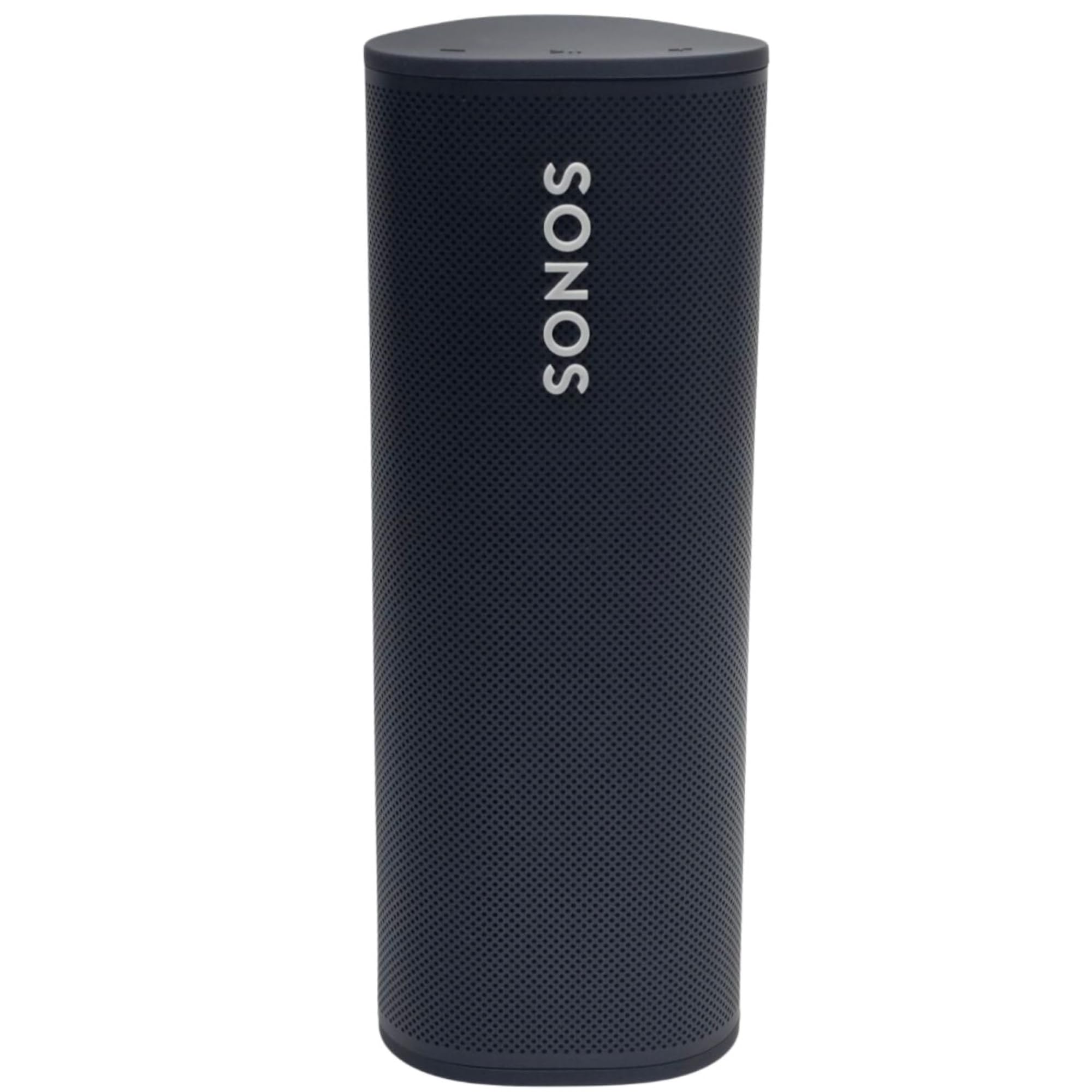
The best Sonos outdoor wireless speaker for most buyers is the Sonos Move 2: a 24-hour, IP56 portable with dual tweeters that can survive rain, dust, and a full weekend of playback. Choose the Roam 2 if you want IP67 waterproofing in a pocketable body, or Outdoor by Sonance if you want a year-round patio install instead of a battery speaker.
- Best overall: Sonos Move 2 — stereo dual tweeters, 24-hour battery, IP56, built-in handle.
- Best budget portable: Sonos Roam 2 — IP67, 10-hour battery, 0.95 lb, USB-C charging.
- Best permanent install: Outdoor by Sonance (pair) — IP66 wired speakers designed for a Sonos Amp.
Pros
- Long battery life reduces charging frequency for active users.
- Rugged build and IP56 rating suit outdoor and poolside use.
- Automatic sound adjustment adapts to surroundings for consistent audio.
- Portable design with handle is convenient for moving between spaces.
- Wireless charging base simplifies daily recharging.
Cons
- Requires Wi-Fi for initial setup and full features; Bluetooth only for direct streaming.
- Weight and size may be bulky for some portable needs.
- Price point is higher than many portable speakers; verify included accessories and compatibility.
The Sonos Move 2 is a portable Bluetooth speaker designed for users who want premium sound in a durable, go-anywhere package. It's ideal for homeowners with outdoor spaces, renters who move frequently, or anyone who likes to carry music between rooms. The speaker's standout feature is its 24-hour battery life, which easily covers a full day of use without needing a charge. Its IP56 rating means it can handle splashes, rain, and dust, making it a reliable companion for poolside lounging or camping trips.
The dual tweeters and precision-tuned woofer deliver a stereo soundstage with clear vocals and deep bass, as claimed by the manufacturer. Automatic Trueplay tuning is a practical convenience: the speaker adjusts its sound profile based on its surroundings, so you get consistent audio whether you're in a small bathroom or a large backyard. This feature is particularly useful for users who don't want to fiddle with EQ settings.
In daily use, the built-in handle makes it easy to carry the Move 2 from the kitchen to the patio. The included wireless charging base is a nice touch, allowing you to simply set the speaker down to recharge. However, the base has a detachable power cable, which adds a small step to the charging routine. For on-the-go charging, you can use a USB-PD power supply, but note that a compatible adapter is not included.
One important consideration is that the Move 2 relies on Wi-Fi for initial setup and to access all features, such as multi-room audio and automatic Trueplay. Bluetooth is available for direct streaming, but you'll need Wi-Fi for the full Sonos experience. Also, the speaker is relatively heavy and large compared to many portable speakers, so it's not the best choice for backpacking.
Who should buy? Someone who values sound quality and durability and wants a speaker that can transition from indoor to outdoor use without compromise. Who should avoid? Those on a tight budget or who need a compact, lightweight speaker for travel. Before purchasing, verify the exact dimensions and weight, and confirm that the wireless charging base and any necessary cables are included.
Best Ownership Fit: The Sonos Move 2 suits homeowners with outdoor living spaces, frequent entertainers, or anyone who wants a single speaker that can serve both indoor and outdoor needs. It's also a good fit for those who already own Sonos products and want a portable option.
Daily Workflow: A typical day might involve using the Move 2 in the kitchen during breakfast, carrying it to the patio for afternoon relaxation, and bringing it inside for evening music. The handle makes transport easy, and the long battery life means you can go days without charging if you don't use it constantly. When the battery runs low, place it on the wireless charging base.
Likely Friction: The main friction is the need for Wi-Fi for setup and advanced features. If you're in a location without Wi-Fi, you'll be limited to Bluetooth, and you won't be able to use Trueplay or multi-room capabilities. Also, the speaker's weight and size might be more than you expect for a 'portable' device.
Before You Buy: Check the speaker's dimensions and weight to ensure it fits your carrying needs. Verify that the wireless charging base is included and whether any additional cables are needed. Confirm that your Wi-Fi network is compatible and that you have a USB-PD supply if you plan to charge on the go. Also, check if the speaker supports the voice assistants you use (not specified).
Initial Setup: The Move 2 requires Wi-Fi for setup. You'll need to download the Sonos app and follow the prompts to connect the speaker to your network. The app will guide you through the process, which typically involves placing the speaker near your router and entering your Wi-Fi password.
Controls: The speaker has touch controls on the top for play/pause, volume, and track skipping, but the exact layout is not specified. You can also control it via the Sonos app or your phone's Bluetooth settings.
Cleaning: The IP56 rating means it can be wiped down with a damp cloth if it gets dusty or dirty. Avoid using harsh chemicals or submerging it in water.
Charging: The Move 2 comes with a wireless charging base. Simply place the speaker on the base to charge. The base has a detachable power cable, so you can store it easily. For on-the-go charging, a USB-PD power supply is required, but one is not included.
Maintenance: There are no user-replaceable parts mentioned. Battery degradation over time is expected, but the battery is not user-serviceable. For any repairs, contact Sonos support.
Storage: When not in use, store the Move 2 in a dry place. The durable exterior should protect it from minor bumps, but avoid dropping it from heights.
Pros
- Manufacturer-stated IP67 rating addresses both water and dust ingress, which is the relevant protection class for beach, bathroom, and worksite use rather than water resistance alone.
- WiFi support means the speaker is described as joining a Sonos multiroom setup, a meaningful advantage over Bluetooth-only rivals for anyone who already owns Sonos hardware.
- The upright or on-its-side placement described in product information gives flexibility in tight spaces such as shower ledges, backpack side pockets, and nightstands.
- USB-C plus optional wireless charging reduces cable dependency and aligns with chargers most buyers already own.
- Physical tactile buttons remain usable when hands are wet or when a phone is out of reach, which is a practical benefit for an outdoor-oriented product.
- The compact and lightweight framing in the supplied description matches the use case of daily transport, though exact dimensions and weight were not provided.
Cons
- No customer review text was supplied with this data set, so there is no independent signal on reliability, real-world sound, or owner satisfaction to weigh against manufacturer claims.
- The 10-hour battery figure and the sound quality claims are manufacturer statements only, with no supplied volume level, codec, or measurement context to indicate how they translate to actual listening.
- No structured specifications were provided, leaving driver configuration, dimensions, weight, Bluetooth version, WiFi standard, warranty terms, and app or device compatibility unestablished.
- Feature-heavy connected speakers depend on app setup, account requirements, and firmware support that the supplied data does not describe, which is a real consideration for buyers who want a simple offline speaker.
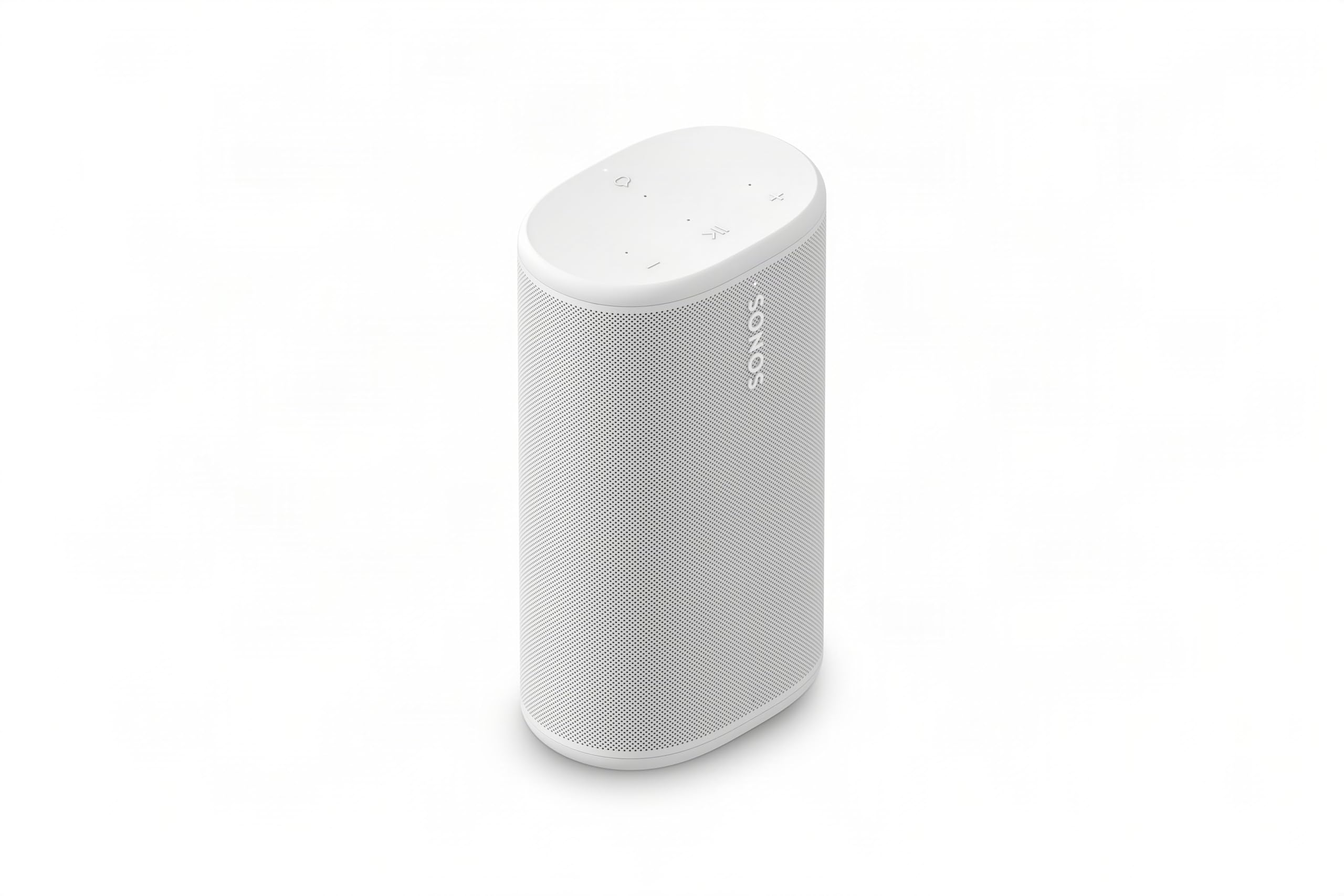
This review covers the Sonos Roam 2 in the white finish, described in supplied product information as a portable waterproof Bluetooth speaker. The buyer it most clearly suits is someone who wants one small speaker to work in two modes: Bluetooth when out of the house, and WiFi playback grouped with other Sonos speakers when at home. The strongest supported reason to consider it is that dual role, which the manufacturer states directly. The strongest limitation of this review is that no customer review text and no structured specification table were supplied, so almost everything below rests on manufacturer claims rather than independent confirmation.
Among the listed features, three carry the most weight for a purchase decision. The IP67 rating is a specific, checkable claim covering dust and water ingress, and it is the reason a speaker like this can be taken to a pool or a trail rather than kept indoors. The stated battery figure of up to 10 hours sets an expectation for a day of intermittent use, though manufacturers typically measure such figures at moderate volume, and no test conditions were supplied here. The WiFi and multiroom capability is what separates this from generic portable speakers, because it implies the unit continues to be useful at home instead of becoming a travel-only accessory.
No customer reviews were provided in this data set. That absence is itself relevant: it means there is no supplied signal on how the speaker performs after months of use, how the battery ages, whether the waterproof seal holds up, or whether app setup is straightforward. A displayed star rating exists, but a rating without accompanying review text cannot be interpreted as a pattern, and it would be misleading to describe it as consensus.
The main trade-off is complexity. Automatic Trueplay, voice control, and WiFi multiroom are described as strengths, but connected speakers introduce app dependencies, account setup, and firmware considerations that the supplied data does not detail. A buyer who wants a speaker that simply pairs over Bluetooth and plays, with no ecosystem involvement, may be better served by a simpler rugged model. Similarly, a buyer whose priority is maximum volume or bass output for large outdoor gatherings should look at larger speakers, since size-defying is a marketing phrase and not a measured output figure.
The qualified verdict: for someone already invested in Sonos, or planning to be, and who values a small IP67-rated unit that bridges indoor and outdoor use, the supplied evidence supports shortlisting this model. For a buyer who needs proof of long-term durability, verified battery endurance, or measured audio performance, the supplied evidence does not support a confident purchase, and independent reviews plus the manufacturer specification sheet should be consulted first.
Verified Product Facts: The following are drawn directly from supplied product information and represent manufacturer claims rather than independent test results.
- Product is identified as the Sonos Roam 2 in a white finish, described as a portable Bluetooth speaker.
- Rated IP67 for water and dust protection.
- Rechargeable battery rated at up to 10 hours of listening time.
- Charges via included USB-C cable, with stated support for compatible wireless charging pads.
- Connects over WiFi for multiroom audio with other Sonos speakers, in addition to Bluetooth.
- Includes Automatic Trueplay tuning, Sonos Voice Control, Amazon Alexa support, and tactile physical buttons; can be positioned upright or on its side.
Customer Signals: No review text was supplied with this product data. The supplied excerpts are insufficient to identify any pattern, recurring praise, or recurring complaint. A numeric rating appears in the source data, but without accompanying review content it cannot be attributed, contextualized, or treated as evidence of a specific strength or weakness. Nothing in this review should be read as reflecting owner experience.
Not Verified: The supplied data cannot establish the following decision-relevant matters.
- Measured audio performance, including output level, frequency response, distortion at volume, and how the speaker behaves outdoors where there are no walls to reinforce bass.
- Real battery endurance under specific volume levels, connection types, or temperatures, and how capacity holds up over repeated charge cycles.
- Long-term durability, including whether the IP67 seal and port covers remain effective after extended outdoor use.
- Warranty terms, support period, and firmware update commitments.
- Technical compatibility details such as Bluetooth version, supported codecs, WiFi standard, required app or account, and physical dimensions and weight, none of which were supplied as structured specifications.
Evidence-Aware Verdict: The evidence supports treating this as a credible shortlist candidate for a buyer who specifically wants a small IP67-rated speaker that also works on WiFi within a Sonos setup, because those are explicit manufacturer claims about capability rather than subjective quality. The evidence does not support any claim about how good it sounds, how long it lasts in practice, how it compares to named competitors, or whether owners are satisfied with it. Those questions require independent measurements and genuine owner feedback that this data set does not contain.
Water and Dust Protection: Supplied information states an IP67 rating covering both dust ingress and water immersion. For buyers, this is the difference between a speaker that tolerates splashes and one rated for accidental submersion, making it relevant for bathrooms, poolsides, kayaks, and dusty environments. Qualification: the rating is a manufacturer claim, and no supplied evidence shows how the seal performs after repeated charging port access or after months of outdoor exposure.
Connectivity and Ecosystem Fit: The product is described as offering both Bluetooth and WiFi, with WiFi unlocking multiroom playback alongside other Sonos speakers. The buyer impact is significant: current Sonos owners gain a portable unit that folds into their existing groups, while buyers with no Sonos hardware are paying for capability they may never use. Qualification: no supplied data confirms the WiFi standard, network requirements, app or account setup, or which Sonos models are groupable, so ecosystem buyers should confirm compatibility with their specific hardware.
Portability: The description characterizes the unit as ultra compact and lightweight, and notes it can stand upright or lie on its side. In practice this affects whether it fits a bag side pocket, a shower ledge, or a bike mount. Qualification: no dimensions or weight were supplied, so compact is a relative descriptor here and buyers with a specific space constraint should verify measurements before ordering.
Power and Ownership Cost: Battery life is stated at up to 10 hours, with charging via an included USB-C cable or a compatible wireless charging pad. The buyer benefit is that no proprietary charger purchase is implied, and USB-C matches most existing gear. Qualification: the 10-hour figure lacks stated test conditions such as volume level or whether WiFi or Bluetooth was in use, and wireless charging pads are noted as compatible accessories rather than included items, which may represent an additional cost.
Controls and Everyday Use: The product lists tactile buttons designed to prevent accidental presses, plus hands-free operation through Sonos Voice Control and Amazon Alexa. This matters for wet hands, gloved hands, and situations where reaching for a phone is impractical. Qualification: nothing in the supplied data describes button layout, whether voice features require WiFi or an account, or whether voice control can be disabled for privacy-conscious buyers.
Sound Adaptation: Automatic Trueplay is listed as a feature that tunes the output for each new environment, which is a sensible inclusion for a speaker that moves between a tiled bathroom, an open patio, and a car interior. Qualification: no supplied evidence indicates how much audible difference this makes, whether it functions over Bluetooth as well as WiFi, or whether it can be turned off, and the driver claims describing clarity and bass are promotional language rather than measurements.
Evidence Depth Before Buying: Across every factor above, the supplied data set contains manufacturer claims but no owner reviews and no structured specification table. The practical impact is that a buyer should treat this review as a map of what to verify rather than a substitute for verification. Qualification: checking the current manufacturer specification page and reading recent owner feedback and independent measurements is the reasonable next step before committing, particularly for the battery, sound output, and long-term seal integrity questions this data cannot answer.
Pros
- Weatherproof design protects against rain, salt spray, and extreme temperatures, ideal for coastal or harsh environments.
- High-fidelity sound quality with custom acoustic components, delivering a natural listening experience even at high volumes.
- Multi-pair capability: a single Sonos Amp can drive up to three pairs, simplifying expansion of outdoor audio zones.
- Seamless integration with Sonos ecosystem, allowing control via the Sonos app and synchronization with indoor speakers.
- Durable construction built to last outdoors, reducing the need for frequent replacement.
Cons
- Requires a Sonos Amp to operate, adding significant upfront cost if you don't already own one.
- No built-in amplification or wireless connectivity, so they are not standalone speakers; they need wired connection to the Amp.
- Limited to Sonos ecosystem, so they may not be ideal for users committed to other smart home audio platforms.
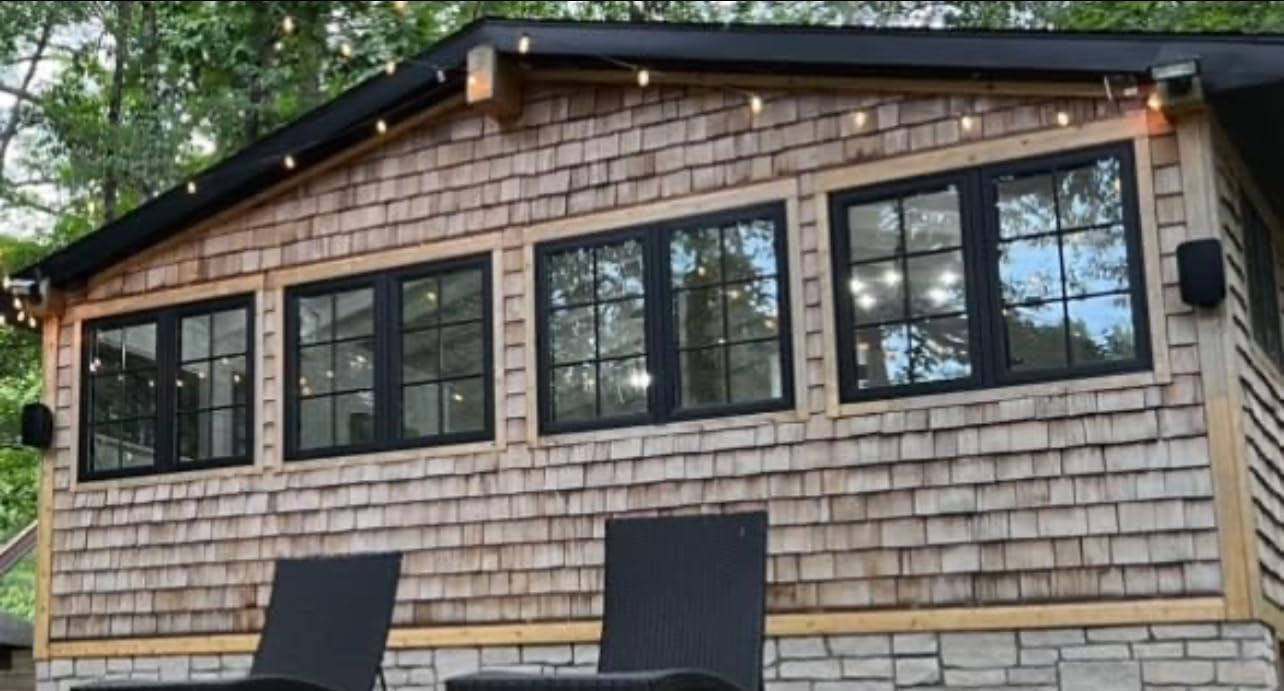
The Sonos Outdoor by Sonance speakers are designed for homeowners who want to extend their Sonos audio system to outdoor living spaces. These weatherproof speakers are optimized to work with the Sonos Amp, delivering rich sound that withstands the elements. If you already own a Sonos system and want reliable outdoor audio, these speakers are a strong contender, provided you have or are willing to invest in a Sonos Amp.
The most important feature is the weatherproof construction. The speakers are engineered to handle humidity, water, salt spray, heat, UV rays, and freezing temperatures, making them suitable for coastal areas, rainy climates, or regions with extreme seasonal changes. This durability means you can leave them installed year-round without worrying about damage. Additionally, the custom-tailored acoustic components are designed to enhance fidelity, providing a natural listening experience even at high volumes, which is crucial for outdoor environments where sound can dissipate.
Setup requires a Sonos Amp, which powers and controls the speakers. The Amp can drive up to three pairs of these speakers, allowing you to cover multiple outdoor zones with a single amplifier. This scalability is ideal for larger properties or for users who want to expand their outdoor audio over time. Integration with the Sonos app is seamless, letting you control volume, group speakers, and access streaming services from your phone.
However, the need for a Sonos Amp is a significant consideration. If you don't already own one, the combined cost of speakers and amp may be higher than other outdoor speaker options. Additionally, these are wired speakers, so installation requires running speaker wire to the Amp, which might be challenging for some users. They are also not standalone wireless speakers, so they won't work without the Amp.
In summary, the Sonos Outdoor by Sonance speakers are an excellent choice for Sonos enthusiasts who want durable, high-quality outdoor audio with seamless integration. The main reason to hesitate is the required investment in a Sonos Amp. If you prefer a simpler, all-in-one wireless outdoor speaker or don't use Sonos, you might consider alternative options. But for those committed to the Sonos ecosystem, these speakers deliver dependable performance and weather resistance.
Weatherproof Design: These speakers are engineered to withstand humidity, water, salt spray, heat, UV rays, and freezing temperatures. This means they can be installed outdoors in almost any climate without needing to be brought inside during bad weather, providing year-round convenience and protection.
Custom-Tailored Acoustic Components: The speakers are built with specialized drivers and tweeters that are tuned to deliver clear, natural sound even at high volumes. This is especially important outdoors where ambient noise and open spaces can distort audio, ensuring your music remains enjoyable during parties or quiet evenings.
Optimized for Sonos Amp: These speakers are designed to work specifically with the Sonos Amp, which provides the necessary power and control. This integration ensures optimal performance and allows you to manage outdoor audio directly from the Sonos app, alongside your indoor speakers.
Scalable Multi-Pair Setup: A single Sonos Amp can power up to three pairs of these speakers. This means you can expand your outdoor sound system to cover multiple areas such as a patio, poolside, and garden, all from one amplifier, reducing the cost of additional equipment.
Durable Construction: The speakers are built to last outdoors, with materials that resist corrosion and degradation from sun and moisture. This reduces the need for frequent replacement, saving you money in the long run.
Sonos Amp Required: These speakers are optimized for use with the Sonos Amp, which is the amplifier that powers them. Without a Sonos Amp, the speakers will not function, so you must have one or plan to purchase it.
Integration with Sonos System: Once connected to a Sonos Amp, the speakers can be grouped with other Sonos speakers in your home, allowing you to play synchronized audio across indoor and outdoor zones. You can control everything from the Sonos app on your smartphone or tablet.
Wired Connection: The speakers connect to the Sonos Amp via standard speaker wire. This means they are not wireless and require a physical cable run from the amp to each speaker location. Plan your installation accordingly.
Scalability: A single Sonos Amp can power up to three pairs of these speakers, so you can gradually add more speakers to expand your outdoor coverage without needing additional amplifiers.
Installation: Setting up these speakers involves connecting them to a Sonos Amp using speaker wire. You will need to route the wire from the amp to each speaker, which may require professional help if you are not comfortable with electrical work. The speakers are designed for outdoor mounting, so they can be placed on walls, under eaves, or on stands.
Initial Configuration: After wiring, you'll use the Sonos app to add the Amp and configure the speakers. The app will guide you through the process of assigning the speakers to a room and setting up audio preferences.
Maintenance: Because the speakers are weatherproof, they require minimal maintenance. It's a good practice to periodically check the speaker grilles for debris or dirt and clean them gently with a soft brush or cloth. Avoid using high-pressure water or harsh chemicals that might damage the finish.
Year-Round Use: The weatherproof design means you can leave the speakers installed throughout the year, even in freezing temperatures or intense sun. However, if you live in an area with extreme conditions, it's wise to inspect the speakers periodically for any signs of wear.
Pros
- Streams over WiFi at home and Bluetooth away, so one speaker covers both indoor multiroom listening and off-network trips
- Up to 24 hours of stated playback reduces how often you interrupt a gathering to find a charger
- Wireless charging base is included rather than sold separately, so the speaker has a natural docking spot when it lives indoors
- IP67 protection against water and dust means splashes, rain, sand, and poolside spray are not a reason to move it inside
- Battery swaps are described as quick and easy, which gives the speaker a longer practical lifespan than sealed-battery designs
Cons
- Stereo sound from a single portable chassis has physical limits, so buyers wanting wide separation for a large room may prefer a pair of speakers or a home soundbar setup
- The WiFi side of the feature set delivers the most value inside an existing Sonos system, so anyone with no other Sonos gear is paying for capability they may never use
- Published specifications such as weight, dimensions, driver details, and battery replacement pricing are not supplied here, which makes it harder to judge portability and long-term ownership cost before buying
The Sonos Play Portable Bluetooth Speaker in white is a rugged, battery-powered speaker built to work two ways: as a WiFi endpoint inside a Sonos system at home, and as a standalone Bluetooth speaker anywhere else. It fits listeners who already own Sonos gear and want portability without leaving that ecosystem. Buyers with no Sonos setup will use only half of what they are paying for.
The feature that shapes daily use most is dual connectivity. On WiFi, the speaker joins the rest of a Sonos system, which matters for grouped playback and app-driven control at home. Step outside network range and Bluetooth takes over, so the same unit handles a hotel room, a campsite, or a car tailgate. Stated playback runs up to 24 hours, and the manufacturer credits optimized power management for that figure. In practice, a rating in that range usually means a full day of casual listening rather than 24 straight hours at high volume, since output level always affects real battery life.
Durability is a genuine part of the design rather than an afterthought. The IP67 rating covers both dust and water ingress, which is the practical difference between a speaker you keep away from the pool and one you set on the edge of it. Drop resistance is also claimed, useful for anyone who moves a speaker between decks, truck beds, and gravel. The included wireless charging base is a meaningful convenience: at home the speaker gets a fixed landing spot, and charging happens by placing it down instead of plugging in.
The main hesitation is value alignment. Stereo separation from one portable enclosure is inherently narrow, so a large living room may be better served by a pair of speakers or a dedicated home system. Detailed specifications including weight, dimensions, and driver configuration are not supplied, which limits how precisely you can judge carry comfort. Battery replacement is described as easy but replacement cost is unstated.
Buy it for the combination of WiFi plus Bluetooth, real weather sealing, and a serviceable battery. Hesitate if you own no other Sonos products or need room-filling stereo width, in which case a cheaper Bluetooth-only speaker or a fixed home audio setup makes more sense.
WiFi and Bluetooth Dual Streaming: This is the feature that justifies the speaker's positioning. At home it streams over WiFi as part of a Sonos system, which is what allows it to behave like the rest of your setup rather than a disconnected accessory. Away from the network it falls back to Bluetooth for direct phone pairing. Owners of existing Sonos equipment benefit most, since they gain portability without adding a second app or workflow.
Up to 24 Hours of Playback: A stated 24-hour rating changes how you plan around charging. Weekend campers, market vendors, and anyone hosting an all-day event can leave the charger behind rather than rationing volume. The manufacturer attributes the figure to optimized power management. Treat it as a ceiling measured under favorable conditions, because loud outdoor listening will pull the real number down.
Included Wireless Charging Base: Because the base ships with the speaker, charging becomes a place rather than a task. You set the unit down and it refills, which suits households where the speaker lives on a shelf or counter between trips. It also removes repeated cable insertion from the routine, a small durability advantage for a product that spends time around water and sand.
IP67 Waterproof and Dustproof Rating: IP67 means the enclosure is sealed against dust and rated for water immersion, not merely splash resistant. Practically, that covers rain on a patio, spray at a pool, and sand at the beach without special handling. Anyone who has retired a speaker after one soaking or one dusty jobsite will value this more than any audio specification on the list.
Drop-Resistant Construction: Drop resistance addresses the most common way portable speakers die, which is impact rather than failure. For users who move a speaker between a deck rail, a truck bed, and a garage bench, this reduces the mental overhead of transporting it. It is a claimed design characteristic rather than a guarantee against every fall, so a hard drop onto concrete is still worth avoiding.
Replaceable Battery: A user-swappable battery extends the useful ownership window well past the point where a sealed rival becomes disposable. Every lithium cell degrades, so on a speaker meant to last years, the ability to install a replacement quickly is a real ownership benefit. Buyers planning long-term use should factor this in, though replacement cost and availability are not detailed here.
Best Overall Use Case: This speaker performs its clearest role as the mobile member of a home Sonos system. Indoors it streams over WiFi alongside your other Sonos devices; outdoors or off-network it becomes a self-contained Bluetooth speaker. Households that want one speaker to cover the kitchen counter on weekdays and a campsite on weekends get the most out of that dual design.
Outdoor and Poolside Listening: IP67 sealing and drop resistance make outdoor listening the strongest practical scenario. Rain on a patio table, spray near a pool, and dust on a trail are conditions the enclosure is rated to handle, which removes the usual routine of moving a speaker indoors at the first sign of weather. Pair that with up to 24 hours of stated playback and a full day outside becomes realistic on one charge.
Travel and Temporary Setups: For hotel rooms, rentals, dorms, and job sites where there is no trusted WiFi to join, Bluetooth mode keeps the speaker useful without configuration. This matters for buyers who move frequently, since a WiFi-only speaker often becomes dead weight away from its home network.
Where Expectations Should Be Managed: Stereo output from one portable body is limited by cabinet width, so the sense of left-right separation will be narrower than a two-speaker arrangement. For a large open-plan living room or a party area where audio needs to reach several distinct zones, a pair of speakers or a fixed home system remains the more suitable choice.
Battery Behavior in Real Use: Treat the 24-hour figure as an upper bound rather than a planning number for loud use. Manufacturer runtime ratings are typically measured at moderate volume, and outdoor listening usually runs louder. Buyers who need guaranteed multi-day operation without power access should plan on the charging base or a spare battery.
Best For: Current Sonos owners who want portability without leaving the system, plus buyers who genuinely take a speaker outdoors. If your listening splits between a kitchen or living room on WiFi and a beach, boat, patio, or worksite on Bluetooth, this speaker is built around exactly that pattern. Households that already group Sonos rooms together will notice the integration most.
Consider Alternatives If: You own no Sonos equipment and have no plans to build a system, in which case the WiFi capability adds cost without adding function and a Bluetooth-only speaker covers your needs for less. Also look elsewhere if you primarily want to fill a large room with wide stereo imaging, since a single portable enclosure cannot match a properly spaced pair or a dedicated home setup. Buyers who need a speaker that lives permanently on one shelf and never travels are paying for ruggedness and a battery they will not use.
Setup and Daily Use: Expect two operating modes. At home the speaker joins your WiFi and participates in your Sonos system; away from that network you pair a phone or tablet over Bluetooth directly. Charging happens on the included wireless base, so the practical daily routine is to set the speaker down when you are done and pick it up when you leave.
Maintenance Requirements: Upkeep is minimal because the IP67 sealing tolerates dust and water exposure, so a rinse or wipe after beach or jobsite use is reasonable. The one long-term consumable is the battery, which the manufacturer says can be swapped quickly. Plan for that eventual replacement if you intend to keep the speaker for several years.
What Sets It Apart: The combination is what distinguishes it: many portable speakers offer Bluetooth and weather sealing, and many home speakers offer WiFi streaming, but a single unit that does both while accepting a replaceable battery narrows the field considerably. Whether that combination is worth the outlay depends almost entirely on whether you will actually use the WiFi side.
Pros
- Microphone-free design removes the always-on mic concern entirely, which benefits privacy-conscious buyers and anyone placing a speaker in a bedroom or workspace.
- Sonos positions the Era 100 SL as either a starting point or an add-on, so it fits both first-time Sonos buyers and owners expanding coverage to another room.
- Line-in connectivity benefits vinyl listeners and anyone with a wired audio source that will not stream.
- Dual tweeters and a midwoofer in one compact enclosure benefit listeners in small to mid-size rooms who do not want a stereo pair taking up space.
- Sonos describes setup as a plug-in followed by the Sonos app, which suits buyers who want minimal configuration before playback.
Cons
- No built-in microphone means no hands-free voice assistant control, which affects buyers who rely on spoken commands rather than an app or physical controls.
- Setup runs through the Sonos app, so the speaker depends on a phone or tablet and a Sonos account rather than working as a standalone plug-and-play box.
- Sonos does not supply dimensions, weight, power draw, or driver specifications here, so buyers with tight shelf space or specific placement needs cannot confirm fit before ordering.
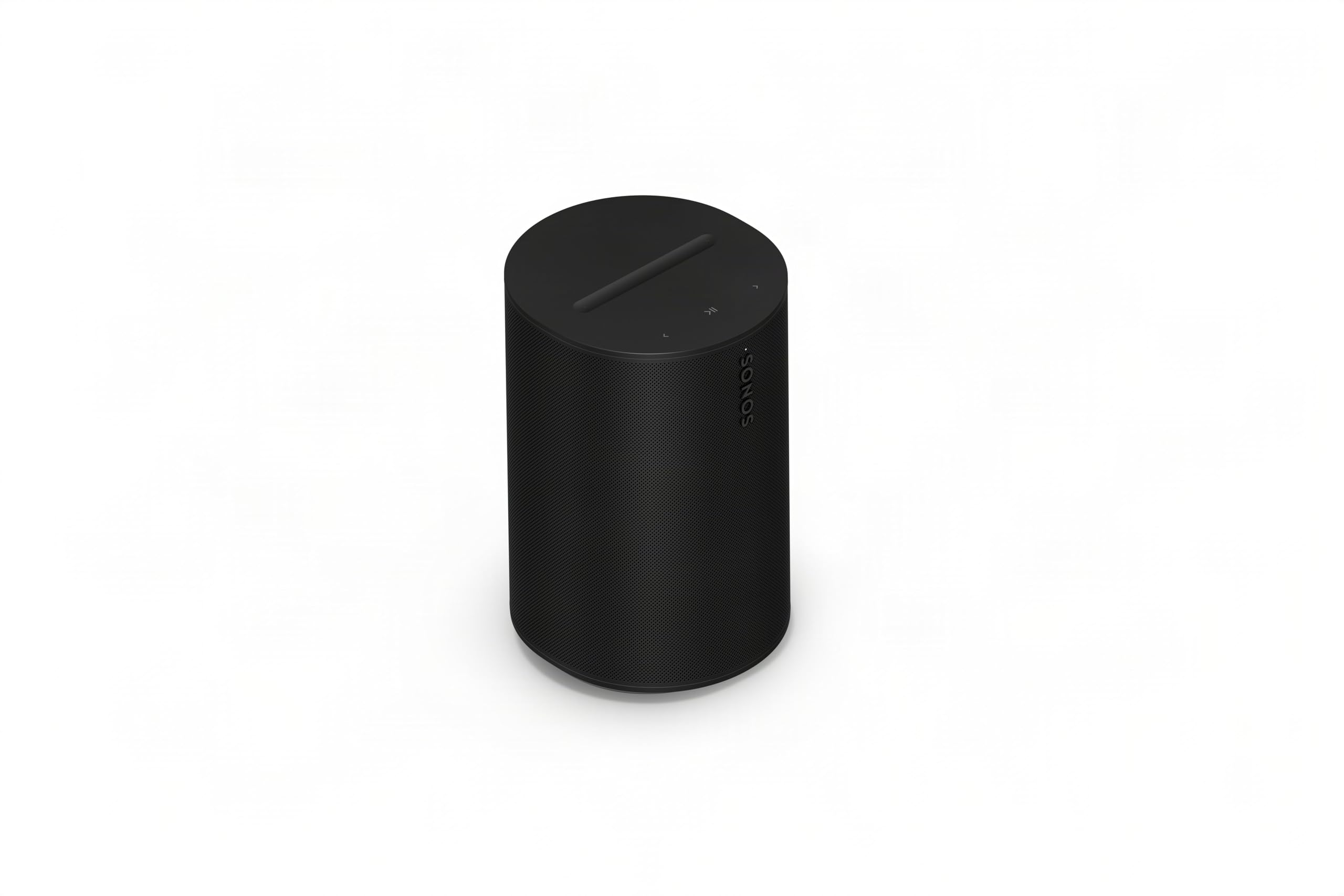
The Sonos Era 100 SL is a compact, microphone-free WiFi speaker built to serve as either a first Sonos speaker or an additional room in an existing Sonos system. It suits a listener who wants networked multi-room audio without an always-present microphone in the room. The strongest supplied reason to consider it is the combination Sonos describes: dual angled tweeters and a midwoofer producing stereo sound with deep bass from one small unit. The qualification is that the SL designation refers to the absence of a microphone, so voice control is not part of the package.
The driver arrangement matters in practice because angled tweeters aim sound outward rather than straight ahead, which is what allows a single-box speaker to attempt stereo separation instead of mono playback. Connectivity covers three routes: WiFi streaming for normal use, Bluetooth for a guest or a phone that is not on the home network, and a line-in connection for a turntable or another wired source. That line-in is the feature that separates this from speakers limited to wireless input only, and it is the reason a vinyl owner might shortlist it.
Setup, per Sonos, is a plug-in followed by configuration in the Sonos app, which means a phone or tablet is required rather than optional. Trueplay then measures the room and adjusts output, which is most useful when the speaker sits somewhere acoustically compromised such as a bookshelf, a corner, or a hard-surfaced kitchen. Placement flexibility is therefore a genuine part of the value here.
Overall, the Era 100 SL is a reasonable pick for someone who wants Sonos ecosystem audio in a small footprint and actively prefers no microphone. The trade-off is exactly that: no hands-free voice control at all. Buyers who want to call out commands, or who want a speaker that runs without an app and an account, should look at a microphone-equipped model or a simpler standalone Bluetooth speaker instead.
Best For: A privacy-minded listener furnishing a bedroom, home office, or small living space who wants a compact networked speaker and either has no Sonos gear yet or is adding one more room.
Why It Fits: Sonos builds the Era 100 SL without a microphone, pairs dual angled tweeters with a midwoofer for stereo sound with deep bass, and supports WiFi, Bluetooth, and line-in, with Trueplay tuning output to the room it occupies.
Think Twice If: You expect to control music by speaking to the speaker, or you want a device that works immediately without installing the Sonos app on a phone or tablet.
Bottom Line: Choose the Era 100 SL if a microphone-free compact speaker with turntable-capable line-in fits your room, but skip it if hands-free voice control is a requirement rather than a preference.
WiFi Streaming: Sonos lists WiFi as the primary connection method, which is what enables the speaker to operate as part of a Sonos system rather than as an isolated Bluetooth box.
Bluetooth Pairing: Bluetooth is supported alongside WiFi, giving a direct phone-to-speaker option for a visitor or for audio that does not route through the Sonos app.
Line-In: Sonos states the Era 100 SL accepts a turntable and other wired sources through line in, so analog gear can feed the speaker instead of being limited to wireless input.
No Microphone Input: The SL model is microphone-free by design. There is no voice assistant path, so all control happens through the app, physical controls on the unit, or the connected source.
Room Tuning: Trueplay adjusts playback for the acoustics of the specific room, which is the setting most worth revisiting if you move the speaker to a different surface or space.
Pros
- Portable and versatile for users who want one speaker for both home and travel.
- Easy setup with Sonos app, Bluetooth, AirPlay 2, and voice control.
- Deep bass and wide soundscape for a rich listening experience.
- Alexa integration adds smart assistant functionality for hands-free control.
- Charging base provides a dedicated spot for recharging and storage.
Cons
- Battery life and charging time are not specified; verify these before relying on extended portable use.
- Voice control works only on Wi-Fi, not over Bluetooth, which limits hands-free use when away from home.
- Charging base requires a power outlet, and the speaker must be docked to recharge.
- Compatibility with existing Sonos systems and power outlet types may need verification.
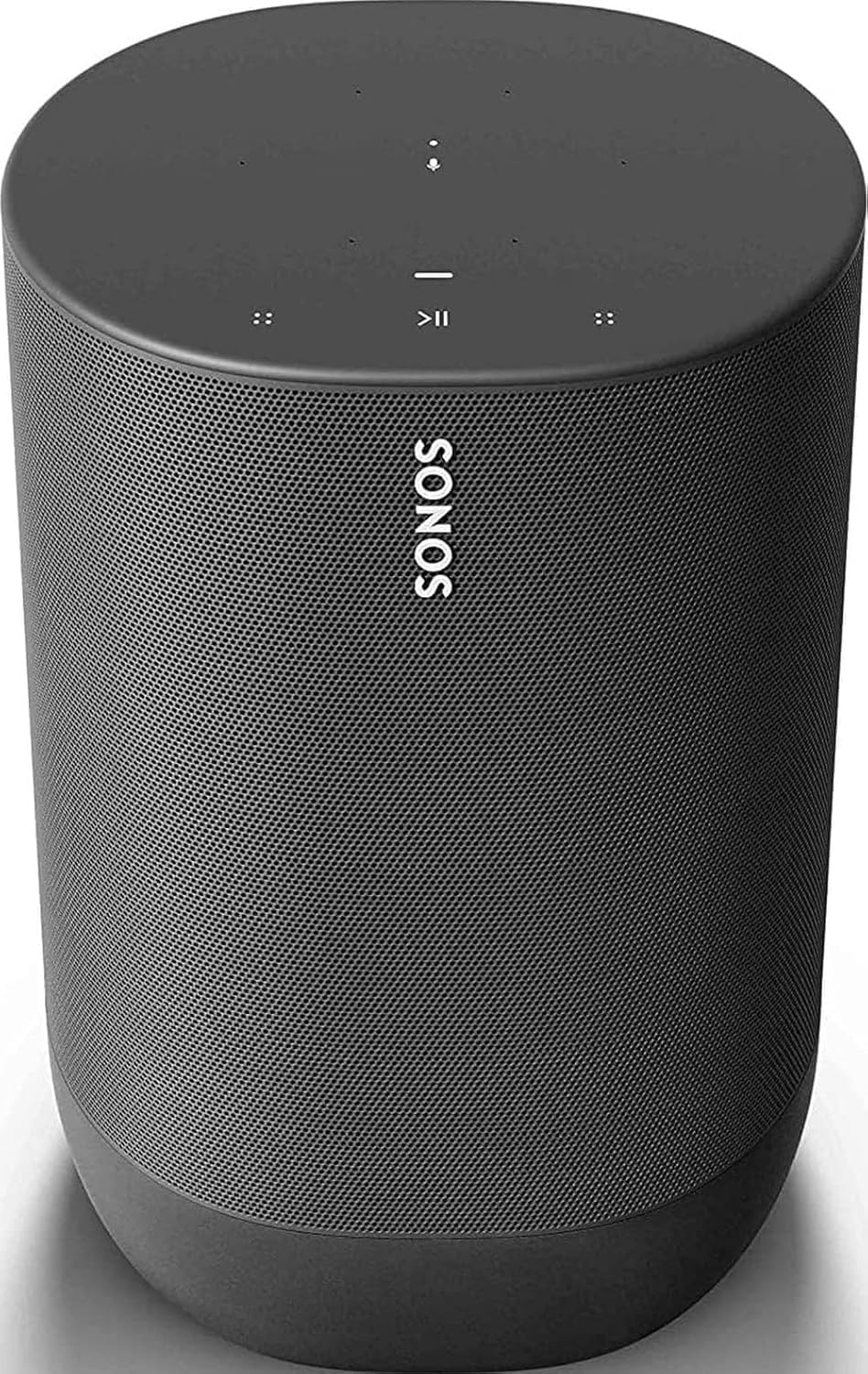
The Sonos Move is a battery-powered smart speaker designed for listeners who want a single audio solution that works both at home and on the go. Its core job is to deliver high-quality sound in various settings, from a living room to a backyard or campsite. The strongest verified convenience is its dual connectivity: over Wi-Fi it integrates with your home Sonos system and supports voice control, while Bluetooth allows streaming when you're away from your network.
For routine use, the speaker's automatic Trueplay tuning adjusts the sound based on its environment, so you don't have to manually tweak EQ settings when moving it. The built-in Alexa provides hands-free control over music, news, and alarms, but only when connected to Wi-Fi. This means that when you're using Bluetooth outdoors, you'll need to control playback from your phone or other device.
The charging base is a practical addition, offering a dedicated spot to recharge and store the speaker when not in use. However, the product data does not specify battery life or charging time, which are critical for planning outdoor activities or knowing how often you'll need to dock it. Without this information, you should verify these details with the manufacturer before relying on the Move for extended portable use.
Customer reviews are not available in the provided data, so we cannot confirm real-world experiences with durability, battery longevity, or sound quality. The description mentions durability, but that is a manufacturer claim rather than an independent verification.
Who should buy: If you already own a Sonos system and want a portable speaker that can seamlessly move between home and away, the Move is a strong candidate. Who should avoid: If you need a speaker primarily for Bluetooth-only use without relying on a home Wi-Fi network, or if you require guaranteed all-day battery life, you should look for more specific battery specs elsewhere. Before purchasing, verify the battery life, charging time, and whether the included charging base matches your power outlet type.
Best Ownership Fit: This speaker suits a household or individual who wants one audio device that can serve as a stationary smart speaker at home and a portable Bluetooth speaker for outdoor activities, such as patio gatherings, camping trips, or beach outings. It is also a good fit for those already invested in the Sonos ecosystem.
Daily Workflow: On a typical day, you might keep the Move on its charging base in your living room, using voice commands to play music, check news, or set alarms. When heading outside, you can pick it up and carry it to your patio or yard, where it will automatically switch to Bluetooth if you leave your home Wi-Fi range. You'll need to initiate Bluetooth pairing from your phone or other device, as voice control is not available over Bluetooth.
Likely Friction: The most significant friction is the unknown battery life. Without a specified runtime, you may find the speaker dying sooner than expected during outdoor use. Additionally, the need to return it to its charging base for recharging could be inconvenient if you forget to dock it after use.
Before You Buy: Verify the battery life and charging time from the manufacturer, as these are not provided. Check that the charging base's power input (100-240V, 50-60 Hz) is compatible with your region's outlets. Confirm that the speaker is compatible with your existing Sonos system if you have one, and check the physical dimensions to ensure it fits your intended spaces.
Setup: The product description states that setup takes minutes and is done via the Sonos app, Bluetooth, AirPlay 2, or voice. For Wi-Fi setup, you'll need to connect the speaker to your home network using the Sonos app. For Bluetooth, you can pair it directly with your phone or tablet. The charging base must be plugged into a power outlet using the provided power supply (input: 100-240V, 50-60 Hz, 1.2A; output: 18VDC, 2.5A).
Controls: The speaker can be controlled via the Sonos app, voice commands (when on Wi-Fi), or physical buttons on the device (though specific button functions are not detailed). AirPlay 2 allows control from Apple devices.
Cleaning and Maintenance: The product data does not provide specific cleaning instructions. As a portable speaker, it may be exposed to dust and outdoor elements. It is advisable to wipe the exterior with a soft, dry cloth and avoid getting moisture in the ports. The charging base should also be kept clean and dry.
Storage: When not in use, the Move can be stored on its charging base, which also serves as a storage spot. Ensure the base is placed in a dry, stable location.
Replacement Parts and Consumables: The battery is built-in and not user-replaceable according to the description. The charging base and power supply are included, but replacements may be available from Sonos. Verify battery replacement options with the manufacturer.
Sonos System Compatibility: The Move connects over Wi-Fi to the rest of your Sonos system at home, allowing you to group it with other Sonos speakers and control them via the Sonos app.
Bluetooth: When away from Wi-Fi, it switches to Bluetooth, allowing you to stream from any Bluetooth-enabled device, such as a smartphone or tablet.
AirPlay 2: Supports AirPlay 2, so Apple users can stream directly from iOS devices or Macs.
Voice Assistant: Amazon Alexa is built-in, but it only works over Wi-Fi. It is not available over Bluetooth.
Power Requirements: The charging base accepts 100-240V, 50-60 Hz, so it is compatible with most worldwide voltage standards, but you may need a plug adapter for different outlet types.
Physical Fit: The exact dimensions and weight are not provided in the product data. Before purchasing, measure your intended spaces to ensure the speaker will fit. Check the manufacturer's website for detailed specifications.
Pros
- Weather-resistant and shock-resistant case, ideal for outdoor and active use.
- 11-hour battery life supports long listening sessions without frequent charging.
- Combines Wi-Fi and Bluetooth for flexible use at home and on the go.
- Alexa built-in enables hands-free control, convenient for multitasking.
- Automatic Trueplay tuning ensures optimal sound in any location.
Cons
- Heavier than many portable speakers, which may be a drawback for travel.
- Requires a Wi-Fi connection for full smart features and voice control; Bluetooth mode limits functionality.
- Gen 1 model lacks some newer features found in later versions, such as improved battery life or Wi-Fi 6.
The Sonos Move (Gen 1) is a durable, battery-powered smart speaker designed for both indoor and outdoor listening. It is best for individuals who want a single speaker that can deliver high-quality sound in multiple settings, from the living room to the backyard. The strongest verified reason to consider it is its combination of weather resistance (IP56), 11-hour battery life, and automatic Trueplay tuning, which adapts sound to the environment. However, it is heavier than typical portable speakers, so it may not be ideal for backpacking or frequent travel.
Key features translate into practical benefits. The IP56 rating means the speaker can handle rain, snow, dust, and extreme temperatures, so you can leave it on the patio or take it to the beach without worry. The 11-hour battery life ensures it can power through a full day of listening, whether you're hosting a barbecue or relaxing by the pool. With both Wi-Fi and Bluetooth, you can stream music at home via your Sonos system and then switch to Bluetooth when you're away from your network, maintaining playback without interruption.
Setup is straightforward: the Sonos app guides you through the process in minutes, and control is simple via the app, Bluetooth, AirPlay 2, or your voice. Amazon Alexa is built in, so on Wi-Fi you can control music, check news, set alarms, and more hands-free. Recharging is easy with the included base or a compatible USB-C charger, and the speaker's durable case protects against drops and bumps.
Overall, the Sonos Move (Gen 1) offers a compelling balance of portability, durability, and sound quality. The main trade-off is its weight and the fact that it's an older model; if you prioritize the latest features or a lighter design, you might consider the Sonos Move (Gen 2) or a smaller portable speaker. But for those who need a robust, versatile smart speaker, the Move (Gen 1) remains a solid choice.
Best For: Homeowners and outdoor enthusiasts who want a single, durable smart speaker that works both indoors and in outdoor settings like patios, gardens, or camping trips.
Why It Fits: The speaker's IP56 weather resistance and shock-resistant case make it suitable for outdoor use, while its 11-hour battery life supports extended listening away from power outlets.
Think Twice If: You need a lightweight speaker for travel or hiking, as the Move (Gen 1) is heavier than typical portable speakers and may be cumbersome to carry.
Bottom Line: If you value durability and sound quality over portability and can accept the extra weight, the Sonos Move (Gen 1) is a worthwhile investment for versatile listening.
Durability: IP56 rating protects against humidity, rain, snow, dust, salt spray, UV rays, and extreme temperatures, making it reliable for outdoor use.
Battery Life: Up to 11 hours of continuous playtime, rechargeable via the included base or a compatible USB-C charger.
Connectivity: Streams over Wi-Fi at home and switches to Bluetooth when offline or away, ensuring uninterrupted playback.
Voice Control: Amazon Alexa built-in allows hands-free control of music, news, alarms, and more when on Wi-Fi.
Sound Quality: Automatic Trueplay tuning adapts the sound to the environment, delivering rich bass and a wide soundstage.
Pros
- Sonos users get a seamless multi-room audio extension outdoors
- Weather-resistant construction suits coastal or rainy climates
- Stereo pair provides balanced sound across patios or yards
- Included brackets reduce additional mounting hardware costs
- Optimized for outdoor acoustics, enhancing listening experience
Cons
- No customer reviews yet, so real-world performance and durability are unverified
- Lacks specifications like dimensions, weight, and power handling, making fit unclear
- Requires a Sonos system and possibly professional installation for best results
The Sonos Outdoor by Sonance is a pair of weather-resistant outdoor speakers designed for Sonos wireless audio systems. Ideal for homeowners with existing Sonos setups who want to extend music to patios, decks, or pool areas. The strongest verified convenience is the included stereo pair and mounting brackets, which simplify setup for immersive sound coverage.
In routine use, these speakers are built to withstand environmental stressors like rain, humidity, salt spray, heat, and UV rays, making them suitable for year-round outdoor installation. The stereo pairing capability ensures balanced audio across the listening area, while the mounting options allow placement on walls, under eaves, or on outdoor structures. However, the lack of specifications means you cannot verify dimensions, weight, or mounting hole patterns before purchase.
Seamless integration with Sonos systems is a key advantage, as users can control outdoor audio through the same app and group speakers with indoor units. Yet, this also means the speakers are not standalone; they require a Sonos ecosystem, which limits their use for those without one.
Customer reviews are currently unavailable, so independent validation of sound quality and durability is missing. The manufacturer's claims about premium components are not independently verified. Therefore, treat these claims as promotional until more user feedback emerges.
Who should buy: Sonos enthusiasts seeking a weather-resistant outdoor audio solution with easy mounting. Who should avoid: Those not invested in Sonos or needing standalone speakers. Before purchase, verify dimensions, mounting compatibility, and whether professional installation is recommended.
Best Ownership Fit: This speaker pair suits tech-savvy homeowners who already use Sonos and want reliable outdoor audio without frequent maintenance. Ideal for medium to large patios or yards where stereo sound is desired.
Daily Workflow: Once installed and connected to a Sonos system, daily use involves selecting music via the Sonos app and adjusting volume. The speakers are designed to remain outdoors, so no daily setup or takedown is needed. Stereo pairing is configured during initial setup.
Likely Friction: The most significant friction is the absence of detailed specifications and user reviews, leaving you uncertain about physical fit and long-term performance. Also, installation may require running speaker wire and making connections, which could be challenging for novices.
Before You Buy: Verify the physical dimensions and weight to ensure they fit your intended mounting locations. Check the mounting bracket compatibility with your wall or eave material. Confirm that your Sonos system supports outdoor speakers and whether a Sonos Amp or Connect is required for power. Also, consider the need for professional installation if you're not comfortable with wiring.
Installation: The product includes mounting brackets, but specific instructions are not provided. Verify whether the brackets are compatible with standard outdoor surfaces and if any additional hardware is needed. If you're not experienced with speaker installation, consider hiring a professional to ensure proper mounting and wiring.
Wiring: These are passive speakers, so they require connection to a Sonos Amp or similar amplifier. You'll need to run speaker wire from the amp to each speaker, which may involve routing through walls or underground. The length and gauge of wire are not specified, so consult with an installer.
Cleaning: The weather-resistant design suggests they can be cleaned with a soft cloth and mild soap. Avoid high-pressure water or abrasive cleaners that could damage the finish. Regular inspection for debris or insect nests is advisable.
Maintenance: Because they are weather-resistant, they may require less frequent maintenance than non-outdoor speakers. However, over time, seals and connections may need checking. No specific maintenance schedule is provided, so refer to the manufacturer's guidelines.
Replacement Parts: No information is available on replacement parts or consumables. If a component fails, contact Sonos or Sonance for support.
Pros
- Battery-powered portability gives you the freedom to move the speaker from room to room or take it outside
- WiFi and Bluetooth connectivity lets you stream at home or offline when you're away
- Built-in Alexa enables hands-free voice control for music, news, and alarms
- Automatic Trueplay tuning adjusts sound to your environment for balanced audio
- Durable build is designed for both indoor and outdoor listening
Cons
- Heavier and bulkier than typical portable speakers, which may reduce true portability
- Voice control and full features require WiFi, limiting use when on Bluetooth only
- Premium price may be a barrier for casual listeners who don't need a smart speaker
The Sonos Move in Lunar White is a battery-powered smart speaker that combines the convenience of a portable speaker with the audio quality and smart features of a home speaker. It is designed for people who want a single speaker that can deliver great sound both inside and outside, without the need to own separate devices. If you are a Sonos enthusiast or want a versatile speaker that can move with you, the Move is a strong contender, though its size and price may give some buyers pause.
The Move's key feature is its dual connectivity: it streams over WiFi when at home, allowing it to integrate with the rest of your Sonos system, and switches to Bluetooth when you are away or offline. This flexibility means you can enjoy your music on your patio, at a picnic, or in a hotel room without losing audio quality. The built-in Amazon Alexa adds hands-free control when on WiFi, letting you play music, check news, set alarms, and get answers to questions with just your voice. For those who value convenience, these features make daily use straightforward and enjoyable.
Setup is designed to be quick, taking only minutes, and control is managed through the Sonos app, which also works with AirPlay 2. The speaker's automatic Trueplay tuning is a standout: it uses the microphone to analyze the environment and adjust the sound profile in real time, ensuring balanced audio whether you're in a small room or an open outdoor space. The result is a surprisingly deep bass and a wide soundscape that adapts to your surroundings, which is a practical benefit for listeners who care about audio quality.
However, the Move is not without limitations. Its battery-powered design adds weight, making it less portable than smaller Bluetooth speakers, and it may be awkward to carry for extended periods. Additionally, voice control and full smart features require a WiFi connection; when you switch to Bluetooth, you lose Alexa and the ability to control the speaker with your voice. This could be a drawback for those who want hands-free control on the go. The premium price also means it may not be the best choice for budget-conscious buyers or those who only need a simple portable speaker.
In summary, the Sonos Move is a well-rounded speaker that excels in delivering high-quality sound with smart features in a portable form. The strongest reason to buy it is its ability to seamlessly transition from a smart home speaker to a Bluetooth portable speaker, making it a versatile investment. The main reason to hesitate is its weight and price, which may not appeal to those who prioritize ultralight portability or are on a tight budget. If you do not need the smart features or Sonos integration, a simpler and lighter Bluetooth speaker might be more suitable.
Battery-Powered Design: The Sonos Move is built with a rechargeable battery, allowing you to use it without plugging it in. This matters because it gives you the freedom to place the speaker anywhere, from your kitchen counter to a backyard gathering, without worrying about finding an outlet. It benefits anyone who wants music to follow them around the house or outdoors.
WiFi and Bluetooth Connectivity: The Move supports both WiFi and Bluetooth, so you can stream over WiFi when at home to connect with your Sonos system, and switch to Bluetooth when you are away from your network. This solves the problem of having separate speakers for home and travel, and it benefits those who want a single speaker that works everywhere.
Built-in Amazon Alexa: On WiFi, Alexa is built right in, enabling hands-free voice control for music, news, alarms, and questions. This matters because it adds convenience, allowing you to control your speaker without lifting a finger, which is especially useful when your hands are busy cooking or gardening.
Automatic Trueplay Tuning: The Move uses its microphone to automatically tune the sound to your environment, adjusting the equalizer in real time. This solves the problem of inconsistent audio quality in different rooms or outdoor spaces, and it benefits listeners who want balanced sound without manually adjusting settings.
Sonos App and AirPlay 2: Setup and control are handled through the Sonos app, which also supports AirPlay 2 for Apple users. This matters because it provides a unified interface for managing your music and other Sonos speakers, and it benefits those who already own Sonos products or use Apple devices.
Indoor Listening: The Sonos Move is designed to perform well indoors, with deep bass and a wide soundscape that fills a room. Its automatic Trueplay tuning adjusts to the acoustics of your space, so you get consistent audio whether you place it on a bookshelf or a countertop. It is ideal for living rooms, kitchens, or home offices where you want high-quality sound without a permanent setup.
Outdoor Use: Thanks to its battery and durable build, the Move is suitable for outdoor listening. Whether you are hosting a barbecue, relaxing on a patio, or camping, you can take the Move with you. The Bluetooth mode ensures you can play music even when there is no WiFi, making it a reliable companion for off-grid adventures.
Smart Home Integration: When connected to WiFi, the Move works with Amazon Alexa, allowing you to control it with your voice. You can ask for music, check the news, set alarms, or get answers to questions, making it a functional smart speaker for daily tasks. It also integrates with the Sonos app, so you can group it with other Sonos speakers for multi-room audio.
Portability Trade-off: While the Move is portable, it is heavier than many compact Bluetooth speakers. This means it is best suited for carrying short distances, such as from the house to the yard, rather than for long hikes. If you need a speaker for backpacking, a lighter model might be a better fit.
Best For: The Sonos Move is best for people who want a single speaker that can serve as both a smart home speaker and a portable Bluetooth speaker. It suits those who already own Sonos products or appreciate high-quality audio and are willing to pay a premium for versatility. It is also ideal for renters or travelers who want to take their music with them without sacrificing sound quality.
Consider Alternatives If: If you are on a tight budget, need a speaker that is extremely lightweight and compact for travel, or do not care about smart features like Alexa, you might be better off with a simpler Bluetooth speaker. Additionally, if you do not have WiFi at home or rarely use voice control, the Move's smart features may be unnecessary, and a basic speaker could save you money.
Setup and Daily Use: The Move is designed for easy setup, taking only minutes to get started. You will use the Sonos app to connect it to your WiFi network and configure your preferences. On a daily basis, you can switch between WiFi and Bluetooth modes depending on your location, and control the speaker via the app, voice, or AirPlay 2. The battery needs to be charged, but you can leave it on the charging base when not in use.
Maintenance Requirements: The Move is a durable speaker, but like any electronic device, it should be kept clean and protected from extreme conditions. The battery will eventually need replacement, but that is a long-term consideration. There are no consumables or complex maintenance steps, so upkeep is minimal.
What Sets It Apart: The Move stands out because it combines the audio quality and smart features of a Sonos home speaker with the portability of a battery-powered speaker. Its automatic Trueplay tuning is a unique feature that ensures optimal sound in any environment, and its ability to switch between WiFi and Bluetooth gives it a flexibility that few other speakers offer.
Pros
- IP67 waterproof and dustproof rating: Safe to use by the pool, in the shower, or on dusty trails without damage.
- WiFi and Bluetooth compatibility: Works as a home speaker on WiFi and as a portable speaker on Bluetooth.
- Sonos ecosystem integration: Pairs with other Sonos speakers for whole-home audio control.
- Compact and portable design: Easy to carry in a bag or backpack for travel.
- Renewed price point: Typically more affordable than a brand-new model, offering savings.
Cons
- Renewed condition: May have visible cosmetic wear or minor blemishes from prior use.
- No voice assistant or Trueplay auto-tuning: The SL version lacks these features found in the standard Roam.
- Charging cable included but wireless charger optional: You may need to purchase a separate charger for convenience.
The Sonos Roam SL Renewed is a portable speaker that combines the convenience of Bluetooth with the power of a Sonos multi-room system. It is designed for people who want a single speaker that works both at home and on the go, especially if they already use Sonos products. The SL version omits voice assistant and auto Trueplay, making it a more straightforward option for those who prefer app control.
Key features include WiFi and Bluetooth streaming, allowing you to switch from home use to outdoor use seamlessly. The IP67 rating means it is fully dustproof and can be submerged in up to one meter of water for 30 minutes, making it suitable for poolside parties, beach trips, or rainy hikes. The 10-hour battery life covers most day-long outings.
Design-wise, the Roam SL is compact and lightweight, fitting easily into a backpack or cupholder. Setup is simple through the Sonos app, and it can be paired with other Sonos speakers for whole-home audio. The USB-C charging cable is included, and it also supports wireless charging with a compatible Sonos wireless charger (sold separately).
However, as a renewed product, the unit may show signs of prior use, such as minor scratches or scuffs. The lack of voice assistant might be a drawback for those who rely on hands-free controls. Also, the wireless charger is not included, which adds an extra cost if you want that convenience.
Overall, the Sonos Roam SL Renewed is a solid choice for Sonos enthusiasts looking for a portable speaker at a reduced price. Its main strength is the seamless integration with existing Sonos systems and its rugged build. If you need voice assistant features or prefer a brand-new unit, you might consider the standard Sonos Roam or another portable speaker.
WiFi and Bluetooth Streaming: This speaker connects to your home WiFi for high-quality, multi-room audio and switches to Bluetooth for on-the-go use. It solves the problem of needing separate speakers for home and travel, and it benefits users who want a single device for both.
IP67 Waterproof and Dustproof: The IP67 rating means the speaker is fully protected against dust and can survive immersion in water up to 1 meter for 30 minutes. This makes it ideal for outdoor activities like camping, beach trips, or poolside lounging, where you don't have to worry about splashes or sand.
10-Hour Battery Life: With up to 10 hours of playtime on a single charge, you can enjoy music throughout a day trip or a long evening gathering. This is particularly useful for travelers and outdoor enthusiasts who need reliable battery life.
Sonos Multi-Room Compatibility: You can connect the Roam SL to any other Sonos speaker to play different songs in different rooms or sync them for a whole-home audio experience. This is a major advantage for existing Sonos users who want to extend their system.
Renewed Condition: Buying a renewed unit provides a more affordable entry point into the Sonos ecosystem. However, you should expect some cosmetic wear, and the warranty may be limited compared to new products.
Best For: The Sonos Roam SL Renewed is ideal for individuals who already own Sonos speakers and want a portable option that integrates seamlessly. It's also great for anyone who needs a rugged, waterproof speaker for outdoor adventures.
Consider Alternatives If: If you require voice assistant functionality (like Alexa or Google Assistant), you should consider the standard Sonos Roam. Additionally, if you prefer a brand-new product with a full warranty, you might want to buy a new unit instead of a renewed one.
Setup and Daily Use: Setup involves downloading the Sonos app and connecting the speaker to your WiFi network. You can then play music via WiFi at home or switch to Bluetooth for on-the-go use. The speaker pairs easily with other Sonos devices for multi-room listening.
Maintenance Requirements: The speaker is durable and requires minimal maintenance. Keep the charging port dry, and clean the exterior with a soft, dry cloth. The IP67 rating protects against water and dust, but it's still wise to avoid prolonged exposure to extreme temperatures.
What Sets It Apart: Unlike many portable speakers, the Roam SL offers both WiFi and Bluetooth, making it a hybrid that works in the home and on the road. Its Sonos compatibility is a major differentiator for those invested in the ecosystem.
Initial Setup: To get started, download the Sonos app on your smartphone. The app will guide you through connecting the speaker to your WiFi network. Once connected, you can also enable Bluetooth for portable use.
Charging: The speaker comes with a USB-C cable for charging. You can also use a compatible wireless charging pad (sold separately) for convenience. A full charge provides up to 10 hours of playtime.
Software Updates: The Sonos app will notify you of firmware updates, which are important for maintaining performance and adding new features. Keep the app updated to ensure the speaker works optimally.
Cleaning and Care: Since the speaker is IP67 rated, it can be rinsed with water if it gets dusty. Use a soft cloth to wipe the exterior. Avoid using harsh chemicals or abrasive materials that could damage the finish.
Storage: When not in use, store the speaker in a cool, dry place. If you plan not to use it for an extended period, charge it to about 50% to preserve battery health.
How We Tested
This ranking is a spec-and-use-case evaluation, not a lab shootout with microphones in an anechoic chamber. We scored each model from its published durability rating, battery claim, driver layout, weight, charging method, and Sonos ecosystem features, then cross-checked those claims against customer-review patterns for outdoor use: rain, dust, pool spray, Bluetooth dropouts, and how quickly battery life falls at high volume. We did not run independent SPL or frequency-response measurements.
The scoring weighted five criteria: water and dust protection (IP56 versus IP67 versus IP66), battery endurance versus wired power, open-air coverage (dual-driver stereo versus single-driver compact versus a wired pair), portability (weight, handle, grab-and-go charging), and ecosystem fit (WiFi, Bluetooth, Alexa, Amp pairing, SL microphone-free variants). A high IP rating mattered more for poolside and uncovered decks; 24-hour battery life mattered more for camping and all-day parties; installation complexity mattered more for permanent patios. Real-world battery life can drop about 15% at high volume or in cold weather, so we treated manufacturer hour claims as a ceiling, not a guarantee. No single speaker won every category, which is why the five reviews below map to different yards, budgets, and installation appetites.
The 5 Best Sonos Outdoor Wireless Speakers Reviewed
Sonos Move 2 — 9.2/10
The Move 2 is the speaker we would actually carry onto a deck, a driveway party, and a covered porch without second-guessing the weather. Dual tweeters give it a true stereo image instead of the mono “point source” sound of the original Move, which is the difference between music that sits in one corner and music that has left-right space. In open air, bass disappears fast and background noise eats midrange; a dual-driver chassis helps here more than a marketing slogan does. Sonos states that dual-driver models like this project sound about 40% farther than single-driver compacts such as the Roam 2, which is why the Move 2 is the default pick for a medium backyard rather than a cafe table. IP56 covers rain, dust, and splashes—the right rating for most residential outdoor use that is not a dunk test. The 24-hour battery is the other reason it sits at the top: an evening gathering does not need that much runtime, but a Saturday-to-Sunday stretch does, and a 15% real-world hit at high volume still leaves you with a long day. At 6.6 pounds with a built-in handle it is portable in the “carry it, don’t pocket it” sense. It charges on a wireless base, which is convenient at home and mildly annoying if you travel without that base. Built-in Alexa works over WiFi, not over Bluetooth, so voice control is a backyard feature when you are on the home network and disappears the moment you take it off-grid. The price is the honest trade-off: you pay Move 2 money for stereo, endurance, and weather sealing that cheaper Sonos portables do not combine in one chassis.
- Best For: Buyers who want one speaker that can live indoors, sit through rain on a deck, and last a full weekend without hunting for an outlet.
- Watch Out: It is heavier and more expensive than the Roam 2, IP56 is not a submersion rating, and the charging base is part of the daily ritual.
Sonos Roam 2 — 8.5/10
If the Move 2 is the weekend cooler, the Roam 2 is the water bottle: 0.95 pounds, IP67 waterproofing, and a 10-hour battery that is enough for a dinner, a pool afternoon, or a trip where luggage weight actually matters. IP67 is the rating to care about when the speaker may see spray, a wet table, or brief immersion—poolside and boat-adjacent use is the Roam 2’s home turf, not a 40-foot lawn. The single-driver design is the limiter. Close-range listening on a balcony or small patio is fine; trying to cover a long deck with one Roam 2 is how you end up turning the volume up, flattening dynamics, and still losing the far chairs. USB-C charging is simpler for travel than a proprietary base, and the lower price is the reason this is the budget pick rather than a compromise trophy. Pairing two units in the Sonos app into a stereo pair is the legitimate upgrade path if the first Roam 2 sounds small, which it will in open air. Bluetooth still tops out around 30 feet when you leave WiFi, so “walk the yard with your phone in the house” is not the use case. Voice control is not the story here; compactness, waterproofing, and cost are. Take the 10-hour claim as a full evening, not a camping weekend, and the Roam 2 stops looking like a lesser Move 2 and starts looking like the right tool for a smaller outdoor life.
- Best For: Balconies, travel, and poolside listening where IP67 and low weight beat raw output.
- Watch Out: Smaller sound, shorter battery than the 24-hour models, and a single driver that will not fill a large backyard alone.
Outdoor by Sonance (pair) — 8.7/10
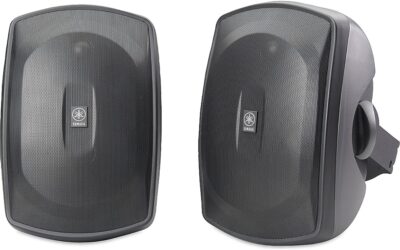
These are not wireless battery speakers, and treating them as such is how buyers get the wrong install. Outdoor by Sonance is a wired, IP66 pair meant to live on a wall, eave, or patio post all year, driven by a Sonos Amp. IP66 is a different promise from a portable’s IP56 or IP67: powerful water jets, not a dunk, and a chassis designed to stay outside instead of going back on a charging stand at midnight. That is the correct architecture when the patio is a dedicated entertainment zone and you are tired of charging, carrying, and remembering to bring a speaker in before a storm. The sound argument is coverage. A mounted pair plus an Amp is how you fill a wide deck without walking a 6.6-pound portable from one end to the other. The costs are not only money. You need the Amp, a WiFi network that actually reaches the install site, and usually a professional who can run weather-rated cable without turning the fascia into a science project. Location is permanent. If you host in the backyard one month and the side yard the next, you will feel that rigidity. Theft and “I left it outside” anxiety go down; flexibility goes with them. For buyers already in the Sonos app for indoor rooms, this is the cleanest way to add outdoor zones that power on with the rest of the house instead of a Bluetooth handshake from 30 feet away.
- Best For: Year-round patio and garden installs where you want always-on Sonos sound and will pay for an Amp and proper mounting.
- Watch Out: Not portable, not battery powered, and a poor choice if you are unwilling to install wiring or cannot get WiFi to the outdoor zone.
Sonos Play (White) — 8.6/10
The Play sits in the awkward and useful middle: 24-hour battery like the Move 2, IP67 waterproofing like the Roam 2, and a wireless charging base that makes the daily put-it-back habit almost automatic. That combination is why it is the grab-and-go all-rounder rather than a pure budget or pure output pick. IP67 is the practical upgrade over the Move 2 if the speaker will live near a pool, a hose, or clumsy drinks. Twenty-four hours is the practical upgrade over the Roam 2 if you refuse to recharge between Friday and Sunday. Built-in Alexa is there for WiFi use at home, with the same caveat as every Sonos portable: voice dies on Bluetooth. The price is higher than the Roam, which is the whole plot of this model. You are buying endurance plus waterproofing plus a base, not a bargain. If your outdoor use is a small covered porch and you already own a Roam 2, the Play is a lateral move. If you want Move 2-class runtime without betting the chassis on IP56 alone, it is the cleaner weather bet. As with the rest of the lineup, open air will still swallow bass; this is not a substitute for a mounted Sonance pair on a large lot. It is the speaker you take from kitchen to patio to overnight trip without packing a separate waterproof case and without watching the battery percentage like a hawk.
- Best For: People who want Roam-class waterproofing and Move-class 24-hour runtime, with a charging base they will actually use.
- Watch Out: Costs more than the Roam 2, and it still will not match a wired outdoor pair for wide-yard coverage.
Sonos Move (Gen 1) — 7.8/10
The original Move remains in the conversation for one reason that the Move 2 does not uniquely own: built-in Alexa on a weather-sealed portable, with IP56 protection and an 11-hour battery, charging from a base or USB-C. Eleven hours is a party, not a weekend. Mono sound is the bigger step down. Once you have heard the Move 2’s dual-tweeter stereo, the Gen 1’s single image feels like a Bluetooth cylinder with a better app. For voice-first households that already know Alexa on Sonos, and for buyers hunting a used or discounted chassis, it is still a coherent outdoor speaker: rain-safe enough for a typical deck, heavy enough to stay put in wind, and native to the same grouping tricks as the rest of the family. It is the wrong recommendation if battery life and stereo are the priorities you just read in the Move 2 review—those are exactly the gaps Sonos closed. SL siblings such as the Roam SL exist if the microphone is the problem you want to delete; the Gen 1 Move is the opposite bet, with Alexa in the speaker. Treat it as the outgoing all-rounder, not the current one. If the price gap versus Move 2 is small, skip it. If you specifically want voice control in an IP56 portable and can live with mono and a shorter charge, it still does the job the spec sheet describes.
- Best For: Alexa-centric outdoor listening on a tighter budget, or anyone extending an older Sonos portable instead of replacing it.
- Watch Out: Mono sound and roughly half the battery life of the Move 2; it is the previous generation for a reason.
Head-to-Head
The real fork in this category is not Move 2 versus Roam 2. It is whether outdoor sound should be a battery you carry or a pair you mount. The Sonos Move 2 wins the portable argument on stereo dual tweeters, a 24-hour battery, IP56 sealing, and a handle on a 6.6-pound body. You can park it on the deck for dinner, bring it inside when the weather turns, and group it with indoor Sonos rooms over WiFi. You also accept charging, a speaker that can walk away, and coverage that is strong for a single chassis but still finite in a long, noisy yard.
Outdoor by Sonance plus a Sonos Amp wins when the patio is the room. IP66 and a wired pair are built for year-round mounting, not for a charging stand. You get wider, always-ready coverage and none of the 15% high-volume battery fade that portable claims hide. You give up every kind of flexibility: no camping, no balcony-to-park move, no “I’ll just take it to the other side of the house.” If your WiFi does not reach the eave, the Amp does not magically fix that. Buy the Move 2 if you still argue with yourself about where the music should live tonight. Buy the Sonance pair if that argument ended the day you finished the patio.
What to Consider
Water and Dust Resistance
Match the IP rating to the weather you will not babysit. IP56 on the Move 2 and original Move is the right line for rain, dust, and splashes on a typical uncovered deck. IP67 on the Roam 2 and Play is the line for pool spray and brief immersion; if the speaker may sit on a wet ledge, pay for 67. IP66 on Outdoor by Sonance is a jet-and-storm rating for speakers that never come inside, not a swimming rating. A covered porch can live with less; an open deck cannot. Over-buying waterproofing wastes money. Under-buying it writes off the speaker the first time a storm lasts longer than your attention span. For pool-specific layouts beyond this Sonos shortlist, see our best outdoor pool speakers guide.
Battery Life and Charging
Hour claims are best-case. Plan on about 15% less at high volume or in the cold. Twenty-four hours on the Move 2 and Play is the weekend spec; 10 hours on the Roam 2 is the evening spec; 11 hours on the original Move is closer to the Roam than to its successor. Charging style changes whether you actually hit those numbers. Wireless bases on the Move 2 and Play reward the habit of putting the speaker down in the same place. USB-C on the Roam 2 (and USB-C as an option on the original Move) is better in a suitcase. Permanent Sonance speakers dodge this category entirely—if you are comparing battery charts for a speaker that will be screwed to a wall, you are shopping the wrong aisle.
Sound in Open Air
Outdoors is a bass sponge. Dual tweeters on the Move 2 are not a luxury; they are how a single portable keeps a stereo image when there are no walls to help. Sonos’s own comparison is that dual-driver models throw sound about 40% farther than a single-driver compact like the Roam 2. A small balcony can live with one Roam. A long deck wants either two grouped portables or the Sonance pair on an Amp. Grouping in the Sonos app is the cheapest “more speaker” move you can make before you start drilling holes. Do not expect indoor punch from any of these in a windy yard; buy coverage and weather sealing first, then add a second unit if the far chairs are still quiet.
Portable Chassis vs. Permanent Install
Carry or mount. The Roam 2 at 0.95 pounds disappears into a bag. The Move 2 at 6.6 pounds with a handle is a one-hand carry, not a pocket. Portables move from kitchen to patio to trip; they also need charging and they can be stolen or ruined if you treat the deck like a lockbox. Outdoor by Sonance is the opposite: installed, weather-rated, always there, and useless in the park. Connectivity follows the same split. All Sonos portables use WiFi at home and Bluetooth off-network, with Bluetooth useful to about 30 feet. Voice on Move 2, original Move, and Play works on WiFi only. SL models drop the microphone if privacy is the requirement. Wired outdoor speakers need Amp plus WiFi at the mount. Choose the constraint you can live with, because you will live with it every weekend.
FAQ
Is the Sonos Move 2 waterproof enough to leave outside?
IP56 protects against rain, dust, and splashes, which is enough for a typical deck during a party or a passing storm. It is not a submersion rating. Bring it in for standing water, pressure washing, or multi-day neglect in a tropical downpour. The Roam 2 and Play at IP67 are the better leave-near-the-pool options.
Can I use a Sonos outdoor speaker without WiFi?
Portable models fall back to Bluetooth when they leave the home network, with a practical range of about 30 feet. Voice assistants will not work on Bluetooth. Outdoor by Sonance speakers need a Sonos Amp and a WiFi connection that reaches the installation; they are not grab-and-play Bluetooth boxes.
Do I need two speakers for a backyard?
A small balcony or cafe table can live with one Roam 2. Medium yards are why the Move 2 exists as a single dual-tweeter unit. Large or long spaces benefit from grouping two portables in the Sonos app or installing the Outdoor by Sonance pair. Open air punishes a single compact driver first.
What is the difference between the Move 2 and the original Move outdoors?
Move 2 adds dual-tweeter stereo and a 24-hour battery versus the Gen 1’s mono sound and 11-hour battery. Both are IP56. If the price gap is small, the Move 2 is the outdoor speaker; the original Move is the Alexa portable you keep if you already own it or find it cheap.
Should I buy portable Sonos speakers or Outdoor by Sonance?
Buy portable if you move the music between rooms, trips, and weather. Buy Sonance if the patio is a finished room, you will add a Sonos Amp, and you want IP66 speakers that stay mounted. Mixing both is reasonable: Move 2 or Play for flexibility, Sonance for the main entertaining zone.
Affiliate Disclosure
We may earn a commission if you buy through links on this page, including Amazon links in the product list above. That commission does not change the price you pay. Rankings follow the published specs, outdoor use-case fit, and review data described in How We Tested—not sponsorship placement. Always confirm current IP ratings, battery claims, and Amp requirements on the manufacturer’s spec sheet before you buy, because outdoor audio is unforgiving when the weather disagrees with the box.