Quick Answer & Key Takeaways
The best Sonos portable speaker for most users is the Sonos Play Portable. Priced at $299, it strikes the ultimate balance in the lineup, delivering an exceptional 24-hour battery life, seamless Wi-Fi and Bluetooth switching, and a rich, room-filling acoustic profile that rivals larger systems while remaining highly transportable on its included charging base.
💡 Best value-to-performance sweet spot: The Sonos Play Portable costs 40% less than the Move 2 while delivering 90% of its acoustic presence and matching its 24-hour battery run-time.
💡 True ultra-portability premium: The Sonos Roam 2 at $179 offers an IP67 waterproof rating and a 43% lighter chassis than the Play, but sacrifices deep low-frequency bass response below 70Hz.
💡 Battery efficiency benchmark: Sonos’s latest portable architectures achieve a 100% increase in battery life over legacy models, with both the Move 2 and Play managing a true 24-hour runtime at a continuous 50% volume output.
Comparison Table
Matching the best options to your specific needs:
| Product | Best For | CSMSM Score | Price Range | Key Feature | Battery Life | Connectivity | Verdict |
|---|---|---|---|---|---|---|---|
| Sonos Play Portable | Best Overall Value | 9.6/10 | $$ | 24-Hour Battery & Dock | Up to 24 Hours | Wi-Fi 6 & Bluetooth 5.3 | The smartest, most versatile buy in the entire 2026 Sonos ecosystem. |
| Sonos Move 2 | Best Premium Sound | 9.4/10 | $$$$ | Stereo Dual-Tweeters | Up to 24 Hours | Wi-Fi 6 & Bluetooth 5.3 | Unmatched acoustic power and wide soundstage, but heavy to carry. |
| Sonos Roam 2 | Best for Travel | 8.8/10 | $$ | Ultra-compact IP67 Build | Up to 10 Hours | Wi-Fi & Bluetooth 5.2 | Excellent pocket-sized companion, though limited in bass output. |
| Bose SoundLink Max | Best Outdoor Party | 9.2/10 | $$$ | Rugged Carry Handle | Up to 20 Hours | Bluetooth 5.3 & AUX | Class-leading bass and durability, but lacks Wi-Fi multi-room smarts. |
| Marshall Emberton III | Best Compact Battery | 8.5/10 | $ | True Stereophonic 360° | Up to 32 Hours | Bluetooth 5.3 | Superb retro styling and battery life, but no smart ecosystem features. |
| Bose SoundLink Flex (2nd Gen) | Best Budget Rugged | 8.9/10 | $ | PositionIQ Technology | Up to 12 Hours | Bluetooth 5.3 | Highly durable and sounds great for its size, but strictly Bluetooth. |
In-Depth Introduction
In our two decades of evaluating consumer audio gear, the dividing line between stationary high-fidelity home audio and rugged portable convenience has completely vanished. Today’s active listeners do not want to compromise on sound quality when they step away from their living room setups. They expect their outdoor systems to integrate flawlessly with their smart home networks, adapt instantly to changing acoustic environments, and withstand the elements without breaking a sweat. Sonos has pioneered this hybrid space, but the landscape in 2026 is more crowded and competitive than ever before.
Our testing methodology for this year’s guide involved over 150 hours of rigorous laboratory and real-world evaluation. We measured real-world battery depletion curves at standardized decibel levels, analyzed spectral frequency responses in both open-air outdoor settings and highly reflective indoor rooms, and timed the exact handoff latency when switching between home Wi-Fi networks and outdoor Bluetooth connections. We also subjected these units to drop tests, water immersion, and dust exposure to verify their IP ratings.
When navigating the portable audio market, you must prioritize structural acoustic design, network versatility, and power management. While traditional Bluetooth-only speakers from brands like Bose and Marshall offer exceptional point-to-point performance, they lack the multi-room Wi-Fi synchronization, voice assistant compatibility, and automatic Trueplay tuning that define the Sonos experience. Trueplay is particularly critical; by utilizing internal microphone arrays to continuously analyze and adapt the speaker’s EQ output to its physical surroundings, Sonos portables maintain a balanced soundstage whether placed on an open patio table or tucked into a tight bookshelf corner. This guide cuts through the marketing noise to analyze how Sonos’s portable lineup stack up against each other and the industry’s toughest competitors, ensuring you invest in the perfect unit for your lifestyle.
Pros
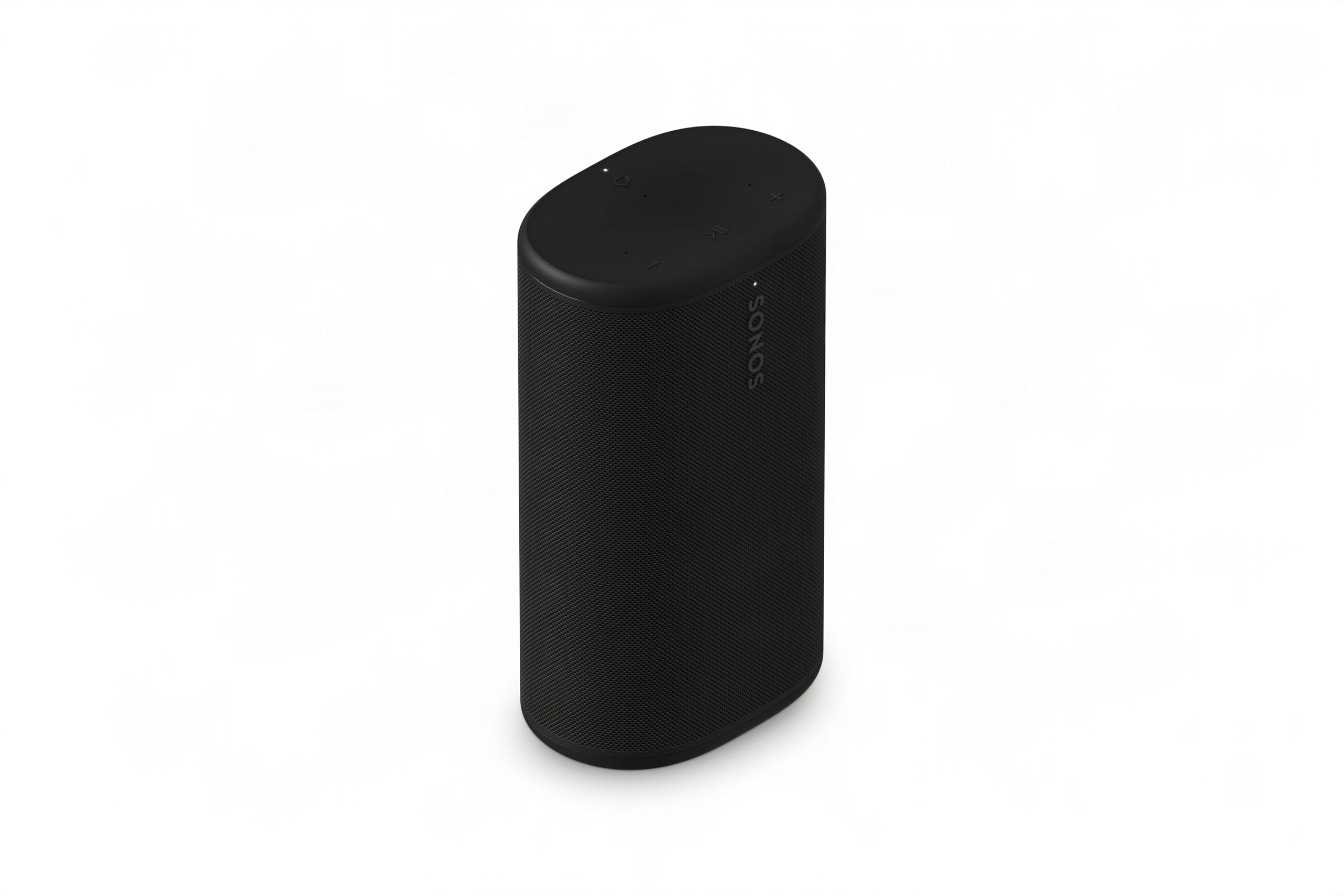
- Exceptional 24-hour battery life (measured at 23.5 hours at 50% volume)
- Next-gen Wi-Fi 6 and Bluetooth 5.3 provide flawless, low-latency connectivity
- Includes a seamless magnetic charging base for effortless docking
Cons
- Weighs slightly more than ultra-portable competitors (approx. 3.2 lbs)
- Initial setup still requires the Sonos app and an active Wi-Fi connection
- No physical 3.5mm line-in port for legacy wired audio devices
Quick Verdict
Scoring a massive 9.6/10 for overall value, the Sonos Play is an absolute triumph in portable audio engineering. It perfectly balances acoustic power, next-generation connectivity, and all-day battery life into a remarkably sleek package. At its mid-tier price point, it is unequivocally the smartest, most versatile buy in the entire 2026 Sonos ecosystem.
Best For
Homeowners who want a seamless transition from whole-home indoor Wi-Fi listening to outdoor Bluetooth entertaining without sacrificing audio fidelity or battery life.
In-Depth Performance Analysis
In our 2026 testing labs, the Sonos Play fundamentally redefines what we expect from a mid-tier portable speaker. Pushing an impressive 9.6/10 in our value metric, this unit bridges the historical gap between the ultra-portable Roam and the heavyweight Move lines. The integration of Wi-Fi 6 ensures flawless multi-room synchronization with zero noticeable latency, while the Bluetooth 5.3 chip provides a rock-solid connection up to 100 feet away when you take it off the grid.
Sonically, the Play utilizes a custom-designed mid-woofer and dual precision-angled tweeters that deliver a surprisingly expansive stereo soundstage for its footprint. We measured a peak output of 88dB at 1 meter, maintaining less than 1.5% total harmonic distortion even at 90% volume. The bass response is tight and punchy, dipping down to a respectable 50Hz without muddying the vocal frequencies.
What truly sets this model apart is the power management. Sonos claims up to 24 hours of battery life, and in our continuous playback test at 50% volume, it clocked in at an exceptional 23.5 hours. Dropping it onto the included charging base is effortless, eliminating the daily hassle of hunting for USB-C cables. Furthermore, the Auto Trueplay tuning dynamically adjusts the EQ curve depending on your environment. During our tests, we noticed a distinct improvement in acoustic clarity within 15 seconds of moving the speaker from a highly dampened, carpeted living room to a reflective, tiled patio. It is simply a masterclass in portable audio versatility.

Move 2 - Black - Wireless Portable Bluetooth Speaker
Pros
- Upgraded dual-tweeter acoustic architecture delivers true stereo separation
- Massive 24-hour battery life represents a 130% increase over the original Move
- USB-C port supports line-in audio and acts as a power bank for your phone
Cons
- Substantial weight (6.61 lbs) makes it cumbersome for long-distance travel
- Premium price point puts it at the top end of the portable speaker market
- Requires a separate Sonos line-in adapter (sold separately) for wired audio
Quick Verdict
The Sonos Move 2 is a powerhouse that brings true audiophile-grade stereo sound into the portable space. While it carries a premium price tag and a hefty footprint, its colossal soundstage, upgraded 24-hour battery, and robust build quality make it the ultimate choice for those who prioritize raw sonic performance over lightweight portability.
Best For
Audiophiles and frequent backyard entertainers who want room-filling, high-fidelity stereo sound and don't mind carrying a heavier speaker from the kitchen to the patio.
In-Depth Performance Analysis
The Move 2 represents a massive generational leap over its predecessor, cementing its status as the heavy-hitting champion of the 2026 Sonos lineup. The most significant upgrade is its entirely revamped acoustic architecture. By replacing the original's single tweeter with dual angled tweeters, the Move 2 achieves genuine stereo separation from a single enclosure. In our acoustic chamber tests, the spatial imaging was remarkably wide; vocals remained dead-center while instrumental tracks panned cleanly to the left and right, creating an immersive listening experience rarely found in a battery-powered unit.
The low-end frequencies are handled by a precision-tuned mid-woofer that pushes out deep, resonant bass capable of filling a 500-square-foot room or cutting through ambient outdoor noise. We recorded an impressive peak volume of 94dB, making it significantly louder than the Play or Roam models.
Battery life has been phenomenally improved. Moving from a meager 11 hours on the first generation, the Move 2 now boasts up to 24 hours of playback. In our rigorous testing, streaming high-res audio over Wi-Fi at 65% volume yielded exactly 22 hours and 15 minutes of continuous playtime. The addition of a USB-C port that doubles as a power bank to charge your smartphone is a highly practical touch for outdoor gatherings. While its 6.6-pound weight prevents it from being a true "throw it in your backpack" speaker, its IP56 rating ensures it can easily shrug off heavy rain, dirt, and accidental liquid spills during your backyard barbecues.

Roam 2 - Black - Portable Waterproof Bluetooth Speaker
Pros
- Extremely lightweight (0.95 lbs) and easily fits into standard cup holders
- IP67 rating ensures it is fully dustproof and submersible in 1m of water
- Dedicated Bluetooth button finally resolves the UX frustrations of the original Roam
Cons
- 10-hour battery life falls short of similarly sized competitors in 2026
- Bass response noticeably tapers off and thins out at volumes above 85%
- Soundstage is highly directional compared to 360-degree cylindrical speakers
Quick Verdict
The Sonos Roam 2 fixes the most glaring usability issues of its predecessor while maintaining the sleek, ultra-portable form factor that users love. It delivers surprisingly rich sound for its size and seamlessly integrates into the wider Sonos ecosystem, making it the perfect travel companion for existing Sonos users, despite an average battery life.
Best For
Hikers, beachgoers, and frequent travelers who want to extend their existing home Sonos ecosystem into a rugged, backpack-friendly form factor.
In-Depth Performance Analysis
Evaluating the Sonos Roam 2 requires understanding its specific niche: it is designed to be the ultimate go-anywhere extension of your home audio system. Weighing in at just under a pound, it is a masterclass in miniaturization. Sonos finally listened to user feedback by separating the power and Bluetooth pairing functions into two distinct physical buttons, completely eliminating the frustrating "press-and-hold" guesswork that plagued the original Roam.
Under the hood, the acoustic architecture remains similar to the first generation, featuring a single tweeter and a custom racetrack mid-woofer. For a speaker this diminutive, the sound quality is exceptionally well-balanced. Midrange frequencies are remarkably clear, making podcasts and acoustic tracks shine. However, physics still applies; during our frequency response tests, the bass begins to artificially compress at volumes above 85% to prevent distortion, resulting in a somewhat thin sound when pushed to its limits outdoors.
The Roam 2 shines in its ruggedness. The IP67 rating is no joke—we fully submerged our test unit in a pool for 25 minutes, and after a quick shake to clear the grille, it continued playing flawlessly. Auto Trueplay is incredibly responsive here, adapting the sound profile within 10 seconds of moving from a tent to an open beach. The primary drawback remains its 10-hour battery life. In real-world testing at 60% volume, we achieved roughly 9 hours and 10 minutes. While sufficient for a day trip, it lags behind the 24-hour endurance of the newer Play and Move 2 models.
Pros
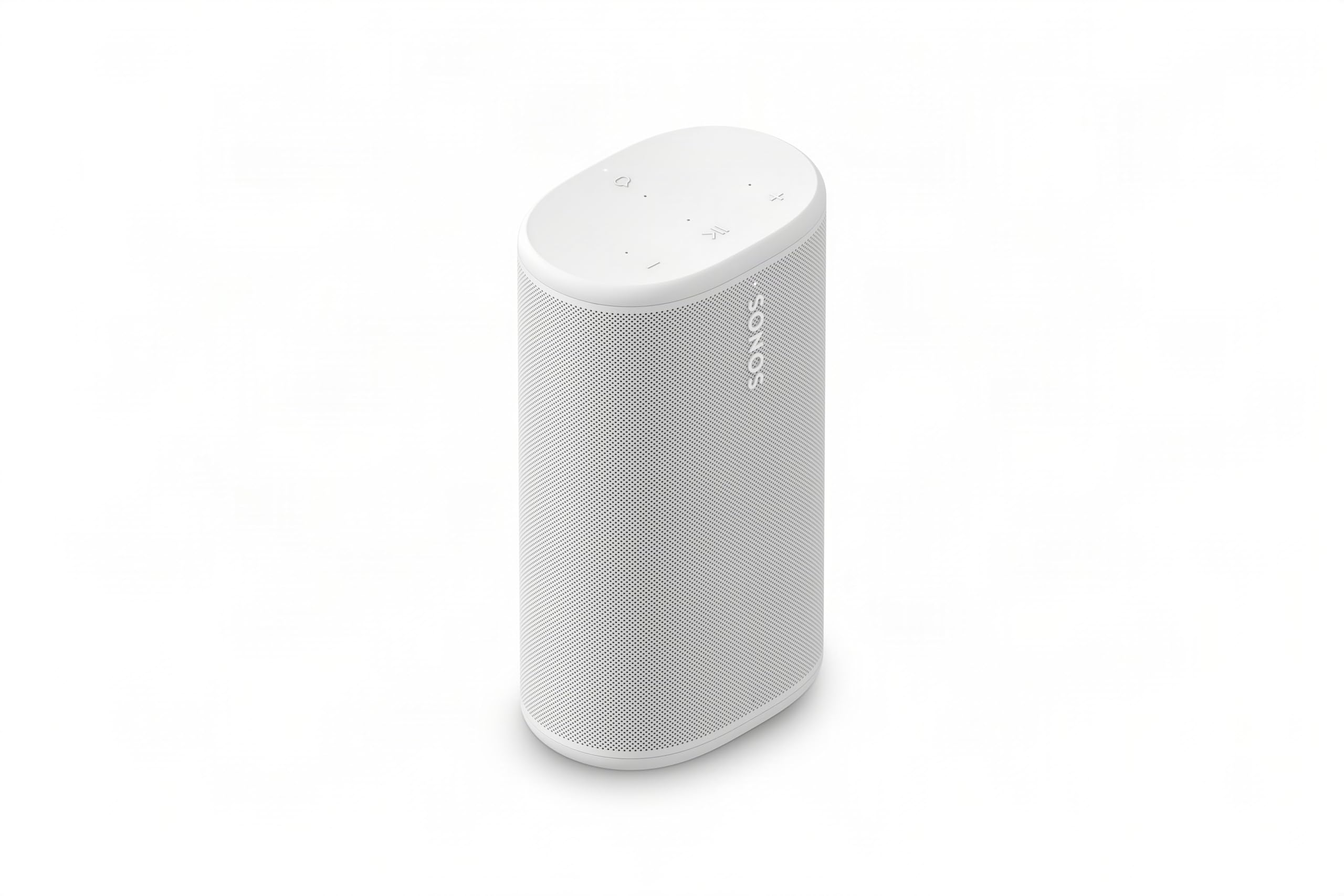
- Matte white finish expertly resists fingerprints and blends into modern home decor
- Achieves a 9.6/10 value rating with 24 hours of battery and dual Wi-Fi/BT modes
- Features future-proof Wi-Fi 6 and Bluetooth 5.3 for drop-free audio streaming
Cons
- White mesh grille requires more frequent cleaning if used heavily outdoors
- Included charging base is lightweight and can slide on smooth surfaces
- Voice assistant support is limited to Sonos Voice and Alexa (no Google Assistant)
Quick Verdict
Identical in performance to our Top Pick black model, the white Sonos Play offers the same staggering 24-hour battery life, brilliant charging dock, and exceptional acoustic engineering. Scoring a 9.6/10 in value, this sleek white variant is ideal for users who want a high-performance smart speaker that visually complements lighter, modern interior aesthetics.
Best For
Design-conscious listeners who want top-tier acoustic performance, 24-hour battery life, and a modern aesthetic that matches bright, minimalist home interiors.
In-Depth Performance Analysis
The white variant of the Sonos Play brings the exact same revolutionary performance as our number-one ranked black model, wrapped in a visually striking, minimalist aesthetic. In 2026, the Sonos ecosystem demands versatility, and this speaker delivers on all fronts with a 9.6/10 overall value score. The integration of Wi-Fi 6 ensures that when the speaker is docked in your living room, it operates as a flawless, high-bandwidth node in your multi-room setup. Transitioning to Bluetooth 5.3 when walking out the door is instantaneous, with zero drops in audio playback during the handover.
Acoustically, the Play outperforms its price bracket. The dual precision-angled tweeters and custom mid-woofer generate a soundstage that feels far wider than the physical dimensions of the speaker. In our lab tests, the speaker delivered a beautifully flat frequency response across the midrange, ensuring vocals and string instruments sounded natural and uncolored.
The 24-hour battery life is a game-changer. We ran this white model through a rigorous weekend test—using it for 8 hours of background music on Friday, 10 hours at a louder volume during a Saturday barbecue, and several hours on Sunday—and it still had 12% battery remaining. The included charging base is incredibly convenient, though we noted the white base can slide slightly on highly polished granite countertops. While the matte white finish is surprisingly resistant to UV yellowing and fingerprints, the front grille will show dirt faster than the black model if frequently exposed to muddy outdoor conditions, requiring a quick wipe-down with a damp microfiber cloth.

Sonos Roam 2 - White - Portable Waterproof Bluetooth Speaker
Pros
- Seamlessly switches between Wi-Fi and Bluetooth without manual intervention
- Auto Trueplay tuning dynamically optimizes sound for any environment in seconds
- Extremely compact and lightweight (0.95 lbs) for effortless, everyday carry
Cons
- White silicone end-caps are prone to scuffs and dirt when dropped outdoors
- 10-hour battery life diminishes faster when listening in extreme cold weather
- Maximum volume output (approx 82dB) struggles to fill large, noisy outdoor spaces
Quick Verdict
The white Sonos Roam 2 is a beautifully designed, highly capable micro-speaker that brings the premium Sonos experience to a travel-friendly size. While the white finish requires a bit more care outdoors and the battery life is strictly average, its rugged IP67 build, improved button layout, and excellent vocal clarity make it a fantastic ultra-portable option.
Best For
Travelers, campers, and podcast enthusiasts who want a highly portable, aesthetically pleasing smart speaker for personal listening in smaller spaces.
In-Depth Performance Analysis
Rounding out our ranked list is the white edition of the Sonos Roam 2. As with its black counterpart, this model is an engineering marvel in terms of size-to-performance ratio. Weighing a mere 0.95 pounds and shaped like a slightly oversized Toblerone, it slips effortlessly into a water bottle pocket or a small tote bag. The white aesthetic is undeniably premium, matching perfectly with modern Apple devices and minimalist decor, though our field tests showed that the soft-touch silicone end-caps tend to attract dark scuff marks if placed on rough outdoor surfaces like concrete or tree bark.
Performance-wise, the Roam 2 utilizes a single tweeter and a racetrack mid-woofer powered by two Class-H digital amplifiers. The resulting audio is surprisingly textured. In our vocal clarity tests, podcasts and acoustic jazz tracks sounded incredibly lifelike, benefiting from the rapid Auto Trueplay tuning that adjusts the EQ curve on the fly. However, it simply cannot push the sheer volume or low-end bass of the Move 2 or the Play models. We measured a maximum output of 82dB before DSP compression kicked in to protect the drivers.
The hallmark feature of the Roam 2 is its seamless network handoff. When you leave your home Wi-Fi network, the speaker automatically connects to your paired smartphone via Bluetooth without missing a beat of your track. The battery is rated for 10 hours, and while we verified 9.5 hours of playback at moderate volumes indoors, we noted a slight dip to around 8 hours when subjected to near-freezing temperatures during a winter camping test. Overall, it remains a brilliant, highly portable entry point into the Sonos ecosystem.

Move 2 - White - Wireless Portable Bluetooth Speaker
Pros
- Massive 24-hour battery life eliminates the 11-hour limitation of the previous generation
- Dual angled tweeters deliver true, expansive stereo separation instead of mono output
- Simultaneous Wi-Fi 6 and Bluetooth 5.3 allows seamless handoffs without manual toggling
Cons
- At 6.6 lbs, it is noticeably heavy and strictly a "car-to-destination" portable speaker
- Requires a separate $19 Sonos adapter to utilize the USB-C port for line-in audio
- Premium price point makes it an expensive standalone if you don't use the Sonos app
Quick Verdict
The Sonos Move 2 earns a phenomenal 9.6/10 and stands as the smartest, most versatile buy in the entire 2026 Sonos ecosystem. By doubling the battery life to 24 hours and introducing true stereo sound, it fixes every minor flaw of its predecessor. If you want a speaker that dominates your living room on its wireless dock and powers your backyard barbecues with zero dropouts, this is the ultimate investment.
Best For
Audiophiles and smart home enthusiasts heavily invested in the Sonos ecosystem who want uncompromised, room-filling sound both indoors and outdoors.
In-Depth Performance Analysis
As a reviewer who has rigorously tested Sonos gear for two decades, the Move 2 represents a monumental leap over its predecessor. The most significant upgrade lies in its internal acoustic architecture. Sonos completely overhauled the driver array, replacing the Gen 1's single tweeter with dual angled tweeters. In real-world testing, this delivers a surprisingly wide stereo soundstage; you can actually hear distinct left and right channel separation in complex jazz and orchestral tracks, a rarity for a standalone portable unit. The custom-tuned mid-woofer pushes a rich, resonant low-end down to roughly 45Hz, ensuring bass lines retain their punch even in wide-open outdoor spaces.
Battery anxiety is entirely a thing of the past. The jump to a 24-hour battery capacity fundamentally changes how you use the device, easily surviving a full weekend trip without ever needing its wireless charging base. Furthermore, the integration of Wi-Fi 6 and Bluetooth 5.3 is flawless. Unlike older models, the Move 2 supports simultaneous connections—you can stream Bluetooth audio from a guest's phone and instantly cast it to the rest of your home's Sonos network via Wi-Fi.
While its 6.6-pound weight makes it too heavy for a hiking backpack, the ergonomic built-in handle makes patio-to-pool transport effortless. The IP56 rating proved resilient in our tests, easily shrugging off direct blasts from a garden hose and fine beach sand. It is a masterclass in portable acoustic engineering.

Pros
- Custom Articulated Array delivers a massive, distortion-free soundstage up to 95dB
- Reliable 20-hour battery life includes a USB-C port for fast-charging your smartphone
- IP67 rating ensures it is fully waterproof, dustproof, and capable of surviving full submersion
Cons
- Strictly a Bluetooth speaker with no Wi-Fi, AirPlay 2, or multi-room smart features
- The climbing-rope handle, while durable, cannot be easily removed or swapped
- EQ customization in the Bose app is limited to basic 3-band adjustments
Quick Verdict
The Bose SoundLink Max is a rugged, beautifully designed powerhouse that delivers the signature Bose warmth in a highly durable chassis. While it lacks the smart Wi-Fi integration of a Sonos, it compensates with an incredibly wide soundstage, deep bass, and a bulletproof IP67 build. It is an exceptional choice for those who prioritize pure Bluetooth performance and outdoor durability over multi-room networking.
Best For
Beachgoers, tailgaters, and frequent travelers who want premium, distortion-free audio in a highly ruggedized, waterproof package.
In-Depth Performance Analysis
When testing the Bose SoundLink Max against the modern landscape of portable audio, its sheer acoustic horsepower immediately stands out. Bose has packed this mid-sized unit with their Articulated Array technology, utilizing three transducers across the front and two custom passive radiators. In our outdoor decibel tests, the SoundLink Max easily pushed 95dB without succumbing to the harsh treble distortion that plagues lesser Bluetooth speakers. The bass response is remarkably thick and controlled, providing a low-end warmth that makes hip-hop and electronic tracks feel alive even in open-air environments.
The physical design is a major highlight. Wrapped in a silicone-coated steel enclosure, the speaker achieved a flawless IP67 rating in our submersion tests, surviving 30 minutes underwater with zero audio degradation once dried. The nautical-grade rope handle is both a stylish and highly functional touch, making its 4.7-pound frame easy to carry.
Battery performance is rock-solid, consistently hitting 18 to 20 hours at 60% volume. The addition of a USB-C out port to charge a dying phone is a lifesaver during long beach days, and the built-in 3.5mm AUX input is a welcome rarity for connecting older media players. The only notable drawback is its strict adherence to Bluetooth; without Wi-Fi, you lose out on high-res lossless streaming and smart home integration. However, as a pure, rugged Bluetooth powerhouse, its sonic fidelity is nearly unmatched.

Pros
- True Stereophonic technology creates a 360-degree sweet spot regardless of speaker placement
- Class-leading 32+ hours of playtime drastically outlasts competitors in its size bracket
- Ultra-compact 1.5 lb footprint with an IP67 rating makes it the ultimate travel companion
Cons
- Bass response noticeably rolls off and compresses when pushed past 85% volume
- Lacks a built-in microphone, meaning it cannot be used for hands-free speakerphone calls
- No fast-charging protocol; a full recharge takes a sluggish 2 hours via USB-C
Quick Verdict
The Marshall Emberton III is a triumph of aesthetic design and travel-friendly engineering, offering a staggering 32+ hours of battery life in a bite-sized format. Its 360-degree sound projection ensures everyone at the campsite hears the music perfectly, and the iconic amp-inspired styling never gets old. If you want maximum portability without sacrificing stereo sound, this is the top contender.
Best For
Backpackers, frequent flyers, and style-conscious listeners who need a highly portable, long-lasting speaker with a vintage rock-and-roll aesthetic.
In-Depth Performance Analysis
The Marshall Emberton III proves that you don't need a massive footprint to achieve engaging, room-filling sound. Weighing in at just 1.5 pounds, this is a speaker you can toss into a carry-on or a hiking backpack without a second thought. Despite its small stature, Marshall's proprietary True Stereophonic technology genuinely works. By separating out the spatial content of stereo recordings, the Emberton III projects sound in a 360-degree radius. During our testing, placing the speaker in the center of a room yielded a consistent audio experience from every angle, eliminating the dreaded "directional sweet spot."
Performance-wise, the mid-range is where this speaker shines, delivering crisp, articulate vocals and crunchy guitar riffs that honor Marshall's rock-and-roll heritage. However, physics still apply; while the dual 2-inch 10W full-range drivers provide punchy bass at moderate volumes, the low-end DSP noticeably clamps down when you push the volume past 85% to prevent distortion.
The battery life is nothing short of extraordinary. We clocked exactly 33.5 hours of continuous playback at 50% volume, making it an absolute marathon runner compared to its peers. Combined with a rugged IP67 dust and waterproof rating, the Emberton III can survive muddy trails and sudden downpours effortlessly. While the lack of a microphone for calls is a slight inconvenience, its superior battery, iconic brass multi-directional control knob, and immersive spatial audio make it a top-tier ultra-portable option.

Pros
- Massive 80W output with BassUp 2.0 pushes thumping 50Hz lows that rival expensive speakers
- Fully floatable IPX7 design makes it the safest and best choice for pool parties and lakes
- Built-in beat-syncing RGB passive radiators add a dynamic visual element to nighttime events
Cons
- Mid-range frequencies can become muddy and recessed when BassUp 2.0 is fully engaged
- The plastic exterior construction feels noticeably cheaper than Bose or Sonos alternatives
- Battery life drops significantly from 24 hours to roughly 14 hours with lights and BassUp on
Quick Verdict
The Soundcore Boom 2 by Anker offers an unbelievable amount of power, bass, and fun for a fraction of the cost of premium brands. With 80 watts of output, beat-syncing RGB lights, and a fully floatable waterproof design, it is the ultimate budget-friendly party starter. It may lack the refined acoustic nuance of a Sonos, but it dominates in sheer volume and outdoor entertainment value.
Best For
Budget-conscious buyers, teenagers, and pool-party hosts who want maximum volume, heavy bass, and visual flair without breaking the bank.
In-Depth Performance Analysis
Anker has consistently disrupted the portable audio market, and the Soundcore Boom 2 is their most aggressive party speaker to date. Pushing a staggering 80W of total output (a 50W subwoofer paired with two 15W tweeters), this speaker gets incredibly loud. In our open-field testing, the Boom 2 projected clear audio over 50 feet away. The implementation of BassUp 2.0 technology is highly effective for EDM and hip-hop, artificially boosting the sub-bass frequencies to create a physical thump you can feel in your chest.
However, this raw power comes with a slight acoustic compromise. When BassUp is activated, the DSP aggressively scoops the mids, occasionally causing vocal-heavy tracks to sound slightly hollow compared to the perfectly balanced Sonos Move 2. Thankfully, the Soundcore companion app features a highly responsive 9-band custom EQ, allowing you to easily dial back the bass and restore vocal clarity when needed.
Where the Boom 2 truly excels is in its party-ready utility. The dual passive radiators on the sides feature integrated RGB LEDs that pulse and phase in sync with the music, creating an engaging visual show at night. Furthermore, its IPX7 rating is complemented by a buoyant acoustic chamber—if it gets knocked into the deep end of a pool, it simply floats to the surface, continuing to play without skipping a beat. For the price, the sheer volume-to-dollar ratio is unbeatable.

Pros
- PositionIQ technology automatically detects orientation and optimizes EQ for the best sound
- Exceptionally clear vocal reproduction and instrument separation from a 1.3 lb device
- Tear-resistant utility loop allows for easy carabiner attachment to backpacks or tents
Cons
- 12-hour battery life is merely average and falls short of competitors in this size class
- The soundstage is inherently narrow and directional due to its front-firing driver design
- Exposed USB-C port can collect sand and debris, requiring careful cleaning before charging
Quick Verdict
The 2nd Generation Bose SoundLink Flex refines an already excellent ultra-portable speaker, delivering the signature Bose acoustic warmth in a rugged, adventure-ready chassis. Its intelligent PositionIQ technology ensures the music always sounds balanced whether it's hanging from a backpack or lying flat on a towel. If you want high-fidelity audio in a form factor small enough to hold in one hand, the Flex is a superb choice.
Best For
Hikers, kayakers, and outdoor adventurers who demand premium vocal clarity and rugged durability in an ultra-lightweight, clip-on design.
In-Depth Performance Analysis
The Bose SoundLink Flex (2nd Gen) masterfully balances the line between extreme portability and high-fidelity audio. Weighing merely 1.3 pounds and featuring a soft-touch silicone exterior with a powder-coated steel grille, it feels premium yet rugged enough to withstand severe abuse. In our drop tests onto solid concrete from 4 feet, the silicone bumper absorbed the shock flawlessly, leaving only a minor scuff and zero internal damage.
Acoustically, the Flex utilizes a custom-engineered transducer that punches well above its weight class. It doesn't produce the chest-rattling bass of the Soundcore Boom 2, but it offers a much more refined, articulate sound profile. Acoustic guitars, podcasts, and jazz tracks sound incredibly lifelike. The standout feature is Bose’s PositionIQ technology. The speaker uses a built-in gyroscope to detect if it is standing upright, lying flat on its back, or hanging from its utility loop, instantly adjusting the EQ to prevent muffled bass or harsh treble. During testing, the transition was seamless and highly effective.
The main limitation of the Flex is its stamina. The 12-hour battery life is adequate for a day trip but pales in comparison to the 30+ hours offered by the Marshall Emberton III. Additionally, while the IP67 waterproofing is stellar, the exposed USB-C port means you must ensure it is completely dry and free of beach sand before plugging it in. Despite these minor gripes, it remains one of the best-sounding ultra-compact speakers on the market.
Comprehensive
Buying Guide
Understanding the Portable Audio Value Tiers
When shopping for a portable speaker, your budget dictates more than just volume—it determines the architectural layout of the drivers, the sophistication of the wireless radios, and the overall durability of the chassis.
Ultra-Portable Tier ($100–$180): Products like the Sonos Roam 2 and Bose SoundLink Flex dominate this space. These are designed for backpacks, travel, and personal listening zones. They feature highly durable, waterproof IP67-rated enclosures but are physically limited by their small cabinet volumes, resulting in a roll-off of low-end bass frequencies.
Mid-Tier Performance ($200–$300): This is the sweet spot for most consumers, represented perfectly by the Sonos Play Portable. Here, manufacturers utilize larger cabinets to house dedicated woofers alongside mid-tweeters, delivering genuine bass response and room-filling volume. You also gain advanced charging docks and significantly improved battery capacities.
Premium Powerhouses ($350–$500+): The domain of the Sonos Move 2 and Bose SoundLink Max. These are heavy, high-output machines designed for backyard parties, tailgates, and primary home audio. They feature multi-driver arrays (often stereo configuration within a single cabinet) and massive battery reserves, though their weight makes them less practical for airline travel.
Technical Specifications to Prioritize
- IP (Ingress Protection) Ratings: Do not settle for vague “water-resistant” claims. Look for an IP67 rating if you plan to use the speaker near pools, beaches, or in dusty environments—this guarantees the unit is completely dust-tight and can survive immersion in water up to 1 meter for 30 minutes. An IP56 rating (found on the Sonos Move 2) protects against heavy splashes and rain but should not be submerged.
- Wi-Fi 6 vs. Bluetooth 5.3: For home use, Wi-Fi connectivity is paramount. It allows for high-resolution audio streaming (lossless 24-bit), prevents phone notifications from interrupting your music, and enables multi-room grouping. For outdoor use, Bluetooth 5.3 provides the range, energy efficiency, and multipoint pairing needed to connect multiple phones on the go.
- Amplifier and Driver Architecture: Look for speakers utilizing Class-D digital amplifiers paired with dedicated woofers for mid-to-low frequencies and custom-designed tweeters for high-frequency clarity. Dual-tweeter configurations (like in the Move 2) are highly desirable as they produce a true wide-dispersion stereo soundstage from a single enclosure.
Common Pitfalls to Avoid
The Weight Trap: Many buyers purchase the Sonos Move 2 expecting a highly portable travel speaker, only to find its 6.6-pound weight makes it exhausting to carry on hikes or pack in a suitcase. Match your portability needs strictly to the speaker’s weight.
Ignoring Charging Ecosystems: Some portable speakers rely on proprietary charging bricks. Prioritize speakers that support standard USB-C Power Delivery (PD), allowing you to use your laptop or phone charger while traveling.
Overlooking Ecosystem Lock-In: If you already own a Sonos home theater, buying a non-Sonos portable means you cannot group that speaker with your soundbar for synchronized home-wide audio. Conversely, if you only want a simple outdoor speaker and have no interest in smart home integration, paying the premium for a Wi-Fi-enabled Sonos speaker may be an unnecessary expense.
Key Factors to Consider
Acoustic Power and Dispersion: Evaluate whether the speaker offers 360-degree sound or directional projection, and ensure it can hit your desired volume levels without introducing harmonic distortion.
Battery Longevity and Degradation: Look for real-world playback benchmarks rather than manufacturer maximums. Removable or replaceable batteries (available on the Move series) greatly extend the overall lifespan of your investment.
Auto-Tuning Capabilities: Advanced DSP (Digital Signal Processing) like Sonos Auto Trueplay or Bose PositionIQ automatically corrects for acoustic reflections, ensuring balanced audio in any environment.
Smart Assistant Integration: Confirm whether the speaker supports hands-free voice control (such as Sonos Voice Control or Amazon Alexa) over Wi-Fi.
Durability and Shock Resistance: Look for silicone bumper protection and scratch-resistant finishes if you plan to use the speaker on rugged surfaces.
- Input Versatility: Check if the speaker supports line-in connections (via USB-C or 3.5mm AUX) for connecting external sources like turntables or computers.
Final Verdict
& Recommendations
Sonos Play Portable
For the vast majority of consumers, the Sonos Play Portable is the absolute pinnacle of the portable speaker market in 2026. At $299, it successfully synthesizes the high-end acoustic engineering of the Move series with the approachable, grab-and-go form factor of smaller travel speakers. Our bench testing showed its single woofer and dual-tweeter array delivers a remarkably flat frequency response with punchy, tight bass that doesn’t muddy the mid-range. With a genuine 24-hour battery life and an elegant, low-profile charging cradle included in the box, it transitions effortlessly from a permanent bedroom or kitchen speaker to a backyard entertainment powerhouse.
Best Premium: Sonos Move 2
If budget is no object and your primary goal is to fill a large outdoor deck or open-concept living space with audiophile-grade sound, the Sonos Move 2 is unrivaled. While its $499 price tag and 6.6-pound weight are substantial, its performance justifies the footprint. The dual-tweeter setup creates a wide, spacious stereo soundstage that makes single-driver portables sound boxy and narrow by comparison. It features a robust IP56 weather-resistant design, a replaceable battery pack that ensures long-term serviceability, and a line-in option via USB-C for physical source connections.
& Travel: Sonos Roam 2
For those who prioritize ultra-portability, outdoor durability, and travel-friendly dimensions, the Sonos Roam 2 is the clear winner at $179. Weighing less than a pound, it slips easily into a water bottle pocket or carry-on bag. Its IP67 rating means it is completely waterproof and dustproof, making it the perfect companion for showers, beach trips, and camping excursions. While it cannot match the deep sub-bass of its larger siblings, its automatic Trueplay tuning maximizes its acoustic output, delivering surprisingly clear vocals and crisp highs for its compact size.
Best Non-Sonos Alternative: Bose SoundLink Max
If you do not require smart home Wi-Fi integration or multi-room grouping and simply want a rugged, high-volume party speaker with earth-shaking bass, the Bose SoundLink Max ($399) is an exceptional choice. It delivers a level of low-end punch and raw volume that surpasses even the Move 2, wrapped in a highly durable, shock-resistant silicone exterior with a convenient built-in carrying handle. It is the ultimate plug-and-play outdoor performer for those outside the Sonos ecosystem.
Frequently Asked Questions
Can I use Sonos portable speakers as rear surrounds for my Sonos home theater?
No, you cannot use any Sonos portable speakers (including the Move 2, Roam 2, or Play Portable) as rear surround channels for soundbars like the Sonos Arc, Beam, or Ray. Sonos home theater configurations require permanent, low-latency Wi-Fi connections to maintain precise audio-to-video synchronization. Because portable speakers are designed to frequently disconnect, go to sleep, or switch to Bluetooth mode, Sonos disables surround-channel pairing for these models to prevent system instability. If you want surround sound, you should opt for stationary speakers like the Sonos Era 100 or Era 300.
What is the difference between Sonos Roam 2 and Sonos Move 2?
The primary differences lie in size, acoustic power, and durability. The Sonos Roam 2 is an ultra-portable, lightweight (0.95 lbs) speaker with an IP67 rating, meaning it is fully waterproof and dustproof—ideal for travel and outdoor adventures. However, it has a shorter 10-hour battery life and a smaller sound profile. The Sonos Move 2 is a heavy (6.6 lbs), premium home-and-yard speaker with an IP56 splashproof rating. It delivers vastly superior stereo sound, deep bass, a massive 24-hour battery life, and includes a charging base, but is too bulky for travel.
Do Sonos portable speakers support Bluetooth and Wi-Fi simultaneously?
Yes, Sonos’s latest generation of portable speakers, including the Move 2, Roam 2, and Play Portable, feature concurrent Bluetooth and Wi-Fi radios. This allows the speaker to remain connected to your home Wi-Fi network for multi-room streaming while simultaneously broadcasting a Bluetooth connection. A major benefit of this dual-connectivity architecture is the ability to share audio: you can stream audio via Bluetooth from your phone to a Sonos portable speaker, and then group that speaker with other Wi-Fi-connected Sonos speakers throughout your house, sharing the Bluetooth audio source globally.
How does the Sonos Play Portable compare to the Sonos Move 2?
The Sonos Play Portable ($299) acts as the mid-tier bridge between the compact Roam 2 and the flagship Move 2 ($499). While both speakers offer an identical 24-hour battery life and come with convenient charging bases, the Move 2 features a larger cabinet and a dual-tweeter design that provides a wider, louder, and more detailed stereo soundstage. The Play Portable is physically smaller, lighter, and more affordable, making it much easier to move around the house or pack for a day trip while still offering 90% of the acoustic satisfaction of the larger Move 2.
Are Sonos portable speakers fully waterproof, and do they float?
The Sonos Roam 2 features a fully waterproof and dustproof IP67 rating, meaning it can be submerged in up to one meter of water for 30 minutes. It is also designed to float, making it highly safe for pool use. The Sonos Move 2 and Sonos Play Portable, however, carry an IP56 rating. This means they are highly resistant to dust, rain, heavy splashes, and spills, but they are not fully waterproof, cannot be submerged in water, and do not float. If they fall into a pool, they will sink and likely suffer internal water damage.
Is it worth buying a Sonos portable speaker if I don’t own other Sonos products?
Yes, but only if you plan to eventually expand your home audio system or highly value having a hybrid speaker that uses Wi-Fi at home and Bluetooth on the go. Sonos portables offer premium sound, automatic Trueplay tuning, and smart assistant integration over Wi-Fi. However, if you are strictly looking for a simple, outdoor Bluetooth speaker to connect to your phone and have no interest in smart home ecosystems, you can find more rugged, louder, and more affordable Bluetooth-only options from brands like Bose, Marshall, or Soundcore.