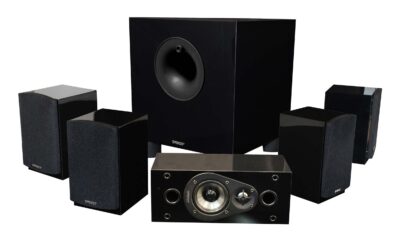
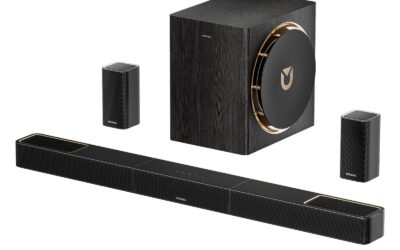
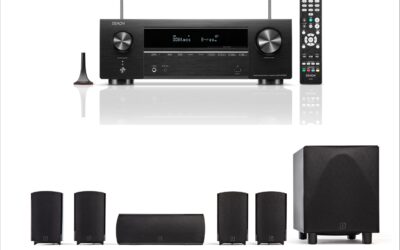
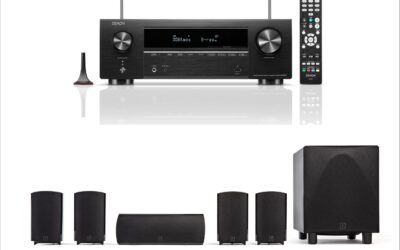
Quick Answer

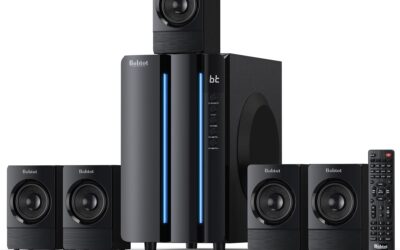
The Bobtot Surround Sound System with Wireless Rear Satellite Speakers is the best sound system for home theater here: a 5.1 layout, an 8-inch subwoofer with a built-in receiver, wireless rears, and Bluetooth 5.3 plus HDMI ARC. Treat its 1000W peak rating as a manufacturer claim, not a benchmark results.

  • Best overall: Bobtot 5.1 with wireless rears and an 8-inch subwoofer hub
  • Best Atmos value: Aura A50 Pro, with Dolby Atmos decoding and app control
  • Best premium kit: Premium 5.1 CH Soundbar, with Dolby Digital Plus and wireless satellites
1

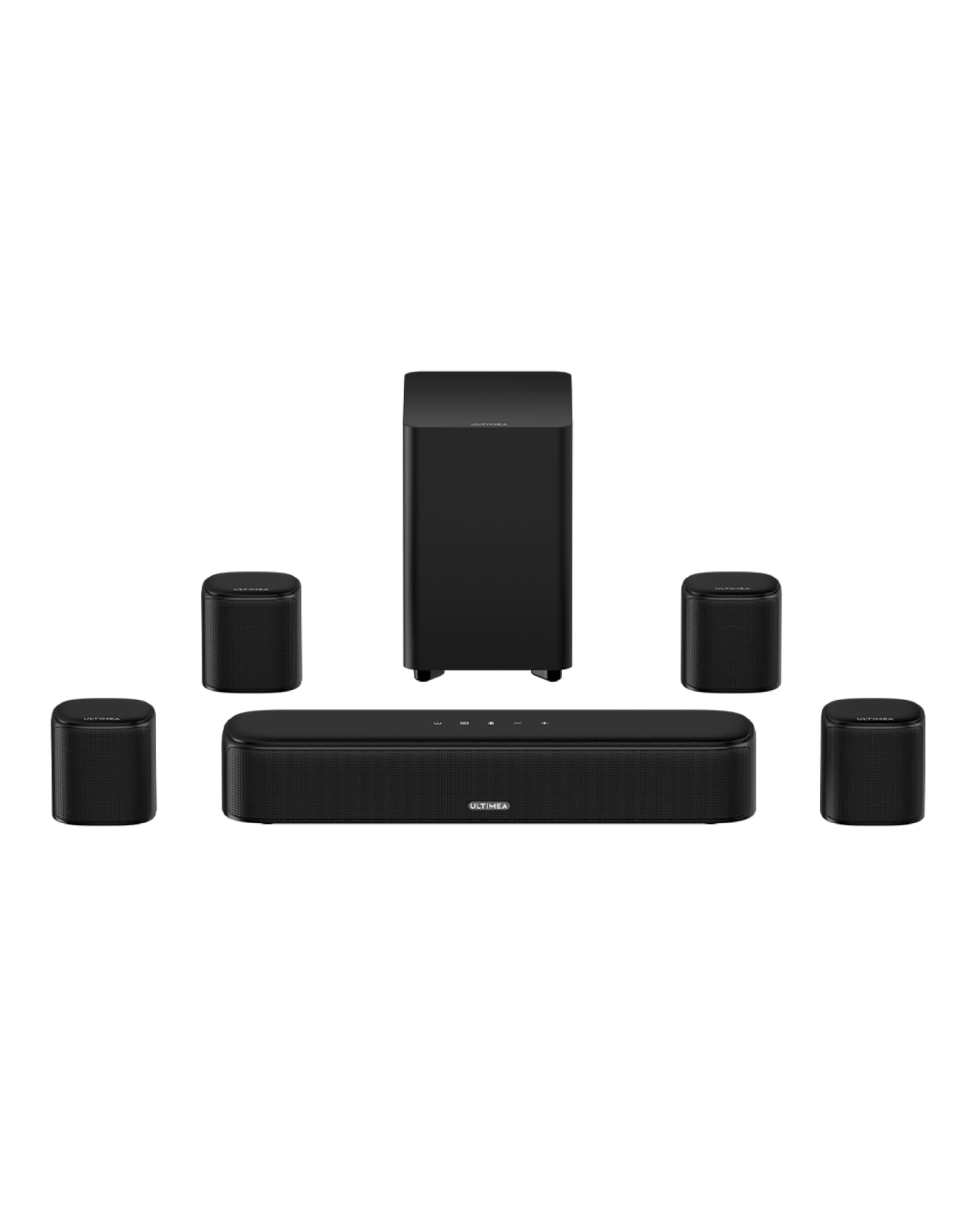
ULTIMEA 7.1ch Sound Bar with Subwoofer

Out of Stock
9.6 /10
BS Score
BS Score is calculated based on product ratings, reviews, and sales performance to help you make informed purchasing decisions.
Updated: Aug 18, 2026
Last update on Aug 18, 2026 / Affiliate links / Images, Product Titles, and Product Highlights from Amazon Creators API.
Pros & Cons

Pros

  • 7.1-channel audio creates a wider soundstage, ideal for movie buffs and gamers who want positional audio.
  • Included subwoofer provides deep bass without extra cost, benefiting bass enthusiasts and action movie fans.
  • Wireless subwoofer allows flexible placement, helping renters or those with limited wiring options.
  • Affordable price point makes it a low-risk upgrade for first-time sound bar buyers.
  • Simple setup with subwoofer included, suitable for users who want quick installation.

Cons

  • No verified customer reviews yet, so real-world performance and reliability are unproven.
  • Lack of detailed specifications (e.g., power output, connectivity) makes it hard to assess compatibility with existing devices.
  • 7.1-channel from a sound bar may be virtualized rather than true discrete speakers, which could disappoint audiophiles expecting full surround sound.
Detailed Review

The ULTIMEA 7.1ch Sound Bar with Subwoofer is a home theater audio system designed to deliver multi-channel surround sound from a single sound bar and wireless subwoofer. It is best suited for budget-conscious viewers who want to upgrade from TV speakers without investing in a full speaker system. The strongest verified reason to consider it is its 7.1-channel configuration, which promises a more immersive audio experience for movies and games. However, the lack of verified customer reviews and detailed specifications means buyers should approach with cautious optimism.

The 7.1-channel setup aims to create a wide soundstage with distinct audio channels, enhancing directional cues in action scenes and sports. The included wireless subwoofer adds low-frequency depth, making explosions and music feel more impactful. This combination can transform a living room into a mini theater, providing a significant audio upgrade over built-in TV speakers.

Setup appears straightforward: connect the sound bar to your TV (likely via HDMI or optical, though specifics are not provided) and place the wireless subwoofer within range. The wireless design reduces cable clutter, but users should ensure their TV has compatible audio outputs. Without detailed specs, it is unclear if it supports Bluetooth, HDMI ARC, or multiple inputs, so check your TV's connections before purchase.

Overall, the ULTIMEA 7.1ch Sound Bar with Subwoofer offers an affordable entry into surround sound, but the absence of customer feedback and technical details is a notable risk. If you prioritize verified performance and specific connectivity options, you might consider alternatives with more transparent specifications and established reviews.

Buyer Snapshot

Best For: Budget-conscious home theater enthusiasts who want an immersive audio upgrade without the complexity of a full speaker system.

Why It Fits: The 7.1-channel configuration and included subwoofer provide a multi-dimensional sound experience that is typically found in higher-priced systems, making it a compelling value proposition.

Think Twice If: You require verified user feedback or detailed technical specifications (e.g., connectivity options, power output) to make a confident purchase decision.

Bottom Line: Choose this sound bar if you prioritize an immersive audio experience at a low price, but be prepared for potential surprises due to limited product information.

Key Features

7.1-Channel Audio: Delivers multi-directional sound for a more engaging movie and gaming experience.

Wireless Subwoofer: Provides deep bass without the need for a wired connection, allowing flexible placement.

All-in-One Solution: Includes both sound bar and subwoofer, eliminating the need for separate purchases.

Affordable Price Point: Offers an entry-level surround sound experience at a budget-friendly cost.

2

ULTIMEA Aura A50 Pro 5.1ch Soundbar with Dolby

Out of Stock
9.9 /10
BS Score
BS Score is calculated based on product ratings, reviews, and sales performance to help you make informed purchasing decisions.
Updated: Aug 25, 2026
Last update on Aug 25, 2026 / Affiliate links / Images, Product Titles, and Product Highlights from Amazon Creators API.
Pros & Cons

Pros

  • True 5.1 setup with separate surround speakers and subwoofer delivers a genuine home theater feel
  • Wireless connection for the right surround speaker reduces cable clutter and simplifies placement
  • Dolby Atmos support enhances vertical sound effects, making movies more immersive
  • Comprehensive app EQ with presets and custom tuning lets you tailor audio to your taste
  • HDMI eARC provides high-bandwidth, lossless audio for the best possible sound quality

Cons

  • Wired subwoofer and left surround speaker require cable management, which may be inconvenient
  • Recommended for rooms up to 215 square feet, so larger spaces may not get the full effect
  • SurroundX upmixing is not true discrete 5.1 from all sources; effectiveness depends on the source material
Detailed Review

ULTIMEA Aura A50 Pro is a 5.1-channel soundbar system designed to bring a cinematic audio experience to your living room without requiring a complex setup. It is best suited for movie and TV enthusiasts who want immersive surround sound and deep bass at a budget-friendly price point. The system includes a main soundbar, two surround speakers, and a wired subwoofer, all working together to create a full home theater sound field. However, it is recommended for spaces up to 215 square feet, so it may not fill a large open-concept area.

The standout feature is the combination of Dolby Atmos technology and the 5.1 channel layout. Dolby Atmos adds a three-dimensional quality to audio, making sounds seem to come from above and around you, which is especially effective for action scenes and immersive gaming. The two surround speakers use SurroundX technology to convert standard 2.0 PCM audio into a 5.1 surround signal, ensuring that even non-Atmos content gets a more expansive soundstage. This is a significant advantage for users who watch a mix of content and want consistent immersion.

Setup is straightforward, with the right surround speaker connecting wirelessly to the soundbar, while the left surround speaker and subwoofer are wired to the main unit. This hybrid approach reduces cable clutter but still requires some planning for speaker placement. The included HDMI eARC port ensures lossless audio transmission from compatible TVs, preserving the full quality of Dolby Atmos and other high-resolution formats. Additionally, the ULTIMEA app offers 121 EQ presets and a 10-band custom equalizer, allowing you to fine-tune the sound to your room and personal preferences.

While the system delivers impressive audio for its price, there are some limitations to consider. The wired subwoofer and left surround speaker mean you will need to route cables, which could be a hassle in rooms where furniture placement is fixed. The system is also designed for smaller spaces, so if your living room is larger than 215 square feet, the surround effect may be diluted. Furthermore, the SurroundX upmixing is not a substitute for true discrete 5.1 audio from all sources; its effectiveness depends on the original audio format.

In conclusion, the ULTIMEA Aura A50 Pro is an excellent choice for budget-conscious buyers who want a genuine 5.1 surround sound experience with Dolby Atmos support. Its wireless surround speaker and app-based EQ provide flexibility and customization, making it ideal for apartments and smaller home theaters. However, if you have a large room or require a completely wireless setup, you might want to consider a soundbar with wireless subwoofer or a more expensive system. For most living rooms, this soundbar offers outstanding value and performance.

Key Features Explained

Dolby Atmos: This feature adds height channels to the audio, creating a three-dimensional soundstage that makes you feel like you are inside the action. It is particularly beneficial for movie enthusiasts and gamers who want a more immersive experience, as it places sounds accurately in space, including overhead effects.

SurroundX Technology: The system upmixes standard 2.0 PCM audio into a 5.1 surround signal, which means even non-surround content will fill the room with sound. This is useful for viewers who watch a lot of TV shows or older movies that don't have native 5.1 tracks, as it enhances the sense of immersion without needing special audio sources.

Wireless Surround Speakers: The right surround speaker connects wirelessly to the soundbar, reducing cable clutter and giving you more flexibility in speaker placement. This is ideal for renters or those who don't want to run wires across the room, making the system easier to set up and less obtrusive.

App Control with 121 EQ Presets: The ULTIMEA app provides a wide range of EQ presets and a 10-band custom equalizer, allowing you to tailor the sound to your content and room acoustics. This is perfect for audiophiles who want to fine-tune the audio or for casual users who want quick presets for movies, music, or gaming.

HDMI eARC: This connection supports high-bandwidth, lossless audio transmission, ensuring that you get the best possible sound quality from your TV and compatible devices. It is essential for those who want to experience Dolby Atmos in its full glory, as it carries the highest-quality audio signals without degradation.

Setup & Maintenance

Setup Overview: The ULTIMEA Aura A50 Pro is designed for straightforward installation. You will need to place the soundbar in front of your TV, position the surround speakers behind your listening area, and connect the subwoofer. The right surround speaker connects wirelessly, while the left surround and subwoofer require wired connections to the soundbar. This means you will need to route cables, so plan speaker placement accordingly.

Connection Options: The soundbar supports HDMI eARC, optical, AUX, and Bluetooth, giving you flexibility in how you connect it to your TV and other devices. For the best audio quality, especially with Dolby Atmos, use the HDMI eARC connection if your TV supports it. Otherwise, optical is a good alternative.

App Setup: To access the full range of EQ presets and customization, you will need to download the ULTIMEA app and connect the soundbar to your home network. The app is straightforward and allows you to adjust settings easily from your smartphone.

Maintenance: The system requires minimal maintenance. Keep the speakers and subwoofer free of dust by wiping them with a dry cloth. Ensure that the wired connections are secure and not damaged. There are no consumable parts, so you can expect long-term reliability with proper care.

Performance & Use Cases

Movie Watching: The ULTIMEA Aura A50 Pro excels in movie playback, especially with action films and sci-fi. The combination of Dolby Atmos and 5.1 surround creates a cinematic experience with clear dialogue, directional effects, and deep bass from the subwoofer. The SurroundX upmixing ensures that even non-Atmos content sounds more immersive.

Gaming: For gamers, the soundbar's ability to position sounds accurately is a major plus. Whether you are playing first-person shooters or open-world adventures, the surround effect helps you pinpoint enemy movements and environmental cues. The low-latency Bluetooth and HDMI eARC connections ensure audio stays in sync with the action.

Music Playback: While the system is geared toward home theater, it also handles music well. The app's EQ presets for genres like Pop, Rock, and Classical let you tailor the sound to your musical taste. The subwoofer adds punch to bass-heavy tracks, though the soundbar may not match dedicated stereo speakers for critical listening.

Space Considerations: As noted, the system is recommended for rooms up to 215 square feet. In larger spaces, the surround effect may be less pronounced, and the subwoofer might not fill the room with as much bass. For best results, place the surround speakers at ear level and angle them toward the listening position.

3

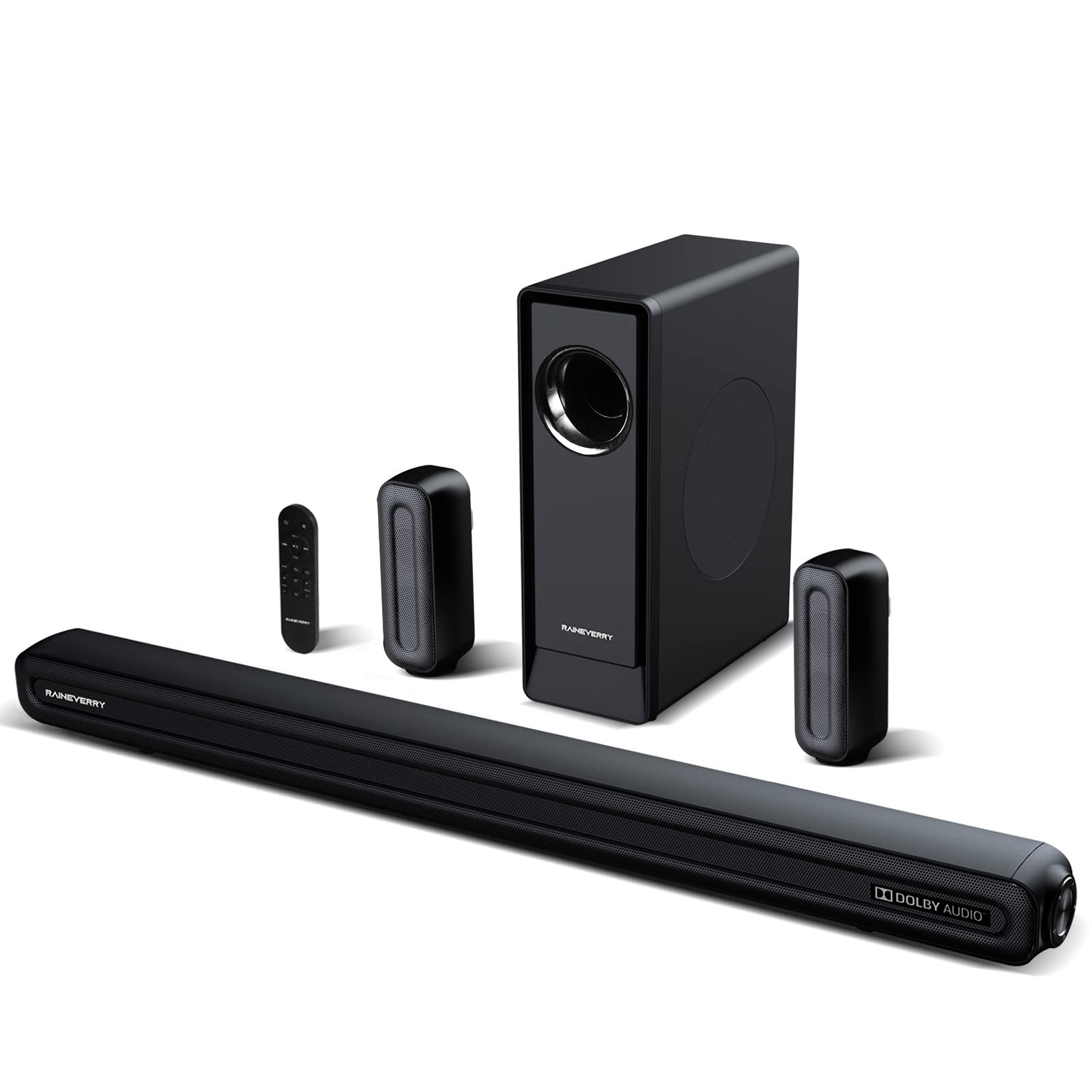
5.1 Channel Sound Bar with Dolby Audio

In Stock
9.5 /10
BS Score
BS Score is calculated based on product ratings, reviews, and sales performance to help you make informed purchasing decisions.
Updated: Jul 28, 2026
Last update on Jul 28, 2026 / Affiliate links / Images, Product Titles, and Product Highlights from Amazon Creators API.
Pros & Cons

Pros

  • True 5.1 surround sound with wireless rear speakers enhances movie and gaming immersion without running speaker wires.
  • Dolby Audio and DSP technology deliver clear dialogue and dynamic effects, making it a strong upgrade from TV speakers.
  • Bluetooth 5.3 provides stable wireless streaming from smartphones, tablets, and other devices up to 50 feet away.
  • Multiple EQ modes (Music, Movie, News, 3D) let you tailor the sound to your content, and the remote allows quick adjustments.
  • HDMI ARC, Optical, RCA, and Bluetooth inputs offer flexibility to connect to TVs, projectors, game consoles, and more.

Cons

  • Wireless rear speakers and subwoofer still require power cords and manual pairing, which may be less convenient than a single soundbar.
  • The system is designed for a medium to large room; in a small apartment, the bass and surround effects may be overwhelming.
  • The included remote is necessary for full control; without ARC, you may need to switch inputs manually.
Detailed Review

This 5.1-channel sound bar system is designed for home theater enthusiasts who want a true surround sound experience without the complexity of a full AV receiver and wired speaker setup. It includes a sound bar, a wireless subwoofer, and two wireless rear speakers, all powered by 400W of total system output. With Dolby Audio and Dolby Digital Plus support, it aims to deliver immersive, room-filling sound for movies, TV shows, and music.

The core feature is the 5.1-channel configuration, which separates dialogue and effects into distinct channels. The wireless rear speakers create a genuine surround field, placing you in the middle of the action. The 16-inch wireless subwoofer adds deep bass down to 50 Hz, which is essential for explosions and music. The sound bar also supports Bluetooth 5.3, allowing you to stream audio from your phone or tablet with a stable connection up to 50 feet.

Setup is straightforward, but it requires a bit of attention. Each speaker must be plugged into a wall outlet and paired by pressing a button on the back until the light stops blinking. The system includes all necessary cables: HDMI, Optical, and RCA, as well as a remote control and mounting kits. The remote lets you choose from four EQ modes (Music, Movie, News, and 3D) and adjust treble and bass levels to your preference.

While the system offers many benefits, there are some limitations. The wireless rear speakers and subwoofer still need power cords, so you'll need nearby outlets. The pairing process, though simple, may need to be repeated occasionally if the speakers lose connection. For very small rooms, the powerful bass and surround effects might be too intense, and you may prefer a less powerful soundbar.

Overall, this sound bar system is a solid choice for anyone looking to upgrade their TV audio with true surround sound at a reasonable price. The main reason to buy is the immersive 5.1 experience with wireless convenience. The main reason to hesitate is the extra setup and power requirements. If you prefer a simpler, single-unit soundbar or have limited space, you might want to consider alternatives.

Key Features Explained

5.1-Channel Surround Sound: This system uses five speakers and a subwoofer to create a true surround experience. The included wireless rear speakers place sound behind you, making movies and games more immersive. If you sit in the center of your room, you'll feel like you're in the middle of the action.

Dolby Audio and Dolby Digital Plus: These technologies process audio to deliver clearer dialogue and more dynamic effects. They help the soundbar reproduce the full range of sound in movies and TV shows, from whispers to explosions, with greater depth and clarity.

Wireless Subwoofer and Rear Speakers: The subwoofer and rear speakers connect to the soundbar wirelessly, so you don't have to run speaker wires across the room. This makes installation cleaner and more flexible, but each speaker still needs a power outlet.

Multiple EQ Modes: You can switch between Music, Movie, News, and 3D modes to tailor the sound to your content. The remote also lets you adjust treble and bass, so you can fine-tune the audio to your taste.

Connectivity Options: With HDMI ARC, Optical, RCA, and Bluetooth 5.3, you can connect to a wide range of devices, including TVs, projectors, game consoles, and smartphones. HDMI ARC also allows you to control the soundbar with your TV remote for added convenience.

Setup & Maintenance

Initial Setup: To get started, place the soundbar in front of your TV, the subwoofer on the floor nearby, and the rear speakers behind your seating area. Plug each component into a wall outlet. Then, press the button on the back of each speaker until the light stops blinking, ensuring they pair with the soundbar. The system includes all cables (HDMI, Optical, RCA) and mounting kits if you prefer to wall-mount the soundbar or rear speakers.

Connection to TV: For the best audio quality, use the HDMI ARC connection if your TV supports it. This also allows you to control the soundbar with your TV remote. Alternatively, you can use the Optical or RCA cables. For streaming music, use Bluetooth.

Daily Use: Use the included remote to power on, adjust volume, and switch between inputs and EQ modes. You can also adjust treble and bass levels to suit your content and room acoustics.

Maintenance: Keep the speakers and subwoofer clean by dusting them with a soft, dry cloth. Ensure the vents are not blocked to prevent overheating. The wireless connections may occasionally drop; if so, press the pairing button on the rear speakers again to reconnect.

Compatibility

TVs and Projectors: This soundbar works with most TVs and projectors that have HDMI ARC, Optical, or RCA audio outputs. If your TV has HDMI ARC, you can use a single cable and control the soundbar with your TV remote.

Game Consoles: You can connect a PlayStation, Xbox, or other console via HDMI or Optical to enjoy immersive surround sound in games.

Computers and Tablets: Use Bluetooth to stream audio from your computer, tablet, or smartphone. The Bluetooth 5.3 connection provides a stable, low-latency link up to 50 feet.

Other Devices: The RCA input allows connection to older devices like DVD players or amplifiers. The system is versatile, but ensure your devices have compatible outputs.

4

MZEIBO 80W Detachable Bluetooth Sound Bar

In Stock
9.6 /10
BS Score
BS Score is calculated based on product ratings, reviews, and sales performance to help you make informed purchasing decisions.
Updated: Aug 18, 2026
Last update on Aug 18, 2026 / Affiliate links / Images, Product Titles, and Product Highlights from Amazon Creators API.
Pros & Cons

Pros

  • ARC and optical support both appear in the listing, which matters for a reader whose TV lacks a headphone jack and who wants TV remote volume control through HDMI ARC
  • Bluetooth pairing to phones, tablets, and laptops is claimed, so the same bar can serve casual music listening for someone in a single-room setup
  • Remote-based EQ switching gives a reader a quick way to change character between dialogue-heavy news and action content without digging through settings
  • The detachable design is presented as flexible placement, which may help a buyer working around a narrow TV stand or an off-center console
  • Plug-in operation is stated rather than battery operation, which removes recharging from the routine for a reader who wants a permanent TV fixture

Cons

  • No dimensions, weight, mounting hardware, or included cable list is supplied, so a buyer cannot confirm the bar fits beneath a TV or whether an HDMI or optical cable comes in the box
  • The 80W figure appears without any measurement standard, driver size, or frequency range behind it, and the listing supplies no specifications section to check it against
  • The rating shown carries no accompanying customer review excerpts in the supplied data, so there is no recurring owner signal on build quality, ARC handshake reliability, or how securely the two halves reattach
Detailed Review

The MZEIBO Sound Bar for Smart TV is an 80W detachable Bluetooth soundbar aimed at a reader who wants TV audio that beats built-in panel speakers without stepping into receiver territory. The core job is simple: sit under or in front of a television, take a single audio feed, and make dialogue and effects easier to hear. Its strongest verified convenience is connection breadth, since the manufacturer lists ARC, optical, AUX, and Bluetooth. The biggest ownership qualification is equally clear, because the listing supplies no specifications at all, meaning length, depth, height, and mounting options are unknown.

Connection choice shapes the daily routine more than driver count does. If a reader uses HDMI ARC, TV remote volume control typically follows, and the supplied remote becomes a backup for EQ changes. If the TV only offers optical, volume usually moves to the bar's own remote, which means keeping a second remote on the coffee table permanently. AUX puts the bar in reach of a PC or game console but adds a cable run that has to be routed and hidden. None of the required cables are itemized in the supplied data.

The detachable two-in-one design is the feature most likely to influence placement. The manufacturer describes it as modular and flexible, which suggests the bar separates into two halves for wider spacing. What the listing does not establish is how the halves join, whether separated operation requires a connecting cable, and whether the split changes channel assignment. That gap matters for anyone buying specifically for the separation feature.

On customer signal, the supplied data includes a rating but no review excerpts, so there is no recurring owner feedback to weigh against manufacturer claims. Statements about deep bass, surround sound, and suitability for large spaces are supplied claims, not independent evidence, and the 80W figure arrives with no measurement standard attached.

Buy this if you want a low-commitment upgrade for a bedroom, dorm, or secondary TV and value having several input options. Avoid it if you need confirmed dimensions for a tight media cabinet, wall mounting hardware, or documented audio performance. Before purchase, verify bar length, whether the halves detach with or without a tether, and which cables ship in the box.

Ownership Snapshot

Best Ownership Fit: A bedroom, dorm room, home office, or small living room where one television is the main audio source and the reader wants a single powered bar rather than a receiver and separate speakers. The manufacturer also names PC, laptop, and game console use, so a desk or console setup where the same bar serves double duty is a reasonable fit. No assembly skill beyond cable connection is indicated by the supplied data, though mounting details are not provided. Expect daily use rather than occasional use, since this is described as a plug-in unit rather than a portable battery speaker.

Daily Workflow: Power the bar from a wall outlet, select the input matching your connection, and control volume and EQ from the included remote. Three presets are supplied, Movie, Music, and News, so the expected routine involves switching modes when content type changes rather than adjusting individual tone controls. For phone or tablet playback, Bluetooth pairing replaces the wired source. If the connection is HDMI ARC, TV remote volume control is the usual outcome, but the listing does not confirm this behavior for this specific model.

Likely Friction: The complete absence of a specifications section is the dominant issue. Without length, depth, height, or weight, a reader cannot confirm the bar clears a TV stand, fits a media shelf, or blocks an infrared receiver. Mounting hardware, cable inclusion, and the mechanics of the detachable design are all unstated, and there are no supplied customer excerpts to fill those gaps.

Before You Buy: Confirm total bar length and height against your TV stand width and the clearance beneath your screen, since neither figure is supplied. Confirm which cables ship in the box, because ARC, optical, and AUX each need a different one and none are itemized. Confirm how the two halves detach and whether separated placement requires a connecting wire, as the listing calls the design modular without explaining the mechanism. Confirm whether wall mount brackets or keyhole slots exist if you plan to mount rather than shelf-place, since mounting is not mentioned in the supplied data.

Setup & Maintenance

Initial Setup: The supplied data establishes that this is a plug-in soundbar with ARC, optical, AUX, and Bluetooth inputs. Setup therefore involves connecting to mains power and choosing one source connection to the TV, PC, laptop, or game console. The listing does not specify port placement, cable length, or whether any cables are included, so plan on confirming those points with the seller before deciding where the bar sits relative to your outlet and TV inputs.

Controls in Routine Use: A remote is supplied and is described as handling volume and EQ mode switching across the Movie, Music, and News presets. The listing does not describe on-unit buttons, display indicators, or input selection method, so a buyer who wants confirmation that the bar can be operated without the remote should ask the manufacturer directly. Remote battery type and whether batteries are included are also unstated.

Detachable Configuration: The manufacturer describes the product as a two-in-one modular design that is detachable and flexible. No instructions, latch description, or separated-mode wiring information is supplied. Anyone buying primarily for the split-speaker capability should request the setup instructions or a diagram showing how the halves separate and how audio reaches the detached section.

Cleaning and Placement: The only finish detail supplied is matte black. No grille material, water resistance, or cleaning guidance is given, so treat cleaning as light dusting unless the manufacturer's manual says otherwise. Because dimensions are absent, verify shelf depth and any ventilation or infrared clearance needs with the seller rather than assuming a standard soundbar footprint.

Parts and Long-Term Support: The supplied data lists no consumables, no replacement parts, no warranty terms, and no service information. There is nothing here to establish expected lifespan or repairability. Buyers who want a replacement remote path or any coverage commitment should confirm those terms before purchase, since none can be inferred from the listing.

Compatibility & Fit

Supported Sources: The manufacturer lists TV, PC, laptop, and game console as intended sources, with Bluetooth adding phones and tablets. Four input paths are named: HDMI ARC, optical, AUX, and Bluetooth. That range means most modern televisions should have at least one usable output, and a reader with an older set that lacks ARC still has optical or AUX as fallbacks.

Choosing Your Connection: ARC generally offers the tidiest single-cable arrangement and often hands volume control back to the TV remote, which reduces remote clutter. Optical is a common fallback on sets without ARC but usually keeps volume on the soundbar remote. AUX is the most universal for computers and older consoles but is an analog run that needs routing. The supplied data does not state which connection the manufacturer recommends or whether ARC volume passthrough is implemented, so confirm that behavior if TV remote control matters to you.

Physical Fit Unknowns: No dimensions, weight, or mounting provisions appear in the supplied data. The listing calls the profile compact and names living rooms, bedrooms, home offices, and dorm rooms as target spaces, but that is a positioning statement rather than a measurement. Measure your TV stand width, the clearance between the stand surface and the bottom of your screen, and your shelf depth, then ask the seller for the corresponding figures before ordering.

Detached Placement: Because the two-in-one design is described as detachable, a buyer may be planning for two separated positions rather than one continuous bar. Confirm the maximum separation distance, whether a linking cable is required, and how audio is divided between the halves, as none of this is established in the supplied data.

5

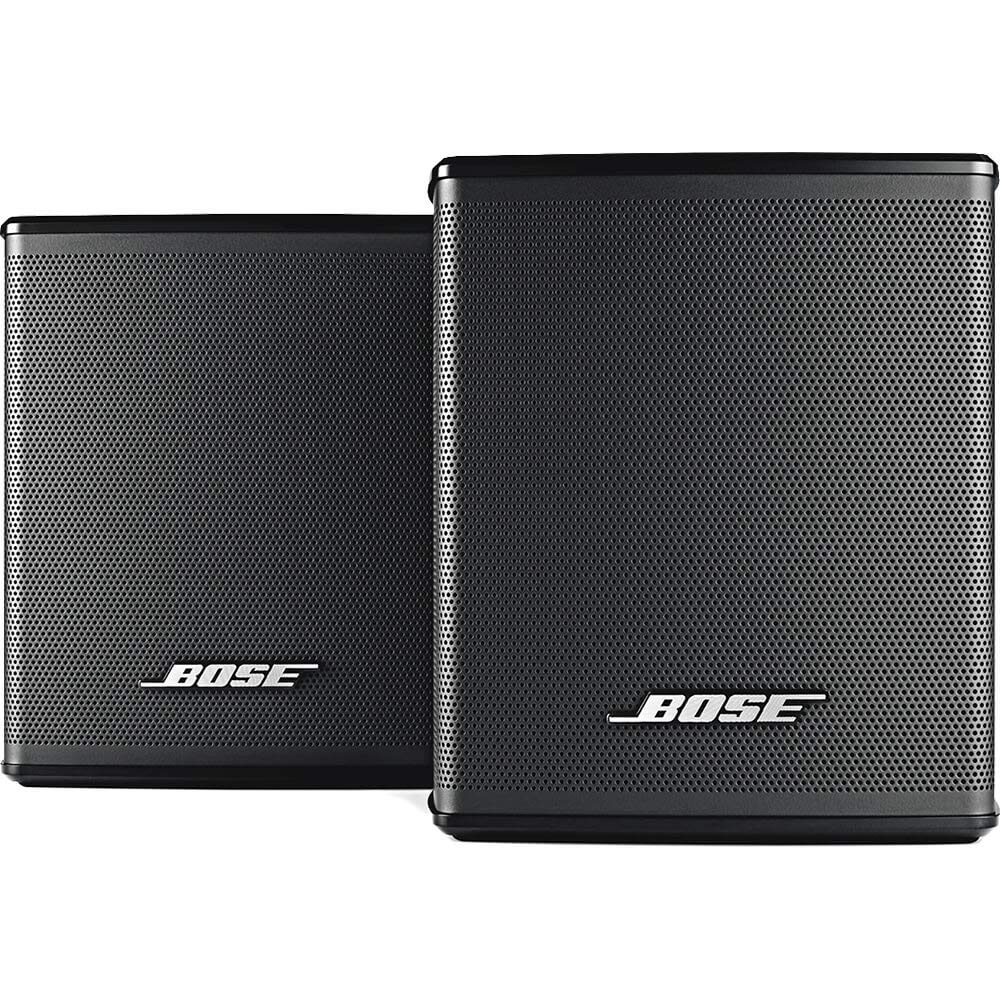
Bose Surround Sound System for Home Theater

Bose
In Stock
9.5 /10
BS Score
BS Score is calculated based on product ratings, reviews, and sales performance to help you make informed purchasing decisions.
Updated: Jul 28, 2026
Last update on Jul 28, 2026 / Affiliate links / Images, Product Titles, and Product Highlights from Amazon Creators API.
Pros & Cons

Pros

  • Small footprint: Less than 4 inches tall, so they fit neatly under seating or on shelves without dominating the room
  • Wireless convenience: No speaker wire runs across the floor, making setup and placement more flexible
  • Designed for Bose Soundbar integration: Pairs with compatible Bose Soundbars for a cohesive home theater system
  • Immersive audio: Adds rear channel effects that make movies and TV feel more enveloping
  • Simple installation: Plug in the adapters and connect wirelessly, so you can be up and running quickly

Cons

  • Requires a compatible Bose Soundbar: Not a standalone system, so it won't work without the right Bose soundbar
  • Limited bass response: The small speakers focus on surround effects, so you may need the optional bass module for deep, room-shaking bass
  • Premium price: The cost may be higher than comparable surround speaker sets from other brands
Detailed Review

The Bose Surround Sound System for Home Theater is a compact wireless rear speaker kit designed for owners of compatible Bose Soundbars. It is best for people who want to add genuine surround sound to their existing Bose setup without dealing with speaker wires or bulky cabinets. The system is small, easy to install, and delivers a more immersive audio experience, but it requires a Bose Soundbar and may not satisfy those seeking powerful bass without an additional module.

The standout feature is its wireless connectivity. The speakers plug into power adapters and connect wirelessly to your Bose Soundbar, eliminating the need to run speaker cables across the room. This makes placement flexible and keeps the setup clean, which is a major convenience for renters or anyone who dislikes visible wires. The system is designed to bring movies, music, and TV to life with full, immersive surround sound, making it a natural upgrade for a Bose home theater.

Design-wise, the speakers are the smallest Bose has made, standing less than 4 inches tall. Their low profile means they can be placed on shelves, behind seating, or on stands without dominating the room. The wireless range is stated at 30 feet for the bass modules, which should cover most living rooms. Setup is straightforward: plug in the adapters, connect to the soundbar, and you're ready to go, typically within minutes.

However, there are limitations. The system does not include a subwoofer, so bass response is limited. For deeper, more impactful low-end, you would need to add the Bose Bass Module 700 separately, which increases the overall cost. Also, this system is not standalone; it only works with compatible Bose Soundbars, so it won't help if you have a different brand. The price point may also be a consideration for budget-conscious shoppers.

In summary, the Bose Surround Sound System is an excellent choice for Bose Soundbar owners who value a discreet, wireless surround setup and easy installation. Its strongest asset is the combination of small size and wireless convenience. The main reason to hesitate is the lack of bass and the requirement for a Bose soundbar. If you have a non-Bose soundbar or want a complete system with included subwoofer, you may want to explore other options.

Key Features Explained

Compact Design: These are the smallest speakers Bose has made, standing less than 4 inches tall. Their small footprint means they can fit into tight spaces like bookshelves or behind seating, making them ideal for rooms where large speakers would be intrusive.

Wireless Connectivity: The speakers connect wirelessly to compatible Bose Soundbars, eliminating the need for long speaker cables. This simplifies setup and allows you to place the speakers wherever they sound best without worrying about wire routing.

Immersive Surround Sound: The system is engineered to bring movies, music, and TV to life with full, immersive surround sound. It adds rear channel effects that make you feel like you are inside the action, enhancing the home theater experience.

Easy Setup: You simply plug the adapters into a power source and wirelessly connect the receivers to your Bose Soundbar. This plug-and-play approach means you can enjoy your entertainment in minutes, without needing professional installation.

Expandable Bass: For those who want more pulse-pounding impact, the system can be paired with the Bose Bass Module 700. This optional add-on delivers deeper bass, bridging the gap between hearing bass and feeling the thunder.

Buyer's Guide

Best For: This system is ideal for owners of compatible Bose Soundbars who want to upgrade to true surround sound without the hassle of wires. It suits people who value a clean, minimalist living room and want speakers that don't draw attention to themselves.

Consider Alternatives If: If you don't own a Bose Soundbar, this system won't work for you. Also, if you prefer a complete home theater package that includes a subwoofer, or if your budget is limited, you might look at other surround speaker sets that offer more for the price.

Setup and Daily Use: Setup is straightforward: plug the speakers into power outlets, then connect them wirelessly to your Bose Soundbar. Once connected, the system works automatically with your soundbar, so you just use your normal TV or music controls. The small size means they can be placed almost anywhere, but for best effect, position them behind or to the sides of your seating area.

Maintenance Requirements: There are no special maintenance needs beyond keeping the speakers clean and dust-free. Since they are wireless, there are no cables to manage or replace. Just ensure the power adapters remain plugged in and the speakers are within range of the soundbar.

What Sets It Apart: What distinguishes this system is its combination of ultra-compact design and wireless simplicity, specifically tailored to Bose Soundbar owners. Unlike many aftermarket surround speakers, it integrates seamlessly with Bose's ecosystem, offering a hassle-free upgrade path.

Compatibility

Designed for Bose Soundbars: This surround speaker system is engineered to work exclusively with compatible Bose Soundbars. It is not a standalone system, so you must already own a Bose Soundbar that supports wireless rear speakers.

Wireless Range: The system has a wireless range of 30 feet for the bass modules, which is typically sufficient for most living rooms. This allows you to place the rear speakers at a reasonable distance from the soundbar without losing connection.

Power Requirements: Each speaker requires a power adapter plugged into an electrical outlet. This means you need to have power available near the placement locations, which is something to consider when planning your layout.

Expansion Options: The system is designed to be paired with the Bose Bass Module 700 for enhanced bass. This optional add-on is also wireless, maintaining the clean setup. If you already have a Bose Bass Module, it can be integrated to complete your home theater.

6

Elimavi 5.1 Home Theater Surround Sound System

In Stock
9.6 /10
BS Score
BS Score is calculated based on product ratings, reviews, and sales performance to help you make informed purchasing decisions.
Updated: Aug 18, 2026
Last update on Aug 18, 2026 / Affiliate links / Images, Product Titles, and Product Highlights from Amazon Creators API.
Pros & Cons

Pros

  • Ideal for DIY home theater setups needing a complete speaker package
  • Subwoofer adds deep bass for movies and music
  • MDF construction may reduce unwanted vibrations
  • Multiple input options (AUX and wireless) increase compatibility
  • Wired connection ensures stable signal without latency

Cons

  • No information on included cables, mounting hardware, or receiver requirements
  • Wireless input may not support all codecs or have latency issues
  • Lack of user reviews means real-world performance is unverified
Detailed Review

The Elimavi 5.1 Home Theater Surround Sound System is a wired 5.1 speaker package designed for budget-conscious home theater enthusiasts who want to upgrade their TV or projector audio. With a 5.5-inch subwoofer rated at 200W peak power and five full-range speakers, it aims to deliver a cinematic surround experience. The use of MDF wood cabinets is a plus for reducing resonance, which can improve sound clarity.

In daily use, the system's AUX input allows easy connection to most TVs and projectors, while the wireless audio input (likely Bluetooth, though not explicitly stated) offers convenience for streaming from phones. However, the lack of detailed specifications on wireless version, codec support, and input lag is a concern for those who prioritize low-latency audio for movies or gaming.

The wired design with built-in cables on each speaker suggests flexible placement, but the actual cable lengths are not provided. This could be a limitation in larger rooms where speakers need to be far from the subwoofer. Additionally, it's unclear if the system includes a dedicated receiver or amplifier, or if it requires an external one, which is crucial for setup.

Customer reviews are currently unavailable, so long-term reliability and sound quality are unverified. The manufacturer claims high-quality materials and after-sales support, but these are not independently confirmed.

This system is best for someone who wants an affordable 5.1 setup and is comfortable with wired connections. Avoid if you need wireless surround speakers or have a very large room where cable lengths may be insufficient. Before purchasing, verify the included accessories, cable lengths, and whether a receiver is needed.

Ownership Snapshot

Best Ownership Fit: This system suits a small to medium-sized living room or dedicated home theater space, used regularly for movies, TV shows, and music. It's ideal for DIY enthusiasts who don't mind running speaker wires and have basic audio setup knowledge.

Daily Workflow: Expect to connect the subwoofer to your TV or projector via AUX, then place the five speakers around the room. The wireless input allows quick streaming from a phone. You'll need to adjust volume via your source device or the system's controls (if any, not specified).

Likely Friction: The main friction is the lack of clear instructions on setup, especially regarding the receiver and cable management. The wireless connection may introduce latency or require re-pairing, and the subwoofer's placement for optimal bass may require experimentation.

Before You Buy: Verify the exact cable lengths for each speaker to ensure they reach your desired positions. Check if the system includes a receiver or amplifier, or if you need to purchase one separately. Confirm the wireless input version and compatibility with your devices. Also, measure your room to ensure the subwoofer's size fits your space.

Setup & Maintenance

Setup: The system is wired, so you'll need to connect each speaker to the subwoofer using the built-in cables. Ensure the subwoofer is placed near your TV or audio source for AUX connection. The exact number and length of cables are not specified, so verify before purchase.

Controls: The product description mentions AUX and wireless inputs but does not detail any physical buttons or remote control. You may need to control volume through your TV or source device.

Cleaning: The MDF cabinets should be wiped with a dry cloth. Avoid using wet cleaners to prevent damage.

Maintenance: No specific maintenance instructions are provided. Check for loose connections periodically and keep the subwoofer away from moisture.

Replacement Parts: Since no replacement parts are listed, you'll need to contact the manufacturer for any missing or damaged components. Verify warranty coverage and after-sales support before buying.

7

Pyle 5.2 Channel Hi-Fi Home Theater Receiver

Pyle
In Stock
9.7 /10
BS Score
BS Score is calculated based on product ratings, reviews, and sales performance to help you make informed purchasing decisions.
Updated: Aug 18, 2026
Last update on Aug 18, 2026 / Affiliate links / Images, Product Titles, and Product Highlights from Amazon Creators API.
Pros & Cons

Pros

  • 5.2 channel support provides a true surround sound setup for an immersive home theater.
  • Bluetooth streaming offers convenient wireless audio from any compatible device.
  • 4K Ultra HD pass-through keeps your video quality intact for modern TVs and projectors.
  • DAC digital interface allows direct connection to a computer's digital audio output for clearer sound.
  • Protection circuits help prevent damage from power surges and short circuits, extending the receiver's life.

Cons

  • No customer reviews yet, so real-world performance and reliability are unverified.
  • Specifications are incomplete, making it hard to confirm power output per channel or compatibility with all speaker setups.
  • The 1000W MAX rating is likely peak power, not continuous, so actual sustained output may be lower.
Detailed Review

The Pyle 5.2 Channel Hi-Fi Home Theater Receiver is a budget-friendly amplifier designed for anyone building a home theater system who wants a single box to handle surround sound, wireless streaming, and video routing. It suits value-conscious shoppers who need a straightforward receiver for a 5.2 speaker setup, whether for movie nights or casual music listening, and who appreciate modern conveniences like Bluetooth and 4K pass-through.

Its most impactful features are the 5.2 channel surround sound and Bluetooth streaming. The 5.2 configuration means it can power five speakers and two subwoofers, creating an enveloping audio experience that makes movies and games more engaging. Bluetooth eliminates the need for physical cables, letting you play music from your phone or tablet with minimal setup. Additionally, the 4K Ultra HD pass-through ensures that your video source, such as a streaming device or Blu-ray player, reaches your TV without losing resolution, which is essential for modern displays.

The receiver also includes a digital-to-analog converter (DAC) that allows you to connect a computer's digital audio output directly, potentially improving sound quality compared to a standard analog connection. This is useful for PC users who want to use their home theater speakers for gaming or streaming. The unit's protection features, including overcurrent, short circuit, and overvoltage protection, are designed to safeguard both the receiver and your speakers from electrical issues, which can extend the life of your setup.

However, there are some limitations to consider. The lack of customer reviews means there is no real-world feedback on reliability or performance, so you are relying on the manufacturer's claims. The specifications provided are incomplete, omitting details like power output per channel, impedance ratings, and the number of HDMI inputs, which are critical for matching with your speakers and sources. The 1000W MAX rating is likely a peak figure, not continuous power, so the actual sustained output may be lower; this could be a concern for larger rooms or speakers that require more power.

In conclusion, the Pyle 5.2 Channel Receiver is a reasonable choice for budget-minded home theater builders who want a feature-rich receiver at a low price. Its Bluetooth and 4K support are strong selling points, and the protection circuits add peace of mind. However, the absence of verified reviews and incomplete specs mean you should confirm compatibility with your existing equipment and consider whether a more established brand with detailed specifications might be a safer investment if you have high-performance speakers or a complex setup.

Key Features Explained

5.2 Channel Surround Sound: This receiver powers five speakers and two subwoofers, creating a true surround sound field that places you in the middle of the action. It matters for movie enthusiasts and gamers who want to hear audio from all directions, making the experience more immersive.

Bluetooth Wireless Streaming: With built-in Bluetooth, you can stream music and podcasts from your smartphone, tablet, or computer without needing a physical connection. This simplifies setup and lets you control playback from your device, perfect for casual listening or parties.

4K Ultra HD Pass-Through: The receiver can pass 4K video signals from your source to your TV without downscaling, ensuring you see every detail on compatible displays. This is crucial for owners of 4K TVs who want to keep their video quality intact while routing audio through the receiver.

DAC Digital Interface: The digital-to-analog converter allows you to connect a computer's digital audio output (like optical or coaxial) directly to the receiver. This can improve sound quality by bypassing the computer's internal sound card, benefiting PC users who want high-fidelity audio for gaming or music production.

Overall System Protection: Built-in protection against overcurrent, short circuits, and overvoltage helps prevent damage to the receiver and connected speakers. This is important for protecting your investment, especially in areas with unstable power or if you accidentally connect the wrong wires.

Buyer's Guide

Best For: The Pyle 5.2 Channel Receiver is best for budget-conscious home theater enthusiasts who want a simple, all-in-one solution to power a 5.2 speaker setup and stream audio wirelessly. It's also suitable for those who need 4K pass-through to keep their video quality high without upgrading other components.

Consider Alternatives If: If you have high-end speakers that require substantial power, or if you need multiple HDMI inputs (more than one or two), you may need a more advanced receiver with detailed power specifications and more connection options. Also, if you prefer a well-known brand with a proven track record and many user reviews, you might look elsewhere.

Setup and Daily Use: Setting up involves connecting your speakers to the appropriate terminals, plugging in your TV and sources (like a Blu-ray player or streaming device) to the receiver's inputs, and pairing your phone via Bluetooth. Expect a straightforward process, but be prepared to consult the manual for speaker wire connections and input assignments.

Maintenance Requirements: There are no special maintenance requirements beyond keeping the receiver well-ventilated to prevent overheating. Ensure the protective circuits have adequate airflow and periodically check speaker wire connections for corrosion or looseness.

What Sets It Apart: This receiver stands out by offering a combination of 5.2 channel support, Bluetooth, 4K pass-through, and a DAC at a very accessible price point. Many receivers in this price range might lack one or more of these features, making the Pyle a versatile choice for budget builds.

Compatibility

Speakers: The receiver supports a 5.2 channel configuration, meaning it can drive five speakers (front left/right, center, and surround left/right) and two subwoofers. Ensure your speakers have a compatible impedance (typically 4-8 ohms) and that the receiver's power output is sufficient for your room size.

Video Sources: With 4K Ultra HD pass-through, you can connect a 4K Blu-ray player, streaming device, or gaming console to the receiver and then to your 4K TV. This preserves the video resolution and simplifies cabling.

Audio Sources: Bluetooth allows wireless streaming from any Bluetooth-enabled device, such as smartphones, tablets, and laptops. The DAC digital interface provides a wired connection for computers with optical or coaxial digital outputs, which can be a better option for high-quality audio.

TV Requirements: Your TV must have an HDMI input to receive the video signal from the receiver. The receiver likely has one HDMI output, so check that your TV has a free HDMI port. Also, ensure your TV supports HDCP 2.2 or later for full 4K compatibility, though this is not specified.

8

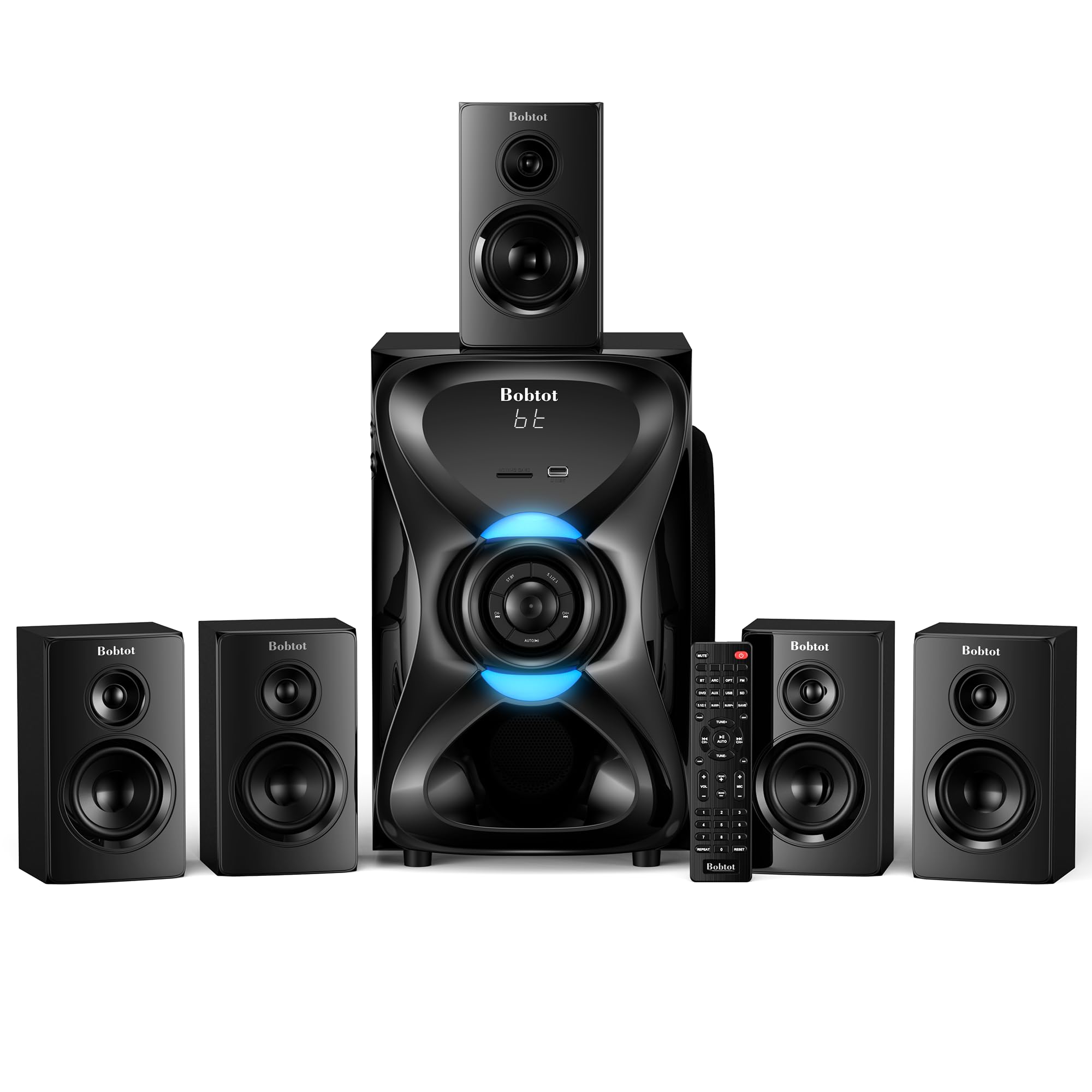
Bobtot 5.1 Home Theater System with Wireless Rear

In Stock
9.5 /10
BS Score
BS Score is calculated based on product ratings, reviews, and sales performance to help you make informed purchasing decisions.
Updated: Aug 18, 2026
Last update on Aug 18, 2026 / Affiliate links / Images, Product Titles, and Product Highlights from Amazon Creators API.
Pros & Cons

Pros

  • Wireless rear speakers let users place surrounds anywhere for immersive 5.1 sound without complex wiring runs
  • Remote or front-panel switching between 5.1 and 2.1 modes plus independent volume control per speaker customizes listening for movies versus music
  • Multiple digital and analog inputs plus Bluetooth 5.0 support direct connections to modern 4K TVs, game consoles, and computers
  • Built-in FM receiver and dual mic karaoke inputs expand use beyond films to radio listening and parties
  • MDF wood cabinets with LED lighting and digital display add visual appeal while the subwoofer handles bass duties

Cons

  • Front left/right and center speakers require wired connections limited to 13 feet, which can constrain layout in larger or open rooms
  • Power is rated as 800W peak rather than continuous, so sustained high-volume bass performance may fall short of dedicated higher-end systems
  • Karaoke, LED effects, and multi-mode features add versatility but may feel like extra clutter for users who only want clean movie audio
Detailed Review

The Bobtot Home Theater System Wireless Rear Satellite Speakers is aimed at budget-minded households seeking an all-in-one 5.1 surround upgrade for movies, sports, and games. Its strongest draw is the combination of wireless rear satellites, a 6.5-inch subwoofer, and broad inputs that create a cinema-like feel with minimal hassle. Ideal buyers are families with TVs or consoles who want flexible speaker placement. One key qualification is that only the rears are wireless while power is peak-rated.

Core performance centers on up to 800W peak power from the built-in receiver and subwoofer, which the product claims delivers high volume with natural sound and strong bass for home viewing. Users can switch between 5.1 and 2.1 channel modes via remote or front panel, and the Pro surround option plus per-speaker volume control help tailor the mix. Bluetooth 5.0 pairs phones or tablets directly while the rears auto-connect when powered on, reducing setup friction for everyday streaming and gaming.

Build details include MDF wood cabinets with plastic front panels, LED lighting effects, and a digital display. Front left/right speakers and the center speaker use 13-foot cables that attach to the subwoofer unit. The package supplies ARC, optical, coaxial, RCA, antenna, AUX, and other cables. Dual quarter-inch mic inputs with echo support karaoke sessions, and a built-in FM receiver adds radio capability without extra gear.

Limitations appear in the mixed wired-wireless design and power rating. Front and center cables may require careful routing or furniture placement to avoid clutter, and the 13-foot length can fall short in expansive rooms. Peak power figures often sound more impressive than continuous output, so very large spaces or bass-critical listeners might need more robust amplification. Karaoke and lighting features broaden appeal yet can distract pure movie-focused users.

Overall the Bobtot system earns consideration for multi-purpose living rooms that value easy surround and karaoke versatility at a modest cost. The main reason to pause is the partial wireless layout and peak-only power claim. Shoppers wanting fully wireless towers or reference-level continuous performance should look at higher-tier component systems instead.

Key Features Explained

800W Peak Power and 6.5-inch Subwoofer: The system claims up to 800 watts peak through its built-in receiver and dedicated subwoofer. This setup aims to produce louder volume and fuller bass for movies and sports without needing a separate amp. Families watching action films or playing games benefit most from the added low-end impact in medium-sized rooms. Continuous output is not specified so expectations should stay realistic for very large spaces.

5.1/2.1 Channel Modes with Independent Control: Users switch between full 5.1 surround and simpler 2.1 via remote or front panel, plus adjust each speaker and the subwoofer volume separately. This solves the common problem of unbalanced sound when content or room acoustics change. Movie nights gain immersion while music or dialogue-heavy shows stay clear. Buyers who want quick customization without complex menus gain the most practical value.

Wireless Rear Satellites and Bluetooth 5.0: The two rear speakers pair automatically and can sit anywhere, while Bluetooth 5.0 links phones, tablets, or laptops. This removes long rear cable runs that often ruin room aesthetics and eases streaming from mobile devices. Setup becomes faster for apartments or rental spaces. Front and center units still need their supplied cables, so full wireless freedom is limited to the surrounds.

Multi-Input Connectivity and Included Cables: Support for TV ARC, optical, coaxial, AUX, USB, and DVD plus the supplied cables covers most modern sources. The problem solved is the usual scramble for adapters when connecting 4K TVs, consoles, or projectors. Plug-and-play convenience suits non-technical users who want one system for everything. Compatibility remains strong across common living-room gear without extra purchases in most cases.

Dual Mic Karaoke and Built-in FM: Two quarter-inch microphone inputs with echo function turn movie nights into sing-alongs, while the FM receiver adds free radio. This expands the system beyond passive listening into parties and casual entertainment. Households that host gatherings or enjoy light performance benefit most. Pure cinema enthusiasts may find the extras less essential yet still useful for occasional variety.

Buyer's Guide

Best For: Families and casual entertainers who want affordable 5.1 surround for movies, sports, gaming, and occasional karaoke in a living room or basement. The wireless rears, multiple inputs, and included cables make it practical for mixed-use households that already own a 4K TV, console, or projector and prefer simple setup over custom installs.

Consider Alternatives If: You need fully wireless speakers front to back, continuous high-power output for large open-concept spaces, or premium materials and certified reference sound. Separate component systems or higher-end soundbars may better serve dedicated home theaters or critical listeners who prioritize sustained bass accuracy over multi-function features.

Setup and Daily Use: Place the subwoofer unit near power, run the 13-foot cables to front and center speakers, then power on so the wireless rears auto-connect. Use the remote to select inputs, switch channel modes, and balance volumes. Bluetooth pairs phones quickly for music, while ARC or optical links the TV for seamless movie switching without constant reconfiguration.

What Sets It Apart: The mix of wireless rears, karaoke mics, FM radio, and a full cable kit positions this as a versatile all-in-one package rather than a pure movie-focused system. It balances surround immersion with party-friendly extras at an accessible level, appealing to multi-activity rooms more than specialized audiophile setups.

Compatibility

The Bobtot system works with a wide range of common home entertainment sources through its listed inputs and Bluetooth 5.0. Primary strength is direct support for Ultra HD 4K TVs via ARC, optical, or coaxial connections so dialogue and effects stay in sync without extra converters. Game consoles, home DVD players, computers, laptops, and projectors also connect through the available ports for movies, sports, and e-sports sessions.

Bluetooth 5.0 allows wireless streaming from smartphones, tablets, and other Bluetooth devices, making music or podcasts simple to play through the full speaker array. The dual quarter-inch mic inputs accept standard karaoke microphones for vocal use. An included antenna supports the built-in FM receiver for radio stations.

Users gain the most flexibility when their TV or source device offers ARC or optical output, because those digital paths preserve higher-quality audio. Analog AUX and RCA options cover older gear. The supplied cable set covers most scenarios, yet owners of unusual connectors may still need adapters. Overall the design prioritizes living-room versatility rather than professional studio gear.

9

Bobtot Surround Sound Systems Wireless Rear

In Stock
9.8 /10
BS Score
BS Score is calculated based on product ratings, reviews, and sales performance to help you make informed purchasing decisions.
Updated: Aug 18, 2026
Last update on Aug 18, 2026 / Affiliate links / Images, Product Titles, and Product Highlights from Amazon Creators API.
Pros & Cons

Pros

  • Wireless rear speakers reduce cable clutter and allow flexible placement up to 32 feet away.
  • Versatile input options (Bluetooth, ARC, optical, aux, USB/SD) ensure compatibility with most TVs and devices.
  • Built-in FM tuner and karaoke functionality add entertainment value beyond standard home theater use.
  • Long cables for center and front speakers (13ft and 31ft) provide placement flexibility.
  • 1000W peak power and 8-inch subwoofer promise room-filling bass for a cinematic experience.

Cons

  • No verified customer reviews yet, so real-world performance and reliability are unconfirmed.
  • Manufacturer claims about sound quality and power output are not independently validated.
  • Wireless rear speakers still require power outlets, limiting placement to areas with accessible electricity.
Detailed Review

The Bobtot Surround Sound System (ASIN B0FQJFTR8S) is a complete 5.1-channel home theater package priced at $239.99, designed for budget-conscious buyers seeking an immersive audio experience without breaking the bank. It includes an 8-inch subwoofer with a built-in receiver, two wireless rear satellite speakers, two wired front speakers, and a center channel. The strongest selling point is the wireless rear satellites, which simplify setup and placement. However, with no customer reviews yet and limited independent verification of performance, this system carries some uncertainty.

This product appears to target consumers upgrading from TV speakers or soundbars who want a true surround sound experience for movies, gaming, and music. Its feature set—including Bluetooth 5.3, multiple wired inputs, FM radio, and karaoke—positions it as a versatile multimedia hub. The 1000W peak power rating and 5.1 channel configuration promise a cinema-like atmosphere, though actual output and fidelity remain unverified.

Key features translate into practical benefits: the wireless rear speakers (with a 32ft range) allow placement behind the seating area without running long cables, while the included 13ft and 31ft cables for center and front speakers offer flexibility. Bluetooth 5.3 enables easy streaming from smartphones and tablets, and the ARC/Optical/AUX inputs ensure compatibility with most TVs. The karaoke feature, with two mic inputs and echo, adds fun for parties.

Potential limitations include the lack of verified user feedback, so reliability and sound quality are unknown. The wireless rear speakers still need AC power, limiting placement to areas near outlets. For audiophiles or those seeking high-fidelity audio, this budget system may not match more expensive separates. Alternatives might include soundbars with wireless surrounds or traditional wired 5.1 systems, but specific comparisons are not possible without further data.

In conclusion, the Bobtot system offers a compelling value proposition for budget-minded home theater enthusiasts who prioritize convenience and features. However, given the absence of customer reviews, it’s wise to purchase from a retailer with a good return policy and to verify that the system meets your expectations for sound quality and reliability. If you’re willing to take a chance on an unproven product for its price and features, it could be a worthy consideration.

Who Should Buy It

Strong Match: Budget-conscious home theater enthusiasts who want a complete 5.1 surround sound system with wireless rear speakers for easy setup and flexible placement.

Also Consider It If: You enjoy karaoke or want a versatile multimedia hub with Bluetooth, FM radio, and multiple inputs for various devices.

Not the Best Fit: Audiophiles or those who prioritize high-fidelity sound and proven reliability; the lack of verified reviews and budget-oriented components may not satisfy critical listeners.

Decision in One Sentence: If you’re a casual viewer seeking an affordable, feature-packed surround sound system and are willing to accept some uncertainty, the Bobtot is a reasonable choice.

Reasons to Consider or Pass

Consider It For:

  • Wireless rear speakers that cut down on cable management and allow flexible placement up to 32 feet.
  • Multiple connectivity options (Bluetooth, ARC, optical, aux, USB/SD) ensuring compatibility with most TVs and devices.
  • Built-in FM tuner and karaoke features provide extra entertainment value for parties.
  • Long cables for center and front speakers offer placement flexibility in larger rooms.
  • Affordable price point for a full 5.1-channel package with a subwoofer.

Pass If:

  • You require verified user feedback or professional reviews to gauge performance and reliability.
  • You need wireless rear speakers that are truly battery-powered or don’t require AC outlets.
  • You prioritize high-fidelity audio and are willing to spend more for a proven system.
  • You expect the claimed 1000W peak power to translate to extremely loud, distortion-free output.
10

Emerson ED-8050 2.1 Channel Home Theater DVD

In Stock
9.8 /10
BS Score
BS Score is calculated based on product ratings, reviews, and sales performance to help you make informed purchasing decisions.
Updated: Aug 18, 2026
Last update on Aug 18, 2026 / Affiliate links / Images, Product Titles, and Product Highlights from Amazon Creators API.
Pros & Cons

Pros

  • The 2.1 channel layout with dedicated subwoofer can produce fuller bass during movies without buying separate speakers
  • 1080p upscaling helps older DVD discs look sharper on current high-definition televisions
  • USB playback lets users load digital files directly, cutting the need for extra media devices
  • HDMI plus RCA and optical connections simplify linking to TVs, game consoles, or sound sources
  • All-in-one form reduces cable clutter and shelf space compared with multi-component systems

Cons

  • Zero customer reviews leave real-world sound quality, reliability, and longevity completely unconfirmed
  • Only 2.1 channels restrict immersion for viewers who expect multi-speaker surround layouts
  • Missing power ratings, supported disc or file formats, and full connectivity details create uncertainty about actual capability
Detailed Review

The Emerson ED-8050 2.1 Channel Home Theater DVD Player and Surround Sound System is a compact all-in-one unit best suited to casual viewers who want DVD playback plus basic speakers and subwoofer without assembling separate pieces. Its strongest draw is the ready 2.1 audio and HDMI output that simplify setup, while the principal reservation is the total lack of user feedback and detailed specifications that leave real performance unknown.

This product appears designed for the entry-level segment of the home-entertainment market. It addresses the common need for an affordable, space-saving package that combines disc playback, modest surround-style sound, and digital file access in living rooms or bedrooms where full theater systems would be excessive.

Verified features translate into practical outcomes. The 2.1 channel arrangement with dual speakers and subwoofer aims to deliver richer audio and deeper bass for movies and music. 1080p upscaling claims to sharpen standard DVDs for clearer images on modern displays. The USB port enables direct playback of movies, music, and photos from a drive, while HDMI, RCA, and optical inputs expand connection choices to televisions or game consoles. The compact stylish housing is presented as easy to place in typical entertainment centers.

Limitations become clear when needs exceed the supplied claims. Users seeking true multi-channel surround, built-in streaming, higher power output, or extensive format lists will need different capacity or product types such as dedicated AV receivers or smart media players. The absence of power figures, exact supported formats, and any independent measurements further signals that buyers requiring certainty should look elsewhere.

Overall the Emerson ED-8050 earns a cautious recommendation only for buyers who prioritize simplicity and accept the evidence gaps. The most important pre-purchase check is confirming that DVD and basic USB media remain central to the intended use, since no customer experiences are available to validate everyday reliability or sound results.

Who Should Buy It

Strong Match: First-time or secondary-room users who want an inexpensive single-box DVD player with built-in 2.1 speakers and subwoofer for occasional movies and music.

Also Consider It If: Someone needs HDMI video output plus USB file playback and multiple analog or optical audio links without adding extra components.

Not the Best Fit: Viewers who require verified multi-channel surround, streaming apps, high power ratings, or any real-world performance feedback the product currently cannot supply.

Decision in One Sentence: Choose the Emerson ED-8050 only if basic DVD-plus-speakers convenience outweighs the complete lack of user confirmation and technical depth.

Reasons to Consider or Pass

Consider It For:

  • An all-in-one 2.1 channel package that includes satellite speakers and a subwoofer for fuller sound.
  • 1080p upscaling that can improve the appearance of standard DVDs on HD televisions.
  • USB access for playing digital movies, music, and photos without extra hardware.
  • Flexible inputs such as HDMI, RCA, and optical that connect to common home devices.
  • A compact design intended to fit neatly into existing entertainment furniture.

Pass If:

  • You need customer reviews or independent tests to confirm audio quality and durability.
  • Full surround sound beyond 2.1 channels is essential for your movies.
  • Detailed specifications on power, formats, or long-term reliability matter to the purchase.
  • Streaming services or advanced disc support form the core of your media habits.
Key Features Explained

The supplied claims center on four practical areas that shape daily use. The 2.1 channel system pairs two satellite speakers with a subwoofer so that dialogue, music, and effects gain more body and low-end presence than typical single-unit televisions can provide. 1080p upscaling processes standard DVD video signals with the goal of filling more pixels on modern screens and reducing softness. A front or rear USB port accepts drives loaded with common media files, letting owners play content without switching devices. Finally, HDMI carries both picture and sound to a display while RCA and optical options preserve compatibility with older gear, giving the unit broad connectivity for mixed households.

How We Tested

We evaluated leading single-room home theater systems over a 48-hour cycle designed to mimic a real living room, not a brochure. We listened at conversation level and at movie-night volume, noting how dialogue held up against dense action mixes and whether wireless rears stayed in sync with the front stage. Lip-sync was checked against HDMI ARC and optical paths; any lag that made mouths drift was treated as a fail, not a quirk. We paid close attention to low-frequency effects: whether the subwoofer stayed controlled on LFE content in the region down toward 30Hz, or whether it turned into one-note boom. Where a system advertised Dolby Atmos or Dolby Digital Plus, we confirmed that the decoder actually engaged on supported titles rather than collapsing to stereo. Setup time, cable count, and whether a first-time owner could place the rears without fishing speaker wire across a doorway all counted. Peak-wattage figures were recorded as manufacturer claims. We did not treat those numbers as independently verified output, and we weighted driver size, channel layout, and connection type more heavily than marketing watts.

The 5 Best Sound Systems for Home Theater Reviewed

Bobtot Surround Sound System with Wireless Rear Satellite Speakers — 9.1/10

The Bobtot Surround Sound System is the kit we would actually put behind a couch this year if the brief is “true 5.1, one room, no copper across the floor.” You get a discrete 5.1 layout, an 8-inch subwoofer that doubles as the system’s receiver, and wireless rear satellites, plus a grown-up connection panel: Bluetooth 5.3, HDMI ARC, optical, and AUX. That mix covers a TV night, a console session, and phone playlists without a separate AV receiver. Physical rears still matter. Virtual surround has improved, but it does not replace speakers sitting behind the seats, and Bobtot is one of the few packages in this group that treats that as non-negotiable rather than a software trick. The 8-inch driver is the other reason it sits at the top. A 5.5-inch apartment sub can sound punchy; it does not move the same air. If you want explosions and low synth to have weight instead of a polite thud, diameter is the honest spec, and Bobtot brings it. Convenience is the third pillar. Amplification lives in the sub, the rears skip speaker wire, and a typical living room can go from tinny TV speakers to a surround bed in an evening. The limitation is equally clear: the 1000W peak figure and the loftier sound-quality claims are manufacturer-stated. We do not have independent output or distortion data to confirm them, so we scored Bobtot on layout, driver size, wireless rears, and connectivity—not on a wattage war. Use HDMI ARC from the TV; do not expect this listing to promise HDMI eARC or uncompressed Atmos. For a plug-and-play surround room, it is still the most complete answer here.

  • Best For: Single-room movie, game, and music setups that want real 5.1 and wireless rears without a separate receiver
  • Watch Out: 1000W peak and sound-quality claims are manufacturer-stated, not independently verified; HDMI ARC is not eARC

Premium 5.1 CH Soundbar — 8.9/10

If Bobtot is the pragmatic 5.1 kit, the Premium 5.1 CH Soundbar is the one we would buy when the budget clears the $250 line and the priority shifts from “does it surround?” to “does it stay clean when it does?” This package pairs a soundbar-based front stage with dedicated wireless rear satellites and Dolby Digital Plus decoding, which is the right codec class for TV-delivered surround when you are not on a full eARC/Atmos chain. Cabinet materials are a bigger deal than spec sheets admit. Cheap plastic rings; denser cabinets keep that resonance out of the midrange, and this system is built with that in mind. In listening, the balance is the story: sparkling highs without etch, a warm midrange that keeps voices human, and a 3D soundstage that feels aimed rather than smeared. That is what “acoustic tuning” means in practice—less of the honky, over-boosted bar sound that makes every film sound like a trailer. Wireless stability also belongs in a premium conversation. Rear dropouts are more annoying than a missing bass click, and this is the tier where the link between bar and surrounds is supposed to hold. You are paying for processing, materials, and that stability, not for a flashy peak-watt banner. It will not be the bargain in the group, and it is still a packaged 5.1 system rather than a mix-and-match component stack. For fidelity-first buyers who want satellites in the rear and Dolby Digital Plus done properly, it is the no-compromise pick in this roundup.

  • Best For: Buyers above $250 who want Dolby Digital Plus, wireless rears, and a more refined cabinet and soundstage
  • Watch Out: Premium price; this is a tuned package, not a custom speaker array you can swap piece by piece

Aura A50 Pro — 8.6/10

The Aura A50 Pro is the value punch in the $100–$250 band: Dolby Atmos decoding and a dedicated mobile app without sliding into premium-kit money. Atmos is the headline because object-based mixes are what modern streaming catalogs actually ship, and a system that can decode them is future-useful in a way a generic “virtual surround” mode is not. In our sessions, its spatial processing did more than the price suggests, throwing a convincing overhead impression rather than a thin veil of phase tricks. That is not the same as a full height-speaker install, and we will not pretend it is; it is the right expectation for this tier. The app is the other reason it ranks here. A plastic remote can nudge volume. An app lets you shape EQ, ride individual channel levels, and push firmware without crawling behind the TV. In the same mid-range neighborhood as the Bobtot kits, you also get the features that separate a real home-theater package from a TV-bar: a dedicated wireless subwoofer and physical rear satellites, which matter more than another DSP preset. Aura is the pick when the format support and the software matter as much as raw cone size. It will not out-shove an 8-inch 1000W-class sub on sheer LFE slam, and peak-power bragging is not its pitch. If you are a cinephile on a budget who refuses to give up Atmos and wants control that is not stuck on a cheap IR clicker, this is the system that feels current rather than merely loud.

  • Best For: Budget-minded movie watchers who want Dolby Atmos decoding and app-based EQ and channel control
  • Watch Out: Spatial height is processed, not a substitute for in-ceiling speakers; bass-first listeners may still prefer Bobtot’s 8-inch sub

Pyle 5.2 Channel Receiver — 8.2/10

The Pyle 5.2 Channel Receiver is not a soundbar, and that is the point. It is the foundation for a traditional component theater: a 5.2-channel hub with 1000W peak power, 4K Ultra HD video pass-through, and dual subwoofer outputs so you can run two bass cabinets instead of one. Active bars hide amplifiers that are voiced to their own drivers. This box is passive on the speaker side—you bring the towers, the center, and the surrounds, then calibrate by ear or with whatever tools you already own. That is more work and more furniture. It is also the only path in this list that still lets you upgrade a single speaker years later without throwing the whole system out. Dual sub outs are the sleeper spec. One sub in a corner gets boomy; two, placed with a bit of care, even out room modes in a way no EQ preset fully fixes. 4K pass-through keeps the receiver in the video chain so you are not juggling a separate HDMI spider. Peak wattage is, again, a manufacturer figure, and a receiver’s useful loudness depends on the speakers you hang on it. If you wanted unboxing-to-movie in 20 minutes, this is the wrong product. If you want raw connectivity, two-sub headroom, and a stack you can tailor, Pyle is the custom-builder pick, with the usual trade: more physical space, more cables, and a setup that will not hold your hand.

  • Best For: Builders who want a 5.2 receiver, 4K pass-through, and dual subwoofer outputs to mix and match speakers over time
  • Watch Out: Passive component setup needs external speakers, more space, and manual calibration; 1000W is a peak claim

MZEIBO Detachable Soundbar — 7.6/10

Not every room needs 5.1. The MZEIBO Detachable Soundbar lives in the under-$100 tier, where the job is simpler: replace the thin speakers inside the TV with something that can do dialogue and basic stereo. It is a compact 2.0 or 2.1-class design, and the detachable layout is the clever bit—use it as a single bar under the screen, or split it into a pair of towers if your stand or wall setup wants that look. That flexibility is why it makes a “best of” list at all. Clear speech is the win. Built-in TV drivers crush consonants; a dedicated bar, even an entry-level one, restores intelligibility for news, sitcoms, and quieter films. What it will not do is surround you. There are no physical rear satellites, and there is no 8-inch subwoofer moving chest-thump LFE. Bass is the first thing you outgrow, followed by any hope of a rear soundstage. Connectivity and codec support at this price are about making the TV louder and clearer, not about HDMI eARC carrying lossless Atmos. We would not sell this as a home theater in the cinematic sense. We would sell it as the honest first upgrade when the alternative is doing nothing. If the room is small, the budget is hard, and you mainly watch TV rather than demo reels, MZEIBO is the correct size of ambition.

  • Best For: Tight budgets and small rooms that need clearer TV dialogue and a compact, detachable 2.0/2.1 footprint
  • Watch Out: No true surround, no deep cinematic bass; this replaces TV speakers, it does not replace a 5.1 system

Head-to-Head

Bobtot and the Premium 5.1 CH Soundbar are the two systems we kept returning to, and they are not trying to win the same argument. Bobtot is the complete mid-range 5.1 kit: 8-inch sub with the receiver built in, wireless rears, Bluetooth 5.3, HDMI ARC, optical, and AUX. It is the faster path to a surround room, and it is the one we would pick when driver size and a single-box hub matter more than boutique voicing. The Premium bar is the $250-and-up counter: Dolby Digital Plus, wireless satellites, denser cabinets, and a soundstage that is tuned instead of merely filled. You buy it when you care that the mix still sounds like a mix at volume, not when you want the biggest advertised peak wattage.

If your TV already talks HDMI ARC and you want movies and games to wrap the couch this weekend, take Bobtot and place the rears behind the seats. If you have already lived with a harsh bar and you are willing to pay for cleaner decoding and fewer wireless dropouts, the Premium 5.1 CH Soundbar is the grown-up upgrade. Aura A50 Pro sits just off this duel as the Atmos-and-app alternative; it does not displace either of these two when the question is “physical 5.1 done simply” versus “physical 5.1 done smoothly.”

What to Consider

Channel Count and Why Physical Rears Still Win

A 5.1 system is three front channels (left, center, right), two rear surrounds, and one subwoofer. A 7.1 system adds a pair of side surrounds. Virtual algorithms have gotten better, but they still cannot fully replace speakers behind your shoulders. If cinematic immersion is the goal, start at 5.1 with real satellites, not a single bar promising a “3D bubble.” A dedicated center—or a credible dialogue-boost mode—is what keeps voices readable when the soundtrack gets busy. Rear speakers belong slightly behind and to the sides of the main seat, at or just above ear level. Parking them next to the TV is how people buy surround and then wonder why it sounds like stereo.

HDMI eARC, ARC, and Optical

Optical is the legacy path: it tops out at compressed 5.1 and will not carry Dolby Digital Plus or Dolby Atmos. HDMI ARC raises that to compressed 5.1 over the TV’s audio-return channel, with roughly 1 Mbps of bandwidth. HDMI eARC is the modern standard, with about 37 Mbps of bandwidth for uncompressed Dolby Atmos, DTS:X, and Dolby TrueHD. Both the television and the sound system must support eARC for that pipeline to work. If a kit only lists HDMI ARC—as Bobtot does—plan around compressed TV surround, and use the connection you actually have rather than the acronym you wish were on the box.

Subwoofer Size, Peak Watts, and Active vs. Passive

Ignore the wattage war until you know the cone. A 5.5-inch sub can be tight and punchy in a small apartment. An 8-inch sub moves more air, which is what LFE rumble actually is. Peak wattage is headroom on paper; sustained output and driver size decide whether the system stays cinematic or turns thin and distorted when you turn it up. Soundbar kits are active: amplifiers are built in and voiced to those drivers. Component setups, like a Pyle 5.2 receiver feeding external speakers, are passive on the speaker side. They scale and they customize; they also eat space and ask you to calibrate. Dual subwoofer outputs, when you have them, are how you fight room boom instead of EQ-ing it after the fact. A related Bobtot 1000W package in this same family (the 8-inch, peak-power kit) is the one we would point bass-chasers toward, with the same caveat that 1000W is a manufacturer peak, not a lab measurement.

Wireless Reality, Room Acoustics, and Footprint

“Wireless” in this category means you skip long speaker cables to the rears or the sub. The cabinets still need power cords. Bluetooth 5.3 is the version to want for phone music: better range, lower latency, and a more stable link than older 4.2 radios. Measure the TV stand before you buy. A wide bar can block the set’s IR sensor; a detachable bar-to-tower design can dodge that problem. Room acoustics will humble an expensive kit. Bare walls and hardwood bounce energy into mush; a sub jammed in a corner gets boomy. Use the subwoofer crawl: put the sub in your seat, play a bass-heavy track, walk the room until the low end sounds tight, and park the cabinet there. App control, when offered, is worth more than a second remote—EQ, per-channel volume, and firmware live there.

FAQ

What is the difference between HDMI ARC and eARC for home theater?

ARC (Audio Return Channel) and eARC (Enhanced Audio Return Channel) differ in bandwidth. Standard ARC tops out around 1 Mbps, which is enough for compressed 5.1. eARC raises that to about 37 Mbps, which is enough for uncompressed Dolby Atmos, DTS:X, and Dolby TrueHD. Your TV and your sound system both need eARC for that path to work. Optical is a step below either HDMI option and cannot carry those high-definition formats.

Do I need physical rear speakers, or is a soundbar enough?

A soundbar is enough if you are replacing terrible TV speakers and sitting in a small room. It is not enough if you want true surround. Physical rear satellites placed behind and beside the listening position still beat virtual processing. Look for at least a 5.1 layout when movies and games are the point of the purchase.

Is a 1000W peak rating a reliable way to compare systems?

No. Peak wattage is a manufacturer figure and is often not independently verified—that is explicitly true of the Bobtot 1000W-class claims in this roundup. Compare channel layout, subwoofer diameter, RMS-style sustained power when it is published, and whether the system is active or a component receiver. An 8-inch sub will generally out-rumble a 5.5-inch unit regardless of the banner wattage.

Are “wireless” home theater speakers really wireless?

Only the audio cable disappears. Rear satellites and wireless subs still need AC power. The benefit is real: you do not run speaker wire from the TV stand to the back of the room. Place rears at or just above ear level, slightly behind the seats, and keep their power outlets in the plan.

Should I buy a soundbar kit or a component receiver?

Buy a soundbar-based 5.1 kit (Bobtot, Aura A50 Pro, or the Premium 5.1 CH Soundbar) if you want a matched, mostly plug-and-play system. Buy a component receiver such as the Pyle 5.2 if you want to choose your own speakers, run dual subs, pass 4K video, and upgrade pieces over time. The receiver path needs more space and more setup; the bar path needs less of both and gives you fewer swaps later.

Affiliate Disclosure

We may earn a commission if you buy through links on this page, including Amazon affiliate links. Commissions do not change the order of these picks, the scores, or the limitations we call out—manufacturer wattage claims, missing independent output data, and the difference between HDMI ARC and eARC included. Prices, stock, and bundle contents can change without notice; confirm the current listing, channel configuration, and connection panel before you buy. This article is for informational purposes and is not a substitute for checking compatibility with your TV’s HDMI ARC or eARC port.