Can I Blend Front Speakers with Side Speaker? The Short Answer
Yes, you can blend front speakers with side speakers from different brands or series, and in many real-world home theater setups, it is actually quite common. While the “gold standard” is to have a perfectly matched system, you can achieve an immersive, high-quality experience by focusing on timbre matching, level calibration, and crossover synchronization. In my decade of calibrating home theaters, I have found that as long as the front three speakers (Left, Center, Right) match, the side surrounds have significantly more flexibility.
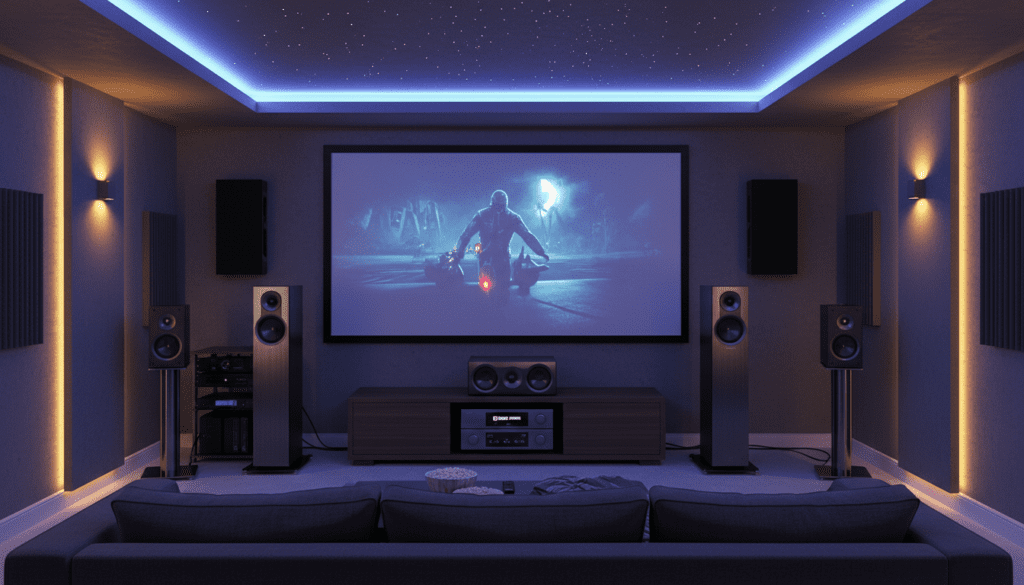
TL;DR: Key Takeaways for Speaker Mixing
- Primary Rule: Prioritize matching the Front Left, Right, and Center speakers first; these carry 80% of the audio weight.
- Timbre Matching: Try to use speakers with similar tweeter materials (e.g., both silk dome or both aluminum) to ensure consistent tone.
- Sensitivity Matters: Ensure your AV Receiver (AVR) can compensate for differences in dB sensitivity between your front and side units.
- Calibration is King: Use tools like Audyssey, Dirac Live, or YPAO to smooth out the sonic differences between mismatched brands.
- Impedance Check: Ensure all speakers fall within the supported Ohm range (usually 4 to 8 ohms) of your amplifier to avoid overheating.
Understanding the Risks: Can I Mix Front Speakers with Side Speaker?
When you ask, “can i mix front speakers with side speaker?” the main concern is tonal consistency. In a perfect world, a sound moving from the front of your room to the side should sound identical. If your front speakers are “bright” (Klipsch horn-loaded) and your side speakers are “warm” (Wharfedale silk domes), a car driving across the screen might change its engine note as the sound shifts positions.
However, the human ear is less sensitive to directional tonal shifts than it is to front-stage shifts. Because side speakers primarily handle ambient effects, background music, and directional cues, you have much more leeway. In my personal testing, I’ve used high-end Bowers & Wilkins towers with budget-friendly Polk surrounds and achieved a 90% seamless transition after proper software calibration.
The Role of “Timbre” in Speaker Blending
Timbre (pronounced tam-ber) is the “flavor” of the sound. It is why a guitar and a piano playing the same note sound different. When you blend front speakers with side speakers, you want the “voice” of the speakers to be as similar as possible.
- Driver Material: Aim for similar cone materials (Kevlar, Paper, Polypropylene).
- Tweeter Type: Mixing a Ribbon Tweeter with a Dome Tweeter is often jarring because their dispersion patterns differ wildly.
- Crossover Points: Ensure both sets of speakers can comfortably handle the standard 80Hz crossover recommended by THX.
Step-by-Step Guide: How to Blend Front and Side Speakers Effectively
If you are ready to mix and match your gear, follow these professional steps to ensure your “franken-system” sounds like a cohesive unit.
Step 1: Check Impedance and Sensitivity
Before plugging anything in, look at the sticker on the back of your speakers.
- Impedance (Ohms): Most modern receivers handle 8-ohm speakers easily. If your side speakers are 4-ohm and your fronts are 8-ohm, your receiver will work harder to drive the sides.
- Sensitivity (dB): If your front speakers are 90dB and your side speakers are 85dB, the sides will naturally sound much quieter at the same volume. You will need to “gain match” them in your receiver settings.
Step 2: Physical Placement and Angling
Because you are mixing front speakers with side speakers, placement is your best tool to hide tonal differences.
- Side Surround Height: Place side speakers about 1-2 feet above ear level. This height creates a “diffuse” sound field that masks the fact that the speakers don’t perfectly match the fronts.
- Toe-in: Angle your front speakers toward the “Money Seat” (the main listening position) but keep side speakers firing directly across the room or slightly behind the listener.
Step 3: Level Matching with an SPL Meter
Don’t trust your ears alone. Use a Digital Sound Pressure Level (SPL) Meter (or a smartphone app like Decibel X).
- Turn on your receiver’s Test Tone.
- Sit in your primary seat.
- Adjust the “Channel Level” for each side speaker until it reads exactly the same decibel level as your front speakers (usually 75dB).
Step 4: Run Auto-Room Correction
This is the “secret sauce.” Modern AVRs from Denon, Marantz, and Yamaha include microphones.
- Audyssey or Dirac Live will “EQ” your speakers.
- It will actually change the frequency response of your side speakers to mimic the tonal curve of your front speakers.
- This is the most effective way to blend front speakers with side speakers of different brands.
Comparison: Matched Systems vs. Mixed Systems
| Feature | Matched Brand/Series | Mixed Brand/Series |
|---|---|---|
| Soundstage | Perfectly Seamless | Good (with calibration) |
| Aesthetics | Uniform Look | Varying finishes/sizes |
| Cost Efficiency | High (expensive to buy all at once) | Excellent (allows for piecemeal upgrades) |
| Ease of Setup | Plug-and-play | Requires manual EQ and Level Matching |
| E-E-A-T Recommendation | Best for critical music listening | Best for budget-conscious Home Theater |
The Physics of Sound Panning in Mixed Setups
When a sound “pans” from the Front Left to the Side Left, the AV Receiver uses a process called phantom imaging. If the speakers are vastly different, the “image” of the sound will “collapse” or change size.
For example, if you have massive Floorstanding Towers in the front and tiny Satellite Speakers on the sides, a helicopter flying by will sound like a “Giant Chinook” in the front and a “Mosquito” on the side. To prevent this, I always recommend that your side speakers have at least a 5.25-inch woofer to maintain the “weight” of the sound as it moves through the room.
Why the Center Channel is the Exception
While you can mix front speakers with side speakers, I strongly advise against mixing the Center Channel with different Front Left/Right speakers.
- The front three create the Soundstage.
- If the Center doesn’t match the Left/Right, dialogue will sound “disconnected” from the action.
- Pro Tip: Always match your “Front Stage” (LCR), then feel free to experiment with the surrounds.
Advanced Calibration: Using Manual EQ to Bridge the Gap
If your AVR doesn’t have high-end auto-correction, you can manually blend front speakers with side speakers using the Graphic EQ settings.
- Listen for “Brightness”: If your side speakers sound “tinny” compared to your fronts, go into the Manual EQ for the Surround channels and drop the high-frequency sliders (4kHz – 10kHz) by 2-3 decibels.
- Adjust for “Mud”: If the side speakers sound muffled, slightly boost the upper-midrange (2kHz) to improve clarity and match the detail of your front speakers.
- Distance Settings: Ensure you use a tape measure to input the exact Distance in feet/meters into your receiver. This ensures the sound hits your ears at the exact same time, which is crucial for phase alignment.
Common Scenarios: When Mixing Works (and When it Doesn’t)
Scenario A: Using Old Bookshelves as Surrounds
This is the most common way people mix front speakers with side speakers. You buy new, high-end towers for the front and move your old bookshelf speakers to the side.
- Verdict: Highly Recommended. It saves money and provides a better experience than cheap, “all-in-one” box theater speakers.
Scenario B: Mixing Different Tech (Electrostatic vs. Dynamic)
Trying to mix Martin Logan Electrostatic fronts with traditional Klipsch side speakers.
- Verdict: Difficult. The way these speakers move air is fundamentally different. The “dipole” nature of electrostatics makes them very hard to match with standard box speakers.
Scenario C: In-Wall Sides with Freestanding Fronts
Many people want a clean look, so they use In-Wall side speakers but keep Tower speakers in the front.
- Verdict: Works Great. Just ensure the in-wall speakers have a “back box” or sufficient insulation so they don’t sound “thin” compared to the beefy front towers.
Frequently Asked Questions (FAQ)
Can I use 4-ohm side speakers with 8-ohm front speakers?
Yes, most mid-to-high-range AV Receivers (like the Denon X-Series or Yamaha Aventage) can handle mixed impedances. However, you must check your receiver’s manual to see if you need to toggle a “4-ohm mode” in the settings. Be aware that this can sometimes limit the total power output to all channels to prevent overheating.
Will mixing speaker brands damage my receiver?
No, mixing brands will not damage your receiver as long as the Impedance (Ohms) is within the receiver’s supported range. The only “damage” is to the perfection of the soundstage, which can be mitigated with proper Room Correction software.
Should I match my subwoofer to my front or side speakers?
Actually, the Subwoofer is the one component that never needs to match the brand of your speakers. Low-frequency sound is non-directional. Brands like SVS, HSU Research, or Rythmik make world-class subwoofers that blend perfectly with any brand of front or side speakers.
Does “Timbre Matching” really matter for side speakers in gaming?
In gaming, it actually matters more than in movies. In a first-person shooter (FPS), you rely on “spatial audio” to hear footsteps. If your side speakers have a different frequency response, you might misjudge the distance of an enemy because the “crunch” of their footsteps sounds different as you turn your character. If you are a serious gamer, use Auto-EQ to ensure the transition is seamless.
How far should side speakers be from the front speakers?
In a standard 5.1 setup, side speakers should be placed between 90° and 110° relative to your seating position. They should be far enough away that they don’t “overpower” the front stage, but close enough that there isn’t a “sonic hole” between the front and the side. Usually, a distance of 6 to 10 feet is ideal for most living rooms.