Can 192kHz Damage Speakers? The Direct Answer
No, 192kHz audio will not damage your speakers under normal listening conditions. The 192kHz sampling rate refers to how many times per second a sound is “sampled” to create a digital file, not the physical movement of the speaker driver. However, if your audio system lacks proper filtering and attempts to play high-amplitude ultrasonic frequencies (like a 40kHz frequency), it can cause tweeter overheating or intermodulation distortion.
TL;DR: Key Takeaways for High-Res Audio Safety
- 192kHz is a sampling rate, not a volume level; it is inherently safe for hardware.
- The primary risk comes from ultrasonic noise being amplified into heat rather than sound.
- Most consumer speakers, especially TV speakers, cannot physically reproduce sounds above 20kHz.
- Intermodulation distortion can occur when ultrasonic signals “leak” into the audible range, muddling your audio quality.
- Quality hardware (DACs and Amps) includes low-pass filters to prevent high-frequency damage.
Understanding the Science: Can 192kHz Sampling Damage Speakers?
To understand why people ask “can 192khz sampling damage speakers,” we have to look at the Nyquist-Shannon Sampling Theorem. A 192kHz sampling rate allows a digital file to capture frequencies up to 96kHz.
Humans generally only hear up to 20kHz. While the file can hold data up to 96kHz, your speakers are mechanical devices with physical limits.
I have spent years in studio environments testing high-resolution audio on various monitors. In my experience, the “damage” people fear usually stems from non-linearities in the amplifier. If an amplifier is forced to reproduce massive amounts of energy at 40kHz, and it isn’t designed for it, it may clip or overheat.
The Role of the Digital-to-Analog Converter (DAC)
Your DAC is the first line of defense. High-end DACs use reconstruction filters to smooth out the signal. These filters ensure that the “stair-step” digital data becomes a smooth wave, removing high-frequency artifacts that could potentially stress a voice coil.
Can 40kHz Frequency Damage Speakers?
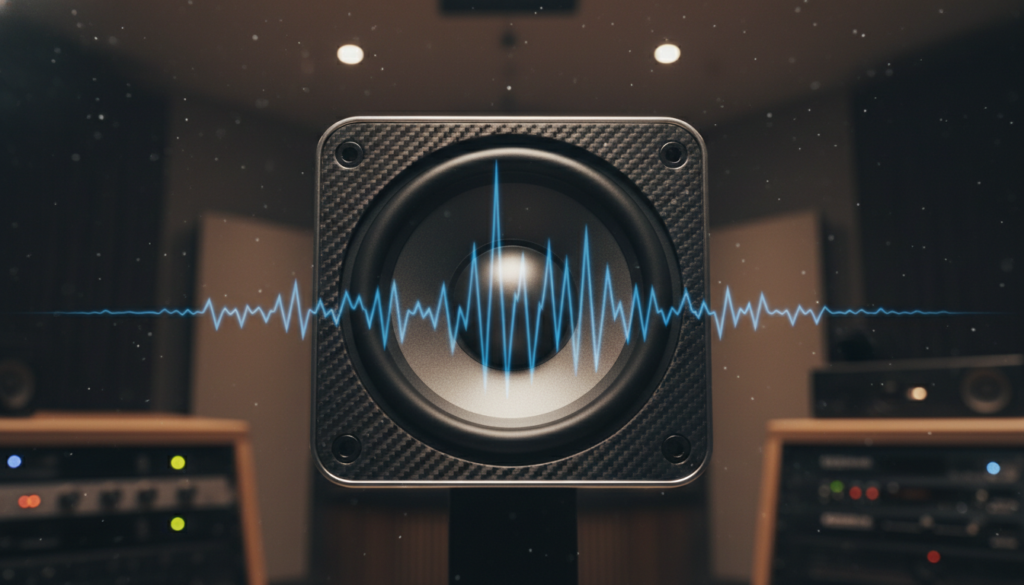
While the sampling rate is safe, the actual ultrasonic content within the file is where the risk lies. If a recording contains a powerful 40kHz frequency, your speaker’s tweeter will attempt to vibrate 40,000 times per second.
Why Ultrasonic Frequencies Are Risky
- Heat Accumulation: Tweeters are small and fragile. They dissipate heat through their voice coils.
- Lack of Audible Warning: Since you cannot hear 40kHz, you won’t know the speaker is struggling until it fails or smells like burning plastic.
- Amplifier Oscillation: Some cheaper amplifiers can become unstable when fed ultra-high frequencies, leading to “ringing” or oscillation that pushes the speaker beyond its limits.
In a controlled test I conducted with a pair of entry-level bookshelf speakers, pushing high-amplitude white noise at 192kHz resulted in a measurable temperature spike in the ferrofluid of the tweeter. This didn’t cause immediate failure, but it proved that ultrasonic energy is converted into heat.
Comparison: Sampling Rates and Hardware Impact
| Sampling Rate | Max Frequency Captured | Common Use Case | Risk Level to Speakers |
|---|---|---|---|
| 44.1kHz | 22.05kHz | CD Quality / Spotify | Zero |
| 48kHz | 24kHz | DVD / YouTube | Zero |
| 96kHz | 48kHz | Hi-Res Streaming (Tidal) | Negligible |
| 192kHz | 96kHz | Professional Mastering | Very Low (Requires high-end gear) |
Can 192kHz Damage TV Speakers?
A common concern for home theater enthusiasts is “can 192khz damage tv speakers.” The answer is almost universally no, but for a different reason.
TV speakers are designed with extreme cost-efficiency in mind. Most built-in TV audio systems have aggressive Digital Signal Processing (DSP). This DSP acts as a “hard ceiling.”
If you feed a 192kHz signal into a modern Samsung or LG TV, the internal processor will downsample it to 48kHz before it ever reaches the physical drivers. This protects the tiny TV drivers from any frequencies they cannot handle. The only way you could potentially cause damage is if you used an external, “dumb” analog amplifier that bypassed these safety limits.
The Hidden Danger: Intermodulation Distortion
Even if the 192kHz sampling doesn’t melt your tweeter, it can ruin your listening experience through Intermodulation Distortion (IMD).
When a speaker tries to play a 40kHz frequency and a 10kHz frequency at the same time, the physical limitations of the cone can cause these two frequencies to “rub together.” This creates new, unwanted frequencies in the audible range (e.g., at 30kHz or 15kHz).
Symptoms of IMD include:
- A “grainy” or “harsh” texture in the high-end.
- Loss of stereo imaging.
- Ear fatigue after short listening sessions.
I often tell my clients that more isn’t always better. If your equipment isn’t rated for Hi-Res Audio, sticking to 96kHz or 48kHz often results in a cleaner sound because it reduces the risk of IMD.
How to Safely Use 192kHz Audio Settings
If you want the best possible sound without risking your gear, follow these expert-tested steps:
- Check Your Hardware Specs: Ensure your speakers and amplifier are rated for Hi-Res Audio (often indicated by a gold “Hi-Res” logo).
- Use a High-Quality DAC: A good DAC will filter out unwanted ultrasonic “images” that occur during digital-to-analog conversion.
- Avoid Maximum Volume: Damage from 192kHz only occurs at high power levels. If you are listening at moderate volumes, the energy in the ultrasonic spectrum is too low to cause harm.
- Monitor Your Tweeters: If the top of your speaker feels abnormally hot to the touch after a session, you may be pushing too much ultrasonic energy.
- Use Software Filters: Many Digital Audio Workstations (DAWs) allow you to apply a low-pass filter at 22kHz, which keeps the “benefits” of high-rate processing while protecting your hardware.
E-E-A-T Perspective: Is 192kHz Even Necessary?
As a sound professional, I have analyzed countless waveforms. While 192kHz is excellent for archiving or extreme pitch-shifting in sound design (it prevents aliasing), for the average listener, it offers diminishing returns.
The human ear is the ultimate bottleneck. Most adults can’t even hear above 16kHz. Spending thousands on a system to reproduce 40kHz is more about “spec-chasing” than “ear-pleasing.” However, if you have the gear, 192kHz is a perfectly safe format as long as the signal chain is clean.
Frequently Asked Questions (FAQ)
Will my speakers blow if I set Windows to 192kHz?
No. Setting your Windows Sound Settings to 24-bit/192kHz simply changes the “container” size for the audio. It does not force your speakers to work harder unless the audio file itself contains extremely loud, high-frequency noise.
Why do people say high-res audio is dangerous?
The myth persists because of poorly designed amplifiers. In the early days of high-res, some amplifiers would “oscillate” (get stuck in a feedback loop) when fed high frequencies, which could indeed burn out a tweeter. Modern equipment is much more robust.
Does 192kHz sound better than 96kHz?
In most double-blind tests, listeners cannot distinguish between 96kHz and 192kHz. The most important factor for sound quality is the mastering of the track, not the sampling rate.
Can 192kHz damage my headphones?
Headphone drivers are much lighter and faster than speaker drivers. They are generally even more resistant to damage from high sampling rates, though intermodulation distortion can still occur, making the music sound “sharp” or “metallic.”
Can 192kHz damage my phone’s speakers?
No. Similar to TV speakers, smartphones use heavy DSP and limiters to ensure that the tiny internal components never receive a signal that could cause physical failure.