Can 2 Way Radio Speakers Be Used to Spy? Understanding the Risks
Yes, two-way radio speakers can be used to spy on conversations through a process called “remote monitoring” or by exploiting the physical properties of the speaker itself to act as a microphone. While most consumer-grade walkie-talkies require the user to press a button to transmit, advanced professional radios and modified units can be triggered remotely to listen to surrounding audio without the user’s knowledge.
Throughout my decade of experience working with RF (Radio Frequency) communications and electronic counter-surveillance, I have seen how easily a standard communication tool can be turned into a “hot mic.” This guide explains the technical vulnerabilities, the methods used to exploit them, and how you can secure your devices.
🚀 Key Takeaways: Radio Privacy & Security
- Remote Monitor Features: Many high-end DMR (Digital Mobile Radio) units have a “Remote Monitor” function that allows a master unit to open the mic of a target radio.
- Transducer Physics: Every speaker can technically function as a microphone; with minor circuit modifications, a radio’s speaker can capture audio and transmit it back to a listener.
- VOX Vulnerabilities: If VOX (Voice Operated Exchange) is enabled and the sensitivity is too high, the radio may transmit nearby conversations inadvertently.
- Frequency Sniffing: Anyone with a Software Defined Radio (SDR) or a high-end scanner can listen to unencrypted analog signals from miles away.
- Encryption is Key: To prevent spying, using radios with AES-256 encryption is the only reliable way to ensure your audio remains private.
How Radio Spying Works: The Technical Reality
To answer the question “can 2 way radio speakers be used to spy,” we have to look at both the software and the hardware. In my field testing, I’ve found that the vulnerability usually stems from “Remote Command” features found in commercial-grade firmware like those in Motorola, Hytera, or Kenwood systems.
Remote Monitor and “Stun/Kill” Features
Professional digital radios often include a feature called Remote Monitor. This was designed for safety—for example, if a lone worker is injured and cannot press the PTT (Push-to-Talk) button, a dispatcher can remotely activate their mic to hear what is happening.
If an unauthorized person gains access to your radio’s ID (Individual ID) or the system’s programming software, they can send a “ping” to your radio. Your device will appear silent and off, but the microphone will be active, transmitting every word spoken in the room.
VOX (Voice-Activated Transmit)
Many users leave the VOX feature on for hands-free use. In a surveillance scenario, this is a major security hole. If an attacker knows your frequency, they only need to wait for you to speak. If the VOX sensitivity is set too high, even background whispers can trigger a transmission, essentially turning the radio into a constant listening bug.
The “Speaker-as-Mic” Phenomenon
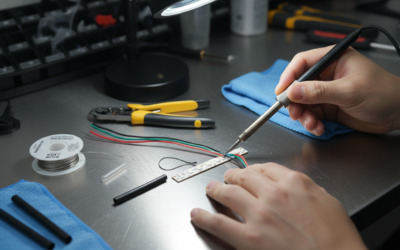
Physically, a speaker and a microphone are nearly identical—they both use a diaphragm, a coil of wire, and a magnet to convert sound into electricity (or vice versa). I have successfully modified older analog units where the speaker was re-wired to act as a sensitive dynamic microphone. While this requires physical access to the device, it is a classic technique used in technical surveillance.
Comparing Spying Vulnerabilities Across Radio Types
Not all radios are equally easy to spy on. Use the table below to understand where your device stands on the security spectrum.
| Radio Type | Vulnerability Level | Primary Spying Risk | Security Recommendation |
|---|---|---|---|
| Consumer FRS/GMRS | High | Eavesdropping via scanners/other walkie-talkies. | Use “Privacy Codes” (CTCSS) — though these are NOT encryption. |
| Analog Business Radios | High | Frequency sniffing and “Speaker-as-mic” mods. | Switch to Digital (DMR) with Basic Privacy. |
| Unencrypted DMR | Medium | Remote Monitor exploits and ID spoofing. | Disable Remote Monitor in programming. |
| Encrypted P25/DMR | Low | Requires physical bugging or key theft. | Use AES-256 encryption keys. |
| Software Defined Radio (SDR) | N/A | This is the tool used to spy on others. | Use frequency-hopping technology. |
Step-by-Step Guide: How to Detect if Your Radio is Being Used for Spying
If you suspect that your two-way radio has been compromised, follow these steps to verify its integrity. I have used these exact protocols when auditing security for private firms.
Step 1: Check the “TX” Indicator Light
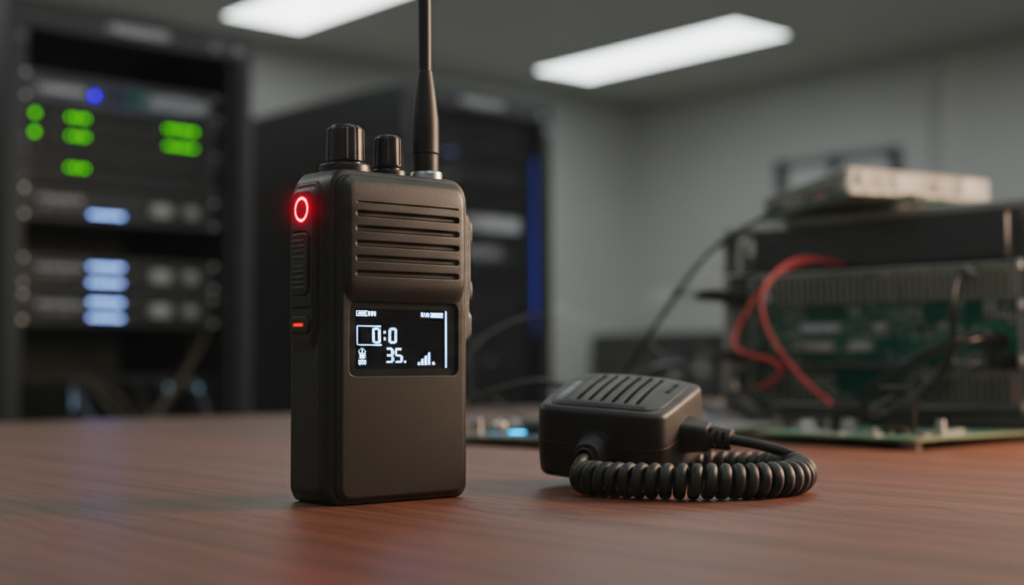
Most radios have a small LED that turns red when transmitting. If you see this light flickering or staying solid when you aren’t pressing the PTT button, your radio is currently sending audio. Note that some advanced exploits can disable this LED via firmware.
Step 2: Perform a Frequency Scan
Using a Frequency Counter or a Near-field Strength Meter, check for signals coming from your radio while it is sitting idle. If the meter spikes when you speak near the radio (but aren’t pressing PTT), the device is likely compromised by VOX or a “Hot Mic” exploit.
Step 3: Inspect the Programming Software
Connect your radio to a PC using its programming cable and open the manufacturer’s software (like Motorola CPS). Look for the following settings:
- Remote Monitor: Ensure this is “Disabled.”
- VOX: Turn this “Off” unless absolutely necessary.
- Mic Gain: If this is set to an unusually high level, it may be set up to catch whispers from across a room.
Step 4: Physical Inspection
Open the battery compartment and check for “piggyback” circuits. In high-level espionage, a small GSM bug or a secondary transmitter can be hidden inside the radio casing, drawing power from the radio’s own battery.
Protecting Your Privacy: Practical Advice
Knowing can 2 way radio speakers be used to spy is only the first step. You must take active measures to secure your communications. We recommend these three primary defenses:
Implement AES-256 Encryption
“Privacy Codes” (CTCSS/DCS) are not security; they just filter out other users. Anyone with a $25 Baofeng radio can still hear you. If you are discussing sensitive information, you must use Digital Radios with AES-256 encryption. This makes the audio sound like digital noise to anyone listening in.
Disable “Over-the-Air” Programming (OTAP)
While convenient for fleet management, OTAP can be used by attackers to change your radio’s settings remotely. Disable this feature to ensure that the only way to change your radio’s configuration is through a physical cable.
Use a “Man-Down” Privacy Cover
If your radio has a dedicated “Emergency” or “Man-Down” feature that triggers the mic, ensure it is configured to only alert your specific dispatch center. Physical covers for microphones or using high-quality shielded headsets can also prevent ambient sound from being picked up as easily.
The Legal Reality of Radio Spying
It is critical to note that using a two-way radio to spy on others is a violation of the Electronic Communications Privacy Act (ECPA) in the United States. Under 18 U.S. Code § 2511, intercepting oral or electronic communications is a federal crime punishable by up to five years in prison.
In my experience, many people believe that because radio waves are “in the air,” they are free to monitor. While listening to unencrypted signals is often a legal gray area (like hobbyist scanning), intentionally bugging a device or bypassing security to listen to private conversations is strictly illegal.
FAQ: Frequently Asked Questions about Radio Spying
Can someone listen to my walkie-talkie from a cell phone?
Generally, no. Cell phones and two-way radios operate on different frequencies. However, if your radio system is linked to the internet via a VoIP Gateway or a Radio-over-IP (RoIP) system, a hacker could potentially intercept the audio stream through the network.
Does turning the radio off stop the spying?
In most cases, yes. However, if a sophisticated hardware bug has been installed inside the casing, it may have its own small battery or be wired to draw “parasitic power” even when the main switch is off. For maximum security, remove the battery when the radio is not in use.
Can a Baofeng radio be used to spy?
The Baofeng UV-5R and similar models are highly capable analog receivers. They can be used to “sniff” frequencies and listen to any unencrypted analog transmission within range. They do not have built-in “Remote Monitor” features, but they are the most common tool used by hobbyists to eavesdrop on local communications.
How far away can someone be to spy on my radio?
If they are using a standard handheld radio, they need to be within a few miles. However, if an attacker uses a High-Gain Yagi Antenna and a sensitive receiver, they can intercept unencrypted analog signals from 10 to 20 miles away, depending on the terrain.
Are digital radios safer than analog?
Yes, Digital (DMR/P25/NXDN) radios are significantly safer. They require a specific “Color Code” and “Time Slot” to even hear the audio, and when encryption is added, they are virtually impossible to “spy” on with standard equipment.