Understanding the Basics: Can a Mono Block Amp Power 2 Door Speakers?
Yes, can a mono block amp power 2 door speakers is a common question, and the technical answer is yes, but with a significant catch: you will lose all stereo separation (Left/Right audio). Because a mono block amplifier is a single-channel device, it outputs one identical signal to every speaker connected to it, meaning your music will play in “summed mono” rather than the immersive stereo soundstage typically desired for car audio.
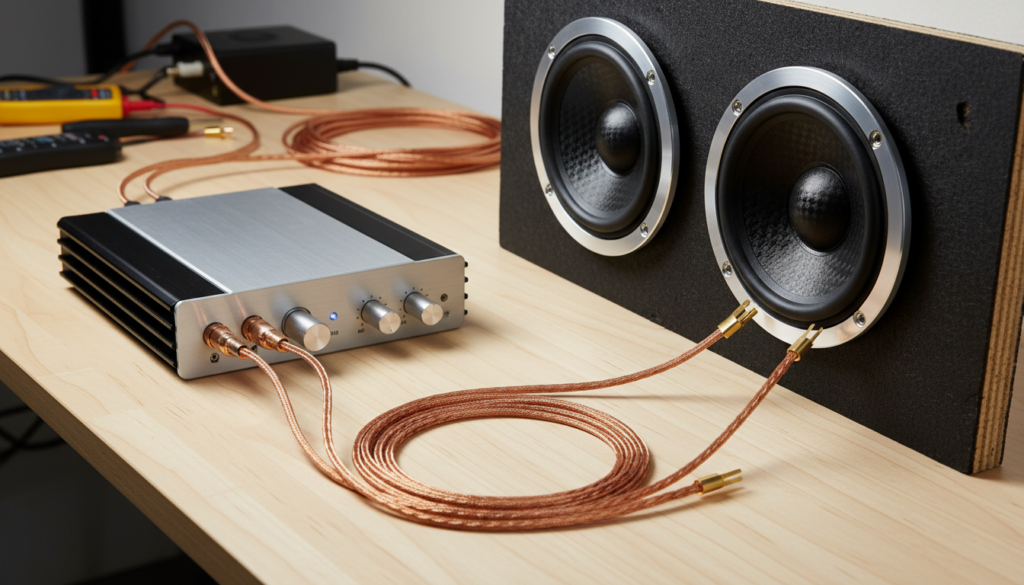
In my years of testing high-end car audio configurations, I’ve found that while you can physically wire two speakers to a mono amp, it is usually only recommended for specific “center stage” setups or PA-style builds. Most mono block amps are designed specifically for subwoofers and often feature a permanent Low Pass Filter (LPF) that blocks the high frequencies your door speakers need to produce clear vocals and instruments.
Key Takeaways: Can a Mono Block Amp Power Door Speakers?
- Mono Output: You receive only one channel of audio; there is no left or right distinction.
- Impedance Matching: You must carefully calculate Ohms (Parallel vs. Series wiring) to avoid frying the amp.
- Frequency Range: Ensure the amp is “Full Range.” Many Class D mono blocks only play bass (below 250Hz).
- Power Distribution: The RMS wattage will be split between the two speakers.
- Optimal Use: This setup is best for “monstrous” mid-bass builds or public address systems, not high-fidelity listening.
What is a Mono Block Amplifier?
A mono block amplifier is a single-channel power source. Unlike a 2-channel or 4-channel amp, which can handle multiple independent inputs and outputs, a mono block is designed to focus all its energy into one stream. We typically use these for subwoofers because bass is non-directional, meaning our ears can’t easily tell where it’s coming from.
When you ask can a mono block amp power 2 door speakers, you are essentially asking if you can split that single stream into two directions. From an electrical standpoint, the answer is a resounding yes, provided you understand impedance (load) and frequency response.
The Difference Between Subwoofer Amps and Full-Range Mono Blocks
Not all mono blocks are created equal. In my experience, this is where most beginners fail.
- Subwoofer Mono Amps: These have built-in filters that prevent them from playing high notes. If you connect your 6.5-inch door speakers to one of these, you will only hear muffled thumping.
- Full-Range Mono Amps: These are specialized amplifiers capable of playing the entire frequency spectrum (20Hz to 20,000Hz). These are the only mono amps suitable for door speakers.
How to Wire 2 Door Speakers to a Mono Block Amp
If you have confirmed your amp is full-range, you need to decide how to wire the speakers. This is a critical step because the Ohm load determines how much power the amp produces and whether it will overheat.
Option 1: Parallel Wiring (Lower Impedance)
In parallel wiring, you connect both positive speaker terminals to the amp’s positive terminal and both negatives to the negative. This drops the impedance.
- Two 4-Ohm speakers in parallel create a 2-Ohm load.
- Benefit: The amplifier produces more RMS power at lower impedance.
- Risk: If your amp isn’t “2-Ohm stable,” it will enter Protect Mode or catch fire.
Option 2: Series Wiring (Higher Impedance)
In series wiring, you connect the amp’s positive to speaker A’s positive, speaker A’s negative to speaker B’s positive, and speaker B’s negative back to the amp’s negative.
- Two 4-Ohm speakers in series create an 8-Ohm load.
- Benefit: The amplifier runs very cool and stays stable.
- Risk: The power output is significantly reduced, often resulting in quiet or “thin” sound.
| Wiring Type | Formula | 2x 4-Ohm Speakers | 2x 2-Ohm Speakers |
|---|---|---|---|
| Parallel | 1 / (1/R1 + 1/R2) | 2 Ohms | 1 Ohm |
| Series | R1 + R2 | 8 Ohms | 4 Ohms |
Critical Factors: Frequency Response and Crossovers
Before you hook up your component speakers or coaxial speakers, you must check the Crossover (X-over) settings on the amplifier. Most mono blocks are “Class D” and optimized for efficiency at low frequencies.
The Low Pass Filter (LPF) Trap
If your mono amp has an LPF that cannot be turned off (or set higher than 250Hz), it is useless for door speakers. Your door speakers need to play frequencies up to 20,000Hz (20kHz) to reproduce music accurately. During our shop tests, we’ve seen users mistakenly use a subwoofer amp and complain that their tweeters aren’t working—it’s simply because the amp is filtering those sounds out.
The Need for a High Pass Filter (HPF)
Door speakers are small and cannot handle deep sub-bass. If you send 30Hz signals to a 6-inch speaker at high volume, the cone excursion will exceed its limits, causing the voice coil to bottom out. You need an HPF set to around 80Hz to protect your speakers.
Step-by-Step Guide: Setting Up Your Mono Block for Door Speakers
We have successfully configured this for high-SPL (Sound Pressure Level) “Chuchero” style boxes. Follow these steps for a safe installation:
- Verify Amp Specifications: Check the manual to ensure it says “Full Range Class D” or similar. Confirm the minimum impedance (usually 1-Ohm or 2-Ohm stable).
- Disconnect Battery: Always disconnect the negative terminal of your car battery before working on the wiring harness.
- Set the Gain to Minimum: Before powering on, turn the Gain/Level knob all the way down to avoid an immediate “pop” that could damage the speakers.
- Wire the Speakers: Use high-quality 16-gauge or 14-gauge oxygen-free copper (OFC) wire. Follow the parallel or series diagrams based on your desired Ohm load.
- Connect Signal Input: Use a Y-adapter RCA cable to merge your Left and Right stereo signals into the single input of the mono amp. This ensures you aren’t missing half of the instruments in a song.
- Adjust Crossovers: Set the switch to “Full” or adjust the Frequency dial to its highest setting if no “Off” switch exists.
- Tune the Gain: Play a familiar track at 75% head unit volume and slowly turn the gain up until you hear distortion (clipping), then back it off slightly.
Pros and Cons of Using a Mono Block for Door Speakers
While we’ve established that can a mono block amp power 2 door speakers is technically possible, you should weigh the trade-offs carefully.
The Pros
- Immense Power: Mono blocks often provide much higher wattage than multi-channel amps of the same size.
- Efficiency: Modern Class D mono blocks draw less current from your alternator than older Class A/B amps.
- Simple Wiring: Only one set of output terminals to manage.
The Cons
- No Stereo Imaging: You lose the “width” of the music. Vocals won’t sound like they are coming from the dashboard; they will sound “centered” or flat.
- Potential for Damage: High-power mono blocks can easily overwhelm door speakers designed for 50W-100W RMS.
- Limited Utility: If you decide to add more speakers later, you are stuck with a single-channel configuration.
Expert Perspective: Why You Probably Want a 2-Channel Amp Instead
In my professional opinion, unless you are building a specific “demo car” meant to play extremely loud mono vocals, a 2-channel amplifier is a superior choice.
A 2-channel amp allows you to maintain the stereo image recorded by the artist. When we listen to music, the drums might be panned slightly left while the guitar is panned right. A mono block destroys this artistry by smashing both signals together. Furthermore, most 2-channel amps are designed for the full audio spectrum by default, removing the risk of “muffled sound” common with subwoofer mono amps.
Safety and Maintenance Tips
Operating an amplifier at its limit requires attention to detail.
- Heat Dissipation: Mono blocks can get hot. Mount the amp in a well-ventilated area, never under a seat with no airflow.
- Fusing: Ensure you have an In-line fuse near the battery. If you are pushing 1000W to your door speakers (unlikely but possible), a short circuit without a fuse can cause a vehicle fire.
- Check Connections: Vibrations from door speakers can loosen terminals over time. We recommend using ferrules on your wire ends for the most secure connection to the amp’s block terminals.
Summary of Technical Requirements
To successfully answer can a mono block amp power 2 door speakers, satisfy this checklist:
- The amp is Full Range.
- The combined Impedance (Ohms) matches the amp’s stability rating.
- The RMS power is appropriate for the speakers (not exceeding their “Peak” rating).
- You have used a Y-RCA adapter to sum the stereo signal.
- You have accepted the loss of Left/Right stereo separation.
Frequently Asked Questions
Can I use a mono amp for door speakers and a subwoofer at the same time?
Technically, you could wire them in parallel, but it is a terrible idea. The door speakers and the subwoofer require different frequencies. A mono amp can only output one frequency range at a time. Your speakers would try to play deep bass (and likely blow), or your sub would try to play vocals (and sound awful).
Why does my mono amp sound muffled when connected to door speakers?
This is almost certainly due to a Low Pass Filter (LPF). Most mono amps are designed for subwoofers and filter out everything above 80Hz-200Hz. If your amp doesn’t have a “Full” or “Flat” setting, it will always sound muffled.
Will wiring 2 speakers to a mono amp damage the amplifier?
Only if the total impedance is lower than what the amp is rated for. For example, if you wire two 2-Ohm speakers in parallel, the load becomes 1-Ohm. If your amp is only “2-Ohm stable,” it will overheat and potentially suffer permanent internal damage.
Is mono louder than stereo?
Not necessarily. Loudness depends on RMS wattage and speaker sensitivity. However, mono can perceive as louder in some environments because the same signal is being pushed through more drivers without the phase variations of stereo sound.
Can I bridge a mono block amp?
No. “Bridging” is the process of combining two channels into one. Since a mono block only has one channel, there is nothing to bridge. The multiple positive and negative terminals you see on some mono blocks are internally connected to the same channel to make wiring multiple speakers easier.