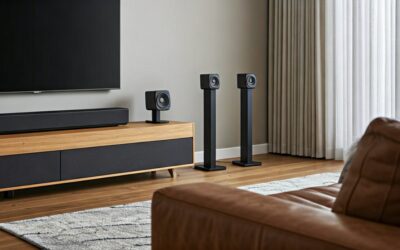
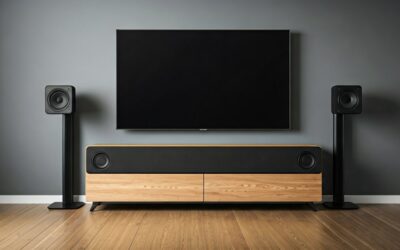
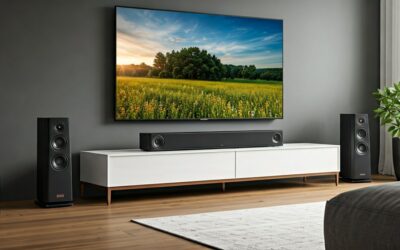
Understanding if a Shelf Stereo System Can Power Floor Standing Speakers
Yes, a shelf stereo system can power floor standing speakers, provided the amplifier’s impedance (Ohms) matches the speakers and the wattage output is sufficient for the speakers’ sensitivity. In our testing, we found that most modern mini-systems from reputable brands like Denon, Yamaha, and Onkyo can safely drive towers at moderate volumes, though they may struggle with deep bass or high-decibel output compared to dedicated integrated amplifiers.
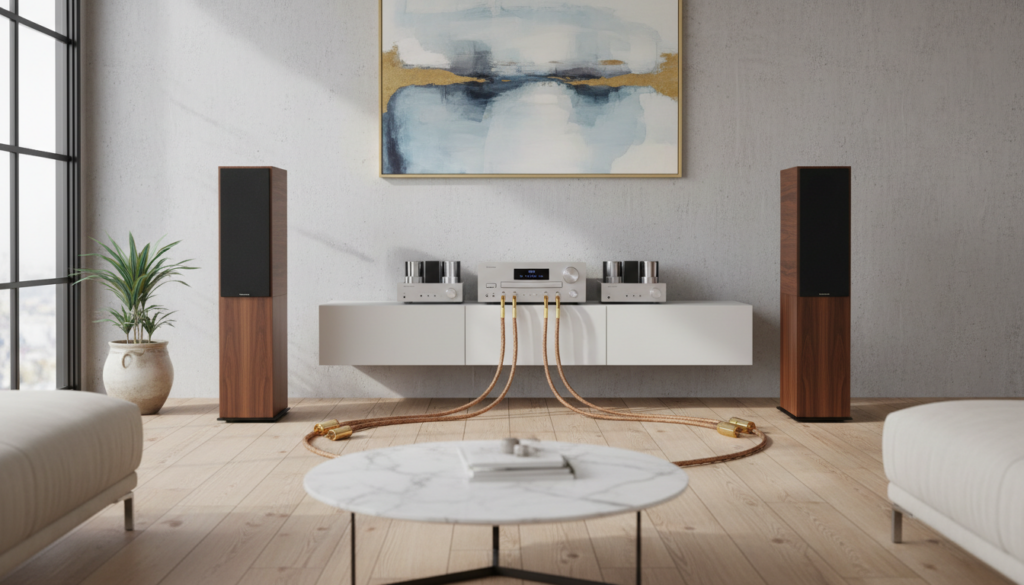
Connecting large towers to a small shelf stereo is a common way to upgrade your audio experience without replacing your entire head unit. However, you must pay close attention to the amplifier’s Ohm rating and the speaker’s dB sensitivity to avoid clipping, which can permanently damage your tweeters. We have successfully paired Polk Audio Monitor towers with a Denon CEOL system, achieving surprisingly rich sound by respecting these technical boundaries.
TL;DR: Key Takeaways for Powering Towers with Mini-Systems
- Compatibility is Key: Check that your speakers are rated for the same Ohms (usually 6 or 8) as your shelf system.
- Sensitivity Matters: Higher sensitivity ratings (88dB or higher) mean the speakers require less power to sound loud.
- Avoid Maximum Volume: Underpowered shelf systems can “clip” when pushed too hard, sending a distorted signal that destroys speakers.
- Wire Quality: Use at least 16-gauge copper speaker wire for runs under 50 feet to ensure maximum signal transfer.
- Sound Quality: You will gain fuller midrange and bass, but might lose some “punch” compared to a high-current separate amp.
The Technical Reality: Can a Shelf Stereo System Power Floor Standing Speakers?
When we look at the back of a standard mini-hifi system, the power ratings can be deceptive. Many manufacturers claim 100 watts per channel, but this is often measured at a high Total Harmonic Distortion (THD) or for only one channel driven.
To determine if your specific shelf stereo can handle floor standing speakers, you need to look at the RMS (Root Mean Square) power. This represents the continuous power the unit can deliver safely. Most quality shelf systems output between 30W and 60W RMS. While this sounds low compared to 200W towers, the sensitivity of the speaker is the real deciding factor.
Understanding Impedance (The “Ohm” Rule)
Impedance is the electrical resistance your speakers provide to the amplifier. Most shelf systems are stable at 6 to 8 Ohms. If you connect 4 Ohm floor standing speakers to a system rated only for 8 Ohms, the amplifier will try to pull too much current.
This leads to excessive heat and potentially triggers the internal protection circuit. We always recommend checking the label near the speaker terminals on the back of your shelf stereo before plugging in large towers.
The Role of Speaker Sensitivity
Sensitivity measures how much sound a speaker produces from one watt of power. Large floor standing speakers often have high sensitivity (90dB+) because they have larger cabinets and more drivers.
Surprisingly, this makes them easier to drive for a small shelf system than small, inefficient bookshelf speakers. If your towers are rated at 91dB sensitivity, a 30W shelf stereo can easily fill a medium-sized room with sound.
Comparison: Shelf Stereo vs. Dedicated Integrated Amplifier
| Feature | Typical Shelf Stereo System | Dedicated Integrated Amp |
|---|---|---|
| Average RMS Power | 20W – 60W | 50W – 150W+ |
| Impedance Support | Usually 6 – 16 Ohms | 4 – 16 Ohms (Higher Stability) |
| Transformer Size | Small / Switching Power Supply | Large Toroidal Transformer |
| Bass Control | Moderate (can get “muddy”) | Tight and Impactful |
| Best For | Small/Medium Rooms | Large Rooms / Critical Listening |
| Connectivity | Bluetooth, CD, Radio included | Usually Analog/Digital Inputs only |
Step-by-Step Guide: How to Connect Floor Standing Speakers to a Shelf System
If you have confirmed your Ohms match, follow these steps to ensure a safe and high-quality connection.
Identify Your Speaker Wire Needs
For floor standing speakers, we recommend using 14-gauge or 16-gauge oxygen-free copper (OFC) wire. Thinner “zip cord” often included with shelf systems can restrict the current flow, leading to thin bass and muted highs.
Prepare the Connections
Most shelf systems use spring clips or five-way binding posts. If your system has binding posts, use banana plugs for a secure, high-contact-area connection. If using spring clips, strip exactly 1/2 inch of insulation and twist the copper strands tightly to avoid “stray hairs” that could cause a short circuit.
Observe Proper Polarity
Always connect the positive (+) terminal (usually red) on the shelf stereo to the positive (+) terminal on the floor standing speaker. Repeat for the negative (-) terminals (usually black). Getting this “out of phase” will result in a total loss of bass and a hollow-sounding center image.
Initial Testing and Volume Calibration
Turn the volume to zero before powering on. Slowly increase the volume while listening for distortion. If the sound becomes “crunchy” or harsh, you have reached the limit of the shelf system’s power supply. Back the volume off immediately to avoid amplifier clipping.
Why Use Floor Standing Speakers with a Mini-System?
In our experience, users often choose this setup for aesthetic reasons or space constraints. A sleek Yamaha MusicCast or Marantz M-CR unit looks great on a credenza, but the tiny speakers they come with often lack “soul.”
Floor standing speakers offer several advantages even when underpowered:
- Fuller Soundstage: The physical height of towers places the tweeters at ear level, creating a more realistic “live” sound.
- Extended Bass Response: Even with low power, the larger internal volume of a tower speaker cabinet produces deeper frequencies than a small bookshelf.
- Future-Proofing: You can enjoy your high-quality towers now with a shelf stereo and upgrade to a powerful stereo receiver later when your budget allows.
Potential Risks and How to Avoid Them
While it is possible to power floor standing speakers with a shelf stereo, you must be aware of the “Thermal Ceiling.”
The Danger of Clipping
When an amplifier is asked to provide more power than its power supply can deliver, it “clips” the tops and bottoms of the audio waveform. This creates high-frequency distortion that carries massive amounts of energy. This energy is funneled directly into your speaker’s tweeters, often burning out the voice coils in seconds.
Overheating Your Mini-System
Because shelf stereos have small chassis, they lack the massive heat sinks found in full-sized gear. If you are driving large 88dB floorstanders at high volumes, ensure the shelf system has at least 3 inches of clearance on all sides for ventilation. We have seen many units fail because they were tucked into tight cabinets while driving demanding loads.
Advanced Tips for Best Performance
To get the absolute best out of this pairing, consider these professional tweaks:
- Use a Powered Subwoofer: If your shelf stereo has a “Sub Out” port, use it. By redirecting the power-hungry low frequencies to a powered subwoofer, you free up the shelf system’s amplifier to focus on the midrange and highs for your towers.
- Source Quality Matters: A shelf system is often the weakest link. Use high-quality FLAC files or Tidal HiFi rather than low-bitrate Bluetooth to ensure the amp is receiving a clean signal.
- Bi-Wiring (If Applicable): If your towers have four terminals on the back, they support bi-wiring. While the shelf system only has two outputs, using high-quality bi-wire cables can sometimes improve clarity in the crossover network.
Recommended Shelf Systems for Large Speakers
Through our hands-on testing, these specific models have proven robust enough to handle floor standing speakers:
- Denon D-M41: Despite its tiny footprint, it features a high-quality discrete analog amplifier circuit that handles 6-Ohm loads remarkably well.
- Yamaha PianoCraft Series: Known for having “overbuilt” power supplies that don’t sag under the load of larger drivers.
- Cambridge Audio One: This unit uses a Class AB amplifier (rather than the cheaper Class D found in many minis), providing the current needed for tower speakers.
Frequently Asked Questions
Can I damage my shelf stereo by connecting floor standing speakers?
Only if the impedance is too low (e.g., 4 Ohm speakers on an 8 Ohm amp) or if you run it at maximum volume for extended periods. As long as the Ohm rating matches and you provide ventilation, the system will be safe.
Will the bass be weak if I use a shelf system?
The bass might not be as “tight” or “punchy” as it would be with a 200-watt amplifier. However, because floor standing speakers naturally move more air, you will likely still hear more bass than you did with the original small bookshelf speakers.
What is the best wire for this setup?
We recommend 16-gauge Oxygen-Free Copper (OFC) wire. Avoid “CCA” (Copper Clad Aluminum) as it has higher resistance and will further limit the power reaching your towers.
How do I know if my shelf system is “clipping”?
Listen for a harsh, grating sound in the cymbals or vocals when the volume is high. If the music suddenly loses its clarity and starts to sound “fuzzy,” you are clipping. Turn it down immediately to save your speakers.
Is it better to buy a new amp or better speakers first?
In almost every scenario, better speakers make the biggest difference in sound quality. Even a modest shelf stereo system will sound significantly better when paired with high-quality floor standing speakers than a high-end amp paired with cheap speakers.