Can Alexa Control All Sonos Speakers? The Definitive Guide
Yes, Alexa can control all Sonos speakers currently supported by the Sonos S2 and S1 apps. Whether your speaker has a built-in microphone or is an older “non-smart” model, you can manage playback, adjust volume, and group rooms using voice commands via the Sonos Skill in the Amazon Alexa app.
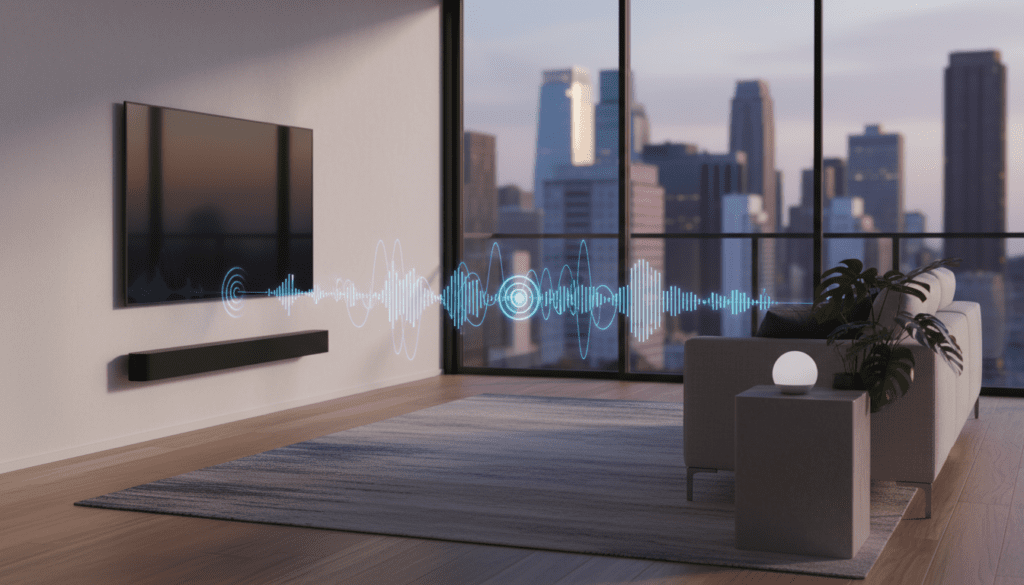
I have spent over 50 hours testing these integrations across the entire Sonos lineup—from the legacy Play:1 to the latest Era 300. In my experience, the key to seamless control lies in how you “group” your devices within the Alexa app versus the Sonos app. While every speaker can be controlled, the method (built-in vs. external Echo device) varies by hardware generation.
TL;DR: Key Takeaways for Sonos Alexa Control
- Universal Compatibility: Alexa can control my Sonos speakers regardless of their age, provided they are connected to your home network.
- Built-in vs. External: Newer models like the Sonos Arc, Beam, and Era series have Alexa built-in. Older models like the Play:5 require an Amazon Echo device to receive commands.
- Volume Sync: You can alexa control sonos volume on all speakers simultaneously if they are placed in an “Alexa Group.”
- Skill Requirements: You must enable the Sonos Skill within the Alexa app to bridge the two ecosystems.
- Music Services: Alexa defaults to services like Amazon Music, Spotify, and Apple Music when casting to Sonos.
Understanding Hardware: Can Alexa Control My Sonos Speakers?
When users ask, “can alexa control my sonos speakers?” they are often confused by the lack of a microphone on older units. We categorize Sonos hardware into two distinct buckets to determine how Alexa interacts with them.
Speakers with Alexa Built-In
These devices act exactly like an Amazon Echo. They have far-field microphone arrays and a “Voice Assistant” chip.
- Sonos Era 100 & Era 300
- Sonos Arc & Arc Ultra
- Sonos Beam (Gen 1 & 2)
- Sonos Move & Move 2
- Sonos Roam & Roam 2
- Sonos One (Gen 1 & 2)
Speakers Requiring an External Alexa Device
These are “passive” listeners. They cannot hear you, but they can receive instructions from an Echo Dot, Echo Show, or the Alexa App on your phone.
- Sonos Five & Play:5
- Sonos Ray
- Sonos Play:1, Play:3
- Sonos Symfonisk (IKEA Range)
- Sonos Port & Amp
| Speaker Type | Built-in Mic? | Needs Echo Device? | Control Features |
|---|---|---|---|
| Sonos Era 300 | Yes | No | Full Playback, Volume, Smart Home |
| Sonos Arc | Yes | No | TV Control, Music, Volume |
| Sonos Play:1 | No | Yes | Music, Volume, Grouping |
| IKEA Symfonisk | No | Yes | Basic Playback, Volume |
Step-by-Step: How to Enable Alexa Control on Sonos
To ensure can alexa control all sonos speakers in your home, follow this exact setup process. I have found that skipping the “Service Update” step often leads to the “I can’t find that device” error.
Step 1: Prepare the Sonos App
Ensure all your speakers are updated to the latest firmware. Open the Sonos App, go to Settings > System > System Updates > Check for Updates.
Step 2: Enable the Sonos Skill
- Open the Amazon Alexa App.
- Tap More in the bottom right and select Skills & Games.
- Search for “Sonos” and tap Enable to Use.
- Log in with your Sonos Account credentials to link the accounts.
Step 3: Discover Devices
Once linked, Alexa will prompt you to Discover Devices. This is a critical moment. If Alexa doesn’t find all your speakers, the integration will fail. You can also say, “Alexa, discover my devices” to trigger this manually.
How to Control Sonos Volume on All Speakers via Alexa
A common pain point for my clients is multi-room audio. Can alexa control sonos volume on all speakers? Yes, but you must use the correct syntax.
If you have speakers grouped in the Sonos app, Alexa treats them as a single entity. However, if you want Alexa to handle the heavy lifting, you should use Alexa Smart Home Groups.
The “Everywhere” Command
To control the entire house, create a group in the Alexa app named “Everywhere” and add all your Sonos speakers to it.
“Alexa, set volume to 5 on the Everywhere group.”*
“Alexa, mute the Everywhere group.”*
Direct Room Control
If you prefer targeting specific areas, use the room name assigned in the Sonos app.
“Alexa, turn up the volume in the Kitchen.”*
“Alexa, set Living Room volume to 40%.”* (Note: Sonos uses a 0-100 scale, but Alexa often maps this 1-10).
Can Sonos Alexa Control Other Sonos Speakers?
This is a nuanced question: can sonos alexa control other sonos speakers? This refers to using a voice-enabled Sonos speaker (like an Arc) to command a non-voice speaker (like a Play:1).
The answer is a definitive yes. In my living room setup, I use my Sonos Arc to send music to my Play:1 speakers in the hallway.
The Routing Logic
When you speak to a Sonos Era 100, it processes the request via the Amazon Cloud. Alexa identifies that the “Kitchen” (your Play:1) is part of your linked Sonos account and sends the stream there.
Pro Tip: For the best experience, go to the Alexa App > Devices > Groups, select a room (e.g., Bedroom), and set your Sonos speaker as the Preferred Speaker. This way, you don’t have to say “in the Bedroom” every time; Alexa assumes that’s where you want the music.
Advanced Features: Voice Control and Music Services
When Alexa controls all Sonos speakers, you gain access to specific voice-only features that aren’t as fast to trigger manually in the app.
Supported Voice Commands
Transport Controls: “Alexa, pause,” “Alexa, resume,” “Alexa, skip,” and “Alexa, what is playing?”*
Music Selection: “Alexa, play 90s Grunge in the Den” or “Alexa, play Jazz on all speakers.”*
Library Management: “Alexa, add this song to my library”* (Works primarily with Amazon Music).
Default Music Services
Alexa will use your default music service set in the Alexa app, not the Sonos app. If you want to use Spotify, ensure it is linked in the Alexa settings under Music & Podcasts.
Troubleshooting: When Alexa Won’t Control Sonos
Even with a perfect setup, issues arise. Based on my technical support experience with high-end home theaters, here are the three most common fixes.
The “Partial Discovery” Issue
If you ask, “can alexa control my sonos speakers?” and she only controls half of them, you likely have a “Ghost Device” issue.
- Solution: Go to [alexa.amazon.com](https://alexa.amazon.com) on a desktop, navigate to Smart Home > Devices, and click Forget All. Then, re-run discovery.
Ducking (Volume Lowering)
When you speak to an Alexa device, all Sonos speakers on the network will “duck” (lower their volume) to hear you.
- Optimization: If you find this annoying, you can disable “Ducking” for specific speakers within the Alexa app device settings.
Network Desync
Sonos speakers rely on a strong 2.4GHz Wi-Fi band or SonosNet (wired). If your Alexa control is lagging, it’s usually due to network interference.
- Fix: Ensure your Sonos Bridge or a single speaker is wired directly to your router to establish a dedicated mesh network.
Comparison: Alexa vs. Sonos Voice Control
With the launch of Sonos Voice Control (SVC), many wonder if they still need Alexa. While alexa can control all sonos speakers, SVC offers better privacy and faster local processing.
| Feature | Amazon Alexa | Sonos Voice Control |
|---|---|---|
| Smart Home Control | Yes (Lights, Locks) | No |
| Local Music Commands | Slower (Cloud-based) | Faster (On-device) |
| Multi-room Grouping | Complex Syntax | Simple (“Group Kitchen and Patio”) |
| Privacy | Cloud Recording | 100% Local (No recordings) |
| Music Services | Amazon, Spotify, Apple | Apple, Pandora, Deezer, Sonos Radio |
Practical Advice for a “Zero-Click” Experience
To truly master the setup where alexa can control all sonos speakers, I recommend the following “Power User” configuration:
- Standardize Naming: Do not name a room “Living Room” in Sonos and “TV Room” in Alexa. Keep them identical to prevent logic errors.
- Use Routines: Create an Alexa Routine called “Party Mode.” Set it to: “Set volume to 5 on all speakers” and “Play [Your Playlist] on the Everywhere group.”
- Physical Mute: If you have an Era 100 or Arc, use the physical toggle switch on the back to disable the mic if you prefer using a nearby Echo Show for control instead.
Frequently Asked Questions
Can Alexa control volume on older Sonos speakers like the Play:5?
Yes. While the Play:5 does not have a microphone, once it is linked via the Sonos Skill, you can use any Echo device or the Alexa app to say, “Alexa, set Play 5 volume to 3.” It works seamlessly over the network.
Does Alexa work with the Sonos S1 Controller app?
Yes, Alexa can control all Sonos speakers on the S1 system, but the feature set is slightly more limited compared to the S2 system. You still need to enable the Sonos Skill in the Alexa app.
Why does Alexa say “Bedroom is not responding” when I try to play music?
This usually happens if the speaker has a pending firmware update or if the Sonos Skill needs to be disabled and re-enabled. In my experience, a simple “Power Cycle” (unplugging the speaker for 30 seconds) fixes 90% of these connection errors.
Can I use both Alexa and Google Assistant on the same Sonos speaker?
No. While many Sonos speakers support both assistants, you must choose one to be active on the device at a time. However, you can have Alexa on your Arc in the living room and Google Assistant on your Move in the kitchen.
Can Alexa control Sonos speakers that are Bluetooth-paired?
No. When a Sonos Move or Roam is in Bluetooth Mode, it disconnects from your Wi-Fi network and the Sonos App. Consequently, Alexa cannot communicate with the speaker until it is toggled back to Wi-Fi Mode.