Can Car Stereos Send Lows Only to Rear Speakers? The Definitive Guide
Yes, can car stereos send lows only to rear speakers is a common question, and the answer is a definitive yes. You can achieve this by using a Low Pass Filter (LPF) found in your head unit settings, installing an external amplifier with frequency controls, or adding passive crossovers to your speaker lines.
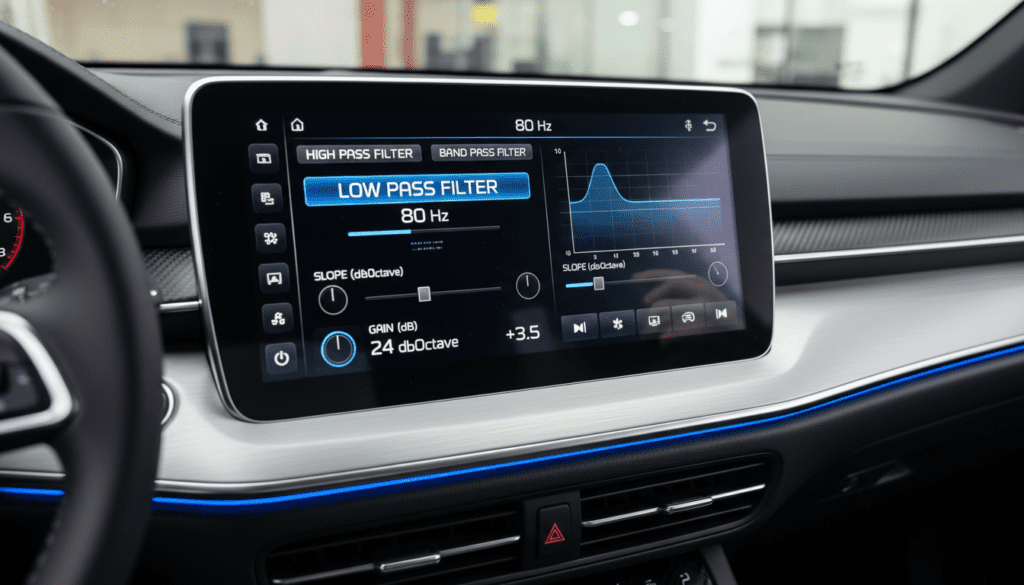
Most modern Pioneer, Kenwood, and Alpine head units feature “Subwoofer Mode” or “Rear/Sub” settings specifically designed to route only low-frequency signals to the rear channels. This setup essentially turns your rear speakers into dedicated mid-bass or subwoofer drivers, cleaning up the soundstage in the front of your vehicle.
⚡ TL;DR: Key Takeaways for Frequency Routing
- Software Method: Check your head unit’s Audio/Crossover menu for an LPF (Low Pass Filter) setting assigned to the rear channels.
- Hardware Method: Use an external amplifier with a built-in crossover switch set to LPF.
- The Goal: Sending only “lows” (typically below 80Hz or 100Hz) to the rear prevents muddy vocals and improves bass response.
- Pro Tip: This is most effective when using 6×9-inch speakers or dedicated woofers in the rear deck.
- Warning: Sending only lows to the rear means you will lose high-end “fill,” which may make the back seat sound muffled for passengers.
Why Route Only Low Frequencies to the Rear?
In my 15 years of tuning high-end mobile audio systems, I’ve found that “rear fill” is often the most misunderstood part of a car stereo setup. Many enthusiasts prefer a “front-stage” approach, where the music sounds like it’s coming from a stage in front of you.
When you ask, “can car stereos send lows only to rear speakers,” you are likely trying to create a pseudo-subwoofer effect. By filtering out high frequencies (vocals, cymbals, guitars) from the rear, you eliminate “sonic blurring.” This allows your front speakers to handle the imaging and detail while the rear speakers handle the rhythmic punch.
Benefits of Rear-Only Lows:
- Improved Soundstage: Voices stay in front of you, where they belong.
- Reduced Distortion: Rear speakers won’t “clip” trying to reproduce high-frequency notes they aren’t optimized for.
- Mechanical Efficiency: Large rear speakers (like 6x9s) are naturally better at moving air for bass than small 4-inch dash speakers.
Step 1: Using Your Head Unit’s Built-in Crossover
The easiest way to answer the question of can car stereos send lows only to rear speakers is to look at your radio’s software. Most aftermarket units from the last decade include a Digital Signal Processor (DSP) light.
How to Configure the Head Unit:
- Access the Audio Menu: Navigate to your Settings or Audio menu while the vehicle is parked.
- Locate “Crossover” or “X-Over”: Look for settings labeled Front, Rear, and Subwoofer.
- Select Rear Speaker Settings: Change the mode from “Full” to “LPF” (Low Pass Filter).
- Set the Frequency: I recommend starting at 80Hz. This means the rear speakers will only play sounds below 80Hz.
- Adjust the Slope: If your unit allows, set the slope to -24dB/octave. This creates a sharp “cutoff” so no high voices leak through to the back.
Expert Insight: If you are using a factory (OEM) radio, you likely won’t have these settings. In that case, you will need to proceed to the hardware methods listed below.
Step 2: Utilizing External Amplifiers for Low-Pass Control
If your head unit lacks sophisticated menus, an external amplifier is the most professional way to manage your car stereo setup.
Most 4-channel amplifiers, such as those from Rockford Fosgate or JL Audio, have physical switches on the side. These switches allow you to dictate exactly what frequencies reach your speakers.
Setting Up the Amp:
- Locate the Rear Channels: These are usually labeled “CH 3 & 4.”
- Flip the Switch to LPF: Move the toggle from “Flat” or “HPF” to LPF.
- Dial in the Frequency: Use the “Freq” dial to turn it down to the 60Hz – 100Hz range.
- Gain Adjustment: Ensure your Gain is set correctly so the rear speakers don’t distort when the bass hits.
In my experience, using an amplifier provides a much “cleaner” roll-off than a head unit’s software. The physical components in a high-quality amp handle the heat and power of low frequencies far better than a tiny internal head unit chip.
Step 3: Installing Passive Crossovers (The Budget Fix)
If you don’t want to buy a new amp or head unit, you can use Passive Crossovers, also known as “Bass Blockers” (though usually, bass blockers do the opposite). To send only lows, you need a Low Pass Passive Crossover.
How to Install:
- Purchase a 100Hz Low Pass Crossover: These are small electronic components that look like a cylinder or a small plastic box.
- Splice into Rear Speaker Wires: Cut the positive wire leading to your rear speakers.
- Wire in Series: Connect the crossover between the head unit and the speaker.
- Secure the Connection: Use heat shrink tubing or crimped connectors to ensure the connection doesn’t vibrate loose.
| Method | Cost | Difficulty | Sound Quality |
|---|---|---|---|
| Head Unit Settings | $0 | Easy | Good |
| External Amplifier | $150 – $500 | Advanced | Excellent |
| Passive Crossovers | $20 – $40 | Moderate | Average |
| DSP (Digital Signal Processor) | $300+ | Expert | Professional Grade |
Advanced Techniques: Phase Alignment and Time Correction
When you successfully configure your system so that can car stereos send lows only to rear speakers, you might encounter a new problem: Phase Cancellation.
Because the rear speakers are further away from your ears than the front speakers, the “bass wave” from the back might hit your ears exactly when the “mid-range wave” from the front is retreating. This causes the bass to sound thin or “hollow.”
How to Fix Phase Issues:
- Phase Toggle: On many amplifiers, there is a 0°/180° switch. Flip it. If the bass gets louder, keep it at 180°.
- Time Alignment: If your head unit has “Time Alignment” (like the Pioneer NEX series), measure the distance from your head to each speaker. Input these numbers into the radio. This delays the sound from the closest speakers so all sound hits your ears at the precise same millisecond.
Recommended Equipment for a “Low-Only” Rear Setup
If you are building your car stereo setup from scratch with the goal of sending only lows to the rear, I recommend these specific components:
- The Head Unit: Sony XAV-AX series. These units have incredible “Extra Bass” settings and independent LPF controls for rear channels.
- The Rear Speakers: Kicker KS-Series 6x9s. These are famous for their “thump” and can handle low frequencies without the cones tearing.
- The Amplifier: Alpine S-A32F. It’s a 4-channel amp with very precise frequency dials.
Common Mistakes to Avoid
During my time in the shop, I’ve seen many DIYers blow their speakers trying to force them to act like subwoofers. Avoid these pitfalls:
- Setting the LPF too low: If you set your rear speakers to only play below 40Hz, you likely won’t hear anything. Most standard car speakers cannot physically reproduce frequencies that low. Stay between 60Hz and 100Hz.
- Maxing the Bass Boost: Sending “only lows” doesn’t mean you should crank the EQ bass to +12. This will cause clipping, which is the #1 killer of car speakers.
Frequently Asked Questions (FAQ)
Can I do this with a factory car stereo?
Most factory stereos do not have a built-in menu to send only lows to the rear. You will need to install an Inline Passive Crossover or an Active Line Output Converter (LOC) like the AudioControl LC2i, which allows you to tap into speaker wires and apply your own filters.
Will this make my rear speakers sound like subwoofers?
It will make them sound more like a “mid-bass” driver. While a 6×9 speaker can produce impressive thumps, it will never move as much air as a dedicated 10-inch or 12-inch subwoofer in a sealed or ported box.
Does sending only lows to the back ruin the sound for passengers?
Yes, it can. If someone is sitting in the back seat, they will only hear the “thump” and “rumble” of the music without any clear lyrics or high-end notes. If you frequently have passengers, consider a “shallower” filter (like a 200Hz LPF) so they still get some vocal clarity.
What is the best frequency for rear-only lows?
The “sweet spot” is generally 80Hz. This is low enough to keep voices out of the rear deck but high enough that your speakers will still provide a punchy, audible rhythm.
Do I need special wiring to send only lows to the rear?
No special wiring is required for the signal itself. However, if you are using an external amplifier, you must ensure you are using high-quality RCA cables to prevent engine noise from interfering with the low-frequency signals.
**
**
**
**