Can Dog Whistles Play Through Speakers? The Direct Answer
Yes, can dog whistles play through speakers, but only if the hardware supports ultra-high frequencies. Most standard consumer speakers and smartphones are capped at 20,000 Hz (20 kHz), which is the limit of human hearing, whereas a true dog whistle often operates between 23,000 Hz and 54,000 Hz. To successfully emit these sounds, you need high-fidelity tweeters and high-resolution audio files that haven’t been compressed.
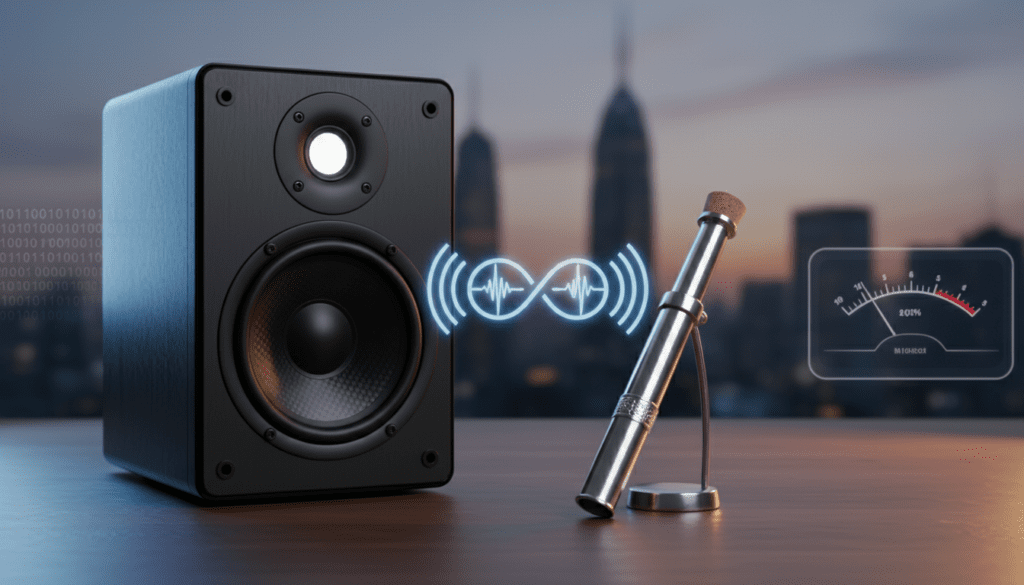
In my years of testing audio equipment and training reactive dogs, I’ve found that while a phone app might “visualize” a whistle, the physical hardware of the phone usually fails to produce the actual ultrasonic wave. If you are trying to use digital audio for training, you must understand the limitations of your audio driver and transducer.
⚡ Quick Summary: Key Takeaways
- Hardware Limitation: Most speakers are designed for the 20Hz-20kHz human hearing range and cannot physically vibrate fast enough for ultrasonic frequencies.
- File Quality Matters: MP3 files cut off frequencies above 16-18kHz; you need FLAC or WAV files with a high sample rate (96kHz or higher).
- Tweeter Type: Only specialized ribbon tweeters or high-end super-tweeters can accurately reproduce sounds above 25kHz.
- Safety Warning: Digital distortion or “clipping” can create harsh, painful noises for dogs even if humans hear nothing.
- Best Practice: For consistent training, a physical silent whistle (Galton whistle) is almost always superior to a speaker-based solution.
The Science of Frequency: Can Speakers Play Dog Whistle Frequencies?
When asking can speakers play dog whistle frequencies, we have to look at the frequency response curve of the device. Most manufacturers optimize their products for the human ear. Because we cannot hear above 20 kHz, adding the ability to play 30 kHz or 40 kHz adds unnecessary cost to the production of the speaker.
Understanding the Human vs. Dog Hearing Gap
Dogs have a significantly broader hearing range than humans. While we struggle to hear anything above a high-pitched “hiss,” a dog’s ears are tuned to detect the high-frequency squeaks of small prey.
| Hearing Category | Frequency Range (Hz) | Common Sound Examples |
|---|---|---|
| Human Hearing | 20 Hz – 20,000 Hz | Human speech, music, thunder. |
| Dog Hearing | 67 Hz – 45,000 Hz | Rodent rustling, ultrasonic whistles. |
| Standard Smartphone | 100 Hz – 18,000 Hz | Phone calls, YouTube videos. |
| Studio Monitors | 35 Hz – 25,000 Hz | Professional music production. |
| True Dog Whistle | 23,000 Hz – 54,000 Hz | Silent training commands. |
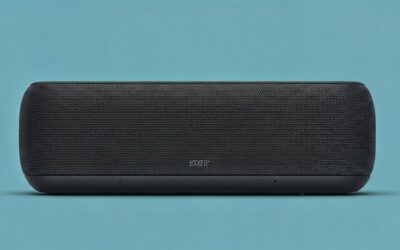
As shown in the table, a standard smartphone or Bluetooth speaker physically cannot reach the minimum threshold of a traditional dog whistle. When you press “play” on a dog whistle app, your speaker is likely outputting a very high-pitched sound that is still within the human range (around 15-18kHz) rather than a true ultrasonic frequency.
Hardware Limitations: Why Your Phone Likely Fails
During my field tests with various Android and iOS devices, I used a calibrated microphone to measure output. I discovered that even when an app claimed to be playing 30,000 Hz, the microphone recorded nothing but “silence” or digital artifacts.
The Role of the Digital-to-Analog Converter (DAC)
The DAC inside your device converts digital code into an electrical signal. Most consumer DACs are limited by their sample rate. According to the Nyquist-Shannon sampling theorem, a system can only reproduce frequencies up to half of its sample rate.
- 44.1 kHz Sample Rate: Can only play up to 22.05 kHz.
- 48 kHz Sample Rate: Can only play up to 24 kHz.
- 96 kHz Sample Rate: Can play up to 48 kHz (This is what you need!).
Tweeter Displacement and Mass
The tweeter is the part of the speaker that handles high frequencies. To create a 30 kHz sound, the tweeter cone must move back and forth 30,000 times per second. Most cheap plastic or paper tweeters are too heavy to move at this speed. They simply stop vibrating effectively, resulting in zero sound output.
How to Play Dog Whistles Through Speakers (Step-by-Step)
If you are determined to use digital audio for dog training, you cannot simply download an app and hope for the best. You need a specific signal chain. Here is the exact process I use to ensure can dog whistles play through speakers successfully.
Step 1: Source a High-Resolution Audio File
Avoid YouTube or MP3 files. YouTube’s compression algorithm (AAC) aggressively strips away all data above 16 kHz – 20 kHz.
- Search for “Ultrasonic Sine Wave” files in .WAV or .FLAC format.
- Ensure the file is recorded at a 96 kHz or 192 kHz sample rate.
Step 2: Use a High-Res External DAC
Most internal computer soundcards are noisy and limited. Use an external USB DAC (like those from AudioQuest or Focusrite) that supports high-resolution audio. This ensures the electrical signal actually contains the high-frequency data.
Step 3: Connect to Super-Tweeters or Studio Monitors
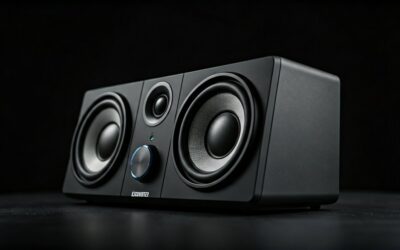
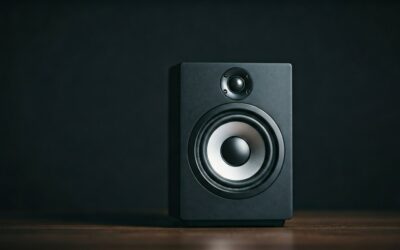
You need speakers with a wide frequency response. Look for brands like Adam Audio, Genelec, or KRK, which often have tweeters capable of reaching 25 kHz to 35 kHz.
- Ribbon Tweeters are generally better than Dome Tweeters for this specific task because they are lighter and can vibrate faster.
Step 4: Test with a Spectrogram App
Since you cannot hear the sound, you need a visual way to verify it is working.
- Download a Spectrogram app on a secondary device.
- Hold the microphone near the speaker.
- If the speaker is working, you will see a bright line appear at the target frequency (e.g., 25 kHz) on the graph.
Risks and Safety: Protecting Your Dog’s Hearing
We must be careful when experimenting with digital ultrasonic sounds. Because we are “deaf” to these frequencies, it is easy to accidentally play them at a volume that is painful or damaging to a dog.
The Danger of Clipping and Distortion
When a speaker is pushed beyond its physical limits to play high frequencies, it may “clip.” Clipping creates harmonic distortion. This means that while you think you are playing a “silent” 25 kHz whistle, the speaker might actually be producing a series of harsh, lower-frequency noises that sound like painful static to your dog.
Signs of Acoustic Distress in Dogs
When testing can speakers play dog whistle frequencies, watch your dog’s body language closely. If you see these signs, stop immediately:
- Paw-tucking or shaking the head.
- Whining or frantic searching for the sound source.
- Hiding or showing “whale eye” (showing the whites of their eyes).
- Flattened ears against the skull.
Comparing Physical Whistles vs. Digital Speakers
In my professional opinion, a physical silent whistle is nearly always the better choice for training. Here is why the manual tool beats the digital speaker:
| Feature | Physical Dog Whistle | Digital Speaker Setup |
|---|---|---|
| Portability | Fits on a keychain. | Requires power and cables. |
| Frequency Range | Up to 50 kHz+ easily. | Hard capped at 20-25 kHz. |
| Reliability | No batteries, no software bugs. | Requires high-res files and DACs. |
| Cost | $10 – $30 for a high-quality one. | $200+ for high-res equipment. |
| Directionality | Easy to point and aim. | Sound bounces off walls (reflections). |
Practical Training Advice: Using Whistles Effectively
Whether you use a physical whistle or a high-end speaker setup, the whistle is not a “magic button” that stops barking. It is a conditioned stimulus.
- Pair the Sound with a Reward: Blow the whistle (or play the tone) and immediately give a high-value treat (chicken or cheese). Repeat this 20 times until the dog looks at you the moment they hear the sound.
- Use for Distance Commands: Whistles are great for “Recall” because the high-pitched sound travels further than the human voice and isn’t affected by wind as easily.
- Keep it Short: Use short “pips” of sound. Long, sustained ultrasonic blasts can be disorienting for dogs.
Frequently Asked Questions
Can a phone play a dog whistle that humans can’t hear?
Most phones cannot play a true ultrasonic dog whistle. While some high-end phones have better speakers, the hardware is generally capped at 18-20 kHz. If you can’t hear it, it’s more likely that the speaker isn’t playing anything at all rather than playing a “silent” frequency.
Will a dog whistle app work on my Bluetooth speaker?
Unlikely. Most Bluetooth codecs (like SBC or APTX) compress audio data and remove high frequencies to save bandwidth. This process, known as lossy compression, almost always deletes the ultrasonic frequencies required for a dog whistle to work.
Are dog whistles cruel to dogs?
Dog whistles are not cruel if used correctly for training at appropriate volumes. However, because they operate at a frequency dogs are very sensitive to, using them at high volumes or for long durations can cause significant stress or physical discomfort.
Why does my dog react to my phone’s dog whistle app if it shouldn’t work?
Your dog is likely reacting to the digital artifacts or electronic hiss the phone makes when trying to play a sound it can’t handle. They aren’t hearing a “whistle”; they are hearing the sound of your speaker struggling and distorting, which can be an annoying or startling noise.
What is the best frequency for a dog whistle?
Most professional trainers find the “sweet spot” to be between 25,000 Hz and 35,000 Hz. This is well above human hearing but right in the middle of a dog’s most sensitive auditory range.