Can Hotels Recommend Speakers? The Ultimate Guide to Audio and Talent Sourcing
Yes, hotels can recommend speakers, typically through their dedicated Audio-Visual (AV) department or a Preferred Vendor List (PVL). Whether you are looking for professional audio hardware (sound systems) or keynote speakers (talent), hotels leverage deep partnerships with specialized agencies to ensure your event runs smoothly.
Planning an event can feel like a high-stakes jigsaw puzzle, especially when you are balancing technical requirements with audience engagement. During my years managing large-scale corporate retreats, I’ve found that the “house” recommendations are often the safest bet for technical compatibility, but they require a specific vetting process to ensure they meet your unique goals. This guide provides a step-by-step framework for navigating hotel recommendations to get the best results for your budget.
TL;DR: Key Takeaways
- Audio Hardware: Hotels usually recommend their in-house AV provider (like Encore or PSAV) for guaranteed technical support.
- Keynote Talent: Most luxury hotels maintain relationships with Speaker Bureaus to help you find local or national talent.
- The Cost Factor: In-house recommendations often include “service fees” (typically 20-25%), but provide the highest level of reliability.
- Action Step: Always ask for a “Spec Sheet” of the recommended equipment and a “Client Referral List” for any suggested talent.
Understanding the Types of Speaker Recommendations Hotels Provide
When you ask, “Can hotels recommend speakers?” you are likely looking for one of two things: the technology to be heard or the person doing the talking. It is vital to distinguish between these two “entities” early in your planning phase.
Audio Equipment (The Hardware)
Most full-service hotels (like Marriott, Hilton, or Hyatt) do not actually own their sound systems. Instead, they outsource this to a permanent on-site partner.
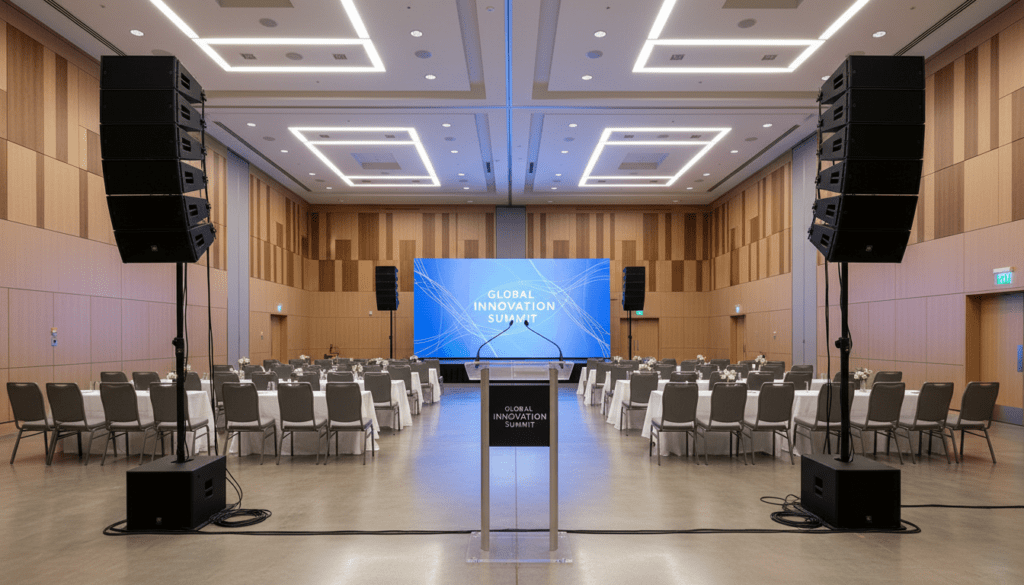
- Key Entities: Line array speakers, subwoofers, wireless microphones, and mixing consoles.
- Common Brands: You will likely see recommendations for high-end gear like Bose, JBL, QSC, or Meyer Sound.
Keynote Speakers (The Talent)
If your event needs a “hook,” hotels often have a Rolodex of local influencers, industry experts, and professional speakers who have successfully performed in their ballrooms before.
- Expert Insight: I recommend asking the Catering and Convention Services Manager (CSM). They see hundreds of speakers a year and know exactly who gets a standing ovation and who puts the audience to sleep.
Step-by-Step Guide to Getting the Best Speaker Recommendations
Navigating the hotel ecosystem requires a tactical approach. Follow these steps to ensure the recommendations you receive are high-quality and cost-effective.
Step 1: Define Your “Audio Footprint” and Talent Needs
Before approaching the hotel, you must know what you are looking for.
- Capacity: How many people are in the room? (e.g., 50 vs. 500).
- Format: Is it a “fireside chat” or a high-energy product launch?
- Budget: Are you looking for a $5,000 local expert or a $50,000 celebrity keynote?
Step 2: Contact the In-House AV Director
The AV Director is your best resource for hardware. Ask them: “Can hotels recommend speakers that are optimized for this specific ballroom’s acoustics?”
- Ballrooms often have “dead zones.” The in-house team knows these zones better than any external vendor.
- Request a CAD drawing of the room showing speaker placement for optimal Sound Pressure Level (SPL).
Step 3: Leverage the Preferred Vendor List (PVL)
If the hotel cannot provide the talent directly, they will give you their Preferred Vendor List.
- Why it matters: These vendors have already been vetted for insurance (COI) and reliability.
- Negotiation Tip: Tell the hotel you are considering an outside vendor. This often prompts them to waive certain “patch fees” or “plug-in fees” to keep your business in-house.
Step 4: Conduct a Technical “Dry Run”
Once a speaker (hardware or talent) is recommended, verify it.
- For hardware: Ask for a frequency response chart.
- For talent: Ask the hotel for the contact info of the last group that hired that specific speaker.
Comparison: In-House vs. External Speaker Recommendations
| Feature | In-House Recommendations | External/Third-Party |
|---|---|---|
| Setup Time | Immediate (Gear is on-site) | Requires 4-6 hour load-in |
| Technical Support | 24/7 On-site technicians | Limited to contract hours |
| Cost | Higher (Includes hotel commissions) | Lower (Direct pricing) |
| Reliability | Extremely High | Variable |
| Expertise | Deep knowledge of the specific room | General industry knowledge |
Why Hotels Prefer Specific Audio Equipment Brands
When hotels recommend speakers for audio, they aren’t just picking brands at random. They prioritize “Road Warrior” brands that offer durability and clarity.
- QSC (K Series): Frequently recommended for mid-sized breakout rooms. They are “active” speakers, meaning they have built-in amplifiers, reducing clutter.
- Meyer Sound: Often the gold standard for large ballrooms. If a hotel recommends Meyer, they are aiming for a high-fidelity, concert-like experience.
- Bose Professional: Known for their “Column Array” systems (L1 Pro), which are sleek and visually unobtrusive—perfect for high-end weddings or minimalist corporate setups.
Expert Tips for Vetting Hotel-Recommended Talent
If the hotel suggests a specific keynote speaker, don’t take their word for it. Use these E-E-A-T principles to verify the recommendation:
- Check the “Sizzle Reel”: A professional speaker should have a 3-minute video showing them in front of a live audience.
- Analyze Their “Information Gain”: Does the speaker provide unique data or just motivational fluff? In the age of AI, audiences crave original research and first-hand experiences.
- Review the Contract: Ensure the hotel-recommended speaker includes a “technical rider.” This document tells the AV team exactly what kind of XLR inputs, DI boxes, and monitor wedges they need.
Common Pitfalls When Relying on Hotel Recommendations
Even the best hotels have biases. Be aware of these common issues we’ve encountered in the field:
- The “Commission Bias”: Hotels often get a 10-20% kickback from recommended vendors. Always ask if the recommendation is based on quality or a formal partnership.
- Outdated Tech: Some hotels sit on audio gear for 10+ years. If they recommend “standard speakers,” ask for the specific model number to ensure they aren’t suggesting 2005-era technology.
- Hidden Fees: Watch out for “Service Charges” (often 24%) and “State Sales Tax” added on top of the recommended speaker’s quote.
Practical Checklist for Your AV Planning Meeting
- [ ] Ask: “Can hotels recommend speakers for both my keynote and my sound reinforcement?”
- [ ] Request the Preferred Vendor List (PVL) in PDF format.
- [ ] Verify the Labor Rates. (Hotels often charge a 4-hour minimum for technicians).
- [ ] Ask about Bluetooth Connectivity. Many modern hotel systems allow you to stream audio directly from a tablet for background music.
- [ ] Confirm the Power Requirements. Professional line arrays can trip standard 15-amp breakers; ensure the room has 20-amp circuits or 3-phase power.
Frequently Asked Questions (FAQ)
Can hotels recommend speakers who are local to avoid travel costs?
Yes. Most Convention Services Managers maintain a list of local talent to help clients save on airfare and per diem costs. This is particularly common in major hubs like Las Vegas, Orlando, and Chicago.
Do hotels charge a fee if I bring my own speakers instead of their recommended ones?
Typically, yes. This is often called a “Patch Fee” or “Outside Vendor Fee.” It can range from $150 to $500 per day. Hotels justify this by saying their staff must oversee the safety of your setup.
Can a hotel’s recommended AV team handle hybrid events (Zoom/Teams)?
Almost always. Post-2020, most in-house providers like Encore have upgraded their speaker recommendations to include USB Audio Interfaces and high-definition PTZ cameras for streaming.
How do I know if the recommended audio system is loud enough?
Ask for the Decibel (dB) coverage map. A professional recommendation should provide even sound distribution (within +/- 3dB) throughout the entire seating area, ensuring the person in the back row hears as clearly as the person in the front.