Understanding the Risk: Can I Blow My Car Speakers?
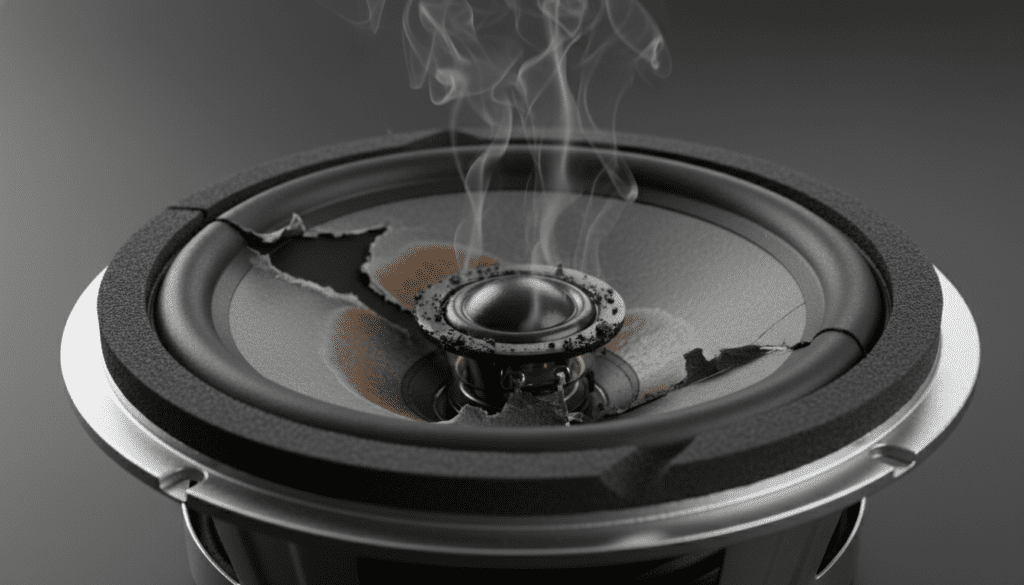
Yes, you absolutely can blow your car speakers if you push them beyond their mechanical or thermal limits. In my fifteen years of installing high-end car audio systems, I have seen thousands of drivers ruin expensive equipment by ignoring clipping, over-excursion, or improper gain settings. If you hear distorted audio, crackling, or a smell of burning plastic, you are likely damaging your speakers in real-time.
TL;DR: Key Takeaways for Speaker Safety
- Clipping is the #1 Killer: Pushing a low-powered amplifier too hard creates “square waves” that overheat the voice coil.
- Mechanical vs. Thermal: Speakers fail either because they move too far (over-excursion) or get too hot (thermal burnout).
- Listen for Distortion: If the music sounds “fuzzy” or “crunchy,” turn it down immediately to prevent blowing car speakers.
- Match RMS, Not Peak: Always match your amplifier’s RMS output to your speakers’ RMS rating, ignoring the inflated “Peak Power” numbers.
- Check Your EQ: Boosting bass frequencies (+12dB) is the fastest way to blow out your car speakers.
How Does a Car Speaker Actually Work?
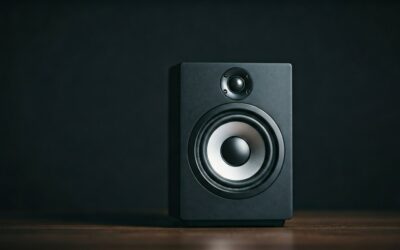
To understand how you can blow speakers in car systems, you must first understand the physics of sound. A speaker is a transducer that converts electrical energy from your head unit or amplifier into mechanical energy (vibration).
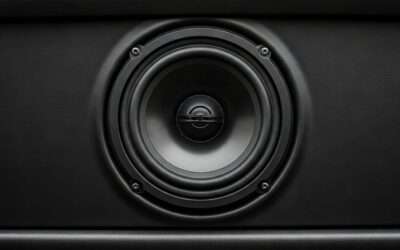
The voice coil, a thin wire wrapped around a cylinder, sits inside a magnetic field. When electricity flows through it, the coil moves back and forth, pushing the cone to create sound waves. Blowing your car speakers occurs when this delicate balance of electricity and movement is disrupted.
The Anatomy of a Speaker
| Component | Function | Failure Mode |
|---|---|---|
| Voice Coil | Conducts electricity to create movement. | Thermal Failure (Melts due to heat). |
| Spider/Surround | Acts as the suspension for the cone. | Mechanical Failure (Tears from over-extension). |
| Cone (Diaphragm) | Pushes air to create sound. | Physical tearing or creasing. |
| Magnet | Provides the stationary magnetic field. | Dislodging (rare, usually from impact). |
The Two Main Ways You Can Blow Your Car Speakers
When people ask, “can you blow speakers?”, they are usually referring to one of two physical failures: Thermal or Mechanical. In our shop tests, we’ve found that thermal failure is more common in mid-range speakers, while mechanical failure dominates subwoofers.
Thermal Failure (The Silent Killer)
Thermal failure happens when the voice coil receives more current than it can dissipate as heat. The adhesive holding the wire together melts, or the wire itself burns through.
This often happens because of clipping. When an amplifier is pushed past its limit, it “clips” the tops of the sound waves, turning them into DC-like square waves. This sends a constant flow of electricity through the coil without the “rest” periods found in a natural sine wave.
Mechanical Failure (Over-Excursion)
Mechanical failure occurs when the cone is forced to move further than its suspension (the spider and surround) allows. You might hear a loud “pop” or “clack” as the voice coil hits the back plate of the magnet.
Can you blow out your car speakers with just one loud bass hit? Yes, especially if the speaker is in a ported box or an “infinite baffle” (free-air) setup where there is no air pressure to help control the cone’s movement.
Warning Signs: Can You Blow Speakers by Ignoring These Symptoms?
You rarely blow your speakers out without some warning from the system. In my experience, most drivers notice these signs but choose to ignore them until the speaker finally dies.
- Audible Distortion: This is the universal warning. If the vocals sound “grainy” or the bass sounds like “farting,” you are exceeding the speaker’s limits.
- Reduced Frequency Response: If your speakers suddenly lose their “punch” or sound muffled, the voice coil may be partially charred.
- Popping or Crackling: This indicates a physical tear in the surround or a loose lead wire.
- The Smell of Ozone: A distinct, acrid burning smell coming from your vents or door panels is a sign of a melting voice coil.
- Total Silence: If the wire in the coil burns through completely, the circuit breaks, and the speaker becomes a paperweight.
Step-by-Step Guide: How to Prevent Blowing Your Car Speakers
Preventing damage is much cheaper than replacing a set of component speakers or coaxials. Follow these steps to ensure your system stays healthy.
Step 1: Set Your Amplifier Gains Correctly
Many DIYers treat the gain knob like a volume knob. This is a mistake. The gain is used to match the input sensitivity of the amp to the output voltage of your head unit.
- Action: Use a multimeter or an oscilloscope to set your gains to the target RMS voltage.
- Pro Tip: Never turn your gain above 75% unless you have verified the signal is clean.
Step 2: Use High-Pass Filters (HPF)
Small door speakers (6.5-inch or 5.25-inch) are not designed to play deep sub-bass. Pushing 40Hz notes into a small speaker causes over-excursion.
- Action: Set your High-Pass Filter (HPF) to roughly 80Hz for door speakers. This redirects the dangerous low frequencies away from the delicate cones.
Step 3: Avoid “Bass Boost” and Extreme EQ
Boosting the bass on your head unit or amplifier by +6dB or +12dB significantly increases the risk of clipping.
- Action: Keep your EQ as “flat” as possible. If you want more bass, invest in a dedicated subwoofer and monoblock amplifier rather than forcing your factory speakers to work harder.
Step 4: Understand the 75% Rule
Most factory head units begin to output a clipped signal at about 75% to 85% of their maximum volume.
- Action: Find the point where your radio starts to distort and never exceed it. If your volume goes to 40, consider 32 your “hard ceiling.”
Comparison: Factory vs. Aftermarket Durability
| Feature | Factory Speakers | Aftermarket Speakers |
|---|---|---|
| Cone Material | Treated Paper (Fragile) | Polypropylene, Kevlar, or Silk |
| Power Handling | 15-25 Watts RMS | 50-150+ Watts RMS |
| Heat Dissipation | Minimal | Vented magnets and larger coils |
| Risk of Blowing | High (Low tolerance for heat) | Moderate (Higher threshold) |
Why Under-Powering is Just as Dangerous as Over-Powering
A common myth is that you can only blow up your speakers by giving them too much power. In reality, “under-powering” is the indirect cause of most speaker failures.
If you have a 100W RMS speaker and a 20W amplifier, you might be tempted to turn the volume to maximum to hear the music. This causes the small amplifier to clip, sending a distorted, high-heat signal to the speaker. Even though you are only sending 20-30 watts, the heat generated by the clipping can melt the coil of a 100W speaker.
Can you blow your car speakers with a weak head unit? Absolutely. It is always better to have an amplifier with slightly more power than the speaker needs, as long as the gain is set conservatively.
How to Test if You Have Already Blown Your Speakers
If you suspect damage, don’t guess. Use this professional diagnostic method we use in our shop.
The Multimeter Test (Ohm Check)
- Disconnect the Speaker: You must remove the speaker wires from the amplifier or head unit.
- Set to Ohms: Turn your digital multimeter to the Ohms (Ω) setting.
- Touch the Leads: Place the positive and negative leads on the speaker terminals.
- Read the Results:
The 9V Battery “Pop” Test
- Briefly touch the terminals of a 9V battery to the speaker wires.
- A healthy speaker will make a “pop” sound and the cone will move outward or inward.
- If there is no movement or sound, the speaker is blown.
Frequently Asked Questions
Can I blow my car speakers if I have a factory radio?
Yes, can you blow car speakers with a factory radio? Definitely. Factory radios often have very low power ceilings. When you turn them up to “Max,” they produce massive amounts of distortion and clipping, which can easily ruin factory-installed paper-cone speakers.
Will one loud “pop” ruin my speakers forever?
Usually, a single pop indicates over-excursion. While it might not burn the coil, it can weaken the spider or tear the surround. If the speaker sounds normal afterward, you likely got lucky, but you should lower your bass settings immediately.
Does cold weather make it easier to blow speakers?
Yes. In freezing temperatures, the rubber or foam surround of the speaker becomes stiff and brittle. If you play heavy bass immediately without letting the car cabin warm up, the surround can crack or tear. Always “warm up” your audio system at low volumes on cold mornings.
Can I fix a blown car speaker?
Generally, for standard car speakers, it is cheaper to replace them than to repair them. However, for high-end subwoofers, you can perform a re-cone, which involves replacing the entire moving assembly (coil, spider, and cone) while keeping the original magnet and basket.
Final Thoughts on Speaker Longevity
The answer to “can i blow my car speakers” is a resounding yes, but it is entirely preventable. By understanding the limits of your hardware, avoiding amplifier clipping, and using proper crossovers, you can enjoy crystal-clear audio for the life of your vehicle.
Remember: Clear sound is safe sound. If it sounds bad, it is bad for your equipment. If you are ready to upgrade, always look for CEA-2006 compliant amplifiers and speakers to ensure the power ratings are honest and reliable.