Can I Hookup Speakers to a Jukebox? The Definitive Guide
Yes, you can hook up extra speakers to a jukebox, provided you match the impedance (ohms) and power requirements of the machine’s internal amplifier. Most vintage and modern models, such as Rock-Ola, Wurlitzer, and Seeburg, feature dedicated terminal strips designed specifically for auxiliary or remote speaker connections.
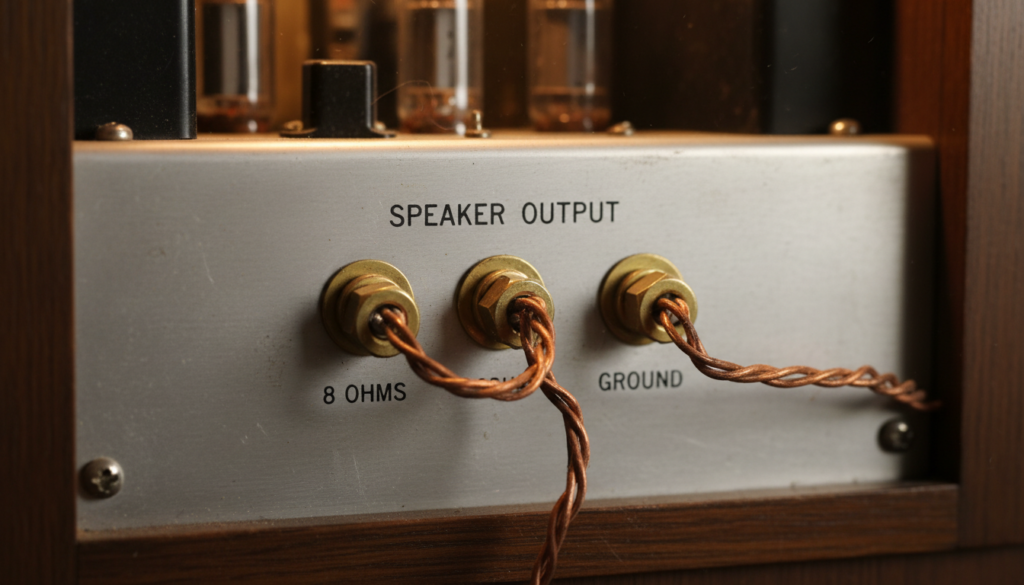
Connecting external audio can transform your listening experience, but doing it incorrectly can overheat your amplifier or blow your output transformers. In my years of restoring vintage Rock-Ola 444 and 448 models, I’ve found that the secret lies in understanding the distinction between constant voltage systems and low-impedance loads.
Key Takeaways: Quick Summary for Jukebox Owners
- Compatibility: Most jukeboxes support 8-ohm or 70-volt speaker systems.
- Terminal Location: Look for a strip labeled “Remote Speakers” or “Extension Speakers” inside the back cabinet.
- Wiring Method: Use Series wiring to increase resistance or Parallel wiring to decrease it, depending on your amp’s limits.
- Rock-Ola Specifics: These models often use a “Com,” “8-Ohm,” and “70V” terminal setup.
- Essential Tool: Always use a Multimeter to check your speaker load before powering on the unit.
Understanding Jukebox Amplifier Impedance
Before you install extra speakers to a jukebox, you must understand Impedance, measured in Ohms (Ω). Think of impedance as the “resistance” the speaker provides against the electrical current from the amplifier.
Most vintage jukebox amplifiers are designed to “see” a specific load. If you add too many speakers in parallel, the resistance drops too low. This causes the amplifier to work too hard, generate excessive heat, and potentially melt the output transformer windings.
Common Impedance Ratings for Jukeboxes
| Jukebox Type | Typical Internal Load | Safe External Connection |
|---|---|---|
| Vintage Tube (Mono) | 8 or 16 Ohms | One 8-ohm speaker or two 16-ohm in parallel |
| Vintage Solid State | 4 to 8 Ohms | High-efficiency 8-ohm speakers |
| Commercial (70V System) | Variable | Multiple 70V transformer-equipped speakers |
| Modern Digital (Rowe/Ami) | 4 Ohms | Standard high-wattage stereo speakers |
Can I Hookup Speakers to a Rock-Ola Jukebox?
If you are asking, “Can I hookup speakers to a Rock-Ola jukebox?” the answer is a resounding yes. Rock-Ola machines are famous for their robust “World of Music” sound systems. Most models from the 1960s and 70s (like the 440 series) have a terminal strip located near the bottom of the amplifier or on the back door.
Identifying Rock-Ola Terminals
On a classic Rock-Ola, you will typically see a strip with screws labeled:
- Common (C): This is your ground or negative wire.
- Level 1 / Level 2: These allow for different volume taps.
- 70-Volt: Used for long-distance commercial wiring in bars or diners.
To put regular stereo speakers on a Rock-Ola jukebox, you should use the low-impedance taps. I recommend using 16-gauge oxygen-free copper wire to maintain signal integrity, especially if the speakers are more than 20 feet away.
Step-by-Step: How to Install Extra Speakers to a Jukebox
Following this process ensures you don’t fry your classic hardware. I have used this exact method to set up multi-room audio for clients using nothing but a 1970s Seeburg.
Step 1: Power Down and Safety
Always unplug the jukebox from the wall. Vintage amplifiers contain large capacitors that can hold a lethal charge even when the unit is turned off.
Step 2: Locate the Speaker Terminal Strip
Open the back panel of your cabinet. Look for a plastic or phenolic strip with screw terminals. It is usually labeled “Ext. Speakers” or “Auxiliary.”
Step 3: Calculate Your Load
If your jukebox expects an 8-ohm load and you already have an internal 8-ohm speaker, adding another 8-ohm speaker in parallel will drop the load to 4 ohms.
- Parallel Wiring: (Speaker 1 x Speaker 2) / (Speaker 1 + Speaker 2).
- Series Wiring: Speaker 1 + Speaker 2.
Step 4: Connect the Wires
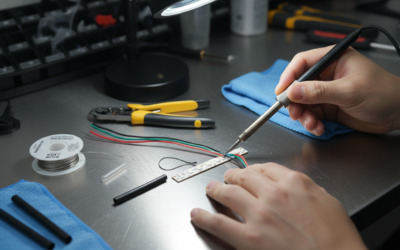
Strip approximately 1/2 inch of insulation from your speaker wire. Wrap the wire clockwise around the terminal screw and tighten it firmly. Ensure there are no stray copper strands touching adjacent terminals, as this will cause a short circuit.
Step 5: Testing the Phase
When you hookup speakers to a jukebox, they must be “in phase.” This means the cones move in the same direction at the same time. If the bass sounds thin or “hollow,” reverse the positive and negative wires on one of the external speakers.
Can I Put Regular Stereo Speakers on a Rock-Ola Jukebox?
A common question I receive is whether modern bookshelf speakers (like those from Polk or Klipsch) can be used. You can certainly put regular stereo speakers on a Rock-Ola jukebox, but you must account for Sensitivity.
Jukeboxes of the 1950s-1970s used very high-efficiency speakers. Modern speakers are often “power hungry.” If you use small, inefficient speakers, the jukebox internal speakers will be much louder than the external ones.
Pro Tip: To balance the volume, I recommend installing a Wall-Mount L-Pad Attenuator. This allows you to turn the volume of the external speakers up or down independently from the jukebox cabinet.
The Risks of “Daisy Chaining” Speakers
Many owners try to install extra speakers to a jukebox by simply “daisy-chaining” them (connecting one speaker to the next in a long line). This is a recipe for disaster on vintage equipment.
- Heat Build-up: Low impedance causes the transistors or vacuum tubes to run hot.
- Distortion: When an amplifier is mismatched, the “clipping” will sound harsh and can ruin your tweeters.
- Transformer Failure: In vintage units, the Output Transformer is the most expensive part to replace. Overloading it with too many speakers will eventually cause it to fail.
Using 70-Volt Systems for Multi-Room Audio
If you want to run speakers through your entire house or a large venue, use the 70V (70-Volt) terminals found on most commercial jukeboxes.
- Why use 70V? It allows you to run long wires without losing signal strength.
- What do I need? You must use speakers that have a 70V transformer built-in.
- The Benefit: You can tap each speaker at a specific wattage (e.g., 5W, 10W) to set the volume for each room individually without affecting the overall impedance of the jukebox.
Expert Tips for Better Jukebox Sound
During my restoration projects, I’ve found these three “insider” tricks make a massive difference:
- Check the Capacitors: If you are adding speakers to a 40-year-old jukebox, your “crossover” capacitors are likely dried out. Replacing them with polypropylene film capacitors will significantly brighten the sound of your new external speakers.
- Mono vs. Stereo: Most jukeboxes pre-1958 are Mono. If you connect two speakers to a mono jukebox, you are simply duplicating the signal. Don’t expect a “stereo image” unless the jukebox was built after the stereo revolution of 1958/59.
- Shield Your Wires: Jukeboxes contain heavy motors and fluorescent lights that create EMI (Electromagnetic Interference). Keep your speaker wires away from the main power cord to prevent a 60Hz hum.
Frequently Asked Questions (FAQ)
Can I connect a Bluetooth speaker to my vintage jukebox?
Not directly. You would need to tap into the Pre-amp signal or use a Speaker Level to Line Level Converter to send the signal to a Bluetooth transmitter. However, this often introduces latency (delay) between the jukebox and the speaker.
Will adding more speakers make the jukebox louder?
Not necessarily. Adding more speakers spreads the power of the amplifier across more drivers. While you might fill a larger room with sound, the “peak” volume of the machine usually remains the same or may even slightly decrease as the load increases.
What is the best wire for jukebox speakers?
For runs under 50 feet, 16 AWG stranded copper wire is ideal. For longer runs, move to 14 AWG to prevent “voltage drop,” which results in muddy bass and lost volume.
Can I damage my jukebox by using 4-ohm speakers?
Most vintage jukeboxes are designed for 8-ohm or 16-ohm loads. Using a 4-ohm speaker (standard for modern car audio) will likely cause a vintage tube amplifier to overheat quickly. Always check the manual or the label on the output transformer first.