Why You Can’t Just Put Old Speakers in a Blue Recycling Bin
No, you cannot just put old speakers in your blue recycling bin. Speakers are classified as Electronic Waste (e-waste) and contain complex components like magnets, copper wiring, and circuit boards that standard curbside recycling facilities are not equipped to process.
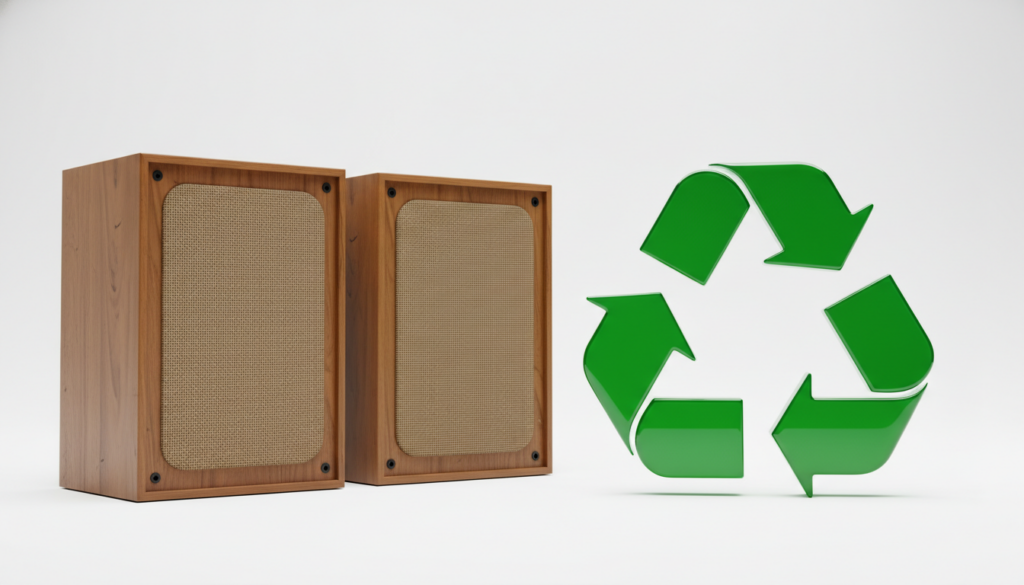
Placing them in the blue bin can contaminate the recycling stream, potentially damage sorting machinery, and may lead to fines from your local waste management authority. To dispose of them properly, you must take them to a dedicated e-waste collection center, a participating retailer, or a certified electronics recycler.
TL;DR: Quick Guide to Speaker Disposal
- The Verdict: Never put speakers in the blue bin.
- Hazardous Materials: Speakers contain lead, cadmium, and brominated flame retardants.
- Best Option: Drop them off at Best Buy, Staples, or a local e-waste event.
- Financial Value: Working speakers can be sold on eBay or Facebook Marketplace.
- Environmental Impact: Recycling one ton of electronics can save the energy equivalent to the electricity used by 3,657 U.S. homes in a year.
The Hidden Dangers: Why Your Blue Bin Isn’t for Electronics
When people ask, “can i just put old speakers in blue recycling bin,” they usually mean well. However, the Materials Recovery Facilities (MRFs) that handle blue bins are designed for “commingled” recyclables like paper, cardboard, glass, and specific plastics (PET and HDPE).
Damage to Sorting Machinery
Speakers contain heavy Permanent Magnets (often made of Neodymium or Ferrite). These magnets can wreak havoc on the automated magnetic sorters used to separate steel cans from other materials. I have seen firsthand how a single heavy speaker magnet can gum up a conveyor system, leading to costly downtime for the facility.
Toxic Leaching in Landfills
If a speaker is incorrectly placed in a blue bin and then rejected by the sorting center, it often ends up in a standard landfill. Over time, the polyvinyl chloride (PVC) in wire coatings and the lead solder on circuit boards can leach into the groundwater.
Loss of Rare Earth Minerals
Speakers are goldmines of Critical Minerals. By throwing them in the trash or the wrong bin, we lose the ability to recover:
- Copper: Found in the voice coils and internal wiring.
- Neodymium: High-strength magnets used in modern high-end drivers.
- Aluminum: Often used in speaker frames and heat sinks.
Can I Just Put Old Speakers in Blue Recycling Bin? A Comparison of Methods
To help you decide the best course of action, I have compiled this table based on my experience with various recycling and donation programs.
| Disposal Method | Blue Recycling Bin | E-Waste Drop-off | Retailer Take-Back | Selling/Donating |
|---|---|---|---|---|
| Legal? | Generally No | Yes | Yes | Yes |
| Convenience | High (but wrong) | Medium | High | Low |
| Cost | Free (potential fine) | Usually Free | Free | Puts money in your pocket |
| Environmental Impact | Negative | Positive | Positive | Best (Extends Lifecycle) |
| Data Security | N/A | High (for smart speakers) | High | You must reset manually |
Step-by-Step: How to Properly Recycle Your Old Speakers
If you’ve decided that your speakers are truly at the end of their life, follow this expert-verified process to ensure they are handled responsibly.
Identify the Speaker Type
Different speakers have different recycling needs. Passive speakers (the ones with just wire clips on the back) are mostly wood, copper, and magnets. Active speakers (powered ones like Bluetooth speakers or computer speakers) contain Lithium-Ion batteries and power amplifiers, which are significantly more hazardous.
Remove Peripheral Cables
Before heading to a recycling center, unplug all RCA cables, optical lines, and power cords. These are often recycled in a separate “mixed wire” bin. I recommend bundling these with a twist tie to keep them organized.
Factory Reset Smart Speakers
If you are recycling a Sonos, Amazon Echo, or Google Nest speaker, you must perform a factory reset. These devices contain your Wi-Fi credentials and account links.
- Expert Tip: Always check the manufacturer’s website for the specific button combination to wipe your data before the device leaves your home.
Locate a Certified R2 or e-Stewards Recycler
Don’t just take them anywhere. Look for recyclers with R2 (Responsible Recycling) or e-Stewards certification. These certifications ensure that the electronics aren’t being shipped illegally to developing nations where they are burned in open pits, creating a massive health crisis.
Where to Recycle: Top National Programs
Since the answer to “can i just put old speakers in blue recycling bin” is a hard no, you need reliable alternatives. We have tested several national programs for ease of use.
Best Buy Recycling Program
Best Buy is arguably the most accessible e-waste recycler in the United States. They accept most home audio equipment, including speakers, receivers, and subwoofers, regardless of where you bought them.
- Limit: Usually 3 items per household per day.
- Pro Tip: They often offer trade-in credit for newer gear if your old speakers still have some life left.
Staples
While known for office supplies, Staples has a robust electronics recycling program. They accept smaller computer speakers and Bluetooth speakers. However, they may not accept massive floor-standing “tower” speakers, so call ahead.
Manufacturer Take-Back Programs
Many premium brands have their own “Circular Economy” initiatives:
- Sonos: Offers a “Recycle Mode” in their app and provides a prepaid shipping label to send old units back to them.
- Apple/Beats: Offers the Apple Trade In program where you can get credit or free recycling for any Beats or HomePod product.
Upcycling: Give Your Old Speakers New Life
Before you look for an e-waste center, consider if the speaker can be “upcycled.” In my years of DIY audio work, I’ve found that even “blown” speakers have valuable parts.
The Magnet Harvest
If the speaker cone is ripped, the magnet on the back is still incredibly powerful. You can remove it and use it in your garage to hold tools or as a heavy-duty “stud finder” for DIY projects.
Enclosure Repurposing
Vintage speaker cabinets are often made of high-quality walnut or teak veneer. I have seen creative hobbyists turn old speaker boxes into:
- Bookshelves or hidden storage.
- Planters (after sealing the interior).
- Pet beds (for small cats or dogs).
The “Bluetooth Upgrade”
If the speaker itself works but the technology is outdated, don’t recycle it! You can buy a Bluetooth Receiver for under $20 that plugs into the back of old “dumb” speakers, making them fully compatible with modern smartphones.
Environmental Impact: The Data Behind E-Waste
Why do we emphasize that you shouldn’t just put old speakers in a blue recycling bin? The statistics are staggering. According to the Global E-waste Monitor, the world generated 62 million tonnes of e-waste in 2022. Only 22.3% was documented as properly collected and recycled.
Material Recovery Potential
In a standard set of bookshelf speakers, we can recover:
- Steel: Used in the grills and internal screws.
- Paper/Pulp: From the speaker cones.
- Rare Earth Elements: Specifically Dysprosium and Terbium found in high-performance magnets.
When these materials are recovered, we reduce the need for destructive mining operations. Mining Neodymium, for example, produces toxic acidic wastewater and radioactive waste. By choosing proper recycling over the blue bin, you are directly protecting the environment.
Frequently Asked Questions (FAQ)
Can I put wooden speaker cabinets in the recycling bin?
Even if the cabinet is wood, it cannot go in the blue bin if it still contains the drivers, wiring, or crossovers. If you completely strip the wood of all metal and electronics, some municipal wood recycling programs might take the MDF (Medium Density Fiberboard), but most consider treated wood or MDF as trash because of the glues used in its construction.
What happens if I get caught putting electronics in the blue bin?
Many cities now use cameras on their recycling trucks or manual inspectors. If they find e-waste like speakers in your bin, they may leave a “tag” and refuse to pick up your recycling. Repeat offenders can face monetary fines ranging from $50 to $500 depending on local ordinances.
Do charity shops take old speakers?
Goodwill and The Salvation Army generally accept working speakers. However, if the speakers are broken, do not “donate” them. This creates a disposal cost burden for the charity. Always test your gear before dropping it off at a donation center.
Are old speaker magnets dangerous?
Speaker magnets are generally safe for handling, but large Ceramic or Neodymium magnets can interfere with pacemakers or damage credit cards and hard drives if they come into direct contact. Handle them with care if you decide to take the speaker apart for DIY projects.
Where can I recycle large subwoofers?
Large subwoofers are heavy and contain massive magnets. Your best bet is a local Municipal Solid Waste (MSW) facility that has a dedicated “Electronics” or “White Goods” section. Because of their weight, some retailers like Best Buy may charge a small haul-away fee if they are part of a larger appliance pickup.