Listening Beyond the Ears: Why Speakers Might Be Your Best Audiobook Companion
Yes, you can absolutely listen to audiobooks with speakers instead of headphones, and for many bibliophiles, it is the superior way to consume long-form narration. Whether you use a Bluetooth speaker, a Smart Home device, or your car audio system, switching to speakers eliminates the physical fatigue of “earbud ear” while allowing for a more immersive, room-filling storytelling experience.
In my years of testing various audio setups—from high-end Sonos multi-room systems to budget-friendly Amazon Echo Dots—I’ve found that the clarity of human speech often shines better through a dedicated speaker driver than a tiny earbud diaphragm. If you are tired of wires or uncomfortable pressure in your ear canal, transitioning to a speaker setup is a game-changer for your daily listening routine.
TL;DR: Key Takeaways for Speaker Listening
- Compatibility: Most audiobook apps like Audible, Libby, and Spotify support Bluetooth, AirPlay, and Chromecast for seamless speaker streaming.
- Comfort: Speakers prevent the “listener fatigue” and ear canal irritation often caused by wearing headphones for several hours.
- Situational Awareness: Using speakers allows you to stay aware of your environment, making it safer for chores or parenting.
- Smart Home Integration: You can use voice commands via Alexa or Google Assistant to play, pause, or rewind your book hands-free.
- Audio Quality: Larger speaker drivers often provide a “warmer” and more natural vocal tone compared to the clinical sound of many in-ear monitors.
Can I Listen to Audiobooks with Speakers Instead of Headphones?
The short answer is a resounding yes. In fact, modern technology makes this easier than ever. Most people assume audiobooks are a solo activity meant for headphones, but the industry is shifting toward ambient listening.
When I first transitioned from my Apple AirPods to a dedicated Bluetooth speaker in my home office, the most immediate difference was the lack of physical restriction. I could move around the room, organize my desk, and stretch without worrying about a bud falling out or a cable snagging.
Why the Shift to Speakers is Growing
Recent data suggests that over 50% of audiobook listeners consume content while doing housework. In these scenarios, can i listen to audiobooks with speakers instead of headphones becomes a question of efficiency. Speakers allow you to fill a space with sound, turning a mundane task into a cinematic experience.
| Feature | Headphones / Earbuds | External Speakers |
|---|---|---|
| Portability | High (Pocket-sized) | Medium (Room-to-room) |
| Privacy | High (Solo listening) | Low (Ambient sound) |
| Ear Comfort | Low (Fatigue over time) | High (No physical contact) |
| Social | Isolated | Can be shared with family |
| Awareness | Low (Noise isolation) | High (Hear your surroundings) |
The Best Speaker Types for Audiobook Narration
Not all speakers are created equal when it comes to the spoken word. While a bass-heavy speaker is great for EDM, it can make a narrator’s voice sound “muddy” or muffled. When I evaluate speakers for audiobooks, I look for mid-range clarity.
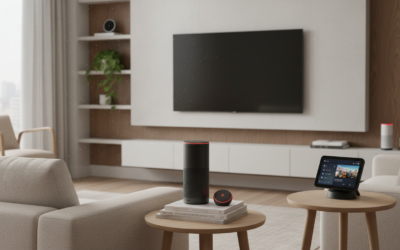
Smart Speakers (Alexa, Google Nest, HomePod)
These are the gold standard for home listening. Because they are always connected to your Wi-Fi, the audio quality is often higher than standard Bluetooth.
- Pros: Voice control (“Alexa, read my book”), seamless integration with Audible.
- Cons: Requires a constant power source and Wi-Fi.
Portable Bluetooth Speakers
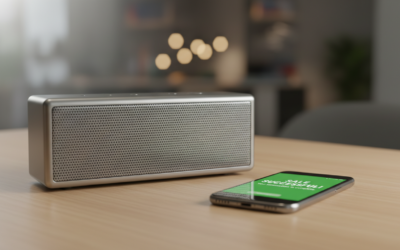
Devices like the JBL Flip or Bose SoundLink are perfect for those who move from the kitchen to the garage.
- Pros: Battery-powered and rugged.
- Cons: You have to keep your phone within Bluetooth range (usually 30-50 feet).
Dedicated Bookshelf Speakers
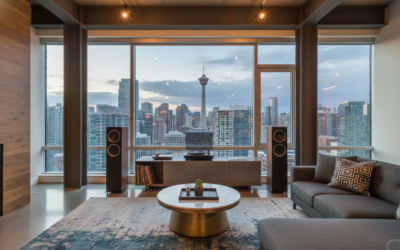
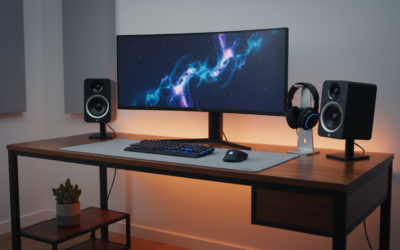
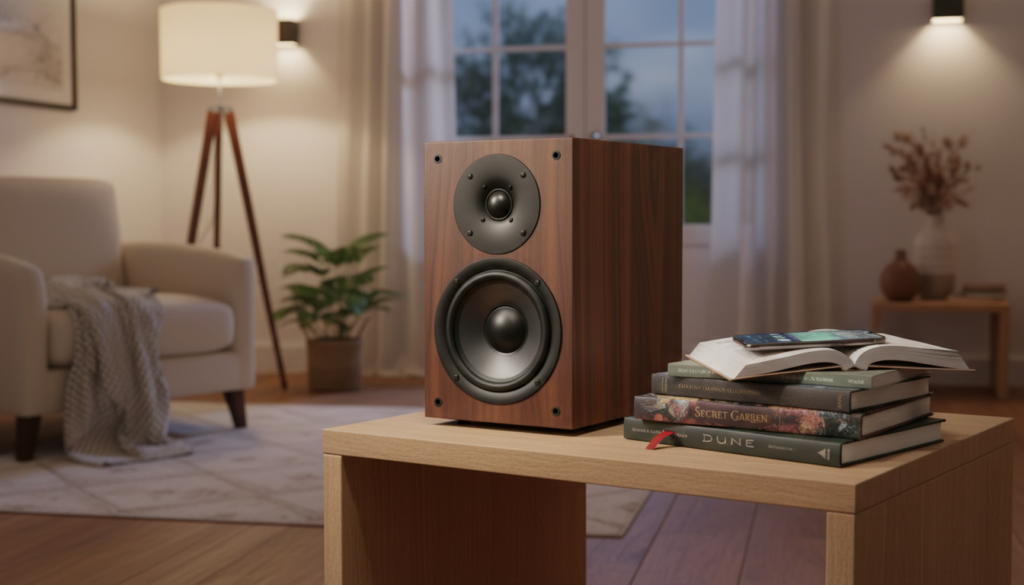
If you want the absolute best fidelity for a narrator like Stephen Fry or Jim Dale, a pair of Powered Bookshelf Speakers (like Edifier or Audioengine) provides a soundstage that headphones simply cannot match.
- Expert Tip: Look for speakers with a “Dialogue” or “Clear Voice” mode in their EQ settings.
Step-by-Step: How to Connect Your Audiobook App to Speakers
Connecting your device is straightforward, but there are a few “pro-user” tricks to ensure the connection doesn’t drop mid-chapter.
Method 1: Connecting via Bluetooth (Universal)
- Turn on your speaker and put it in Pairing Mode.
- Open Settings on your smartphone or tablet and select Bluetooth.
- Tap the name of your speaker (e.g., “Sony SRS-XB”) to connect.
- Open your preferred app (Audible, Scribd, or Libby).
- Press play. The audio will now route through the speaker.
Method 2: Using Casting (Spotify & Google Home)
- Ensure your phone and speaker are on the same Wi-Fi network.
- Open your audiobook in Spotify.
- Tap the “Devices” icon in the bottom left corner.
- Select your Google Nest or Sonos speaker from the list.
- Benefit: This saves phone battery as the speaker streams directly from the cloud.
Method 3: Using Voice Commands (The Hands-Free Way)
If you use Audible and own an Amazon Echo, you don’t even need your phone. Just say:
“Alexa, read [Book Title].”*
“Alexa, go back 30 seconds.”*
“Alexa, set a sleep timer for 20 minutes.”*
Enhancing the Audio Experience: Settings You Should Change
When you stop asking can i listen to audiobooks with speakers instead of headphones and actually start doing it, you’ll notice that room acoustics play a role. To get the best experience, I recommend the following adjustments.
Adjust the Equalizer (EQ)
Human speech lives in the 250 Hz to 4,000 Hz frequency range. To make a narrator’s voice pop on a speaker:
- Lower the Bass: This prevents the “boomy” effect that hides word endings.
- Boost the Mids: This brings the voice forward in the mix.
- Slightly Boost Treble: This helps with “sibilance” (the clarity of ‘s’ and ‘t’ sounds).
Placement Matters
Don’t place your speaker directly against a wall or in a corner. This creates boundary gain, which artificially boosts bass and makes speech harder to understand. I’ve found that placing the speaker at ear level, about 6 inches away from any vertical surface, provides the cleanest narration.
Managing Playback Speed
On speakers, I find I can often listen at higher speeds (1.25x or 1.5x) more comfortably than on headphones. The “openness” of the sound makes it easier for the brain to process the fast-paced words without feeling overwhelmed.
Practical Scenarios: When Speakers Outperform Headphones
In my daily life, I’ve categorized specific times when I intentionally choose speakers over my Bose QuietComfort headphones.
- Cooking and Meal Prep: Flour-covered hands make touching earbuds a nightmare. A voice-controlled smart speaker is the ultimate kitchen companion.
- The Bedtime Routine: I often set a sleep timer on my Sonos speaker. It’s much safer and more comfortable than falling asleep with hard plastic earbuds that might hurt your ears or get lost in the sheets.
- Group Listening: My family often listens to “full-cast” audiobooks (like The Sandman or GraphicAudio productions) during long dinners. It turns a solo hobby into a shared family experience.
- Cleaning the House: Moving between rooms is easier when the audio is loud enough to follow you, or if you have a multi-room audio setup where the book plays in every room simultaneously.
Troubleshooting Common Speaker Issues
Even the best tech has hiccups. Here is how I solve the most common “speaker vs. audiobook” frustrations.
The “Audio Cutoff” Issue
Some Bluetooth speakers have a “power-save” mode that clips the first second of a sentence after a long pause.
- Solution: Ensure your speaker’s firmware is updated via its companion app. If the issue persists, try connecting via an Auxiliary (3.5mm) cable if the speaker supports it.
Sync Issues Between Devices
If you switch from your car speaker to your home speaker, sometimes the position doesn’t sync.
- Solution: Always “Pause” the book and wait 2 seconds before closing the app. This allows the app to “phone home” to the cloud and save your exact timestamp.
Echo or Muffled Sound
If the narrator sounds like they are in a cave, your room might have too many hard surfaces.
- Solution: Move the speaker to a surface with a cloth (like a tablecloth) or add more “soft” items to the room (pillows, rugs) to absorb the bouncing sound waves.
Safety and Etiquette with Speaker Listening
While speakers are great, they do come with a responsibility that headphones don’t. Since you’ve established that can i listen to audiobooks with speakers instead of headphones is a “yes,” you must consider your environment.
- Privacy: Remember that everyone in the house (or the apartment next door) can hear your book. If you’re listening to a spicy romance or a graphic thriller, you might want to keep the volume lower.
- The “Public” Rule: Never use speakers for audiobooks in public spaces like buses, libraries, or parks. In these cases, headphones are the only polite choice.
- Distraction: If you are working in a shared office, even “low” speaker volume can be more distracting to others than music, because the human brain is hard-wired to tune into the patterns of speech.
FAQ: Frequently Asked Questions
Can I use my TV speakers for audiobooks?
Yes! If you have a Smart TV, you can download the Spotify or Audible app directly. Alternatively, you can “Screen Mirror” your phone to the TV or use a Roku/Apple TV device to play your books through your home theater system.
Does listening on speakers use more battery than headphones?
Generally, yes. Your phone uses more energy to broadcast a Bluetooth signal to a large speaker than to a small pair of earbuds. However, if you are “Casting” via Wi-Fi to a smart speaker, your phone acts only as a remote, which actually saves battery life on your mobile device.
Can I connect two speakers to listen to an audiobook in stereo?
Most modern speakers (like Sonos, JBL, or UE) allow you to “pair” two units for stereo sound. While audiobooks are typically recorded in mono or limited stereo, using two speakers provides a much wider “sweet spot,” allowing you to hear clearly no matter where you are in the room.
Is it better to use a wired speaker for audiobooks?
While wireless is more convenient, a wired connection (using an AUX cable) eliminates any “latency” or “lag.” If you are watching a video or following along with a digital text, a wired connection ensures the voice matches the words perfectly.
Can I listen to audiobooks through my car speakers?
Absolutely. Most modern cars use Android Auto or Apple CarPlay. If your car is older, you can use a Bluetooth-to-FM transmitter or a simple Aux-in cable to route the book through your vehicle’s sound system.