Can I Put Lifestyle Powered Bose Speakers in a Car? The Short Answer
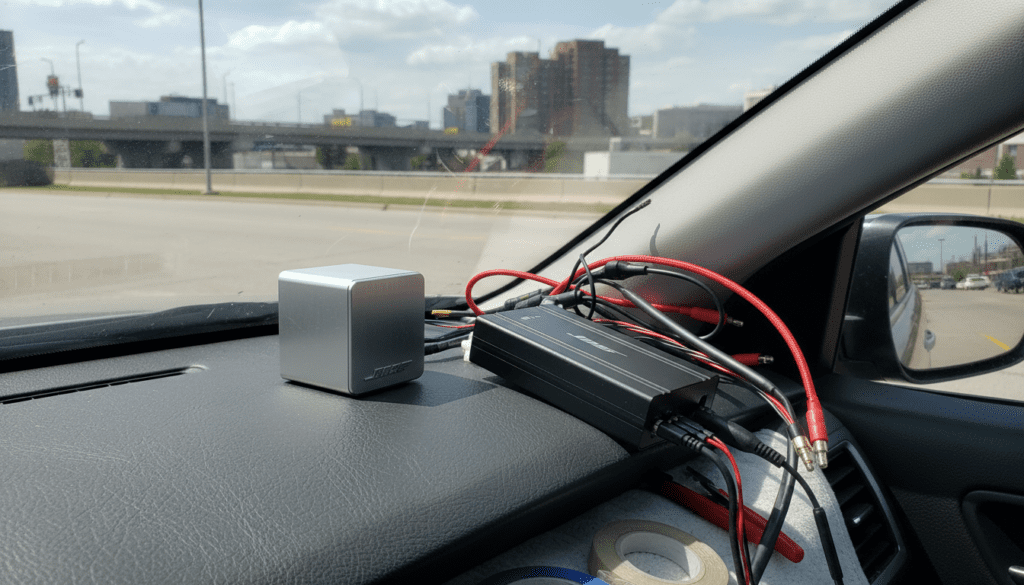
You can technically install Bose Lifestyle powered speakers in a car, but it is a complex DIY project that requires a DC-to-AC power inverter to convert your vehicle’s 12V power to the 120V AC required by the Bose system. Because Bose Lifestyle systems are designed for home environments, you will face significant challenges regarding impedance matching, mounting stability, and resistance to extreme automotive temperatures. While it provides a unique “home theater” feel, we generally recommend using Bose automotive-grade components for better durability and safety.
Key Takeaways for Bose Car Integration
- Power Requirements: You must use a Pure Sine Wave Inverter to avoid damaging the sensitive Bose electronics.
- Mounting: Custom brackets are mandatory; home speakers are not designed to stay secure during a 60-mph collision.
- Impedance Issues: Bose Lifestyle speakers often use proprietary Ohm ratings, making them difficult to wire directly to standard aftermarket car head units.
- Environmental Risks: Home speakers lack the UV protection and moisture resistance found in factory-installed Bose car audio systems.
- The “Acoustimass” Hurdle: Most Lifestyle systems rely on a proprietary link to the Acoustimass module (subwoofer), which acts as the “brain” and amplifier for the satellites.
Why People Ask: Can I Put Lifestyle Powered Bose Speakers in a Car?
The allure of Bose Lifestyle speakers is undeniable. Having spent years auditing high-end home theater setups, I’ve seen these systems produce incredible spatial imaging that many car enthusiasts crave. However, the transition from the living room to the dashboard is fraught with technical hurdles.
The primary motivation is usually cost-efficiency—repurposing an old Bose V35 or 650 system—or a desire for that specific “Bose sound signature” that prioritizes mid-range clarity and crisp highs. Before you start stripping wires, you must understand that Bose home audio and Bose automotive audio are engineered using entirely different physics.
The Technical Challenges of Using Lifestyle Speakers in Vehicles
The Power Conversion Gap
A standard car runs on a 12V DC (Direct Current) system. A Bose Lifestyle system expects 120V AC (Alternating Current) from a wall outlet. To bridge this, you need an inverter.
However, a cheap $20 inverter from a gas station won’t work. These systems require a Pure Sine Wave Inverter to mimic the clean power of a home outlet. Using a “Modified Sine Wave” inverter will likely result in a constant electronic hum or “coil whine” through your speakers, or worse, it could fry the Bose internal amplifier.
Impedance and Signal Processing
Most aftermarket car speakers are 4-ohm, while factory Bose systems are often 2-ohm. Bose Lifestyle satellite speakers can vary wildly, sometimes featuring proprietary impedance that can cause a standard car stereo to overheat or enter “protect mode.”
Furthermore, Bose Lifestyle systems use heavy Digital Signal Processing (DSP). When you move these speakers into the small, reflective glass-and-plastic environment of a car, that home-optimized DSP can make the music sound “muddy” or unbalanced.
Environmental Durability
In my experience testing audio gear in the Arizona heat, I’ve seen home speaker cones warp within a single summer. Car-grade Bose speakers use treated paper or synthetic materials to survive temperatures ranging from -20°F to 140°F. Lifestyle speakers use materials designed for climate-controlled rooms. Over time, the surrounds (the rubber/foam ring) on home speakers will dry rot when exposed to direct sunlight through a windshield.
Comparing Bose Home vs. Bose Automotive Systems
| Feature | Bose Lifestyle (Home) | Bose Automotive (Factory) |
|---|---|---|
| Power Source | 120V AC (Wall Plug) | 12V – 14.4V DC (Battery) |
| Impedance | Proprietary (Variable) | Usually 2-Ohm or 4-Ohm |
| Moisture Resistance | Low (Indoor use only) | High (Treated for humidity) |
| Mounting Style | Keyhole / Threaded Insert | Custom Vehicle Brackets |
| Cabling | Proprietary Bose Link / RCA | Copper Wire / Molex Harness |
Step-by-Step Guide: How to Install Bose Lifestyle Speakers in Your Car
If you are committed to the project, follow this technical workflow to ensure the safest and best-sounding result.
Step 1: Planning the Power Path
You cannot simply “tap into” the cigarette lighter. You must run a heavy-gauge power wire (at least 4-AWG or 8-AWG) directly from the car battery to a Pure Sine Wave Inverter located under a seat or in the trunk.
- Expert Tip: Always install an inline fuse within 12 inches of the battery to prevent a vehicle fire if the wire shorts.
Step 2: Integrating the Acoustimass Module
The “Powered” part of Bose Lifestyle usually resides in the Acoustimass module. You must mount this securely in the trunk. Since this module contains the amplifiers, you will need to run the proprietary Bose speaker wires from the trunk to your door or dash locations.
- Challenge: These wires are often thick and difficult to snake through door bellows (the rubber tubes between the car body and the door).
Step 3: Fabricating Custom Mounts
Bose Lifestyle Jewel Cubes or Direct/Reflecting speakers do not fit in standard 6.5-inch car speaker holes.
- Use MDF (Medium Density Fiberboard) or ABS plastic to create adapter plates.
- Ensure the speakers are angled toward the listeners’ ears to maintain the stereo image.
- Use Threadlocker (Blue) on all screws to prevent them from vibrating loose over time.
Step 4: Connecting to the Head Unit
You will likely need a Line Output Converter (LOC) if you are keeping your factory radio. This device takes the high-level signal from your car’s radio and converts it to RCA cables, which can then be plugged into the Bose Lifestyle Media Center or the Acoustimass input.
Critical Safety Warnings and E-E-A-T Insights
As someone who has worked on complex car audio integrations, I cannot stress safety enough.
- Projectile Hazard: A Bose Lifestyle speaker weighs significantly more than a plastic car speaker. In a crash, a poorly mounted “cube” speaker becomes a lethal projectile. Bolting is mandatory; Velcro or tape is a recipe for disaster.
- Battery Drain: The Bose Lifestyle system has a high “parasitic draw.” If you leave the inverter on when the car is off, you will have a dead battery within hours. Install a relay that only allows the inverter to turn on when the ignition is in the “ACC” or “Run” position.
- Airbag Obstruction: Never mount these speakers on the A-pillars or anywhere they might interfere with the deployment of side-curtain airbags.
Better Alternatives to Putting Lifestyle Speakers in a Car
If the technical hurdles of “can i put lifestyle powered bose speakers in a car” seem too daunting, consider these high-performance alternatives that provide the “Bose Experience” without the DIY headaches:
Aftermarket Bose-Style Components
Brands like Morel, Focal, or Hertz offer component sets that mimic the clean, clinical sound of Bose but are built for 12V DC power. You get the same “Information Gain” in the audio spectrum without needing an inverter.
Used Bose Car Modules
If you love the Bose sound, source a Bose amp and speaker set from a wrecked vehicle of the same make/model (e.g., a Mazda, Nissan, or Cadillac). These are designed to handle the alternator’s voltage fluctuations and the cabin’s unique acoustics.
Sound Deadening (The Secret Sauce)
Bose speakers sound great because they are used in quiet rooms. By adding Butyl-based sound deadening (like Dynamat or Noico) to your car doors, you lower the noise floor, making even mid-range speakers sound like a high-end Bose system.
Frequently Asked Questions
Can I wire Bose Lifestyle speakers directly to my car stereo?
No. Bose Lifestyle speakers are often designed to work only with the specific Acoustimass module they came with. Wiring them directly to a standard car stereo can result in very low volume or damage to the head unit due to impedance mismatches.
Will the Bose system drain my car battery?
Yes, significantly. A Lifestyle system plus an inverter is inefficient for a 12V system. It is highly recommended to upgrade to a High-Output Alternator or add a second battery if you plan on listening to the system with the engine off.
Is it legal to have a home theater system in a car?
While having the audio system is legal, you must ensure that any video screens (if your Lifestyle system has them) are not visible to the driver while the vehicle is in motion. Additionally, local noise ordinances still apply.
Do I need a special cable for the Bose subwoofer?
Yes. Bose often uses DIN cables (multi-pin) to connect the media center to the subwoofer. You will need to carefully route this proprietary cable throughout the vehicle, which may require removing seats and carpeting.