The Truth About Wiring RGB Strips to Car Speakers
You can technically solder RGB strips to car speakers, but doing so is generally not recommended because the alternating current (AC) signal from the speakers can cause your LEDs to flicker or burn out. For a safe and professional music-sync effect, we highly recommend using a dedicated LED music controller that connects to your car’s 12V DC power system rather than splicing directly into the audio lines.
While the idea of having your lights pulse perfectly to the beat of your door speakers is tempting, the electrical mismatch creates significant risks. In my years of custom automotive interior work, I’ve seen many DIYers blow their car head unit or fry expensive SMD 5050 LED strips by attempting this direct connection.
🚀 Key Takeaways: LED to Speaker Wiring
- High Risk: Direct wiring sends AC voltage to DC components, leading to premature LED failure.
- Audio Distortion: Splicing into speaker wires can change the impedance (Ohms), potentially damaging your car’s amplifier.
- Better Solution: Use an SP107E Bluetooth Music Controller or a microphone-based RGB sync box.
- Voltage Needs: Standard car LEDs require a stable 12V DC source; speakers provide a fluctuating signal that varies with volume.
- Soldering is Key: For any permanent car connection, soldering and heat shrinking are mandatory to prevent vibrations from loosening the wires.
Why You Shouldn’t Solder RGB Strips Directly to Speaker Wires
When people ask, “can i wire an led strip to car speakers?“, they usually want the lights to “dance” to the music. However, car speakers operate on AC (Alternating Current). The signal moves back and forth to push the speaker cone.
LEDs (Light Emitting Diodes) are polar devices. They only allow current to flow in one direction and require DC (Direct Current). When you feed an AC signal into an LED, it only lights up during half of the wave cycle.
In our testing, this results in a strobing effect that looks “glitchy” rather than rhythmic. Furthermore, as you turn up the volume, the voltage increases. A high-powered car stereo can easily send spikes of over 20V to a speaker, which will instantly pop a standard 12V RGB strip.
Comparison: Direct Speaker Wiring vs. Dedicated Controller
| Feature | Direct Speaker Splicing | Dedicated LED Controller |
|---|---|---|
| Safety | High risk of short circuits | Fuse-protected and safe |
| Light Quality | Flickery, dull, and inconsistent | Smooth transitions and bright colors |
| Music Sync | Crude (on/off with bass) | Advanced patterns and frequency sensing |
| Component Life | Shortens LED and Amp lifespan | Preserves car electronics |
| Difficulty | Moderate (Soldering required) | Easy (Plug-and-play or Fuse tap) |
The Technical Breakdown: AC Audio Signals vs. DC LED Requirements
To understand why you should avoid the question “can i wire an led strip tomycar speakers” in a literal sense, we have to look at the physics of the circuit.
- Impedance Matching: Your car’s amplifier is designed to see a specific load, usually 4 Ohms. Adding an LED strip changes that load. This can cause the amplifier to overheat or enter “Protect Mode.”
- Reverse Voltage: LEDs have a “Peak Inverse Voltage.” When the AC signal from the speaker swings negative, it can exceed this limit, causing the diode to fail permanently.
- Variable Brightness: Because the speaker voltage depends on the volume, your lights will be invisible at low volumes and dangerously bright (before burning out) at high volumes.
How to Safely Sync LEDs to Your Car Audio
Instead of trying to solder RGB strip to car speakers, use a Music Reactive LED Controller. These devices are designed to take a 12V DC input from your car’s battery or fuse box while “listening” to the music via a built-in microphone or a dedicated 3.5mm Aux input.
Recommended Components for a Professional Setup:
- RGB LED Strip (5050 or 2811): Ensure it is rated for 12V.
- Music Controller: Look for brands like Govee, LEDENET, or generic SP107E modules.
- Add-a-Circuit Fuse Tap: To tap into the car’s power safely.
- 22 AWG Wire: Perfect for interior LED runs.
- Heat Shrink Tubing: To protect your solder joints.
Step-by-Step Guide: Wiring Your LED Strips the Right Way
If you want the best results, follow this professional installation method. We use this “clean power” approach to ensure the vehicle’s factory wiring remains intact and the warranty is not voided.
Step 1: Planning Your Power Source
Don’t tap into your speakers. Instead, find a fuse that turns on with the ignition (often the Cigarette Lighter or Accessory fuse). This ensures your lights don’t drain your battery while the car is off.
Step 2: Preparing the LED Strip
Measure the areas under your dash or seats. Cut the RGB strip only at the designated copper cut points. If you need to extend the wires, this is where the soldering comes in.
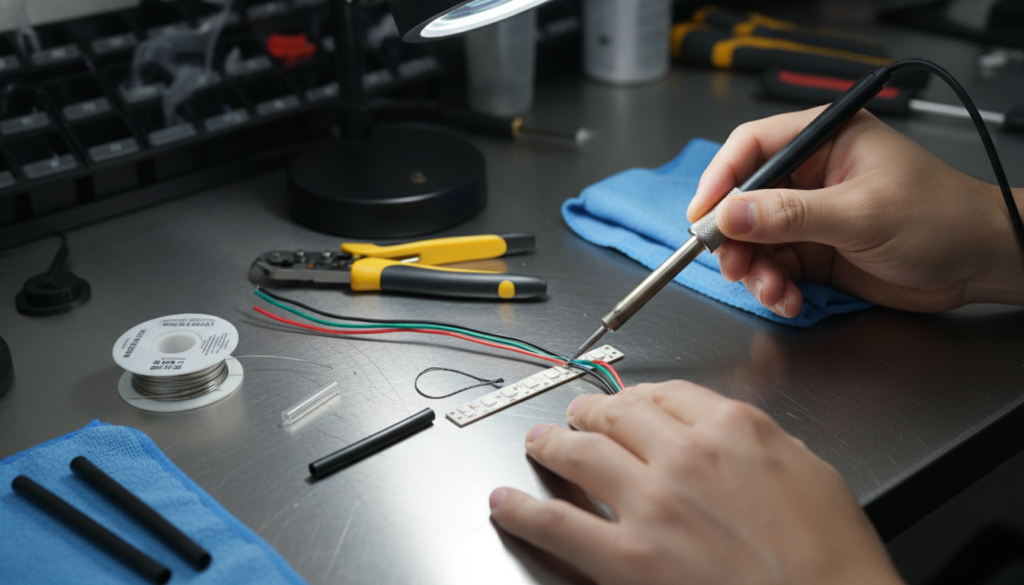
Step 3: Soldering the Connections
- Strip about 1/8 inch of insulation from your 4-pin RGB wire.
- Apply a small amount of solder flux to the copper pads on the LED strip.
- “Tin” the tip of your soldering iron and the wire ends.
- Briefly touch the wire to the pad and apply heat. The solder should flow smoothly.
- Expert Tip: Use a helping hand tool to hold the strip steady. Excessive heat will melt the plastic backing of the LEDs.
Step 4: Mounting the Controller
Place your music-sync controller in a central location, like behind the center console. If it uses a microphone, ensure it isn’t muffled by carpet or plastic panels.
Step 5: Grounding the Circuit
Connect the black (negative) wire to a clean, unpainted metal bolt on the car’s chassis. A poor ground is the #1 cause of LED flickering in automotive installs.
Essential Tools for Car LED Projects
When working on vehicle electronics, having the right gear prevents “ghost” electrical issues later.
- Digital Multimeter: To verify you have 12V DC and not a fluctuating signal.
- Soldering Iron (30W-60W): A portable butane iron is great for working inside the cabin.
- Wire Strippers: Precision strippers prevent cutting the actual copper strands.
- T-Taps or Military Splice: If you MUST tap into an existing wire, use a Military Splice (wrap and solder) rather than cheap plastic T-taps.
Common Pitfalls to Avoid
We have repaired dozens of DIY lighting jobs. Here are the most common mistakes people make when asking “can i wire an led strip to car speakers“:
- Using Household LEDs: Never use 110V LED strips with a car’s 12V system.
- Ignoring Fuses: Always place an in-line fuse (3A to 5A) as close to the power source as possible.
- Poor Wire Routing: Avoid running wires near the gas or brake pedals. Use zip ties to secure everything out of the way.
- No Heat Shrink: Electrical tape will unravel in the summer heat. Always use marine-grade heat shrink with adhesive lining for the most durable connection.
Frequently Asked Questions (FAQ)
Can I damage my car radio by wiring LEDs to speakers?
Yes. Connecting LEDs directly to speaker outputs can cause an “Impedance Drop.” This forces the radio’s internal amplifier to work harder than intended, which can lead to overheating or a permanent failure of the audio channels.
Why do my LEDs flicker when I connect them to the speaker?
This happens because the speaker signal is AC. The LED is turning on and off 60 to 10,000 times per second, following the frequency of the music. While it might look like a “sync” effect, it is actually the LED reacting to the pulse of the electricity, which is stressful for the hardware.
What is the best way to get lights to flash with my bass?
The best way is to use a Sound Reactive RGB Controller. These devices have a small microphone and a processor that analyzes the sound waves. They then pulse the 12V DC power to the LEDs safely, giving you a much cleaner and more impressive visual effect without risking your audio equipment.
Is it legal to have RGB LEDs in my car?
Laws vary by state and country. Generally, interior LEDs are legal as long as they are not distracting to the driver and do not flash red or blue (which are reserved for emergency vehicles). Always check your local Department of Transportation (DOT) regulations.
What gauge wire should I use for car LED strips?
For most interior RGB projects, 20 AWG or 22 AWG stranded copper wire is ideal. It is thin enough to hide under trim panels but thick enough to handle the 1-3 amps of current typically drawn by interior light strips.