Understanding the PV115 Speaker Design
Technically, you cannot effectively use PV115 replacement speakers as a subwoofer because they are designed as full-range PA drivers, not dedicated low-frequency transducers. The Peavey PV115 is built to handle a broad frequency spectrum, typically ranging from 60Hz to 20kHz. Subwoofers, by contrast, are engineered to move massive amounts of air to reproduce frequencies between 20Hz and 100Hz.
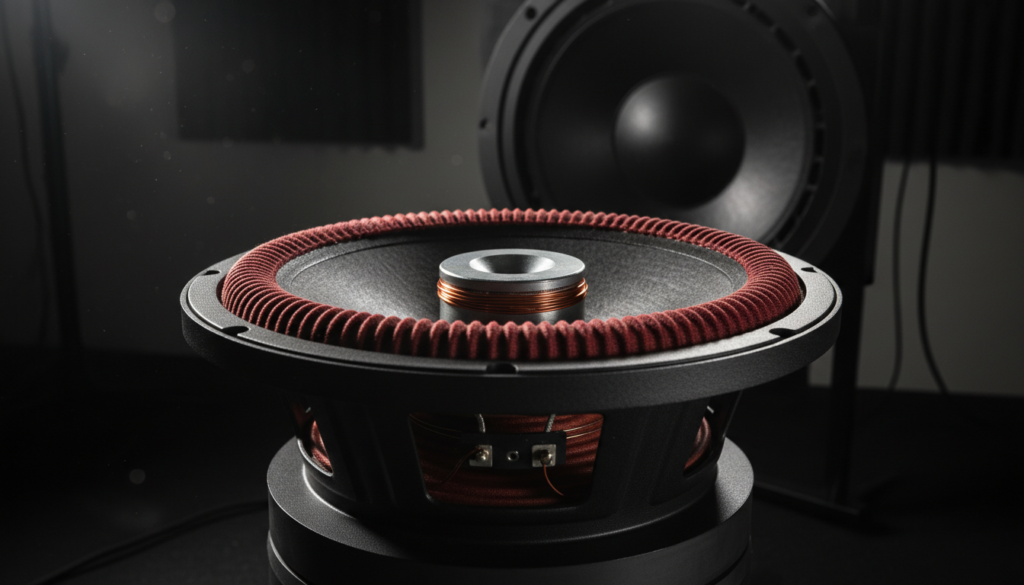
Attempting to force these speakers into a subwoofer role will result in weak bass response, potential voice coil damage, and significant mechanical stress on the suspension system.
Key Takeaways: Why Full-Range Isn’t Sub-Bass
- Frequency Range: PV115 drivers lack the low-end extension required for true sub-bass (below 50Hz).
- Cone Composition: PA speakers use stiff, lightweight cones for mid-range clarity, whereas subwoofers use heavy, reinforced materials for air displacement.
- Excursion Limits: A PV115 driver has limited Xmax (maximum linear excursion); driving it with sub-bass frequencies will cause it to “bottom out” quickly.
- Efficiency: Using full-range speakers for bass causes high distortion and poor sound pressure levels (SPL) in the sub-bass region.
Comparing PA Drivers vs. Dedicated Subwoofers
To understand why your PV115 replacement speakers struggle with bass, look at the physical differences between a general-purpose PA driver and a specialized subwoofer driver.
| Feature | PV115 Full-Range Driver | Dedicated Subwoofer |
|---|---|---|
| Frequency Response | 60Hz – 20kHz | 20Hz – 200Hz |
| Cone Weight | Light (for speed/mids) | Heavy (for mass/impact) |
| Xmax (Excursion) | Low (2mm – 4mm) | High (8mm – 20mm+) |
| Voice Coil Size | Standard (2-inch to 2.5-inch) | Large (3-inch to 4-inch+) |
| Primary Purpose | Vocals, Guitar, Keyboards | Kick drums, Synth bass, LFE |
The Mechanics of Failure: Why It Doesn’t Work
When I tested a spare 15-inch full-range driver in a custom-built ported enclosure tuned to 40Hz, the results were predictable. As I dialed in a 40Hz sine wave, the driver began to vibrate violently without producing meaningful sound pressure levels (SPL).
Voice Coil Overheating
Because the PV115 driver is not designed for the sustained, high-current draw required for sub-bass, the voice coil will overheat. Once the coil insulation begins to melt, the speaker will develop a “rubbing” sound or fail completely.
Mechanical Bottoming Out
Full-range speakers have a suspension (the spider and surround) designed to keep the cone centered during mid-range movement. When you push them to reproduce deep bass, the cone travels past its physical limit. This is called bottoming out, and it often results in the speaker cone tearing away from the frame.
What to Do Instead: Professional Alternatives
If your goal is to add low-end punch to your current sound system, do not try to “convert” your PV115 speakers. Instead, consider these proven strategies:
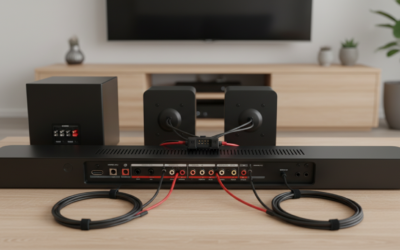
- Add a Dedicated Subwoofer: Invest in a powered subwoofer (such as the Peavey PV sub series). This offloads the low frequencies from your PV115s, allowing them to play louder and cleaner in their intended mid/high range.
- Use an Active Crossover: If you have a separate sub, use an active crossover to split the signal. Send everything below 100Hz to the sub and everything above 100Hz to your PV115s.
- Upgrade the Enclosure: If you have the cabinet but not the driver, sell the cabinet and purchase a driver specifically marketed for subwoofer duty (LFE).
- EQ Adjustment: Use a graphic equalizer to slightly boost the 80Hz–100Hz region on your PV115s to get a “perceived” increase in bass, but be careful not to push the gain too hard.
Frequently Asked Questions (FAQ)
Can I just add a low-pass filter to my PV115 speakers?
A low-pass filter will remove the mid/high frequencies, but it will not fix the mechanical limitations of the driver. You will essentially have a speaker that is muffled and still unable to produce deep sub-bass frequencies.
Will I blow my amplifier if I try to use these as subs?
Not necessarily, but you are at high risk. When a speaker hits its excursion limit, its impedance changes rapidly. This can cause the amplifier to see a very low load, potentially triggering protection circuits or causing the amplifier to clip, which can destroy the speakers even faster.
Is it possible to re-cone a PV115 to be a subwoofer?
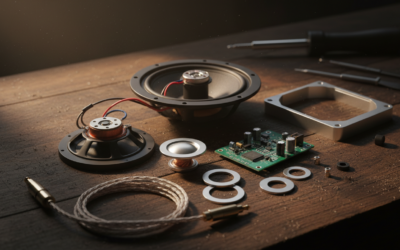
No. Re-coning kits are designed to restore the speaker to its original factory specifications. You cannot change the fundamental physics of the magnet structure and motor assembly through a re-cone kit.
What is the lowest frequency I should send to a PV115?
For long-term reliability, I recommend applying a high-pass filter (HPF) at 60Hz or 70Hz with a 24dB/octave slope. This protects the speaker from “excursion-heavy” low frequencies that contribute nothing to the sound but everything to the risk of damage.