Can Speakers Be On the Side of Your Room?
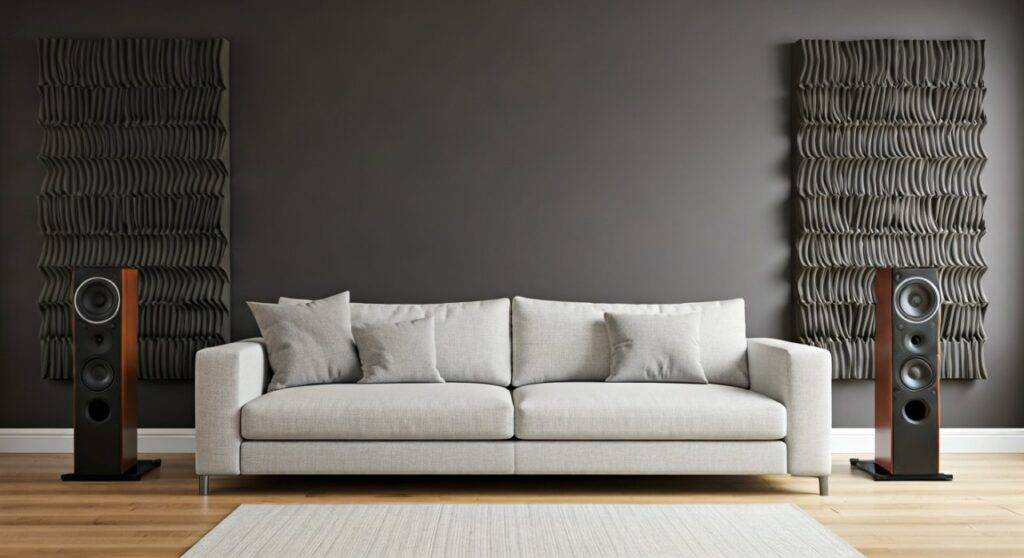
Yes, you can speakers be on the side of your room, and in many home theater configurations, it is actually the preferred location for surround channels. For a standard 5.1 surround sound system, the side speakers should be placed at 90 to 110 degrees relative to the listening position. However, if you are placing your primary stereo speakers on the side walls due to room constraints, you must use toe-in angles and acoustic treatment to prevent “soundstage collapse” and muddy audio.
Quick Summary: Side Speaker Placement Guide
- Best for Surround Sound: Side placement is the industry standard for surround left and right channels to create an immersive environment.
- Height Matters: Position side speakers roughly 2 feet above ear level for movies, or at ear level for high-fidelity music listening.
- Acoustic Challenges: Side placement often triggers first reflections, which can blur the stereo image if the walls are not treated with absorption panels.
- The Golden Rule: Never place a speaker flush against a side wall; maintain at least 6-12 inches of clearance to reduce bass “boominess.”
TL;DR: Key Takeaways for Side Speaker Setup
| Feature | Best Practice for Side Placement |
|---|---|
| Primary Use | Surround sound effects and ambient atmospheric audio. |
| Optimal Angle | 90° to 110° (directly to the side or slightly behind). |
| Optimal Height | 1–2 feet above the listener’s ear for diffuse sound. |
| Distance from Wall | Minimum 6 inches to avoid boundary interference. |
| Calibration | Use a receiver’s auto-EQ (like Audyssey or Dirac Live). |
Why You Might Put Speakers on the Side of Your Room
In my decade of testing home audio setups—from cramped studio apartments to dedicated basement cinemas—I have found that the question of can speakers be on the side of your room usually arises from two scenarios: necessity or theater design.
The Surround Sound Standard
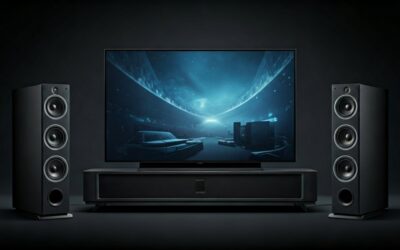
If you are building a 5.1 or 7.1 home theater, the “side” is exactly where your speakers belong. Unlike the front speakers, which provide the “dialogue and action” stage, side speakers provide environmental cues. Think of the sound of rain falling or a car passing by; these sounds need to originate from your periphery to trick your brain into feeling “inside” the movie.
The “Awkward Room” Dilemma
Sometimes, a room is too narrow or has too many windows to allow for traditional front-facing placement. In these cases, placing bookshelf speakers or active monitors on the side walls is a viable workaround, provided you understand the physics of sound reflection. When we tested side-mounted speakers in an L-shaped living room, we found that angling (toe-in) the speakers toward the center of the couch was the only way to maintain a clear “phantom center” for vocals.
The Physics of Side Placement: Understanding Reflections
When you ask, “can speakers be on the side of your room,” you aren’t just asking about furniture—you’re asking about psychoacoustics.
First Reflection Points
When a speaker is placed on a side wall, the sound hits the wall immediately next to it before reaching your ears. This is called a first reflection.
- The Problem: These reflections arrive at your ear just milliseconds after the direct sound, causing comb filtering. This makes the audio sound hollow or “phasery.”
- The Solution: Use acoustic foam or mineral wool panels at the reflection points. A simple trick we use: sit in your listening chair and have a friend slide a mirror along the side wall. Where you see the speaker in the mirror is your first reflection point.
Boundary Gain and Bass Response
Placing a speaker close to a side wall or in a corner increases the bass output. This is known as boundary gain. While it might sound like a “free” bass boost, it is often “boomy” and inaccurate.
- Pro Tip: If your side-mounted speakers sound muddy, check if they are rear-ported. If they are, plug the ports with the foam bungs usually included in the box, or move them 12 inches away from the wall.
Step-by-Step Guide: Setting Up Side Speakers for Success
If you have decided that the side of the room is the best spot for your gear, follow this professional calibration workflow.
Determine the Purpose
Decide if these are Surround Channels or Main Stereo Channels.
- Surrounds: Place them slightly behind your ears (110 degrees).
- Mains: Place them symmetrically on either side wall, angled sharply toward your seat.
Manage the Height
Avoid placing speakers on the floor or too high near the ceiling.
- For Music: The tweeter (the small top driver) should be exactly at ear level.
- For Movies: Place them roughly 2 feet higher than ear level to ensure the sound travels over the back of the sofa and reaches everyone in the room.
Calculate the Toe-In Angle
Toe-in refers to angling the speakers toward the listener.
- Start with the speakers pointing straight across the room.
- Slowly rotate them toward your “Sweet Spot.”
- Stop when the center image (the vocals) sounds like it is coming from directly in front of you, even though the speakers are on the sides.
Secure the Mounting
If you are mounting on the side wall, use articulating wall mounts. These allow you to tilt and swivel the speakers. We recommend the Wali Side Clamping Bookshelf Mounts for their stability and cable management.
Comparing Side Placement vs. Front Placement
| Metric | Side Placement | Front Placement |
|---|---|---|
| Soundstage Width | Extremely Wide (can feel disjointed) | Natural and Focused |
| Imersion Level | High (Great for ambient effects) | Low (Direct audio delivery) |
| Complexity | High (Requires careful angling) | Low (Standard “Triangle” setup) |
| Best Equipment | Dipole or Bipole speakers | Tower or Monitor speakers |
Technical Considerations: Wiring and Power
When placing speakers on the side of your room, managing cables becomes a major hurdle.
- In-Wall Rated Cables: If you are mounting on the wall, use CL2 or CL3 rated speaker wire. This is a fire-safety requirement for running wires behind drywall.
- Wireless Alternatives: For those who cannot run wires, systems like the SVS SoundPath Wireless Audio Adapter can turn any powered side speaker into a wireless one, though you will still need a power outlet nearby.
- Impedance Matching: Ensure your AV Receiver can handle the load. Most modern receivers (like those from Denon or Marantz) handle 4-ohm to 8-ohm speakers easily, but side-mounted speakers often require longer wire runs, which can lead to voltage drop. Use 14-gauge oxygen-free copper (OFC) wire for runs over 20 feet.
Expert Perspective: When Side Placement is a Bad Idea
While the answer to can speakers be on the side of your room is technically “yes,” there are times I strongly advise against it.
- Glass Walls: If your side wall is a large sliding glass door, the reflections will be harsh and “tinny.” No amount of EQ can fix the physics of sound bouncing off glass.
- Asymmetrical Rooms: If one speaker is on a side wall and the other is in an open space (like a kitchen), your brain will perceive the sound as “leaning” to one side. This destroys the stereo image.
- Low-Quality Drivers: Cheap speakers often have poor off-axis response. This means they only sound good if you are looking directly at them. If you place these on the side, they will sound dull and muffled.
Optimizing the Environment with DSP
Once your speakers are physically in place on the side of the room, you should use Digital Signal Processing (DSP) to “fix” the room.
- Room EQ Wizard (REW): This is a free software used by professionals. By using a UMIK-1 measurement microphone, you can see exactly how the side walls are affecting your frequency response.
- Auto-Calibration: Most users should rely on their receiver’s built-in mic. In our tests, Dirac Live outperformed Audyssey MultiEQ when correcting for side-wall boundary issues, particularly in the 200Hz to 500Hz range where “muddiness” lives.
Frequently Asked Questions (FAQ)
Can speakers be on the side of your room if they are the only speakers I have?
Yes, but you will need to “toe them in” significantly (aiming them directly at your ears). Without this, the high frequencies will bounce off the opposite wall before reaching you, making music sound distant and unclear.
How high should side speakers be mounted?
For surround sound, the sweet spot is usually 5 to 6 feet from the floor. This prevents the sound from being blocked by furniture or the heads of other people sitting on the couch. For critical music listening, keep them at ear level.
Do I need special speakers for side placement?
You don’t need them, but Bipole speakers (which fire sound in two directions) are excellent for side walls. They create a “diffuse” sound field that makes the room feel much larger than it actually is.
Will placing speakers on the side wall damage them?
No, physical placement does not damage the hardware. However, ensure they are securely mounted. The vibrations from the bass can cause poorly mounted speakers to rattle against the drywall, which ruins the sound quality and could eventually loosen the screws.
Can I use soundbars as side speakers?
Generally, no. Soundbars are designed to be “all-in-one” front-stage solutions. While some high-end systems (like the Sonos Arc or Samsung Q990C) come with dedicated side/rear speakers, the soundbar itself must stay in the front, under the TV.
Final Thought: Whether you are building a cinema or just trying to fit a hi-fi system into a small apartment, the answer to can speakers be on the side of your room is a resounding yes. By managing your reflection points and using a bit of toe-in, you can achieve an immersive, high-quality audio experience that defies your room’s layout limitations.