Yes, Speakers Can Be Purchased at Salvage Yards
Can speakers be purchased at salvage yard locations? Yes, you can absolutely buy high-quality speakers at salvage yards, and it is often the most cost-effective way to upgrade a factory sound system or find replacement parts for a fraction of the retail price. Most “U-Pull-It” style yards price individual speakers between $5 and $20, even for premium brands like Bose, Harman Kardon, or JBL.
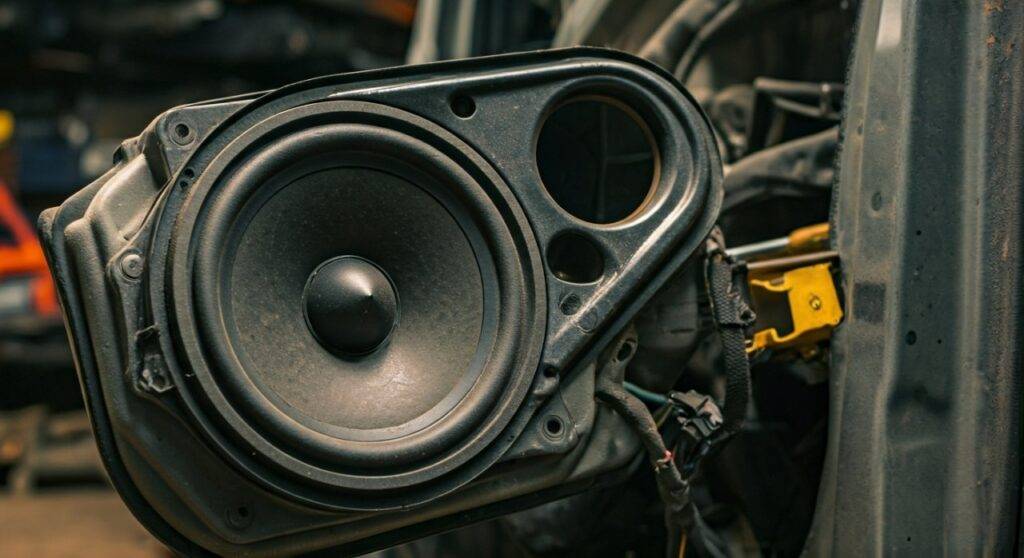
In my years of scavenging through local pick-and-pull lots, I’ve found that the secret to success lies in knowing which trim levels to target and how to test components on-site before you pay. While most people are looking for engines or fenders, the audio gems are often left untouched in the cabin. This guide will show you exactly how to identify, test, and extract the best speakers the yard has to offer.
🚀 TL;DR: Quick Guide to Salvage Yard Speaker Hunting
- Primary Value: Get premium OEM speakers (Bose, Sony, Alpine) for 80-90% less than new prices.
- Essential Tool: Bring a 9V battery to test for voice coil movement and “pop” sounds.
- Best Targets: Look for “Luxury Package” badges on vehicles like Lexus, Acura, Audi, and high-trim Ford or Toyota models.
- Key Risks: Check for foam rot (deteriorating surrounds) and water damage in the door panels.
- Compatibility: Always check the impedance (ohms); many factory premium systems use 2-ohm speakers which can damage standard 4-ohm aftermarket head units.
Why Buy Speakers at a Salvage Yard?
The value proposition for purchasing speakers at a salvage yard is unmatched if you are on a budget. Most modern vehicles, especially those from the last 15 years, come equipped with surprisingly sophisticated audio components.
When a car is totaled due to a rear-end collision or engine failure, the interior components—including the door speakers, tweeters, and subwoofers—usually remain in pristine condition. Unlike mechanical parts, speakers don’t have “mileage” in the traditional sense; if they weren’t blown by the previous owner, they likely have years of life left.
Price Comparison: Salvage vs. New
| Speaker Type | Salvage Yard Price (Avg) | New OEM Price | Aftermarket Equivalent |
|---|---|---|---|
| Standard 6.5″ Door | $5 – $10 | $45 – $80 | $60 – $120 |
| Premium (Bose/JBL) | $10 – $25 | $120 – $300 | $150 – $400 |
| Tweeters | $2 – $5 | $30 – $60 | $40 – $100 |
| Subwoofers (8-10″) | $15 – $40 | $200 – $500 | $150 – $600 |
How to Identify Premium Speakers in the Yard
Not all car speakers are worth the effort of removal. To maximize your “Information Gain,” you need to know which manufacturers partnered with which car brands. Most base-model speakers use cheap paper cones and tiny magnets that aren’t worth the $5 entry fee to the yard.
The “Big Name” Partnerships to Look For
When you are wondering if speakers can be purchased at a salvage yard that actually sound good, look for these specific badges on door grilles or trunk enclosures:
- Mark Levinson (Lexus): Widely considered some of the best factory audio ever made. These speakers use high-quality materials but often have unique impedance ratings.
- Bose (Mazda, Nissan, GM, Porsche): Very common. Look for the silver Bose badge. These are usually 2-ohm speakers.
- Harman Kardon (BMW, Mercedes-Benz, Subaru): Known for excellent clarity and durable rubber surrounds.
- Bang & Olufsen (Audi, Ford): Found in newer, higher-end trims. These feature advanced cone materials like Kevlar or treated paper.
- Sony (Ford high-trim): Usually found in the “Titanium” or “Limited” trims of the F-150, Explorer, and Fusion.
Visual Cues of Quality
If the speaker doesn’t have a brand name, look at the construction:
- Magnet Size: Larger magnets generally indicate better power handling.
- Surround Material: Rubber surrounds last much longer than foam surrounds, which tend to crumble over time (foam rot).
- Cone Material: Look for polypropylene (plastic), Kevlar, or coated silk rather than plain, thin paper.
The Pro’s Toolkit: What to Bring
You cannot simply rip a speaker out with your hands. To ensure you don’t damage the mounting tabs or the speaker cone, I recommend carrying a small “audio extraction kit.”
- 9V Battery: This is the most important tool. Touch the speaker terminals to the battery posts. If you hear a “pop” and see the cone move, the voice coil is intact.
- Cordless Drill/Driver: Many door panels are held by dozens of screws. A manual screwdriver will take forever.
- Plastic Trim Tools: Essential for prying off door panels without shattering the aging plastic clips.
- Wire Snippers: Sometimes the factory wiring harness is stuck; you may need to cut the wire (leave at least 3 inches of “pigtail” for easier installation later).
- Multimeter: If you want to be precise, use a multimeter to check the DC resistance. This tells you if the speaker is 2-ohm, 4-ohm, or 8-ohm.
Step-by-Step Guide to Extracting Salvage Speakers
Once you’ve identified a donor vehicle, follow these steps to ensure you get the part out safely.
Check for Moisture
Before unscrewing anything, feel the bottom of the door carpet or the area around the speaker grille. If the car had a window left open or a leaky door seal, the speaker might have water damage or mold. If it’s damp, move to the next car.
Remove the Door Panel
Locate the hidden screws. These are usually behind the door handle pull, inside the armrest pocket, or along the very bottom edge of the panel. Use your trim tools to pop the plastic “Christmas tree” clips around the perimeter.
Test Before You Unscrew
Before taking the time to remove the four to six screws holding the speaker in, perform the 9V battery test.
- Locate the positive and negative terminals.
- Touch the battery to them briefly.
- Solid Pop: Good.
- Scratchy sound or no movement: The voice coil is frozen or burnt. Leave it.
Inspect the Surround
Look closely at the ring connecting the cone to the metal frame. If you touch it and it turns to dust, that is foam rot. While you can buy re-foaming kits, it’s usually not worth the effort for salvage speakers unless they are rare Mark Levinson or JBL units.
Understanding Impedance (The “Ohms” Trap)
One critical mistake many DIYers make when purchasing speakers at a salvage yard is ignoring impedance.
Most aftermarket car stereos (Pioneer, Kenwood, Sony) are designed for 4-ohm speakers. However, many factory premium systems (especially Bose) use 2-ohm speakers.
- The Risk: If you install a 2-ohm salvage speaker into a 4-ohm head unit, the head unit will try to put out twice the power it was designed for. This can cause the internal amplifier to overheat and fail.
- The Solution: Always check the back of the magnet. Most OEM speakers have the ohm rating stamped on them. If not, use your multimeter to verify.
Top 5 Vehicle Models to Hunt for Audio Upgrades
Based on my experience in various yards, these models consistently provide the best “bang for your buck” audio components.
2000-2006 Lexus LS430 / ES330
These often contain Mark Levinson components. The subwoofers in the rear deck are legendary, though they frequently need a 5-minute foam repair.
2005-2015 Toyota Avalon (Limited Trim)
The JBL Synthesis systems in these cars are incredible. The door speakers feature massive magnets and high-quality silk dome tweeters that can easily be adapted to other vehicles.
2010-2018 Ford F-150 (Lariat/Platinum)
Look for the Sony or B&O logos. The door speakers are standard 6×9 or 6.5-inch sizes, making them very easy to swap into other trucks.
2004-2010 Mazda 6 / Mazda 3
The Bose systems in these are very common in salvage yards. They offer a significant punch over base-model speakers and usually fit perfectly in other Japanese imports.
Early 2000s Volvo V70 / S60
Volvo audio is notoriously underrated. Their high-end “Dynaudio” or “Premium Sound” speakers use extremely high-quality drivers that audiophiles often harvest for home theater DIY projects.
Common Issues and How to Fix Them
Buying used electronics always carries a small risk. Here is how we handle the most common “salvage yard finds” issues:
Fixing Foam Rot
If you find a rare, high-end speaker with a crumbled edge, don’t leave it. You can buy a re-foam kit online for about $15. You simply scrape off the old foam and glue a new rubber or foam ring in place. This can make a $10 salvage speaker perform like a $200 boutique driver.
Cleaning Corroded Terminals
Salvage yard cars are exposed to the elements. If the speaker terminals look green or crusty (oxidation), use a bit of sandpaper or a wire brush to clean them down to the bare metal. Apply a small amount of dielectric grease to prevent future corrosion.
Dealing with Proprietary Brackets
Many OEM speakers are built into a plastic bracket that is specific to that car’s door. You may need to use a Dremel or a small saw to cut the speaker out of the bracket so you can mount it into your vehicle’s standard opening.
Environmental and Ethical Benefits
When speakers are purchased at a salvage yard, you aren’t just saving money; you are participating in a circular economy.
- Waste Reduction: You are preventing heavy magnets and plastics from entering landfills.
- Resource Conservation: Manufacturing new speakers requires rare earth metals (for magnets) and petroleum-based plastics. Reusing perfectly functional components reduces the demand for new production.
Frequently Asked Questions (FAQ)
Can speakers be purchased at salvage yard locations for home audio use?
Yes! Many hobbyists harvest high-end automotive speakers (like those from Volvo or Lexus) to build custom home bookshelf speakers. You will just need to ensure your home amplifier can handle the lower impedance (usually 4 ohms) common in car audio.
Do salvage yards offer any warranty on speakers?
Most yards offer a 30-day exchange policy. They rarely give cash refunds for electronics, but they will give you store credit or let you swap the speaker for another one if it turns out to be blown. Always keep your receipt and the marking the yard puts on the part.
How do I know if a speaker is “blown” without a battery?
Gently and evenly press down on the speaker cone with your fingers. It should move smoothly in and out. If you feel a gritty sensation or if it is stuck and won’t move at all, the voice coil is damaged, and the speaker is “blown.”
Are salvage yard speakers better than cheap new ones?
In most cases, yes. A mid-tier OEM Bose speaker from a salvage yard will typically have better frequency response and build quality than a “budget” $30 pair of new speakers from a big-box retailer. The materials used in premium factory systems are designed to last the life of the vehicle.