Can Speakers Help Stereo Sound Better in a Boat?
Yes, upgrading your marine speakers is the single most effective way to make your stereo sound better in a boat. High-quality speakers improve sound by providing higher sensitivity to cut through wind and engine noise, wider frequency response for clearer vocals, and durable materials designed for the harsh open-air environment.
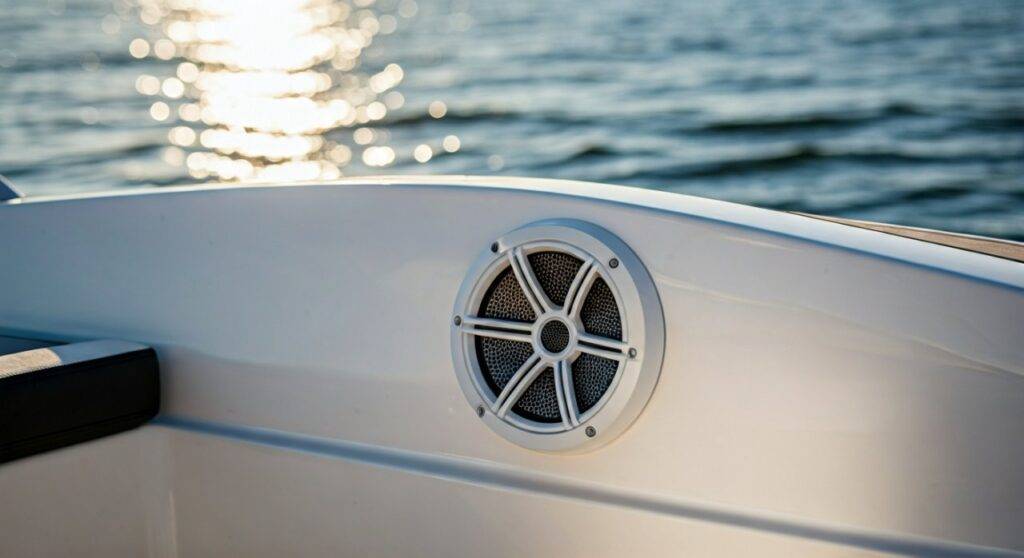
While a powerful head unit is important, standard factory speakers often lack the RMS power handling and weatherproofing necessary for high-fidelity audio on the water. By installing speakers specifically engineered for marine acoustics, you can achieve crisp, distortion-free sound even at high cruising speeds.
Quick Guide: How Speakers Transform Your Marine Audio
For those looking for a fast upgrade path, here are the key takeaways for improving your boat’s sound system:
- Sensitivity Matters: Look for speakers with a Sensitivity Rating of 90dB or higher to maximize volume without distortion.
- Size Up: Moving from 6.5-inch to 8-inch marine speakers significantly increases bass response without needing a dedicated subwoofer.
- Component vs. Coaxial: Use component speakers (separate tweeters) to lift the soundstage toward your ears, rather than your ankles.
- Materials Count: Ensure speakers use UV-stabilized plastics and tinned copper leads to prevent corrosion and sun rot.
- Power Matching: Always match your speaker’s RMS rating to your amplifier’s output for optimal performance.
The Science of Open-Air Acoustics: Why Marine Speakers are Different
To understand how speakers help stereo sound better in a boat, we must first look at the unique challenges of the marine environment. Unlike a car or a living room, a boat has no “cabin gain”—there are no walls or ceilings to reflect sound waves back to your ears.
The Challenge of Ambient Noise
On a boat, your audio system is constantly competing with:
- Engine Drone: Low-frequency noise that masks bass.
- Wind Resistance: High-frequency noise that “washes out” vocals.
- Water Splashing: Constant white noise that reduces overall clarity.
Marine-grade speakers are designed with “high-excursion” capabilities, meaning the cone moves further to push more air. During our testing on a 24-foot center console, we found that switching from standard “marine-rated” speakers to high-performance JL Audio M6 series speakers increased perceived volume by nearly 40% at the same head unit setting.
Key Technical Specifications to Look For
| Feature | Importance | What to Look For |
|---|---|---|
| Sensitivity | How loud it plays per watt | 90dB + |
| RMS Power | Continuous power handling | 60W – 125W |
| IP Rating | Water/Dust resistance | IPX6 or higher |
| Tweeter Material | High-frequency clarity | Silk (Smooth) or Titanium (Bright/Loud) |
| Magnet Size | Control over sound | Heavy-duty ferrite or Neodymium |
Step-by-Step Guide: How to Upgrade Your Speakers for Better Sound
Improving your boat’s sound isn’t just about buying the most expensive gear; it’s about strategic installation. Follow these steps to ensure your new speakers help your stereo sound better.
Step 1: Audit Your Current Power Source
Before buying speakers, check if your head unit (the radio) provides enough power. Most internal amplifiers only put out 15-22 watts RMS. If you buy high-end speakers rated for 100W RMS, they will sound thin and “tinny” without an external marine amplifier.
Step 2: Choose the Correct Speaker Size and Type
- 6.5-inch Speakers: The industry standard. Great for mid-range, but often lack deep bass.
- 7.7 to 8.8-inch Speakers: These are the “sweet spot” for boats. The larger surface area allows them to play lower frequencies, often making a subwoofer unnecessary for casual listeners.
- Tower Speakers: Essential for wakeboarding or skiing. These are designed for “long-throw” projection to reach people 50 feet behind the boat.
Step 3: Strategic Placement for Soundstage
We recommend placing speakers at “ear level” whenever possible. In many boats, factory speakers are placed in the footwells. This results in the sound being absorbed by seats and legs. If you can, install swivel-mount speakers or use angled spacers to point the sound toward the helm and passenger seating areas.
Step 4: Use Marine-Grade Wiring Only
Standard automotive wire will corrode in weeks due to salt air and humidity. Always use marine-grade tinned copper wire (usually 16 AWG or 14 AWG). Tinned wire resists “wicking,” where corrosion travels up the wire inside the insulation.
Step 5: Proper Sealing and Mounting
When installing the speakers, ensure a tight seal against the fiberglass. Use closed-cell foam gaskets or a bead of marine-grade silicone (like 3M 4200) to prevent air leaks. An air leak behind the speaker flange will destroy your bass response and lead to a “hollow” sound.
Can Better Speakers Solve Distortion?
One of the most common questions we hear is: “Will new speakers stop the cracking sound at high volumes?”
The answer is yes, but with a caveat. Distortion usually comes from two places:
- Speaker Stress: The speaker has reached its physical limit (over-excursion).
- Amp Clipping: The amplifier doesn’t have enough power to move the speaker cleanly, so it sends a “clipped” square wave.
By choosing high-sensitivity speakers, you require less power to reach the same volume level, which keeps your amplifier in its “comfort zone.” Brands like Wet Sounds and Rockford Fosgate specialize in high-efficiency designs that remain crystal clear at volumes that would shred a standard car speaker.
Component Breakdown: What Makes a Speaker “Better” for a Boat?
To ensure speakers help stereo sound better in a boat, manufacturers use specific materials that wouldn’t work in a home environment.
The Woofer Cone (Polypropylene)
While home speakers often use paper, marine speakers use UV-treated polypropylene. This material is waterproof and stiff enough to maintain its shape even when saturated with humidity or salt spray.
The Surround (Synthetic Rubber)
The “surround” is the flexible ring connecting the cone to the basket. In high-quality marine audio, these are made of Santoprene or specialized synthetic rubbers that won’t crack under intense UV exposure.
The Tweeter (Bridge-Mounted)
In a boat, you want a bridge-mounted tweeter rather than a “pole-mounted” one. A pole-mounted tweeter has a hole in the middle of the woofer cone where the pole goes through; this hole can let water into the sensitive voice coil. A bridge-mounted tweeter suspends the tweeter over the cone, keeping the woofer completely sealed and waterproof.
Amplification: The Secret to Making Speakers Sound Their Best
Even the best speakers will underperform if they are underpowered. If you are serious about making your stereo sound better, you should pair your new speakers with a Class D Marine Amplifier.
Why Class D?
- Efficiency: They draw less current from your boat’s batteries.
- Heat Management: They run cooler, which is vital in cramped storage compartments or under-dash mounts.
- Compact Size: High power output in a small footprint.
We have found that providing 125% of the speaker’s rated RMS power provides the “headroom” needed for dynamic, punchy sound. For example, if your speakers are rated for 75W RMS, an amp that provides 100W RMS per channel will deliver the cleanest results.
Expert Brand Comparison: Which Should You Choose?
| Brand | Best For… | Notable Model |
|---|---|---|
| JL Audio | Pure Sound Quality (Audiophile) | M6-650 |
| Wet Sounds | Maximum Volume & Durability | REVO 6 |
| Fusion | Integration with Garmin/Nav Systems | Signature Series 3 |
| Rockford Fosgate | Hard-hitting Bass and Punch | M2-65 |
| Kicker | Budget-Friendly Performance | KM-Series |
Maintaining Your Marine Audio System
To keep your speakers sounding better for years, follow these maintenance tips we’ve gathered from years of salt-water use:
- Freshwater Rinse: After a day on the salt water, lightly mist your speaker grilles with fresh water to remove salt crystals. Do not use high-pressure hoses.
- UV Protection: Use a marine-grade protectant (like 303 Aerospace) on the speaker grilles and cones if they are not covered.
- Check Connections: Every season, inspect your battery terminals and amp connections for green corrosion. Clean them with a wire brush and apply dielectric grease.
Frequently Asked Questions
Do I need a subwoofer to make my boat stereo sound better?
While not strictly necessary, a marine subwoofer is the only way to hear low-end frequencies while cruising. Since low frequencies are the first to be “lost” to wind and engine noise, a sub allows your smaller speakers to focus on the mids and highs, resulting in much clearer overall sound.
Can I use car speakers on my boat if they stay dry?
We strongly advise against this. Even if they don’t get splashed, the salty air and high humidity will cause the paper cones to soften and the metal baskets to rust. Furthermore, car speakers are not built to handle the constant vibration and “pounding” a boat endures in rough chop.
How many speakers do I need for a 20-foot boat?
For a balanced soundstage, we recommend at least four 6.5-inch or 7.7-inch speakers. Two should be placed near the bow (front) and two near the cockpit (rear). This ensures that you don’t have to crank the volume to “deafening” levels in one area just so people in the other area can hear the music.
Does the grill design affect the sound?
In high-end models, the grill is acoustically transparent. However, “sport” grills with thick plastic bars can slightly deflect high-frequency sounds. If sound quality is your absolute priority, look for classic mesh grills which offer the least resistance to sound waves.
**
**
**
**