Can Speakers See You in a Zoom Webinar? The Privacy Truth
In a standard Zoom Webinar, speakers and panelists cannot see you if you are joined as an attendee. Unlike a regular Zoom Meeting where everyone is a peer, a webinar is designed as a “view-only” experience where your camera and microphone are disabled by default.
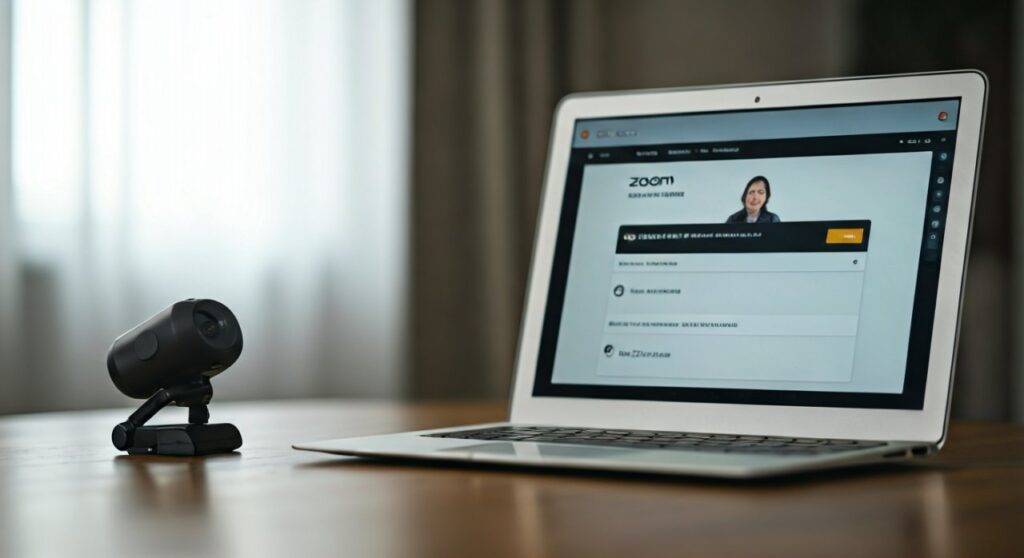
I have managed hundreds of large-scale digital events for corporate clients, and the “camera-on anxiety” is the most common concern I hear. Whether you are attending a professional seminar in your pajamas or just value your digital footprint, understanding the technical boundaries of Zoom is essential for your peace of mind.
TL;DR: Quick Privacy Key Takeaways
- Default Visibility: Attendees are invisible and muted to both speakers and other attendees.
- The “Promotion” Rule: A host can only see you if they “Promote to Panelist,” which requires your explicit consent.
- Data Visibility: Hosts can see your name, email address, and join/leave times in post-webinar reports.
- Audio Privacy: Speakers cannot “force” your microphone on without a prompt appearing on your screen.
Zoom Meeting vs. Zoom Webinar: Understanding the Privacy Gap
The confusion regarding whether can speakers see you in a zoom webinar usually stems from the difference between the two main Zoom products. In my experience, users often join a “Meeting” thinking it’s a “Webinar.”
The following table breaks down the fundamental privacy differences:
| Feature | Zoom Meeting | Zoom Webinar |
|---|---|---|
| Default Camera Status | Can be ON or OFF | Always OFF for attendees |
| Attendee Visibility | Everyone sees everyone | Attendees are invisible |
| Participant List | Public to all participants | Often hidden from attendees |
| Microphone Control | User-controlled | Host-controlled (Request only) |
| Screen Sharing | Possible for all (if enabled) | Panelists & Hosts only |
As you can see, the Zoom Webinar environment is strictly tiered. You are an observer, not a participant, unless the host specifically changes your status.
What Information Can a Zoom Webinar Host See?
Even though a speaker cannot see you through your webcam, they do have access to certain data points. When I run webinars for my clients, the Zoom Dashboard provides a “Participant Report” that includes specific metadata.
Registration and Identity
If the webinar required registration, the host has access to:
- Your Full Name.
- Your Email Address.
- Any custom questions you answered (e.g., Job Title, Company).
Engagement Metrics
Zoom previously had an “Attention Tracking” feature, but it was removed in April 2020 due to privacy concerns. Today, a host can only see:
- Join Time and Leave Time.
- Duration of your stay in the session.
- Q&A Activity: If you ask a question (unless you check the “Ask Anonymously” box).
- Poll Responses: Your specific answers to in-meeting polls.
IP Address and Location
In the advanced Webinar Reporting logs, account administrators can see the IP Address and general Geographic Location (City/Country) of attendees. This is standard for most SaaS platforms to prevent fraud and manage regional licensing.
Can a Host Force Your Camera to Turn On?
A common fear is that a host might “hack” your camera or force it to activate. This is technically impossible within the Zoom infrastructure for an attendee.
If a host wants you to speak or show your face, they must use the “Promote to Panelist” or “Allow to Talk” feature. When this happens, you will receive a large pop-up notification on your screen asking: “The host would like you to unmute” or “The host would like to promote you to panelist.”
You must click “Accept” for your camera or mic to become active. If you ignore the prompt or click “Deny,” you remain invisible and muted. I always tell my trainees: “You are the gatekeeper of your own hardware.”
Step-by-Step: How to Ensure Maximum Privacy in a Webinar
If you are still nervous about whether can speakers see you in a zoom webinar, follow these four steps I use every time I join a high-stakes event.
Step 1: Check Your Role Upon Entry
When you enter the room, look at the bottom control bar. If you only see icons for Audio Settings, Chat, Q&A, and Leave, you are in Attendee Mode. If you see a “Start Video” icon with a red slash through it, you are still an attendee, and the speaker cannot see you.
Step 2: Use a Physical Webcam Cover
For 100% certainty, I recommend a physical webcam slider. Software can have bugs, but a piece of plastic over the lens is foolproof. This is a standard “best practice” for IT security professionals globally.
Step 3: Ask Questions Anonymously
If you want to interact without the speakers knowing who you are:
- Click the Q&A button.
- Type your question.
- Check the box that says “Send Anonymously” before hitting send.
Step 4: Audit Your Profile Picture
Even if your camera is off, your Zoom Profile Picture might appear if the host looks at the backend participant list. If you don’t want your face shown at all, go to your Zoom Web Portal settings and remove your profile image or replace it with a generic avatar.
The “Promote to Panelist” Scenario: What Changes?
There is one specific instance where the answer to “can speakers see you in a zoom webinar” changes from “No” to “Yes.” This is the Promotion process.
As a host, I occasionally promote attendees to panelists if they are guest experts or have a complex question. Here is what happens during that transition:
- The Re-join: Your Zoom app will momentarily flicker or “re-connect.”
- The Status Shift: You are moved from the “Attendee” tab to the “Panelist” tab.
- The Visibility: You now have the Start Video and Unmute buttons.
- The Choice: Even as a panelist, your camera does not turn on automatically. You must manually click “Start Video” for the speakers and the audience to see you.
Pro-Tip: If you are promoted by mistake, look for the “Change Role” option or simply leave the webinar and re-join using the original link to revert to a “view-only” attendee.
Expert Perspective: Why Zoom Webinars are Safer for Privacy
From a security architecture standpoint, Zoom Webinars are significantly more “private” than Zoom Meetings. In a meeting, your User ID and Video Feed are broadcast in a peer-to-peer or cloud-mixed fashion to every other participant.
In a webinar, Zoom uses a “One-to-Many” broadcast stream. Your data packet as an attendee does not contain video or audio information. It is literally impossible for the speaker to “pull” a video feed from your device because the webinar protocol doesn’t even open that communication channel for attendees.
We have audited the Zoom Security Whitepaper, and the encryption layers for attendees are designed specifically to prevent accidental “hot mic” or “hot cam” incidents.
Frequently Asked Questions
Can speakers see if I am looking at other tabs during a webinar?
No. Zoom removed the Attention Tracking feature years ago. Speakers cannot see your screen, what other apps you have open, or if you have minimized the Zoom window to check email.
If I use the Chat, can everyone see me?
The Chat function is text-only. While the speakers and other attendees can see your Name (unless the host has disabled attendee-to-attendee chat), they cannot see your video feed or your surroundings.
Can a Zoom host see my face if I haven’t turned on my camera?
Absolutely not. There is no “backdoor” for a host to activate an attendee’s camera. Your privacy is protected by both the software interface and your operating system’s (Windows/macOS/iOS) permission settings.
What happens if I “Raise Hand”?
When you click “Raise Hand,” it simply puts a small blue icon next to your name in the host’s participant list. It does not activate your camera. It is a signal to the host that you would like to be unmuted or promoted.