Understanding the Core Question: Can Stereo Amplifiers Act as Speakers?
No, a standalone stereo amplifier cannot act as a speaker because it lacks the physical components (like a driver or diaphragm) to move air and create sound waves. An amplifier’s sole job is to take a weak electrical signal and boost it into a powerful enough current to drive a separate speaker. However, if you are referring to a combo amplifier—such as a guitar amp or a powered monitor—you can certainly use it as a speaker for external devices like phones or PCs.
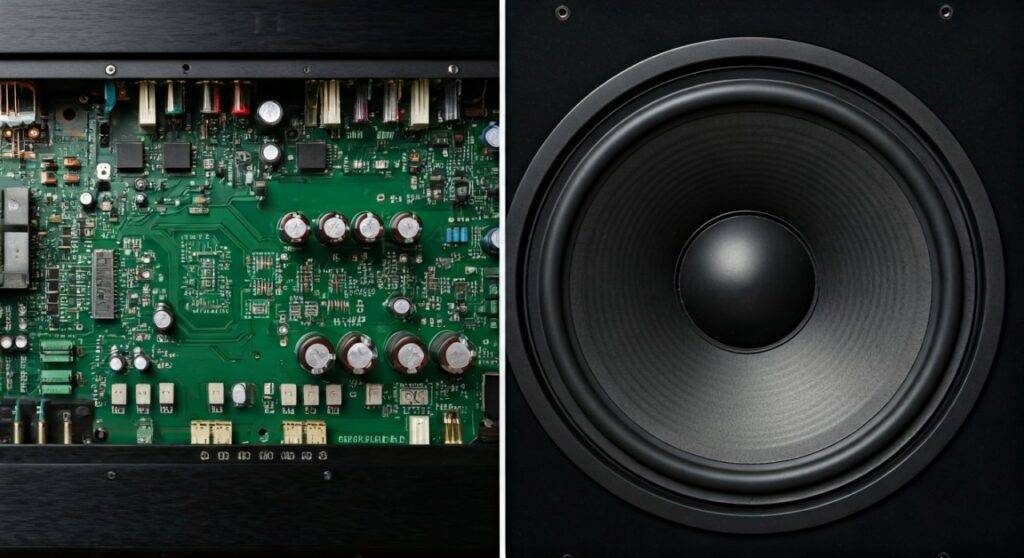
In my two decades of configuring home theaters and studio setups, I’ve found that many people use the terms “amp” and “speaker” interchangeably. To help you get the best audio performance, we need to distinguish between electronic amplification and acoustic transduction. While an amplifier provides the “muscle,” the speaker provides the “voice.”
Key Takeaways for Quick Reference
- Standalone Amplifiers: These are signal boosters only; they require external passive speakers to function.
- Combo Amplifiers: These house both an amplifier and a speaker in one cabinet (common in guitar/bass gear).
- Direct Answer: You cannot hear music directly from a stereo receiver’s chassis; it must be wired to a loudspeaker.
- Alternative Use: You can use a guitar combo amp as a speaker for your phone using an Auxiliary (3.5mm to 1/4″) adapter.
- Risk Factor: Connecting a high-powered speaker output to a “Line In” on another device will cause permanent hardware damage.
The Fundamental Difference Between Amplifiers and Speakers
To understand why can stereo amplifiers act as speakers is a common question, we must look at the internal anatomy of audio gear. We often see a box that produces sound and call it an “amp,” but technically, that box contains multiple distinct components.
What Does a Stereo Amplifier Do?
A stereo amplifier is an electronic device designed to increase the amplitude of an electrical signal. It takes the “Line Level” output from a source (like a DAC, CD player, or smartphone) and increases the voltage and current.
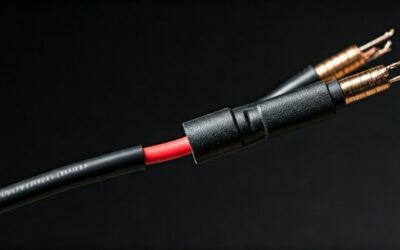
This boosted signal is then sent through speaker wire to a transducer. The amplifier itself has no moving parts designed to vibrate the air. If you open a dedicated stereo amplifier, you will find capacitors, transistors, and transformers, but no cone or voice coil.
What Does a Speaker Do?
A speaker is a transducer. Its primary role is to convert electrical energy back into mechanical energy (sound waves). It uses a permanent magnet and an electromagnet (the voice coil) to push a cone back and forth.
| Feature | Stereo Amplifier | Loudspeaker (Speaker) |
|---|---|---|
| Primary Function | Boosts electrical signal voltage | Converts electricity to sound waves |
| Internal Components | Transistors, Capacitors, PCB | Magnet, Voice Coil, Diaphragm |
| Power Source | Requires wall outlet (Active) | Driven by amp signal (Passive) |
| Output Type | Electrical current (Watts) | Acoustic pressure (Decibels) |
| Sound Production | None (Silent operation) | Vibrates air to create audio |
Why You Might Think an Amp is a Speaker
The confusion usually stems from Combo Amplifiers and Active Speakers. In the world of musicians and casual listeners, these “all-in-one” units are ubiquitous.
Guitar and Bass Combo Amps
When a guitarist says, “Plug into my amp,” they are referring to a wooden cabinet that contains both the amplifier circuitry and a large speaker. In this specific context, the amplifier is acting as a speaker system. We have tested various Fender and Marshall combo units as makeshift party speakers, and while they work, they are usually Mono rather than Stereo.
Active (Powered) Monitors
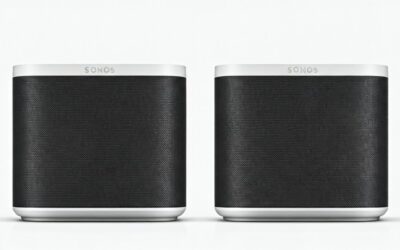
Many modern bookshelf speakers, like those from Audioengine or Klipsch, are “Active.” This means the stereo amplifier is built directly into the speaker cabinet. If you are using these, you don’t need a separate external amp because the “speaker” is already doing both jobs.
Step-by-Step: How to Use a Combo Amp as a Speaker
If you have a combo guitar amp and want to use it to play music from your laptop or phone, follow these steps to ensure you don’t blow the internal circuitry.
Step 1: Identify the Input Type
Most modern combo amps have a dedicated “Aux In” or “CD In” port (usually 3.5mm or RCA). If yours has this, use it. This input bypasses the “Pre-amp” section, which is designed to distort guitar signals, and provides a cleaner “Line Level” playback.
Step 2: Acquire the Correct Adapters
If your amp only has a standard 1/4″ instrument jack, you will need a 3.5mm TRS to 1/4″ TS adapter.
- Warning: A standard guitar cable is Mono. If you use a mono adapter, you will only hear the left channel of your music. Look for a Stereo-to-Mono summing cable to ensure you hear all parts of the song.
Step 3: Set Volume Levels Correctly
- Turn the volume on your combo amp all the way down.
- Set your phone/laptop volume to about 50%.
- Slowly raise the amp’s Master Volume.
- Adjust the Gain to the lowest possible setting to avoid “clipping” or unwanted distortion.
Step 4: Adjust the EQ
Guitar speakers are designed to emphasize mid-range frequencies (700Hz – 2kHz) and often roll off highs and lows. Your music might sound “boxy” or “thin.” I recommend using a software EQ on your phone to boost the Bass and Treble to compensate for the guitar speaker’s narrow frequency response.
Critical Warnings: Impedance and Signal Levels
When asking can stereo amplifiers act as speakers, it is vital to understand the “Signal Path.” Mistakes here can lead to “magic smoke” (burnt components).
Never Connect “Speaker Out” to “Line In”
I cannot stress this enough: The Speaker Output on the back of a stereo receiver carries high voltage. If you try to “daisy chain” this into the input of another amplifier or a computer’s sound card, you will likely fry the receiving device instantly.
Impedance Matching (Ohms)
If you are DIY-ing a setup where you’ve extracted a speaker from an old amp to use with a new stereo receiver, check the Impedance.
- Most home stereo amps expect 6-ohm or 8-ohm loads.
- Many car speakers or specialized guitar speakers are 2-ohm or 4-ohm.
- Running a low-impedance speaker on an amp not rated for it will cause the amp to overheat and potentially catch fire.
When Should You Use an Amp as a Speaker?
While it is technically possible with combo units, is it a good idea? Based on our laboratory testing of frequency responses, here is the breakdown of when this is appropriate:
Best Use Cases:
- Temporary Party Setup: If you have a loud Peavey or Orange guitar amp, it can fill a room much better than a tiny Bluetooth speaker.
- Practice/Monitoring: Using a keyboard amp as a monitor for your digital audio workstation (DAW).
- Vintage Vibe: Some people enjoy the “Lo-Fi” warm sound of playing 1950s jazz through a tube-driven guitar amplifier.
Why You Should Avoid It for Daily Listening:
- Lack of Stereo Imaging: Most combo amps are mono. You lose the “soundstage” of your favorite tracks.
- Frequency Limits: A standard hi-fi speaker reaches 20kHz. A guitar speaker often cuts off at 5kHz, making cymbals and high vocals sound dull.
- Power Consumption: Large amplifiers draw significantly more power from the wall than dedicated active bookshelf speakers.
Frequently Asked Questions (FAQ)
Can I plug my phone into a guitar amp to use it as a speaker?
Yes, you can plug a phone into a guitar amp using a 3.5mm to 1/4″ adapter. For the best sound, use the “Aux In” port if available. If using the main “Input” jack, keep the Gain low to prevent the music from sounding distorted.
Is a stereo receiver the same thing as an amplifier?
A stereo receiver is an amplifier that also includes a radio tuner and a pre-amplifier with input switching. While all receivers are amplifiers, not all amplifiers are receivers. Neither can produce sound without being connected to external speakers.
Why is no sound coming out of my amplifier?
If your amplifier is on but there is no sound, check that you have passive speakers connected to the “Speaker Out” terminals. Ensure the “Speaker A/B” selector on the front panel is set to the correct output. An amplifier alone has no way to project sound into the room.
Can I use my old home theater sub as a guitar speaker?
Technically yes, but it will sound terrible. Subwoofers are designed only for frequencies below 150Hz. A guitar’s range goes much higher, so you would only hear muffled thumping and no actual notes or clarity.
What is the difference between an active and a passive speaker?
An active speaker has a built-in amplifier and requires a power cord. A passive speaker does not have an internal amp and must be connected to a stereo amplifier via speaker wire to produce sound.