Understanding the Risks: Can a Subwoofer Blow Rear Deck Speakers?
Yes, a subwoofer can blow rear deck speakers, but typically not through electrical wiring. Instead, the damage occurs due to acoustic pressure and mechanical stress when both speakers share the same air volume in a trunk, causing the smaller speakers to over-excurse and fail.
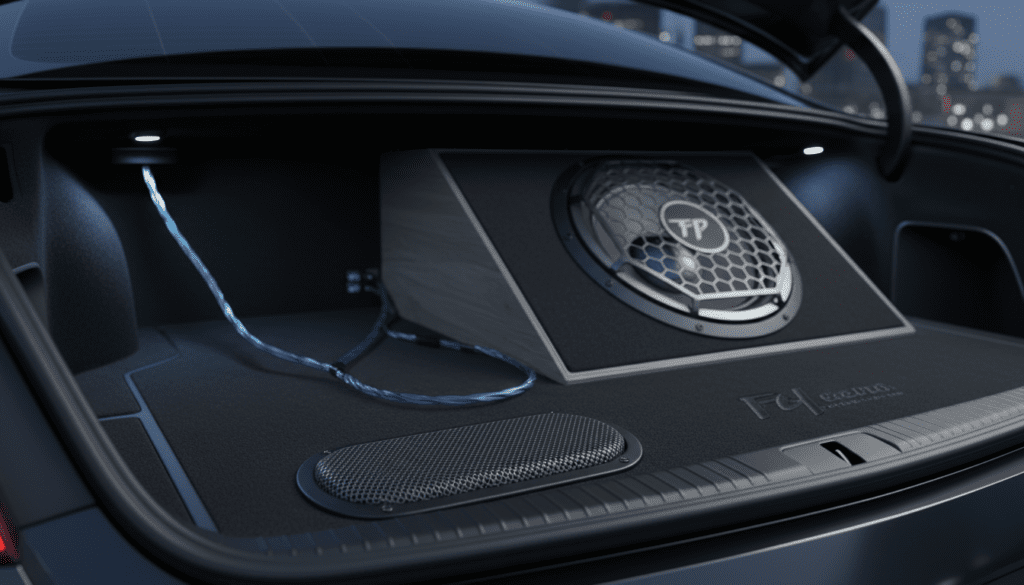
Most car enthusiasts focus on “clipping” or “overpowering” as the primary killers of speakers. However, in a trunk-baffled system, your high-powered subwoofer acts like a pneumatic piston. When the sub moves, it compresses the air in the trunk, forcing your 6×9 or 6.5-inch rear deck speakers to move violently even when they aren’t playing music. Over time, this weakens the spider, tears the surround, or knocks the voice coil out of alignment.
TL;DR: Key Takeaways for Protecting Your Audio
- Mechanical Failure: The primary cause is air pressure from the sub “pushing” the smaller speakers.
- Acoustic Isolation: Using foam baffles or wooden enclosures is the most effective fix.
- High-Pass Filters: Setting your crossover correctly reduces the workload on rear speakers.
- Sound Deadening: Applying Butyl rubber sheets (like Dynamat or Noico) reduces deck vibration.
How Air Pressure Damages Your Rear Deck Speakers
When we discuss if a subwoofer can blow rear deck speakers, we are really talking about back pressure. In a standard sedan, the trunk acts as a large, shared enclosure.
The Physics of “Pumping”
A 12-inch or 15-inch subwoofer moves a massive volume of air. If your rear deck speakers are “infinite baffle” (meaning the back of the speaker is open to the trunk), they are at the mercy of that air pressure.
- Compression: The sub moves outward, creating a vacuum in the trunk.
- Reaction: This vacuum pulls the rear deck speaker cones downward.
- Stress: When this happens 40 times per second (40Hz), the smaller speaker’s suspension (the surround and spider) stretches beyond its physical limit (Xmax).
I once inspected a customer’s Honda Civic where a single JL Audio W7 had completely separated the cones from the baskets of his Alpine Type-R rear speakers. There was no electrical short; the air pressure had simply “punched” the cones out.
Comparison: Shared Trunk vs. Isolated Enclosure
| Feature | Shared Trunk (Infinite Baffle) | Isolated (Baffled/Enclosed) |
|---|---|---|
| Risk of Damage | High (Mechanical Stress) | Very Low |
| Sound Clarity | Moderate (Acoustic Interference) | High (No Distortion) |
| Installation Ease | Very Easy | Moderate (Requires Mods) |
| Bass Impact | Can be muddy | Tight and Defined |
Step 1: Diagnosing Mechanical vs. Electrical Blowouts
Before fixing the issue, you must understand how your speakers are failing. While a subwoofer can blow rear deck speakers via pressure, you might also be dealing with traditional electrical clipping.
Signs of Pressure-Induced Damage (Mechanical)
- Visual Distension: The speaker cone looks “pushed in” or “pulled out” even when the system is off.
- Tattered Surrounds: The foam or rubber ring around the speaker edge is cracked or torn.
- Popping Sounds: You hear a “clack” during heavy bass hits, which is the voice coil hitting the back plate.
Signs of Electrical Overpowering (Thermal)
- Burnt Smell: The unmistakable scent of “toasted” copper.
- Scratchy Sound: This indicates a warped voice coil rubbing against the magnet.
- Complete Silence: The internal wire (tinsel lead) has melted or snapped.
Step 2: Isolating Your Speakers with Foam Baffles
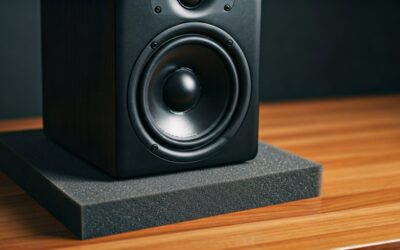
The most cost-effective way to ensure your subwoofer doesn’t blow your rear deck speakers is to install foam speaker baffles. We frequently use brands like XTC or Metra for this exact purpose.
How to Install Baffles Correctly
- Remove the Rear Deck Speakers: Access them from the trunk or by removing the rear tray cover.
- Select the Right Size: Ensure the baffle matches your speaker size (e.g., 6×9 inches).
- Seal the Baffle: Place the speaker inside the foam “bucket” and screw it back into the deck.
- Important Mod: Cut a small hole (about the size of a dime) in the bottom of the baffle. This allows the speaker to “breathe” slightly so it doesn’t get “choked” by the vacuum inside the foam, while still protecting it from the subwoofer’s massive pressure waves.
Step 3: Setting Crossovers and High-Pass Filters (HPF)
Even if you isolate the air, you need to manage the frequencies. A subwoofer can blow rear deck speakers if those speakers are trying to play the same deep bass notes as the sub. This is called intermodulation distortion.
Expert Tuning Advice
I recommend setting a High-Pass Filter (HPF) on your head unit or amplifier for your rear deck.
- Suggested Setting: 80Hz to 120Hz.
- Why: This prevents the rear speakers from attempting to reproduce frequencies below 80Hz.
- The Result: The speakers stay “still” during heavy bass drops, significantly reducing the risk of the voice coil bottoming out.
Step 4: Applying Sound Deadening to the Rear Deck
A secondary way a subwoofer can blow rear deck speakers is through vibrational fatigue. If the metal rear deck flexes too much, it can warp the speaker basket.
The Damping Process
- Clean the Surface: Use denatured alcohol to clean the metal of the rear deck.
- Apply Butyl Sheets: Use a roller to apply Dynamat Xtreme or Hushmat to both the top and bottom of the metal deck.
- Focus on the Mounting Points: Ensure the area where the speaker screws into the metal is rock solid. This prevents “sympathetic resonance,” where the sub vibrates the deck so hard it shakes the smaller speaker to death.
Step 5: Building a Specialized Subwoofer Enclosure
If you are running a high-SPL (Sound Pressure Level) setup—think two 12-inch subs or a 15-inch ported monster—standard foam baffles might not be enough.
Ported vs. Sealed Impacts
- Sealed Subwoofer Boxes: These provide a “tighter” air spring in the trunk. The pressure is more consistent and generally less “violent” on your rear speakers.
- Ported Subwoofer Boxes: These move much more air through the port. If that port is aimed directly at the bottom of your 6×9 speakers, the risk of blowing your rear deck speakers increases exponentially.
Pro Tip: Always aim your subwoofer ports toward the rear bumper, not up toward the rear deck. This redirects the initial pressure wave away from the sensitive speaker cones.
Technical Data: Air Pressure and Speaker Displacement
| Subwoofer Power (RMS) | Trunk Pressure Level | Required Protection |
|---|---|---|
| 250W – 500W | Low | Standard Foam Baffles |
| 500W – 1000W | Moderate | Thick Foam + HPF Tuning |
| 1000W – 2500W+ | Extremely High | Wooden Pods or Complete Removal |
At power levels over 1500W RMS, we often advise clients to remove the rear deck speakers entirely. This creates a “blow-through” effect, allowing the bass to enter the cabin freely while eliminating the risk of destroying expensive components.
FAQ: Protecting Your Car Audio System
Will my rear deck speakers sound worse if I put them in baffles?
They might lose a tiny bit of “mid-bass” warmth because the enclosure is small. However, the gain in clarity and longevity far outweighs the slight loss in low-end response, which your subwoofer should be handling anyway.
Can I just disconnect the rear speakers instead?
Absolutely. In high-end “Sound Quality” (SQ) builds, we often delete the rear speakers to improve the front soundstage. This prevents a subwoofer from blowing rear deck speakers simply because they aren’t there to be damaged.
Does the brand of the speaker matter?
Higher-end speakers with rubber surrounds and Kevlar cones are more resilient to air pressure than cheap factory paper-cone speakers. However, no speaker is immune to the physical force of a high-excursion subwoofer.
Can a ported box prevent this better than a sealed box?
Generally, no. Ported boxes usually create more localized air movement. If the port is firing toward the speakers, it acts like a localized “wind” that can easily over-extend the smaller speaker cones.
What is the best crossover slope to use?
Use a 24dB/octave slope if your head unit allows it. A steeper slope cuts off the dangerous low frequencies more aggressively, keeping your rear deck speakers safe from the “thump” of the sub.
Final Thoughts from the Shop
In my 15 years of car audio experience, I’ve seen hundreds of “blown” speakers that were victims of physics, not electronics. If you’re asking “can a subwoofer blow rear deck speakers,” the answer is a resounding yes. Protect your investment by isolating the air volume, tuning your crossovers, and damping the metal deck. Your ears—and your wallet—will thank you.