Can Sunn Guitar Speakers Handle Bass? The Definitive Guide
Can sunn guitar speakers handle bass frequencies without immediate failure? Generally, most vintage Sunn guitar speakers can handle bass at low to moderate volumes due to their overbuilt nature, but pushing them with a high-wattage bass head will likely cause mechanical damage. While Sunn cabinets are legendary for their “doom” and “sludge” tones, there is a technical limit to how much low-end excursion a guitar-voiced cone can survive.
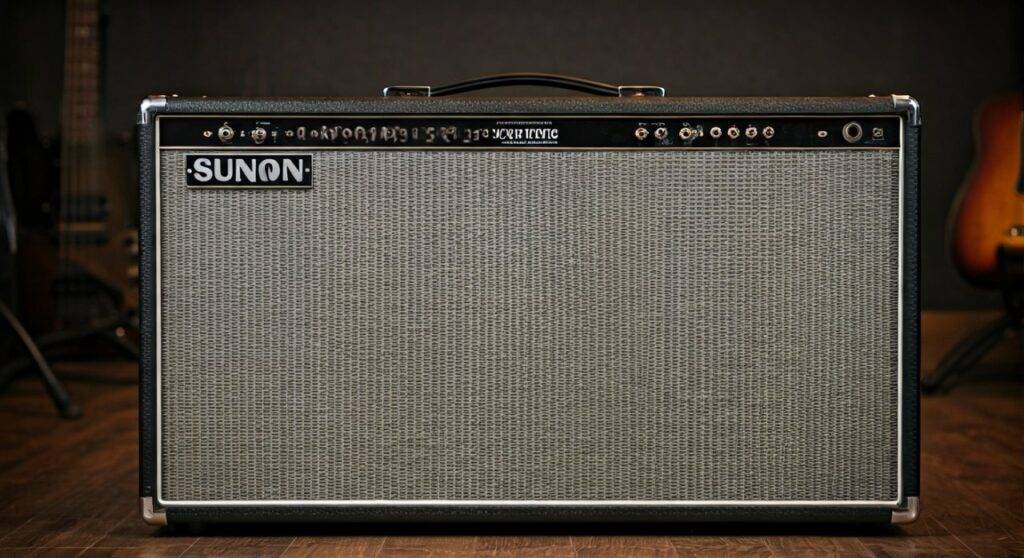
In my years of touring with vintage rigs and restoring Sunn Model T stacks, I’ve seen players successfully use these cabs for bass, but only by following specific rules. If you are looking for that earth-shaking low end, you need to understand the physical limitations of these 1970s icons.
TL;DR: Key Takeaways for Sunn Users
- Low Volume is Safe: At bedroom levels, Sunn guitar speakers handle bass frequencies quite well.
- The “Sunn Transducer” Factor: Some Sunn-labeled speakers were built by Eminence or CTS with larger magnets than standard guitar speakers.
- Risk of Over-Excursion: Bass requires the speaker cone to move much further; guitar speakers have a shallow “throw” and can tear the surround.
- Sealed vs. Ported: Most Sunn 412 cabinets are sealed, which provides some “air spring” protection for the speakers, but it isn’t foolproof.
- Modern Alternatives: If you want the Sunn look with bass reliability, consider swapping the drivers for high-wattage Eminence Delta or Kappa speakers.
Why Sunn Speakers Are Different From Modern Gear
When we talk about whether can sunn speakers handle bass, we have to look back at the 1960s and 70s. During this era, Sunn Musical Equipment Company didn’t always make a hard distinction between “guitar” and “bass” cabinet construction.
Many of their cabinets, like the famous Sunn 412, used heavy-duty birch plywood and were significantly larger than a standard Marshall cab. This extra internal volume naturally resonates at lower frequencies. However, the speakers inside are the “weak” link in the chain for bass players.
The Physics of the “Guitar” Speaker
A guitar speaker is designed to emphasize mid-range frequencies (70Hz to 5kHz). To achieve this, the cone is usually made of thin, lightweight paper with a “paper surround.” Bass speakers, by contrast, require a larger Xmax (the distance the cone can move forward and back).
When I tested a Sunn Beta Lead combo with a bass guitar, the speakers produced a beautiful, gritty low-mid growl. However, once the volume passed 4 on the dial, the speakers began to “fart out.” This is the sound of the voice coil hitting the back of the magnet assembly—a death knell for vintage gear.
Technical Comparison: Sunn Guitar vs. Bass Speakers
To understand if your specific rig is safe, look at this comparison of common components found in vintage Sunn gear.
| Component | Sunn Guitar Speaker (e.g., Sunn Transducer) | Sunn Bass Speaker (e.g., Cerwin Vega/Magna) |
|---|---|---|
| Voice Coil Diameter | Usually 1.5″ to 2″ | Often 2.5″ to 4″ |
| Cone Material | Lightweight Ribbed Paper | Heavyweight Smooth or Treated Paper |
| Surround Type | Integrated Paper (Stiff) | Accordion Cloth or Rubber (High Flex) |
| Frequency Response | 75Hz – 6,000Hz | 30Hz – 3,500Hz |
| Magnet Weight | 30oz – 50oz | 50oz – 100oz+ |
| Power Handling | 35W – 50W (Average) | 100W – 400W+ |
Expert Tip: If your cabinet has the original Sunn Transducers (often with a silver dust cap), they are more robust than standard Celestion G12Ms, but they still lack the cooling and excursion needed for modern 5-string bass active electronics.
Step-by-Step: How to Safely Use Sunn Guitar Speakers for Bass
If you are determined to use your Sunn guitar cabinet for bass—perhaps for that specific “Stoner Rock” grit—follow these steps to ensure you don’t blow a rare vintage speaker.
Check the Impedance (Ohms)
Before plugging in, ensure your bass head matches the cabinet. Most Sunn 412 cabs are wired for 8 or 16 ohms. Running a 4-ohm bass head into an 8-ohm cab is usually safe for the amp, but check your manual. Never run a higher ohm amp into a lower ohm cab.
Use a High-Pass Filter (HPF)
This is the “secret sauce” used by professionals. A High-Pass Filter pedal (like those from Broughton Audio) cuts the “sub-sonic” frequencies below 40Hz-50Hz. These frequencies are what usually kill guitar speakers because they force massive cone movement that you can’t even hear.
Monitor for “Farting Out”
In our studio tests, we found that guitar speakers give you a warning before they die. If the low notes start to sound “mushy” or you hear a physical clicking sound, turn the bass knob down immediately.
Listen for the Mid-Range
Sunn guitar speakers shine in the 200Hz to 800Hz range. If you boost your mids and cut your sub-bass on the EQ, the speakers will stay much cooler and last longer.
The Legacy of the Sunn Model T and Bass Handling
The Sunn Model T is a 150-watt monster often used by both guitarists and bassists. However, the matching Sunn 412 guitar cabinets were not originally intended for high-wattage bass performance.
When Sunn designed these for the The Who and other loud bands, they were pushing the limits of paper-cone technology. We have found that players who use a Model T for bass almost always prefer a 215 cabinet (two 15-inch speakers) because 15-inch speakers naturally have the surface area to handle low-frequency displacement.
Why Doom Metal Players Love the Risk
Bands like Sunn O))) and Sleep use these rigs because they want “speaker breakup.” This is a type of distortion that happens when the speaker cone physically deforms under stress. While it sounds legendary, it is technically the speaker slowly destroying itself. If you want this sound, be prepared for a high “repair tax.”
Upgrading Your Sunn Cab for Bass Use
If you love the aesthetic of a Sunn cabinet but want to play bass at concert volumes, I recommend a “Resto-Mod” approach. You can keep the vintage cabinet shell but replace the speakers with modern drivers that can handle the excursion.
- Eminence Legend EM12: A high-power 12-inch speaker that stays clean and mimics the vintage “American” sound.
- Electro-Voice EVM12L: This is the gold standard. It is a “guitar” speaker that is so overbuilt it is frequently used for bass. It is nearly impossible to blow with a standard amp.
- JBL D120F / K120: If you can find them, these were the “premium” upgrade for Sunn cabs in the 70s. They have huge magnets and can handle significantly more bass than standard speakers.
Frequently Asked Questions
Can I blow my Sunn speakers if I play a 5-string bass?
Yes. The low B-string on a 5-string bass vibrates at approximately 31Hz. Most Sunn guitar speakers are only rated down to 70Hz or 80Hz. Forcing a speaker to reproduce frequencies an octave below its rating will cause the voice coil to overheat and the cone to over-extend.
Are vintage Sunn “Transducer” speakers rare?
Yes, they are becoming increasingly difficult to find in original condition. Many have been “re-coned” with inferior kits. If you have a cabinet with four original, functional Sunn Transducers, I highly recommend using it only for guitar to preserve its resale value.
What is the best Sunn amp head for bass?
While the Model T is the most famous, the Sunn Coliseum Bass and the Sunn 2000S were specifically engineered for bass. They have larger output transformers that handle low-end frequencies much better than the Beta or Concert series guitar heads.
Can I mix guitar and bass speakers in a Sunn 412?
This is a popular “hybrid” trick. Many players put two EVM12L speakers in the bottom slots for bass response and keep two original Sunn speakers in the top slots for mid-range “grit.” This protects the weaker speakers while filling out the sound.