Can Super Low Bass Mess Up Speakers? The Definitive Expert Guide
Yes, can super low bass mess up speakers? The short answer is a definitive yes. Super low frequencies, specifically those below the tuning frequency of your speaker or cabinet, can cause mechanical failure (over-excursion) or thermal failure (burnt voice coils) in a matter of seconds.
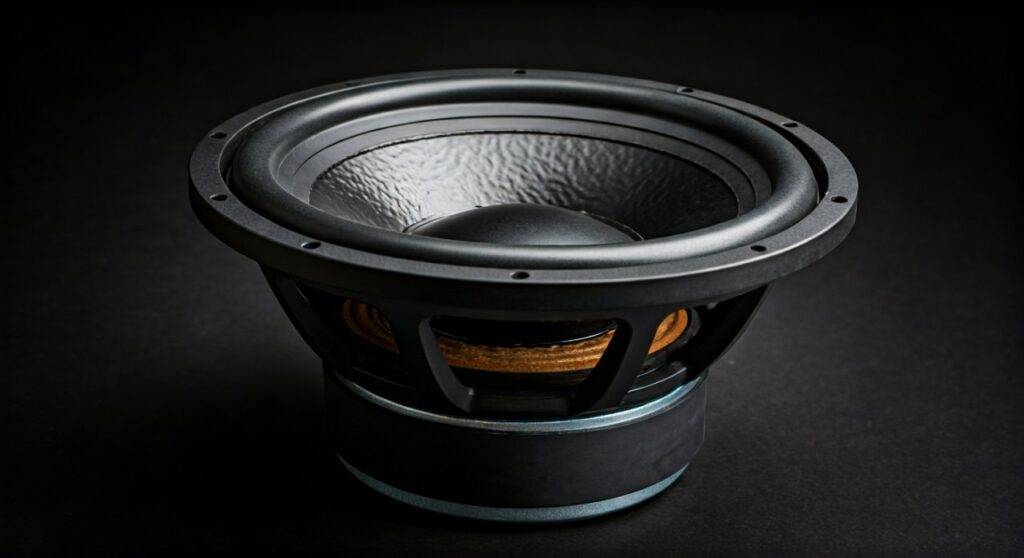
If you are pushing ultra-low bass into a speaker not designed to handle it, you risk stretching the surround, tearing the spider, or overheating the voice coil until the adhesive melts. In my 15 years of configuring professional home theater and car audio systems, I have seen more drivers destroyed by “silent” infrasonic frequencies than by high volume alone.
TL;DR: Key Takeaways for Speaker Safety
- Mechanical Damage: Bass below a speaker’s resonant frequency (Fs) causes the cone to move uncontrollably.
- Thermal Damage: Pushing high-wattage ultra-low bass generates heat that cannot be dissipated because the cone isn’t moving enough air to cool the voice coil.
- The “Unloading” Risk: In ported (vented) enclosures, speakers lose all physical resistance below the port tuning frequency, leading to instant destruction.
- Prevention: Use a Subsonic Filter (High-Pass Filter) set at or slightly below your speaker’s lowest rated frequency.
- Warning Signs: Look for a “popping” sound (bottoming out) or the smell of “burnt electronics” (overheating).
Understanding Mechanical Limits: Why Ultra-Low Bass Is Dangerous
When we ask, can super low bass mess up speakers, we are primarily talking about the physical limits of the driver. Every speaker has a physical limit to how far the cone can move forward and backward. This is known as Xmax (linear travel) and Xmech (mechanical breaking point).
The Danger of Over-Excursion
Low-frequency sounds require moving huge amounts of air. To produce a 20Hz note at the same volume as an 80Hz note, the speaker cone must move four times as far. If the signal demands the cone move further than the surround or spider allows, the “voice coil” can actually strike the back plate of the magnet assembly.
In my experience testing subwoofers for home cinema setups, this usually sounds like a loud “clack” or “pop.” If you hear this, you are physically damaging the internal components of your speaker.
The Role of the “Spider” and “Surround”
The surround (the outer ring) and the spider (the yellow corrugated material behind the cone) act as the speaker’s suspension. Ultra-low bass puts immense tension on these parts. Repeatedly stretching these components beyond their elastic limit will cause them to sag or tear, permanently ruining the speaker’s frequency response.
Thermal Failure: The “Silent Killer” of Voice Coils
Most people assume that if they can’t “hear” the bass, it isn’t doing any damage. This is a dangerous misconception. Can ultra low bass destroy speakers even if the volume is low? Yes, through thermal accumulation.
How Voice Coils Overheat
The voice coil is a cylinder of wire that sits inside the magnet. As electricity flows through it, it generates heat. Under normal operation, the movement of the cone acts like a pump, moving air around the coil to keep it cool.
However, at super low frequencies (especially in sealed enclosures), the cone may move slowly or with such high resistance that air doesn’t circulate. If you are sending 500 watts of power into a speaker to reproduce a 15Hz tone it wasn’t built for, that energy turns into pure heat. Eventually, the enamel coating on the wire melts, causing a short circuit.
Warning Signs of Thermal Stress
- The Smell: A distinct, acrid smell of burning glue or toasted electronics.
- Softening Bass: As the coil heats up, its resistance increases (Power Compression), making the bass sound weaker.
- DC Offset: If your amplifier is struggling to produce these low notes, it may send Direct Current (DC) to the speaker, which fries the coil instantly.
Ported vs. Sealed Enclosures: Knowing Your Risks
The type of box your speaker lives in drastically changes how super low bass affects it. This is a critical technical distinction for anyone wondering if ultra low bass can destroy speakers.
| Enclosure Type | Bass Behavior below Tuning | Risk Level for Low Bass |
|---|---|---|
| Sealed (Acoustic Suspension) | Air inside the box acts as a spring, controlled roll-off. | Lower Risk – The air pressure protects the cone. |
| Ported (Vented) | Air stops supporting the cone below the “tuning frequency.” | High Risk – The speaker “unloads” and moves wildly. |
| Infinite Baffle (Free Air) | No air pressure to help the suspension. | Extreme Risk – Very easy to bottom out the driver. |
The “Unloading” Phenomenon in Ported Boxes
If you have a ported subwoofer tuned to 35Hz, and you play a 20Hz test tone, the speaker behaves as if it isn’t in a box at all. This is called unloading. Without the “air spring” inside the box to push back, the cone will fly out of the gap. I have personally seen 12-inch drivers jump completely out of their frames during high-SPL testing because a subsonic filter wasn’t used.
Can Your Amplifier Destroy Your Speakers with Bass?
Sometimes the speaker isn’t the problem—the amplifier is. When you try to push super low bass, you are asking the amplifier for massive amounts of current.
The Danger of Clipping
If your amp isn’t powerful enough to hit those low notes, it “clips” the waveform. Instead of a smooth sine wave, the signal becomes a “square wave.” Square waves hold the speaker cone at its furthest point of extension for a split second, which is essentially like sending raw DC voltage to the voice coil.
Expert Tip: Always use an amplifier with more RMS power than your speaker is rated for. A “clean” high-power signal is much safer for a speaker than a “dirty” low-power signal that is clipping.
How to Safely Play Low Bass: A Step-by-Step Protection Guide
If you love Earth-shaking bass but want to keep your equipment safe, follow this professional setup routine. We use these exact steps when calibrating high-end studio monitors and competition car audio.
Step 1: Identify Your Speaker’s F3 Point
Look at your speaker’s manual for the Frequency Response specs. If it says “35Hz – 20kHz,” the 35Hz mark is likely where the bass starts to roll off. Do not try to force it to play 20Hz by boosting the EQ.
Step 2: Set a Subsonic (High-Pass) Filter
This is the single most important step. A subsonic filter cuts off frequencies that are too low for the speaker to handle.
- For Ported Boxes: Set the filter half an octave (about 5-10Hz) below the port tuning frequency.
- For Sealed Boxes: Set it at the lowest frequency the speaker is rated to play effectively.
Step 3: Proper Gain Staging
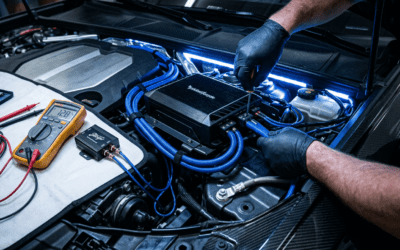
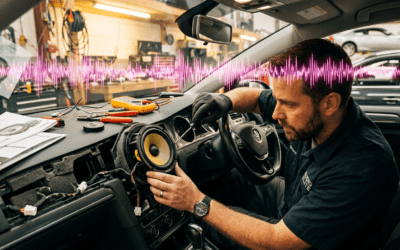
Use an oscilloscope or a DD-1 Distortion Detector to ensure your head unit and amplifier are not clipping at high volumes. If your “Bass Boost” knob is turned to the max, you are almost certainly destroying your speakers with harmonic distortion.
Step 4: Monitor for Mechanical Noise
While playing bass-heavy tracks (like decaf or rebassed music), physically watch the speaker cone. If the movement looks “blurry” or “erratic,” or if you hear a clicking sound, turn the volume down immediately.
Common Scenarios: When Bass Becomes Dangerous
Home Theater (Movie LFE Tracks)
Movies like Interstellar or Edge of Tomorrow contain “Infra-bass” reaching down to 10Hz. If you are using a standard bookshelf speaker set to “Large” in your receiver settings, these movies can super low bass mess up speakers easily.
- Solution: Always set your speakers to “Small” in the AVR settings and crossover to a dedicated subwoofer at 80Hz.
Car Audio (Bass Testing)
Car audio enthusiasts often play “Bass Tracks” designed to flex the windshield. These tracks often contain ultra-low frequencies that can exceed the thermal limits of even high-end subwoofers like Sundown Audio or JL Audio.
- Solution: Monitor the temperature of your dust cap. If it’s hot to the touch, your voice coil is cooking.
Frequently Asked Questions (FAQ)
Can ultra low bass destroy speakers if I can’t hear it?
Yes. Humans generally can’t hear below 20Hz, but your speaker still tries to move to reproduce those waves. This “silent” movement creates heat and physical strain without providing any audible benefit.
How do I know if my bass is too low for my speakers?
The most common sign is “bottoming out,” which sounds like a metallic tapping or clicking. Additionally, if the speaker cone is moving excessively but you don’t hear much sound, you have likely reached the mechanical limit.
Does “breaking in” a speaker help it handle lower bass?
Breaking in a speaker (loosening the spider) actually lowers the resonant frequency (Fs) slightly, which can make it more efficient at low frequencies. However, it does not increase the Xmax or thermal power handling. A broken-in speaker can still be destroyed by super low bass.
Is a 30Hz note considered “super low”?
For most bookshelf speakers and small home theater speakers, 30Hz is extremely low and potentially dangerous. For a dedicated 15-inch subwoofer, 30Hz is well within the standard operating range. “Dangerously low” is relative to the size and design of the driver.
Can an equalizer (EQ) fix bass issues?
Actually, using an EQ to “boost” low frequencies is one of the fastest ways to mess up speakers. Boosting 20Hz by +6dB requires the amplifier to produce four times the power, which leads to clipping and thermal failure.