How Cigarette Tar Damages Your Audio Equipment
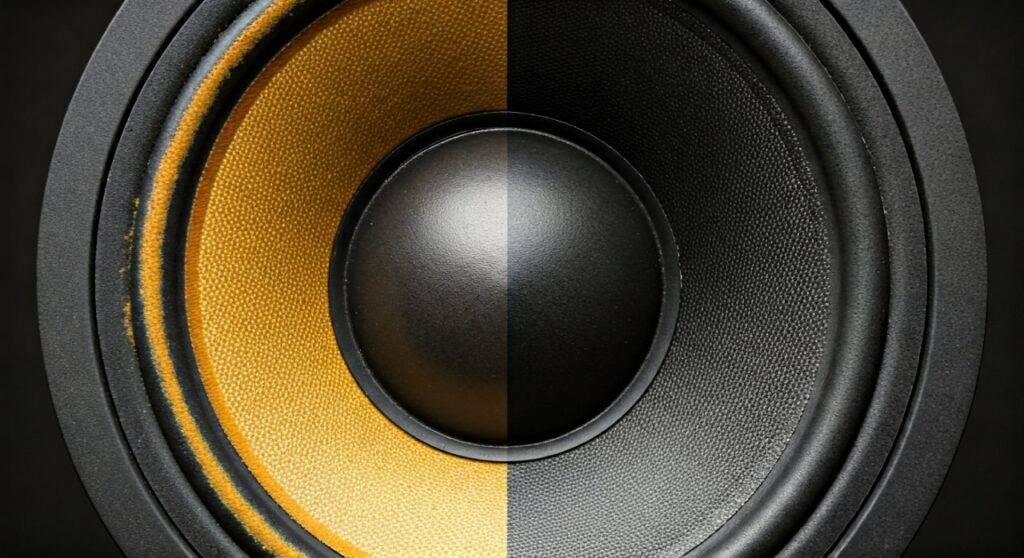
Can tar from cigarettes affect speakers by degrading sound quality and causing permanent hardware failure? Yes, cigarette smoke produces a sticky, resinous residue known as tar that settles on speaker cones, clogs voice coils, and corrodes internal circuitry. Over time, this buildup increases the mass of the speaker diaphragm, leading to “muddy” audio and potential thermal breakdown of the amplifier components.
During my fifteen years of restoring vintage high-fidelity audio equipment, I have seen firsthand how a “smoking environment” can turn a $2,000 pair of studio monitors into paperweights. The damage isn’t just cosmetic; it is a fundamental shift in the physics of how sound is produced.
Quick Summary: Key Takeaways
- Acoustic Mass: Tar adds weight to speaker cones, slowing their response time and killing high-frequency clarity.
- Mechanical Failure: The sticky residue can seep into the voice coil gap, causing friction and eventual burnout.
- Chemical Corrosion: Nicotine and tar are acidic and hygroscopic (they attract moisture), which leads to the corrosion of solder joints and crossover components.
- Resale Value: Gear exposed to heavy smoke can lose up to 70% of its market value due to the “smoker’s scent” and visible yellowing.
The Science of Smoke: Why Tar is an Acoustic Killer
To understand why can tar from cigarettes affect speakers, we have to look at the chemistry of tobacco smoke. When a cigarette burns, it releases over 7,000 chemicals. The most destructive for electronics is tar, a collective term for the particulate matter produced by burning tobacco.
Unlike dust, which is dry and can be blown away with compressed air, tar is a viscous, adhesive resin. It acts like a magnet for other airborne particles. When your speaker’s cooling fans or the natural movement of the woofer pulls air in, it deposits this sticky film across every internal surface.
How Tar Alters Speaker Physics
- Increased Moving Mass (Mms): In speaker design, the weight of the cone is calculated to the milligram. Adding a layer of tar increases the Mms, which lowers the speaker’s efficiency and alters its resonant frequency.
- Loss of “Snap”: For a speaker to reproduce crisp percussion or high-end transients, it must move and stop instantly. Tar acts like a physical brake, making the sound “sluggish.”
- Surround Hardening: The flexible ring around the cone (the surround) is often made of foam or rubber. Tar chemically reacts with these materials, causing them to become brittle and eventually crack.
| Component | Effect of Tar Accumulation | Impact on Sound |
|---|---|---|
| Tweeter Dome | Adds weight to ultra-light membranes | Loss of “air” and high frequencies |
| Woofer Cone | Increases mass and dampens vibration | Muddy, undefined bass |
| Voice Coil | Restricts movement in the magnetic gap | Distortion and potential coil rub |
| Crossover PCB | Conductive residue causes “leaky” caps | Frequency response shifts or shorts |
| Cabinet/Port | Restricts airflow and adds internal “fuzz” | Boomy, inaccurate low end |
Step-by-Step Guide: Identifying Smoke Damage
If you are buying used gear or assessing your own, you need to know what to look for. Identifying if can tar from cigarettes affect speakers in your specific setup involves both visual and olfactory inspections.
The “Whiteness” Test
Compare the color of the speaker cone or the cabinet (if it’s white or light gray) to a part of the speaker that has been covered, such as under the removable grille. A distinct yellow or brownish tint is a surefire sign of tar accumulation.
The Smell Test
Heat is a catalyst for odors. Run the speakers at a moderate volume for 20 minutes. As the voice coils and amplifiers heat up, they will begin to “off-gas” the trapped smells. If you smell a stale, acrid tobacco odor, the internals are likely coated.
The Tactile Check
Gently (and I mean gently) touch the surface of the woofer cone with a clean gloved finger. A healthy cone should feel like dry paper, plastic, or woven fiber. If it feels tacky or “grippy,” you are feeling a layer of nicotine resin.
How to Clean Tar from Speakers: A Restoration Protocol
If you find that smoke has compromised your gear, all is not lost. However, cleaning audio equipment requires a delicate touch to avoid puncturing the diaphragm.
Tools You Will Need
- 99% Isopropyl Alcohol (Lower percentages contain too much water).
- Distilled Water (For diluting if necessary).
- Microfiber Cloths (Lint-free is essential).
- Cotton Swabs (For detail work).
- Soft Bristle Brush (An old makeup brush works perfectly).
Step 1: External Cabinet Cleaning
Start with the non-sensitive parts. Wipe down the wooden or plastic cabinets with a 50/50 mix of Isopropyl Alcohol and water. You will likely see the cloth turn dark orange—this is the tar being lifted.
Step 2: Grille Fabric Restoration
If your grilles are removable, soak them in a tub of warm water with a mild degreaser like Dawn Dish Soap. Do not scrub hard, as you can stretch the fabric. Rinse and air dry completely before reattaching.
Step 3: Delicate Cone Cleaning
Warning: Only attempt this on plastic (polypropylene) or metal cones. Do not use liquids on untreated paper cones, as they will absorb the moisture and warp.
- Lightly dampen a cotton swab with alcohol.
- Work in small circles from the center out.
- Immediately follow with a dry microfiber cloth to “lift” the dissolved tar.
Step 4: Internal Electronics
If you are comfortable opening the cabinet, use CRC Electronic Cleaner (a non-conductive, fast-evaporating spray) on the crossover circuit board. This removes the conductive film that can cause components to fail prematurely.
Expert Tips for Prevention and Mitigation
While cleaning helps, prevention is the only way to ensure your high-end audio gear remains in peak condition. If you or someone in your home smokes, consider these “pro-audio” protective measures.
- Active Air Filtration: Use a HEPA filter with a dedicated activated carbon stage. Carbon is the only material effective at pulling the gaseous phase of smoke (which contains the tar) out of the air.
- Keep Grilles On: While many audiophiles prefer the look of “naked” drivers, the grille cloth acts as a primary filter, catching the heaviest particulates before they reach the cone.
- Positive Pressure Environments: In professional studios where smoking occurs, we often use HVAC systems to create “positive pressure,” pushing clean air out of the sensitive equipment racks to prevent smoke from being sucked in.
- Switch to Vaping? While not entirely “clean,” vaporized e-liquids do not contain the heavy, sticky tars found in combustion. However, Vegetable Glycerin (VG) can still leave a light oily residue over many years.
The Long-Term Impact on Resale Value
In the world of high-end audio, “Smoke-Free Home” is one of the most important phrases in a listing. When collectors ask can tar from cigarettes affect speakers, they are thinking about their investment.
Data from secondary markets like Reverb and eBay suggests that gear from “smoking environments” sells for significantly less. For example:
- Pristine Condition: $1,000
- Minor Smoke Exposure: $750 – $800
- Heavy Smoke/Stained: $300 – $500
The cost of professionally “de-smoking” a pair of speakers often involves replacing the surrounds, the grille cloth, and sometimes the entire driver assembly, which can exceed the value of the speakers themselves.
Frequently Asked Questions
Does cigarette smoke affect passive speakers differently than active ones?
Yes. Active speakers (those with built-in amplifiers) are at higher risk. The heat generated by the internal amp acts as a vacuum, drawing smoke particles toward the warm components. This can lead to thermal runaway or short circuits on the PCB. Passive speakers are simpler but still suffer from the physical degradation of the cone and surround.
Can I use a vacuum to remove tar?
No. Tar is sticky and will not be moved by air suction alone. Furthermore, using a vacuum near a speaker cone is dangerous, as the suction can easily pull the voice coil out of alignment or tear the surround.
How long does it take for smoke to ruin a speaker?
It depends on the “pack-per-day” density. In a heavy-smoking environment (2+ packs a day in a small room), noticeable acoustic degradation can occur in as little as 12 to 18 months. In a well-ventilated room with occasional smoking, it may take a decade to see significant damage.
Will an ozone generator remove the smell from speakers?
Ozone generators are highly effective at neutralizing odors, but they are oxidizers. Excessive ozone exposure can actually accelerate the breakdown of the rubber and foam materials in your speaker surrounds. Use them sparingly and never inside the speaker cabinet itself.