Can Teachers See Speaker Notes? The Definitive Guide for Students
Yes, teachers can see speaker notes if you submit the original file or share your entire screen during a presentation. However, they generally cannot see them if you share only the “Presentation Window” or provide a PDF version of your slides. Your visibility depends entirely on the file format you share and the specific settings of the platform you use.
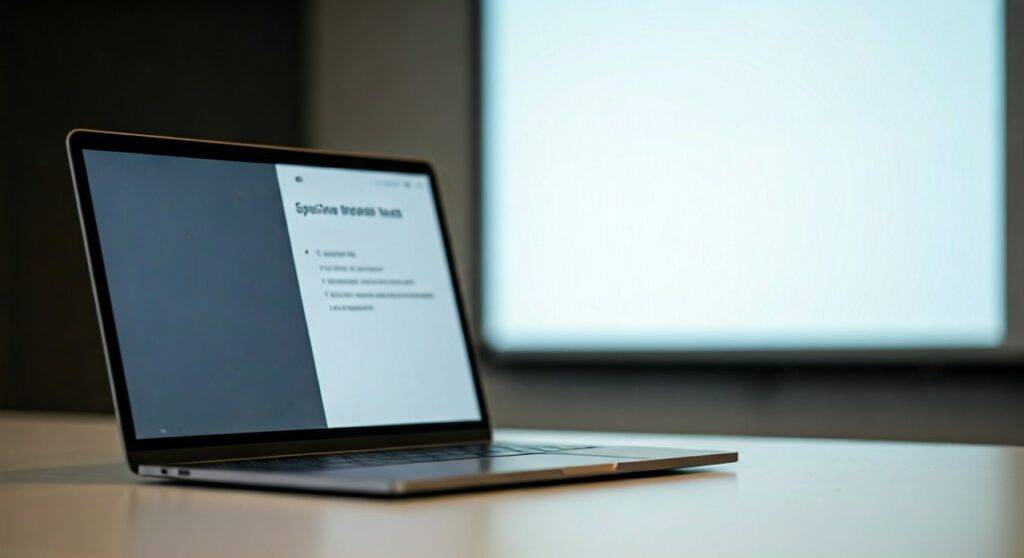
As an educational technology specialist who has spent over a decade helping schools implement Google Workspace and Microsoft 365, I have seen countless students accidentally reveal their “script” to the whole class. Understanding the technical side of Presenter View is essential for maintaining your privacy and professionalism. Whether you are using Google Slides, PowerPoint, or Canva, the way you deliver your work determines what the instructor sees.
TL;DR: Quick Visibility Summary
- Google Slides (Shared Link): Yes, if they have “Commenter” or “Editor” access.
- Canvas/Google Classroom (File Upload): Yes, they can view all metadata and notes.
- Zoom/Teams (Screen Share): Only if you share your Entire Desktop.
- PDF Exports: No, unless you specifically enable “Include Notes” during export.
- The Solution: Use Presenter View on a second monitor or share a specific window.
Understanding How Teachers View Your Digital Notes
When you ask, “can teachers see speakers notes,” you are likely thinking about two different scenarios: the grading process and the live presentation. In my experience, these are two very different technical environments. Teachers look for different things in each, and your digital footprint varies accordingly.
The Grading Phase (File Submission)
When you turn in an assignment through a Learning Management System (LMS) like Canvas, Schoogle, or Google Classroom, you are usually handing over the “source code” of your presentation. If you upload a .pptx or a .gslides file, the teacher sees everything. This includes your revision history, the time spent on slides, and every word in the speaker notes section.
The Presentation Phase (Live Sharing)
During a live class, whether in-person or via Zoom, the teacher only sees what you project. If you are “Mirroring” your screen to a projector, the class sees exactly what you see, including your notes. To keep your notes private, you must use Presenter View, which splits the display into a “presentation” for the audience and a “dashboard” for you.
Platform Deep-Dive: Can Teachers See Speaker Notes on Google Slides?
Google Slides is the most common tool in modern classrooms. Because it is cloud-based, permissions play a massive role in visibility. I have managed thousands of student accounts, and the most common mistake is not understanding the “View” vs. “Edit” dynamic.
When Teachers CAN See Your Notes
- Shared with Edit Access: If you add your teacher as a collaborator, they have full access to the speaker notes pane at the bottom of the screen.
- Google Classroom Submission: When you click “Turn In,” ownership of the file temporarily shifts. The teacher can open the file and read your notes to see if you prepared a script or just winged it.
- Screen Mirroring: If you click the “Slideshow” button while sharing your whole screen on a video call, your notes are hidden from the audience, but they are still technically on your computer.
When Teachers CANNOT See Your Notes
- Published to Web: If you use the “Publish to the Web” feature, the teacher only sees the slides themselves.
- PDF Format: If you go to File > Download > PDF Document, the speaker notes are automatically stripped out.
- Presenter View (Single Window): If you select “Share a Window” in Google Meet and pick the presentation window, the pop-up containing your notes remains invisible to the viewers.
The Technical Reality: PowerPoint and Microsoft Teams
Microsoft PowerPoint handles notes slightly differently than web-based tools. As a Microsoft Certified Educator, I often remind students that PowerPoint stores notes as part of the XML structure of the file.
Visibility in File Uploads
If you upload a PowerPoint file to Microsoft Teams or Canvas, the instructor can see the notes by simply scrolling down beneath each slide. Many teachers actually use these notes to grade the depth of your research. They want to see that the slide is visual while the “meat” of the content is in the notes.
Using Presenter View Correctly
To ensure privacy during a live presentation, you must use the Presenter View shortcut. On Windows, this is usually Alt + F5.
| Feature | Student View | Teacher/Audience View |
|---|---|---|
| Slide Content | Visible | Visible |
| Speaker Notes | Visible | Hidden |
| Next Slide Preview | Visible | Hidden |
| Timer/Clock | Visible | Hidden |
How to Protect Your Privacy: A Step-by-Step Guide
If you are worried about a teacher seeing your “cheatsheet” or personal reminders, follow these steps to ensure your speaker notes stay private. I recommend these steps to all my students to help them maintain a professional appearance.
Step 1: Use the “Window Share” Method
Never share your “Entire Screen” during a virtual presentation.
- Open your presentation.
- Start Presenter View.
- Go to your meeting software (Zoom, Google Meet, or Teams).
- Select “Share” and click only the window showing the slides.
- Your speaker notes window will stay on your screen, but the teacher will only see the slides.
Step 2: Convert to PDF Before Submitting
If the assignment instructions don’t strictly require a presentation file, submit a PDF.
- In Google Slides or PowerPoint, go to the File menu.
- Select Download or Save As.
- Choose PDF.
- Open the PDF to verify that the notes are gone before uploading it to Canvas.
Step 3: Check Permissions
Before sharing a link to your work:
- Click the Share button.
- Ensure the “General Access” is set to “Viewer.”
- Viewers can often see notes, so if you want them hidden, use the “Publish to Web” link instead (File > Share > Publish to web).
Why Teachers Actually Want to See Your Notes
It is a common misconception that students only use notes to “cheat.” From a teacher’s perspective, speaker notes are a sign of a well-prepared student. When I grade presentations, I often look for the following in the notes section:
- Citations: Proper MLA or APA citations for the images and data on the slide.
- Elaboration: Proof that the student knows more than what is written on the bullet points.
- Accessibility: Notes act as a transcript for students who may have hearing impairments.
- Organization: A clear flow of thought that shows the student practiced the delivery.
Expert Tip: Instead of hiding your notes, try to make them professional. Use them to hold your references and key statistics. This way, if a teacher does see them, it actually boosts your grade.
Common Mistakes to Avoid
In my years of technical consulting, I have seen these three mistakes happen repeatedly. Avoiding them will save you from potential embarrassment.
- Mirroring Displays: When presenting in a physical classroom, check if your laptop is “Mirroring” or “Extending” the display. Mirroring shows your notes to the whole room. Always use Extend mode.
- Leaving Personal Comments: Students often leave notes like “Don’t forget to smile” or “I hate this topic.” If you submit the file, the teacher will see these. Always do a final “sweep” of your notes.
- Assuming LMS Privacy: Some students believe that Canvas or Blackboard only shows the slides to the teacher. This is false. The “SpeedGrader” tool in Canvas allows teachers to toggle speaker notes on and off with a single click.
FAQ: Frequently Asked Questions about Speaker Notes
Can teachers see my speaker notes on Canvas?
Yes. When you upload a PowerPoint or Google Slides file to Canvas, the teacher can view the notes through the document previewer or by downloading the file. To prevent this, upload a PDF or a Video Recording of your presentation.
Does Google Classroom show speaker notes to teachers?
Yes, Google Classroom gives the teacher “Teacher” permissions on any file you submit. This allows them to see the entire file structure, including the speaker notes area and the version history.
How can I present on Zoom without showing my notes?
You should open your slides in Presenter View, then go to Zoom and select Share Screen. Instead of choosing “Screen 1,” go to the Advanced tab and choose Portion of Screen, or simply select the specific Slide Show window from the list of available windows.
Can a teacher see if I edited my notes during the presentation?
If you are using Google Slides and the teacher has the file open on their own computer while you are presenting, they can see “real-time” edits. However, if they are just watching your screen share, they cannot see any changes unless you show that specific window.
Is there a way to permanently delete notes before turning in a file?
In PowerPoint, you can use the Document Inspector. Go to File > Info > Check for Issues > Inspect Document. Ensure “Presentation Notes” is checked, click Inspect, and then select Remove All. This ensures no hidden notes remain in the file.