Can Thunder Affect Speakers? Understanding the Risks to Your Audio Gear
Yes, thunder can affect speakers, primarily through the electrical surges and Electromagnetic Pulses (EMP) generated by the lightning that accompanies it. While the acoustic sound of thunder itself rarely causes physical damage, the power surges traveling through your home’s wiring can instantly destroy speaker voice coils, amplifiers, and sensitive crossover circuits.
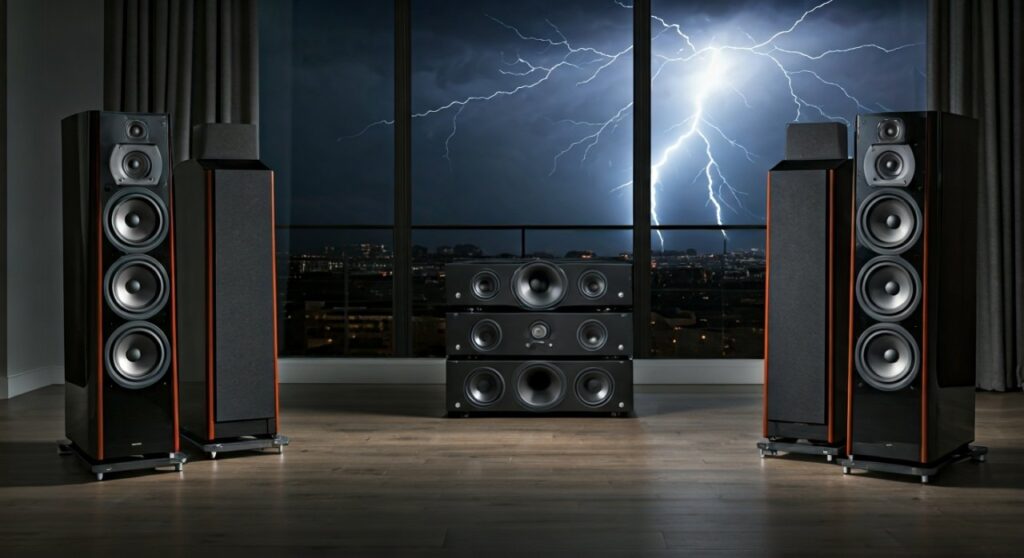
Key Takeaways: Protecting Your Audio Investment
- Primary Threat: Lightning-induced voltage spikes are the main cause of speaker failure during storms.
- Secondary Threat: Electromagnetic Induction can affect wireless signals and internal components without a direct hit.
- Physical Sound: It is extremely rare for the actual sound frequency of thunder to “blow” a speaker cone, though not impossible at extreme proximities.
- Best Protection: Unplugging your equipment entirely is the only 100% effective method to prevent damage.
- Warning Signs: If you hear “popping” or “static” during a storm, your system may be experiencing transient interference.
How Electrical Surges During Thunderstorms Damage Speakers
In my fifteen years as an audio technician, I have seen dozens of high-end setups ruined by “the sound of thunder.” Usually, it isn’t the sound that did it; it was the overvoltage event. When lightning strikes a nearby power line or even the ground, it creates a massive surge of electricity that seeks the path of least resistance.
Your speakers are connected to an amplifier or receiver, which is plugged into the wall. That copper wire acts as a highway for high-voltage transients. These surges hit the voice coil—the heart of your speaker—and melt the thin wire windings, causing an open circuit and rendering the speaker silent.
The Role of Electromagnetic Pulses (EMP)
Even if lightning doesn’t hit your house directly, a nearby strike creates a powerful Electromagnetic Pulse. This pulse can induce a current in any long cable, including your speaker wires. If your wires are long (like those running to rear channels or outdoor zones), they act as antennas, capturing this energy and sending a “spike” back into your receiver or forward into the tweeters.
Can the Sound of Thunder Physically Break a Speaker?
A common question I get is whether the “boom” of thunder is loud enough to physically tear a speaker cone. To understand this, we have to look at Acoustic Pressure.
Thunder is a low-frequency sound, often dropping below 20Hz. While most high-quality subwoofers are designed to handle low frequencies, the sheer volume of a close-range thunderclap can exceed 120 decibels.
- Passive Damage: If your speakers are “on” and your microphone or built-in sensors pick up the thunder, the system might try to reproduce that sound at an amplified level, leading to clipping.
- Sympathetic Vibration: If the thunder is loud enough to rattle your windows, it is also vibrating your speaker’s diaphragm. In rare cases, this can cause the voice coil to rub against the magnet assembly, leading to permanent “scratchy” sound quality.
Step-by-Step: How to Protect Your Speakers from Thunder and Lightning
Protecting your gear requires a multi-layered approach. Follow these steps to ensure your Home Theater or Studio Monitors survive the next storm.
Step 1: Install a High-Quality Surge Protector
Don’t rely on a cheap $10 power strip. You need a dedicated Surge Protective Device (SPD) with a high Joule rating. Look for units that offer a “Protected” LED indicator.
Step 2: Use an Uninterruptible Power Supply (UPS)
For active speakers or high-end amplifiers, a UPS (Battery Backup) is superior to a standard surge protector. It provides Line Conditioning, which smoothes out small voltage fluctuations that occur frequently during thunderstorms.
Step 3: The “Total Air Gap” Method
During a severe storm, the only guaranteed protection is to physically unplug the power cord from the wall. This creates an “air gap” that even a high-voltage bolt cannot jump. Don’t forget to unplug the subwoofer and any Ethernet cables connected to smart speakers.
Step 4: Disconnect Speaker Leads (For Long Runs)
If you have outdoor speakers or wires running through the attic, consider disconnecting the wires from the back of the receiver. This prevents induced current from entering your expensive amplifier.
Comparing Protection Methods for Audio Equipment
| Protection Type | Effectiveness | Best For | Cost |
|---|---|---|---|
| Standard Power Strip | Low | Low-end PC speakers | $10 – $20 |
| Surge Protector (2000+ Joules) | Medium | Mid-range Home Theater | $30 – $60 |
| UPS / Battery Backup | High | Active Monitors & Subwoofers | $100 – $300 |
| Power Conditioner | High | Audiophile / Hi-Fi Systems | $200+ |
| Physical Unplugging | 100% | All high-value equipment | $0 |
Symptoms of Speaker Damage After a Storm
If a storm has passed and you suspect your gear is affected, look for these specific “red flags.” I recommend testing your system at low volume first to prevent further damage.
- The “Burning” Smell: This is the most common sign of a fried transformer or melted voice coil insulation.
- Constant Humming or Buzzing: This often indicates a blown capacitor in the amplifier or a damaged grounding circuit.
- Distortion at Low Volumes: If the speaker sounds “crunchy” or “thin,” the voice coil may have been deformed by a momentary surge.
- No Sound from Tweeters: Tweeters are the most fragile component. A small spike will often kill the high-frequency driver while leaving the woofer intact.
The Danger to Wireless and Bluetooth Speakers
You might think Bluetooth speakers are safe because they aren’t “plugged in.” However, they are still vulnerable. Most portable speakers like the Sonos Move or JBL Flip utilize sensitive Integrated Circuits (ICs).
A nearby lightning strike can create enough Static Discharge in the air to “scramble” the firmware of these devices. If your wireless speaker won’t turn on or won’t pair after a storm, try a Hard Reset (usually holding the power and volume buttons simultaneously) to clear any static-induced logic errors.
Expert Advice for Outdoor Speaker Systems
Outdoor speakers are at the highest risk. Because they are often mounted to the exterior of a home or near pools, they are prone to static buildup.
We always recommend installing a Lightning Arrestor on the speaker lines for any permanent outdoor installation. These devices are designed to shunt excess electricity into the ground before it reaches your indoor amplifier. If you live in a high-lightning area like Florida or the Midwest, this is a non-negotiable part of a professional install.
Frequently Asked Questions
Can thunder make my speakers pop?
Yes. The electrical “noise” from a lightning strike can be picked up by your speaker wires, acting as an antenna. This interference is converted into an audible pop or crack by the amplifier. If you hear this, it is a sign that your system is currently vulnerable to a larger surge.
Is it safe to play music during a thunderstorm?
While it is generally safe to play music, it is not recommended if the storm is directly overhead. If a power surge occurs while the speaker is “active” (diaphragm moving), the potential for mechanical and electrical failure is significantly higher than if the system is off.
Do surge protectors wear out?
Yes. Surge protectors use components called MOVs (Metal Oxide Varistors) that degrade every time they absorb a spike. After a major thunderstorm, most experts—myself included—recommend replacing your surge protectors, as their ability to handle the next strike is likely compromised.
Can a speaker survive a direct lightning strike?
Almost never. A direct strike carries millions of volts. This is enough to vaporize the copper wiring inside the speaker and even melt the plastic casing. Proper Whole-House Surge Protection at the breaker panel is your only defense against direct hits.