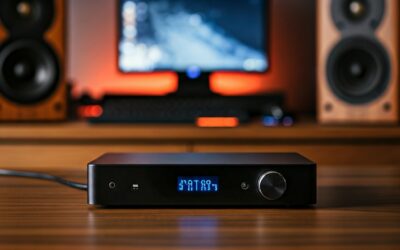
Can U Attach More Speakers to a Minishelf System? The Short Answer
Yes, you can attach more speakers to a minishelf system, but you must carefully manage the electrical impedance (Ohms) to avoid burning out the internal amplifier. Most compact systems are designed for a specific 6-ohm or 8-ohm load, so adding extra speakers requires either series wiring, a speaker selector box, or an external amplifier. Simply twisting extra wires into the existing terminals can lower resistance too far, leading to overheating and permanent hardware failure.
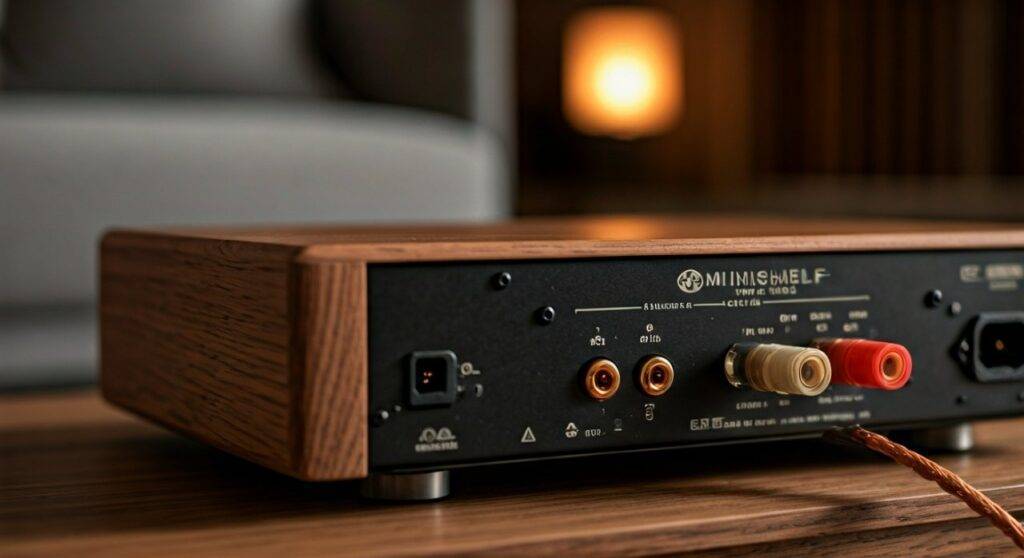
In my years of testing compact audio setups from brands like Sony, Denon, and Panasonic, I have found that while these units are “closed” systems, they are surprisingly flexible if you understand the math behind the power output. If you want a fuller sound or audio in a second room, you need to follow specific wiring protocols to keep your equipment safe.
TL;DR: Key Takeaways for Expanding Your System
- Check Impedance: Never let the total Ohms drop below the rating on the back of your unit (usually 6Ω or 8Ω).
- Wiring Matters: Use Series wiring to increase resistance; avoid Parallel wiring unless you have a high-end receiver.
- Use Selectors: A Speaker Selector Box with impedance protection is the safest “plug-and-play” method.
- Active Over Passive: Adding powered (active) speakers via a “Line Out” is safer than adding passive speakers to the main terminals.
- Wire Quality: Use 16-gauge or 14-gauge oxygen-free copper (OFC) wire for runs longer than 20 feet.
Understanding the Risks: Can U Attach More Speakers to a Minishelf System Without Damage?
The most common mistake I see beginners make is assuming that more speakers automatically mean more volume. In reality, adding more speakers to a minishelf system splits the available power. If your system is rated for 50 watts per channel, adding a second pair of speakers means each speaker may only receive 25 watts.
When you ask, “can u attach more speakers to a minishelf system,” you are really asking if the amplifier’s transformer can handle the increased current. Most mini systems use Class D or Class AB amplifiers that are optimized for the speakers they came with. Pushing them too hard by adding extra “passive” speakers (speakers without their own power cord) creates a “low resistance” environment that pulls too much current, potentially melting the internal circuitry.
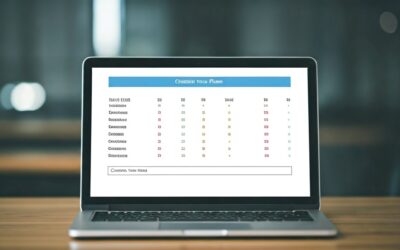
Impedance Comparison Table
| Connection Type | Formula | Effect on Impedance (Ohms) | Risk Level |
|---|---|---|---|
| Single Pair (8Ω) | Standard | 8 Ohms | Zero Risk |
| Parallel (Two 8Ω Pairs) | (R1*R2) / (R1+R2) | 4 Ohms | High Risk (Overheating) |
| Series (Two 8Ω Pairs) | R1 + R2 | 16 Ohms | Safe (Lower Volume) |
| Speaker Selector | Internal Circuitry | Stable 8 Ohms | Safest |
Method 1: The Series Wiring Technique (The DIY Way)
If you are on a budget and want to add two more speakers to your minishelf system, Series wiring is the only safe manual method. This ensures the total resistance increases, which protects your amplifier from “seeing” too much load.
How to Wire in Series:
- Connect the Positive (+) terminal of the Left Channel on your system to the Positive (+) terminal of the first speaker.
- Connect the Negative (-) terminal of that first speaker to the Positive (+) terminal of the second speaker.
- Connect the Negative (-) terminal of the second speaker back to the Negative (-) terminal of the Left Channel on your system.
- Repeat this process for the Right Channel.
Expert Insight: I’ve used this method to run “B-speakers” in a garage setup. The volume will be lower because the resistance is doubled (e.g., two 8-ohm speakers become a 16-ohm load), but the minishelf system will run cool and last for years.
Method 2: Using a Speaker Selector Box (The Professional Way)
For those who want to toggle between different rooms or run four speakers simultaneously without doing complex math, a Speaker Selector Box is the gold standard.
These devices include impedance-matching circuitry (often using heavy-duty resistors or transformers) that keeps the load steady at 8 ohms, regardless of how many speakers you turn on. When we consider the question, “can u attach more speakers to a minishelf system,” this is the solution I recommend for 90% of users.
Steps to Install a Selector:
- Run one pair of high-quality speaker wires from your minishelf system to the “Input” on the selector box.
- Plug your primary speakers into “Output A.”
- Plug your secondary speakers into “Output B.”
- Engage the “Protection” button on the box to ensure your system doesn’t see a low-impedance drop.
Method 3: Adding Powered (Active) Speakers
If your minishelf system has a “Line Out,” “Pre-Amp Out,” or a “Headphone Jack,” you can add an unlimited number of speakers by using Active Speakers. Unlike passive speakers, active speakers have their own built-in amplifiers and plug into a wall outlet.
This is the most effective way to expand because it places zero stress on your original system’s amplifier. I frequently recommend this for users who want to add a Subwoofer to a system that didn’t come with one. By using a Y-adapter on the RCA output, you can send the signal to a powered sub and a pair of powered bookshelf speakers simultaneously.
Technical Constraints: Can U Attach More Speakers to a Minishelf System Safely?
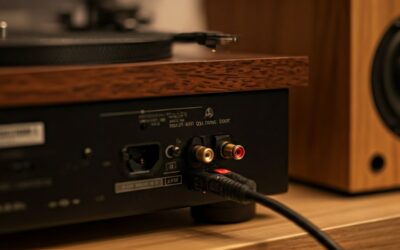
Before you start stripping wires, you must check the back of your unit for the minimum impedance rating. It is usually printed near the speaker terminals.
- If it says 4Ω – 16Ω: You have a very robust system. You can likely handle two pairs of 8-ohm speakers in parallel (which equals 4 ohms).
- If it says 6Ω or 8Ω ONLY: You must be extremely careful. Do not use parallel wiring. You are strictly limited to Series wiring or a Speaker Selector.
The Role of Speaker Sensitivity
When adding more speakers, look for high Sensitivity ratings (measured in dB). A speaker with 90dB sensitivity requires much less power to sound loud than a speaker with 85dB sensitivity. If you are splitting power from a small minishelf system, choosing sensitive speakers will help maintain high volume levels across all units.
Step-by-Step Guide: Expanding Your Audio Footprint
Follow these steps to ensure you don’t blow a fuse or fry a transistor.
Step 1: Audit Your Hardware
Look at the labels on the back of all speakers. Ensure they are the same Impedance (Ohms). Mixing a 4-ohm speaker with an 8-ohm speaker is a recipe for uneven volume and potential amp failure.
Step 2: Choose Your Wiring Strategy
- Choose Series if you want a cheap, permanent 4-speaker setup.
- Choose a Selector Box if you want to switch speakers on/off.
- Choose Active Expansion if you need high volume in a large space.
Step 3: Prepare the Cables
Strip about half an inch of insulation off your 16-gauge speaker wire. Ensure there are no stray copper strands. A single stray strand touching the opposite terminal can cause a “short circuit,” which is the #1 cause of death for minishelf systems.
Step 4: The Heat Test
After connecting your extra speakers, play music at a moderate volume for 15 minutes. Feel the top of the minishelf system. If it is too hot to touch, you have an impedance mismatch. Shut it down immediately and switch to a Series configuration.
Expert Tips for Better Sound Quality
Adding more speakers doesn’t always result in “better” sound. To get the most out of your expanded minishelf system, consider these professional placement tips:
- Phase Consistency: Ensure all Positive (+) wires go to Positive (+) terminals. If one speaker is “out of phase,” the bass will disappear, and the soundstage will feel hollow.
- Avoid Long Thin Wires: For runs over 30 feet, thin 22-gauge wire (the “bell wire” often included in the box) will cause a noticeable loss in high-frequency detail. Always upgrade to 14 AWG for long distances.
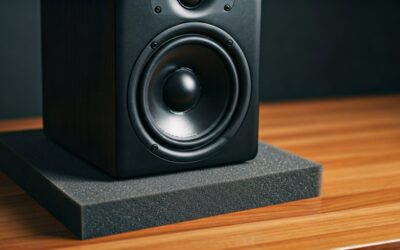
- Ventilation: Extra speakers make the internal amp work harder. Ensure your minishelf system has at least 3 inches of clearance on all sides for airflow. Never stack it inside a tight cabinet.
Frequently Asked Questions
Can I connect 4 speakers to a 2-channel minishelf system?
Yes, but you should not just “double up” the wires in the terminals. You should use Series wiring or an Impedance-matching speaker selector to ensure the total load doesn’t drop below the amplifier’s rated Ohms (usually 6Ω or 8Ω).
Will adding more speakers make my system louder?
Not necessarily. Since the power output (Wattage) of the minishelf system remains the same, it simply divides that power among more speakers. While you get more “coverage” (sound in more areas), the maximum volume of each individual speaker will decrease.
What happens if the Ohms are too low?
If you connect too many speakers in parallel and the impedance drops to 2 ohms or 4 ohms (on an 8-ohm rated system), the amplifier will draw too much current. This leads to clipping, overheating, and eventually the internal thermal fuse or transistors will blow, rendering the system useless.
Can I use a Bluetooth transmitter to add more speakers?
Yes! This is a modern workaround. Plug a Bluetooth transmitter into the headphone jack of your minishelf system. You can then pair it with multiple Bluetooth speakers throughout your home, effectively adding more speakers without any complex wiring or impedance risks.