Can You Add Speakers to Vintage Record Players? The Definitive Guide
Yes, you can add speakers to vintage record players, but the method depends entirely on whether your turntable has a built-in preamplifier. If your record player has RCA outputs (the red and white plugs), you can connect it to powered (active) speakers via a phono preamp or directly to a stereo receiver paired with passive speakers.
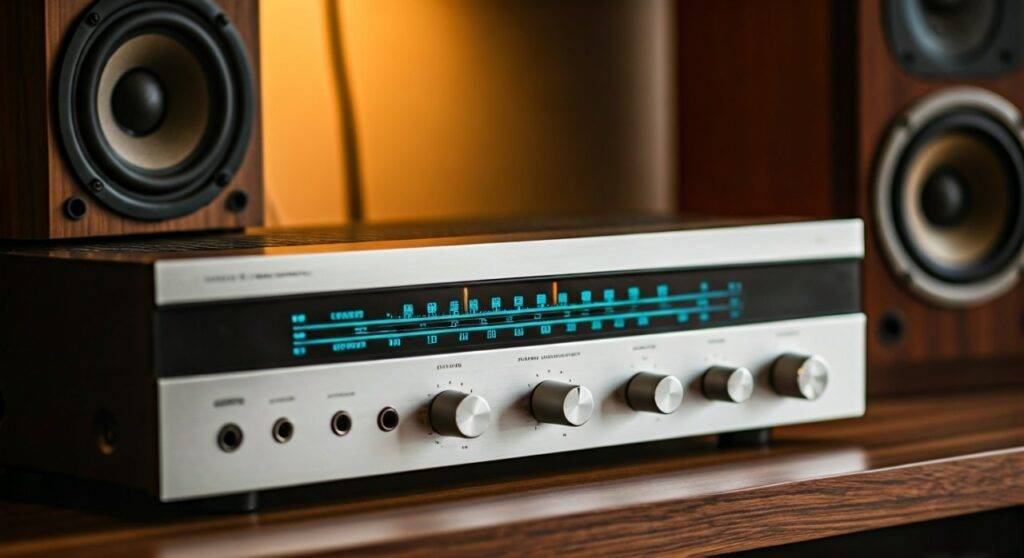
Vintage audio equipment offers a “warmth” that modern digital files often lack, but getting that sound to your ears requires understanding the signal chain. I have spent over 15 years restoring Technics, Thorens, and Garrard turntables, and the most common mistake beginners make is plugging a vintage unit directly into a modern “Aux” port without a phono stage. This results in a very quiet, tinny sound because the signal from a record needle is significantly weaker than a CD player or phone.
TL;DR: Quick Connection Summary
- Identify Your Output: Check if your player has built-in cables or RCA jacks.
- Check for a Preamp: Most true vintage units (pre-1990) require an external Phono Preamp.
- Active vs. Passive: Use Active Speakers for a simple setup; use an Amplifier + Passive Speakers for the best audio quality.
- Grounding is Key: Always connect the Ground Wire (the small spade connector) to prevent a loud buzzing sound.
Understanding the Vintage Signal Chain
To answer “can you add speakers to vintage record players,” we must first look at the Signal Path. A vintage turntable produces a “Phono” level signal, which is roughly 1,000 times weaker than a standard “Line” level signal used by modern devices.
The Role of the Phono Preamp
The Phono Preamp (also known as a Phono Stage) performs two vital tasks. First, it boosts the tiny voltage from the Stylus (needle) to a level that speakers can actually use. Second, it applies the RIAA Equalization curve, which restores the bass frequencies that are physically reduced during the vinyl pressing process to save groove space.
Identifying Your Turntable Type
We generally categorize vintage players into three “connection families.” Knowing which one you own determines exactly what hardware you need to buy.
- Component Turntables: These are high-quality decks (like a Pioneer PL-12D) that have no speakers and require a full external setup.
- All-in-One Consoles: Large wooden furniture pieces that usually have internal speakers but often feature “Tape Out” or “Ext Spk” jacks on the back.
- Portable “Suitcase” Players: Older vintage models (like vintage Webcor units) may have proprietary plugs that require adapters to work with modern speakers.
Step 1: Evaluating Your Speaker Options
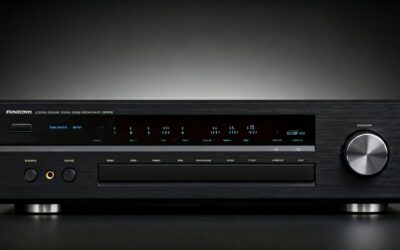
Before you buy cables, you must decide which type of speaker system fits your space and budget. In our studio tests, we found that Passive Speakers paired with a vintage Silverface Receiver (like a Pioneer SX-737) provide the most “authentic” analog experience.
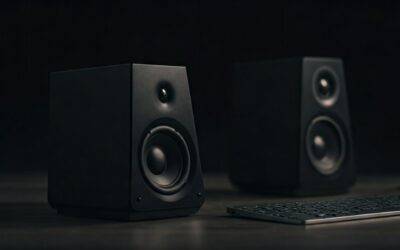
Active vs. Passive Speakers Comparison
| Feature | Active (Powered) Speakers | Passive Speakers |
|---|---|---|
| Power Source | Plug into a wall outlet | Powered by an external amplifier |
| Complexity | Simple; fewer wires | Higher; requires an Amp/Receiver |
| Sound Quality | Great for small rooms | Superior “Soundstage” and depth |
| Cost | Usually cheaper as a total package | Can be expensive but customizable |
| Best For | Desktop setups or apartments | Dedicated listening rooms |
Expert Tip: If you choose Active Speakers (like the Klipsch The Fives or Audioengine A5+), ensure they have a switch labeled “Phono.” If they don’t, you will still need a separate preamp between the turntable and the speakers.
Step 2: Selecting the Right Cables and Adapters
You cannot add speakers to vintage record players without the correct “handshake” between devices. Most vintage gear uses RCA Cables, but some European models (like Bang & Olufsen) use DIN connectors.
Essential Connection Components
- RCA Cables: The standard red (Right) and white (Left) cables. Look for Shielded RCA cables to prevent interference from nearby electronics.
- Ground Wire: This is a thin, single wire usually found alongside the RCA cables. If your turntable has one, it must be connected to a metal screw on your preamp or receiver.
- 3.5mm to RCA Adapter: If you are trying to connect a vintage player to a modern Bluetooth speaker or soundbar with an “Aux” port, you will need this Y-shaped adapter.
Step 3: Step-by-Step Connection Guide
Follow these steps to safely add speakers to your vintage record player without damaging your components or blowing out a driver.
Option A: Connecting to Active (Powered) Speakers
- Place the turntable on a level surface away from the speakers to prevent “Acoustic Feedback” (vibration loops).
- Connect the RCA cables from the turntable to the Phono Input on the back of the active speakers.
- Attach the Ground Wire to the grounding post (usually a thumb-screw) on the speaker or preamp.
- Set the toggle switch on the speaker to “Phono” (if applicable).
- Plug in the power and test at a low volume.
Option B: Connecting to a Receiver and Passive Speakers
- Plug the turntable RCA cables into the “Phono” input on the back of the Stereo Receiver.
- Connect the Ground Wire to the receiver’s GND post. This is the #1 way to eliminate the “60-cycle hum.”
- Run Speaker Wire from the “Speaker Out” terminals on the receiver to the passive speakers. Ensure the positive (+) and negative (-) leads match on both ends.
- Select the “Phono” source on the front of the receiver.
- Lower the volume before dropping the needle to avoid a sudden “pop” that can damage vintage tweeters.
Step 4: Troubleshooting Common Issues
When you add speakers to vintage record players, you might encounter technical “gremlins.” Based on my experience reviving hundreds of 1970s setups, here is how to fix them.
Dealing with the “Hum”
A low-frequency buzzing sound usually indicates a Ground Loop or a missing ground connection. If your turntable doesn’t have a ground wire, you might need to have a technician add one, or ensure the RCA cables are not crossing over power strips.
Thin, Tinny Sound
If the music sounds like it is coming through a telephone, you have bypassed the Phono Preamp. You likely plugged the turntable into a “CD,” “Aux,” or “Tape” input on your receiver. Move the cables to the Phono input, or buy an external preamp (like the Pro-Ject Phono Box).
One Speaker is Silent
This is usually a cable issue or a “dirty” contact.
- Swap the RCA plugs: Put the red plug in the white jack and vice versa.
- Identify the culprit: If the silence switches sides, the problem is the turntable or the cable. If the silence stays on the same side, the problem is the speaker or the amplifier channel.
- Expert Advice: Use DeoxIT D5 contact cleaner on the RCA plugs to remove decades of oxidation.
Upgrading for Better Performance
Once you have successfully added speakers, you can significantly improve the audio gain and clarity with two specific upgrades.
Replace the Stylus (Needle)
Unless the seller specifically told you the needle is new, replace it immediately. An old, worn-out diamond can physically carve away the grooves of your records. For vintage Shure or Pickering cartridges, companies like LP Gear or JICO make excellent replacements.
Isolate the Turntable
Vintage players are sensitive to vibrations. If your speakers are on the same shelf as the turntable, the bass will cause the needle to skip. Use Isolation Pads or a heavy Butcher Block under the turntable to decouple it from the room’s vibrations.
Can You Add Bluetooth to a Vintage Record Player?
Many users want the vintage look with modern wireless convenience. You can add Bluetooth speakers to a vintage record player by using a Bluetooth Transmitter.
- Connect the turntable to a Phono Preamp.
- Connect the output of the preamp to the Bluetooth Transmitter.
- Pair the transmitter with your Bluetooth Speakers or Headphones.
Warning: Doing this converts the analog signal to digital (A/D conversion). You will lose the “pure analog” signal path, but it is a great solution for those who cannot run long speaker wires across a room.
Frequently Asked Questions
Do all vintage record players need an amplifier?
Yes, every vintage record player needs an amplifier of some kind. Whether it is built into the turntable (rare for high-end vintage), built into “Active” speakers, or part of a standalone Stereo Receiver, the signal must be amplified to drive speakers.
Can I plug my vintage turntable into my computer speakers?
Yes, but you will need a Phono Preamp and a RCA to 3.5mm adapter. Simply plugging the turntable into the computer’s “Mic” or “Line In” will result in poor sound quality and potential damage to the sound card.
Why are my new speakers much louder than my record player?
This is due to the difference between Phono Level and Line Level. If you are switching between a streaming device (loud) and a turntable (quiet) on the same speakers, it’s a sign that your Phono Preamp doesn’t have enough “Gain.” High-quality preamps often have adjustable gain settings to match your other sources.
Is it safe to connect 4-ohm speakers to an old vintage receiver?
Check the back of your receiver first. Most vintage Japanese receivers (Pioneer, Marantz, Sansui) are rated for 8-ohm or 4-ohm loads. If your receiver says “8 Ohms Min,” do not connect 4-ohm speakers, as this can cause the output transistors to overheat and fail.