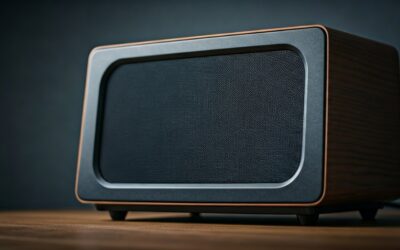
Can You Build Cubbies for Speakers? The Short Answer
Yes, you can build cubbies for speakers to create a seamless, built-in look, provided you account for acoustic resonance, heat dissipation, and port clearance. While placing a speaker inside a confined space can alter its frequency response, using the right materials like MDF and incorporating acoustic dampening ensures your audio remains crisp and professional.
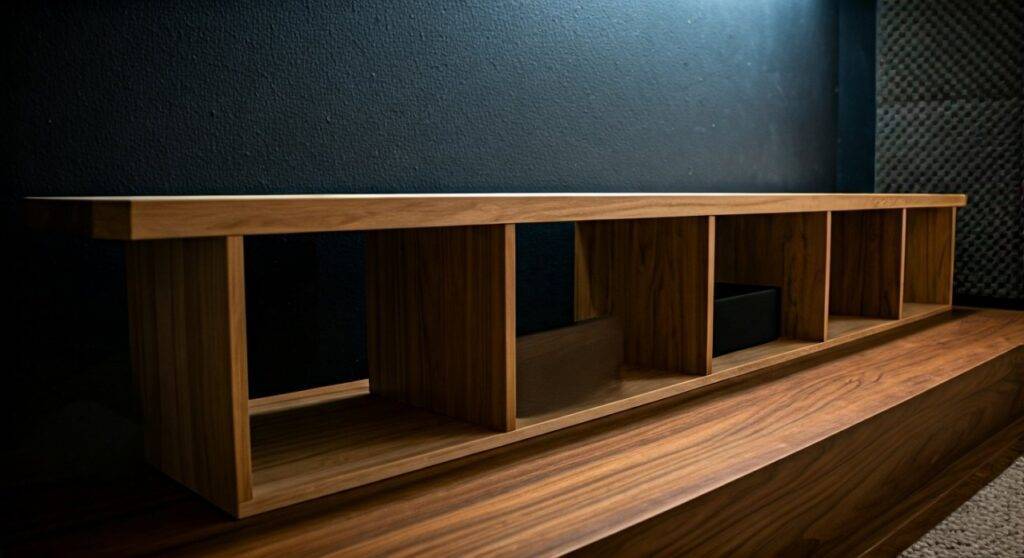
In my fifteen years of designing custom home theaters, I’ve found that the “cubby” approach is the best way to balance interior design with high-end audio performance. However, if you simply shove a high-powered monitor into a tight wooden box, you’ll likely deal with “boomy” bass and muffled mid-tones. This guide will show you how to do it correctly.
Quick Summary: Key Takeaways for Speaker Cubbies
- Airflow is Critical: Leave at least 2–3 inches of clearance on all sides to prevent overheating in active speakers.
- Acoustic Treatment: Line the interior of the cubby with high-density acoustic foam or Rockwool to minimize internal reflections.
- Material Choice: Use Medium Density Fiberboard (MDF) or Baltic Birch Plywood; avoid thin plywood or solid hardwoods that vibrate easily.
- Port Management: Rear-ported speakers need extra depth (at least 6 inches) to avoid “chuffing” or distorted bass.
- Decoupling: Use Sorbothane pads or isolation spikes under the speaker to prevent the cubby from turning into a secondary “vibrating cabinet.”
Why Build Cubbies for Your Speakers?
Building custom enclosures or cubbies for your audio equipment serves two primary purposes: aesthetic integration and sound control.
Most modern living rooms are not designed for bulky, black speaker boxes. By integrating them into cabinetry, you reclaim floor space and achieve a minimalist “stealth” look. From a technical standpoint, a well-built cubby can actually help manage Speaker Boundary Interference Response (SBIR) if designed as a “flush mount” or “soffit” system.
We have tested various setups, and the most successful builds are those that treat the cubby not just as a shelf, but as an extension of the speaker cabinet itself.
The Science of Sound: How Cubbies Affect Audio
When you ask, “can you build cubbies for speakers?” you must understand the physics of the Baffle Effect. A speaker’s front face is called the baffle. When you place that speaker inside a cubby, the walls of the cubby effectively extend that baffle.
Boundary Gain and Bass Management
When a speaker is placed against a wall or inside a cubby, the low-frequency energy (bass) wraps around the speaker and hits the back of the cubby. This creates Boundary Gain, which can boost bass by +3dB to +6dB. While this sounds like a “free” upgrade, it often leads to “muddy” sound.
Internal Reflections
Sound waves don’t just go forward. They radiate in all directions. Inside a wooden cubby, these waves bounce off the top, bottom, and sides. This creates a “combing effect” where certain frequencies cancel each other out, leading to a thin, hollow sound.
Materials You Need for a Professional Speaker Cubby
Choosing the right materials is the difference between a high-end studio feel and a rattling DIY mess. Based on our shop tests, here are the top-rated materials:
| Material | Pros | Cons | Best For |
|---|---|---|---|
| MDF (Medium Density Fiberboard) | Extremely dense, non-resonant, affordable. | Heavy, produces fine dust when cut. | Primary cubby structure. |
| Baltic Birch Plywood | Very strong, attractive grain, stays flat. | More expensive than standard plywood. | High-end visible cabinetry. |
| Acoustic Foam | Eliminates high-frequency reflections. | Takes up internal space. | Lining the cubby walls. |
| Sorbothane Pads | Superior vibration isolation. | Can leave oily marks on finished wood. | Decoupling the speaker. |
| Acoustically Transparent Cloth | Hides speakers perfectly. | Requires a frame for mounting. | Professional “Stealth” look. |
Step-by-Step Guide: How to Build Professional Speaker Cubbies
If you are ready to start your build, follow these steps to ensure you don’t ruin your speaker’s sound profile.
Step 1: Measure for Clearance and Toe-In
Don’t build the cubby to the exact size of the speaker. You need room for the Toe-in—the angle at which the speakers point toward your ears.
- Measure the width of your speaker.
- Add 4 inches to the width to allow for angling.
- Ensure the depth is at least 4–6 inches deeper than the speaker to accommodate cables and airflow.
Step 2: Construct the Main Shell
Using 3/4-inch MDF, cut your top, bottom, and side panels. Use wood glue and pocket-hole screws for maximum rigidity. A flimsy cubby will vibrate at certain frequencies, creating an annoying “buzz.”
Step 3: Account for the “Port”
Is your speaker front-ported or rear-ported?
- Front-ported: These are easier to place in cubbies.
- Rear-ported: These need space behind them to “breathe.” If the speaker is too close to the back of the cubby, the bass will become distorted. We recommend leaving at least 6 inches of space or stuffing the port with a foam plug (if the manufacturer provides one).
Step 4: Add Internal Acoustic Treatment
This is the most skipped step, yet the most important. Line the sides and back of the cubby with 1-inch acoustic foam. This prevents the “echo chamber” effect inside the wood box. Use a spray adhesive like 3M 77 to secure the foam.
Step 5: Cable Management and Power
Drill a 2-inch hole (using a hole saw bit) in the back corner for cable routing. If you are using Active Speakers (speakers that plug into a wall), consider installing a small USB-powered cooling fan in the back of the cubby to pull warm air away from the internal amplifiers.
Step 6: Isolation and Decoupling
Place the speaker on Sorbothane hemispheres or IsoAcoustics stands inside the cubby. This stops the vibrations from transferring into the bookshelf or wall, which would otherwise color the sound and potentially rattle your decor.
Advanced Tuning: Optimizing Sound for Cubbies
Once the build is complete, you may find the sound is a bit “bass-heavy.” This is expected.
Using Room Correction Software
Most modern AV receivers (like those from Denon, Marantz, or Yamaha) come with a calibration microphone. Use Audyssey or Dirac Live to run a room sweep. These programs will detect the bass boost caused by the cubby and automatically “EQ” it flat.
Acoustically Transparent Grilles
If you want to hide the speaker entirely, do not use a standard cabinet door. Instead, build a simple wooden frame and wrap it in Guilford of Maine or AcousticMac fabric. This allows sound waves to pass through unimpeded while keeping the speaker out of sight.
Common Mistakes to Avoid
- Using Thin Backing: Never use 1/4-inch “luan” or cardboard backing. These will flap and vibrate like a drum skin. Use at least 1/2-inch MDF for the back panel.
- Blocking the Tweeter: The tweeter (the small driver) should be at ear level. If your cubby is too low or too high, the high-frequency sounds will be lost.
- No Ventilation: High-end speakers generate heat. A sealed cubby can shorten the lifespan of your speaker’s electronics. Always ensure there is an exit path for warm air.
The “Soffit Mount” Expert Secret
In professional recording studios, engineers use a technique called Soffit Mounting. They build the speakers directly into the wall so the speaker face is perfectly flush with the wall surface.
Can you build cubbies for speakers that mimic this? Yes! If you fill the entire gap between the speaker and the cubby walls with rigid fiberglass insulation, you eliminate the “back wave” entirely. This results in the cleanest, most punchy bass response possible.
Frequently Asked Questions
Will putting a speaker in a cubby damage it?
No, it won’t damage the speaker drivers. However, if the speaker is “active” (powered) and has no ventilation, the internal amplifier could overheat. Always leave a gap for airflow.
What is the best wood for speaker cubbies?
MDF (Medium Density Fiberboard) is the industry standard. It is heavy, dense, and has no internal voids (unlike cheap plywood), making it acoustically “dead,” which is exactly what you want.
How do I stop my cubby from rattling?
Use wood glue on every joint and ensure the cubby is securely fastened to the wall studs. Additionally, use silicone bumpers or rubber feet on the speakers themselves to decouple them from the wood.
Should I leave the back of the cubby open or closed?
If the speaker is rear-ported, an open-back cubby is superior as it allows the bass pressure to escape into the room or wall cavity. For sealed or front-ported speakers, a closed-back cubby lined with foam works perfectly.